Classic of the Way and Virtue
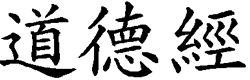
By Lao Tzu (Laozi)
Green Way Research, Valley Spirit Center, Gushen Grove Notebooks, Vancouver, Washington
Chapter 72 Chapter 74 Index to All the Chapters Daoism Concordance Commentary Cloud Hands Blog
Classic Book (Ching) about the Tao (Way, Nature, Patterns, Processes) and Te (Virtue, Potency, Power, Integrity, Wise Person, Sage)
Concordance: Indexing, Search Terms, Topics, Themes, Keys, Subjects
English and Chinese (Wade-Giles) Terms:
Accomplishing, Ambivalence Regarding Acts,
Avoiding Striving and Daring Actions, Calm, Cause or Reason (ku), Content
or Compete (chêng), Courage or Bravery (yung), Daring or
Fearlessness (kan), Daring to Act, Death or Killed (sha),
Favoritism, Freedom Non-Competition, God's Blessing, God's Curse, Hate or
Despise (wu), Heaven (t'ien), Heaven's Way, Impartiality,
Inevitability, Inevitable, Injury or Hurt (hai), Justice, Life or Living
(huo), Manner or Behavior (jan), Mesh or Sieve, Naturalness,
Nature's Course, Net (wang), Net of Heaven, Pacifist, Plans or Designs (mou),
Power, Quiet, Quietism, Responds or Answers (ying), Retribution, Sage,
Secrecy, Self-Restraint, Slip By or Loss (shih), Slow or Patient (ch'an),
Spreading and Influencing, Subtle, Tao Way, The Way of Heaven is Quiet,
Understands or Knows (chih), Vast or Wide (k'uei), Victory or
Overcome (shêng), Way (Tao), 任為
Términos en Español:
Ancho,
Autocontrol, Bendición de Dios,
Calma,
Causa, Comportamiento, Contenido,
Coraje,
Desdeña, Diseños, El Camino del Cielo
es Tranquila,
Entiende, Evitar el Esfuerzo,
Favoritismo, Imparcialidad,
Implantación, Inevitabilidad,
Inevitable,
Justicia, Lento, Lesión,
Libertad, Maldición de Dios,
Malla o Tamiz,
Manera, Motivo,
Muerte, Naturalidad,
Neto, Odiar,
Paciente, Pérdida,
Planes, Poder,
Propagación e Influencia, Quietismo,
Responde, Respuestas, Retribution,
Sabio,
Secreto, Silencioso, Sutil,
Valentía, Victoria, Vida
Electronic Concordance for all 81 Chapters of the Tao Te Ching
English Language Translations of the Tao Te Ching, Chapter 73
"He whose boldness appears in his daring to do wrong, in defiance of the laws
is put to death;
He whose boldness appears in his not daring to do so lives on.
Of these two cases the one appears to be advantageous, and the other to be
injurious.
When Heaven's anger smites a man,
Who the cause shall truly scan?
On this account the sage feels a difficulty as to what to do in the former case.
It is the way of Heaven not to strive, and yet it skillfully overcomes;
Not to speak, and yet it is skilful in obtaining a reply;
Does not call, and yet men come to it of themselves.
Its demonstrations are quiet, and yet its plans are skilful and effective.
The meshes of the net of Heaven are large; far apart, but letting nothing
escape."
- Translated by
James Legge, 1891, Chapter 73
"Courage, if carried to daring, leads to death;
Courage, if not carried to daring, leads to life.
Either of these two things is sometimes beneficial, sometimes harmful.
"Why is it by heaven rejected,
Who has the reason detected?"
Therefore the holy man also regards it as difficult.
The Heavenly Reason strives not, but it is sure to conquer.
It speaks not, but it is sure to respond.
It summons not, but it comes of itself.
It works patiently, but is sure in its designs.
Heaven's net is vast, so vast.
It is wide-meshed, but it loses nothing."
- Translated by
D. T. Suzuki and Paul Carus, 1913,
Chapter 73
"Obviously, bravery in battle sometimes gets you killed.
Real
courage helps you survive, and everyone else too.
Or, try
this: courage sometimes helps you survive.
Other
times it gets you killed.
Who
knows the reason that things happen?
Some
things seem easy, some hard.
At any
rate, the sage doesn't struggle, but
simply responds.
He
doesn't summon, but
things appear.
He's
patient and resourceful.
When the
source casts its net, nothing
escapes."
- Translated by
Crispin Starwell, Chapter 73
"Bravery in being bold leads to death;
Bravery in being timid leads to life.
These two kinds of bravery,
One leads to good the other to harm,
Who knows why
Heaven hates what it hates?
Even the sage feels it difficult to understand.
This is the Tao of heaven:
To excel in triumphing by means of non-contention;
To be good at answering by means of taciturnity;
To attract people by using no summons;
To be quick in planning by acting slowly.
The net of heaven is spread wide and far,
Though the mesh is largely knit,
Nothing can slip through the net."
- Translated by
Zhengkun Gu, Chapter 73
"The man who is brave
and takes unneeded chances
will be killed;
The man who is brave
and does not take unneeded chances will survive.
Of these two kinds of bravery,
one proves harmful,
while the other is helpful.
Some things
are hated by the Laws of the Universe,
But who knows the reason?
Even the Complete Thinker
does not understand
such a question.
It is the Universal Law,
to win without effort.
It is the Universal Law
to get answers without speaking.
It is the Universal Law to get the people to come
without calling them.
It is the Universal Law to act agreeing to plans without hurry.
Powerful, beyond knowing are the Laws of the Universe:
Visible only by its results
and yet
Only the formless
can create new results."
- Translated by
J. L. Trottier, 1994, Chapter 73
"He whose braveness lies in daring, slays.
He whose braveness lies in not daring , gives life.
Of these two, either may be profitable or unprofitable.
But “Heaven hates what it hates;
None can know the reason why”.
Wherefore the Sage, too, disallows it.
For it is the way of Heaven not to strive but none the less to conquer,
Not to speak, but none the less to get an answer,
Not to beckon; yet things come to it of themselves.
Heaven is like one who says little, yet none the less has laid his plans.
Heaven's net is wide;
Coarse are the meshes, yet nothing slips through."
- Translated by
Arthur Waley, 1934, Chapter 73
"Those bold in daring will die;
Those bold in not daring will survive.
Of these two, either may benefit or harm.
Nature decides which is evil,
But who can know why?
Even Evolved Individuals regard this as difficult.
The Tao in Nature
Does not contend,
Yet skillfully triumphs.
Does not speak,
Yet skillfully responds.
Does not summon,
And yet attracts.
Does not hasten,
Yet skillfully designs.
Nature's network is vast, so vast,
Its mesh is coarse, yet nothing slips through."
- Translated by
R. L. Wing, 1986, Chapter 73
"He whose courage is shown in rashly daring will be killed;
He whose courage is shown in not rashly daring will live.
Of these two either may be harmful, either may be beneficial;
And who shall say which of them is hated by Heaven?
(Even the Sage sees a difficulty here.)
The Tao of Heaven does not contend, yet knows the way to win;
It does not speak, yet knows how to get the right answer;
It does not beckon, yet all things come to it freely,
In stillness and without haste, it carries out its well-laid plans.
The net of Heaven is vast, but though its mesh is wide,
Nothing escapes."
- Translated by
Herman Ould, 1946, Chapter 73
"He who is brave in daring, is killed.
He who is brave in not-daring, will live.
Of these two course the one is profitable and the other harmful.
Who knows the cause of what heaven hates?
It is the Way of heaven not to strive and yet be able to conquer;
not
to speak and yet be able to respond;
not to call and yet let things come
of themselves;
to be slow and yet be able to plan well.
Heaven's net is wide; though its meshes be far apart, nothing escapes it."
- Translated by
Jan J. L. Duyvendak, 1954, Chapter 73
"If you are
courageous in daring you will die.
If you are courageous in not-daring you
will live.
Among these two, one is beneficial and the other is
harmful.
Who understands the reason why Heaven dislikes what it
dislikes?
Even the sage has difficulty in knowing this.
The Way of
Heaven is to win easily without struggle.
To respond well without
words,
To naturally come without special invitation,
To plan well without
anxiety.
Heaven's net is vast.
It is loose.
Yet nothing slips
through."
- Translated by
Charles Muller, 1891, Chapter 73
"The Net of Heaven: Both life and death require courage
It takes courage and daring to kill,
and it takes courage and restraint to live.
There is the possibility of benefit or harm in each of these.
As for those things that Heaven detests
who knows the reason why?
Even for wise people this is a difficult question to answer.
The Way of Heaven is not to fight, yet successfully win.
Is not to speak, yet skillfully respond.
Is not to summon, yet all come willingly.
Is calm, yet plans are accomplished.
The net of Heaven is vast.
And though its mesh is wide, nothing is lost."
- Translated by
Roderic and Amy M. Sorrell, 2003, Chapter 73

Created by Michael P. Garofalo, Green Way Research, Valley Spirit Center, Gushen Grove Notebooks, Vancouver, Washington © 2020 CCA 4.0
 By Alexander Simkins.
  By Derek Lin.
 By Ming-Dao Deng.
 By Benjamin Hoff.
Tai Chi Chuan, Qigong, Taoist Body-Mind Arts and Practices
How to Live a Good Life: Advice from Wise Persons
 By Ming-Dao Deng.
 Translated by Thomas Cleary.
"One who shows bravery by being daring will get killed
one who shows bravery by not being daring will survive.
But in both these cases: "Sometimes it helps, sometimes it harms.
What Heaven picks to hate - who knows the reason?
And so the Wise Person: Treats things as difficult.
Heaven's Way: Not contending, but excels at overcoming not speaking,
but excels
in getting answers not summoning,
but people come of themselves lax,
but excels
at organization.
Heaven's net is very wide - loosely woven, but it lets nothing slip by."
- Translated by
Michael LaFargue, 1992, Chapter 73
"Reckless bravery leads to death;
careful bravery leads to life.
One leads to good, the other harm.
Heaven hates what it hates:
who knows the reason?
Not even those who are enlightened know why.
The Dao of heaven
does not contend yet overcomes with ease,
does not speak yet communicates with ease,
does not summon yet attracts things naturally,
seems unhurried yet plans with ease.
The net of Heaven is vast.
Its meshes may be wide,
but not a thing slips through."
- Translated by
Tim Chilcott,
2005, Chapter 73
"Those who are courageous out of daring are killed.
Those who are courageous out of love survive.
The first is harmful, the second beneficial.
Heaven prohibits some
things, but who knows the reason?
Not even the sage knows the answer to
this.
This is the way of heaven:
It doesn't contend, but easily overcomes.
It
doesn't speak, but always responds.
It can't be summoned, but comes of
its own volition.
Utterly without haste, it plans for everything.
The net of heaven is vast.
Though its meshes are wide, nothing slips through."
- Translated by
Brian Browne Walker, 1996, Chapter 73
"Brave and reckless will be killed.
Brave but prudent will survive.
Two different types of bravery have dissimilar outcomes:
one is beneficial but the other is disastrous.
Why Providence dislikes one but not the other is a puzzle.
Even the sage is unable to fathom the reason.
The way of Dao is to accomplish without contention;
To evoke response without utterance;
All things come to pay homage without being told.
Dao does not resort to scheming but its plan is perfect.
The dragnet cast by Providence has wide meshes,
Yet, no wrongdoers ever slip through."
- Translated by
Han Hiong Tan, Chapter 73
"One who is brave enough to dare gets death.
One who is brave enough not to dare gets life.
The big difference between the two
Is the result of heaven's intervention.
And that is where the ruler should hesitate.
Heaven's way wins without fighting,
Responds without being asked,
Comes to the rescue without being summoned,
And has wonderful schemes within a simple expanse.
Heaven's net of law is the most sparsely woven,
But it is the biggest and lets off no criminals."
- Translated by
Liu Qixuan, Chapter 73
 By Hu Xuzehi
 Annotated translation by Victor Mair
 Tai Chi Chuan, Qigong, Taoist Body-Mind Arts and Practices
How to Live a Good Life: Advice from Wise Persons
 By Ha Poong Kim
 By Hans-Georg Moeller
  By Roger T. Ames and David T. Hall
 By Wes Burgess
 By Arthur Waley
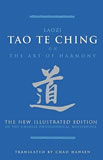
"Daring to act means death
daring not to act means life
of these two one benefits
one harms what Heaven hates who knows the reasons
the Way of Heaven wins easily without a fight
answers wisely without a word
comes quickly without a summons
plans ingeniously without a thought
the Net of Heaven is all-embracing
its mesh is wide but nothing escapes."
- Translated by
Bill Porter (Red Pine),
1996, Chapter 73
A Chinese Language Version of Chapter 73 of the Tao Te
Ching by Lao Tzu
A
note
on my style of displaying the Chinese characters of the Tao Te Ching
勇於敢則殺.
勇於不敢則活.
此兩者或利或害.
天之所惡孰知其故.
是以聖人猶難之.
天之道不爭而善勝.
不言而善應.
不召而自來.
繟然而善謀.
天網恢恢.
踈而不失.
- Chinese characters, Tao Te Ching,
Chapter 73
yung yü kan tsê sha.
yung yü pu kan tsê huo.
tz'u liang chê huo li huo hai.
t'ien chih so wu shu chih ch'i ku.
shih yi shêng jên yu nan chih.
t'ien chih tao pu chêng erh shan shêng.
pu yen erh shan ying.
pu chao erh tzu lai.
ch'an jan erh shan mou.
t'ien wang k'uei k'uei.
shu erh pu shih.
- Wade-Giles Romanization, Tao Te Ching, Chapter 73
Audio
Version in Chinese of Chapter 73 of the Tao Te Ching
yong yu gan ze sha.
yong yu bu gan ze huo.
ci liang zhe huo li huo hai.
tian zhi suo wu shu zhi qi gu.
shi yi sheng ren you nan zhi.
tian zhi dao bu zheng er shan sheng.
bu yan er shan ying.
bu zhao er zi lai.
chan ran er shan mou.
tian wang hui hui,
shu er bu shi.
- Pinyin Romanization, Daodejing, Chapter 73
Tao Te Ching in Chinese characters and English (includes a word by word key) from YellowBridge
Tao Te Ching in Chinese characters, Hanyu Pinyin (1982) Romanization, English and German by Dr. Hilmar Alquiros.
Laozi Daodejing: Chapters with Chinese characters, seal script, detailed word by word concordance, Pinyin (tone#), German, French and English.
Chinese and English Dictionary, MDGB
Dao De Jing Wade-Giles Concordance by Nina, Dao is Open
Dao De Jing English and Wade-Giles Concordance by Mike Garofalo
Tao Te Ching in Pinyin Romanization with Chinese characters, WuWei Foundation
Tao Te Ching in Pinyin Romanization
Tao Te Ching in Chinese characters and English
Tao Te Ching in Chinese characters, English, Word by word analysis, Zhongwen
Tao Te Ching: The Definitive Edition
Tao Te Ching in Chinese characters: Big 5 Traditional and GB Simplified
Chinese Characters, Wade-Giles and Pinyin Romanizations, and 16 English Translations for Each Chapter of the Daodejing by Mike Garofalo.
Tao Te Ching in Chinese characters, Wade-Giles and Pinyin Romanization spellings, English; a word for word translation of the Guodian Laozi Dao De Jing Version.
Lao Zi's Dao De Jing: A Matrix Translation with Chinese Text by Bradford Hatcher.
"Courage carried to daring leads to death.
Courage restrained by caution leads to life.
These two things, courage and caution, are sometimes beneficial and sometimes
harmful.
Some things are rejected by heaven, who can tell the reason?
Therefore the wise man deems all acting difficult.
The Tao of heaven does not quarrel, yet it conquers.
It speaks not, yet its response is good.
It issues no summons but things come to it naturally because its devices are
good.
Heaven's net is vast, indeed! its meshes are wide but it loses nothing."
- Translated by
Dwight Goddard, 1919, Chapter 73
"He who is fearless in being bold will meet with his death;
He who is fearless in being timid will stay alive.
Of the two, one leads to good, the other to harm.
Heaven
hates what it hates,
Who knows the reason why?
Therefore even the sage treats some things as difficult.
The
way of heaven
Excels in overcoming though it does not contend,
In responding though it does not speak,
In attracting though it does not summon,
In laying plans though it appears slack.
The
net of heaven is cast wide.
Though the mesh is not fine, yet nothing ever slips through."
- Translated by
D. C. Lau, 1963, Chapter 73
The Routledge Encyclopedia of Taoism
The Complete Works of Lao Tzu: Tao Teh Ching & Hua Hu Ching
Tai Chi Chuan, Qigong, Taoist Body-Mind Arts and Practices
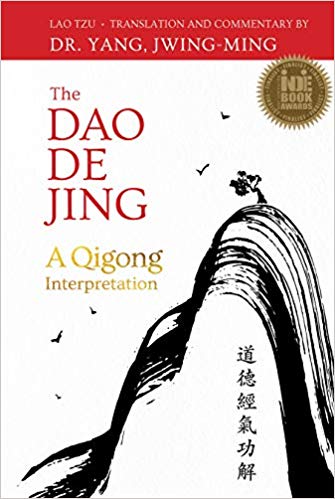
The Dao De Jing: A Qigong Interpretation by Dr. Yang Jing-Ming
How to Live a Good Life: Advice from Wise Persons
Dao De Jing: A Philosophical Translation by Roger T. Ames and David L. Hall
Practicing the Tao Te Ching: 81 Steps on the Way by Solala Towler
"He whose courage expresses itself as defiance is often put to death.
He whose courage manifests itself as patience to endure insult continues
to live.
Of these two kinds of courage, the one is beneficial, the other
harmful.
Many people are puzzled as to why, of two courageous men, one
is harmed and one benefited.
But the intelligent man finds no difficulty
with this question.
Nature itself has the patience to endure insult, yet always wins in
the end.
It does not explain; nevertheless all understand.
It does not
command; but all eventually obey.
It does not hurry; yet everything is
accomplished.
Nature's web is so finely woven - wide enough to catch the biggest,
fine enough to catch the smallest - that not a single thing escapes."
- Translated by
Archie J. Bahm, 1958, Chapter 73
"The brave in daring dies;
The brave in not-daring lives.
Of these two,
One helps, the other hurts.
Heaven may hate,
But who knows why?
This question stumps the sage.
It is the Tao of heaven
To conquer without competing,
To answer without speaking,
To attract without summoning,
To get results without hastening.
Vast is heaven’s net and wide-meshed,
Yet nothing slips through."
- Translated by
Herrymoon Maurer, 1985, Chapter 73
 Translated by Eva Wong
  Translated by Philip Ivahoe
 By James Miller
 Translated by Stephen Bokencamp
Tai Chi Chuan, Qigong, Taoist Body-Mind Arts and Practices
How to Live a Good Life: Advice from Wise Persons
By Alexander and Annellen Simpkins Translated by Thomas Cleary
 By Livia Kohn

"That courage which is manifest by bravado and
foolhardiness,
Leads to disaster and death.
That which is not so manifest,
Leads to life.
Between these two,
One benefits - one does not.
Even the Sage has difficulty in knowing why one of these brings destruction from
above.
It is the way of nature -
- Not to compete, yet to achieve victory.
- Not to ask, yet to obtain an answer.
- Not to summon, yet be supplied all needs.
- Not to overtly plan, yet to achieve results.
Truly - the net of nature is cast far and wide.
Tho' its mesh be coarse,
Yet nothing escapes."
- Translated by
Alan B. Taplow, 1982, Chapter 73
"One
who is brave in daring will be killed.
One who is brave but not in daring
will survive.
One of these two courses is beneficial, the other harmful.
Who
knows the reason for Heaven's preferences?
The
way of Heaven is to not make war,
yet it is good at conquering;
does
not expound,
yet is good at answering;
will not be ordered-about,
yet comes of it's own free will;
is unconcerned,
yet good at making
plans.
Heaven's
net is vast;
though it's mesh is wide,
nothing escapes."
- Translated by
Jerry C. Welch, 1998, Chapter 73
"He who shows courage in daring will perish;
He who shows courage in not-daring will live.
To know these two is to distinguish the one, benefit, from the other, harm.
Who can tell that one of them should be loathed by Heaven?
The Tao of heaven does not contend yet it surely wins the victory.
It does not speak; yet it surely responds.
It does not call; yet all things come of their own accord.
The net of heaven is vast, and its meshes are wide; yet from it, nothing escapes."
- Translated by
Ch'u Ta-Kao, 1904, Chapter 73
Created by Michael P. Garofalo, Green Way Research, Valley Spirit Center, Gushen Grove Notebooks, Vancouver, Washington © 2020 CCA 4.0
Translation and elucidation by Hua Ching Ni Translated by Brian Walker
 Translated by Arthur Waley
 Translated by Lionel and and Herbert Giles
Tai Chi Chuan, Qigong, Taoist Body-Mind Arts and Practices
How to Live a Good Life: Advice from Wise Persons
 By Eva Wong
"One who’s fearless in being brave will be killed.
One who’s fearless in being cautious remains alive.
One of these is useful, the other harmful.
Heaven disdains what it disdains
Who knows the reasons why?
Even the wise find these things difficult.
The way of heaven
Overcomes easily without contention,
Replies though it does not speak,
Invites though it does not summon,
Obeys the laws though it seems free.
The net of heaven is vast.
The mesh is wide
But nothing slips through."
- Translated by
A. S. Kline, 2003, Chapter 73
"He who is brave in daring will meet an unnatural death.
He who is brave in gentleness will be preserved.
Of these two kinds of bravery, one is beneficial, while the other proves harmful.
The subtle truth of the universe does not support those who are brave in daring,
yet there are still many people who do not understand such apparent truth.
So, even the one who integrates his being with the subtle essence of the universe,
dares not make light of the subtle law of life.
The subtle Way of the universe gave birth to a world of peace and order.
It responds to the order and harmony of all beings and things without needing to talk to them.
Without your summoning it, it comes to you.
Without scheming, its plan is perfect.
Vast is the subtle energy network of the universe.
Sparsely meshed it is, yet nothing can slip through it!"
- Translated by
Hua-Ching Ni, 1995, Chapter 73
"When bravery is pushed to rashness, a
man will incur a violent death.
When courage is tempered by
caution, he will preserve his life.
These two conditions result, the one in
benefit, the other in injury.
Who knows the cause of Heaven’s
animosity to either?
Thus it is that even the Sage here sees a
difficulty.
The Tao of Heaven never strives, yet
excels in victory.
It speaks not, yet excels in responding.
Tt beckons not, yet things come to it of their own
accord.
It lies concealed, yet excels in organizing.
The net of
Heaven extends everywhere.
Its meshes are wide, but nothing ever
escapes it."
- Translated by
Frederic Henry Balfour, 1884, Chapter 73
Tao Te Ching
Lao Tzu: Tao Te Ching
 Translated by Livia Kohn
Dao De Jing: The Book of the Way
Tai Chi Chuan, Qigong, Taoist Body-Mind Arts and Practices
How to Live a Good Life: Advice from Wise Persons
"Who is brave in daring you kill,
Who is brave in not daring you let live.
In these two,
There is some advantage and some disadvantage.
Even if Heaven dislikes certain people,
Who would know why?
Therefore even the Sage regards it as a difficult question.
Heaven's Way is good at conquest without strife,
Rewarding vice and virtue without words,
Making its appearance without call,
Achieving results without obvious design.
The heaven's net is broad and wide.
With big meshes, yet letting nothing slip through."
- Translated by
Lin Yutang, 1955,
Chapter 73
"The brave who value daring and killing will kill.
The brave who value life and virtue will let live.
Of these two kinds of bravery, Heaven sees one as good, and the other as bad, but why?
Even the sage has difficulty with such a question.
Who can understand the ways of Heaven?
The Way of heaven does not strive and yet it skillfully achieves victory.
It says nothing yet responds fully.
It does not summon, but all things come to it of their own accord.
It does not make a plan, but accomplishes all things perfectly.
The net of Heaven is wide and covers all. The mesh is widely woven, yet nothing slips through."
- Translated by
Rivenrock, Chapter 73
"When one is brave at acting bold then one will be
killed.
When one is bravest not acting bold then one will live.
Of these two, one may involve benefit and one may involve injury.
Who knows the reason for what Heaven hates.
The Dao of Heaven does not contend and yet is good at winning,
does not speak and yet is good at responding,
does not summon yet things come to it of their own accord,
is in repose and yet good at laying plans.
The vast net of Heaven is coarse, yet nothing escapes it."
- Translated by
Patrick E. Moran,
Chapter 73
Walking the Way: 81 Zen Encounters with the Tao Te Ching
The Tao of Zen
Tai Chi Chuan, Qigong, Taoist Body-Mind Arts and Practices
How to Live a Good Life: Advice from Wise Persons
Tao Te Ching: Zen Teachings on the Taoist Classic
Buddhism and Taoism Face to Face: Scripture, Ritual, and Iconographic Exchange in Medieval China

"A man with courage and daring is slain,
A man with courage and self-restraint lives.
Of these two, the one has benefit, the other has injury.
Who can tell why one of them should incur Heaven's Wrath?
Because of this the self-controlled man has doubt and difficulty.
Heavenly Tao strives not, but conquers by love;
It speaks not, but responds in Love;
It calls not to men, but of themselves they come;
It slowly is made manifest, yet its plans are laid in Love.
The net of Heaven is widely meshed; the meshes are far apart, yet nothing escapes from it."
- Translated by
Isabella Mears, 1916, Chapter 73
"A
distinguishing man in his righteousness
is prepared to kill or be killed in
the name of righteousness.
A non-distinguishing woman is indifferent
and refuses to even consider killing.
Both types of people occupy the world forever.
They are one
and undistinguished by Infinity.
Infinity does not contend
but through oneness overcomes all things.
It does not speak but is the
answer to all questions.
It does not summons
but all things are attracted to it.
It makes no plans and has no goals
but all things are manifested by it.
The net of Infinity is all encompassing.
The mesh is large
yet nothing slips through."
- Translated by
John Worldpeace, Chapter 73
"He whose boldness appears in his daring (to do wrong, in defiance of the laws) is put to death;
he whose boldness appears in this not daring (to do so) lives on.
Of these two cases the one appears to be advantageous, and the other to be injurious.
When Heaven's anger smites a man,
Who the cause shall truly scan?
On this account the sage feels a difficulty (as to what to do in the former case).
It is the way of Heaven not to strive, and yet it skillfully overcomes;
not to speak, and yet it is skilful in (obtaining) a reply,
does not call, and yet men come to it of themselves.
Its demonstrations are quiet, and yet its plans are skilful and effective.
The meshes of the net of Heaven are large; far apart, but letting nothing escape."
- Translated by
Andre von Gauthier, Chapter 73
"A man with
outward courage dares to die,
A man with inward courage dares to live;
But
either of these men
Has a better and a worse side than the other.
And who
can tell exactly to which qualities heaven objects?
Heaven does nothing to
win the day,
Says nothing-Is echoed,
Orders nothing-Is obeyed,
Advises
nothing-Is right:
And which of us, seeing that nothing is outside the
vast
Wide-meshed net of heaven, knows just how it is cast?"
- Translated by
Witter Bynner, 1944, Chapter 73
Further Teachings of Lao-Tzu: Understanding the Mysteries (Wen Tzu)
 Translated by Thomas Cleary
Tai Chi Chuan, Qigong, Taoist Body-Mind Arts and Practices
How to Live a Good Life: Advice from Wise Persons
The Lunar Tao: Meditations in Harmony with the Seasons
 By Lui I-Ming (1780) and translated by Thomas Cleary
Ripening Peaches: Taoist Studies and Practices By Mike Garofalo
Zhuangzi: The Essential Writings with Selections from Traditional Commentaries

"Whose courage makes him dare is slain,
He lives whom courage makes refrain,
And harm or profit each will gain;
But Heaven's hate, what could compel
That it on this or that one fell,
T'is even hard for sage to tell.
Not to strive is Heaven's way,
And yet it conquers; naught to say,
Yet answers; will uncalled obey;
Its perfect plans in s1owness hide,
The net of Heaven has meshes wide,
But through its meshes none can
glide."
- Translated by
Isaac Winter Heysinger, 1903, Chapter 73
|
Tao Te
Ching |
|||||||||
| 1 | 2 | 3 | 4 | 5 | 6 | 7 | 8 | 9 | 10 |
| 11 | 12 | 13 | 14 | 15 | 16 | 17 | 18 | 19 | 20 |
| 21 | 22 | 23 | 24 | 25 | 26 | 27 | 28 | 29 | 30 |
| 31 | 32 | 33 | 34 | 35 | 36 | 37 | 38 | 39 | 40 |
| 41 | 42 | 43 | 44 | 45 | 46 | 47 | 48 | 49 | 50 |
| 51 | 52 | 53 | 54 | 55 | 56 | 57 | 58 | 59 | 60 |
| 61 | 62 | 63 | 64 | 65 | 66 | 67 | 68 | 69 | 70 |
| 71 | 72 | 73 | 74 | 75 | 76 | 77 | 78 | 79 | 80 |
| 81 | |||||||||
"Courage that swells to arrogance and recklessness ends in death.
Courage that wells up from humbleness and gentleness leads to life.
One brings disaster the other liberation.
Yet who pays attention to how heaven evaluates him?
The Sage considers the consequences and follows the way of the Tao.
Tao rules without force commands without commands calls without calls acts
without deeds.
Its net of destiny is wide-meshed yet all-embracing and nothing slips
through."
- Translated by
K. O. Schmidt, 1975, Chapter 73
"Höchste Sittlichkeit Wegweiser beijedem Zweifel
Wer mutig wagt, der wagt auch zu töten.
Wer mutig genug ist,
(in den Augen der andern) feig zu gelten,
der wagt auch ein Leben zu erhalten.
Töten und lebenlassen -
beides ist manchmal gut, manchmal schlecht.
Wer wagt zu wissen,
welches Urteil von den ewigen Mächten anerkannt wird?
Der Weyse weiß es nicht.
(Im Zweifel erinnert er sich
des Wirkens des Unergründlichen.)
Das Unergründliche aber offenbart sich immer so:
es setzt sich durch - ohne Gewalt,
es gebietet - ohne Befehl,
es lockt - doch drängt nicht auf,
es wirkt zielbewusst - doch ohne Absicht.
Es ist ein Netz, weitmaschig zwar, doch nichts durchlassend."
- Translated
by Rudolf
Backofen, 1949, Chapter 73
"Wer Mut zeigt in Waghalsigkeiten, der kommt um.
Wer Mut zeigt, ohne waghalsig zu sein, des bleibt am Leben.
Von diesen beiden hat die eine Art Gewinn, die andre Schaden.
Wer aber weiß den Grund davon, daß der Himmel einen haßt?
Also auch der Berufene:
Er sieht die Schwierigkeiten.
Des Himmels Sinn streitet nicht und ist doch gut im Siegen.
Er redet nicht und findet doch gute Antwort.
Er winkt nicht, und es kommt doch alles von selbst.
Er ist gelassen und ist doch gut im Planen.
Des Himmels Netz ist ganz weitmaschig, aber er verliert nichts."
- Translated by Richard Wilhelm, 1911, Chapter
73
"One man, daring, is executed; another, not daring, liveth.
It would seem
as if the one course were profitable and the other detrimental.
Yet when
Heaven smiteth a man, who shall assign the cause thereof?
Therefore the
sage is diffident.
The
Tao of Heaven contendeth not, yet it overcometh.
It is silent, yet
its need is answered.
It summoneth none, but all men come to it of their
free will.
Its method is quietness, yet its will is efficient.
Large
are the meshes of Heaven's Net; wide open, yet letting none escape."
- Translated by
Aleister Crowley, 1918, Chapter 73
Created by Michael P. Garofalo, Green Way Research, Valley Spirit Center, Gushen Grove Notebooks, Vancouver, Washington © 2020 CCA 4.0
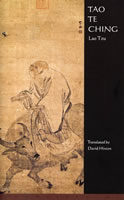
Tao Te Ching: An Illustrated Journey
Tao Te Ching
The Book of Tao: Tao Te Ching - The Tao and Its Characteristics
Ripening Peaches: Taoist Studies and Practices
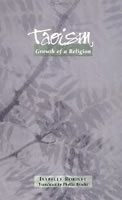
Taoism: Growth of a Religion
Zhuangzi (Chuang Tsu), Daoist Scripture: Bibliography, Links, Resources, Quotations, Notes
Zhuangzi: Basic Writings
Zhuangzi Speaks: The Music of Nature
Tai Chi Chuan, Qigong, Taoist Body-Mind Arts and Practices
How to Live a Good Life: Advice from Wise Persons


"He whose courage is expressed in daring will soon meet death.
He whose courage is shown in self-restraint will be preserved.
There are, then, two kinds of courage; the one is injurious and the other of advantage.
But who is to say why one of them should incur the judgment of Heaven?
That is why the Sage finds it difficult to act.
The celestial Tao does not strive, and yet overcomes everything.
It does not speak, yet is skilful in replying.
It does not call, yet things come to it readily.
It is quiet in its methods, yet its plans are thoroughly effective.
The net of Heaven has large meshes, and yet nothing escapes it!"
- Translated by
Walter Gorn Old, 1904, Chapter 73
"He who is brave in daring will be killed.
He who is brave in not daring will live.
Of these two, one is advantageous and one is harmful.
Who knows why
Heaven dislikes what it dislikes?
Even the sage considers it a difficult
question.
The Way of Heaven does not compete, and yet is skillfully achieves
victory.
It does not speak, and yet it skillfully responds to things.
It
comes to you without your invitation.
It is not anxious about things
and yet it plans well.
Heaven's net is indeed vast.
Though its meshes are wide, it misses nothing."
- Translated by
Chan Wing-Tsit, 1963, Chapter 73
"A brave man who dares to, will kill;
A brave man who dares not, spares life;
And from them both come good and ill;
"God hates some folks, but who knows why?"
The Wise Man hesitates there too:
God's Way is bound to conquer all
But not by strife does it proceed.
Not by words does God get answers:
He calls them not and all things come.
Master plans unfold but slowly,
Like God's wide net enclosing all:
Its mesh is coarse but none are lost."
- Translated by
Raymond Blakney, 1955, Chapter 73
"Celui qui met son courage à oser, trouve la mort.
Celui qui met son courage à ne pas oser, trouve la vie.
De ces deux choses, l'une est utile, l'autre est nuisible.
Lorsque le ciel déteste quelqu'un, qui est-ce qui pourrait sonder ses motifs?
C'est pourquoi le Saint se décide difficilement à agir.
Telle est la voie la conduite du ciel.
Il ne lutte point, et il sait remporter la victoire.
Il ne parle point, et (les êtres) savent lui obéir.
Il ne les appelle pas, et ils accourent d'eux-mêmes.
Il paraît lent, et il sait former des plans habiles.
Le filet du ciel est immense; ses mailles sont écartées et cependant personne
n'échappe."
- Translated by Stanislas Julien, 1842, Chapter
73
Spanish
Language Versions of the Tao Te Ching (Daodejing)
Tao Te Ching en Español
Lao Tsé Tao Te Ching 
Tao Te Ching Traducido por Stephen Mitchell, versión española
Tao Te Ching Traducido al español por el Padre Carmelo Elorduy
Lao Tzu-The Eternal Tao Te Ching
Ripening Peaches: Taoist Studies and Practices By Mike Garofalo Maduración Duraznos: Estudios y Prácticas Taoístas por Mike Garofalo
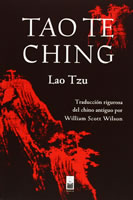
Tao Te Ching
Lao Tzu - Tao Te Ching
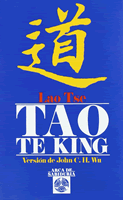
Tao te king
Daodejing Español, Inglés, y Chino Versiones Lingüísticas de la Daodejing
Spanish Language Translations of the Tao Te Ching, Chapter 73
"El valor del osado le conduce a la muerte.
El valor del prudente le conserva la vida.
Uno es el perjudicado
y el otro el beneficiado.
No todos son favorecidos por el Cielo.
Incluso el sabio se desconcierta ante tal cuestión.
Por eso, el Tao del Cielo es
saber vencer sin batallar,
saber responder sin palabras,
saber acudir sin haber sido llamado,
saber establecer planes sin presura.
Amplia es la red del Cielo
y de anchas mallas,
pero nada se le escapa."
- Translation from
Wikisource, 2013,
Capítulo 73
"El valiente que se arriesga, muere.
El valiente que no se arriesga, vive.
De estos dos, el primero es perjudicial
mientras que el último es favorable.
Quién conoce la causa de lo que el Cielo aborrece?
Por lo tanto, con más razón el sabio lo encuentra difícil.
El Tao del Cielo,
sin luchar, es bueno venciendo,
sin hablar, es bueno respondiendo,
sin ser llamado, viene por sí solo,
sin prisa, es bueno planeando.
La red del Cielo es vasta,
ampliamente extendida, de nada carece."
- Translated
by Álex Ferrara,
2003, Capítulo 73
"Quien es valiente y belicoso morirá; quien es valiente,
pero no es belicoso, vivirá.
Quién sabe la razón del odio hacia los belicosos? Ni siquiera la persona
sabia puede explicarlo.
El Gran Tao permanece en tranquilidad y no lucha contra nadie. El Gran Tao
vence sin violencia.
Es silente, pero contesta a las perguntas y acude a los que Lo llaman.
Tao - en tranquilidad - controla todo.
Y escoge para Sí a las personas dignas."
- Translated by Anton Teplyy, 2008,
Capítulo 73
"Un hombre valiente y apasionado matará o será asesinado.
Un hombre valiente y calmo preservará su vida.
De estos dos cuál es conveniente y cuál dañino?
Ciertas cosas no son favorecidas por el cielo.Nadie las conoce.
Hasta el sabio está inseguro de lo dicho.
El Tao del cielo no se esfuerza y con todo se sobrepone.
No habla, pero responde.
No pregunta, pero son abastecidas todas sus necesidades.
Parece cómodo, pero sigue un plan.
La red del cielo se lanza lejos;
aunque la malla sea tosca, nada se escapa."
- Translated by
Cristina Bosch, 2002,
Capítulo 73
"El valor del
osado le conduce a la muerte.
El valor del prudente le conserva la vida.
Uno es el perjudicado y el otro el beneficiado.
Del que resulta dañado,
¿quién sabe los motivos del cielo?
Esta es la duda del sabio.
El camino del cielo
es saber vencer sin combatir,
responder sin hablar,
atraer sin llamar,
y actuar sin agitarse.
Amplia es la red del cielo
y de anchas mallas,
pero nada se le escapa."
- Translated by
Unknown
"Actuar y no actuar, realizar y no realizar, sabroso e
insípido, grande y pequeño, mucho y poco, en todo rige la virtud.
Acomete la dificultad por su lado más fácil.
Ejecuta lo grande comenzando por lo más pequeño.
Las cosas más difíciles se hacen siempre abordándolas en lo que es más fácil,
y las cosas grandes en lo que es más pequeño.
El sabio no emprende grandes cosas, y en ello está su propia grandeza.
El que promete a la ligera merece poco crédito.
El que todo lo encuentra fácil difícil le será todo.
Por esto, el sabio en todo considera la dificultad, y en nada la halla."
- Translated by
Tipsfengshui, Capítulo 73
"El valor del osado le conduce a la muerte.
El valor del prudente le conserva la vida.
Uno es el perjudicado y el otro el beneficiado.
No todos son favorecidos por el Cielo.
Incluso el sabio se desconcierta ante tal cuestión.
Por eso, el Tao del Cielo es
saber vencer sin batallar,
saber responder sin palabras,
saber acudir sin haber sido llamado,
saber establecer planes sin presura.
Amplia es la red del Cielo
y de anchas mallas,
pero nada se le escapa."
- Unknown at
TaoteKing.net., Capítulo 73
"El valiente temerario perecerá.
El valiente prudente
sobrevivirá.
Entre las dos valentías una es beneficiosa y la otra perjudicial.
¿Quién conoce la razón de tu que el cielo aborrece?
Por eso el sabio elude
estas cuestiones oscuras.
El proceder del cielo es: No luchar y saber vencer.
No hablar y saber responder.
No llamar y atraer al pueblo.
No inquietarse y
saber tejer la trama.
La red del cielo es muy grande /tiene anchas mallas.
Nada se le escapa."
- Translation from
Logia Medio Dia, 2015,
Tao Te Ching, Capítulo 73
"Quien demuestra su valentía con temeridad,
perecerá.
El que, sin ser temerario, se muestra valiente,
conservará la vida.
De estas dos actitudes, una es provechosa,
la otra dañina.
¿Quién sabe el motivo
de que el Cielo lo odie?
El Sabio ve las dificultades.
El Sentido celeste no rivaliza,
pero vence con facilidad.
No habla
y da la respuesta adecuada.
No hace señas,
pero todo se le acerca solo.
No se previene,
y es hábil planeando.
La red del Cielo es de mallas muy amplias,
pero a través de ellas nada se escapa."
- Translation into Spanish from
Richard Wilhelm's 1911
German Version by an Unknown Spanish Translator,
2015, Capítulo 73
Created by Michael P. Garofalo, Green Way Research, Valley Spirit Center, Gushen Grove Notebooks, Vancouver, Washington © 2020 CCA 4.0
Commentary, Notes, Links,
Comparisons, Suggestions
Chapter 73
By Mike Garofalo
Is it God, Nature, Fate, or the Law of Life that rules our destiny, or all of these and more. It is kept balanced by some imbalance: randomness, accidents, the unexpected, chaos, uncertainty, tragedy.
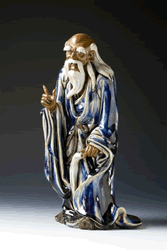
There are very few mentions of "God" (C4, C73), Goddess (C6), or the Gods (C4, C39,) in the Daodejing. God as we speak of "Him" the "Father" in Christian countries is a supernatural personal being with powers over us. I don't think Lao Tzu viewed that God, as a personal supernatural being, was very useful to a Sage. Hermit Taoists, Philosophical Taoists, often did not put much emphasis on a need for conventional social religious rituals, rites, fortune telling, magic, talismans, offerings, sacrifices, etc; some Taoist's even ridicule these practices. The Hellenistic Epicureans had similar views about the usefulness of Gods. Taoist's were often anti-Confucian on the subject of rites and rituals. Popular Taoist folk religion practiced by villagers was and is, however, just like old Latin Catholicism, filled with rituals, rites, fortune telling, magic, talismans, offerings, chants, songs, art, incense, sacrifices, etc. Religion as theater is ever popular.
I think the text leads us to envisage the Tao as Nature, an immanent and silent Procreative Power, guiding destiny. God is associated with Heaven (C73), the rain bearing and life giving heaven, and the nets of fisherman and the sieves of the kitchen. The Tao is prior to God (C4).
Sometimes spirit (shen) is a god-like non-material process and phenomenon, in the mental/social space of languages and creativity, something that can be cultivated by Taoist longevity and spiritual practices, something special about human consciousness, maybe our spiritual doppelgänger.
The Sage should take his/her time, don't overdue one's efforts, be patient, be less talkative, act intelligently, adhere to wu wei, think clearly, and proceed quietly and effectively (C73).
Arthur Waley in The Way and Its Power (1934) translates one sentence in C73 as "But “Heaven hates what it hates; None can know the reason why”." and then comments: "Heaven hates the shedding of blood (i.e., it is 'against nature'), and those who ignore the will of Heaven are bound to be trapped at last in the meshes of Fate. This is the traditional pacifist argument of the Mo Tzü school, which Lao Tzu is here able to utilize by identifying Heaven with Tao."
Next Chapter of the Tao Te Ching #74
Previous Chapter of the Tao Te Ching #72
Chapter and Thematic Index to the Tao Te Ching
Tao Te Ching
Commentary, Interpretations, Research Tools, Resources
Chapter 73
Das Tao Te King von Lao Tse. Complete versions of all 81 Chapters of the Tao Te Ching by many different translators in many languages: 124 English, 24 German, 14 Russian, 7 Spanish, 5 French and many other languages. Links are organized first by languages, and then alphabetically by translators. Formatting varies somewhat. The original website at Onekellotus went offline in 2012; but, the extensive collection of these Tao Te Ching versions was saved for posterity by the Internet Archive Wayback Machine and available as of 9/9/2015. This is an outstanding original collection of versions of the Daodejing─ the Best on the Internet. Caution: copyright infringement may sometimes be an issue at this website.
Tao Te Ching, Translations into English: Terebess Asia Online (TAO). 124
nicely formatted complete English language translations, on separate webpages, of the Daodejing.
Alphabetical index by translators. Each webpage has all 81 chapters of the Tao Te
Ching translated into English. A useful collection! Many
reformatted and colored versions from the original collection at
Das Tao Te King von Lao Tse. Caution: copyright infringement may
sometimes be an
issue at this website.
Lao Tzu: Te-Tao Ching - A New Translation Based on the Recently Discovered Ma-wang-tui
Texts (Classics of Ancient China)
Daodejing by Laozi: Chapters with Chinese characters, seal script,
detailed word by word concordance, Pinyin (tone#), German, French and English.
This is an outstanding resource for serious students of the Tao Te Ching.
Tao Te
Ching: A New Translation and Commentary. By Ellen Chen. Paragon
House, 1998. Detailed glossary, index, bibliography, notes, 274 pages.
The Tao
and Method: A Reasoned Approach to the Tao Te Ching. By Michael
Lafargue. New York, SUNY Press, 1994. 640 pages. Detailed
index, bibliography, notes, and tables. An essential research tool.
Two Visions of the Way: A Study of the Wang Pi and the Ho-Shang Kung Commentaries on the Lao-Tzu.
By Professor by Alan Kam-Leung Chan. SUNY Series in Chinese
Philosophy and Culture. State University of New York Press, 1991.
Index, bibliography, glossary, notes, 314 pages.
ISBN: 0791404560.
Tao Te Ching: The Definitive Edition
Chinese Reading of the Daodejing
Wang Bi's Commentary on the Laozi with Critical Text and Translation.
By Professor Rudolf G. Wagner. A SUNY Series in Chinese Philosophy and
Culture. English and Mandarin Chinese Edition.
State University of New York Press; Bilingual edition (October 2003). 540
pages. ISBN: 978-0791451823.
Wang Bi (Wang Pi, Fusi), 226-249 CE,
Commentary on the Tao Te
Ching.
Tao Te Ching

The Taoism Reader
Change Your Thoughts - Change Your Life: Living the Wisdom of the Tao
The Routledge Encyclopedia of Taoism.
Lao Tzu's Tao Teh Ching, A Parallel Translation Collection. Compiled by B.
Boisen.
Tao Te Ching: The Book of the Way. Revised by Sam Torode based on the
translation by Dwight Goddard, 1919. Independent Pub., 2009, 88 pages.
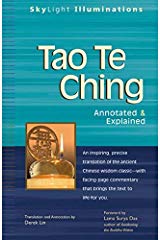
Tao Te Ching: Annotated
and Explained. By Derek Lin. Foreword by Lama Surya Das.
Skylight Illuminations, SkyLight Paths, 2006. 208 pages.
Comparison and Analysis of Selected English Interpretations of the Tao Te Ching.
By Damian J. Bebell and Shannon M. Fera.
Practicing the Tao Te Ching: 81 Steps on the Way. By Solala Towler.
Foreword by Chunglang Al Huang. Sounds True, 2016. 320 pages.
The Lunar Tao: Meditations in Harmony with the Seasons
The Classic of the Way and Virtue: A New Translation of the Tao-te Ching of Laozi as Interpreted by Wang Bi.
Translated by Richard John Lynn. Translations from the Asian Classics
Series. Columbia University Press, 2004. 256 pages.
Tao Te Ching in Chinese characters,
Pinyin Romanization, English and German by Dr. Hilmar
Alquiros.
Yellow Bridge
Dao De Jing Comparison Table Provides side by side comparisons of
translations of the Tao Te Ching by James Legge, D. T. Suzuki, and Dwight
Goddard. Chinese characters for each paragraph in the Chapter are on the
left; place your cursor over the Chinese characters to see the Pinyin
Romanization of the Chinese character and a list of meanings.
Translators Index,
Tao Te Ching Versions in English, Translators Sorted Alphabetically by Translator, Links to Books and
Online Versions of the Chapters
Taoism and the Tao Te
Ching: Bibliography, Resources, Links
Spanish Language
Translations of the Tao Te Ching, Daodejing en Español, Translators Index
The Tao of Zen
Chapter 1 in the
Rambling
Taoist Commentaries by Trey Smith. The
Rambling Taoists are Trey Smith and Scott Bradley.
By Hans-Georg Moeller. Columbia University Press, 2006, 176 pages.
Valley Spirit, Gu Shen,
Concept, Chapter 6
Valley Spirit Center in Red
Bluff, California.
Sacred
Circle in the Gushen Grove.
Lao-tzu's Taoteching
Reading Lao Tzu: A Companion to the Tao Te Ching with a New Translation
Dao De Jing: A Philosophical Translation
Thematic Index to the
81 Chapters of the Tao Te Ching
Lieh-Tzu: A Taoist Guide to Practical Living
Revealing the Tao Te Ching: In-depth Commentaries on an Ancient Classic
Cloud Hands Blog
Mike Garofalo writes about Mind-Body Arts, Philosophy, Taoism, Gardening, Taijiquan, Walking, Mysticism,
Qigong, and the Eight Ways.
The Whole Heart of Tao:
The Complete Teachings From the Oral Tradition of Lao Tzu.

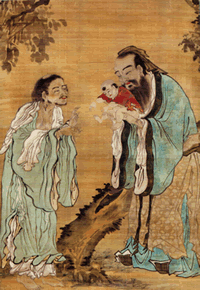
Gushen Grove Notebooks for the Tao Te Ching
Green Way Research, Valley Spirit
Center, Gushen Grove Notebooks (2001-2020)
Red Bluff, California from 1998-2017;
Vancouver, Washington from 2017-2020
Green Way Research, Tao Te Ching, Chapter 73, 2011-2020.
Compiled and
Indexed by
Michael P. Garofalo
The indexing information for this webpage was originally
developed in 2011.
The indexing information was updated and expanded for both English and Spanish
on December 6, 2019.
The indexing information for this Chapter 73 was added to the
Concordance
master list (ttclzindex31.htm) on December 6, 2019.
This webpage was last modified, edited, maintained, expanded, improved or updated on December 6, 2019.
This webpage was originally placed on the Internet on July 14, 2011.
Created by Michael P. Garofalo, Green Way Research, Valley Spirit Center, Gushen Grove Notebooks, Vancouver, Washington © 2020 CCA 4.0
Brief Biography of Michael P. Garofalo, M.S.

Ripening Peaches: Daoist Studies and Practices
Zhuangzi (Chuang Tzu, Zhuang Zhou, Master Chuang) 369—286 BCE
Taoist Perspectives: My Reading List
Bodymind Theory and Practices, Somaesthetics
How to Live a Good Life: Advice from Wise Persons
Qigong (Chi Kung) Health Practices
One Old Daoist Druid's Final Journey: Notebooks of the Librarian of Gushen Grove
Index to Cloud Hands and Valley Spirit Websites
Index to English Language Translators of the Tao Te Ching
Recurring Themes (Terms, Concepts, Leimotifs) in the Tao Te Ching
Spanish Language Translations of the Tao Te Ching
Chinese Characters, Wade-Giles (1892) and Hanyu Pinyin (1982) Romanizations
The Tao Te Ching (Dao De Jing) by Lao Tzu (Laozi) circa 500 BCE
|
Tao Te
Ching |
|||||||||
| 1 | 2 | 3 | 4 | 5 | 6 | 7 | 8 | 9 | 10 |
| 11 | 12 | 13 | 14 | 15 | 16 | 17 | 18 | 19 | 20 |
| 21 | 22 | 23 | 24 | 25 | 26 | 27 | 28 | 29 | 30 |
| 31 | 32 | 33 | 34 | 35 | 36 | 37 | 38 | 39 | 40 |
| 41 | 42 | 43 | 44 | 45 | 46 | 47 | 48 | 49 | 50 |
| 51 | 52 | 53 | 54 | 55 | 56 | 57 | 58 | 59 | 60 |
| 61 | 62 | 63 | 64 | 65 | 66 | 67 | 68 | 69 | 70 |
| 71 | 72 | 73 | 74 | 75 | 76 | 77 | 78 | 79 | 80 |
| 81 | |||||||||
Return to the Top of this Webpage

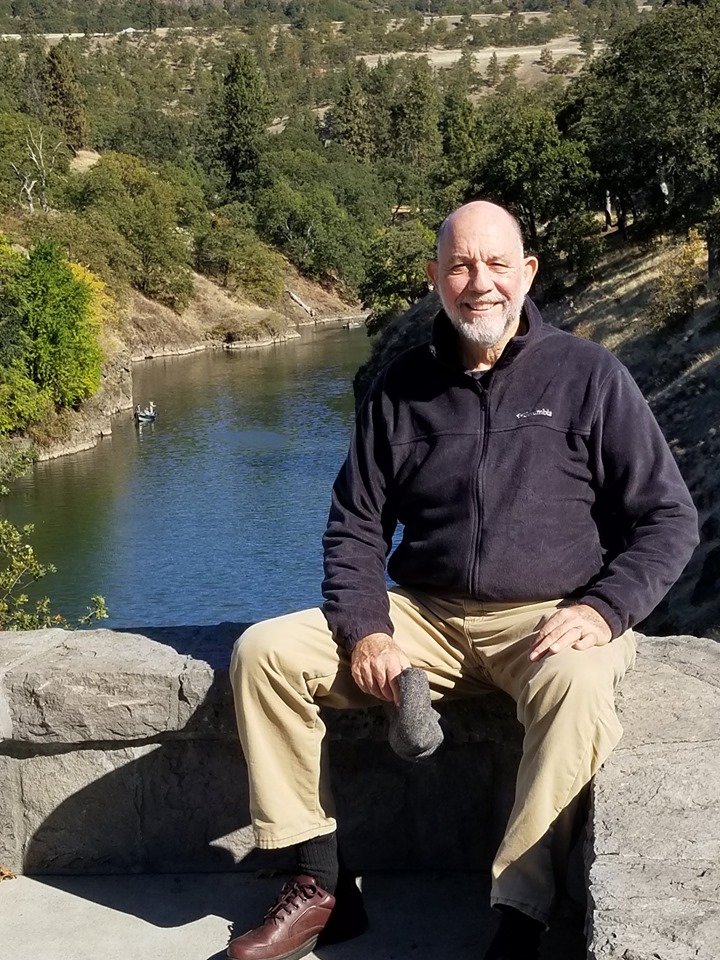
Mike Garofalo at the Klickitat River in Southwest Washington, 2019
Cloud Hands Blog of
Michael P. Garofalo

Facebook of
Michael P. Garofalo

Return to the Alphabetical
Index of Mike Garofalo's Hypertext Documents
Return to the Top of this Webpage