Classic of the Way and Virtue
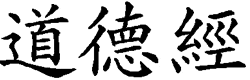
By Lao Tzu (Laozi)
Compiled and Indexed by Michael P. Garofalo
Green Way Research, Valley Spirit Center, Gushen Grove Notebooks, Vancouver, Washington
Chapter 55 Chapter 57 Index to All the Chapters Daoism Cloud Hands Blog
Classic Book (Ching) about the Tao (Way, Nature, Patterns, Processes) and Te (Virtue, Potency, Power, Integrity, Wise Person, Sage)
Indexing, Concordance, Search Terms, Topics, Themes, Keys
English and Chinese (Wade-Giles) Terms: Virtuous Passivity, Know or
Understand (chih), Speak or Talk (yen), Shut or Close (sai), Virtue of the
Mysterious, Circumspection in Speech, Ineffability, Gate or Door (mên), Blend, Soften,
Blunt or Break (ts'o),
Sharp or Point (jui), Unravel or Untie (chieh), Dao, Those Who Know Do Not Speak, Closing the Senses, Mystic Oneness,
Independence, Tangle or Knot (fên), Untangle, Knots, Harmony (ho),
Brillant or Light (kuang), Sage, Attainment, Tao, Identify or Unite (t'ung), Silence,
Restraint, Dust or Worldly (ch'ên), Profound or Mysterious or Mystical (hsüan), Unravel the Knots, Beyond Good and Evil,
Union or Whole (t'ung), Aloof, Obtain and Attain (tê), Can or Able
(k'o), Attachment or Afinity or Love (ch'in), Noble,
Indifferent, Aversion and Hate (shu), Gain, Profit or Benefit (li), Free,
Loss or Injury (hai), Ambivalent, The Way, Dignity, Loss, Enlightened, Honor
or Esteem (huei),
Disgrace or Demean (chien), Heaven (t'ien), Below Heaven or
Earthly, Mysterious Identity, 玄德
Términos en Español:
Virtud,
Inefabilidad,
Ablande, Puertas, Nitidez, los que saben
no hablan, Cerrando
los Sentidos, Mystic
Unidad, Independencia,
Nudos, Amonizar, Sabio, Logro,
Silencio, Restricción, Místico,
Desentrañar los Nudos,
Más allá del bien y del mal,
Distante, Indiferente,
Ganancia,
Libre,
Ambivalente,
Camino, Noble, Dignidad, Pérdida,
Iluminado, Honor,
Conocer, Comprender,
Habla, Silencio, Apagar,
Cerrar, Puerta,
Romper, Agudo,
Desvela, Desate, Punto,
Armonía,
Brillant, Luz, Edentidad,
Unir, Polvo, Mundano, Unión,
Entero, Lata, Capaz, Adjunto, Amor,
Aversión,
Odio, Beneficio, Beneficio,
Pérdida, Lesión, Honra, Autoestima,
Desgracia, Damián,
Cielo, Debajo.
Electronic Concordance for Chapters 1 - 81 of the Tao Te Ching
English Language Translations of the Tao Te Ching
"Those who know do not talk.
Those who talk do not know.
Stop up your orifices.
Close your doors.
Blunt your sharpness.
Release your tangles.
Harmonize your lights.
Make same your dust.
So doing is called the dark and mysterious identity.
Therefore [those who have attained to the mysterious identity] cannot be made to
be intimate, and they cannot be alienated.
They cannot be benefited, and they cannot be injured.
They cannot be ennobled, and they cannot suffer degradation.
Therefore they are noble among all those in the world."
- Translated by
Patrick E. Moran,
Chapter 56
"He who knows the Tao does not care to speak about it.
He
who is ever ready to speak about it does not know it.
He
who knows it will keep his mouth shut and close the portals of his nostrils.
He will blunt his sharp points and unravel the
complications of things.
He will temper his brightness, and bring
himself into agreement with the obscurity of others.
This is called
'the Mysterious Agreement.'
Such
an one cannot be treated familiarly or distantly.
He is
beyond all consideration of profit or injury; of nobility or
meanness.
He is the noblest man under heaven."
- Translated by
James Legge, 1891, Chapter 56
"One who is aware does not talk.
One who talks is not aware.
Ceasing verbal expressions,
Stopping the entry of sensations,
Dulling its sharpness,
Releasing its entanglements,
Tempering its brightness,
And unifying with the earth:
This is called the identity of Tao.
Hence, no nearness can reach him nor distance affect him.
No gain can touch him nor loss disturb him.
No esteem can move him nor shame distress him.
Thus, he is the most valuable man in the world."
- Translated by
Chung-Yuan Chang, Chapter 56
"Those who know do not speak.
Those who speak do not know.
Close the mouth; shut the doors.
Smooth the sharpness; untie the tangles.
Dim the glare; calm the turmoil.
This is mystical unity.
Those achieving it are detached from friends and enemies,
from benefit and harm, from honor and disgrace.
Therefore they are the most valuable people in the world."
- Translated by
Sanderson Beck, 1996, Chapter 56
"Those who know don't talk.
Those who talk don't know.
Block the passage
Bolt the gate
Blunt the sharp
Untie the knot
Blend
with the light
Become one with the dust
This is called original unity.
It can't be embraced
It can't be escaped
It can't be helped
It can't be
harmed
It can't be exalted
It can't be despised
Therefore it is
revered under Heaven."
- Translated by
Stephen Addis, 1993, Chapter 56
"Those who know do not talk.
Those who talk do not know.
Close the openings of your senses,
Blunt the sharpness of your intellect,
Untie the tangles of your attachment,
Soften the brightness of your knowledge.
Be one with the dust of the world.
This is to be one with the Tao.
He who is one with the Tao cannot be courted,
cannot be distanced, cannot be
bought,
cannot be harmed, cannot be honored, cannot be humiliated.
For this reason, he becomes the true treasure of the world."
- Translated by
Yasuhiko Genku Kimura, Chapter 56
"He who knows does not speak.
He who speaks does not know.
He closes the mouth
And shuts the doors;
Blunts sharp edges,
Unties all tangles;
Softens the glare,
And blends with the dust.
This is called mystical union.
He who can attain this state
Is not concerned with being liked or disliked,
Benefited or harmed,
Exalted or despised.
Thus he is valued by the world."
- Translated by
Keith H. Seddon,
Chapter 56

Created by Michael P. Garofalo, Green Way Research, Valley Spirit Center, Gushen Grove Notebooks, Red Bluff, California, © 2015 CCA 4.0
 Translated by Eva Wong
  Translated by Philip Ivahoe
 By James Miller
 Translated by Stephen Bokencamp
 By Alexander and Annellen Simpkins
 Translated by Thomas Cleary
 By Livia Kohn
"Those who know, do not speak.
Those who speak, do not know.
So shut your mouth
Guard your senses
Blunt your sharpness
Untangle your affairs
Soften your glare
Be one with All dust.
This is the mystery of union.
You cannot approach it Yet you cannot escape it.
You cannot benefit it
Yet you cannot harm it.
You cannot bestow any honor on it
Yet you cannot rob it of its dignity.
That is why the whole Universe reveres it."
- Translated by
John Mabry,
Chapter 56
"The one who speaks doesn't know,
The one who doesn't speak knows.
By closing the eyes, not hearing, not smelling,
Not touching, nor tasting, the senses are closed.
But a world of harmony it is opened in the mind.
The Wise Person is not concerned by friends,
enemies, glory or disgrace.
He reaches perfection by following the Tao Way."
- Translated by
Octavian Sarbatorare, Chapter 56
"Those who know do not speak.
Those who speak do not know.
Block the openings;
Shut the doors.
Blunt the sharpness;
Untangle the knots.
Soften the glare;
become one with the dusty world,
and let your wheels move along old ruts.
This is called Mysterious sameness.
To be like this:
Others can neither be intimate nor indifferent to you.
Others can neither benefit nor harm you.
No one can honor or disgrace you.
Therefore, you are honored by the way."
Translated by Kari
Hohne, 2009, Chapter 56
"Inner Peace and the Mystical Union
Those who know do not speak much.
Those who speak much do not know.
Block the passage of exchange with the outside world.
Close the doors;
Blunt the protruding points;
Absolve the disputes;
Tone down the dazzling light;
Receive outside stimuli with an equanimous mind.
This is called the mystical union.
With a non-possessive mind100 we get together;
With a non-possessive mind we separate.
With a non-possessive mind we experience what seems advantageous to us;
With a non-possessive mind we experience what seems disadvantageous;
With a non-possessive mind we experience high positions;
With a non-possessive mind we experience low positions.
This way we achieve the most valuable under heaven."
- Translated by
Lok Sang Ho, 2002, Chapter 56
"He who knows does not speak,
And he who speaks does not know.
Blocking the vent of knowledge, closing the door of knowledge,
covering the cutting-edge, going beyond entanglement,
ontaining the
light, and mixing with the dust,
These can be called "the mysterious agreement."
So, the person with "the mysterious agreement"
Cannot be treated intimately,
Cannot be estranged,
Cannot be given profits,
Cannot be injured,
Cannot be raised to nobility,
And cannot be made humble,
And can therefore be esteemed by all the people under Heaven."
- Translated by
Ren Jiyu, 1985, Chapter 56
"He who knows does not speak.
He who speaks does not know.
Complete the exchange, close the door.
Round the edges, end the separation,
merge with the light, join with the dust.
This is called Mystic Unity.
Therefore,
from then on, never need Temples,
from then on, never be dispersed,
from then on, never need money,
from then on, never be harmed,
from then on, never be Noble,
from then on, never be Humble.
And so be Exalted under Heaven."
- Translated by
Karl Kromal, 2002, Chapter 56
By Alexander Simkins.  By Derek Lin.
 By Ming-Dao Deng.
 By Benjamin Hoff.
 By Ming-Dao Deng.
 Translated by Thomas Cleary.
"One who understands won't be willing to use words;
One who uses words won't be willing to understand.
Shut off your dissipation.
Seal up your door.
Harmonize with your brightness.
Adapt to the dust in your life.
Blunt your sharpness.
Untangle your disorder.
This is correctly described as the mystery of putting the pieces together.
Therefore, what can't be obtained and held closely also can't be obtained and cast off.
What can't be obtained and used for profit also can't be obtained and used for
harm.
What can't be obtained and valued also can't be obtained and cheapened.
Therefore, every action in the world is precious."
- Translated by
Nina Correa,
Chapter 56
A Chinese Language Version of Chapter 56 of the Tao Te
Ching by Lao Tzu
A
note
on my style of displaying the Chinese characters of the Tao Te Ching
知者不言.
言者不知.
塞其兑.
閉其門.
挫其銳.
解其分.
和其光.
同其塵.
是謂玄同.
故不可得而親.
不可得而踈.
不可得而利.
不可得而害.
不可得而貴.
不可得而賤.
故為天下貴.
- Chinese characters, Tao Te Ching,
Chapter 56
chih chê pu yen.
yen chê pu chih.
sai ch'i tui.
pi ch'i mên.
ts'o ch'i jui.
chieh ch'i fên.
ho ch'i kuang.
t'ung ch'i ch'ên.
shih wei hsüan t'ung.
ku pu tê erh ch'in.
pu k'o tê erh shu.
pu k'o tê erh li.
pu k'o tê erh hai.
pu k'o tê erh kuei.
pu k'o tê erh chien.
ku wei t'ien hsia kuei.
- Wade-Giles Romanization, Tao Te Ching, Chapter
56
Audio
Version in Chinese of Chapter 56 of the Tao Te Ching
zhi zhe bu yan.
yan zhe bu zhi.
se qi dui.
bi qi men.
cuo qi rui.
jie qi fen.
he qi guang.
tong qi chen.
shi wei xuan tong.
gu bu ke de er qin.
bu ke de er shu.
bu ke de er li.
bu ke de er hai.
bu ke de er gui.
bu ke de er jian.
gu wei tian xia gui.
- Pinyin Romanization, Daodejing, Chapter 56
Tao Te Ching in Chinese characters and English (includes a word by word key) from YellowBridge
Tao Te Ching in Chinese characters, Hanyu Pinyin (1982) Romanization, English and German by Dr. Hilmar Alquiros.
Laozi Daodejing: Chapters with Chinese characters, seal script, detailed word by word concordance, Pinyin (tone#), German, French and English.
Chinese and English Dictionary, MDGB
Dao De Jing Wade-Giles Concordance by Nina, Dao is Open
Dao De Jing English and Wade-Giles Concordance by Mike Garofalo
Tao Te Ching in Pinyin Romanization with Chinese characters, WuWei Foundation
Tao Te Ching in Pinyin Romanization
Tao Te Ching in Chinese characters and English
Tao Te Ching in Chinese characters, English, Word by word analysis, Zhongwen
Tao Te Ching: The Definitive Edition
Tao Te Ching in Chinese characters: Big 5 Traditional and GB Simplified
Chinese Characters, Wade-Giles and Pinyin Romanizations, and 16 English Translations for Each Chapter of the Daodejing by Mike Garofalo.
Tao Te Ching in Chinese characters, Wade-Giles and Pinyin Romanization spellings, English; a word for word translation of the Guodian Laozi Dao De Jing Version.
Lao Zi's Dao De Jing: A Matrix Translation with Chinese Text by Bradford Hatcher.
"Those who know do not talk
Those who talk do not know
Close the mouth
Shut the doors
Blunt the sharpness
Unravel the knots
Dim the glare
Mix the dust
This is called mystic oneness
They cannot obtain this and be closer
They cannot obtain this and be distant
They cannot obtain this and be benefited
They cannot obtain this and be harmed
They cannot obtain this and be valued
They cannot obtain this and be degraded
Therefore, they become honored by the world."
- Translated by
Derek Lin, Chapter
56
"Knowledgeable people rarely show off.
Boastful people are not truly knowledgeable.
Block up leakages;
Close doors;
Smooth out sharp edges;
Resolve conflicts;
Harmonize glares;
And blend into the base.
These are profound concords.
Do not become intimate when receiving
the desired.
Do not become alienating when receiving
the undesired.
Do not become greedy when obtaining profit.
Do not retaliate when receiving hostility.
Do not prize when obtaining the precious.
Do not debase when receiving humility.
Doing so can gain respect from others."
- Translated by
Thomas Z. Zhang and Jackie X. Zhang, 2004, Chapter 56
 By Hu Xuzehi
 Annotated translation by Victor Mair
  By Ha Poong Kim
 By Hans-Georg Moeller
 Ripening Peaches: Taoist Studies and Practices By Mike Garofalo
 By Roger T. Ames and David T. Hall
 By Arthur Waley
Lifestyle Advice from Wise Persons
"To know does not mean to speak
To speak does not mean to know
Close the passages
Secure the gates
Blunt the sharpness
Resolve the tangles
Shade the glare
Be one with the world
This may be called “mystic union”
Such as may not be gained by affection
May not be gained by detachment
May not be gained by favor
May not be gained by suffering
May not be gained by esteem
May not be gained by humility
And so becomes precious to all under heaven"
- Translated by
Bradford Hatcher,
Chapter 56
"Those who know do not speak.
Those who speak do not know.
Block
the passages!
Shut the doors!
Blunt the sharpness!
Untangle the knots!
Soften the glare!
Settle with the dust!
This is the Mystery of Evenness.
Those
who have achieved this cannot be enclosed
nor kept at a distance;
They cannot be benefited nor harmed,
honored nor disgraced.
Therefore,
this is the noblest state under heaven."
- Translated by
Tolbert McCarroll, 1982, Chapter 56
"He who knows the truth does not brag,
He who brags does not know the truth.
Closing the apertures, Shutting the doors,
Blunting the sharpness, Resolving inner conflicts,
Softening brightness, and
Harmonizing with the dusty world,
He is then in profound harmony with Tao.
Thus he is no longer:
Affected by being close to, or
Bothered by being distant from others;
Touched by gains, or
Influenced by losses
Tempted by nobleness, or
Shamed by lowliness.
Therefore he is respected by the world."
- Translated by
Cheng, Chapter 56
Created by Michael P. Garofalo, Green Way Research, Valley Spirit Center, Gushen Grove Notebooks, Red Bluff, California, © 2015 CCA 4.0
 Translation and elucidation by Hua Ching Ni
 Translated by Brian Walker
 Translated by Arthur Waley
 Translated by Lionel and and Herbert Giles
 By Eva Wong
"Those who know do not say; those who say do not know.
Close the senses, shut the doors; blunt the sharpness, resolve the
complications; harmonize the light, assimilate to the world. This is called the
mysterious sameness.
It cannot be made familiar, yet cannot be estranged; it cannot be profited, yet
cannot be harmed; it cannot be valued, yet cannot be demeaned.
Therefore it is precious for the world."
- Translated by
Thomas Cleary,
1991, Chapter 56
"One who knows does not speak;
One who speaks does not know.
He
Stopples the openings of his heart,
Closes his doors,
Diffuses the light,
Mingles with the dust,
Files away his sharp points,
Unravels his tangles.
This is called "mysterious identity."
Therefore,
Neither can one attain intimacy with him,
Nor can one remain distant from him;
Neither can one profit from him,
Nor can one be harmed by him;
Neither can one achieve honor through him,
Nor can one be debased by him.
Therefore,
He is esteemed by all under heaven."
- Translation by
Victor H. Mair, 1990, Chapter 56
"The one who knows does not speak; the one who speaks
does not know.
The wise man shuts his mouth and closes his gates.
He softens his sharpness, unravels his tangles, dims his brilliancy, and reckons
himself with the mysterious.
He is inaccessible to favor or hate; he cannot be reached by profit or injury;
he cannot be honored or humiliated.
Thereby he is honored by all."
- Translated by
Dwight Goddard, 1919, Chapter 56
Tao Te Ching
 Translated by Stephen Addiss and Stanley Lombardo
Lao Tzu: Tao Te Ching
 Translated by Livia Kohn
Dao De Jing: The Book of the Way
"One who knows does not speak,
One who speaks does not know.
Stop the apertures,
Close the door;
Blunt the sharp,
Untie the entangled;
Harmonize the bright,
Make identical the dust.
This is called the mystical identity (hsüan t'ung).
Therefore with this person you cannot get intimate (ch'in),
Cannot get distant,
Cannot benefit,
Cannot harm,
Cannot exalt,
Cannot humiliate.
Therefore such person is the exalted of the world."
- Translated by
Ellen M. Chen,
Chapter 56
"One who knows does not talk.
One who talks does not know.
Therefore the sage keeps his mouth shut and his sense-gates
closed.
He will blunt his own sharpness,
His own tangles adjust;
He will dim his own radiance,
And be one with his dust.
This is called profound identification.
Thus he is inaccessible to love and also inaccessible to
enmity.
He is inaccessible to profit and inaccessible to loss.
He is also inaccessible to favor and inaccessible to disgrace.
Thus he becomes world-honored."
- Translated by
D. T.
Suzuki and Paul Carus, 1913, Chapter 56
"Blunt all that is sharp;
Cut all that is divisible;
Blur all that which is brilliant;
Mix with all that is humble as dust;
This is called absolute equality.
Therefore it cannot be made intimate;
Nor can it be alienated.
It cannot be benefited;
Nor can it be harmed.
It cannot be exalted;
Nor can it be debased.
Therefore it is the most valuable thing in the world."
- Translated by
Ch'u Ta-Kao, 1904, Chapter 56
Walking the Way: 81 Zen Encounters with the Tao Te Ching
The Tao of Zen
Tao Te Ching: Zen Teachings on the Taoist Classic
Buddhism and Taoism Face to Face: Scripture, Ritual, and Iconographic Exchange in Medieval China
"He who knows, speaks not;
He who speaks, knows not.
He closes the mouth,
He shuts the doors of the senses.
He rounds off angles;
He unravels all difficulties.
he harmonizes Light.
He brings men into Unity.
This is called wonderful Unity.
Favour and disgrace do not touch him,
profit and loss do not affect him,
Honour and shame are alike to him,
Therefore he is held in high esteem by all men."
- Translated by
Isabella Mears, 1916, Chapter 56
"Those who know don't talk
those who talk don't know
seal the opening
close the gate
dull the edge
untie the tangle
soften the light
join the dust
this is called the Dark Union
it can't be embraced
it can't be abandoned
it can't be helped
it can't be harmed
it can't be exalted
it can't be debased
thus does the world exalt it"
- Translated by
Red Pine, 1996, Chapter 56
He who speaks does not know.
He who knows does not speak.
Block the passages!
Shut the doors,
Blunt edges,
Untie tangles,
Harmonize lights,
Unite all dust.
Call this the original oneness.
It can’t be had by courting,
Can’t be had by shunning;
Can’t be had by helping;
Can’t be had by harming;
Can’t be had by praising,
Can’t be had by blaming:
For it is beneath-heaven’s highest.
- Translated by
Herrymoon Maurer, 1985, Chapter 56
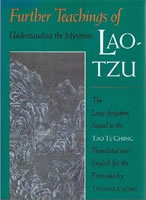
Further Teachings of Lao-Tzu: Understanding the Mysteries (Wen Tzu)
 Translated by Thomas Cleary
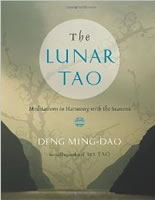
The Lunar Tao: Meditations in Harmony with the Seasons
 By Lui I-Ming (1780) and translated by Thomas Cleary
Ripening Peaches: Taoist Studies and Practices By Mike Garofalo
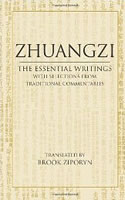
Zhuangzi: The Essential Writings with Selections from Traditional Commentaries
"They who know speak not,
And they who speak know not;
To close the mouth and shut the
gates,
To blunt the point which
lacerates,
To simplify what complicates;
To temper brightness in its glare,
The shadows of the dust to share,
The Deep' s identity declare.
A man like that cannot be got
And loved, and then discarded be,
Cannot be got by profit's bribe,
Cannot be got for injury,
Cannot be got by honor's gift,
Nor got for cheap humility,
And so becomes, throughout the
world,
The type of high nobility."
- Translated by
Isaac Winter Heysinger, 1903, Chapter 56
|
Tao Te
Ching |
|||||||||
| 1 | 2 | 3 | 4 | 5 | 6 | 7 | 8 | 9 | 10 |
| 11 | 12 | 13 | 14 | 15 | 16 | 17 | 18 | 19 | 20 |
| 21 | 22 | 23 | 24 | 25 | 26 | 27 | 28 | 29 | 30 |
| 31 | 32 | 33 | 34 | 35 | 36 | 37 | 38 | 39 | 40 |
| 41 | 42 | 43 | 44 | 45 | 46 | 47 | 48 | 49 | 50 |
| 51 | 52 | 53 | 54 | 55 | 56 | 57 | 58 | 59 | 60 |
| 61 | 62 | 63 | 64 | 65 | 66 | 67 | 68 | 69 | 70 |
| 71 | 72 | 73 | 74 | 75 | 76 | 77 | 78 | 79 | 80 |
| 81 | |||||||||
"Those who know
do not tell,
Those who tell do not know.
Not to set the tongue
loose
But to curb it,
Not to have edges that catch
But to remain
untangled,
Unblinded,
Unconfused,
Is to find balance,
And he who
holds balance beyond sway of love or hate,
Beyond reach of profit or
loss,
Beyond care of praise or blame,
Has attained the highest post in the
world."
- Translated by
Witter Bynner, 1944, Chapter 56
"Die stillordnende Kraft des Weisen
Wer erkennt, schweigt.
Wer schwätzt, erkennt nicht.
Der Weyse schweigt. Er kehrt sich nach innen.
Er mildert das Scharfe, klärt das Wirre, dämpft das Grelle,
macht sich eins mit dem Unscheinbaren.
So wird er des Letzten inne und findet das große Einssein.
Er hält sich frei von Zuneigung und Abneigung,
fragt nicht nach Gewinn oder Verlust,
steht über der Ehre und der Schande.
Darum ist ihm wirklich Adel eigen."
- Translated
by Rudolf
Backofen, 1949, Chapter 56
"Der Wissende redet nicht.
Der Redende weiß nicht.
Man muß seinen Mund schließen
und seine Pforten zumachen,
seinen Scharfsinn abstumpfen,
seine wirren Gedanken auflösen,
sein Licht mäßigen,
sein Irdisches gemeinsam machen.
Das heißt verborgene Gemeinsamkeit (mit dem SINN).
Wer die hat, den kann man nicht beeinflussen durch Liebe
und kann ihn nicht beeinflussen durch Kälte.
Man kann ihn nicht beeinflussen durch Gewinn
und kann ihn nicht beeinflussen durch Schaden.
Man kann ihn nicht beeinflussen durch Herrlichkeit
und kann ihn nicht beeinflussen durch Niedrigkeit.
Darum ist er der Herrlichste auf Erden."
- Translated
by Richard
Wilhelm, 1911, Chapter 56
"One who knows may not preach.
One who preaches may not know.
Close the entrances to attractions and control the excess of desires.
It blunts all sharpness.
It settles all disputes.
It harmonizes all lights.
It unites all lands.
They are the "Profound Similarities" of Dao.
Thus,
It cannot be involved, nor can it be ignored.
It cannot be utilized, nor can it be harmed.
It cannot be honored, nor can it be disgraced.
Thus, it is cherished by all things under the heaven.
- Translated by
Tang Zi-Chang, Chapter 56
Created by Michael P. Garofalo, Green Way Research, Valley Spirit Center, Gushen Grove Notebooks, Red Bluff, California, © 2015 CCA 4.0
Tao Te Ching: An Illustrated Journey
Tao Te Ching
The Book of Tao: Tao Te Ching - The Tao and Its Characteristics
Ripening Peaches: Taoist Studies and Practices
Taoism: Growth of a Religion
Zhuangzi (Chuang Tsu), Daoist Scripture: Bibliography, Links, Resources, Quotations, Notes
Zhuangzi: Basic Writings
Zhuangzi Speaks: The Music of Nature
Lifestyle Advice from Wise Persons
"He who knows the Tao does not discuss it, and those who babble about it do not know it.
To keep the lips closed, to shut the doors of sight and sound, to smooth
off the corners,
to temper the glare, and to be on a level with the
dust of the earth, this is the mysterious virtue.
Whoever observes this will regard alike both frankness and reserve, kindness and injury, honour and degradation.
For this reason he will be held in great esteem of all men."
- Translated by
Walter Gorn Old, 1904, Chapter 56
"Those who really understand it do not talk about it,
And those who really talk about it do not understand it.
Block up the openings,
Shut the gateways,
Soften the glare,
Bring things together on the same track,
Blunt the sharp edges,
Untangle the knots.
This is what is called profoundest consonance.
Thus, there is no getting too intimate
Or staying aloof from it;
There is no benefiting
Or causing it harm;
There is no ennobling
Or debasing it.
It is thus the most precious thing in the world."
- Translated by
Roger T. Ames and David L. Hall, 2003, Chapter 56
"Those who know do not talk.
Those who talk do not know.
Stop talking,
meditate in silence,
blunt your sharpness,
release your worries,
harmonize your inner light,
and become one with the dust.
Doing this is the called the dark and mysterious identity.
Those who have achieved the mysterious identity
can not be approached,
and they can not be alienated.
They can not be benefited nor harmed.
They can not be made noble nor to suffer disgrace.
This makes them the most noble of all under the heavens."
- Translated by
John H. McDonald, 1996, Chapter 56
"L'homme qui connaît le Tao ne
parle pas; celui qui parle ne le connaît pas.
Il clôt sa bouche, il ferme ses oreilles et ses yeux, il émousse son activité,
il se dégage de tous liens, il tempère sa lumière intérieure, il s'assimile au
vulgaire.
On peut dire qu'il ressemble au Tao.
Il est inaccessible à la faveur comme à la disgrâce,
au profit comme au détriment, aux honneurs comme à l'ignominie.
C'est pourquoi il est l'homme le plus honorable de l'univers."
- Translated by Stanislas Julien, 1842, Chapter
56
Spanish
Language Versions of the Tao Te Ching (Daodejing)
Tao Te Ching en Español
Lao Tsé Tao Te Ching 
Tao Te Ching Traducido por Stephen Mitchell, versión española
Tao Te Ching Traducido al español por el Padre Carmelo Elorduy
Lao Tzu-The Eternal Tao Te Ching
Ripening Peaches: Taoist Studies and Practices By Mike Garofalo Maduración Duraznos: Estudios y Prácticas Taoístas por Mike Garofalo
Tao Te Ching
Lao Tzu - Tao Te Ching
Tao te king
Daodejing Español, Inglés, y Chino Versiones Lingüísticas de la Daodejing
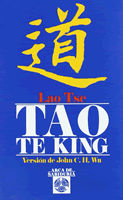
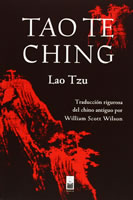
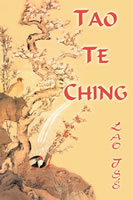
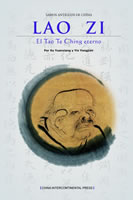
Spanish Language Translations of the Tao Te Ching
"El que sabe no habla.
El que habla no sabe.
Habla solo lo necesario,
Controla tus emociones,
Simplifica los problemas,
Deshazte de la confusión,
Atenúa tu resplandor,
Identifícate con el polvo,
Esta es la Misteriosa Totalidad.
Quien ha alcanzado este estado,
No se preocupa por el amor o el odio,
ni por el auge o el fracaso.
A la Misteriosa Totalidad,
No se le puede atraer;
no se le puede rechazar;
no se le puede beneficiar;
no se le puede perjudicar;
no se le puede honrar;
Por eso, es lo máximo que un hombre podrá alcanzar."
- Translation from
Wikisource, 2013,
Tao Te Ching, Capítulo 56
"El sabio no habla.
El locuaz no sabe.
Cerrar la boca,
obstruir las puertas,
mellar el filo del espíritu,
desenredar la confusión de los pensamientos,
moderar el brillo,
armonizar las cualidades terrenales.
En esto consiste la misteriosa unión con el Sentido.
Quien está unido a él no se deja influir por el amor,
ni por la frialdad.
Es indiferente a las ganancias, a las pérdidas.
Es indiferente al esplendor, a la desgracia.
Por eso es el más noble de la Tierra."
- Translation into Spanish from
Richard Wilhelm's 1911 German Version by an Unknown Spanish Translator,
2015, Capítulo 56
"El que sabe no habla.
El que habla no sabe.
¡Bloquea todos los pasajes!
¡Cierra todas las puertas!
¡Mella los filos!
¡Deshaz los nudos!
¡Armoniza todas las luces!
¡Une al mundo en un todo!
A esto se llama la Totalidad Misteriosa, a la que no puedes cortejarni
rechazar,
beneficiar ni dañar, enaltecer o humillar.
Por ello, es lo más Elevado del mundo."
- Translated into Spanish by
Alfonso Colodrón from
the English translation by John C. H. Wu, 1993, Tao Te Ching, Capítulo
56
"El que sabe no habla.
El que habla no sabe.
Mantén
cerrada tu boca.
Cierra tus puertas.
Desafila lo cortante.
Desenmaraña los
nudos.
Suaviza el resplandor.
Adáptate a tu polvo.
Esto es identificarse con el
misterio.
No lo realizas acercándote a él, ni lo realizas rechazándolo.
No lo realizas ganándolo, ni lo realizas perdiéndolo.
Por lo tanto
No hay nada que
pueda superarlo."
- Translation from
Logia Medio Dia, 2015,
Capitulo 56
"Quien le conoce no habla
y quien habla no le conoce.
Tapa los orificios,
cierra las puertas,
suaviza las asperezas,
disuelve la confusión
atenúa los resplandores,
se identifica con el polvo,
esta es la unidad misteriosa.
No se le puede atraer;
no se le puede rechazar;
no se le puede beneficiar;
no sele puede perjudicar;
no sele puede honrar;
Por esto, es lo más valioso del mundo."
- Spanish Version Online at
RatMachines,
Tao Te Ching, Capítulo 56
Created by Michael P. Garofalo, Green Way Research, Valley Spirit Center, Gushen Grove Notebooks, Red Bluff, California, © 2015 CCA 4.0
Next Chapter of the Tao Te Ching #57
Previous Chapter of the Tao Te Ching #55
Chapter and Thematic Index to the Tao Te Ching
Tao Te Ching
Commentary, Interpretations, Research Tools, Resources
Chapter 56
Das Tao Te King von Lao Tse. Complete versions of all 81 Chapters of the Tao Te Ching by many different translators in many languages: 124 English, 24 German, 14 Russian, 7 Spanish, 5 French and many other languages. Links are organized first by languages, and then alphabetically by translators. Formatting varies somewhat. The original website at Onekellotus went offline in 2012; but, the extensive collection of these Tao Te Ching versions was saved for posterity by the Internet Archive Wayback Machine and available as of 9/9/2015. This is an outstanding original collection of versions of the Daodejing─ the Best on the Internet. Caution: copyright infringement may sometimes be an issue at this website.
Tao Te Ching, Translations into English: Terebess Asia Online (TAO). 124
nicely formatted complete English language translations, on separate webpages, of the Daodejing.
Alphabetical index by translators. Each webpage has all 81 chapters of the Tao Te
Ching translated into English. A useful collection! Many
reformatted and colored versions from the original collection at
Das Tao Te King von Lao Tse. Caution: copyright infringement may
sometimes be an
issue at this website.
Lao Tzu: Te-Tao Ching - A New Translation Based on the Recently Discovered Ma-wang-tui
Texts (Classics of Ancient China)
Daodejing by Laozi: Chapters with Chinese characters, seal script,
detailed word by word concordance, Pinyin (tone#), German, French and English.
This is an outstanding resource for serious students of the Tao Te Ching.
Tao Te
Ching: A New Translation and Commentary. By Ellen Chen. Paragon
House, 1998. Detailed glossary, index, bibliography, notes, 274 pages.
The Tao
and Method: A Reasoned Approach to the Tao Te Ching. By Michael
Lafargue. New York, SUNY Press, 1994. 640 pages. Detailed
index, bibliography, notes, and tables. An essential research tool.
Two Visions of the Way: A Study of the Wang Pi and the Ho-Shang Kung Commentaries on the Lao-Tzu.
By Professor by Alan Kam-Leung Chan. SUNY Series in Chinese
Philosophy and Culture. State University of New York Press, 1991.
Index, bibliography, glossary, notes, 314 pages.
ISBN: 0791404560.
Tao Te Ching: The Definitive Edition
Chinese Reading of the Daodejing
Wang Bi's Commentary on the Laozi with Critical Text and Translation.
By Professor Rudolf G. Wagner. A SUNY Series in Chinese Philosophy and
Culture. English and Mandarin Chinese Edition.
State University of New York Press; Bilingual edition (October 2003). 540
pages. ISBN: 978-0791451823.
Wang Bi (Wang Pi, Fusi), 226-249 CE,
Commentary on the Tao Te
Ching.
Tao Te Ching
The Taoism Reader
Change Your Thoughts - Change Your Life: Living the Wisdom of the Tao
The Lunar Tao: Meditations in Harmony with the Seasons
The Classic of the Way and Virtue: A New Translation of the Tao-te Ching of Laozi as Interpreted by Wang Bi.
Translated by Richard John Lynn. Translations from the Asian Classics
Series. New York, Columbia University Press, 1999. Extensive index,
glossaries, notes, 244 pages.
Tao Te Ching in Chinese characters,
Pinyin Romanization, English and German by Dr. Hilmar
Alquiros.
Yellow Bridge
Dao De Jing Comparison Table Provides side by side comparisons of
translations of the Tao Te Ching by James Legge, D. T. Suzuki, and Dwight
Goddard. Chinese characters for each paragraph in the Chapter are on the
left; place your cursor over the Chinese characters to see the Pinyin
Romanization of the Chinese character and a list of meanings.
Translators Index,
Tao Te Ching Versions in English, Translators Sorted Alphabetically by Translator, Links to Books and
Online Versions of the Chapters
Taoism and the Tao Te
Ching: Bibliography, Resources, Links
Spanish Language
Translations of the Tao Te Ching, Daodejing en Español, Translators Index
The Tao of Zen
Chapter 1 in the
Rambling
Taoist Commentaries by Trey Smith. The
Rambling Taoists are Trey Smith and Scott Bradley.
By Hans-Georg Moeller. Columbia University Press, 2006, 176 pages.
Valley Spirit, Gu Shen,
Concept, Chapter 6
Valley Spirit Center in Red
Bluff, California.
Sacred
Circle in the Gushen Grove.
Lao-tzu's Taoteching
Reading Lao Tzu: A Companion to the Tao Te Ching with a New Translation
Dao De Jing: A Philosophical Translation
Thematic Index to the
81 Chapters of the Tao Te Ching
Lieh-Tzu: A Taoist Guide to Practical Living
Revealing the Tao Te Ching: In-depth Commentaries on an Ancient Classic
Cloud Hands Blog
Mike Garofalo writes about Mind-Body Arts, Philosophy, Taoism, Gardening, Taijiquan, Walking, Mysticism,
Qigong, and the Eight Ways.
The Whole Heart of Tao:
The Complete Teachings From the Oral Tradition of Lao Tzu.
Commentary on Chapter 56
"The truly wise understand the Tao,
so they know that actions speak louder than words. Rather than to talk endlessly
about what they should do or how they should be, they put their time and effort
into the actual doing and being.
On the other hand, those who prattle on and on only demonstrate that they know
little about the Tao. They spend so much time talking about what they think they
know that they end up not putting any of it into actual practice. Without
real-life applications, the Tao means nothing.
Tao cultivators close openings and doors - the passages that lead to, or allow
in, the many temptations and distractions of the material world. They realize
that the sensory thrills of such distractions are short-lived and ultimately
illusory, so they prefer to stick to the real and practical.
When interacting with others, they are gentle and compassionate, because caustic
and abrasive words can form a sharp edge that hurts people. Their gentle
approach unravels the complexities of personal interactions, so they can enjoy a
simple, direct connection with fellow human beings that is mutually enriching.
They are also humble and full of self-effacing humor, because those who like to
show off their mental brilliance end up alienating people with the blinding
glare of their arrogance.
True Tao cultivators do not try to set themselves apart from the rest of
humanity. They do not go into hermitage far away from civilization. Instead,
they are fully immersed in the dust of the material world where they can really
put their spiritual cultivation to the test.
All of the above are aspects of what we call "Mystic Oneness." It is a crucial
element in any spiritual path.
Those who achieve true understanding of Mystic Oneness (whether they call it by
that name or not) are the ones who can be fully involved with life in the
material world... and yet transcend beyond it. One cannot influence them by
getting close to them or treating them in a cold and distant manner. They are
unmoved by the promise of benefits or threats of injury. It is equally useless
to flatter them, feed their ego, or attempt to pummel them into submission by
degrading or condemning them.
Such people are truly exceptional, and that is why they will invariably become
honored by the entire world."
- Comments by
Derek Lin, Chapter
56
Gushen Grove Notebooks for the Tao Te Ching
Green Way Research, Valley Spirit
Center, Gushen Grove Notebooks, Red Bluff, California
Green Way Research, 2011-2015.
Indexed and Compiled by
Michael P. Garofalo
This webpage was last modified or updated on
September 22, 2015.
This webpage was first distributed online on June 26, 2011.
Created by Michael P. Garofalo, Green Way Research, Valley Spirit Center, Gushen Grove Notebooks, Red Bluff, California, © 2015 CCA 4.0
Brief Biography of Michael P. Garofalo, M.S.
Valley Spirit Center, Red Bluff, California
Study Tai Chi Chuan or Chi Kung or Yoga with Mike Garofalo

Ripening Peaches: Daoist Studies and Practices
Zhuangzi (Chuang Tzu, Zhuang Zhou, Master Chuang) 369—286 BCE
Taoist Perspectives: My Reading List
Bodymind Theory and Practices, Somaesthetics
How to Live a Good Life: Advice from Wise Persons
Qigong (Chi Kung) Health Practices
One Old Daoist Druid's Final Journey: Notebooks of the Librarian of Gushen Grove
Index to Cloud Hands and Valley Spirit Websites
Index to English Language Translators of the Tao Te Ching
Recurring Themes (Terms, Concepts, Leimotifs) in the Tao Te Ching
Spanish Language Translations of the Tao Te Ching
Chinese Characters, Wade-Giles (1892) and Hanyu Pinyin (1982) Romanizations
The Tao Te Ching (Dao De Jing) by Lao Tzu (Laozi) circa 500 BCE
|
Tao Te
Ching |
|||||||||
| 1 | 2 | 3 | 4 | 5 | 6 | 7 | 8 | 9 | 10 |
| 11 | 12 | 13 | 14 | 15 | 16 | 17 | 18 | 19 | 20 |
| 21 | 22 | 23 | 24 | 25 | 26 | 27 | 28 | 29 | 30 |
| 31 | 32 | 33 | 34 | 35 | 36 | 37 | 38 | 39 | 40 |
| 41 | 42 | 43 | 44 | 45 | 46 | 47 | 48 | 49 | 50 |
| 51 | 52 | 53 | 54 | 55 | 56 | 57 | 58 | 59 | 60 |
| 61 | 62 | 63 | 64 | 65 | 66 | 67 | 68 | 69 | 70 |
| 71 | 72 | 73 | 74 | 75 | 76 | 77 | 78 | 79 | 80 |
| 81 | |||||||||
Return to the Top of this Webpage