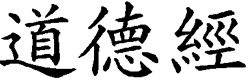
Compiled and Indexed by Michael P. Garofalo
Green Way Research, Valley Spirit Center, Gushen Grove Notebooks, Vancouver, Washington
Chapter 16 Chapter 18 Index to All 81 Chapters Daoism Concordance Cloud Hands Blog
Classic Book (Ching) about the Tao (Way, Nature, Patterns, Processes) and Te (Virtue, Potency, Power, Integrity, Wise Person, Sage)
Concordance: Indexing, Search Terms, Topics, Themes, Keys, Subjects, Words
English and Chinese (Wade-Giles) Terms:
Simplicity of Habits, Faith in Rulers, Existence or Presence (yu),
Completes or Finishes (kung), Independence of People, Earned Respect,
Despised Rulers, Deeds or Work (shih), Trust, Antiquity, Three Ages, Self
(tsu), History, Self-Rule,
Self-Reliance, Relaxed or Quiet (yu), Respected or Feared (wei), Tao, Self-Reliance, Peace, Prosperity, Wu Wei,
Rulers or Leaders (shang), Control, Despised or Reviled (wu),
Faith or Trust or Belief (hsin), Accomplishments of the People, Words (yen),
Work or Task (ch'êng), Love or Attachment (ch'in), Families or
People (hsing), Know or Aware (chih), Great or Best or Highest (t'ai),
淳風
Términos en Español: La
Smplicidad de los hábitos, Fe en
Reglas, Existencia, Presencia,
Completa, Acabados, Independencia de las Personas,
Respeto Ganado, Reglas Despreciado,
Escrituras, Trabajo,
Confianza, Antigüedad, Tres Edades,
Historia, Gobierno Autónomo,
Auto-Confianza, Relajado, Tranquilo,
Respetados, Temidos, Autosuficiencia, Paz, Prosperidad,
Gobernantes, Líderes, Despreciado,
Convicciones, los logros del pueblo,
Palabras, Tarea, Amor,
Adjunto, Familias, Personas,
Saber, Grande, Mejor.
Electronic Concordance for all 81 Chapters of the Tao Te Ching
English Language Translations of the Tao Te Ching
"In the highest antiquity, the people did not know that
there were rulers.
In the next age they loved them and praised them.
In the next they feared them.
In the next they despised them.
Thus it was that when faith in the Dao was deficient in the rulers a want of
faith in them ensued.
How irresolute did those earliest rulers appear, showing by their reticence the
importance which they set upon their words!
Their work was done and their undertakings were successful, while the people all
said, 'We are as we are, of ourselves!' "
- Translated by
James Legge, 1891,
Chapter 17
"From great antiquity forth they have known and
possessed it.
Those of the next level loved and praised it.
The next were
in awe of it.
And the next despised it.
If you lack sincerity no one will
believe you.
How careful she is with her precious words!
When her
work is complete and her job is finished,
Everybody says: "We did it!""
- Translated by
Charles Muller, 1891, Chapter 17
"Of the best the people hardly ever know they exist;
The next best they flock to and praise for nothing.
The next they shrink from;
the next get reviled.
"Not believing people you turn them into liars" -
such bosses don't command the people's faith.
They lose faith in them and take to oaths!
The wise man is a clever ruler; he values his words highly.
It's so hard to get a single word from at any price that when his task is
finished, a work well done, everyone says,
"It happened by itself, and we did it." "
- Translated by
Tromod Byrn, 1997, Chapter 17
"People take the great ruler for granted and are oblivious to his presence.
The good ruler is loved and acclaimed by his subjects.
The mediocre ruler is universally feared.
The bad ruler is generally despised;
Because he lacks credibility, the subjects do not trust him.
On the other hand, the great ruler seldom issues orders.
Yet he appears to accomplish everything effortlessly.
To his subjects everything he does is just a natural occurrence."
- Translated by
Hang Hiong Tan, Chapter 17
"The
best type of leader is
one of whose existence the
people are barely aware.
Next
comes one whom
they love and praise.
Next
comes one whom
they fear.
Next
comes one whom
they despise and defy.
When
you are lacking
in faith,
Others
will be unfaithful
to you.
The
Complete Thinker is quiet
and uses few words.
When
tasks have been accomplished
and things
have been completed,
All
the people say,
"We
ourselves have achieved it!"
- Translated by
J. L. Trottier, 1994, Chapter 17
"The best rulers are those whom the people hardly know exist.
Next come rulers whom the people love and praise.
After that come rulers whom the people fear.
And the worst rulers are those whom the people despise.
The ruler who does not trust the people will not be trusted by the people.
The best ruler stays in the background, and his voice is rarely heard.
When he accomplishes his tasks, and things go well,
The people declare: It was we who did it by ourselves."
- Translated by
Keith H. Seddon, Chapter 17
"The best leader is one whose existence is barely known.
Next best is one
who is lived and praised.
Next is one who is feared.
Worst of all is a
leader who is despised.
If you fail to trust people, they won't turn out to be trustworthy.
Therefore, guide others by quietly relying on Tao.
Then, when the work is done, the people can say,
"We did this ourselves." "
- Translated by
Brian Browne Walker, 1996, Chapter 17

Created by Michael P. Garofalo, Green Way Research, Valley Spirit Center, Gushen Grove Notebooks, Vancouver, Washington © 2018 CCA 4.0
 By Hu Xuzehi
 Annotated translation by Victor Mair
  By Ha Poong Kim
 By Hans-Georg Moeller
 Ripening Peaches: Taoist Studies and Practices By Mike Garofalo
 By Roger T. Ames and David T. Hall
 ,
1934
By Arthur Waley
,
1934
By Arthur Waley
"When great men rule, subjects know little of their
existence.
Rulers who are less great win the affection and praise of their subjects.
A common ruler is feared by his subjects, and an unworthy ruler is despised.
When a ruler lacks faith, you may seek in vain for it among his subjects.
How carefully a wise ruler chooses his words.
He performs deeds, and accumulates merit!
Under such a ruler the people think they are ruling themselves."
- Translated by
Dwight Goddard, 1919, Chapter 17
"In ancient times
The people knew that they had rulers.
Then they loved and praised them,
Then they feared them,
Then they despised them.
The rulers did not trust the people,
The people did not trust the rulers.
The rulers were grave, their words were precious.
The people having finished their work,
and brought it to a successful issue, said:
"We affirm the Self.""
- Translated by
Isabella Mears, 1916, Chapter 17
"It's
best if you are barely known
The lesser state is being praised
Worse is being hated
Just stay empty and amazed
Only
do what must be done
And see you are the one alone
When you finish all will say
We did this on our own"
- Translated by
Jim Clatfelder, 2000, Chapter 17
"The highest ruler is unknown to the people,
To the next comes the ruler whom the people love and honor.
Then the one whom people fear.
Then the one whom people despise.
He who does not trust enough is not be trusted.
When an accomplishment is achieved without words,
People say, “It is natural!” "
- Translated by
Eichi Shimomisse, 1998, Chapter 17
"Great rising and falling - People only know it exists.
Next they see and praise.
Soon they fear.
Finally they despise.
Without fundamental trust There is no trust at all.
Be careful in valuing words.
When the work is done,
Everyone says
"We just acted naturally." "
- Translated by
Stephen Addis, 1993, Chapter 17
"During the High Ages people knew they were there
then people loved and praised them
then they feared them
finally they despised them
when honesty fails
dishonesty prevails
hesitate and guard your words
when their work succeeds
let people think they did it."
- Translated by
Red Pine (Bill Porter), 1996, Chapter 17
"In the early days (when, in human affairs, everything still conformed to
the action of the Principle),
subjects scarcely knew that they had a
prince (so discreet was the action of the latter).
After this the people
loved and flattered their prince (because of his good deeds),
but later
on, they feared him (because of his laws), and scorned him (because of
his unjust acts).
They became disloyal, though having been treated disloyally.
They lost
confidence in him though receiving only good words which were never put
into effect.
How delicate was the touch of ancient rulers.
When everything prospered
under their administration,
the people believed they had done everything
themselves, of their own free will."
- Translated by
Derek Bryce, 1999, Chapter 17
"The truly developed self
Is ever aware of the Cosmic Presence.
Another may abide
In love and praise of it;
Still another might fear it;
And finally there are those
Who hold it in contempt.
Trust is not built on faith;
It is nurtured on experience.
One following the Sage uses words sparingly,
And lets his natural action speak;
His work is not enslaved to a goal-
Its accomplishment is his statement.
Then progress happens
As if no one had tried."
- Translated by
Brian
Donohue, 2005, Chapter 17
"Of the highest the people merely know that such a one
exists;
The next they draw near to and praise.
The next they shrink from, intimidated; but revile.
Truly, “It is by not believing people that you turn them into liars”.
But from the Sage it is so hard at any price to get a single word
That when his task is accomplished, his work done,
Throughout the country every one says: “It happened of its own accord”."
- Translated by
Arthur Waley, 1934, Chapter 17
Tao Te Ching
Lao Tzu: Tao Te Ching
 Translated by Livia Kohn
Dao De Jing: The Book of the Way
"The greatest rulers are the ones whose existence the
people do not notice at all,
The rulers who are inferior to them are the ones whom the people honor and
praise,
And inferior to those are the ones of whom they are afraid,
And inferior to those are the ones whom they despise.
When there is a lack of faith in the ruler,
No one believes in his rule.
Now, learn how much importance must be attributed to words."
- Translated by
Chou Wing Chohan,
Chapter 17
A Chinese Language Version of Chapter 17 of the Tao Te
Ching by Lao Tzu
A
note
on my style of displaying the Chinese characters of the Tao Te Ching
太上下知有之.
其次親而譽之.
其次畏之.
其次侮之.
信不足焉有不信焉.
悠兮其貴言.
功成事遂百姓皆謂我自然.
- Chinese characters, Tao Te Ching, Chapter 17
t'ai shang hsia chih yu chih.
ch'i tz'u ch'in erh yü chih.
chi tz'u wei chih.
ck'i tz'u wu chih.
hsin pu tsu yen yu pu hsin yen.
yu hsi ch'i kuei yen.
kung ch'êng shih sui pai hsing chieh wei wo tzu jan.
- Wade-Giles Romanization, Tao Te Ching, Chapter 17
Audio Version in Chinese of Chapter 17 of the Tao Te Ching
tai shang bu zhi you zhi.
qi ci qin er yu zhi.
qi ci wei zhi.
qi ci wu zhi.
xin bu zu yan you bu xin yan.
you xi qi gui yan.
gong cheng shi sui bai xing jie wei wo zi ran.
-  Pinyin Romanization, Daodejing, Chapter 17
Tao Te Ching in Chinese characters and English (includes a word by word key) from YellowBridge
Tao Te Ching in Chinese characters, Pinyin Romanization, English and German by Dr. Hilmar Alquiros.
Laozi Daodejing: Chapters with Chinese characters, seal script, detailed word by word concordance, Pinyin (tone#), German, French and English.
Chinese and English Dictionary, MDGB
Dao De Jing Wade-Giles Concordance by Nina, Dao is Open
Dao De Jing English and Wade-Giles Concordance by Mike Garofalo
Tao Te Ching in Pinyin Romanization with Chinese characters, WuWei Foundation
Tao Te Ching in Pinyin Romanization
Tao Te Ching in Chinese characters and English
Tao Te Ching in Chinese characters, English, Word by word analysis, Zhongwen
Tao Te Ching: The Definitive Edition
Tao Te Ching in Chinese characters: Big 5 Traditional and GB Simplified
Chinese Characters, Wade-Giles and Pinyin Romanizations, and 16 English Translations for Each Chapter of the Daodejing by Mike Garofalo.
Tao Te Ching in Chinese characters, Pinyin and Wade Giles Romanization spellings, English; a word for word translation of the Guodian Laozi Dao De Jing Version.
Lao Zi's Dao De Jing: A Matrix Translation with Chinese Text by Bradford Hatcher.
"In the first age of mankind the people recognized their superiors.
In the second age they served and flattered them.
In the third age they feared them,
In the fourth age they despised them.
Where faith is lacking it does not inspire confidence.
How careful were they in their expressions!
When they had done a good thing they would say, "How very natural we are!" "
- Translated by
Walter Gorn Old, 1904, Chapter 17
 By Alexander Simkins
 By Derek Lin
 By Ming-Dao Deng.
 By Benjamin Hoff.
 By Ming-Dao Deng
 Translated by Thomas Cleary



"Of great rulers the subjects do not notice the
existence.
To lesser ones people are attached; they praise them.
Still lesser ones people fear, and the meanest ones people despise.
For it is said: 'If your faith be insufficient, verily, you will receive no
faith.'
How reluctantly the great rulers considered their words!
Merit they accomplished; deeds they performed; and the hundred families thought:
'We are independent.' "
- Translated by
D. T. Suzuki and
Paul Carus, 1913, Chapter 17
"Of the best ruler,
The people only know he exists.
Next comes one the love and praise.
Next comes one they fear.
Next comes one they abhor.
When you are lacking in trust,
Others have no trust in you.
Of the work of one who is short with his words,
The hundred families say,
We have done it ourselves!"
- Translated by
Herrymoon Maurer, 1985, Chapter 17
"The great rulers - the people do not notice their
existence;
The lesser ones - they attach to and praise them;
The still lesser ones - they fear them;
The still lesser ones - they despise them;
For where faith is lacking,
It cannot be met by faith.
Now how much importance must be attached to words!"
- Translated by
Ch'u Ta-Kao, 1904, Chapter 17
Created by Michael P. Garofalo, Green Way Research, Valley Spirit Center, Gushen Grove Notebooks, Vancouver, Washington © 2018 CCA 4.0
 Translation and elucidation by Hua Ching Ni
 Translated by Brian Walker
 Translated by Arthur Waley
 Translated by Lionel and and Herbert Giles
 By Eva Wong
"The wise leader does not intervene unnecessarily. The
leader's presence is felt, but often the group runs itself.
Lesser leaders do a lot, say a lot, have followers, and form cults.
Even worse ones use fear to energize groups to overcome resistance.
Only the most dreadful leaders have bad reputations.
Remember that you are facilitating another person's process.
It is not your
process.
Do not intrude. Do not control. Do not force your own needs and
insights into the foreground.
If you do not trust a person's process, that person will not trust you.
Imagine that you are a midwife; you are assisting at someone else's birth.
Do
good without show or fuss. Facilitate what is happening rather than what you
think ought to be happening.
If you must take the lead, lead so that the mother
is helped, yet still free and in charge.
When the baby is born, the mother will rightly say: "We did it ourselves!""
- Translated by
John Heider, 1985, Chapter 17
"The best leaders are those the people hardly know
exist.
The next best is a leader who is loved and praised.
Next comes the one who is feared.
The worst one is the leader that is despised.
If you don't trust the people, they will become
untrustworthy.
The best leaders value their words, and use them
sparingly.
When she has accomplished her task,
the people say, "Amazing:
we did it, all by ourselves!""
- Translated by
John H. McDonald, 1996, Chapter 17
"First the supreme.
Then a sense of separateness.
Next preferences and eulogies.
Lastly, fear.
Then scorn.
Hence it is plain that lack of sincerity has its origins in superficial faith.
Cautious!
They valued their words, accomplished their purposes, settled
their affairs,
And the people all said: “We are spontaneous.” "
- Translated by
C. Spurgeon Medhurst, 1905, Chapter 17
 Translated by Eva Wong
  Translated by Philip Ivahoe
 By James Miller
 Translated by Stephen Bokencamp
By Alexander and Annellen Simpkins
Translated by Stephen Bokencamp
By Alexander and Annellen Simpkins Translated by Thomas Cleary
 By Livia Kohn
"Of the best rulers
The people (only) know that they exist;
The next best the love and praise;
The next they fear;
And the next they revile.
When they do not command the people's faith,
Some will lose faith in them,
And then they resort to oaths!
But (of the best) when their task is accomplished,
their work done,
The people all remark, "We have done it ourselves.""
- Translated by
Lin Yutang, 1955, Chapter 17
"All Leaders Great and Small: Good and bad leaders.
The best leader; people do not know he exists.
The next best; people are close to him and praise him.
The next best; people fear him.
The next best; people scorn him.
The untrustworthy have no trust.
We take our time and value our words.
We do good deeds and get things done.
Then people will say, “I did it all by myself.” "
- Translated by
Amy and Roderic Sorrell, 2003, Chapter 17
"As for him who is highest,
The people just know he is there.
His deputy's cherished and praised;
Of the third, they are frightened;
The fourth, they depise and revile.
If you trust people less than enough,
Some of them never trust you.
He is aloof, as if his talk
Were priced beyond the purchasing;
But once his project is contrived,
The folk will want to say of it:
"Of course! We did it by ourselves!""
- Translated by
Raymond Blakney, 1955, Chapter 17
Walking the Way: 81 Zen Encounters with the Tao Te Ching
The Tao of Zen
Tao Te Ching: Zen Teachings on the Taoist Classic
Buddhism and Taoism Face to Face: Scripture, Ritual, and
Iconographic Exchange in Medieval China
"The best leaders the people barely know.
The next best they love and praise.
The next they fear.
And the next they hate.
Those who lack trust will not be trusted.
Then they resort to promises.
But when they accomplish their task and complete their work,
the people say, "We did it ourselves.""
- Translated by
Sanderson Beck, 1996, Chapter 17
|
Tao Te
Ching |
|||||||||
| 1 | 2 | 3 | 4 | 5 | 6 | 7 | 8 | 9 | 10 |
| 11 | 12 | 13 | 14 | 15 | 16 | 17 | 18 | 19 | 20 |
| 21 | 22 | 23 | 24 | 25 | 26 | 27 | 28 | 29 | 30 |
| 31 | 32 | 33 | 34 | 35 | 36 | 37 | 38 | 39 | 40 |
| 41 | 42 | 43 | 44 | 45 | 46 | 47 | 48 | 49 | 50 |
| 51 | 52 | 53 | 54 | 55 | 56 | 57 | 58 | 59 | 60 |
| 61 | 62 | 63 | 64 | 65 | 66 | 67 | 68 | 69 | 70 |
| 71 | 72 | 73 | 74 | 75 | 76 | 77 | 78 | 79 | 80 |
| 81 | |||||||||
"Very great leaders in their domains are only known to exist.
Those next
best are loved and praised.
The lesser are feared and despised.
Therefore when faith is insufficient and there is disbelief,
it is from the high value placed on words.
Works are accomplished, tasks
are completed, and ordinary folk all say they are acting spontaneously."
- Translated by
Thomas Cleary, 1991, Chapter 17
"Herrscht ein ganz Großer,
so weiß das Volk kaum, daß er da ist.
Mindere werden geliebt und gelobt,
noch Mindere werden gefürchtet,
noch Mindere werden verachtet.
Wie überlegt muß man sein in seinen Worten!
Die Werke sind vollbracht, die Geschäfte gehen ihren Lauf,
und die Leute denken alle:
Wir sind frei."
- Translated by Richard Wilhelm, 1911, Chapter 17
"Die Unauffälligkeit guter Staatsführung
Den echten Führer einer Gemeinschaft gewahrt das Volk kaum;
weniger große werden geliebt und gelobt,
die kleinen gefürchtet,
die Herrschsüchtigen verachtet.
So wie ein Herrscher seinem Volk vertraut,
vertraut das Volk ihm.
Die weisen Herrscher wählten bedacht ihre Worte,
was sie taten, war gut; ihr Werk vollendeten sie.
Das Volk aber glaubte, sich selbst zu führen."
- Translated
by Rudolf
Backofen, 1949, Chapter 17
"In highest (antiquity)
one did not even know there were (rulers).
Next one loved them and praised them.
Next one feared them.
Next one despised them.
If good faith (of the prince towards the people) is inadequate, good faith (of
the people towards the ruler) will be wanting.
Thoughtful were (the sage rulers), valuing their words!
When the work was done and things ran smoothly, the people all said: "We have
done it ourselves!""
- Translated by
Jan J. L. Duyvendak, 1954, Chapter 17
Further Teachings of Lao-Tzu: Understanding the Mysteries (Wen Tzu)
 By Thomas Cleary
The Lunar Tao: Meditations in Harmony with the Seasons
 By Lui I-Ming (1780) and translated by Thomas Cleary
Ripening Peaches: Taoist Studies and Practices By Mike Garofalo
Zhuangzi: The Essential Writings with Selections from Traditional
Commentaries
"In the highest antiquity people scarce knew
When
a 'Ruler' is not trusting,
he is not trustworthy.
But,
if carefully he measures his words,
when his work is done and his affairs
completed,
his subjects will say,
"this is like being left to ourselves."
"
- Translated by
Jerry C. Welch, 1998, Chapter 17
"With the highest rulers -
Those below simply know they exist.
With those one step down -
They love and praise them.
With those one further step down -
They fear them.
And with those at the bottom -
They ridicule and insult them.
Who does not trust enough
will not be trusted.
Hesitant and undecided!
Like this is his respect for speaking.
He completes his tasks and finishes his affairs
Yet the common people say,
"These things all happened by nature."
- Translated by
Bram den Hond, Chapter 17
Created by Michael P. Garofalo, Green Way Research, Valley Spirit Center, Gushen Grove Notebooks, Vancouver, Washington © 2018 CCA 4.0
Tao Te Ching: An Illustrated Journey
Tao Te Ching
The Book of Tao: Tao Te Ching - The Tao and Its Characteristics
Ripening Peaches: Taoist Studies and Practices
Taoism: Growth of a Religion
Zhuangzi (Chuang Tsu), Daoist Scripture: Bibliography, Links, Resources, Quotations, Notes
Zhuangzi: Basic Writings
Zhuangzi Speaks: The Music of Nature
Lifestyle Advice from Wise Persons
"Those of preeminent wisdom and purity knew this Tao
intuitively from their birth,
and so possessed it.
Those of the second rank—the men of virtue—approached it nearly, and eulogised
it.
Those of the third rank—who were still above the commonalty—stood in awe of it.
Those of the lowest rank held it in light esteem.
Their belief in it was superficial, or imperfect; while there were even some who
did not believe in it at all.
The first spoke only with forethought and calculation, as though honouring their
words.
When their public labours were achieved, and affairs progressed unimpeded, the
people all said,
"This is our natural and spontaneous condition.""
- Translated by
Frederic Henry Balfour, 1884, Chapter 17
"Dans la Haute Antiquité, le peuple savait seulement
qu'il avait des rois.
Les suivants, il les aima et leur donna des louanges.
Les suivants il les craignit.
Les suivants, il les méprisa.
Celui qui n'a pas confiance dans les autres n'obtient pas leur confiance.
Les premiers étaient graves et réservés dans leurs paroles.
Après qu'ils avaient acquis des mérites et réussi dans leurs desseins,
les cent familles disaient: Nous suivons notre nature."
- Translated by Stanislas Julien, 1842, Chapter 17
"The best ruler: the people merely know he exists.
Next best: the people love and praise him.
Next: the people fear him.
Lowest: the people despise him.
Because he does not trust enough,
he will not be trusted by others.
Silent, the best ruler values his words.
When he has achieved merit and completed his works,
the people all say, "We did it ourselves." "
- Translated by
Yi Wu, Chapter 17
"A leader is best
When people barely know that he
exists,
Not so good when people obey and acclaim him,
Worst when they
despise him.
'Fail to honor people,
They fail to honor you;'
But of a
good leader, who talks little,
When his work is done, his aim fulfilled,
They will all say, 'We did this ourselves.'"
- Translated by
Witter Bynner, 1944, Chapter 17
Spanish
Language Versions of the Tao Te Ching (Daodejing)
Tao Te Ching en Español
Lao Tsé Tao Te Ching 
Tao Te Ching Traducido por Stephen Mitchell, versión española
Tao Te Ching Traducido al español por el Padre Carmelo Elorduy
Lao Tzu-The Eternal Tao Te Ching
Ripening Peaches: Taoist Studies and Practices By Mike Garofalo Maduración Duraznos: Estudios y Prácticas Taoístas por Mike Garofalo
Tao Te Ching
Lao Tzu - Tao Te Ching
Tao te king
Daodejing Español, Inglés, y Chino Versiones Lingüísticas de la Daodejing
Spanish Language Translations of the Tao Te Ching
"De los buenos líderes, la gente no nota su existencia.
A los no tan buenos, la gente les honrará y alabará.
A los mediocres, les temerán
y a los peores les odiarán.
Cuando se haya completado el trabajo de los mejores líderes,
la gente dirá: "lo hemos hecho nosotros""
- Translation from Wikisource, 2013, Tao Te Ching, Capítulo 17
"Del Emperador conocían antiguamente sus súbditos suexistencia.
Más tarde
comenzaron a quererlo y enaltecerlo, y despuésa temerle y despreciarlo.
Tras
la falta de confianza, vinieron la desconfianzay las lisonjas.
Con este
gobierno de no intervención el sucesoseguía a la obra realizada y el pueblo
creía obrar espontáneamente.
Con este gobierno de no intervención el suceso
seguíaa la obra realizada
y el pueblo creía obrar espontáneamente."
- Translated by
Carmelo Elorduy,
2006, Capítulo 17
"Acerca de los antiguos todo lo que se sabe es que
existían.
Los sucesores fueron amados y alabados, y los siguientes fueron temidos.
Los que vinieron después aborrecidos.
Sí no te tienes plena confianza, otros te serán infieles.
Entonces las palabras rituales estaban medidas.
El mérito de las obras tenía plenitud.
Todo el mundo decía:
"Estamos en armonía con nosotros mismos"."
- Translation from
Logia Medio Dia, 2015,
Capítulo 17
"El gran gobernante pasa inadvertido por el pueblo.
A éste sucede el que es amado y elogiado por el pueblo.
Después, el que es temido.
Y finalmente, el despreciado.
Si no hay una confianza total,
se obtiene la desconfianza.
El gran gobernante practica el no-hacer
y así, a la obra acabada sigue el éxito.
Entonces, el pueblo cree vivir según su propia ley."
- Spanish Version Online at
RatMachines,
Tao Te Ching, Capítulo 17
"Lo muy alto es meramente desconocido por los hombres.
Luego viene aquello que ellos conocen y aman,
luego aquello que desprecian.
El que no confía suficiente no será de confiar.
Cuando los acciones son ejecutadas
sin discursos innecesarios,
la gente dice: lo logramos!"
- Translated by
Cristina Bosch, 2002, Capítulo 17
Created by Michael P. Garofalo, Green Way Research, Valley Spirit Center, Gushen Grove Notebooks, Vancouver, Washington © 2018 CCA 4.0
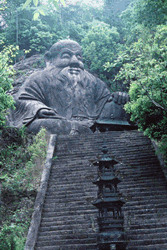
Next Chapter of the Tao Te Ching #18
Previous Chapter of the Tao Te Ching #16
Chapter and Thematic Index to the Tao Te Ching
Tao Te Ching
Commentary, Interpretations, Research Tools, Resources
Chapter 17
"During the High Ages people knew they were there
then people loved and praised them
then they feared them
finally they despised them
when honesty fails
dishonesty prevails
hesitate and guard your words
when their work succeeds
let people think they did it."
- Translated by
Red Pine (Bill Porter), 1996, Chapter 17
"The mistake of loving and praising, fearing and despising does not rest with
the people but with those above. The reason the people turn to love and
praise, fear and hate is because those above cannot be trusted. And when
trust disappears, chaos appears."
- Sung Ch'ang-Hising
"The reason the sages don't speak or act is so that they can bestow their
blessings in secret and so that people can live their lives in peace.
And when their work succeeds and their lives go well, people think that is just
the way it is supposed to be. They don't realized it was made possible by
those on high."
- Wu Ch'eng
"As long as the people think they did it themselves, they have no reason to love
or praise anyone."
- Lu Hui-Ch'ing
Lao-tzu's Taoteching

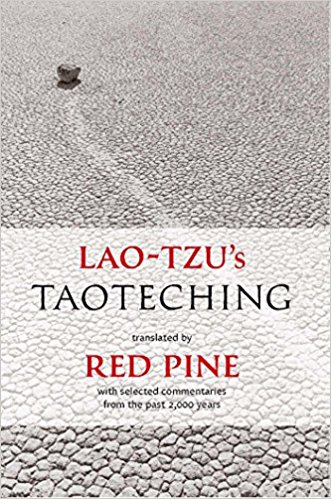
Other Commentaries on the Tao To Ching:
Lao Tzu: Te-Tao Ching - A New Translation Based on the Recently Discovered Ma-wang-tui
Texts (Classics of Ancient China)
Early Daoist Scriptures. Translated by Stephen R. Bokenkamp. Peter
Nickerson, Contributor. Berkeley, University of California Press, Revised
Edition, 1999. 520 pages. This compilation includes a translation of "The Xiang'er Commentary to the Laozi," pages 78-148, with a long introduction to the
same, pages 29-78. Scholars think this document was created in the late
5th century, CE. It was discovered in Buddhist Grottos in 1920, but parts
were missing.
Lao-Tzu: My Words are Very Easy to Understand. Lectures on the Tao Teh
Ching by Professor
Cheng Man-ch'ing (1902-1975). Translated from the Chinese by Tam C. Gibbs, 1981.
Berkeley, California, North Atlantic Books, 1981, 1991. 240 pages.
Includes the Chinese characters for each of the 81 Chapters. A brief
biography of Professor Cheng is included.
The
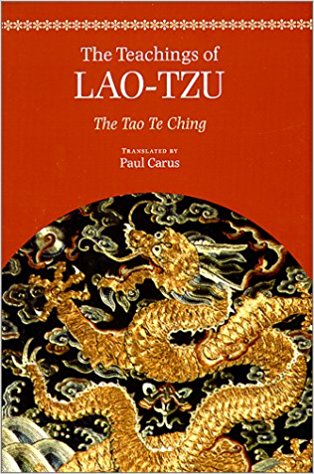
Teachings of Lao-Tzu: The Tao Te Ching.
Translation, commentary, and notes by Paul Carus, 1913. New York,
St. Martin's Press, 2000. D.T.
Suzuki worked and studied with Paul Carus around 1905 in Illinois, and
translated together their version the Tao Te Ching.
Daodejing by Laozi: Chapters with Chinese characters, seal script,
detailed word by word concordance, Pinyin (tone#), German, French and English.
This is an outstanding resource for serious students of the Tao Te Ching.
Tao Te
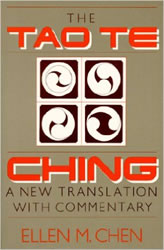
Ching: A New Translation and Commentary. By Ellen M. Chen. Paragon
House, 1989. Detailed glossary, index, bibliography, notes, 274 pages.
One of my favorites.
The New Lao Tzu: A Contemporary Tao Te Ching. By Ray Grigg. Interpretation, comments,
notes by Ray Grigg. Tuttle, 1995. 187 pages.
Das Tao Te King von Lao Tse. Complete versions of all 81 Chapters of
the Tao Te Ching by many different translators in many languages: 124
English, 24 German, 14 Russian, 7 Spanish, 5 French and many other languages.
Links are organized first by languages, and then alphabetically by translators. Formatting
varies somewhat. The original website at Onekellotus went offline in 2012; but, the
extensive collection of these Tao Te Ching versions was
saved for posterity by the Internet Archive Wayback Machine and available as of
9/9/2015. This is an outstanding original collection of
versions of the Daodejing─ the Best on the Internet. Caution:
copyright infringement may sometimes be an issue at this website.
The Tao
and Method: A Reasoned Approach to the Tao Te Ching. A translation and
commentary by Professor Michael Lafargue. New York, SUNY Press, 1994. 640 pages. Detailed
index, bibliography, notes, and tables. An essential research tool.
The Tao
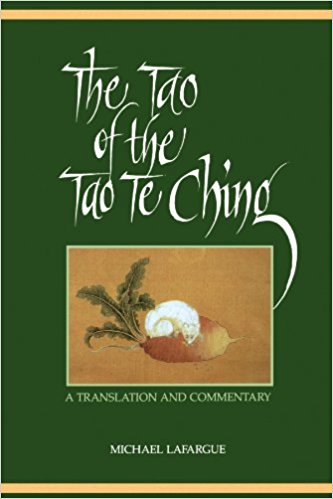
of the Tao Te Ching. A Translation and Commentary by Profesor Michael LaFargue.
State University of New York Press, 1992. Detailed glossary, extensive bibliography, 270 pages. This translation is based on the oldest version ( 168 BCE) of
the Tao Te Ching found in King Ma's tomb - the famous Magwandali
manscript.
81 Chapters arranged in a topical order by the author.
Two Visions of the Way: A Study of the Wang Pi and the Ho-Shang Kung Commentaries on the Lao-Tzu.
By Professor by Alan Kam-Leung Chan. SUNY Series in Chinese
Philosophy and Culture. State University of New York Press, 1991.
Index, bibliography, glossary, notes, 314 pages.
Tao Te Ching
The Taoism Reader
The Lunar Tao: Meditations in Harmony with the Seasons
The Classic of the Way and Virtue: A New Translation of the Tao-te Ching of Laozi as Interpreted by Wang Bi.
Translated by Richard John Lynn. Translations from the Asian Classics
Series. New York, Columbia University Press, 1999. Extensive index,
glossaries, notes, 244 pages.
Tao Te Ching in Chinese characters,
Pinyin Romanization, English and German by Dr. Hilmar
Alquiros.
Tao Te
Ching: Annotated and Explained. Translation and Annotation by Derek
Lin. Foreword by Lama Surya Das. "An inspiring, precise translation
of the ancient Chinese wisdom classic─ with facing-page commentary that brings
the text to life for you." Woodstock, Vermont, 2006, 2010. 167 pages.
How to Live a Good Life:
Advice from Wise Persons
One Old Philosopher's
Notebooks Research, reading, and reflections by Mike Garofalo.
Yellow Bridge
Dao De Jing Comparison Table Provides side by side comparisons of
translations of the Tao Te Ching by James Legge, D. T. Suzuki, and Dwight
Goddard. Chinese characters for each paragraph in the Chapter are on the
left; place your cursor over the Chinese characters to see the Pinyin
Romanization of the Chinese character and a list of meanings.
Translators Index,
Tao Te Ching Versions in English, Translators Sorted Alphabetically by Translator, Links to Books and
Online Versions of the Chapters
Taoism and the Tao Te
Ching: Bibliography, Resources, Links
Spanish Language
Translations of the Tao Te Ching, Daodejing en Español, Translators Index
Chapter 17 in the
Rambling
Taoist Commentaries by Trey Smith. The
Rambling Taoists are Trey Smith and Scott Bradley.
Tao Te Ching, Translations into English: Terebess Asia Online (TAO). 124
nicely formatted complete English language translations, on separate webpages, of the Daodejing.
Alphabetical index by translators. Each webpage has all 81 chapters of the Tao Te
Ching translated into English. A useful collection! Many
reformatted and colored versions from the original collection at
Das Tao Te King von Lao Tse. Caution: copyright infringement may
sometimes be an
issue at this website.
Tao Te Ching: The Definitive Edition
Chinese Reading of the Daodejing
Wang Bi's Commentary on the Laozi with Critical Text and Translation.
By Professor Rudolf G. Wagner. A SUNY Series in Chinese Philosophy and
Culture. English and Mandarin Chinese Edition.
State University of New York Press; Bilingual edition (October 2003). 540
pages. Wang Bi (Wang Pi, Fusi), 226-249 CE,
Commentary on the Tao Te
Ching.
By Hans-Georg Moeller. Columbia University Press, 2006, 176 pages.
Valley Spirit, Gu Shen,
Concept, Chapter 6
Valley Spirit Center in Red
Bluff, California.
Sacred
Circle in the Gushen Grove.
Lao-tzu's Taoteching
The Way and Its Power: Lao Tzu's Tao Te Ching and Its Place in Chinese
Thought. By Arthur
Waley, 1889-1966. Translation and commentary by Arthur Waley in 1934.
Part of the UNESCO collection of representative works, 1994. Grove Press,
First Edition, 1994. 262 pages.
Reading Lao Tzu: A Companion to the Tao Te Ching with a New Translation
Dao De Jing: A Philosophical Translation
Thematic Index to the
81 Chapters of the Tao Te Ching
Lieh-Tzu: A Taoist Guide to Practical Living
Revealing the Tao Te Ching: In-depth Commentaries on an Ancient Classic
Cloud Hands Blog
Mike Garofalo writes about Mind-Body Arts, Philosophy, Taoism, Gardening, Taijiquan, Walking, Mysticism,
Qigong, and the Eight Ways.
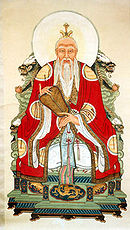
The Whole Heart of Tao:
The Complete Teachings From the Oral Tradition of Lao Tzu.
Gushen Grove Notebooks for the Tao Te Ching
Green Way Research, Valley Spirit
Center, Gushen Grove Notebooks (2001-2018)
East Los Angeles, California, 1946-1998;
Red Bluff, California from 1998-2017;
Vancouver, Washington from 2107-
Green Way Research, Chapter 17, 2011-2018.
Indexed and Compiled by
Michael P. Garofalo
This webpage was last modified, edited,
maintained, improved or updated on February 15, 2018.
This webpage was first distributed online on February 19, 2011.
Created by Michael P. Garofalo, Green Way Research, Valley Spirit Center, Gushen Grove Notebooks, Vancouver, Washington © 2018 CCA 4.0
Brief Biography of Michael P. Garofalo, M.S.
Valley Spirit Center, Red Bluff, California
Study Chi Kung or Tai Chi with Mike Garofalo

Ripening Peaches: Daoist Studies and Practices
Zhuangzi (Chuang Tzu, Zhuang Zhou, Master Chuang) 369—286 BCE
Taoist Perspectives: My Reading List
Bodymind Theory and Practices, Somaesthetics
How to Live a Good Life: Advice from Wise Persons
Pleasures, Satisfaction, Desires
Qigong (Chi Kung) Health Practices
One Old Daoist Druid's Final Journey: Notebooks of the Librarian of Gushen Grove
Index to Cloud Hands and Valley Spirit Websites
Index to English Language Translators of the Tao Te Ching
Recurring Themes (Terms, Concepts, Leimotifs) in the Tao Te Ching
Spanish Language Translations of the Tao Te Ching
The Tao Te Ching (Dao De Jing) by Lao Tzu (Laozi) circa 500 BCE
|
Tao Te
Ching |
|||||||||
| 1 | 2 | 3 | 4 | 5 | 6 | 7 | 8 | 9 | 10 |
| 11 | 12 | 13 | 14 | 15 | 16 | 17 | 18 | 19 | 20 |
| 21 | 22 | 23 | 24 | 25 | 26 | 27 | 28 | 29 | 30 |
| 31 | 32 | 33 | 34 | 35 | 36 | 37 | 38 | 39 | 40 |
| 41 | 42 | 43 | 44 | 45 | 46 | 47 | 48 | 49 | 50 |
| 51 | 52 | 53 | 54 | 55 | 56 | 57 | 58 | 59 | 60 |
| 61 | 62 | 63 | 64 | 65 | 66 | 67 | 68 | 69 | 70 |
| 71 | 72 | 73 | 74 | 75 | 76 | 77 | 78 | 79 | 80 |
| 81 | |||||||||
Return to the Top of this Webpage