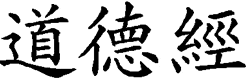
Compiled and Indexed by Michael P. Garofalo
Green Way Research, Valley Spirit Center, Gushen Grove Notebooks, Vancouver, Washington
Chapter 17 Chapter 19 Index to All 81 Chapters Daoism Concordance Cloud Hands Blog
Classic Book (Ching) about the Tao (Way, Nature, Patterns, Processes) and Te (Virtue, Potency, Power, Integrity, Wise Person, Sage)
Concordance: Indexing, Search Terms, Topics, Themes, Keys, Subjects, Words
English and Chinese (Wade-Giles) Terms: Compassion, Filial Piety, Justice, Jen, Great Tao
(ta tao), Hypocrisy or Duplicity or Falsehood (wei), Duty or
Devotion or Filial Piety (hsiao), Loyal or Patriotic (chung), The Decay of Manners, The Deterioration of Society,
Hypocrisy,
Chaos, Natural, Selfishness, Morality or Duty or Righteous (yi), Change, Tao Disappears,
Intellect or Intelligence (hui), Six Relationships, Social
Convention, Country or Nation (kuo), Way,
Morality, Convention, Disharmony, Bureaucracy, Disorder or Confusion or Chaos (hun), Formalism, Rules, Country,
Family, Forgotten or Abandoned (fei), Artifice, Harmony or Peace (ho), Deception,
Families or Clans (chia), Pretense, Trouble or Discord or Anarchy (luan), Unnatural,
Knowledge or Cleverness (chih), Disorder, Sham, Religion, Clans, Dishonesty,
Appear or Emerge (ch'u), Ministers or Rulers (ch'ên), Benevolence
or Kindness or Humane (jên), Love and Affection (tz'u), 俗薄
Términos en Español:
Compasión,
Piedad Filial, Justicia, Gran Tao,
Hipocresía, Duplicidad, Falsedad, Obligación, Devoción,
Leal, Patriótico, Caos, Natural,
Egoísmo, Moralidad, Impuestos,
Justos, Cambio, Desaparece,
Intelecto,
Inteligencia. Seis Relaciones, Convención
Social, País,
Nación, Burocracia, Trastorno, Confusión,
Formalismo, Reglas, Campo,
Familiar, Abandonada, Artificio,
Armonía, Engaño, Familias, Clanes, Conocimiento, Astucia,
Desorden, Religión,
Deshonestidad, Aparecen, Ministros, Gobernantes,
Benevolencia, Bondad, Amor, Afecto.
Electronic Concordance for all 81 Chapters of the Tao Te Ching
English Language Translations of the Tao Te Ching
"When humankind strayed from the natural way of life,
Relative social disciplines began to appear.
When intelligence and cleverness of mind are admired,
Great hypocrisy is born.
When disharmony manifested in family relations,
Children who respected their parents
And parents who respected their children
Became rare examples.
When chaos prevailed in the county,
Only a few loyal ministers were recognized.
Let all people return to their true nature.
Love, kindness, wisdom, family harmony, and loyalty
Should not be taught one by one,
Separately from an honest life.
Then, once again,
People will regain the natural virtue of wholeness.
The world will be naturally ordered.
There will be no one who singly and cunningly
Works for personal interest alone."
- Translated by
Hua-Ching Ni, 1979, Chapter 18
"Great Tao lost,
There came the duty to man and right conduct.
Wisdom and shrewdness appearing,
There came great hypocrisy.
The six relationships inharmonious,
There came filial piety deep, deep in the heart.
Kingdoms, families, and clans at war,
There came loyal Ministers."
- Translated by Isabella Mears, 1916, Chapter 18
"When the great Dao is in decline,
Benevolence and loyalty appear.
As wisdom arises, so does hypocrisy.
Only in a feuding family do filial piety and parental doting become
conspicuous.
Loyal ministers emerge whenever the country is in chaos."
- Translated by
Han Hiong Tan, Chapter 18
"When people try to improve upon, and thus deviate from, the way Nature
itself naturally functions,
they develop artificial codes of right and
wrong.
When knowledge becomes highly abstract, men are deceived by mistaking abstractions for realities.
When instinctive family sympathies are replaced by rules for proper
conduct then parents
become "responsible" and children become "dutiful".
When corruption replaces genuine benevolence in government,
then loyalty oaths are demanded of officials."
- Translated by
Archie J. Bahm, 1958, Chapter 18
"When the Tao disappears, humanity and justice will appear by themselves.
When intelligence appears, falsity will appear too.
When relatives fall into disharmony, filial piety and kindheartedness will appear.
When the country falls into chaos, official loyalists will appear."
- Translated by
Chao-Hsiu Chen, Chapter 18
"When the way of the Tao is forgotten,
morality and ethics need to be stressed.
When the body's innate intelligence is not heeded,
deception becomes routine, and men learn to pretend to be wise and good.
When genuine peace among people is not regarded;
filial piety and compassion are made apparent.
When a nation falls into chaos; loyalty and patriotism are renewed."
- Translated by
Rivenrock,
Chapter 18
"Social Decadence
Su Po
The Great Tao having been abandoned,
There arise benevolence and righteousness.
With the emergence of wit and wisdom,
There comes into being monstrous hypocrisy.
When the six relatives fail to live in harmony,
There arise filial piety and parental love.
When the state falls into darkness and disorder,
There come into existence loyal ministers."
- Translated by
Henry Wei,
1982, Chapter 18
"When the great Way was abandoned,
Humanity and righteousness appeared.
When the intelligent and knowledgeable arose,
Great hypocrisy appeared.
When the six relationships were not in harmony,
Filial piety and paternalistic kindness appeared.
When the state was in chaos and disorder,
Loyal ministers appeared."
- Translated by
Wu Yi, Chapter
18

Created by Michael P. Garofalo, Green Way Research, Valley Spirit Center, Gushen Grove Notebooks, Vancouver, Washington © 2018 CCA 4.0
Walking the Way: 81 Zen Encounters with the Tao Te Ching
The Tao of Zen
Tao Te Ching: Zen Teachings on the Taoist Classic
Buddhism and Taoism Face to Face: Scripture, Ritual, and Iconographic Exchange in Medieval China
"When the great Reason is obliterated, we have benevolence and justice.
Prudence and circumspection appear, and we have much hypocrisy.
When family relations no longer harmonize, we have filial piety and paternal
devotion.
When the country and the clans decay through disorder, we have loyalty and
allegiance."
- Translated by
D. T. Suzuki and Paul Carus, 1913,
Chapter 18
"Therefore;
when the Heavenly Way was forgotten,
there arose 'humaneness' and 'righteousness;'
when cunning and Wit arose,
there came great falsity;
when the loving relations between people, as if all of one family,
was lost, there arose Religions in the world.
Once the state and royal house were in disarray,
there arose 'upright ministers!'"
- Translated by
Jerry C. Welch, 1998,
Chapter 18
"When the Great Tao is out of use,
Kindness and morality arise.
When Smartness and intelligence are born,
The Great pretense begins.
When no peace is among the family,
Filial Piety and thoughtfulness arise.
When the country is confused and in disarray,
The royal minister appear."
- Translated by
Eichi Shimomisse, 1998, Chapter 18
"When the greatness of Tao is present action arises from one
own heart
When the greatness of Tao is absent action comes from the rules
of kindness and justice.
If you need rules to be kind and just,
if you act virtuous, this is a sure sign that virtue is absent
Thus we see the great hypocrisy
Only when the family loses its harmony do we hear of dutiful
sons?
Only when the state is in chaos do we hear of loyal ministers.
- Translated by
Jonathan Star, 2001, Chapter 18
"Separated from the origin there is talk of humaneness and justice.
Where wisdom gives way to smartness cunning and lying appear.
Separated from the All-relatedness and All-union man seeks a substitute in
human relationships and family ties.
When consciousness of the unity of mankind vanished clans and peoples and
feud without end arose."
- Translated by
K. O. Schmidt, 1975, Chapter 18
"And when the olden way of rule declined,
The words for love and serve came in.
Next came knowledge and keen thought,
Advent of lying, sham, and fraud.
When kinsmen lost their kind concord,
They honoured child- and parent-love.
In dark disorder ruling houses
Turned to loyal devoted vassals."
- Translated by
Moss Roberts, 2001, Chapter 18
 By Hu Xuzehi
 Annotated translation by Victor Mair
  By Ha Poong Kim
 By Hans-Georg Moeller
 Ripening Peaches: Taoist Studies and Practices By Mike Garofalo
 By Roger T. Ames and David T. Hall
 By Arthur Waley
"When the Way of the Great Dao ceased to be observed, benevolence and
righteousness came into vogue.
Then appeared wisdom and shrewdness, and there ensued great hypocrisy.
When harmony no longer prevailed throughout the six kinships, filial sons found
their manifestation.
When the states and clans fell into disorder, loyal ministers appeared."
- Translated by
James Legge, 1891,
Chapter 18
A Chinese Language Version of Chapter 18 of the Tao Te
Ching by Lao Tzu
A
note
on my style of displaying the Chinese characters of the Tao Te Ching
大道廢,
有仁義,
智慧出,
有大偽,
六親不和,
有孝慈國家昏亂,
有忠臣.
- Chinese characters, Tao Te Ching, Chapter 18
ta tao fei,
yu jên yi,
hui chih ch'u,
yu ta wei,
liu
ch'in pu ho,
yu hsiao tz'u kuo chia hun luan,
yu chung ch'ên.
- Wade-Giles Romanization, Tao Te Ching, Chapter 18
Audio Version in Chinese of Chapter 18 of the Tao Te Ching
da dao fei,
you ren yi,
hui zhi chu,
you da wei,
liu qin bu he,
you xiao ci guo jia hun luan,
you zhong chen.
-  Pinyin Romanization, Daodejing, Chapter 18
Tao Te Ching in Chinese characters and English (includes a word by word key) from YellowBridge
Tao Te Ching in Chinese characters, Pinyin Romanization, English and German by Dr. Hilmar Alquiros.
Laozi Daodejing: Chapters with Chinese characters, seal script, detailed word by word concordance, Pinyin (tone#), German, French and English.
Chinese and English Dictionary, MDGB
Dao De Jing Wade-Giles Concordance by Nina, Dao is Open
Lao Zi’s Dao De Jing Section B - A Matrix Translation, With Chinese Text (Pinyin), By Bradford Hatcher, 2005
Dao De Jing English and Wade-Giles Concordance by Mike Garofalo
Tao Te Ching in Pinyin Romanization with Chinese characters, WuWei Foundation
Tao Te Ching in Pinyin Romanization
Spanish Language Concordance to the Tao Te Ching
Tao Te Ching in Chinese characters and English
Tao Te Ching in Chinese characters, English, Word by word analysis, Zhongwen
Tao Te Ching: The Definitive Edition
Tao Te Ching in Chinese characters: Big 5 Traditional and GB Simplified
Chinese Characters, Wade-Giles and Pinyin Romanizations, and 16 English Translations for Each Chapter of the Daodejing by Mike Garofalo.
Tao Te Ching in Chinese characters, Pinyin and Wade Giles Romanization spellings, English; a word for word translation of the Guodian Laozi Dao De Jing Version.
Lao Zi's Dao De Jing: A Matrix Translation with Chinese Text by Bradford Hatcher.
"When the Great Way is abandoned,
we get benevolence and righteousness.
When wisdom and knowledge appear,
we get great deception.
When there is no harmony in the family,
we get family values and kindness.
When the homeland is in chaos and confusion,
we get loyal bureaucrats."
- Translated by
Roderic and Amy
Sorrell, 2003, Chapter 18
Tao Te Ching
Lao Tzu: Tao Te Ching
How to Live the Good Life: Advice from Wise Persons
Lao-Tzu and the Tao-Te-Ching Translated by Livia Kohn
Dao De Jing: The Book of the Way
"Wherever the cosmic order is neglected,
Goodness and morality are born.
When the heart’s awareness is repressed,
The intellect is led into hypocrisy.
When the family loses its natural harmony,
The rules of duty and honor are enforced.
When the natural society is disrupted,
The dragon of state arises,
And powerful leaders take over."
- Translated by
Brian Donohue,
2005, Chapter 18
"When the great Way declines, there is "humanity and justice".
When cleverness and knowledge appear, there is "great artificiality".
When the six degrees of kinship do not live in harmony, there are "filial sons".
When state and dynasty are plunged in disorder, there are "loyal ministers"."
- Translated by
Jan J. L. Duyvendak, 1954, Chapter 18
"When Tao is abandoned,
Benevolence and morality arise.
When wisdom and knowledge arise,
Hypocrisy flourishes.
When there is discord in the family,
Filial piety and parental affection arise.
When the country is in darkness and turmoil,
Loyal ministers appear."
- Translated by
Keith H. Seddon, Chapter 18
Created by Michael P. Garofalo, Green Way Research, Valley Spirit Center, Gushen Grove Notebooks, Vancouver, Washington © 2018 CCA 4.0
 By Alexander Simkins
 By Derek Lin
 By Ming-Dao Deng.
 By Benjamin Hoff.
 By Ming-Dao Deng
 Translated by Thomas Cleary
"When people
lost sight of the way to live
Came codes of love and honesty,
Learning came, charity came,
Hypocrisy took charge;
When differences weakened family ties
Came benevolent fathers and dutiful sons;
And when lands were disrupted and misgoverned
Came ministers commended as loyal."
- Translated by
Witter Bynner, 1944, Chapter 18
"Great Tao rejected: Benevolence and righteousness appear.
Learning and knowledge professed: Great Hypocrites spring up.
Family relations forgotten: Filial piety and affection arise.
The nation disordered: Patriots come forth."
- Translated by
Stephen Addis, 1993, Chapter 18
"When the great Tao is lost spring forth benevolence and righteousness.
When wisdom and sagacity arise, there are great hypocrites.
When family relations are no longer harmonious, we have filial children and devoted parents.
When a nation is in confusion and disorder, patriots are recognised.
Where Tao is, equilibrium is. When Tao is lost, out come all the differences of things."
- Translated by
Ch'u Ta-Kao, 1904, Chapter 18
 Translation and elucidation by Hua Ching Ni
 Translated by Brian Walker
How to Live the Good Life: Advice from Wise Persons
 Translated by Arthur Waley
 Translated by Lionel and and Herbert Giles
 By Eva Wong
"It was when the Great Way declined
That human kindness and morality arose;
It was when intelligence and knowledge appeared
That the Great Artifice began.
It was when the six near ones were no longer at peace
That there was talk of “dutiful sons”;
Nor till fatherland was dark with strife
Did we hear of “loyal slaves”."
- Translated by
Arthur Waley, 1934, Chapter 18
"When the Way is forgotten
Duty and justice appear;
Then knowledge and wisdom are born
Along with hypocrisy.
When harmonious relationships dissolve
Then respect and devotion arise;
When a nation falls to chaos
Then loyalty and patriotism are born."
- Translated by
Peter Merel,
Chapter 18
"The mighty Way declined
among the folk
And then came kindness and morality.
When wisdom and intelligence appeared,
They brought with them a great hypocrisy.
The six relations were no more at peace,
So codes were made to regulate our homes.
The fatherland grew dark, confused by strife:
Official loyalty became the style."
- Translated by
Raymond Blakney,
1955, Chapter 18
 Translated by Eva Wong
  Translated by Philip Ivahoe
 By James Miller
 Translated by Stephen Bokencamp
By Alexander and Annellen Simpkins
Translated by Stephen Bokencamp
By Alexander and Annellen Simpkins Translated by Thomas Cleary
 By Livia Kohn
"On
the decline of the great Tao,
The doctrine of "humanity" and "justice" arose.
When knowledge and cleverness appeared,
Great hypocrisy followed in its wake.
When
the six relationships no longer lived at peace,
There was praise of "kind parents" and "filial sons."
When
a country fell into chaos and misrule,
There was praise of "loyal ministers." "
- Translated by
Lin Yutang, 1955, Chapter 18
|
Tao Te
Ching |
|||||||||
| 1 | 2 | 3 | 4 | 5 | 6 | 7 | 8 | 9 | 10 |
| 11 | 12 | 13 | 14 | 15 | 16 | 17 | 18 | 19 | 20 |
| 21 | 22 | 23 | 24 | 25 | 26 | 27 | 28 | 29 | 30 |
| 31 | 32 | 33 | 34 | 35 | 36 | 37 | 38 | 39 | 40 |
| 41 | 42 | 43 | 44 | 45 | 46 | 47 | 48 | 49 | 50 |
| 51 | 52 | 53 | 54 | 55 | 56 | 57 | 58 | 59 | 60 |
| 61 | 62 | 63 | 64 | 65 | 66 | 67 | 68 | 69 | 70 |
| 71 | 72 | 73 | 74 | 75 | 76 | 77 | 78 | 79 | 80 |
| 81 | |||||||||
"The great Tao faded and there was
benevolence and righteousness.
Worldly wisdom and shrewdness
appeared and there was much dissembling.
The family relationships no longer harmonious, there was filial
piety and paternal love.
The state and the clans in anarchy, there was loyalty and
faithfulness."
- Translatewd by
C.
Spurgeon Medhurst, 1905, Chapter 18
"Geht der große Sinn zugrunde,
so gibt es Sittlichkeit und Pflicht.
Kommen Klugheit und Wissen auf,
so gibt es die großen Lügen.
Werden die Verwandten uneins,
so gibt es Kinderpflicht und Liebe.
Geraten die Staaten in Verwirrung,
so gibt es die treuen Beamten."
- Translated by Richard Wilhelm, 1911, Chapter 18
"Mangelnde Ursprünglichkeit wirkt auflösend
Sitte und Recht entstanden,
als der Mensch nicht mehr aus dem Ursprung lebte.
Mit der Herrschaft des Verstandes begann die große Unaufrichtigkeit.
Als die Einheit des Blutes verloren ging,
mußte von Elternpflicht und Kindesgehorsam gesprochen werden;
als die Einheit der Gemeinschaft verloren ging,
mußte von Staatstreue und Bürgerpflicht gesprochen werden."
- Translated
by Rudolf
Backofen, 1949, Chapter 18
"When the Great Tao is abandoned,
The doctrines of benevolence and righteousness will come to light.
When knowledge and wisdom appear,
Great hypocrisy will also emerge.
When a family falls into dispute,
Filial piety and parental affection to children will be advocated.
When a country falls into disorder,
There will be loyal ministers."
- Translated by
Ren Jiyu, 1985, Chapter 18
"When men abandoned the Way of the Tao, benevolence and justice became
necessary.
Then also was need of wisdom and cunning, and all fell into
illusion.
When harmony ceased to prevail in the six spheres it was needful
to govern them by manifesting Sons.
When the kingdoms and races became
confused, loyal ministers had to appear."
- Interpolated by
Aleister Crowley,
1918, Chapter 18
Created by Michael P. Garofalo, Green Way Research, Valley Spirit Center, Gushen Grove Notebooks, Vancouver, Washington © 2018 CCA 4.0
Further Teachings of Lao-Tzu: Understanding the Mysteries (Wen Tzu)
 By Thomas Cleary
The Lunar Tao: Meditations in Harmony with the Seasons
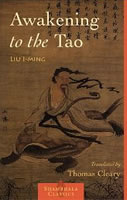
 By Lui I-Ming (1780) and translated by Thomas Cleary
Ripening Peaches: Taoist Studies and Practices By Mike Garofalo
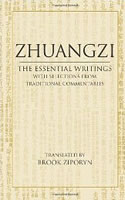
Zhuangzi: The Essential Writings with Selections from Traditional Commentaries
"When the great Tao perishes
There is jen
and justice.
When intelligence is manifest
There is great
deception.
When the six relationships are not in harmony
There is filial
piety and compassion.
When the country is in chaos
Loyal ministers
appear."
- Translated by
Charles Muller, 1891, Chapter 18
"When the way of the Tao is forgotten,
morality and ethics need to be stressed.
When the body's innate intelligence is not heeded,
deception becomes routine, and men learn to pretend to be wise and good.
When genuine peace among people is not regarded;
filial piety and compassion are made apparent.
When a nation falls into chaos; loyalty and patriotism are renewed."
- Translated by
John Dicus, 2002, Chapter 18
""When the great Tao is abandoned,
charity and righteousness appear.
When intellectualism arises,
hypocrisy is close behind.
When there is strife in the family unit,
people talk about 'brotherly love'.
When the country falls into chaos,
politicians talk about 'patriotism'."
- Translated by
John H. McDonald, 1996, Chapter 18
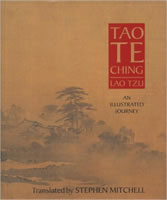
Tao Te Ching: An Illustrated Journey
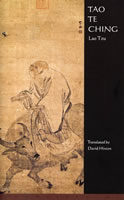
Tao Te Ching
The Book of Tao: Tao Te Ching - The Tao and Its Characteristics
Ripening Peaches: Taoist Studies and Practices
Taoism: Growth of a Religion
Zhuangzi (Chuang Tsu), Daoist Scripture: Bibliography, Links, Resources, Quotations, Notes
Zhuangzi: Basic Writings
Zhuangzi Speaks: The Music of Nature
Lifestyle Advice from Wise Persons
"When the Great Tao had ceased to be observed,
Benevolence and Righteousness found place,
And when world-wisdom linked with shrewdness came,
Then Grand Hypocrisy exposed her face.
And now we have, with families all at strife,
Filial piety, parental care,
With states and clans disordered and confused,
Loyalty, and faithfulness are
there."
- Translation by
Isaac Winter Heysinger, 1903, Chapter 18
"Goodness
and compliance
Came when people lost the way
Spontaneity declined
Hypocrisy was here to stay"
- Translated by
Jim Clatfelder, 2000, Chapter 18
"The reason Great Dao has been abandoned is because there is
benevolence and righteousness.
As wisdom and intelligence spread then there is deception.
As families don’t experience harmony then there is filial piety.
As unconditional love within the households is misunderstood
then there are proper servants."
- Translated by
Nina Correa, 2005, Chapter 18
"Quand la grande Voie
eut dépéri, on vit paraître l'humanité et la justice.
Quand la prudence et la perspicacité se furent montrées, on vit naître une
grande hypocrisie.
Quand les six parents eurent cessé de vivre en bonne harmonie, on vit des actes
de piété filiale et d'affection paternelle.
Quand les États furent tombés dans le désordre, on vit des sujets fidèles et
dévoués."
- Translated by Stanislas Julien, 1842, Chapter 18
Spanish
Language Versions of the Tao Te Ching (Daodejing)
Tao Te Ching en Español
Lao Tsé Tao Te Ching 
Tao Te Ching Traducido por Stephen Mitchell, versión española
Tao Te Ching Traducido al español por el Padre Carmelo Elorduy
Lao Tzu-The Eternal Tao Te Ching
Ripening Peaches: Taoist Studies and Practices By Mike Garofalo Maduración Duraznos: Estudios y Prácticas Taoístas por Mike Garofalo
Tao Te Ching
Lao Tzu - Tao Te Ching
Tao te king
Daodejing Español, Inglés, y Chino Versiones Lingüísticas de la Daodejing
Spanish Language Translations of the Tao Te Ching
"Cuando se abandona el Tao
aparecen la "ética" y la "moral".
Con la "verdad" y la "justicia"
surgen los grandes hipócritas.
Cuando no existe armonía entre los parientes,
hablan de "lealtad a la familia" y de "honrar a los padres".
Cuando hay revueltas en el reino,
aparecen el "patriotismo" y el "nacionalismo",
inventando así la fidelidad del buen súbdito.
Cuando el Tao se pierde aparece la falsedad."
- Translation from Wikisource, 2013, Tao Te Ching, Capítulo 18
"Cuando el dao ha sido abandonado,
aparece la bondad y la rectitud.
Cuando surge la inteligencia y la sabiduría,
aparece la gran hipocresía.
Cuando no hay armonía entre los seis parentescos,
aparece la piedad filial y el amor.
Cuando los Estados caen en el desorden y el caos,
aparecen los honestos vasallos."
- Translated by
Juan Ignacio
Preciado, 1978, Tao Te Ching, Capítulo #
"Al declinar el gran Tao surgieron la "humanidad"
y la "justicia".
Cuando nació el conocimiento y la astucia, apareció la gran
hipocresía.
Al desaparecer los lazos familiares, aparecieron la "piedad
filial' y el "amor".
Cuando el reino cayó en la anarquía, apareció el buen
ministro."
- Translation from
Logia Medio Dia, 2015,
Capítulo 18
"Cuando decayó el Tao, vinieron la caridad y lajusticia.
Conlos talentos y
los ingenios vinieron los falsos artificios.
Cuando faltó la armonía entre
los seis parientes, se inventaron la piedad y el amor.
Para remediar las
revueltas de la nación, se inventóla fidelidad del súbdito."
- Translated by
Carmelo Elorduy,
2006, Capítulo # 18
"Cuando el Tao se olvida
Deber y justicia degeneran;
Entonces, la sabiduría y la sagacidad
Se pierden bajo la hipocresía.
Cuando se deshacen las relacciones familiares
El respeto y la devoción degeneran;
Cuando una nación cae en el caos
Han de nacer la lealtad y el patriotismo."
- Translated by
Antonio Rivas Gonzálvez, 1998, Tao Te Ching, Capítulo 18
Spanish Language Concordance to the Tao Te Ching
Created by Michael P. Garofalo, Green Way Research, Valley Spirit Center, Gushen Grove Notebooks, Vancouver, Washington © 2018 CCA 4.0
Next Chapter of the Tao Te Ching #19
Previous Chapter of the Tao Te Ching #17
Chapter and Thematic Index to the Tao Te Ching
Tao Te Ching
Commentary, Interpretations, Research Tools, Resources
Chapter 18
Lao Tzu: Te-Tao Ching - A New Translation Based on the Recently Discovered Ma-wang-tui
Texts (Classics of Ancient China)
Early Daoist Scriptures. Translated by Stephen R. Bokenkamp. Peter
Nickerson, Contributor. Berkeley, University of California Press, Revised
Edition, 1999. 520 pages. This compilation includes a translation of "The Xiang'er Commentary to the Laozi," pages 78-148, with a long introduction to the
same, pages 29-78. Scholars think this document was created in the late
5th century, CE. It was discovered in Buddhist Grottos in 1920, but parts
were missing.
Lao-Tzu: My Words are Very Easy to Understand. Lectures on the Tao Teh
Ching by Professor
Cheng Man-ch'ing (1902-1975). Translated from the Chinese by Tam C. Gibbs, 1981.
Berkeley, California, North Atlantic Books, 1981, 1991. 240 pages.
Includes the Chinese characters for each of the 81 Chapters. A brief
biography of Professor Cheng is included.
Concordance for the
Tao Te Ching. English, Spanish, and Wade-Giles Romanized Chinese
Subject Terms. By Michael P. Garofalo. 2018.
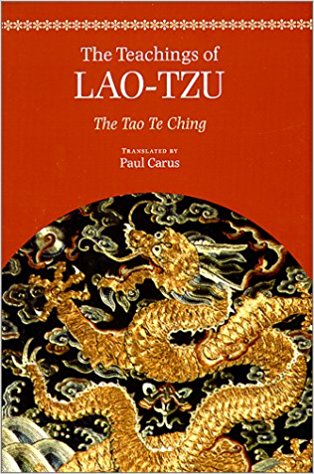
The
Teachings of Lao-Tzu: The Tao Te Ching.
Translation, commentary, and notes by Paul Carus, 1913. New York,
St. Martin's Press, 2000. D.T.
Suzuki worked and studied with Paul Carus around 1905 in Illinois, and
translated together their version the Tao Te Ching.
Daodejing by Laozi: Chapters with Chinese characters, seal script,
detailed word by word concordance, Pinyin (tone#), German, French and English.
This is an outstanding resource for serious students of the Tao Te Ching.
Tao Te
Ching: A New Translation and Commentary. By Ellen M. Chen. Paragon
House, 1989. Detailed glossary, index, bibliography, notes, 274 pages.
One of my favorites.
The New Lao Tzu: A Contemporary Tao Te Ching. By Ray Grigg. Interpretation, comments,
notes by Ray Grigg. Tuttle, 1995. 187 pages.
Das Tao Te King von Lao Tse. Complete versions of all 81 Chapters of
the Tao Te Ching by many different translators in many languages: 124
English, 24 German, 14 Russian, 7 Spanish, 5 French and many other languages.
Links are organized first by languages, and then alphabetically by translators. Formatting
varies somewhat. The original website at Onekellotus went offline in 2012; but, the
extensive collection of these Tao Te Ching versions was
saved for posterity by the Internet Archive Wayback Machine and available as of
9/9/2015. This is an outstanding original collection of
versions of the Daodejing─ the Best on the Internet. Caution:
copyright infringement may sometimes be an issue at this website.
The Tao
and Method: A Reasoned Approach to the Tao Te Ching. A translation and
commentary by Professor Michael Lafargue. New York, SUNY Press, 1994. 640 pages. Detailed
index, bibliography, notes, and tables. An essential research tool.
The Tao
of the Tao Te Ching. A Translation and Commentary by Profesor Michael LaFargue.
State University of New York Press, 1992. Detailed glossary, extensive bibliography, 270 pages. This translation is based on the oldest version ( 168 BCE) of
the Tao Te Ching found in King Ma's tomb - the famous Magwandali
manscript.
81 Chapters arranged in a topical order by the author.
Two Visions of the Way: A Study of the Wang Pi and the Ho-Shang Kung Commentaries on the Lao-Tzu.
By Professor by Alan Kam-Leung Chan. SUNY Series in Chinese
Philosophy and Culture. State University of New York Press, 1991.
Index, bibliography, glossary, notes, 314 pages.
Tao Te Ching
The Taoism Reader
The Lunar Tao: Meditations in Harmony with the Seasons
The Classic of the Way and Virtue: A New Translation of the Tao-te Ching of Laozi as Interpreted by Wang Bi.
Translated by Richard John Lynn. Translations from the Asian Classics
Series. New York, Columbia University Press, 1999. Extensive index,
glossaries, notes, 244 pages.
Tao Te Ching in Chinese characters,
Pinyin Romanization, English and German by Dr. Hilmar
Alquiros.
Tao Te
Ching: Annotated and Explained. Translation and Annotation by Derek
Lin. Foreword by Lama Surya Das. "An inspiring, precise translation
of the ancient Chinese wisdom classic─ with facing-page commentary that brings
the text to life for you." Woodstock, Vermont, 2006, 2010. 167 pages.
How to Live a Good Life:
Advice from Wise Persons
One Old Philosopher's
Notebooks Research, reading, and reflections by Mike Garofalo.
Yellow Bridge
Dao De Jing Comparison Table Provides side by side comparisons of
translations of the Tao Te Ching by James Legge, D. T. Suzuki, and Dwight
Goddard. Chinese characters for each paragraph in the Chapter are on the
left; place your cursor over the Chinese characters to see the Pinyin
Romanization of the Chinese character and a list of meanings.
Translators Index,
Tao Te Ching Versions in English, Translators Sorted Alphabetically by Translator, Links to Books and
Online Versions of the Chapters
Taoism and the Tao Te
Ching: Bibliography, Resources, Links
Spanish Language
Translations of the Tao Te Ching, Daodejing en Español, Translators Index
Chapter 17 in the
Rambling
Taoist Commentaries by Trey Smith. The
Rambling Taoists are Trey Smith and Scott Bradley.
Tao Te Ching, Translations into English: Terebess Asia Online (TAO). 124
nicely formatted complete English language translations, on separate webpages, of the Daodejing.
Alphabetical index by translators. Each webpage has all 81 chapters of the Tao Te
Ching translated into English. A useful collection! Many
reformatted and colored versions from the original collection at
Das Tao Te King von Lao Tse. Caution: copyright infringement may
sometimes be an
issue at this website.
Tao Te Ching: The Definitive Edition
Chinese Reading of the Daodejing
Wang Bi's Commentary on the Laozi with Critical Text and Translation.
By Professor Rudolf G. Wagner. A SUNY Series in Chinese Philosophy and
Culture. English and Mandarin Chinese Edition.
State University of New York Press; Bilingual edition (October 2003). 540
pages. Wang Bi (Wang Pi, Fusi), 226-249 CE,
Commentary on the Tao Te
Ching.
By Hans-Georg Moeller. Columbia University Press, 2006, 176 pages.
Valley Spirit, Gu Shen,
Concept, Chapter 6
Valley Spirit Center in Red
Bluff, California.
Sacred
Circle in the Gushen Grove.
Lao-tzu's Taoteching
The Way and Its Power: Lao Tzu's Tao Te Ching and Its Place in Chinese
Thought. By Arthur
Waley, 1889-1966. Translation and commentary by Arthur Waley in 1934.
Part of the UNESCO collection of representative works, 1994. Grove Press,
First Edition, 1994. 262 pages.
Reading Lao Tzu: A Companion to the Tao Te Ching with a New Translation
Dao De Jing: A Philosophical Translation
Thematic Index to the
81 Chapters of the Tao Te Ching
Lieh-Tzu: A Taoist Guide to Practical Living
Revealing the Tao Te Ching: In-depth Commentaries on an Ancient Classic
Cloud Hands Blog
Mike Garofalo writes about Mind-Body Arts, Philosophy, Taoism, Gardening, Taijiquan, Walking, Mysticism,
Qigong, and the Eight Ways.
The Whole Heart of Tao:
The Complete Teachings From the Oral Tradition of Lao Tzu.
Gushen Grove Notebooks for the Tao Te Ching
Green Way Research, Valley Spirit
Center, Gushen Grove Notebooks (2001-2018)
East Los Angeles, California, 1946-1998;
Red Bluff, California from 1998-2017;
Vancouver, Washington from 2107-
Green Way Research, Chapter 18, 2011-2018.
Indexed and Compiled by
Michael P. Garofalo
This webpage was last modified, edited,
maintained, improved or updated on March 1, 2018.
This webpage was first distributed online on February 11, 2011.
Created by Michael P. Garofalo, Green Way Research, Valley Spirit Center, Gushen Grove Notebooks, Vancouver, Washington © 2018 CCA 4.0
Brief Biography of Michael P. Garofalo, M.S.
Valley Spirit Center, Red Bluff, California
Study Chi Kung or Tai Chi with Mike Garofalo

Ripening Peaches: Daoist Studies and Practices
Zhuangzi (Chuang Tzu, Zhuang Zhou, Master Chuang) 369—286 BCE
Taoist Perspectives: My Reading List
Bodymind Theory and Practices, Somaesthetics
How to Live a Good Life: Advice from Wise Persons
Pleasures, Satisfaction, Desires
Qigong (Chi Kung) Health Practices
One Old Daoist Druid's Final Journey: Notebooks of the Librarian of Gushen Grove
Index to Cloud Hands and Valley Spirit Websites
Index to English Language Translators of the Tao Te Ching
Recurring Themes (Terms, Concepts, Leimotifs) in the Tao Te Ching
Spanish Language Translations of the Tao Te Ching
The Tao Te Ching (Dao De Jing) by Lao Tzu (Laozi) circa 500 BCE
|
Tao Te
Ching |
|||||||||
| 1 | 2 | 3 | 4 | 5 | 6 | 7 | 8 | 9 | 10 |
| 11 | 12 | 13 | 14 | 15 | 16 | 17 | 18 | 19 | 20 |
| 21 | 22 | 23 | 24 | 25 | 26 | 27 | 28 | 29 | 30 |
| 31 | 32 | 33 | 34 | 35 | 36 | 37 | 38 | 39 | 40 |
| 41 | 42 | 43 | 44 | 45 | 46 | 47 | 48 | 49 | 50 |
| 51 | 52 | 53 | 54 | 55 | 56 | 57 | 58 | 59 | 60 |
| 61 | 62 | 63 | 64 | 65 | 66 | 67 | 68 | 69 | 70 |
| 71 | 72 | 73 | 74 | 75 | 76 | 77 | 78 | 79 | 80 |
| 81 | |||||||||
Return to the Top of this Webpage