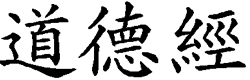
Compiled and Indexed by Michael P. Garofalo
Green Way Research, Valley Spirit Center, Gushen Grove Notebooks, Vancouver, Washington
Chapter 2 Chapter 4 Index to All 81 Chapters Daoism Concordance Commentary Cloud Hands Blog
Classic Book (Ching) about the Tao (Way, Nature, Patterns, Processes) and Te (Virtue, Potency, Power, Integrity, Wise Person, Sage)
Concordance: Indexing, Search Terms, Topics, Themes, Keys, Subjects
English and Chinese (Wade-Giles) Terms:
Action, Actionless
Activity (wu wei), Anxious or Troubled (luan), Basic Needs, Bones
or Frame (ku), Causes or Makes (shih),
安民
Compete or Contend (chêng),
Control, Controlling Desires, Dare or Venture (kan), Desire or Want (yü),
Difficult (nan), Display or Show (chien), Emotions, Empty (hsü),
Essentials, Goods or Merchandise (huo), Governing, Heart or Mind (hsin),
Honor or Esteem (shang), Inner Life, Jealousy, Keeping the People at
Rest, Knowledge (chih), Lead and Teach by Example, Limiting Actions,
Making (wei), Natural, No-Desire (wu yü), No-Knowledge (wu
chih), Not Acting, Not Hoarding, Not-Thinking, Obtain or Get (tê),
Orderly or Controlled (chih), Peace, Prize or Honor (kuei),
Quieting the People (min), Quieting Thoughts, Quietism, Quietness, Rest,
Restraint, Rule or Govern (chih), Sage (shêng jên), Simple Minded,
Simplicity, Steal or Theft (tao), Stilling Mind, Stomach or Belly (fu),
Strengthen or Sturdy (ch'iang), Value, Virtuous or Worthy (hsien),
Wants or Desires (yü), Weakened or Relaxed (jo), Will Power, Wise
Leaders Exercise Restraint, Wishes or Ambitions (chih).
Términos en Español:
Acallar los
Pensamientos, Acción, Ambiciones, Ansioso, Atreverse, Bienes, Celos, Competir,
Contender, Control, Controlada, Corazón, Deseos, Difícil,
Digno, Emociones, Empresa, Espíritus, Estima, Exhibición, Fortalecimiento,
Fuerza de voluntad, Fuerza, Gobierno,
Hacer, Honor, Honra, Huesos, Limitación de Acciones, Marcas, Mente, Mercancías,
Moderación, Mostrar,
Natural, Necesidades Básicas, No Acaparamiento, No Actuar, No Deseo, No Quiere,
Obtener,
Ordenada, Paz, Pensamiento, Premio, Preocupado, Regla, Relajado, Resto,
Restricción, Robar, Robo, Saber, Sabios, Sausas, Sencillez, Tranquilidad,
Vacío,
Valor, Vida, Virtuosos.
Electronic Concordance for all 81 Chapters of the Tao Te Ching
English Language Translations of the Tao Te Ching, Chapter 3
"Neglecting to praise the worthy deters people from emulating them,
Not prizing rare treasures deters a man from becoming a thief,
Ignoring the things which awaken desire keeps the heart at rest.
Therefore the wise ruler does not suggest unnecessary things,
He seeks to satisfy the minds of his people.
He seeks to allay appetites but strengthen bones.
He ever tries by keeping people in ignorance to keep them satisfied
and those
who have knowledge he restrains from evil.
If he, himself, practices restraint then everything is in quietness."
- Translated by Dwight Goddard
and Henri Borel, 1919,
Chapter 3
"By not exalting the talented you will cause the people to cease from rivalry and contention.
By not prizing goods hard to get, you will cause the people to cease from robbing and stealing.
By not displaying what is desirable, you will cause the people's hearts to remain undisturbed.
Therefore, the Sage's way of governing begins by
Emptying the heart of desires,
Filling the belly with food,
Weakening the ambitions,
Toughening the bones.
In this way he will cause the people to remain without
knowledge and without desire, and prevent the
knowing ones from any ado.
Practice Non-Ado, and everything will be in order."
- Translated by
John C. H. Wu, 1961, Chapter 3
"Not to esteem the worthy
Causes the people not to contend.
Not to value goods that are hard to get
Causes the people not to do any stealing.
Not to see desirables
Causes the people’s minds not to be confused.
Therefore, the governance of the sages:
Empties their minds
Makes true their insides
Weakens their determinations
Strengthens their bones
Always causing the people not to know
Not to desire
Causing the clever men not to dare to act!
By doing without “doing”
There is necessarily nothing not managed."
- Translated by
Aalar Fex, 2006, Chapter 3
"Avoiding distinctions of merit among the people prevents jealousy.
Not setting a value on rare things prevents theft.
Not seeking the things of peace keeps the mind in peace.
Thus the Sage governs by ridding the heart of its desires;
giving the
stomach due satisfaction,
by resting the muscles and strengthening the
bones,
by preserving the world from a knowledge of evil and hence from
its desire,
and by making those who have such knowledge afraid to use
it.
He acts by non-action, and by this he governs all."
- Translated by Walter Gorn-Old, 1904, Chapter 3
"If you glorify the worthy, you will bring forth strife.
Overvaluing possessions induces thievery.
If you desire the expensive, your heart will never loosen.
The master leads by clearing people's minds,
He fills their inner being, weakens their ambitions,
and strengthens their
bones.
He helps people lose all that they know.
If people lack cleverness and desire,
then they will not presume to act, and
harmony will reign.
By not striving, he maintains his inner harmony,
And remains at peace within himself."
- Translated by
John Dicus, 2002, Chapter 3
"Do not promote those who excel
And folk will have no cause to quarrel.
Prize not goods too hard to find
And people won’t be turned to crime.
The people’s thoughts remain subdued.
Thus under a wise man’s rule
Blank are their minds
But full their bellies,
Meek their wills
But tough their bones.
He keeps the folk
From knowing and craving,
And the intellects
From daring to lead.
By acting himself without taking the lead
Inside his kingdom all is well ruled."
- Translated by
Moss Roberts, 2001, Chapter 3
"Don’t place a lot of value on being superior;
then that will
cause people not to argue with each other.
Don’t hold as precious objects that are hard to come by;
that
will cause people not to steal from one another.
Don’t be willing to pay too much attention to those desires;
that will cause people not to be confused.
It’s just natural for a wise person to rule by:
Emptying their hearts;
Satisfying their stomachs;
Weakening their determination;
Strengthening their bones;
Constantly reminding people to accept ignorance
while
eliminating their desires.
That causes the kind of understanding that doesn’t require
being foolishly adventurous;
Not being willing to act, but to contentedly stop.
Follow that procedure and there will be nothing
that doesn’t
cure problems."
- Translated by
Nina
Correa, 2005, Chapter 3
"If you're always groveling before the great,
people
become envious and quarrelsome.
If you
hide your riches you
obviously think people are robbers.
Soon
they will be.
If, on
the other hand, you flaunt your things
you
encourage people to be devoured by their own greed.
So the
sage governs himself, not other people.
He
empties his own mind and so helps free others from greed and envy.
He fills
their stomachs and helps them relax.
He
strengthens people's bodies.
In the
company of people, he tries to find simplicity.
Look.
Forget how smart you think you are.
Stop wanting everything,
as
though there is something out there that will cure or fix you.
Just
make things happen by allowing them to happen
Then
everything will turn out alright."
- Translated by
Crispin Starwell, Chapter 3
"Do not exalt the talented, and the people cease from rivalry and contention.
Do not prize goods hard to get, and the people cease from robbing and
stealing.
Do not display what is desirable, and the people's hearts remain
undisturbed.
Therefore, the sage's way of governing is: emptying the mind, filling the
belly,
weakening the will, toughening the bones.
In this way he will cause the people to remain without knowledge
and without
desire, and prevent the knowing ones from any doing.
Doing "non-doing", and everything will be in order."
- Translated by
Tran Tien Cong, Chapter 3

This webpage work is licensed under a Creative Commons Attribution-NonCommercial-NoDerivatives 4.0 International License.
Created by Michael P. Garofalo, Green Way Research, Valley Spirit Center, Gushen Grove Notebooks, Vancouver, Washington © 2020 CCA 4.0
 Translated by Eva Wong
  Translated by Philip Ivahoe
 By James Miller
 Translated by Stephen Bokencamp
Tai Chi Chuan, Qigong, Taoist Body-Mind Arts and Practices
How to Live a Good Life: Advice from Wise Persons
 By Alexander and Annellen Simpkins
 Translated by Thomas Cleary
 By Livia Kohn
"Not to value and employ men of superior ability is the way to keep the
people from rivalry among themselves;
Not to prize articles which are difficult to procure is the way to keep them
from becoming thieves;
Not to show them what is likely to excite their desires is the way to keep their
minds from disorder.
Therefore the sage, in the exercise of his government, empties their minds,
fills their bellies,
weakens their wills, and strengthens their bones.
He constantly tries to keep them without knowledge and without desire,
and where
there are those who have knowledge, to keep them from presuming to act on it.
When there is this abstinence from action, good order is universal."
- Translated by James Legge, 1891,
Chapter 3
"Exalt not men, so that the people may not fight.
Prize not rare objects, so that the people may not steal.
Look not on desirable things, so that the people's hearts be not troubled.
That is why the self-controlled man governs by stilling the emotions,
by
quieting thought, by mastering the will, by increasing strength.
He always teaches the people to know the Inner Life, to desire the Inner Life.
He teaches the Masters of knowledge to cease from activity,
to act
through activity of the Inner Life; then Inner Life will govern all."
- Translated by
Isabella Mears, 1916, Chapter 3
"Do not exalt the worthy,
so that people do not compete.
Do not value treasures,
so that people do not steal.
Do not display objects of desires,
so that people do not be disturbed.
Therefore, the sage leads
by emptying people's minds
and filling their cores,
by weakening their ambition
and strengthening their bodies.
He always help the people
acquire no "knowledge"
and no desires.
And the crafty to be afraid to act.
Practice not-doing,
and everything will fall into place."
- Translated by
Edwin Shaw, 1996, Chapter 3
"Not exalting cleverness causes the people not to contend.
Not putting high prices on hard-to-get goods causes the people not to steal.
Not seeing anything to want causes the mind not to be confused.
Therefore the government of sages empties the mind
and fills the middle, weakens the ambition and strengthens the bones,
always keeping the people innocent and passionless.
It makes the sophisticated not dare to contrive;
action being without contrivance, nothing is disordered."
- Translated by
Thomas Cleary, 1991, Chapter 3
"Without boasting cleverness, there would be no quarrel among people.
Without treasuring precious wealth and utensils, there would be no theft by people.
Without knowing the objects of desires, there will be no dissatisfaction among people.
Therefore, the person in tune with Tao rules the people by emptying
his/her mind
and managing them to fulfill their basic needs and by
weakening their ambition
and strengthening their moral uprightness.
When people lack of knowledge of distinctions and desires for them,
Cleaver persons will not attempt to artificially interfere.
If no artificial things are done, nothing is unaccomplished."
- Translated by
Eichi Shimomisse, 1998, Chapter 3
"Promote no exalted persons, thus enabling the people to cease competition.
Prize no rare goods, thus enabling the people to cease robbery.
Don't display desirable things.
Let people's minds be undisturbed.
A Sage ruler enabled them to be tranquil in their hearts;
be filled in their stomachs;
be weakened in their ambitions;
be strengthened in their will.
He made them less intelligent and less desirous.
If intelligent people are made afraid of doing wrong,
then no one in the world can not be governed."
- Translated by Tang Zi-chang, Chapter 3
"Not to give preference to the high and mighty will
deter the envy of the people in order.
To demonstrate no desire will give them
peace in their hearts.
Therefore, when the Sage governs, he frees his people of
passionate wishes
and offers serenity to their souls.
The Sage weakens greedy
curiosity and strengthens the backbone of the upright.
So does he master true
serenity in good government."
- Translated by
Unbekannten, Chapter 3
"Keep the people from contention by disregarding men of abilities;
Keep the people from theft by not valuing rare goods;
Keep the people from the disturbed state of mind by concealing what is desirable.
That is why in governing the people
The sage simplifies their minds but fills up their stomachs;
weakens their wills, but strengthens their bones.
By keeping the people from knowledge and desires,
He disables wise men from taking any active action.
Act in accordance with this principle of inaction
And the world will be kept in order everywhere."
- Translated by
Zengkun Gu, Chapter 3
 Translation and elucidation by Hua Ching Ni
 Translated by Brian Walker
 Translated by Arthur Waley
 Translated by Lionel and and Herbert Giles
 By Eva Wong
"By not showing exclusive approval of those who are eminent in virtue,
the
Sage prevents the people from quarrelling;
By not setting high store on things difficult to obtain,
he prevents the people
from becoming robbers;
By closing his eyes to objects of desire,
he secures his heart from corruption.
Wherefore the Sage, in governing, does so with a heart
empty of all distractions
and temptations,
but with a bosom full of justice and benevolence,
He makes his will pliant, his bodily frame-work firm;
He ever keeps the people from harmful knowledge and desires,
and prevents those
who have such knowledge from daring to put it into practice.
He pursues a policy of inaction, and there is therefore nothing that is left
ungoverned."
- Translated by Frederic H. Balfour, 1884, Chapter
3
A Chinese Language Version of Chapter 3 of the Tao Te
Ching by Lao Tzu
A
note
on my style of displaying the Chinese characters of the Tao Te Ching
不尚賢, 使民不爭; 不貴難得之貨, 使民不為盜.
不見可欲, 使心不亂.
是以聖人之治.
虛其心.
實其腹.
弱其志.
強其骨.
常使民無知無欲.
使夫知者不敢為也.
為無為.
則無不治.
- Chinese characters, Tao Te Ching, Chapter 3
pu shang hsien, shih min pu chêng; pu kuei nan tê chih
huo, shih min pu wei tao.
pu chien k'o yü, shih min hsin pu luan.
shih yi shêng jên chih chih.
hsü ch'i hsin.
shih ch'i fu.
jo ch'i chih.
ch'iang ch'i ku.
ch'ang shih min wu chih wu yü.
shih fu chih chê pu kan wei yeh.
wei wu wei.
tsê wu pu chih.
- Wade-Giles Romanization, Tao Te Ching, Chapter 3
Audio
Version in Chinese of Chapter 3 of the Tao Te Ching
bu shang xian, shi min bu zheng;
bu gui nan de zhi huo, shi min bu wei dao.
bu jian ke yu, shi min xin bu luan.
shi yi sheng ren zhi zhi.
xu qi xin.
shi qi fu.
ruo qi zhi.
qiang qi gu.
chang shi min wu zhi wu yu.
shi fu zhi zhe bu gan wei ye.
wei wu wei.
ze wu bu zhi.
- Hanyu Pinyin
Romanization, Daodejing, Chapter 3
Tao Te Ching in Chinese characters and English (includes a word by word key) from YellowBridge
Tao Te Ching in Chinese characters, Pinyin Romanization, English and German by Dr. Hilmar Alquiros.
Laozi Daodejing: Chapters with Chinese characters, seal script, detailed word by word concordance, Pinyin, German, French and English. Excellent!
Chinese and English Dictionary, MDGB
Dao De Jing Wade-Giles Concordance by Nina, Dao is Open
Dao De Jing English and Wade-Giles Concordance by Mike Garofalo
Tao Te Ching in Pinyin Romanization with Chinese characters, WuWei Foundation
Tao Te Ching in Pinyin Romanization
Tao Te Ching in Chinese characters and English
Tao Te Ching in Chinese characters, English, Word by word analysis, Zhongwen
Tao Te Ching in Chinese characters: Big 5 Traditional and GB Simplified
Tao Te Ching in Chinese characters, Pinyin and Wade Giles Romanization spellings, English; a word for word translation of the Guodian Laozi Version.
Lao Zi's Dao De Jing: A Matrix Translation with Chinese Text by Bradford Hatcher.
Tao Te Ching: The Definitive Edition
"Not exalting the worthy keeps the people from emulation.
Not valuing
rare things keeps them from theft.
Not showing what is desirable keeps
their hearts from confusion.
Therefore the sage rules:
By emptying their hearts,
Filling their stomachs,
Weakening their ambitions
And strengthening their bones.
He always keeps them from knowing what is evil and desiring what is
good;
thus he gives the crafty ones no chance to act.
He governs by
non-action; consequently there is nothing ungoverned."
- Translated by
Ch'u Ta-Kao, 1904, Chapter 3
"If no one esteems the best, men will be free from contention.
If no one values the precious, men will be free from illegal gain.
If men see nothing to desire, their minds will be free from confusion.
Therefore, the wise guides men by relaxing their minds and keeping their bellies firm;
By reducing their wills and letting their physiques become strong.
He always frees men from the search for knowing and demanding.
This means that the knower dares not act for the known.
When action is through non-action, no one is uncultivated."
- Translated by
Chang Chung-Yuan, Chapter 3
The Routledge Encyclopedia of Taoism
The Complete Works of Lao Tzu: Tao Teh Ching & Hua Hu Ching
Tai Chi Chuan, Qigong, Taoist Body-Mind Arts and Practices
The Dao De Jing: A Qigong Interpretation by Dr. Yang Jing-Ming
How to Live a Good Life: Advice from Wise Persons
Tai Chi Chuan, Qigong, Taoist Body-Mind Arts and Practices
Dao De Jing: A Philosophical Translation by Roger T. Ames and David L. Hall
Practicing the Tao Te Ching: 81 Steps on the Way by Solala Towler
"The holy man abides by non-assertion in his affairs and conveys
by silence his instruction.
When the ten thousand things arise,
verily, he refuses them not.
He quickens but owns not.
He acts
but claims not.
Merit he accomplishes, but he does not dwell on
it.
Since he does not dwell on it
It will never leave him.”
- Translated by
Paul Carus and D.T. Suzuki, 1913, Chapter 3
"Stop looking for rare, moral persons (hsien) to put in
power.
There will be jealousies among people, jealousies and strife.
If we cease to set store by products that are hard to get,
there will be less outright thieves.
If the people never see such things as excite desire,
their hearts can remain placid and undisturbed.
Therefore the wise one rules by emptying their hearts.
He fills their bellies, weakens their brightness and toughens their bones,
ever striving to make the people without knowledge.
He sees to it that if there are any who are bright and clever,
they dare not interfere.
Through his non-do actions all [such subjection] runs well [for some time]."
- Translated by
Byrn Tromod,
1997, Chapter 3
By Alexander SimkinsTai Chi Chuan, Qigong, Taoist Body-Mind Arts and Practices
How to Live a Good Life: Advice from Wise Persons
 By Derek Lin
 By Ming-Dao Deng
 By Benjamin Hoff
 By Ming-Dao Deng
 Translated by Thomas Cleary
Return to the Top of this Webpage
"If we stop looking for “persons of superior morality” (hsien) to put in power,
There will be no more jealousies among the people.
If we cease to set store by products that are hard to get,
There will be no more thieves.
If the people never see such things as excite desire,
Their hearts will remain placid and undisturbed.
Therefore the Sage rules
By emptying their hearts
And filling their hearts?
Weakening their intelligence
And toughening their sinews
Ever striving to make the people knowledgeless and desireless.
Indeed he sees to it that if there be any who have knowledge,
They dare not interfere.
Yet through his actionless activity all things are duly regulated."
- Translated by
Arthur Waley, 1934, Chapter 3
"Glorify the superior, hatch jealousy and competition.
Value possessions, provoke stealing.
Stimulate desire, enflame the passions.
Therefore, the Tao–Master would rule
by emptying minds and filling bellies,
by weakening desire and strengthening bodies.
He would lead the people away from knowing and wanting
and would try to prevent those with knowledge
from interfering.
Practice non–ado, and everything will fall into place."
- Translated by
George Cronk, 1999, Chapter 3
"Not making any special case of cleverness, of ability,
will have the result that people will no longer push themselves.
Not to prize rare objects will have the result that no one will continue to steal.
To show nothing as alluring will have the effect of putting the people's hearts at rest.
Therefore the politics of Sages consists in emptying the minds of men
and filling their stomachs, in weakening their initiative and
strengthening their bones.
Their constant care is to hold the people in ignorance and apathy.
They make things such that clever people dare not to act,
for there is nothing that cannot be sorted out through the practice of non-action."
- Translated by
Derek Bryce, 1999, Chapter 3
Created by Michael P. Garofalo, Green Way Research, Valley Spirit Center, Gushen Grove Notebooks, Vancouver, Washington © 2020 CCA 4.0
"If you overly esteem talented individuals,
people will become overly competitive.
If you overvalue possessions,
people will begin to steal.
Do not display your treasures
or people will become envious.
The Master leads by
emptying people's minds,
filling their bellies,
weakening their ambitions,
and making them become strong.
Preferring simplicity and freedom from desires,
avoiding the pitfalls of knowledge and wrong action.
For those who practice not-doing,
everything will fall into place."
- Translated by
John H. McDonald, 1996, Chapter 3
 By Hu Xuzehi
 Annotated translation by Victor Mair
  By Ha Poong Kim
 By Hans-Georg Moeller
 Ripening Peaches: Taoist Studies and Practices By Mike Garofalo
 By Roger T. Ames and David T. Hall
Tai Chi Chuan, Qigong, Taoist Body-Mind Arts and Practices
How to Live a Good Life: Advice from Wise Persons
 By Arthur Waley
"When worth is not honoured the people may be kept from strife.
When rare articles are not valued the people are kept from theft.
When the desirable is left unnoticed the heart is not confused.
Therefore, the method of government by the Holy Man is to empty the
heart,
while strengthening the purpose; to make the will pliant, and the
character strong.
He ever keeps the people simple-minded and
passionless,
so that the world-wise do not dare to plan.
Practice non-action and everything will be regulated."
- Translated by
C. Spurgeon Medhurst, 1905, Chapter 3
"Bestowing honor breeds ambitions.
Hoarding treasure invites thieves.
Displaying objects of desire sows the seeds of discontent.
Therefore the sage governs
by emptying minds and filling bellies,
by weakening wills and strengthening bones.
He extols the virtue of desireless unknowing
and keeps intellects off balance.
When not-doing is accomplished,
nothing remains undone."
- Translated by
Bart Marshall,
2006, Chapter 3
"If you glorify the worthy, you will bring forth strife.
Overvaluing possessions induces thievery.
If you desire the expensive, your heart will never loosen.
The master leads by clearing people's minds,
He fills their inner being, weakens their ambitions,
and strengthens their bones.
He helps people lose all that they know.
If people lack cleverness and desire,
then they will not presume to act, and harmony will reign.
By not striving, he maintains his inner harmony,
And remains at peace within himself."
- Translated by
Rivenrock, Chapter 3
Tao Te Ching
Tai Chi Chuan, Qigong, Taoist Body-Mind Arts and Practices
How to Live a Good Life: Advice from Wise Persons
Lao Tzu: Tao Te Ching
 Translated by Livia Kohn
Dao De Jing: The Book of the Way
"Not
honoring men of worth keeps the people from competing;
Not wanting rare things keeps the people from thievery;
Not showing off desirous objects keeps the hearts of the people from disaster.
That is why the Sage governs himself by relaxing the mind,
reinforcing the abdomen, gentling the will, strengthening the bones.
Always cause the people to be without knowledge or desires.
Cause the intelligent ones to dare not act.
Let there be Non-action and there is nothing that will not be well regulated."
- Translated by
Tam C. Gibbs, 1981, Chapter 3
"When the superior are not exalted, envy will not be aroused.
Then there will be no rivalry or contention among people.
When wealth is not treasured, desire for possessions will not be stirred up.
Then people will not be tempted to rob one another.
By shutting that which is desirable out of sight, the heart will remain undisturbed.
Then there will be no confusion in the hearts of people.
The guidance of the Universal One of natural wholeness is therefore:
Empty your mind.
Enjoy good health.
Weaken your ambitions.
Strengthen your essence.
When people are free from cunning, desire, and artifice,
everything will be well-ordered of its own accord."
- Translated by
Ni Hua-Ching, 1995, Chapter 3
"Do not exalt the worthy [xian], and so keep the common folk from contention.
Do not value goods hard to get, and so stop the common folk from becoming thieves.
Do not let them see desirable things, and so spare the hearts/minds of the common folk from disorder.
Therefore the way the sage governs is to keep their hearts/minds empty and their bellies full.
He keeps their wills weak and their bones strong.
He always keeps the common folk free from the capacity for knowing and from feeling desire.
And prevents the knowledgeable from ever daring to act.
Because he acts without conscious effort, nothing remains ungoverned."
- Translated by
Richard John Linn, Chapter 3
Walking the Way: 81 Zen Encounters with the Tao Te Ching
The Tao of Zen
Tao Te Ching: Zen Teachings on the Taoist Classic
Buddhism and Taoism Face to Face: Scripture, Ritual, and Iconographic Exchange in Medieval China
Tai Chi Chuan, Qigong, Taoist Body-Mind Arts and Practices
How to Live a Good Life: Advice from Wise Persons
"Exalt
not the wise,
So that the people shall not scheme and contend;
Prize not rare objects,
So that the people shall not steal;
Shut out from site the things of desire,
So that the people's hearts shall not be disturbed.
Therefore
in the government of the Sage:
He keeps empty their hearts
Makes full their bellies,
Discourages their ambitions,
Strengthens their frames;
So that the people may be innocent of knowledge and desires.
And the cunning ones shall not presume to interfere.
By action without deeds
May all live in peace."
- Translated by
Lin Yutang,
1955, Chapter 3
|
Tao Te
Ching |
|||||||||
| 1 | 2 | 3 | 4 | 5 | 6 | 7 | 8 | 9 | 10 |
| 11 | 12 | 13 | 14 | 15 | 16 | 17 | 18 | 19 | 20 |
| 21 | 22 | 23 | 24 | 25 | 26 | 27 | 28 | 29 | 30 |
| 31 | 32 | 33 | 34 | 35 | 36 | 37 | 38 | 39 | 40 |
| 41 | 42 | 43 | 44 | 45 | 46 | 47 | 48 | 49 | 50 |
| 51 | 52 | 53 | 54 | 55 | 56 | 57 | 58 | 59 | 60 |
| 61 | 62 | 63 | 64 | 65 | 66 | 67 | 68 | 69 | 70 |
| 71 | 72 | 73 | 74 | 75 | 76 | 77 | 78 | 79 | 80 |
| 81 | |||||||||
"Not promoting the wise and worthy brings it about that the people are not contentious.
Not prizing goods hard to come by brings it about that the people do not become thieves
Not paying attention to the desirable brings it about that the people's minds do not become disordered.
And so, the government of the Wise Person: Empty their minds,
fill
their bellies weaken their ambitions, strengthen their bones.
Always bring it about that the people are without knowledge and
without desires.
Bring it about that the clever ones do not presume to
set about doing.
Do Not Doing and nothing will be left un-governed."
- Translated by
Michael LaFargue, 1992, Chapter 3
"Die Tüchtigen nicht bevorzugen,
so macht man, daß das Volk nicht streit.
Kostbarkeiten nicht schätzen,
so macht man, daß das Volk nicht stiehlt.
Nichts Begehrenswertes zeigen,
so macht man, daß des Volkes Herz nicht wirr wird.
Darum regiert der Berufene also:
Er leert ihre Herzen und füllt ihren Leib.
Er schwächt ihren Willen und stärkt ihre Knochen
und macht, daß das Volk ohne Wissen
und ohne Wunsche bleibt,
md sorgt dafür,
daß jene Wissenden nicht zu handeln wagen.
er macht das Nichtmachen,
so kommt alles in Ordnung."
- Translated by Richard Wilhelm, 1911, Chapter
3
Nichtwirken -- Grundsatz aller Menschenführung
Die Fähigen auszeichnen,
das heißt: im Volke Streber erziehen.
Das Seltene preisen, das heißt: die Neider locken.
Die Begierden reizen, das heißt: die Herzen verwirren.
Daher weckt ein weiser Fürst keine Leidenschaften,
sondern sorgt für Zufriedenheit;
weckt keine Begierden,
sondern läßt sein Volk in sich stark Seyn;
weckt keinen Wissensdrang,
sondern fördert die Herzensbildung.
Er selbst wirkt-ohne zu wirken
und erwirkt gerade dadurch die Ordnung des Reichs.
- Translated
by Rudolf
Backofen, 1949, Chapter 3
"If those who are excellent find no
preferment,
The people will cease to contend for promotion.
If goods that are hard to obtain are not favored,
The people will cease to turn robbers or bandits.
If things much desired are kept under cover,
Disturbance will cease in the minds of the people.
The Wise Man's policy, accordingly,
Will be to empty people's hearts and minds,
To fill their bellies, weaken their ambition,
Give them sturdy frames and always so,
To keep them uniformed, without desire,
And knowing ones not venturing to act.
Be still while you work
And keep full control
Over all."
- Translated by
Raymond Blakney, 1955, Chapter 3
This webpage work is licensed under a Creative Commons Attribution-NonCommercial-NoDerivatives 4.0 International License.
Created by Michael P. Garofalo, Green Way Research, Valley Spirit Center, Gushen Grove Notebooks, Vancouver, Washington © 2020 CCA 4.0
Tao Te Ching
The Book of Tao: Tao Te Ching - The Tao and Its Characteristics
Ripening Peaches: Taoist Studies and Practices
Taoism: Growth of a Religion
Zhuangzi (Chuang Tsu), Daoist Scripture: Bibliography, Links, Resources, Quotations, Notes
Zhuangzi: Basic Writings
Zhuangzi Speaks: The Music of Nature
Lifestyle Advice from Wise Persons
"Rewarding not the talented from fierce contention frees,
With wealth unprized, the people will not take to thievish arts,
Not seeing what awakes desire will keep the mind at ease,
And so the sage' s governing unloads the people' s hearts.
He fills the stomach, strengthens bones, and calms the daring will,
He causes people not to know desires they should not hold,
And those who know of such he keeps, from reckless daring, still,
He acts the nothing acting, and
there' s nothing uncontrolled."
- Translated by
Isaac Winter Heysinger, 1903, Chapter 3
"Do not exalt talents
So that the people will not contend;
Do not treasure goods hard to come by
So that the people will not steal;
Do not parade enviable things
So that the people will not rebel.
Hence, when the sage man ruled,
He emptied their minds,
Filled their stomachs,
Weakened their ambitions,
Strengthened their bones.
He constantly made the people
Uncrafty and unlustful,
And made them know not to be daring.
He acted not, that is all.
Thus, the state cannot but become well-ruled."
- Translated by
Chichung Huang, Chapter 3
"When you praise people for their achievements, people will compete
When you call things valuable, people will steal
When people flaunt desirable things, it will make other people restless
Therefore the sage sets himself to the task of emptying their heads
To make sure they're not hungry, discourage their ambitions and strengthen their bodies
So people will be without anxiety and without the desire for knowledge
And the scientists will be played off the field
When people won't labour anymore
All will live in peace."
- Translated by
Anonymous, Chapter 3
Further Teachings of Lao-Tzu: Understanding the Mysteries (Wen
Tzu)
The Lunar Tao: Meditations in Harmony with the Seasons
 By Lui I-Ming (1780) and translated by Thomas Cleary
Tai Chi Chuan, Qigong, Taoist Body-Mind Arts and Practices
How to Live a Good Life: Advice from Wise Persons
Ripening Peaches: Taoist Studies and Practices By Mike Garofalo
Zhuangzi: The Essential Writings with Selections from Traditional Commentaries
"If no distinctions of superiority and inferiority prevail among
officers,
they will devote themselves to their tasks rather than to
rivalries with one another.
If no special value is placed upon rare things, one will have no incentive for stealing them.
If nothing appears to arouse envy, one will remain satisfied with things as they are
Since this is so, the wise administrator does not lead people to set
their hearts upon
what they cannot have, but satisfies their inner
needs.
He does not promote ambition to improve their status, but
supports their self-sufficiency.
He does not complicate their lives with
knowledge of multifarious details
or with an urge to attend to this,
that and the other.
By keeping people contented, he prevents those who mistakenly believe
that ambition is better than contentment from leading the contented
astray.
By being calm and contented himself, he sets an example for his people."
- Translated by
Archie J. Bahm, 1958, Chapter 3
"Do not glorify the elite, and people will not compete.
Do not treasure rare things, and people will not steal them.
Do not let people see things that induce desire, and people will not commit crimes.
Thus,
the sage will make people know less, but feed them well;
make them less ambitious, but physically strong;
make people less knowledgeable and have less desire.
This way, even knowledgeable people would not dare to have ambition.
Do not coerce people, and then they are not difficult to rule."
- Translated by
Thomas Z. Zhang, Chapter 3
"Not exalting ability ensures that the people do not strive.
Not prizing goods that are difficult to obtain ensures that the people do not become robbers.
Not showing them what they might desire ensures that the people do not feel disturbed in their hearts.
Therefore the Saint, in the exercise of government, empties their
hearts and fills their bellies,
weakens their wills and strengthens
their bones, thus constantly ensuring that the people
are without
knowledge and without desires and that those who have knowledge dare not
act.
He practices Non-action and consequently there is nothing that is
not well governed."
- Translated by
Jan J. L. Duyvendak, 1954, Chapter 3
"En n'exaltant pas les sages, on empêche le peuple de se
disputer.
En ne prisant pas les biens d'une acquisition difficile,
on empêche le peuple de
se livrer au vol.
En ne regardant point des objets propres à exciter des désirs,
on empêche que le
cœur du peuple ne se trouble.
C'est pourquoi, lorsque le saint homme gouverne, il vide son cœur,
il remplit
son ventre son intérieur, il affaiblit sa volonté, et il fortifie ses os.
Il s'étudie constamment à rendre le peuple ignorant et exempt de désirs.
Il fait en sorte que ceux qui ont du savoir n'osent pas agir.
Il pratique le non-agir, et alors il n'y a rien qui ne soit bien gouverné."
- Translated by Stanislas Julien, 1842, Chapter
3
Spanish
Language Versions of the Tao Te Ching (Daodejing)
Tao Te Ching en Español
Lao Tsé Tao Te Ching 
Tao Te Ching Traducido por Stephen Mitchell, versión española
Tao Te Ching Traducido al español por el Padre Carmelo Elorduy
Lao Tzu-The Eternal Tao Te Ching
Ripening Peaches: Taoist Studies and Practices By Mike Garofalo Maduración Duraznos: Estudios y Prácticas Taoístas por Mike Garofalo
Tao Te Ching
Lao Tzu - Tao Te Ching
Tao te king
Daodejing Español, Inglés, y Chino Versiones Lingüísticas de la Daodejing
Spanish Language Translations of the Tao Te Ching, Chapter 3
"No ensalzar los talentos
para que el pueblo no compita.
No estimar lo que es difícil de adquirir
para que el pueblo no se haga ladrón.
No mostrar lo codiciable
para que su corazón no se ofusque.
El sabio gobierna de modo que
vacía el corazón de deseos,
llena el vientre de alimentos,
debilita la ambición,
y fortalece hasta los huesos.
Así evita que el pueblo tenga codicia
y ambiciones,
para que los oportunistas
no busquen aventajarse de los otros.
Quien practica la no-acción,
todo lo gobierna."
- Translation from
Wikisource, 2013, Capítulo
3
"No alabando al honrado se evita el engaño,
No estimando lo raro se evita el robo,
No ostentando la belleza se evita la lujuria.
Así pues, el sabio controla a la gente:
Vaciando sus corazones,
Llenando sus vientres,
Debilitando sus ambiciones,
Y fortaleciendo sus cuerpos.
Si la gente carece de conocimiento y deseo
El más hábil entre ellos es incapaz de actuar;
Si se evitan las acciones
Todos viven pacíficamente."
- Translated by
Antonio Rivas Gonzálvez, 1998, Capítulo
3
"Si no se eleva a los hombres de mérito,
no habrá disputas entre el pueblo.
Si no se valoran los objetos difíciles de conseguir,
no existirán ladrones en el pueblo.
Si no se deja ver lo que puede provocar el deseo,
no se producirán disturbios populares.
Por eso el gobierno del sabio es:
vaciar la mente del pueblo,
y llenar su estómago;
debilitar su ambición,
y fortalecer sus huesos.
Hacer siempre que el pueblo no tenga conocimientos, ni deseos.
Hacer que los inteligentes no se atrevan (a gobernar);
no actuar, en una palabra,
y entonces reinará el orden universal."
- Translated by
Juan Ignacio
Preciado, 1978, Tao Te Ching, Capítulo 3
"No ensalzar los talentos para que el pueblo no compita.
No estimar lo que es difícil de adquirir para que el pueblo no se haga ladrón.
No mostrar lo codiciable para que su corazón no se ofusque.
El sabio gobierna de modo que vacía el corazón, llena el vientre,
debilita la ambición, y fortalece los huesos.
Así evita que el pueblo tenga saber ni deseos,
para que los más astutos no busquen su triunfo.
Quien practica el no-obrar todo lo gobierna."
- Online at Tips
Feng Shui, Anonymous, Capítulo 3
"No ensalzar los talentos
para que el pueblo no compita.
No estimar lo que es difícil de adquirir
para que el pueblo no se haga ladrón.
No mostrar lo codiciable
para que su corazón no se ofusque.
El sabio gobierna de modo que
vacía el corazón,
llena el vientre,
debilita la ambición,
y fortalece los huesos.
Así evita que el pueblo tenga saber
ni deseos,
para que los más astutos
no busquen su triunfo.
Quien practica el no-obrar todo
lo gobierna."
- Spanish Version Online at
RatMachines,
Capítulo 3
"No apreciar los talentos, para que en el pueblo no haya competiciones.
No
estimar los objetos costosos, para que el pueblo no se haga ladrón.
No ver lo
codiciable, para que el corazón no se alborote.
Así, el hombre perfecto sigue la táctica devaciar los corazones y llenar los
estómagos,
debilitar las aspiracionesy robustecer los huesos, hacer que el
vulgo no sepa y no ambicione.
Que los más inteligentes no se atrevan a actuar. Conel no obrar nada hay que
no se arregle."
- Translated by
Carmelo Elorduy,
2006, Capítulo 3
Created by Michael P. Garofalo, Green Way Research, Valley Spirit Center, Gushen Grove Notebooks, Vancouver, Washington © 2020 CCA 4.0

Commentary, Notes, Links,
Comparisons, Resources
Chapter 3
By Mike Garofalo
Lao-tzu's Taoteching
Tao Te Ching: The Taoism of Lao Tzu Explained. By Stefan Stenudd.
CreateSpace Independent Pub., 2015. 320 pages.
Tao Te
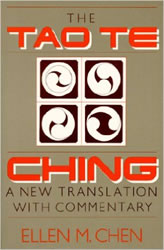
Ching: A New Translation and Commentary. By Ellen Chen. Paragon
House, 1998. 274 pages.
Practicing the Tao Te Ching: 81 Steps on the Way. By Solala Towler.
Foreword by Chunglang Al Huang. Sounds True, 2016. 320 pages.
The Whole Heart of Tao:
The Complete Teachings From the Oral Tradition of Lao Tzu.
Dao De Jing: A Philosophical Translation
Return to the Top of this Webpage
Next Chapter of the Tao Te Ching #4
Previous Chapter of the Tao Te Ching #2
Chapter and Thematic Index to the Tao Te Ching
Tao Te Ching
Bibliography, Links, Research Tools, Resources, Commentaries
Chapter 3
Das Tao Te King von Lao Tse. Complete versions of all 81 Chapters of the Tao Te Ching by many different translators in many languages: 124 English, 24 German, 14 Russian, 7 Spanish, 5 French and many other languages. Links are organized first by languages, and then alphabetically by translators. Formatting varies somewhat. The original website at Onekellotus went offline in 2012; but, the extensive collection of these Tao Te Ching versions was saved for posterity by the Internet Archive Wayback Machine and available as of 9/9/2015. This is an outstanding original collection of versions of the Daodejing─ the Best on the Internet. Caution: copyright infringement may sometimes be an issue at this website.
Tao Te Ching, Translations into English: Terebess Asia Online (TAO). 124
nicely formatted complete English language translations, on separate webpages, of the Daodejing.
Alphabetical index by translators. Each webpage has all 81 chapters of the Tao Te
Ching translated into English. A useful collection! Many
reformatted and colored versions from the original collection at
Das Tao Te King von Lao Tse. Caution: copyright infringement may
sometimes be an
issue at this website.
Lao Tzu: Te-Tao Ching - A New Translation Based on the Recently Discovered Ma-wang-tui
Texts (Classics of Ancient China)
Early Daoist Scriptures. Translated by Stephen R. Bokenkamp. Peter
Nickerson, Contributor. Berkeley, University of California Press, Revised
Edition, 1999. 520 pages. This compilation includes a translation of "The Xiang'er Commentary to the Laozi," pages 78-148, with a long introduction to the
same, pages 29-78. Scholars think this document was created in the late
5th century, CE. It was discovered in Buddhist Grottos in 1920, but parts
were missing.
Tao Te Ching: The Definitive Edition
Chinese Reading of the Daodejing
Wang Bi's Commentary on the Laozi with Critical Text and Translation.
By Professor Rudolf G. Wagner. A SUNY Series in Chinese Philosophy and
Culture. English and Mandarin Chinese Edition.
State University of New York Press; Bilingual edition (October 2003). 540
pages. Wang Bi (Wang Pi, Fusi), 226-249 CE,
Commentary on the Tao Te
Ching.
Lao-Tzu: My Words are Very Easy to Understand. Lectures on the Tao Teh
Ching by Professor
Cheng Man-ch'ing (1902-1975). Translated from the Chinese by Tam C. Gibbs, 1981.
Berkeley, California, North Atlantic Books, 1981, 1991. 240 pages.
Includes the Chinese characters for each of the 81 Chapters. A brief
biography of Professor Cheng is included. Professor Cheng was a
Master of Five Excellences: Taijiquan, Painting, Poetry ...
Taijiquan and
Qigong are considered Daoist practices.
The
Teachings of Lao-Tzu: The Tao Te Ching.
Translation, commentary, and notes by Paul Carus, 1913. New York,
St. Martin's Press, 2000. D.T.
Suzuki worked and studied with Paul Carus around 1905 in Illinois, and
translated together their version the Tao Te Ching.
Daodejing by Laozi: Chapters with Chinese characters, seal script,
detailed word by word concordance, Pinyin (tone#), German, French and English.
This is an outstanding resource for serious students of the Tao Te Ching.
The New Lao Tzu: A Contemporary Tao Te Ching. By Ray Grigg. Interpretation, comments,
notes by Ray Grigg. Tuttle, 1995. 187 pages.
The Tao
and Method: A Reasoned Approach to the Tao Te Ching. A translation and
commentary by Professor Michael Lafargue. New York, SUNY Press, 1994. 640 pages. Detailed
index, bibliography, notes, and tables. An essential research tool.
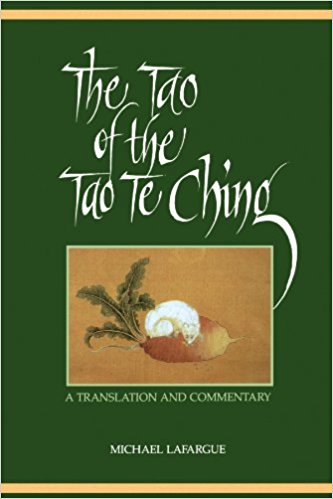
The Tao
of the Tao Te Ching. A Translation and Commentary by Profesor Michael LaFargue.
State University of New York Press, 1992. Detailed glossary, extensive bibliography, 270 pages. This translation is based on the oldest version ( 168 BCE) of
the Tao Te Ching found in King Ma's tomb - the famous Magwandali
manscript.
81 Chapters arranged in a topical order by the author.
Two Visions of the Way: A Study of the Wang Pi and the Ho-Shang Kung Commentaries on the Lao-Tzu.
By Professor by Alan Kam-Leung Chan. SUNY Series in Chinese
Philosophy and Culture. State University of New York Press, 1991.
Index, bibliography, glossary, notes, 314 pages.
Tao Te Ching
The Classic of the Way and Virtue: A New Translation of the Tao-te Ching of Laozi as Interpreted by Wang Bi.
Translated by Richard John Lynn. Translations from the Asian Classics
Series. New York, Columbia University Press, 1999. Extensive index,
glossaries, notes, 244 pages.
Tao Te Ching in Chinese characters,
Pinyin Romanization, English and German by Dr. Hilmar
Alquiros.
Tao Te
Ching: Annotated and Explained. Translation and Annotation by Derek
Lin. Foreword by Lama Surya Das. "An inspiring, precise translation
of the ancient Chinese wisdom classic─ with facing-page commentary that brings
the text to life for you." Woodstock, Vermont, 2006, 2010. 167 pages.
How to Live a Good Life:
Advice from Wise Persons
The Taoism Reader
Tao Te
Ching: A New Translation and Commentary. By Ellen M. Chen. Paragon
House, 1989. Detailed glossary, index, bibliography, notes, 274 pages.
A substantial commentary and fine translation. One of my favorites.
Change Your Thoughts - Change Your Life: Living the Wisdom of the Tao
The Routledge Encyclopedia of Taoism.
Lao Tzu's Tao Teh Ching, A Parallel Translation Collection. Compiled by B.
Boisen.
Tao Te Ching: The Book of the Way. Revised by Sam Torode based on the
translation by Dwight Goddard, 1919. Independent Pub., 2009, 88 pages.
Tao Te Ching: Annotated
and Explained. By Derek Lin. Foreword by Lama Surya Das.
Skylight Illuminations, SkyLight Paths, 2006. 208 pages.
Comparison and Analysis of Selected English Interpretations of the Tao Te Ching.
By Damian J. Bebell and Shannon M. Fera.
Practicing the Tao Te Ching: 81 Steps on the Way. By Solala Towler.
Foreword by Chunglang Al Huang. Sounds True, 2016. 320 pages.
One Old Philosopher's
Notebooks Research, reading, and reflections by Mike Garofalo.
Concordance for the
Daodejing Indexed by Michael P. Garofalo in 2011. Updated
indexing in 2020 of one Chapter each week.
Yellow Bridge
Dao De Jing Comparison Table Provides side by side comparisons of
translations of the Tao Te Ching by James Legge, D. T. Suzuki, and Dwight
Goddard. Chinese characters for each paragraph in the Chapter are on the
left; place your cursor over the Chinese characters to see the Pinyin
Romanization of the Chinese character and a list of meanings.
Translators Index,
Tao Te Ching Versions in English, Translators Sorted Alphabetically by Translator, Links to Books and
Online Versions of the Chapters
Taoism and the Tao Te
Ching: Bibliography, Resources, Links
Spanish Language
Translations of the Tao Te Ching, Daodejing en Español, Translators Index
The Philosophy of the Daodejing
Valley Spirit, Gu Shen,
Concept, Chapter 6
Valley Spirit Center in Red
Bluff, California.
Sacred
Circle in the Gushen Grove.
Lao-tzu's Taoteching
The Way and Its Power: Lao Tzu's Tao Te Ching and Its Place in Chinese
Thought. By Arthur
Waley, 1889-1966. Translation and commentary by Arthur Waley in 1934.
Part of the UNESCO collection of representative works, 1994. Grove Press,
First Edition, 1994. 262 pages.
Reading Lao Tzu: A Companion to the Tao Te Ching with a New Translation
Dao De Jing: A Philosophical Translation
Thematic Index to the
81 Chapters of the Tao Te Ching
Epicurean and Stoicism
in Hellenistic
Philosophy
Lieh-Tzu: A Taoist Guide to Practical Living
Revealing the Tao Te Ching: In-depth Commentaries on an Ancient Classic
Cloud Hands Blog
Mike Garofalo writes about Mind-Body Arts, Philosophy, Taoism, Gardening, Taijiquan, Walking, Mysticism,
Qigong, and the Eight Ways.
The Whole Heart of Tao:
The Complete Teachings From the Oral Tradition of Lao Tzu.
Return to the Top of this Webpage
Gushen Grove Notebooks for the Tao Te Ching
Green Way Research, Valley Spirit
Center, Gushen Grove Notebooks (2011-2020)
Red Bluff, California from 1998-2017;
Vancouver, Washington from 2107-
Green Way Research, Chapter 3, 2011-2020.
Compiled and
Indexed by
Michael P. Garofalo
The indexing information for this webpage was originally
developed in 2011.
The indexing information was updated and expanded for both English and Spanish
on December 8, 2019.
The indexing information for this Chapter 73 was added to the
Concordance
master list (ttclzindex31.htm) on December 8, 2019.
This webpage was last modified, edited,
maintained, changed, reformatted, improved or updated on December 8, 2019.
This webpage was first distributed online on November 4, 2010.
Created by Michael P. Garofalo, Green Way Research, Valley Spirit Center, Gushen Grove Notebooks, Vancouver, Washington © 2020 CCA 4.0
Return to the Top of this Webpage
Brief Biography of Michael P. Garofalo, M.S.

Ripening Peaches: Daoist Studies and Practices
Zhuangzi (Chuang Tzu, Zhuang Zhou, Master Chuang) 369—286 BCE
Taoist Perspectives: My Reading List
Bodymind Theory and Practices, Somaesthetics
How to Live a Good Life: Advice from Wise Persons
Pleasures, Satisfaction, Desires
Qigong (Chi Kung) Health Practices
One Old Daoist Druid's Final Journey: Notebooks of the Librarian of Gushen Grove
Index to Cloud Hands and Valley Spirit Websites
Index to English Language Translators of the Tao Te Ching
Recurring Themes (Terms, Concepts, Leimotifs) in the Tao Te Ching
Spanish Language Translations of the Tao Te Ching
The Tao Te Ching (Dao De Jing) by Lao Tzu (Laozi) circa 500 BCE
How to Live a Good Life: Advice from Wise Persons
|
Tao Te
Ching |
|||||||||
| 1 | 2 | 3 | 4 | 5 | 6 | 7 | 8 | 9 | 10 |
| 11 | 12 | 13 | 14 | 15 | 16 | 17 | 18 | 19 | 20 |
| 21 | 22 | 23 | 24 | 25 | 26 | 27 | 28 | 29 | 30 |
| 31 | 32 | 33 | 34 | 35 | 36 | 37 | 38 | 39 | 40 |
| 41 | 42 | 43 | 44 | 45 | 46 | 47 | 48 | 49 | 50 |
| 51 | 52 | 53 | 54 | 55 | 56 | 57 | 58 | 59 | 60 |
| 61 | 62 | 63 | 64 | 65 | 66 | 67 | 68 | 69 | 70 |
| 71 | 72 | 73 | 74 | 75 | 76 | 77 | 78 | 79 | 80 |
| 81 | |||||||||
Return to the Top of this Webpage

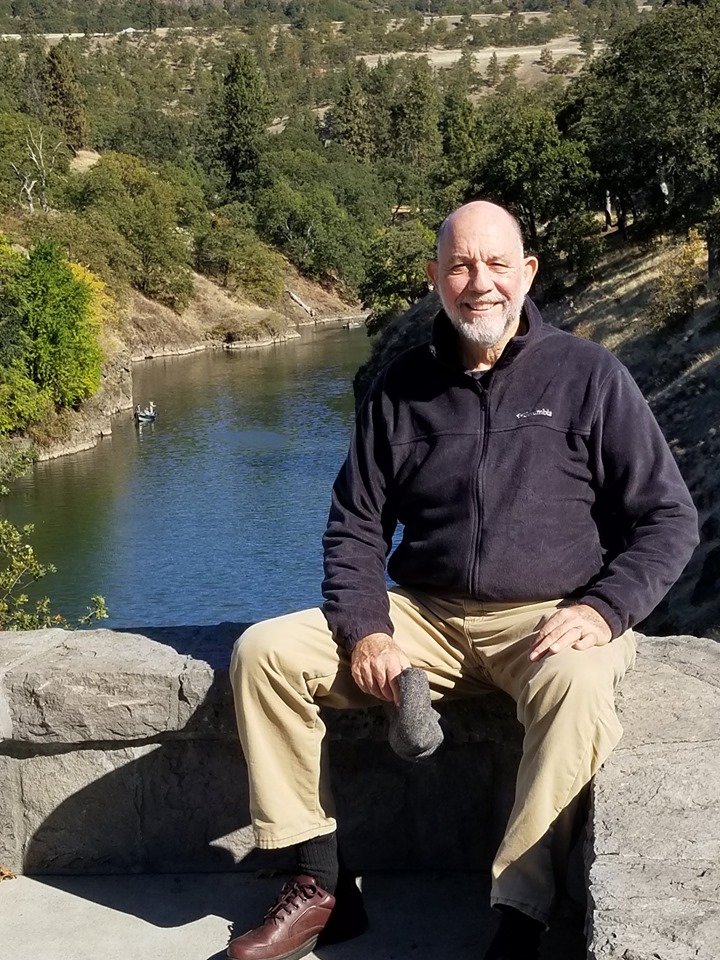
Mike Garofalo at the Klickitat River in Southwest Washington, 2019
Cloud Hands Blog of
Michael P. Garofalo

Facebook of
Michael P. Garofalo

Return to the Alphabetical
Index of Mike Garofalo's Hypertext Documents
Return to the Top of this Webpage