Classic of the Way and Virtue
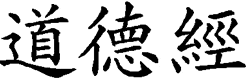
By Lao Tzu (Laozi)
Compiled and Indexed by Michael P. Garofalo
Green Way Research, Valley Spirit Center, Gushen Grove Notebooks, Vancouver, Washington
Chapter 52 Chapter 54 Index to All the Chapters Taoism Cloud Hands Blog
Classic Book (Ching) about the Tao (Way, Nature, Patterns, Processes) and Te (Virtue, Potency, Power, Integrity, Wise Person, Sage)
Indexing, Concordance, Search Terms, Topics, Themes, Keys
English and Chinese (Wade-Giles) Terms:
Kings or Rulers (wo), Follow the Way, Little or Small (chieh),
Natural (jan), Avoid Shortcuts, Knowledge or Understanding (chih),
Walk or Travel (hsing), Great (ta), Disadvantages of Wealth, Act (shih),
Frear or Dread (wei), Excess (shên), Level or Smooth (yi),
Like or Prefer (hao), Side Roads or By Paths (ching), Avoid Greed,
Splendid (ch'u), Field (t'ien), Work, Be
Diligent, Weeds (wu), Riches, Granaries (ts'ang), Empty or Vacant
(hsü), Walking, Clothes (fu), The Way,
Elegant (wên), Gown (ts'ai), Wealth, Carry (tai), Fine or
Sharp (li),
Gaining Insight, Weapon or Sword (chien), Look at the Facts, Starvation, Greed, Tao,
Alcohol or Drinks (yin), Eating or Food (shih), Palaces, Possessions
or Goods (huo), Corrupt, Extravagance,
Appearances, Thieves or Robbers (tao), Braggarts,
Gluttony, Fashion, Hoarding, Riches, Theft, Brigands, Opulence, Pride (k'ua), Grand Direction,
Dao, 益証
Términos en Español:
Siga
el Camino, Evite
Atajos, Desventajas de la
Riqueza, Trabajo,
Diligente, Andar, Camino,
Riqueza, Excesos, Hambre,
Armas, Codicia, Ropa,
Alcohol, Comer, Campos,
Palacios, Posesiones,
Corruptos, Extravagancia,
Apariciones, Ladrones,
Granos, Fanfarronería, Gula, Moda,
Acaparamiento, Riqueza, Robo,
Bandidos, Opulencia,
Reyes, Regla, Poco, Natural, Conocimiento,
Caminar, Viajes, Gran
Camino, Ley, Exceso, Nivel,
Liso, Prefiero, Espléndido,
Vacío, Elegante, Vestido,
Llevar, Espada, Arma,
Orgullo, Multa.
Electronic Concordance for Chapters 1 - 81 of the Tao Te Ching
English Language Translations of the Tao Te Ching
"Once started on the great [lax] highway, if I had but
little knowledge I should,
in walking on a broad way, fear getting off the road.
On the main path (dao), I would avoid the by-paths.
Some dao main path is easy to walk [or drift] on, but safe and easy.
All the same people are fond, men love by-paths, love even small by-paths:
The by-path courts are spick-and-span.
And the fields go untilled, nay, exceedingly weedy.
They're content to let their fields run to weed.
All the while granaries stand quite empty and some exceedingly empty.
They have elegant, in clothes and gown to wear, some furnished with patterns and
embroideries,
Some carry sharp weapons, glut themselves with drink and foods enjoyed beyond
limit,
And wealth and treasures are accumulated in excess, owning far more than they
can handle and use.
This is to [molest] the world towards brigandage, it's robbery as extravagance.
In the end they're splitting with wealth and possessions.
Wealth splits, tends to.
This cannot be a highway of dao (the way)."
- Translated by
Tormond Byrd, Chapter 53
"If only I had the tiniest grain of wisdom,
I should walk in the Great Way,
And my only fear would be to stray from it.
The Great Way is very smooth and straight;
And yet the people prefer devious paths.
The court is very clean and well garnished,
But the fields are very weedy and wild,
And the granaries are very empty!
They wear gorgeous clothes,
They carry sharp swords,
They surfeit themselves with food and drink,
They possess more riches than they can use!
They are the heralds of brigandage!
As for Tao, what do they know about it?"
- Translated by
John C. H. Wu, 1961, Chapter 53
"If I possess even the smallest bits of wisdom,
I would walk the great way, and my only fear would be in straying from this great road.
The great way is wide and the going is easy, but how people seem to prefer the side paths.
When the offices of government, the palaces and temples are richly adorned, and lavishly outfitted...
when the ministers are concerned chiefly with pomp and display;
the fields will be dusty and overgrown with rank weeds, and the granaries of the land will be bare.
The gentry wear elaborate richly embroidered clothes,
eat and drink in excess with their sharp swords at their sides,
these are surely the robber barons.
This is not in keeping with the Way."
- Translated by
Rivenrock, Chapter 53
"When you follow the tao, planning will only
lead you astray
The way is easy and straight, but people always look for shortcuts
They leave weeds in the fields to make sure the courtyard is clean
Empty their cupboards so that everyone can gorge
Carry a sword so they can wear their jewels in public
One excess always leads to another
This wanders far from the way"
- Translated by
Ted Wrigley, Chapter 53
"With even just a scrap of sense, I can walk the Great Way.
The great way is easy to travel on; but we all love to get sidetracked.
We keep elegant palaces and desolate farms;
Our storehouses are meager while fashions abound.
Our swords are sharp, but our senses are dull.
We all have more than we need; who have we taken it from?"
- Translated by
Ned Ludd, Chapter 53
"If I have acquired a little knowledge,
I will be afraid of going astray
When I walk on the road.
The road is even,
Yet people prefer to take by-paths.
While the court is corrupt,
The fields lie waste;
The granaries are empty;
There are persons who are still dressed gaudily,
Wearing ornamented swords,
Satiated with fine food and drink,
In possession of extravagant goods.
They can be called the chieftains of robbers.
What a phenomenon against the Tao!"
- Translated by
Gu Zhengkun, Chapter 53
"My
greatest fear is pride.
That's
what kills a sage.
That's
what kills the powerful
and
tortures the powerless.
The road
is plain before us,
but we
strike out willfully.
When the
palace is grandly appointed
the
fields are full of weeds and the granaries are empty.
When the
famous and powerful preen,
wear
grand clothes
go
armed,
and
spend all their time eating and drinking
and
displaying their possessions,
the
people starve.
The Tao
has no pride."
- Translated by
Crispin Starwell, Chapter 53
"My own opinions have caused me to have a limited
understanding of the operations of Great Dao.
It's only going astray from what is right that I dread the most.
The way of Great Dao is so smooth, but people prefer to take the most difficult
route.
They keep the palaces and courts so clean, yet the fields are overgrown with
weeds
and the granaries are totally empty.
They wear fashionable clothing, carry sharp weapons to protect their property,
eat until they are glutted., and make sure they all have equal amounts of
valuable
possessions - more than they could possibly use.
Of course there will be thiefs!
Stealing is in opposition to Dao."
- Translated by
Nina Correra,
Chapter 53

This webpage work is licensed under a Creative Commons Attribution-NonCommercial-NoDerivatives 4.0 International License.
Created by Michael P. Garofalo, Green Way Research, Valley Spirit Center, Gushen Grove Notebooks, Red Bluff, California, © 2015 CCA 4.0
 Translation and elucidation by Hua Ching Ni
 Translated by Brian Walker
 Translated by Arthur Waley
 Translated by Lionel and and Herbert Giles
 By Eva Wong
"If I interpret the facts correctly,
following the Great Tao carries only this risk;
the Great Tao is very easy, but people prefer the hard way!
Government is divided.
Farms are overgrown.
Granaries are empty.
People wear fancy clothes and carry sharp swords,
tire of food and drink, spend money endlessly,
and are said to be corrupt.
Alas, this is not the Way."
- Translated by
Karl Kromal,
Chapter 53
"Grant me this: to firmly know
That in walking the great high Way
I shall fear only to deviate
From the high way plain and fair;
For to byways men are lightly drawn.
The court is richly blessed,
But the farm fields are wasting,
And the bins bare of grain;
And courtiers dress in elegance,
Bear well-honed swords,
Gorge on food and drink –
This superflux of wealth and goods
Is the piper’s tune for thieves,
The negation of the Way."
- Translated by
Moss Roberts,
Chapter 53
"I
have cause to know that, though I possess great wisdom, to preach it
while traveling on the highway is dangerous.
Though the highway is
smooth and straight,
The common people prefer the byways.
The ruler's court is well tended, but the fields are neglected.
The granaries are empty, but garments are gorgeous.
Men carry sharp swords, but food and drink satiate them.
There is a surplus of money and merchandise, "temptation for bandits."
Alas, it is not Tao."
- Translated by
Tam C. Gibbs, 1981, Chapter 53
"If I possess even the smallest bits of wisdom, I would walk the great way, and
my only fear would be in straying from this great road.
The great way is wide and the going is easy, but how people seem to prefer the
side paths.
When the offices of government, the palaces and temples are richly adorned, and
lavishly outfitted,
when the ministers are concerned chiefly with pomp and display;
the fields will be dusty and overgrown with rank weeds, and the granaries of the
land will be bare.
The gentry wear elaborate richly embroidered clothes, eat and drink in excess
with their sharp swords at their sides,
these are surely the robber barons.
This
is not in keeping with the Way."
- Translated by
John Dicus, 2002, Chapter 53
"Having some knowledge
When walking on the Great Tao Only brings fear.
The great Tao is very smooth,
But people like rough trails.
The government is divided,
Fields are overgrown,
Granaries are empty,.
But the nobles clothes are gorgeous,
Their belts show off swords,
And
they are glutted with food and drink.
Personal wealth is excessive.
This
is called thieves' endowment,
But it is not Tao."
- Translated by
Stephen Addis, 1993, Chapter 53
 By Hu Xuzehi
 Annotated translation by Victor Mair
  By Ha Poong Kim
 By Hans-Georg Moeller
 Ripening Peaches: Taoist Studies and Practices By Mike Garofalo
 By Roger T. Ames and David T. Hall
 By Arthur Waley
Lifestyle Advice from Wise Persons
"If I had the smallest seed of wisdom,
I would walk the Great Way,
And my only fear
would be to lose my way from it.
The Great Way is very smooth and straight;
And yet the people like better the complicated paths.
The courtyard is very clean and well decorated,
(Their cities appear powerful.)
But the fields are very weedy and wild,
And the grain silo's are very empty!
(But they have lost the skill to feed themselves.)
They wear beautiful clothes,
(They value appearances over substance.)
They carry destructive weapons,
They use the tools of destruction to get their needs.)
They over fill themselves with food and drink,
(They indulge themselves in the fruits of the conquered.)
They own more riches than they can use!
(They are greedy.)
They are the messengers of lawlessness!
As for Tao (the Laws of the Universe),
what do they know about it?"
- Translated by
John Trottier,
Chapter 53
A Chinese Language Version of Chapter 53 of the Tao Te
Ching by Lao Tzu
A
note
on my style of displaying the Chinese characters of the Tao Te Ching
使我介然有知.
行於大道.
唯施是畏.
大道甚夷而民好徑.
朝甚除.
田甚蕪.
倉甚虛.
服文綵.
帶利劍.
厭飲食.
財貨有餘.
是謂盜夸.
非道也哉.
- Chinese characters, Tao Te Ching,
Chapter 53
shih wo chieh jan yu chih.
hsing yü ta tao.
wei shih shih wei.
ta tao shên yi erh min hao ching.
chao shê ch'u.
t'ien shên wu.
ts'ang shên hsü.
fu wên ts'ai.
tai li chien.
yen yin shih.
ts'ai huo yu yü.
shih wei tao k'ua.
fei tao yeh tsai.
- Wade-Giles Romanization, Tao Te
Ching, Chapter 53
Audio
Version in Chinese of Chapter 53 of the Tao Te Ching
shi wo jie ran you zhi.
xing yu da dao.
wei shi shi wei.
da dao shen yi er min hao jing.
zhao shen chu.
tian shen wu.
cang shen xu.
fu wen cai.
dai li jian.
yan yin shi.
cai huo you yu.
shi wei dao yu.
fei dao ye zai.
- Pinyin Romanization, Daodejing, Chapter 53
Tao Te Ching in Chinese characters and English (includes a word by word key) from YellowBridge
Tao Te Ching in Chinese characters, Hanyu Pinyin (1982) Romanization, English and German by Dr. Hilmar Alquiros.
Laozi Daodejing: Chapters with Chinese characters, seal script, detailed word by word concordance, Pinyin (tone#), German, French and English.
Chinese and English Dictionary, MDGB
Dao De Jing Wade-Giles Concordance by Nina, Dao is Open
Dao De Jing English and Wade-Giles Concordance by Mike Garofalo
Tao Te Ching in Pinyin Romanization with Chinese characters, WuWei Foundation
Tao Te Ching in Pinyin Romanization
Tao Te Ching in Chinese characters and English
Tao Te Ching in Chinese characters, English, Word by word analysis, Zhongwen
Tao Te Ching: The Definitive Edition
Tao Te Ching in Chinese characters: Big 5 Traditional and GB Simplified
Chinese Characters, Wade-Giles and Pinyin Romanizations, and 16 English Translations for Each Chapter of the Daodejing by Mike Garofalo.
Tao Te Ching in Chinese characters, Wade-Giles and Pinyin Romanization spellings, English; a word for word translation of the Guodian Laozi Dao De Jing Version.
Lao Zi's Dao De Jing: A Matrix Translation with Chinese Text by Bradford Hatcher.
"This little I know:
In moving toward the Grand Direction, the only fear is moving astray.
The Grand Direction is straight forward; still, people go astray.
The court is not filled; the field is not tilled.
Storehouses are empty, but gorgeous gowns are aplenty.
Bearing sharp swords, tired of exquisite boards,
With wealth to the burst, they are bandits at their worst.
This is not Direction."
- Translated by
David H. Li,
Chapter 53
 Translated by Eva Wong
  Translated by Philip Ivahoe
 By James Miller
 Translated by Stephen Bokencamp
 By Alexander and Annellen Simpkins
 Translated by Thomas Cleary
 By Livia Kohn
"Let our resolve here be this: to be understanding
To travel upon the great way
(With) only distractions to fear
The great way is so very ordinary
And the people love the detours
The courts are so very well kept
The fields, so very weedy
The granaries, so very empty
The clothes, refined & elaborate
Sharp swords worn at the waist
A glut of drinking & feasting
Wealth & goods kept in heaps
This describes robbery & bombast
Surely not the way at all."
- Translated by
Bradford Hatcher,
Chapter 53
"Freedom lies in the Tao.
Habits are binding.
There is freedom in
moderation, and bondage in excess.
When the wealthy thrive at the
expense of others, is this not theft?
Is it not chaotic for a rich man
to flaunt his money, when those around have barely enough?
The violence
of excess will end in disaster."
- Translated by
David Bullen, Chapter 53
"If I have a grain of wisdom,
I walk along the great Tao
And fear only to stray.
The great Tao is easy indeed,
But the people choose by-paths.
The court is very resplendent;
Very weedy are the fields,
And the granaries very empty.
They wear gaudy clothes,
Carry sharp swords,
Exceed in eating and drinking,
Have riches more than they can use.
Call them robber-braggarts:
They are anti-Tao indeed!"
- Translated by
Herrymoon Maurer,
Chapter 53
This webpage work is licensed under a Creative Commons Attribution-NonCommercial-NoDerivatives 4.0 International License.
Created by Michael P. Garofalo, Green Way Research, Valley Spirit Center, Gushen Grove Notebooks, Red Bluff, California, © 2015 CCA 4.0
By Alexander Simkins.  By Derek Lin.
 By Ming-Dao Deng.
 By Benjamin Hoff.
 By Ming-Dao Deng.
 Translated by Thomas Cleary.
"Causing one flashes of knowledge to travel the Great
Way, only its application demands care.
The Great Way is quite even, yet people prefer byways.
When courts are extremely fastidious, the fields are seriously neglected, and
the granaries are very empty;
They wear colorful clothing and carry sharp swords, eat and drink their fill and
possess more than enough.
This is called the vanity of thieves; it is not the Way."
- Translated by
Thomas Cleary, Chapter 53
"Let me have knowledge and follow the great way of the Tao,
I alone am afraid of straying from this path.
The great way is easy and simple,
But people prefer byways.
The royal palaces are wonderfully maintained,
But the people's fields are full of thorns,
And the barns are empty.
There are those who wear expensive clothes,
There are those who carry polished swords,
There are those who gorge themselves on food and drink,
There are those who amass property and possessions:
This is called encouraging the robbers.
Is this not straying from the path of the Tao?"
- Translated by
Chou Wing Chohan, Chapter 53
"Let me have sound knowledge and walk on the great way (Tao);
Only I am in fear of deviating.
The great way is very plain and easy,
But the people prefer by-paths.
While the royal palaces are very well kept,
The fields are left weedy
And the granaries empty.
To wear embroidered clothes,
To carry sharp swords,
To be satiated in drink and food,
To be possessed of redundant riches -
This is called encouragement to robbery.
Is it not deviating from Tao?"
- Translated by
Ch'u Ta-Kao, 1904, Chapter 53
Chapter 53, Tao Te Ching by Lao Tzu, Cloud Hands Blog Post, July 11, 2014
Chapter 53, Dao De Jing, Laozi, Cloud Hands Blog Post, August 15, 2012
English Language Audio-Version, Four Translations of Chapter 53, Tao Te Ching by Lao Tzu, Reading by Michael P. Garofalo, January 1, 2015
Tao Te Ching
 Translated by Stephen Addiss and Stanley Lombardo
Lao Tzu: Tao Te Ching
 Translated by Livia Kohn
Dao De Jing: The Book of the Way
"He who has the least scrap of sense,
Once he has got started on the great highway has nothing to fear
So long as he avoids turnings.
For great highways are safe and easy.
But men love by-paths.
So long as Court is in order
They are content to let their fields run to weed
And their granaries stand empty.
They wear patterns and embroideries,
Carry sharp swords, glut themselves with drink and food,
Have more possessions than they can use.
These are the riotous ways of brigandage; they are not the Highway."
- Translated by Arthur Waley, 1934, Chapter 53
"Walking on the mighty Way ...
When I am walking on the mighty Way,
Let me but know the very least I may,
And I shall only fear to leave the road.
The mighty Way is easy underfoot,
But people still prefer the little paths.
The royal court is dignified, sedate
, While farmers' fields are overgrown with weeds;
The granaries are empty and yet they
Are clad in rich-embroidered silken gowns.
They have sharp swords suspended at their sides;
With glutted wealth, they gorge with food and drink.
It is, the people say,
The boastfulness of brigandage,
But surely not the Way!"
- Translated by
Raymond Blakney, 1955, Chapter 53
"If I had any
learning
Of a highway wide and fit,
Would I lose it at each
turning?
Yet look at people spurning
Natural use of it!
See how fine
the palaces
And see how poor the farms,
How bare the peasants'
granaries
While gentry wear embroideries
Hiding sharpened arms,
And the
more they have the more they seize,
How can there be such men as these
Who
never hunger, never thirst,
Yet eat and drink until they burst!
There are
other brigands, but these are the worst
Of all the highway's
harms."
- Translated by
Witter Bynner, 1944, Chapter 53
Walking the Way: 81 Zen Encounters with the Tao Te Ching
The Tao of Zen
Tao Te Ching: Zen Teachings on the Taoist Classic
Buddhism and Taoism Face to Face: Scripture, Ritual, and Iconographic Exchange in Medieval China
"If I have knowledge and resolute faith I shall walk in the Great Tao.
If I fear, I can only behave well outwardly.
Great Tao is very straight, But the people love by-roads.
The palace may be well kept, But the fields may be uncultivated And the granaries empty.
The Princes take more land,
At their girdle they carry a sword,
They eat dainty food,
They take possession of much gold.
That is called glorification of robbery.
It is not Tao."
- Translated by Isabella Mears, 1916, Chapter 53
"If I had any sense, I would walk on the main road [the Tao],
and I would fear leaving it.
Keeping to the main road [the Tao] is so easy,
and yet people love to stray from it as they seek shortcuts.
Look! The royal palace is magnificent,
but the fields are full of weeds, and the granaries are empty.
Some are beautifully dressed and bejeweled,
wearing flashy weapons on their belts,
eating and drinking until they burst.
These people—these state–sanctioned crooks—
have far more than they need.
Surely, this isn't the Tao!"
- Translated by
George Cronk, 1999, Chapter 53
"If I had but little knowledge I should, in walking on a broad way,
Fear getting off the road.
Broad ways are extremely even,
But people are fond of bypaths.
The courts are exceedingly splendid,
While the fields are exceedingly weedy,
And the granaries are exceedingly empty.
Elegant clothes are worn,
Sharp weapons are carried,
Food and drinks
are enjoyed beyond limit,
And wealth and treasures are accumulated in
excess.
This is robbery and extravagance.
This is indeed not Tao."
- Translated by
Wing-Tsit Chan, 1963, Chapter 53
Further Teachings of Lao-Tzu: Understanding the Mysteries (Wen Tzu)
 Translated by Thomas Cleary
The Lunar Tao: Meditations in Harmony with the Seasons
 By Lui I-Ming (1780) and translated by Thomas Cleary
Ripening Peaches: Taoist Studies and Practices By Mike Garofalo
Zhuangzi: The Essential Writings with Selections from Traditional Commentaries
"If, in some unexpected manner, I
As one endowed with knowledge should appear,
To walk according to the mighty Tao,
T'is only bold display that I should fear;
For plain and simple ways Great Tao suggest,
But people love cross-paths and by-ways best.
The halls and courts are splendid, but the fields
Uncultivated are, the granaries
Empty; to put on ornamented robes,
And keen-edged swords, to gorge with gluttonies,
To pile up wealth; this, robbers' pride I call,
But, of a surety, not Great Tao
at all."
- Translated by
Isaac Winter Heysinger, 1903, Chapter 53
|
Tao Te
Ching |
|||||||||
| 1 | 2 | 3 | 4 | 5 | 6 | 7 | 8 | 9 | 10 |
| 11 | 12 | 13 | 14 | 15 | 16 | 17 | 18 | 19 | 20 |
| 21 | 22 | 23 | 24 | 25 | 26 | 27 | 28 | 29 | 30 |
| 31 | 32 | 33 | 34 | 35 | 36 | 37 | 38 | 39 | 40 |
| 41 | 42 | 43 | 44 | 45 | 46 | 47 | 48 | 49 | 50 |
| 51 | 52 | 53 | 54 | 55 | 56 | 57 | 58 | 59 | 60 |
| 61 | 62 | 63 | 64 | 65 | 66 | 67 | 68 | 69 | 70 |
| 71 | 72 | 73 | 74 | 75 | 76 | 77 | 78 | 79 | 80 |
| 81 | |||||||||
"If I understood only one thing,
I would want to use it to follow the Tao.
My only fear would be one of pride.
The Tao goes in the level places,
but people prefer to take the short cuts.
If too much time is spent cleaning the house
the land will become neglected and full of weeds,
and the granaries will soon become empty
because there is no one out working the fields.
To wear fancy clothes and ornaments,
to have your fill of food and drink
and to waste all of your money buying possessions
is called the crime of excess.
Oh, how these things go against the way of the Tao!"
- Translated by
John H. McDonald, 1996, Chapter 53
"Wenn ich wirklich weiß, was es
heißt,
im großen Sinn zu leben,
so ist es vor allem die Geschäftigkeit,
die ich fürchte.
Wo die großen Straßen schön und eben sind,
aber das Volk Seitenwege liebt;
wo die Hofgesetze streng sind,
aber die Felder voll Unkraut stehen;
wo die Scheunen ganz leer sind,
aber die Kleidung schmuck und prächtig ist;
wo jeder ein scharfes Schwert im Gürtel trägt;
wo man heikel ist im Essen und Trinken
und Güter im Überfluß sind:
da herrscht Verwirrung, nicht Regierung."
- Translated by
Richard Wilhelm, 1911, Chapter
53
"Echte Bildung kennt kein eigensüchtigesWirken
Wahre Bildung ist Herzensgehorsam
dem Unergründlichen gegenüber.
Nichts fürchte ich mehr als Betriebsamkeit.
Ins Unergründliche führt unmittelbar der innere Weg;
doch die Menschen lieben ihre Eigenpfade:
Eigensucht ist es,
wenn die Herrscher in glänzenden Schlößern leben,
während die Felder der Bauern verwüstet sind,
und die Scheunen leer bleiben.
Eigensucht ist es,
mit Kleidern zu protzen, mit Schmuck zu prunken,
mit Waffen zu prangen, bei Essen und Trinken zu praßen
und Schätze zu horten.
Diebstahl ist alles, was auf Kosten anderer geht;
es ist nicht im Sinn der letzten Wirklichkeit."
- Translated
by Rudolf
Backofen, 1949, Chapter 53
"If one day I am to have desires,
As I am walking along a big road, I am only afraid of straying into the small alleys.
The big road is so smooth, but people prefer to take the small alleys.
The government is a mess, the fields are barren, and the barns are empty,
But they wear bright and colorful clothing, carrying sharp swords, overeat and overdrink;
They steal countless treasures, so they are the heads of thieves.
This is completely against the Dao!"
- Translated by
Xiaolin Yang, Chapter 53
This webpage work is licensed under a Creative Commons Attribution-NonCommercial-NoDerivatives 4.0 International License.
Created by Michael P. Garofalo, Green Way Research, Valley Spirit Center, Gushen Grove Notebooks, Red Bluff, California, © 2015 CCA 4.0
Tao Te Ching: An Illustrated Journey
Tao Te Ching
The Book of Tao: Tao Te Ching - The Tao and Its Characteristics
Ripening Peaches: Taoist Studies and Practices
Taoism: Growth of a Religion
Zhuangzi (Chuang Tsu), Daoist Scripture: Bibliography, Links, Resources, Quotations, Notes
Zhuangzi: Basic Writings
Zhuangzi Speaks: The Music of Nature
Lifestyle Advice from Wise Persons
"Ah, that I were wise enough to follow the great Tao!
Administration is a great undertaking.
The great Tao is extremely simple, but the people prefer the complex ways.
While the palace is extremely well appointed, the fields may be full of tares, and the granaries may be empty.
To dress grandly, to carry sharp swords, to eat and drink excessively, and to amass great wealth,
this I call stylish theft.
That it is not Tao is certain."
- Translated by
Walter Gorn Old, 1904, Chapter 53
"If I, subtly, have knowledge,
Walking in the great Way,
My only fear is to act on it.
The great Way is very level,
But the people prefer short cuts.
The court is very remote;
The fields are very weedy;
The storehouses are very empty.
But officials wear gorgeous garments,
Carry sharp swords,
Are surfeited with food and drink,
And possess more money and goods than they can use.
This is called, "to steal reputation."
This is not the Way!"
- Translated by
Wu Yi, Chapter 53
"If I were possessed of the slightest knowledge, traveling on the great Way,
My only fear would be to go astray.
The great Way is quite level,
but the people are much enamored of mountain trails.
The court is thoroughly deserted,
The fields are choked with weeds,
The granaries are altogether empty.
Still there are some who wear clothes with fancy designs and brilliant colors,
sharp swords hanging at their sides,
are sated with food,
overflowing with possessions and wealth.
This is called "the brazenness of a bandit."
The brazenness of a bandit is surely not the Way!"
- Translated by
Victor H. Mair, 1990, Chapter 53
"Si j'étais doué de quelque connaissance, je marcherais
dans la grande Voie.
La seule chose que je craigne, c'est d'agir.
La grande Voie est très unie, mais le peuple aime les sentiers.
Si les palais sont très brillants, les champs sont très incultes, et les
greniers vides.
Les princes s'habillent de riches étoffes ; ils portent un glaive tranchant ;
ils se rassasient de mets exquis ; ils regorgent de richesses.
C'est ce qu'on appelle se glorifier du vol ; ce n'est point pratiquer le Tao."
- Translated by
Stanislas
Julien, 1842, Chapter 53
Spanish Language Versions of the Tao Te
Ching (Daodejing)
Tao Te Ching en Español
Lao Tsé Tao Te Ching 
Tao Te Ching Traducido por Stephen Mitchell, versión española
Tao Te Ching Traducido al español por el Padre Carmelo Elorduy
Lao Tzu-The Eternal Tao Te Ching
Ripening Peaches: Taoist Studies and Practices By Mike Garofalo Maduración Duraznos: Estudios y Prácticas Taoístas por Mike Garofalo
Tao Te Ching
Lao Tzu - Tao Te Ching
Tao te king
Daodejing Español, Inglés, y Chino Versiones Lingüísticas de la Daodejing
Spanish Language Translations of the Tao Te Ching
"Quisiera poseer la sabiduría
para poder marchar por el Gran Camino
sin temor a desviarme.
El Gran Camino es llano y recto,
pero la gente elige los senderos tortuosos.
Cuando la corte imperial se adorna de esplendor,
los campos se llenan de malas hierbas
y los graneros quedan vacíos.
Los barones y reyes visten ropas lujosas,
Tienen mas posesiones de las que llegan a usar,
se hartan de bebida y de manjares,
Acumulan tesoros y riquezas en exceso.
Son gobernantes-ladrones.
Robar y ostentar no es seguir al Tao."
- Translation from
Wikisource, 2013,
Tao Te Ching, Capítulo 53
"Si realmente sé lo que significa vivir el
gran Sentido,
entonces, sobre todo, temo la agitación
Donde las grandes vías son bellas y lisas
pero el pueblo prefiere las veredas,
donde las leyes son estrictas
y en los campos prolifera la mala hierba,
donde los graneros están vacíos
pero las vestimentas son lujosas y elegantes,
donde cada hombre lleva en la cintura una
espada afilada,
donde se es delicado en el comer y el beber,
donde hay exuberancia de bienes,
allí, reina la confusión, no el gobierno."
- Translation into Spanish from
Richard Wilhelm's 1911 German Version by an Unknown Spanish Translator,
2015, Capítulo 53
"Si yo tengo sabiduría sin compromisos
para marchar por el Gran Tao,
reflexiono y digo:
El Gran Tao es muy fácil.
Pero al pueblo le gustan los atajos.
La Corte imperial se renueva constantemente,
Los campos se cubren de malas hierbas,
Los graneros se vacían,
Vistiendo sedas ornadas,
Llevando armas filosas,
Hartándose de comida y de bebida,
Acumulando tesoros y riquezas en exceso,
Esto se denomina robar y ostentar.
Esto no es seguir al Tao."
- Translated
by Álex Ferrara,
2003, Capítulo 53
"Quisiera poseer la sabiduría
para poder marchar por el gran camino
sin temor a desviarme.
El gran camino es llano
pero la gente ama los senderos.
La corte de todo tiene abundancia
pero los campos están llenos de malas hierbas
y los graneros vacíos.
Vestirse ropas lujosas,
ceñir afiladas espadas,
hartarse de bebida y de manjares,
retener grandes riquezas,
es como el robo;
no es Tao."
- Spanish Version Online at
RatMachines,
Tao Te Ching, Capítulo 53
"Quien posee el más pequeño grano de sabiduría, va por el
gran camino del Tao.
EI único temor es el de la notoriedad que lo apartaría del camino.
El camino del Tao es grande, pero la gente prefiere otros caminos.
La corte está repleta de magnificencia.
Los campos están repletos de hierbas malas.
Los almacenes públicos vacíos.
Ellos visten trajes elegantes y hermosos, llevan filudas espadas en la cintura
y se hastían con vinos y manjares.
Poseen riquezas que no pueden usar.
Son ellos los heraldos del bandidaje.
No están con Tao."
- Translation from
Logia Medio Dia, 2015,
Capítulo
53
This webpage work is licensed under a Creative Commons Attribution-NonCommercial-NoDerivatives 4.0 International License.
Created by Michael P. Garofalo, Green Way Research, Valley Spirit Center, Gushen Grove Notebooks, Red Bluff, California, © 2015 CCA 4.0
Next Chapter of the Tao Te Ching #54
Previous Chapter of the Tao Te Ching #52
Chapter and Thematic Index to the Tao Te Ching
Tao Te Ching
Commentary, Interpretations, Research Tools, Resources
Chapter 53
Das Tao Te King von Lao Tse. Complete versions of all 81 Chapters of the Tao Te Ching by many different translators in many languages: 124 English, 24 German, 14 Russian, 7 Spanish, 5 French and many other languages. Links are organized first by languages, and then alphabetically by translators. Formatting varies somewhat. The original website at Onekellotus went offline in 2012; but, the extensive collection of these Tao Te Ching versions was saved for posterity by the Internet Archive Wayback Machine and available as of 9/9/2015. This is an outstanding original collection of versions of the Daodejing─ the Best on the Internet. Caution: copyright infringement may sometimes be an issue at this website.
Tao Te Ching, Translations into English: Terebess Asia Online (TAO). 124
nicely formatted complete English language translations, on separate webpages, of the Daodejing.
Alphabetical index by translators. Each webpage has all 81 chapters of the Tao Te
Ching translated into English. A useful collection! Many
reformatted and colored versions from the original collection at
Das Tao Te King von Lao Tse. Caution: copyright infringement may
sometimes be an
issue at this website.
Lao Tzu: Te-Tao Ching - A New Translation Based on the Recently Discovered Ma-wang-tui
Texts (Classics of Ancient China)
Daodejing by Laozi: Chapters with Chinese characters, seal script,
detailed word by word concordance, Pinyin (tone#), German, French and English.
This is an outstanding resource for serious students of the Tao Te Ching.
Tao Te
Ching: A New Translation and Commentary. By Ellen Chen. Paragon
House, 1998. Detailed glossary, index, bibliography, notes, 274 pages.
The Tao
and Method: A Reasoned Approach to the Tao Te Ching. By Michael
Lafargue. New York, SUNY Press, 1994. 640 pages. Detailed
index, bibliography, notes, and tables. An essential research tool.
Two Visions of the Way: A Study of the Wang Pi and the Ho-Shang Kung Commentaries on the Lao-Tzu.
By Professor by Alan Kam-Leung Chan. SUNY Series in Chinese
Philosophy and Culture. State University of New York Press, 1991.
Index, bibliography, glossary, notes, 314 pages.
ISBN: 0791404560.
Tao Te Ching: The Definitive Edition
Chinese Reading of the Daodejing
Wang Bi's Commentary on the Laozi with Critical Text and Translation.
By Professor Rudolf G. Wagner. A SUNY Series in Chinese Philosophy and
Culture. English and Mandarin Chinese Edition.
State University of New York Press; Bilingual edition (October 2003). 540
pages. ISBN: 978-0791451823.
Wang Bi (Wang Pi, Fusi), 226-249 CE,
Commentary on the Tao Te
Ching.
Tao Te Ching
The Taoism Reader
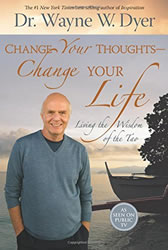
Change Your Thoughts - Change Your Life: Living the Wisdom of the Tao
The Lunar Tao: Meditations in Harmony with the Seasons
The Classic of the Way and Virtue: A New Translation of the Tao-te Ching of Laozi as Interpreted by Wang Bi.
Translated by Richard John Lynn. Translations from the Asian Classics
Series. New York, Columbia University Press, 1999. Extensive index,
glossaries, notes, 244 pages.
Tao Te Ching in Chinese characters,
Pinyin Romanization, English and German by Dr. Hilmar
Alquiros.
Yellow Bridge
Dao De Jing Comparison Table Provides side by side comparisons of
translations of the Tao Te Ching by James Legge, D. T. Suzuki, and Dwight
Goddard. Chinese characters for each paragraph in the Chapter are on the
left; place your cursor over the Chinese characters to see the Pinyin
Romanization of the Chinese character and a list of meanings.
Translators Index,
Tao Te Ching Versions in English, Translators Sorted Alphabetically by Translator, Links to Books and
Online Versions of the Chapters
Taoism and the Tao Te
Ching: Bibliography, Resources, Links
Spanish Language
Translations of the Tao Te Ching, Daodejing en Español, Translators Index
The Tao of Zen
Chapter 1 in the
Rambling
Taoist Commentaries by Trey Smith. The
Rambling Taoists are Trey Smith and Scott Bradley.
By Hans-Georg Moeller. Columbia University Press, 2006, 176 pages.
Valley Spirit, Gu Shen,
Concept, Chapter 6
Valley Spirit Center in Red
Bluff, California.
Sacred
Circle in the Gushen Grove.
Lao-tzu's Taoteching
Reading Lao Tzu: A Companion to the Tao Te Ching with a New Translation
Dao De Jing: A Philosophical Translation
Thematic Index to the
81 Chapters of the Tao Te Ching
Lieh-Tzu: A Taoist Guide to Practical Living
Revealing the Tao Te Ching: In-depth Commentaries on an Ancient Classic
Cloud Hands Blog
Mike Garofalo writes about Mind-Body Arts, Philosophy, Taoism, Gardening, Taijiquan, Walking, Mysticism,
Qigong, and the Eight Ways.
The Whole Heart of Tao:
The Complete Teachings From the Oral Tradition of Lao Tzu.
Comments on Chapter 53 by Mike
Garofalo:
Breathe Naturally - Don't Overstrain
Gushen Grove Notebooks for the Tao Te Ching
Green Way Research, Valley Spirit
Center, Gushen Grove Notebooks, Red Bluff, California
Green Way Research, 2011-2015.
Indexed and Compiled by
Michael P. Garofalo
This webpage was last modified or updated on
September 29, 2015.
This webpage was first distributed online on June 22, 2011.
This webpage work is licensed under a Creative Commons Attribution-NonCommercial-NoDerivatives 4.0 International License.
Created by Michael P. Garofalo, Green Way Research, Valley Spirit Center, Gushen Grove Notebooks, Red Bluff, California, © 2015 CCA 4.0
Brief Biography of Michael P. Garofalo, M.S.
Valley Spirit Center, Red Bluff, California
Study Chi Kung or Tai Chi or Philosophy with Mike Garofalo

Ripening Peaches: Daoist Studies and Practices
Zhuangzi (Chuang Tzu, Zhuang Zhou, Master Chuang) 369—286 BCE
Taoist Perspectives: My Reading List
Bodymind Theory and Practices, Somaesthetics
How to Live a Good Life: Advice from Wise Persons
Qigong (Chi Kung) Health Practices
One Old Daoist Druid's Final Journey: Notebooks of the Librarian of Gushen Grove
Index to Cloud Hands and Valley Spirit Websites
Index to English Language Translators of the Tao Te Ching
Recurring Themes (Terms, Concepts, Leimotifs) in the Tao Te Ching
Spanish Language Translations of the Tao Te Ching
Chinese Characters, Wade-Giles (1892) and Hanyu Pinyin (1982) Romanizations
The Tao Te Ching (Dao De Jing) by Lao Tzu (Laozi) circa 500 BCE
|
Tao Te
Ching |
|||||||||
| 1 | 2 | 3 | 4 | 5 | 6 | 7 | 8 | 9 | 10 |
| 11 | 12 | 13 | 14 | 15 | 16 | 17 | 18 | 19 | 20 |
| 21 | 22 | 23 | 24 | 25 | 26 | 27 | 28 | 29 | 30 |
| 31 | 32 | 33 | 34 | 35 | 36 | 37 | 38 | 39 | 40 |
| 41 | 42 | 43 | 44 | 45 | 46 | 47 | 48 | 49 | 50 |
| 51 | 52 | 53 | 54 | 55 | 56 | 57 | 58 | 59 | 60 |
| 61 | 62 | 63 | 64 | 65 | 66 | 67 | 68 | 69 | 70 |
| 71 | 72 | 73 | 74 | 75 | 76 | 77 | 78 | 79 | 80 |
| 81 | |||||||||