Compilation and Indexing by Michael P. Garofalo
Green Way Research, Valley Spirit Center, Gushen Grove Notebooks, Vancouver, Washington
Chapter 23 Chapter 25 Chapter Indexes 1-81 Daoism Concordance Cloud Hands Blog
Classic Book (Ching) about the Tao (Way, Nature, Patterns, Processes) and Te (Virtue, Potency, Power, Integrity, Wise Person, Sage)
Concordance: Indexing, Search Terms, Topics, Themes, Keys, Subjects, Words
English and Chinese (Wade-Giles) Terms: Non-Assertiveness, Modesty, Reclusiveness,
Endure or Grow (ch'ang), Trouble from Indulgence, Gluttony,
Humility, Reticence,
Excess or Surplus (yü), Cancer, Rotten, Stand Erect or on Tiptoes (ch'i), , Stand
(li), Unnatural, Walk (hsing), Bragging, Conceit (ching), Waste, Sage, Indulgence,
Beings or Things (wu), Malignant, Proud, Praise or Approving (fa),
Right or Correct (shih), Conceit (ching),
Extremes, Prominent or Outstanding (chang), Stride or Straddle (k'ua),
To Be or Exist or Presence (tsai), Not or Cannot (pu), Likely (huo),
Merit or Accomplishment (kung), Useless, Actions or Activity (hsing),
Food or Eat (shih), Counter-Productive, Unfit, Unclean, Excretion, Sage
or Seeker of Tao (chê), Detested or Loathed (wu), Self or Himself
(tzu), Tao, Dao, Cosmos, Universe, Superfluous or Excess (chui), Painful Graciousness,
Dwell or Stay (ch'u), 苦恩
Términos en Español:
No Asertividad,
Modestia, Reclusión, Problema
de Indulgencia,
Gula, Humildad,
Reticencia, Cáncer, Podrido, Ir de Pontillos,
Estar de Pie, Aguantar, Antinatural, Caminar, Alardear,
Residuos,
Sabio, Santo,
Indulgencia,
Maligno, Orgulloso,
Arrogancia,
Extremos, Inútil,
Contraproducente,
Montar a Horcajadas, Cosas, Logro, No Apto, No Puede, Poner,
Inmundo, Sucio, Mierda, Cagada, Gracioso, Para Caminar, Correcto,
Acertado, Exceso, Albanza, Comida, Comer, Realización, Cumplimiento,
Excepcional, Engreimiento, Perdurar, Probable, Soportar, Actividad, Ambulante, a
Pie, Yo, Ser, Existir, Sí Mismo, Tao, Dao, Via, Cosmos, Universo, Detestar,
Habitar, Morar, Permanecer.
Electronic Concordance for all 81 Chapters of the Tao Te Ching
English Language Translations of the Tao Te Ching
"He who stands on his tiptoes does not stand firm; he who stretches his legs
does not walk.
He who displays himself does not shine.
He who asserts his own views is not distinguished.
He who vaunts himself does not find his merit acknowledged.
He who is self-conceited has no superiority allowed to him.
Such conditions, viewed from the standpoint of the Tao, are like remnants of
food,
or a tumor on the body, which all dislike.
Hence, those who pursue the course of the Tao do not adopt and allow them."
- Translated by
James Legge, 1891,
Chapter 24
"He who stands on tiptoe is not steady,
He who holds legs stiffly cannot walk.
He who looks at self does not see clearly.
He who asserts himself does not shine.
He who boasts of himself has no merit.
He who glorifies himself shall not endure.
These things are to the Tao like excreta or a hideous tumour to the body.
Therefore he who has Tao must give them no place."
- Translated by
Isabella Mears, 1916, Chapter 24
"He who tiptoes cannot stand; he who strides cannot walk.
He
who shows himself is not conspicuous;
He who considers himself right is not illustrious;
He who brags will have no merit;
He who boasts will not endure.
From
the point of view of the way these are 'excessive food and useless
excrescences.
As there are Things that detest them, he who has the way does not abide in them."
- Translated by
D. C. Lau, 1963, Chapter 24
"One up on tiptoes does not stand firm.
One who takes big strides does not move.
One who flaunts himself does not shine.
One who insists that he is right is not commended.
One who boasts about himself has no acknowledged merit.
One filled with self-importance does not last long.
In respect to the Dao, we can say about such behavior, too much food is an excrescence making the rounds.
The people always hate this, so one who has the Dao has nothing to do with it."
- Translated by
Richard John Linn, Chapter 24
"Those who stand on tiptoe are not steady.
Those who stride out ahead will soon fall behind.
Those who make a big show are far from enlightenment.
Those who think they can never be wrong are not respected.
Those who justify themselves have no merit.
Those who boast will not last long.
To followers of the Tao, such actions are excessive, like eating too much.
They are disliked by all things,
And therefore followers of the Tao do not seek refuge in them."
- Translated by
Keith H. Seddon, Chapter 24

Created by Michael P. Garofalo, Green Way Research, Valley Spirit Center, Gushen Grove Notebooks, Vancouver, Washington © 2010-2020 CCA 4.0
 By Hu Xuzehi
 Annotated translation by Victor Mair
  By Ha Poong Kim
 By Hans-Georg Moeller
 Ripening Peaches: Taoist Studies and Practices By Mike Garofalo
 By Roger T. Ames and David T. Hall
 By Arthur Waley
"A man who raises himself on tiptoe
cannot remain firm.
A man with crooked legs cannot walk far.
He who says himself that he can see is not enlightened.
He who says himself that he is right is not manifested to others.
He who praises himself has no merit.
He who is self-conceited will not increase in knowledge.
Such men may be said to search after Tao that they may gorge themselves in
feeding,
and act the parasite; moreover, they are universally detested.
Therefore those who are possessed of Tao do not act thus."
- Translated by
Frederic H. Balfour, 1884, Chapter 24
"Standing tiptoe
a man loses balance,
Walking astride he has no pace,
Kindling himself he
fails to light,
Acquitting himself he forfeits his hearers,
Admiring
himself he does so alone.
Pride has never brought a man greatness
But,
according to the way of life,
Brings the ills that make him unfit,
Make
him unclean in the eyes of his neighbor,
And a sane man will have none of
them."
- Translated by
Witter Bynner, 1944, Chapter 24
"Those
on tiptoe are not standing firmly
Those who stride are not moving
Those who show themselves are not luminous
Those who justify themselves are not conspicuous
Those who boast of themselves are not of outstanding service
Those who brag of themselves are not growing.
They
that join tao also say
Surplus food and redundant actions are somehow disliked
So
those present with tao are not dwelling there."
- Translated by
David Lindauer, Chapter 24
 Translation and elucidation by Hua Ching Ni
 Translated by Brian Walker
 Translated by Arthur Waley
 Translated by Lionel and and Herbert Giles
 By Eva Wong
"One on tiptoe is not steady;
One astride makes no advance.
Self-displayers are not enlightened,
Self-asserters lack distinction,
Self-approvers have no merit,
And self-seekers stunt their lives.
Before Reason this is like surfeit of food; it is like a wen on the body
with which people are apt to be disgusted.
Therefore the man of reason will not indulge in it."
- Translated by
Daisetsu Teitaro Suzuki and
Paul Carus, 1913, Chapter 24
A Chinese Language Version of Chapter 24 of
the Tao Te Ching by Lao Tzu
A
note
on my style of displaying the Chinese characters of the Tao Te Ching
企者不立.
跨者不行.
自見者不明.
自是者不彰.
自伐者無功.
自矜者不長.
其在道也, 曰餘食贅行.
物或惡之.
故有道者不處.
- Chinese characters, Tao Te Ching, Chapter 24
ch'i chê pu li.
k'ua chê pu hsing.
tzu chien chê pu ming.
tzu shih chê pu chang.
tzu fa chê wu kung.
tzu ching chê pu ch'ang.
ch'i tsai tao yeh, yüeh yü shih chui hsing.
wu huo wu chih.
ku yu tao chê pu ch'u.
- Wade-Giles Romanization, Tao Te Ching, Chapter 24
Audio Version in Chinese of Chapter 24 of the Tao Te Ching
qi zhe bu li.
kua zhe bu xing.
zi xian zhe bu ming.
zi shi zhe bu zhang.
zi fa zhe wu gong.
zi jin zhe bu zhang.
qi zai dao ye, yue yu shi zhui xing.
wu huo wu zhi.
gu you dao zhe bu chu.
-  Pinyin Romanization, Daodejing, Chapter 24
Tao Te Ching in Chinese characters and English (includes a word by word key) from YellowBridge
Tao Te Ching in Chinese characters, Pinyin Romanization, English and German by Dr. Hilmar Alquiros.
Laozi Daodejing: Chapters with Chinese characters, seal script, detailed word by word concordance, Pinyin (tone#), German, French and English.
Chinese and English Dictionary, MDGB
Dao De Jing Wade-Giles Concordance by Nina, Dao is Open
Dao De Jing English and Wade-Giles Concordance by Mike Garofalo
Tao Te Ching in Pinyin Romanization with Chinese characters, WuWei Foundation
Tao Te Ching in Pinyin Romanization
Tao Te Ching in Chinese characters and English
Tao Te Ching in Chinese characters, English, Word by word analysis, Zhongwen
Tao Te Ching: The Definitive Edition
Tao Te Ching in Chinese characters: Big 5 Traditional and GB Simplified
Chinese Characters, Wade-Giles and Pinyin Romanizations, and 16 English Translations for Each Chapter of the Daodejing by Mike Garofalo.
Tao Te Ching in Chinese characters, Pinyin and Wade Giles Romanization spellings, English; a word for word translation of the Guodian Laozi Dao De Jing Version.
Lao Zi's Dao De Jing: A Matrix Translation with Chinese Text by Bradford Hatcher.
"One who tries to stand on tiptoe cannot stand still.
One who stretches his legs too far cannot walk.
One who advertises himself to much is ignored.
One who is too insistent on his own views finds few to agree with him.
One who claims too much credit does not get even what he deserves.
One who is too proud is soon humiliated.
These, when judged by the standards of Nature, are condemned as
"Extremes of greediness and self-destructive activity."
Therefore, one
who acts naturally avoids such extremes."
- Translated by
Archie J. Bahm, 1958, Chapter 24
 By Alexander Simkins
 By Derek Lin
 By Ming-Dao Deng.
 By Benjamin Hoff.
 By Ming-Dao Deng
 Translated by Thomas Cleary
"Those who tiptoe do not stand.
Those who stride do not walk.
Those who see for themselves are not discerning.
Those who affirm for themselves are not insightful.
Those who attack it themselves do not achieve.
Those who esteem themselves do not become elders.
When these are in guides, we say:
'Excess provision; redundant action.'
Some natural kinds avoid them.
Hence those who have guides don't place them."
- Translated by
Chad Hansen,
Chapter 24
"One who tiptoes to stand taller does not stand firm;
One who strides to walk faster does not walk long;
One who self-touts does not shine;
One who self-justifies does not reassure;
One who self-aggrandizes does not accomplish;
One who self-serves does not endure.
They, in relation to Direction, are the equivalent of leftover food and
excess fat.
They are unattractive;
they are not held by those with Direction."
- Translated by
David H. Li, Chapter 24
"A man on tiptoe cannot stand firm;
A man astride cannot walk on;
A man who displays himself cannot shine;
A man who approves himself cannot be noted;
A man who praises himself cannot have merit;
A man who glories in himself cannot excel;
These, when compared with the Tao, are called
'Excess in food and overdoing in action.'
Even in other things, mostly, they are rejected;
Therefore the man of Tao does not stay with them."
- Translated by
Ch'u Ta-Kao, 1904, Chapter 24
Created by Michael P. Garofalo, Green Way Research, Valley Spirit Center, Gushen Grove Notebooks, Vancouver, Washington © 2010-2020 CCA 4.0
 Translated by Eva Wong
  Translated by Philip Ivahoe
 By James Miller
 Translated by Stephen Bokencamp
By Alexander and Annellen Simpkins
Translated by Stephen Bokencamp
By Alexander and Annellen Simpkins Translated by Thomas Cleary
 By Livia Kohn
"One who boasts is not established.
One who shows himself off does not become prominent.
One who makes a show is not enlightened.
One who brags about himself gets no credit;
One who praises himself does not long endure.
In the Way such things are called:
"Extra food and redundant action."
And with things - there are those who hate them
therefore followers of the Tao does not dwell in them."
- Translated by
Bram den Hond, Chapter 24
"Those who stand on tiptoe are not steady.
Those who stand with legs astride cannot walk.
Those who hold a high opinion of themselves are not enlightened.
Those who admire themselves are not beautiful.
Those who think much of themselves are worthless.
Those who are conceited will not endure.
Those with the Tao call this self-indulgent and parasitical behavior.
These are loathsome things.
So those in the Tao will have nothing to do with them."
- Translated by
Amy and Roderic Sorrell, 2003, Chapter 24
" "He who stands on tip-toe, does not stand firm;
He who takes the longest strides, does not walk the fastest.”
He who does his own looking sees little,
He who defines himself is not therefore distinct.
He who boasts of what he will do succeeds in nothing;
He who is proud of his work, achieves nothing that endures.
Of these, from the standpoint of the Way, it is said:
“Pass round superfluous dishes to those that have already had enough,
And no creature but will reject them in disgust.”
That is why he that possesses Tao does not linger."
- Translated by
Arthur Waley, 1934, Chapter 24
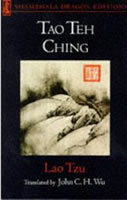
Tao Te Ching
Lao Tzu: Tao Te Ching
 Translated by Livia Kohn
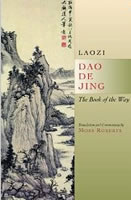
Dao De Jing: The Book of the Way
"Standing on tiptoe, you are unsteady.
Straddle-legged, you cannot go.
If you show yourself, you will not be seen.
If you affirm yourself, you will not shine.
If you boast, you will have no merit.
If you promote yourself, you will have no success.
Those who abide in the Tao call these
Leftover food and wasted action
And all things dislike them.
Therefore the person of the Tao does not act like this."
- Translated by
Charles Muller, 1891, Chapter 24
"He who stands on his tiptoes does not stand firm
he who travels at a speed beyond his means,
cannot maintain his pace.
He who tries to shine dims his own light.
If you boast, you will have no merit.
Pride yourself and you will not endure.
These behaviors are wasteful and indulgent,
so they attract disfavor;
therefore those who pursue
the Tao do not accept and allow them."
- Translated by
Rivenrock, Chapter 24
"He
who stands on tiptoe does not stand (firm);
He who strains his strides does not walk (well);
He who reveals himself is not luminous;
He who justifies himself is not far-famed;
He who boasts of himself is not given credit;
He who prides himself is not chief among men.
These in the eyes of Tao
Are called "the dregs and tumors of Virtue,"
Which are things of disgust.
Therefore the man of Tao spurns them."
- Translated by
Lin Yutang, 1955, Chapter 24
Walking the Way: 81 Zen Encounters with the Tao Te Ching
The Tao of Zen
Tao Te Ching: Zen Teachings on the Taoist Classic
Buddhism and Taoism Face to Face: Scripture, Ritual, and Iconographic Exchange in Medieval China
"By standing on tiptoe one cannot keep still.
Astride of one's fellow one cannot progress.
By displaying oneself one does not shine.
By self-approbation one is not esteemed.
In self-praise there is no merit.
He who exalts himself does not stand high.
Such things are to Tao what refuse and excreta are to the body.
They are everywhere detested.
Therefore the man of Tao will not abide with them."
- Translated by
Walter Gorn Old, 1904, Chapter 24
"How long can you stand up on your toes?
How far walk with stretching stride?
Self-display does not illumine;
Self-justifying sets no pattern;
Self-advancement won’t succeed;
Self-assertion cannot lead.
In terms of Dao, as has been said,
“Like food discarded, excess actions
Provoke repugnance.”
Dao-keepers will indeed avoid them."
- Translated by
Moss Roberts, 2001, Chapter 24
"Those who stand on tiptoes
do not stand firmly.
Those who rush ahead
don't get very far.
Those who try to outshine others
dim their own light.
Those who call themselves righteous
can't know how wrong they are.
Those who boast of their accomplishments
diminish the things they have done.
Compared to the Tao, these actions are unworthy.
If we are to follow the Tao,
we must not do these things."
- Translated by
John H. McDonald, 1996, Chapter 24
Further Teachings of Lao-Tzu: Understanding the Mysteries (Wen
Tzu)
The Lunar Tao: Meditations in Harmony with the Seasons
 By Lui I-Ming (1780) and translated by Thomas Cleary
Ripening Peaches: Taoist Studies and Practices By Mike Garofalo
Zhuangzi: The Essential Writings with Selections from Traditional Commentaries
"It is not natural to stand on tiptoe, or being astride
one does not walk.
One who displays himself is not bright, or one who asserts himself cannot shine.
A self-approving man has no merit, nor does one who praises himself grow.
The relation of these things (self-display, self-assertion, self-approval) to
Tao is the same as offal is to food.
They are excrescences from the system; they are detestable; Tao does not dwell
in them."
- Translated by
Dwight Goddard,
1919, Chapter 24
|
Tao Te
Ching |
|||||||||
| 1 | 2 | 3 | 4 | 5 | 6 | 7 | 8 | 9 | 10 |
| 11 | 12 | 13 | 14 | 15 | 16 | 17 | 18 | 19 | 20 |
| 21 | 22 | 23 | 24 | 25 | 26 | 27 | 28 | 29 | 30 |
| 31 | 32 | 33 | 34 | 35 | 36 | 37 | 38 | 39 | 40 |
| 41 | 42 | 43 | 44 | 45 | 46 | 47 | 48 | 49 | 50 |
| 51 | 52 | 53 | 54 | 55 | 56 | 57 | 58 | 59 | 60 |
| 61 | 62 | 63 | 64 | 65 | 66 | 67 | 68 | 69 | 70 |
| 71 | 72 | 73 | 74 | 75 | 76 | 77 | 78 | 79 | 80 |
| 81 | |||||||||
"Wer auf den Zehen steht, steht nicht fest.
Wer mit gespreizten Beinen geht, kommt nicht voran.
Wer selber scheinen will, wird nicht erleuchtet.
Wer selber etwas sein will, wird nicht herrlich.
Wer selber sich rühmt, vollbringt nicht Werke.
Wer selber sich hervortut, wird nicht erhoben.
Er ist für den Sinn wie Küchenabfall und Eiterbeulen.
Und auch die Geschöpfe alle hassen ihn.
Darum: Wer den Sinn hat, weilt nicht dabei."
- Translated by Richard Wilhelm, 1911, Chapter
24
"Who tiptoes, totters.
Who straddles, stumbles.
The self-regarding cannot
cognize; the egotistic are not distinguished;
the boastful are not
meritorious; the self-conceited cannot excel.
Such from the standpoint
of the Tao are like remnants of food,
or parasites, which all things
probably detest.
Hence, those who possess the Tao are not so."
- Translated by
C. Spurgeon Medhurst, 1905, Chapter 24
"Those
who rise on tiptoe do not stand firm.
Those who straddle as wide as possible
cannot move.
Those who show themselves off are not luminous.
Those who justify
themselves are not illustrious.
Those who boast of themselves have no merit.
Those who brag on themselves do not stand senior to others.
In respect of the
Dao, these behaviors are said to be leftovers and excrescences.
Creatures
always loath them, and so those who have the Dao do not involve themselves therewith."
- Translated by
Patrick E. Moran, Chapter 24
Created by Michael P. Garofalo, Green Way Research, Valley Spirit Center, Gushen Grove Notebooks, Vancouver, Washington © 2010-2020 CCA 4.0
Tao Te Ching: An Illustrated Journey
Tao Te Ching
The Book of Tao: Tao Te Ching - The Tao and Its Characteristics
Ripening Peaches: Taoist Studies and Practices
Taoism: Growth of a Religion
Zhuangzi (Chuang Tsu), Daoist Scripture: Bibliography, Links, Resources, Quotations, Notes
Zhuangzi: Basic Writings
Zhuangzi Speaks: The Music of Nature
Lifestyle Advice from Wise Persons
"A man who stands on tiptoe can' t be still,
A man with legs astride walks not with skill,
He who is self-displaying is not bright,
He who is self-asserting sheds no light,
lie that boasts himself no merit gains,
He who is self-conceited there remains.
Conditions such as these with Tao compared
Are like left-over food too long prepared,
Excrescences men loathe, like wart or spot,
And those who follow Tao dwell
with them not.
- Translated by
Isaac Winter Heysinger, 1903, Chapter 24
"One who stands on tiptoe does not stand firm.
One who walks astride does not get on
One who tries to shine is not illumined.
One who asserts himself has no importance.
One who throws his weight about carries no weight.
One who exalts himself is no Exalted One.
Such an attitude is of little use to the Tao as refuse is to the
preservation of the body.
One who has Tao keeps away from it."
- Translated by
K. O. Schmidt, 1975, Chapter 24
"Those who are on tiptoes cannot stand
Those who straddle cannot walk
Those who flaunt themselves are not clear
Those who presume themselves are not distinguished
Those who praise themselves have no merit
Those who boast about themselves do not last
Those with the Tao call such things leftover food or
tumors
They despise them
Thus, those who possesses the Tao do not engage in them"
- Translated by
Derek Linn,
2006, Chapter 24
"Celui qui se dresse sur ses pieds ne
peut se tenir droit;
celui qui étend les jambes ne peut marcher.
Celui qui tient à ses vues n'est point éclairé.
Celui qui s'approuve lui-même ne brille pas.
Celui qui se vante n'a point de mérite.
Celui qui se glorifie ne subsiste pas longtemps.
Si l'on juge cette conduite selon le Tao, on la compare à un reste d'aliments
ou
à un goitre hideux qui inspirent aux hommes un constant dégoût.
C'est pourquoi celui qui possède le Tao ne s'attache pas à cela."
- Translated by Stanislas Julien, 1842, Chapter 24
Spanish
Language Versions of the Tao Te Ching (Daodejing)
Tao Te Ching en Español
Lao Tsé Tao Te Ching 
Tao Te Ching Traducido por Stephen Mitchell, versión española
Tao Te Ching Traducido al español por el Padre Carmelo Elorduy
Lao Tzu-The Eternal Tao Te Ching
Ripening Peaches: Taoist Studies and Practices By Mike Garofalo Maduración Duraznos: Estudios y Prácticas Taoístas por Mike Garofalo
Tao Te Ching
Lao Tzu - Tao Te Ching
Tao te king
Daodejing Español, Inglés, y Chino Versiones Lingüísticas de la Daodejing
Spanish Language Translations of the Tao Te Ching
"Quien se sostiene de puntillas no
permanece mucho tiempo en pie.
Quien da largos pasos no puede ir muy lejos.
Quien se exhibe carece de luz.
Quien se alaba no brilla.
Quien se ensalza no merece honores.
Quien se glorifica no llega.
Para Tao, estos excesos,
son como excrecencias y restos de comida que a todos repugnan.
Por eso, quien posee el Tao
no se detiene en ellos."
- Spanish Version Online at
RatMachines,
Capítulo 24
"Si te mantienes de puntillas no te mantienes mucho tiempo;
Si dás pasos demasiado largos no puedes caminar bien;
Si te muestras a tí mismo no puedes ser bien visto;
Si te autojustificas no puedes ser respetado;
Si te halagas a ti mismo no puedes ser creído;
Si te enorgulleces demasiado no puedes alcanzar la excelencia.
Todos estos comportamientos son excrecencias y tumores,
Cosas desagradables evitadas por el virtuoso."
- Translated by
Antonio Rivas Gonzálvez, 1998, Tao Te Ching, Capítulo 24
"Quien se sostiene de puntillas no
permanece mucho tiempo en pie.
Quien da largos pasos no puede ir muy lejos.
Quien quiere brillar
no alcanza la iluminación.
Quien pretende ser alguien
no lo será naturalmente.
Quien se ensalza no merece honores.
Quien se vanagloria
no realiza ninguna obra.
Para los seguidores del Tao, estos excesos son como excrecencias
y restos de basura que a todos repugnan.
Por eso, quien posee el Tao
no se detiene en ellos, sino que los rechaza."
- Translation from
Wikisource, 2013, Capítulo
24
"Si te mantienes de puntillas no te mantienes mucho tiempo;
Si dás pasos demasiado largos no puedes caminar bien;
Si te muestras a tí mismo no puedes ser bien visto;
Si te autojustificas no puedes ser respetado;
Si te halagas a ti mismo no puedes ser creído;
Si te enorgulleces demasiado no puedes alcanzar la excelencia.
Todos estos comportamientos son excrecencias y tumores,
Cosas desagradables evitadas por el virtuoso."
- Translation by
Antonio Rivas, 1998, Capítulo 24
Created by Michael P. Garofalo, Green Way Research, Valley Spirit Center, Gushen Grove Notebooks, Vancouver, Washington © 2010-2020 CCA 4.0
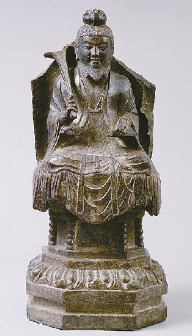
Next Chapter of the Tao Te Ching #25
Previous Chapter of the Tao Te Ching #23
Chapter and Thematic Index to the Tao Te Ching
Tao Te Ching
Commentary, Interpretations, Research Tools, Resources
Chapter 24
Lao Tzu: Te-Tao Ching - A New Translation Based on the Recently Discovered Ma-wang-tui
Texts (Classics of Ancient China)
Early Daoist Scriptures. Translated by Stephen R. Bokenkamp. Peter
Nickerson, Contributor. Berkeley, University of California Press, Revised
Edition, 1999. 520 pages. This compilation includes a translation of "The Xiang'er Commentary to the Laozi," pages 78-148, with a long introduction to the
same, pages 29-78. Scholars think this document was created in the late
5th century, CE. It was discovered in Buddhist Grottos in 1920, but parts
were missing.
Lao-Tzu: My Words are Very Easy to Understand. Lectures on the Tao Teh
Ching by Professor
Cheng Man-ch'ing (1902-1975). Translated from the Chinese by Tam C. Gibbs, 1981.
Berkeley, California, North Atlantic Books, 1981, 1991. 240 pages.
Includes the Chinese characters for each of the 81 Chapters. A brief
biography of Professor Cheng is included.
The
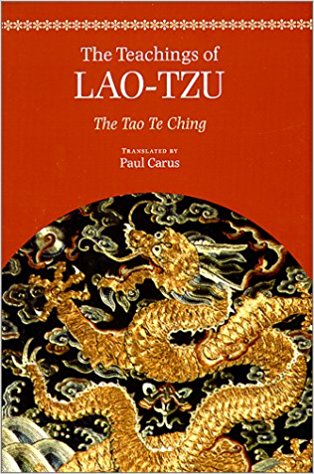
Teachings of Lao-Tzu: The Tao Te Ching.
Translation, commentary, and notes by Paul Carus, 1913. New York,
St. Martin's Press, 2000. D.T.
Suzuki worked and studied with Paul Carus around 1905 in Illinois, and
translated together their version the Tao Te Ching.
Daodejing by Laozi: Chapters with Chinese characters, seal script,
detailed word by word concordance, Pinyin (tone#), German, French and English.
This is an outstanding resource for serious students of the Tao Te Ching.
Tao Te
Ching: A New Translation and Commentary. By Ellen Chen. Paragon
House, 1998. Detailed glossary, index, bibliography, notes, 274 pages.
One of my favorites.
The New Lao Tzu: A Contemporary Tao Te Ching. Interpretation, comments,
notes by Ray Grigg. Tuttle, 1995. 187 pages.
Das Tao Te King von Lao Tse. Complete versions of all 81 Chapters of
the Tao Te Ching by many different translators in many languages: 124
English, 24 German, 14 Russian, 7 Spanish, 5 French and many other languages.
Links are organized first by languages, and then alphabetically by translators. Formatting
varies somewhat. The original website at Onekellotus went offline in 2012; but, the
extensive collection of these Tao Te Ching versions was
saved for posterity by the Internet Archive Wayback Machine and available as of
9/9/2015. This is an outstanding original collection of
versions of the Daodejing─ the Best on the Internet. Caution:
copyright infringement may sometimes be an issue at this website.
Tao Te Ching, Translations into English: Terebess Asia Online (TAO). 124
nicely formatted complete English language translations, on separate webpages, of the Daodejing.
Alphabetical index by translators. Each webpage has all 81 chapters of the Tao Te
Ching translated into English. A useful collection! Many
reformatted and colored versions from the original collection at
Das Tao Te King von Lao Tse.
The Tao
and Method: A Reasoned Approach to the Tao Te Ching. A translation and
commentary by Professor Michael Lafargue. New York, SUNY Press, 1994. 640 pages. Detailed
index, bibliography, notes, and tables. An essential research tool.
The Tao
of the Tao Te Ching. A Translation and Commentary by Michael LaFargue.
State University of New York Press, 1992. Detailed glossary, extensive bibliography, 270 pages. This translation is based on the oldest version ( 168 BCE) of
the Tao Te Ching found in King Ma's tomb - the famous Magwandali
manscript.
81 Chapters arranged in a topical order by the author.
Two Visions of the Way: A Study of the Wang Pi and the Ho-Shang Kung Commentaries on the Lao-Tzu.
By Professor by Alan Kam-Leung Chan. SUNY Series in Chinese
Philosophy and Culture. State University of New York Press, 1991.
Index, bibliography, glossary, notes, 314 pages.
Chinese Reading of the Daodejing
Wang Bi's Commentary on the Laozi with Critical Text and Translation.
By Professor Rudolf G. Wagner. A SUNY Series in Chinese Philosophy and
Culture. English and Mandarin Chinese Edition.
State University of New York Press; Bilingual edition (October 2003). 540
pages. Wang Bi (Wang Pi, Fusi), 226-249 CE,
Commentary on the Tao Te
Ching.
Tao Te Ching
The Taoism Reader
The Lunar Tao: Meditations in Harmony with the Seasons
The Classic of the Way and Virtue: A New Translation of the Tao-te Ching of Laozi as Interpreted by Wang Bi.
Translated by Richard John Lynn. Translations from the Asian Classics
Series. New York, Columbia University Press, 1999. Extensive index,
glossaries, notes, 244 pages.
Tao Te Ching in Chinese characters,
Pinyin Romanization, English and German by Dr. Hilmar
Alquiros.
Tao Te
Ching: Annotated and Explained. Translation and Annotation by Derek
Lin. Foreword by Lama Surya Das. "An inspiring, precise translation
of the ancient Chinese wisdom classic─ with facing-page commentary that brings
the text to life for you." Woodstock, Vermont, 2006, 2010. 167 pages.
How to Live a Good Life:
Advice from Wise Persons
One Old Philosopher's Notebooks Research, reading, and reflections by Mike Garofalo.
Yellow Bridge
Dao De Jing Comparison Table Provides side by side comparisons of
translations of the Tao Te Ching by James Legge, D. T. Suzuki, and Dwight
Goddard. Chinese characters for each paragraph in the Chapter are on the
left; place your cursor over the Chinese characters to see the Pinyin
Romanization of the Chinese character and a list of meanings.
Translators Index,
Tao Te Ching Versions in English, Translators Sorted Alphabetically by Translator, Links to Books and
Online Versions of the Chapters
Taoism and the Tao Te
Ching: Bibliography, Resources, Links
Spanish Language
Translations of the Tao Te Ching, Daodejing en Español, Translators Index
Chapter 23 in the
Rambling
Taoist Commentaries by Trey Smith. The
Rambling Taoists are Trey Smith and Scott Bradley.
Tao Te Ching: The Definitive Edition
The Philosophy of the Daodejing
Valley Spirit, Gu Shen,
Concept, Chapter 6
Valley Spirit Center in Red
Bluff, California.
Sacred
Circle in the Gushen Grove.
Lao-tzu's Taoteching
The Way and Its Power: Lao Tzu's Tao Te Ching and Its Place in Chinese
Thought. By Arthur
Waley, 1889-1966. Translation and commentary by Arthur Waley in 1934.
Part of the UNESCO collection of representative works, 1994. Grove Press,
First Edition, 1994. 262 pages.
Reading Lao Tzu: A Companion to the Tao Te Ching with a New Translation
Dao De Jing: A Philosophical Translation
Thematic Index to the
81 Chapters of the Tao Te Ching
Lieh-Tzu: A Taoist Guide to Practical Living
Revealing the Tao Te Ching: In-depth Commentaries on an Ancient Classic
Cloud Hands Blog
Mike Garofalo writes about Mind-Body Arts, Philosophy, Taoism, Gardening, Taijiquan, Walking, Mysticism,
Qigong, and the Eight Ways.
The Whole Heart of Tao:
The Complete Teachings From the Oral Tradition of Lao Tzu.
Gushen Grove Notebooks for the Tao Te Ching
Green Way Research, Valley Spirit
Center, Gushen Grove Notebooks, Red Bluff, North Sacramento Valley, California,
2010-2017
Vancouver, Columbia River Valley, Washington, 2017-
Green Way Research, 2010-2018.
Indexed and Compiled by
Michael P. Garofalo
This webpage was last modified, revised,
reformatted, improved, edited, graphics added, or updated on
October 9, 2020.
This webpage was first distributed online on June 14, 2010.
Created by Michael P. Garofalo, Green Way Research, Valley Spirit Center, Gushen Grove Notebooks, Vancouver, Washington © 2010-2020 CCA 4.0
Brief Biography of Michael P. Garofalo, M.S.

Ripening Peaches: Daoist Studies and Practices
Zhuangzi (Chuang Tzu, Zhuang Zhou, Master Chuang) 369—286 BCE
Taoist Perspectives: My Reading List
Bodymind Theory and Practices, Somaesthetics
How to Live a Good Life: Advice from Wise Persons
Qigong (Chi Kung) Health Practices
One Old Daoist Druid's Final Journey: Notebooks of the Librarian of Gushen Grove
Index to Cloud Hands and Valley Spirit Websites
The Tao Te Ching (Dao De Jing) by Lao Tzu (Laozi) circa 500 BCE
Index to English Language Translators of the Tao Te Ching
Concordance Project 2018: Concordance to Chapters 1-30 in English, Spanish, and Wade-Giles
Spanish Language Translations of the Tao Te Ching
Return to the Top of this Webpage
|
Tao Te
Ching |
|||||||||
| 1 | 2 | 3 | 4 | 5 | 6 | 7 | 8 | 9 | 10 |
| 11 | 12 | 13 | 14 | 15 | 16 | 17 | 18 | 19 | 20 |
| 21 | 22 | 23 | 24 | 25 | 26 | 27 | 28 | 29 | 30 |
| 31 | 32 | 33 | 34 | 35 | 36 | 37 | 38 | 39 | 40 |
| 41 | 42 | 43 | 44 | 45 | 46 | 47 | 48 | 49 | 50 |
| 51 | 52 | 53 | 54 | 55 | 56 | 57 | 58 | 59 | 60 |
| 61 | 62 | 63 | 64 | 65 | 66 | 67 | 68 | 69 | 70 |
| 71 | 72 | 73 | 74 | 75 | 76 | 77 | 78 | 79 | 80 |
| 81 | |||||||||