Classic of the Way and Virtue
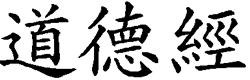
By Lao Tzu (Laozi)
Green Way Research, Valley Spirit Center, Gushen Grove Notebooks, Vancouver, Washington
Chapter 28 Chapter 30 Index to All the Chapters Daoism Concordance Cloud Hands Blog Commentary
Classic Book (Ching) about the Tao (Way, Nature, Patterns, Processes) and Te (Virtue, Potency, Power, Integrity, Wise Person, Sage)
Concordance: Indexing, Search Terms, Topics, Themes, Keys, Subjects, Words
English and Chinese (Wade-Giles) Terms: Abandon Excess, Not Forcing Things,
Finish or End (yi), Variations, No Extravagance, Taking-Loosing, Spirit, Kingdom,
Sometimes or Perhaps (huo), Empire,
Breathe Out or Sigh or Blow or Breathe Warm Air Out (hsü), Achieve or Succeed (tê), Front, Back, Warm Cold,
Controlled or Forced (wei), Extravagant or Elaborate (shê), Want or Desire (yü), Simplicity, Austerity, Variety,
Ruins or Destroys (pai), Pride or Indulgence or Excess (t'ai),
Strong or Forceful (ch'iang), Break or Destroy (ts'o), Peaceful, Reticence,
Sacred or Divine or Spirit (shên), Breathe In or Pant or Blow Cold (ch'ui), Extravagance, Indulgence,
Strong, Weak (lei), Recognize or Perceive (chien), Excess, Act or Impose Order
(wei), Heaven (t'ien), Take or Conquer (ch'ü), Opposites,
Give Up or Fall (hui), Ahead or Lead (hsing), Follow or Behind (sui), Receive (chiang),
Lose (shih), Excess or Extremes (shên), Abandons or Leaves (ch'u), Taking No
Action, Sage, Vessel or Bowl (ch'i), Holy Man or Wise Man (shêng jen), Humility, Wu Wei,
無為
Términos en Español: Variaciones, No
Extravagancia, Espíiritu, Reino,
Imperio, Rotura, Delante, Detrás, Cálido,
Frío, Sencillez, Austeridad,
Variedad, Pacíficas, Indentificar,
Reconocer, Ruina, Acabado, Recibir, Reticencia,
Cielo, Extravagancia, Lograr, Indulgencia, Fuerte, Débil,
Exceso, Opuestos, Renuncir,
Abandonar, Exceso, Extravagante, Deseo, Adelante, Medida,
Sabio, Perder, Humildad, Aspirar, Sagrado, Orgullo, Mayor, Espíritu,
Cuenco, Cáliz, Conquistar,
Enérgico, Hombre Sabio, Vigoroso, Fuerte, Débil, Enfermo, Restricción, No Interferencia,
A Veces, No se Intrometa, No Controlado, Sin Hablar De.
Electronic Concordance for all 81 Chapters of the Tao Te Ching
English Language Translations of the Tao Te Ching
"If any one should wish to get the kingdom for himself, and to effect this by
what he does, I see that he will not succeed.
The kingdom is a spirit-like thing, and cannot be got by active doing.
He who would so win it destroys it; he who would hold it in his grasp loses it.
The course and nature of things is such that
What was in front is now behind;
What warmed anon we freezing find.
Strength is of weakness oft the spoil;
The store in ruins mocks our toil.
Hence the sage puts away excessive effort, extravagance, and easy indulgence."
- Translated by
James Legge, 1891,
Chapter 29
"If anyone wants to take the world and directs it at his will, I do not see
how he can succeed.
The world is a sacred vessel, which cannot be directed at one's will.
To direct it is to fail.
To grasp it is to lose it.
Some things go ahead, some follow, some breathe slowly, some breathe fast,
some are strong, some are weak, some grow in strength, some decay.
Therefore, the sage avoids "very", "too" and "extreme".
:
- Translated by
Tien Cong Tran, Chapter 29
"If you try to grab hold of the world and do what you want with it, you won't succeed.
The world is a vessel for spirit, and it wasn't made to be manipulated.
Tamper with it and you'll spoil it.
Hold it, and you'll lose it.
With Tao, sometimes you move ahead and sometimes you stay back;
Sometimes you work hard and sometimes you rest;
Sometimes you're strong
and sometimes you're weak;
Sometimes you're up; sometimes you're down.
The sage remains sensitive, avoiding extremes, avoiding extravagance, avoiding excess."
- Translated by
Brian Browne Walker, 1996, Chapter 29
"The external world is fragile,
and he who meddles with its natural way,
risks causing damage to himself.
He who tries to grasp it,
thereby loses it.
It is natural for things to change,
sometimes being ahead, sometimes behind.
There are times when even breathing
may be difficult,
whereas its natural state is easy.
Sometimes one is strong,
and sometimes weak,
sometimes healthy,
and sometimes sick,
sometimes is first,
and at other times behind.
The sage does not try
to change the world by force,
for he knows that force results in force.
He avoids extremes and excesses,
and does not become complacent."
- Translated by
Stan Rosenthal, 1984, Chapter 29
"When one desires to take in hand the empire and make it, I see him not
succeed.
The empire is a divine vessel which cannot be made.
One who makes it, mars it.
One who takes it, loses it.
And it is said of beings:
Some are obsequious, others move boldly,
Some breathe warmly, others coldly,
Some are strong and others weak,
Some rise proudly, others sneak.
Therefore the holy man abandons excess, he abandons extravagance, he
abandons indulgence."
- Translated by
Daisetsu Teitaro Suzuki and
Paul Carus, 1913, Chapter 29
"Messing with the World: We don’t always get what we want
If we seek to seize the world and meddle with it:
I see this as unachievable.
This world is a sacred vessel.
We cannot meddle with it, nor can we control it.
Those who meddle with it, ruin it. Those who control it, lose it.
This is why wise people do not meddle with things,
and so do not ruin or lose them.
It is the nature of things either to lead the way, or follow after.
Either to breathe in through the nose, or blow out through the mouth.
They are either strong, or weak. They either make it, or fail.
This is why wise people do away with excess,
and do away with waste and extravagance."
- Translated by
Amy and Roderic Sorrell, 2003, Chapter 29

Created by Michael P. Garofalo, Green Way Research, Valley Spirit Center, Gushen Grove Notebooks, Vancouver, Washington © 2011-2021 CCA 4.0
 Translated by Eva Wong
  Translated by Philip Ivahoe
 By James Miller
 Translated by Stephen Bokencamp
 By Alexander and Annellen Simpkins
 Translated by Thomas Cleary
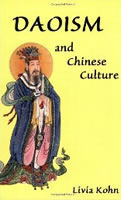
 By Livia Kohn
"As for those who would take the whole world
To tinker as they see fit,
I observe that they never succeed:
For the world is a sacred vessel
Not to be altered by man.
The tinker will spoil it;
Usurpers will lose it.
For indeed there are things
That must move ahead,
While others must lag;
And some that feel hot,
While others feel cold;
And some that are strong,
While others are weak;
And vigorous ones,
While others worn out.
So the Wise Man discards
Extreme inclinations
To make sweeping judgments,
Or to a life of excess."
- Translated by
Raymond B.
Blakney, Chapter 29
"One who desires to take the world and act (wei)
upon it,
I see that it cannot be done.
The world (t'ien hsia) is a spirit vessel (shen ch'i),
Which cannot be acted (wei) upon.
One who acts (wei) on it fails,
One who holds on to it loses (shih).
Therefore things either move forward or follow behind;
They blow hot or blow cold;
They are strong (ch'iang) or weak;
They get on or they get off.
Therefore the sage gets rid of over-doing,
Gets rid of extravagances,
Gets rid of excesses."
- Translated by
Ellen M.
Chen, Chapter 29
"Do you think you can control the world?
I do not believe it can be done.
The world is a manifestation of change
and cannot be controlled.
If you try to control it, you will end up deceiving
yourself.
If you treat it like an object, it will overwhelm
you.
The world is a manifestation of change;
sometimes ahead, sometimes behind,
sometimes dynamic, sometimes static,
sometimes vigorous, sometimes feeble,
sometimes manifesting, sometimes
disintegrating.
Therefore, refuse to distinguish excesses and
extremes.
See only oneness.
Flow with Infinity
and exist in peace and harmony."
- Translated by
John Worldpeace, Chapter 29
"To conquer and rule the world, I think, is not achievable.
The world is like a sacred utensil, which cannot be taken and held.
Whoever tries to conquer it will fail.
Whoever tries to hold it will lose it.
Thus, the sage does not try this, so he can avoid failure.
The sage does not try to own the world, so he loses nothing.
Things can be fast or slow, warm or cool, strong or weak, light or heavy.
The sage avoids the excessive, extravagant, and grandiose."
- Translated by
Thomas Z.
Zhang, Chapter 29
"Of the many who wish to grab the universe and 'use' it,
Ego has never
had even one success.
Now,
the universe is a Divine Alembic, not something to 'use.'
Who strives to
'use' it will be defeated; who grasps it will fail.
Of
Creatures; some march forward, others follow behind;
some tremble in silence, others are puffed-up;
some are agressive, others are meek;
some build things up, others collapse them.
For
these reasons, Sages avoid extremism;
avoid excesses;
avoid being grandiose."
- Translated by
Jerry C.
Welch, 1998, Chapter 29
Tao Te Ching
Lao Tzu: Tao Te Ching
 Translated by Livia Kohn
Dao De Jing: The Book of the Way
"The external world is fragile,
and he who meddles with its natural way,
risks causing damage to himself.
He who tries to grasp it,
thereby loses it.
It is natural for things to change,
sometimes being ahead, sometimes behind.
There are times when even breathing
may be difficult,
whereas its natural state is easy.
Sometimes one is strong,
and sometimes weak,
sometimes healthy,
and sometimes sick,
sometimes is first,
and at other times behind.
The sage does not try
to change the world by force,
for he knows that force results in force.
He avoids extremes and excesses,
and does not become complacent."
- Translated by
Stan
Rosenthal, Chapter 29
A Chinese Language Version of Chapter 29 of
the Tao Te Ching by Lao Tzu
A
note
on my style of displaying the Chinese characters of the Tao Te Ching
將欲取天下而為之.
吾見其不得已.
天下神器, 不可為也.
為者敗之.
執者失之故物或行或隨.
或歔或吹.
或強或羸.
或挫或隳.
是以聖人去甚去奢去泰.
- Chinese characters, Tao Te Ching, Chapter 29
chiang yü ch'ü t'ien hsia erh wei chih.
wu chien ch'i pu tê yi.
t'ien hsia shên ch'i, pu k'o wei yeh.
wei chê pai chih.
chih chê shih chih ku wu huo hsing huo sui.
huo hsü huo ch'ui.
huo ch'iang huo lei.
huo ts'o huo hui.
shih yi shêng jên ch'ü shên ch'ü shê ch'ü t'ai.
- Wade-Giles Romanization, Tao Te Ching, Chapter 29
Audio Version in Chinese of Chapter 29 of the Tao Te Ching
jiang yu qu tian xia er wei zhi.
wu jian qi bu de yi.
tian xia shen qi, bu ke wei ye.
wei zhe bai zhi.
zhi zhe shi zhi fu wu huo xing huo sui.
huo xu huo chui.
huo qiang huo lei.
huo zai huo hui.
shi yi sheng ren qu shen qu she qu tai.
-  Pinyin Romanization, Daodejing, Chapter 29
Tao Te Ching in Chinese characters and English (includes a word by word key) from YellowBridge
Tao Te Ching in Chinese characters, Pinyin Romanization, English and German by Dr. Hilmar Alquiros.
Laozi Daodejing: Chapters with Chinese characters, seal script, detailed word by word concordance, Pinyin (tone#), German, French and English.
Chinese and English Dictionary, MDGB
Dao De Jing Wade-Giles Concordance by Nina, Dao is Open
Dao De Jing English and Wade-Giles Concordance by Mike Garofalo
Tao Te Ching in Pinyin Romanization with Chinese characters, WuWei Foundation
Tao Te Ching in Pinyin Romanization
Tao Te Ching in Chinese characters and English
Tao Te Ching in Chinese characters, English, Word by word analysis, Zhongwen
Tao Te Ching: The Definitive Edition
Tao Te Ching in Chinese characters: Big 5 Traditional and GB Simplified
Chinese Characters, Wade-Giles and Pinyin Romanizations, and 16 English Translations for Each Chapter of the Daodejing by Mike Garofalo.
Tao Te Ching in Chinese characters, Pinyin and Wade Giles Romanization spellings, English; a word for word translation of the Guodian Laozi Dao De Jing Version.
Lao Zi's Dao De Jing: A Matrix Translation with Chinese Text by Bradford Hatcher.
"There are those who will conquer the world
And make of it (what they conceive or desire).
I see that they will not succeed.
(For) the world is God's own Vessel
It cannot be made (by human interference).
He who makes it spoils it.
He who holds it loses it.
For: Some things go forward,
Some things follow behind;
some blow hot,
And some blow cold;
Some are strong,
And some are weak;
Some may break,
And some may fall.
Hence the Sage eschews excess, eschews extravagance,
Eschews pride."
- Translated by
Lin Yutang,
Chapter 29
By Alexander Simkins.  By Derek Lin.
 By Ming-Dao Deng.
 By Benjamin Hoff.
 By Ming-Dao Deng.
 Translated by Thomas Cleary.

"One who desires to take and remake the
Empire will fail.
The Empire is a divine thing that cannot be remade.
He who attempts it will only mar it.
He who seeks to grasp it, will lose it.
People differ, some lead, others follow; some are ardent, others are
formal;
some are strong, others weak; some succeed, others fail.
Therefore the wise man practices moderation; he abandons pleasure,
extravagance and indulgence."
- Translated by
Dwight
Goddard, Chapter 29
"If one wants to possess the world and act upon it,
I know that he cannot get it.
The world is a sacred vessel;
It cannot be acted upon.
To act upon it is to destroy it.
To grasp it is to lose it.
Therefore, in all things,
Some lead, some follow,
Some blow warm, some blow cool,
Some are strong, some are weak,
Some destroy, some are destroyed.
Therefore, the sage avoids the extreme,
The extravagant, and the excessive."
- Translated by
Yi Wu,
Chapter 29
"He who wants to gain the kingship by force
Can never be successful, I think.
The kingship is so sacred
That cannot be obtained through force.
Those who try to obtain it by force will ruin it;
Those who keep it by force will lose it.
Because things are different:
Some go ahead or follow;
Some breathe gently or hard;
Some are strong or weak;
Some are in safety or in danger.
Hence the sage does away with extremity,
extravagance and excess."
- Translated by
Gu Zengkun,
Chapter 29
"Do you want to change the world?
You cannot possibly succeed
The given cannot be improved
On this the seers are agreed
At times you find you're out in front
At other times you fall behind
Sometimes you're all commotion
But afterwards you must unwind
When all around is turmoil
Just stay with the serene
You are the quiet center
Of the ever changing scene
Can you see things as they are
And let them be all on their own?
Remain in pure awareness
You never need to stray from home"
- Translated by
Jim
Caltfelter, Chapter 29
Created by Michael P. Garofalo, Green Way Research, Valley Spirit Center, Gushen Grove Notebooks, Vancouver, Washington © 2011-2021 CCA 4.0
 By Hu Xuzehi
 Annotated translation by Victor Mair
  By Ha Poong Kim
 By Hans-Georg Moeller
 Ripening Peaches: Taoist Studies and Practices By Mike Garofalo
 By Roger T. Ames and David T. Hall
 By Arthur Waley
"Those who would take over the earth
And shape it to their will
Never, I notice, succeed.
The earth is like a vessel so sacred
That at the mere approach of the profane
It is marred
And when they reach out their fingers it is gone.
For a time in the world some force themselves ahead
And some are left behind,
For a time in the world some make a great noise
And some are held silent,
For a time in the world some are puffed fat
And some are kept hungry,
For a time in the world some push aboard
And some are tipped out:
At no time in the world will a man who is sane
Over-reach himself,
Over-spend himself,
Over-rate himself."
- Translated by
Witter
Bynner, 1944, Chapter 29
"He who wants to gain the kingship by force
Can never be successful, I think.
The kingship is so sacred
That cannot be obtained through force.
Those who try to obtain it by force will ruin it;
Those who keep it by force will lose it.
Because things are different:
Some go ahead or follow;
Some breathe gently or hard;
Some are strong or weak;
Some are in safety or in danger.
Hence the sage does away with extremity, extravagance and excess."
- Translated by
Gu
Zhengkun, Chapter 29
"Trying to govern the world with force I see
this not succeeding
the world is a spiritual thing it can't be forced to force it is to
harm
it to control it is to lose it
sometimes things lead sometimes they follow sometimes blow hot
sometimes blow cold sometimes expand sometimes collapse
therefore the sage avoids extremes, avoids extravagance, avoids
excess"
- Translated by
Red Pine,
Bill Porter, 1996, Chapter 29
 Translation and elucidation by Hua Ching Ni
 Translated by Brian Walker
 Translated by Arthur Waley
 Translated by Lionel and and Herbert Giles
 By Eva Wong
"How would you improve the universe?
I see no way to finish the task.
The universe is a holy vessel, and should not be tampered with.
If you alter it, you will hurt it; if you hold it, you will lose it.
Sometimes ahead, and sometimes behind;
sometimes hot, and sometimes cold;
sometimes strong, sometimes weak;
sometimes building up, sometimes breaking down;
thus the sage avoids extremes, excess and indulgence."
- Translated by
Ned Ludd,
Chapter 29
"Will anybody want to lead the world according to his selfish design?
I see that he will never attain his end.
The sacred instrument of the world cannot be grasped or intervened:
one who intervenes will be defeated;
one who grasps will lose it.
Among things:
some are moving ahead, others are following behind;
some are breathing in air, others are breathing in water;
some are strong, others are weak;
some are still carried on and some are dropped.
Therefore, a Sage ruler avoided:
Extreme, Extravagance and Indulgence."
- Translated by
Tang
Zi-Chang, Chapter 29
"When a man desires to obtain the Empire,
and govern it by acting on this principle of simplicity,
I see
that he does so in spite of himself.
The insignia of royalty may not
be used by such.
Those who make them will break them; those who clutch at them will
lose them.
For among the things of the world there are those who
lead and those who follow;
there are ejaculations of grief and
ejaculations of gladness;
there are those who are strong and those
who are weak;
there are those who sustain loads and those who are
good for nothing.
For this reason the Sage puts away excess,
display, and pride."
- Translated by
Frederic
Henry Balfour, 1884, Chapter 29
Walking the Way: 81 Zen Encounters with the Tao Te Ching
The Tao of Zen
Tao Te Ching: Zen Teachings on the Taoist Classic
Buddhism and Taoism Face to Face: Scripture, Ritual, and Iconographic Exchange in Medieval China
"If you desire to gain the kingdom by action,
I see that you will not succeed.
The kingdom is a spiritual vessel,
It cannot be gained by action.
He who acts, destroys it
He who grasps, loses it.
Therefore behold the animals:
Some go in front, others follow;
Some are warm, others cold;
Some are strong, others feeble;
Some keep moving, others are still.
That is why the self-controlled man puts away excess, he puts away egotism, he puts away easy living."
- Translated by
Isabella
Mears, 1916, Chapter 29
"Those who seek to conquer the world and shape it as they see fit never
succeed.
The world is a sacred vessel and cannot be improved.
Whoever tries
to alter it, spoils it; whoever tries to direct it, misleads it.
So, some
things advance, others lag; some proceed in silence, others make sound;
some
are strong, others weak; some are forward, others retiring.
Therefore the
truly wise avoid extremes, extravagance, and foolish pride."
- Translated by
Frank J. MacHovec, 1962, Chapter 29
"Do you want to rule the world and control it?
I don't think it can ever be done.
The world is a sacred vessel
and it can not be controlled.
You will only make it worse if you try.
It may slip through your fingers and disappear.
Some are meant to lead,
and others are meant to follow;
Some must always strain,
and others have an easy time;
Some are naturally big and strong,
and others will always be small;
Some will be protected and nurtured,
and others will meet with destruction.
The Master accepts things as they are,
and out of compassion avoids extravagance,
excess and the extremes."
- Translated by John H. McDonald, 1996, Chapter 29
Further Teachings of Lao-Tzu: Understanding the Mysteries (Wen
Tzu)
The Lunar Tao: Meditations in Harmony with the Seasons
 By Lui I-Ming (1780) and translated by Thomas Cleary
Ripening Peaches: Taoist Studies and Practices By Mike Garofalo
Zhuangzi: The Essential Writings with Selections from Traditional Commentaries
"Do you think you can take over the universe
and improve it?
I do not believe it can be done.
The universe is sacred.
You cannot improve it.
If you try to change it, you will ruin it.
If you try to hold it, you will lose it.
So sometimes things are ahead and sometimes they are behind;
Sometimes breathing is hard, sometimes it comes easily;
Sometimes there is strength and sometimes weakness;
Sometimes one is up and sometimes down.
Therefore the sage avoids extremes, excesses, and complacency."
- Translated by
Gia-Fu
Feng and Jane English, 1972, Chapter 29
|
Tao Te
Ching |
|||||||||
| 1 | 2 | 3 | 4 | 5 | 6 | 7 | 8 | 9 | 10 |
| 11 | 12 | 13 | 14 | 15 | 16 | 17 | 18 | 19 | 20 |
| 21 | 22 | 23 | 24 | 25 | 26 | 27 | 28 | 29 | 30 |
| 31 | 32 | 33 | 34 | 35 | 36 | 37 | 38 | 39 | 40 |
| 41 | 42 | 43 | 44 | 45 | 46 | 47 | 48 | 49 | 50 |
| 51 | 52 | 53 | 54 | 55 | 56 | 57 | 58 | 59 | 60 |
| 61 | 62 | 63 | 64 | 65 | 66 | 67 | 68 | 69 | 70 |
| 71 | 72 | 73 | 74 | 75 | 76 | 77 | 78 | 79 | 80 |
| 81 | |||||||||
"If one start out to take the world in hand,
And make it, he will never gain his end,
For spirit-vessels are not made like pails,
And he who makes mars, who grasps fails.
For, in the course of things, if some one press
Ahead, some other lags behind, and will,
While one has warmth, another one is chill,
While one is strong, another weakly shrinks,
One keeps himself afloat, another sinks.
Therefore the sage abandons all excess,
And all extravagance and
selfishness."
- Translated by
Isaac Winter Heysinger, 1903, Chapter 29
"Die Welt erobern und behandeln wollen,
ich habe erlebt, daß das mißlingt.
Die Welt ist ein geistiges Ding,
das man nicht behandeln darf.
Wer sie behandelt, verdirbt sie,
wer sie festhalten will, verliert sie.
Die Dinge gehen bald voran, bald folgen sie,
bald hauchen sie warm, bald blasen sie kalt,
bald sind sie stark, bald sind sie dünn,
bald schwimmen sie oben, bald stürzen sie.
Darum meidet der Berufene
das Zusehr, das Zuviel, das Zugroß."
- Translated by Richard Wilhelm, 1911, Chapter
29
"Machtpolitik zerstört, Verzicht aufGewalt baut auf
Die Erfahrung zeigt,
daß man sich die Welt nicht willentlich unterjochen kann.
Die Welt ist ein sich selbst bildendes geistiges Ganzes.
Sie mit Gewalt ordnen zu wollen,
heißt, sie aus der Ordnung bringen.
Sie mit Macht befestigen zu wollen, heißt, sie zerstören.
Denn alle ihre Glieder haben ihr eigenes Gesetz:
die einen müßen voranstürmen, die andern verharren;
die einen schweigen, die andern prahlen;
die einen sind selbst stark,
die andern müßen gestützt werden;
die einen siegen im Lebenskampf,
die andern unterliegen.
Der Weyse erzwingt daher nichts,
er überhebt sich nicht und greift nicht mit Gewalt ein."
- Translated
by Rudolf
Backofen, 1949, Chapter 29
"Of those who wish to take hold of all-under-heaven and act upon it,
I have seen that they do not succeed.
Now,
All-under-heaven is a sacred vessel,
Not something that can be acted upon;
Who acts upon it will be defeated,
Who grasps it will lose it.
Of creatures,
some march forward, others follow behind;
some are shiveringly silent, others are all puffed up;
some are strong, others are meek;
some pile up, others collapse.
For these reasons,
The sage
rejects extremes, rejects excess, rejects extravagance."
- Translated by
Victor H.
Mair, 1990, Chapter 29
Created by Michael P. Garofalo, Green Way Research, Valley Spirit Center, Gushen Grove Notebooks, Vancouver, Washington © 2011-2021 CCA 4.0
Tao Te Ching: An Illustrated Journey
Tao Te Ching
The Book of Tao: Tao Te Ching - The Tao and Its Characteristics
Ripening Peaches: Taoist Studies and Practices
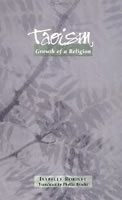
Taoism: Growth of a Religion
Zhuangzi (Chuang Tsu), Daoist Scripture: Bibliography, Links, Resources, Quotations, Notes
Zhuangzi: Basic Writings
Zhuangzi Speaks: The Music of Nature
Lifestyle Advice from Wise Persons

"There
are those who will conquer the world
And make of it what they conceive or desire.
I see that they will not succeed.
For the world is God's own Vessel
It cannot be made by human interference.
He who makes it spoils it.
He who holds it loses it.
Some things go forward,
Some things follow behind;
some blow hot,
And some blow cold;
Some are strong,
And some are weak;
Some may break,
And some may fall.
Hence the Sage eschews excess, eschews extravagance, eschews pride."
- Translated by
Lin Yutang,
1948, Chapter 29
"Winning and controlling the empire by deeds is the way that leads to
failure.
Because the empire is a divine vessel not to be grasped and not to be
bargained for.
One who tries to seize it does no comprehend it.
One who tries to take it loses it:
He thinks he is getting ahead and is staying behind.
He thinks he is increasing and is dwindling away.
He believes he is strong and reveals his weakness.
He believes he is above others and succumbs.
How different the Sage:
He avoids arrogance and impetuousness.
Instead of doing he accomplishes through non-action."
- Translated by
K. O.
Schmidt, 1975, Chapter 29
"Ambition
"Si l'homme agit pour gouverner parfaitement
l'empire, je vois qu'il n'y réussira pas.
L'empire est comme un vase divin auquel l'homme ne doit pas
travailler.
S'il y travaille, il le détruit; s'il veut le saisir, il le perd.
C'est pourquoi, parmi les êtres, les uns marchent en avant et les
autres suivent;
les uns réchauffent et les autres refroidissent; les uns sont forts
et les autres faibles,
les uns se meuvent et les autres s'arrêtent.
De là vient que le saint homme supprime les excès, le luxe et la
magnificence."
- Translated by Stanislas Julien, 1842, Chapter 29
Spanish
Language Versions of the Tao Te Ching (Daodejing)
Tao Te Ching en Español
Lao Tsé Tao Te Ching 
Tao Te Ching Traducido por Stephen Mitchell, versión española
Tao Te Ching Traducido al español por el Padre Carmelo Elorduy
Lao Tzu-The Eternal Tao Te Ching
Ripening Peaches: Taoist Studies and Practices By Mike Garofalo Maduración Duraznos: Estudios y Prácticas Taoístas por Mike Garofalo
Tao Te Ching
Lao Tzu - Tao Te Ching
Tao te king
Daodejing Español, Inglés, y Chino Versiones Lingüísticas de la Daodejing
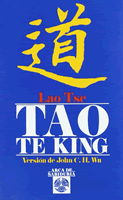
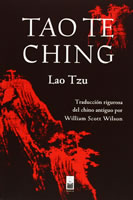
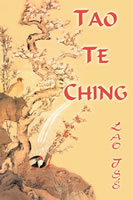
Spanish Language Translations of the Tao Te Ching
"Pretende alguien conquistar el mundo y hacer lo que quiera
con él?
No veo cómo podría tener éxito.
El mundo es un recipiente sagrado que no puede ser manipulado ni dominado.
Manipularlo es estropearlo, y dominarlo es perderlo.
De hecho, existe un tiempo para que todas las cosas vayan delante, y existe un
tiempo para
que vayan detrás; un tiempo para respirar despacio y
otro para hacerlo deprisa;
un tiempo para crecer en fortaleza y otro para declinar;
un tiempo para subir y otro para bajar.
Por ello, el Sabio evita los extremos, los excesos y las extravagancias."
- Translation from Chinese to English by
John C. H. Wu,
translated into Spanish by Alfonso Colodrón, Capítulo
29
"Quien pretenda conseguir el mundo y trabajarlo,
veo yo que no lo logrará.
El mundo,
es un recipiente espiritual,
que no se puede trabajar.
Quien lo trabaja lo destroza,
quien lo sujeta lo pierde.
Las cosas unas veces marchan delante y otras, detrás;
a veces soplan suavemente, otras veces con violencia;
a veces son fuertes, a veces débiles;
a veces se reproducen vigorosas, otras veces decaen.
Por eso el sabio renuncia a lo mucho,
rechaza lo grande,
rechaza el exceso."
- Translated by
Juan Ignacio
Preciado, 1978, Tao Te Ching, Capítulo 29
"Quien pretende el dominio del mundo
y mejorar éste,
se encamina al fracaso.
El mundo es tan sagrado y vasto que no puede ser dominado.
Quien lo domina lo empeora,
quien lo tiene lo pierde.
Porque, en el mundo todo tiene su tiempo y lugar,
unas cosas van por delante, otras por detrás.
A veces soplan suavemente, otras con fuerza.
Unas cosas son vigorosas, otras débiles.
A veces permanecen, otras veces caen.
Por esto, el sabio rechaza todo exceso,
desecha los absolutos
y descarta toda exhuberancia.
- Translation from
Wikisource, 2013, Capítulo
29
"Aquellos que desean cambiar el Mundo
De acuerdo con sus deseos
Nunca tienen éxito.
Al Mundo le dá forma el Tao;
No puede darse forma a sí mismo.
Si alguien intenta darle forma, le daña;
Si alguien intenta poseerle, le pierde.
Así pues:
A veces las cosas florecen, a veces no.
A veces la vida es dura, a veces es fácil.
A veces la gente es fuerte, a veces es débil.
A veces llegas a donde quieres ir, a veces te quedas en el camino.
Por ello el sabio no es extremo, extravagante o complaciente."
- Translated by
Antonio Rivas Gonzálvez, 1998, Capítulo
29
"El mundo externo es frágil,
y el que se entromete con su manera natural,
riesgos de causar daño a sí mismo.
El que trata de agarrarlo,
por lo tanto lo pierde.
Es natural que las cosas cambien,
a veces por delante, a veces detrás.
Hay momentos en que incluso respirar
puede ser difícil,
mientras que su estado natural es fácil.
A veces uno es fuerte,
y a veces débil,
a veces saludable,
y a veces enfermo,
a veces es lo primero,
y en otros momentos detrás.
El sabio no intenta
para cambiar el mundo por la fuerza,
porque sabe que la fuerza da lugar a su fuerza.
Evita los extremos y los excesos,
y no se vuelve complaciente".
- Translated into English by
Stan Rosenthal,
1984, Capítulo 29. Spanish version by
Michael P.
Garofalo.
"Aquellos que desean cambiar el Mundo
De acuerdo con sus deseos
Nunca tienen éxito.
Al Mundo le dá forma el Tao;
No puede darse forma a sí mismo.
Si alguien intenta darle forma, le daña;
Si alguien intenta poseerle, le pierde.
Así pues:
A veces las cosas florecen, a veces no.
A veces la vida es dura, a veces es fácil.
A veces la gente es fuerte, a veces es débil.
A veces llegas a donde quieres ir, a veces te quedas en el camino.
Por ello el sabio no es extremo, extravagante o complaciente."
- Translated by
Antonio Rivas Gonzálvez, 1998, Tao Te Ching, Capítulo 29
Created by Michael P. Garofalo, Green Way Research, Valley Spirit Center, Gushen Grove Notebooks, Vancouver, Washington © 2011-2021 CCA 4.0
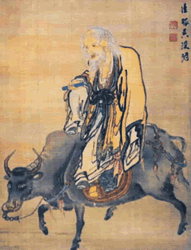
Next Chapter of the Tao Te Ching #30
Previous Chapter of the Tao Te Ching #28
Chapter and Thematic Index to the Tao Te Ching
Tao Te Ching, Translations into English: Terebess Asia Online (TAO). 124
nicely formatted complete English language translations, on separate webpages, of the Daodejing.
Alphabetical index by translators. Each webpage has all 81 chapters of the Tao Te
Ching translated into English. A useful collection! Many
reformatted and colored versions from the original collection at
Das Tao Te King von Lao Tse. Caution: copyright infringement may
sometimes be an
issue at this website.
Lao Tzu: Te-Tao Ching - A New Translation Based on the Recently Discovered Ma-wang-tui
Texts (Classics of Ancient China)
Daodejing by Laozi: Chapters with Chinese characters, seal script,
detailed word by word concordance, Pinyin (tone#), German, French and English.
This is an outstanding resource for serious students of the Tao Te Ching.
Tao Te
Ching: A New Translation and Commentary. By Ellen Chen. Paragon
House, 1998. Detailed glossary, index, bibliography, notes, 274 pages.
The Tao
and Method: A Reasoned Approach to the Tao Te Ching. By Michael
Lafargue. New York, SUNY Press, 1994. 640 pages. Detailed
index, bibliography, notes, and tables. An essential research tool.
Two Visions of the Way: A Study of the Wang Pi and the Ho-Shang Kung Commentaries on the Lao-Tzu.
By Professor by Alan Kam-Leung Chan. SUNY Series in Chinese
Philosophy and Culture. State University of New York Press, 1991.
Index, bibliography, glossary, notes, 314 pages.
ISBN: 0791404560.
Tao Te Ching: The Definitive Edition
Chinese Reading of the Daodejing
Wang Bi's Commentary on the Laozi with Critical Text and Translation.
By Professor Rudolf G. Wagner. A SUNY Series in Chinese Philosophy and
Culture. English and Mandarin Chinese Edition.
State University of New York Press; Bilingual edition (October 2003). 540
pages. ISBN: 978-0791451823.
Wang Bi (Wang Pi, Fusi), 226-249 CE,
Commentary on the Tao Te
Ching.
Tao Te Ching
The Taoism Reader
Change Your Thoughts - Change Your Life: Living the Wisdom of the Tao
The Tao of Being: A Think and Do Workbook
The Lunar Tao: Meditations in Harmony with the Seasons
The Classic of the Way and Virtue: A New Translation of the Tao-te Ching of Laozi as Interpreted by Wang Bi.
Translated by Richard John Lynn. Translations from the Asian Classics
Series. New York, Columbia University Press, 1999. Extensive index,
glossaries, notes, 244 pages.
Tao Te Ching in Chinese characters,
Pinyin Romanization, English and German by Dr. Hilmar
Alquiros.
Stoicism and Hellenistic
Philosophy
How to Live a Good Life:
Advice from Wise Persons
One Old Philosopher's
Notebooks Research, Reading, and Reflections by Mike Garofalo.
Yellow Bridge
Dao De Jing Comparison Table Provides side by side comparisons of
translations of the Tao Te Ching by James Legge, D. T. Suzuki, and Dwight
Goddard. Chinese characters for each paragraph in the Chapter are on the
left; place your cursor over the Chinese characters to see the Pinyin
Romanization of the Chinese character and a list of meanings.
Translators Index,
Tao Te Ching Versions in English, Translators Sorted Alphabetically by Translator, Links to Books and
Online Versions of the Chapters
Taoism and the Tao Te
Ching: Bibliography, Resources, Links
Spanish Language
Translations of the Tao Te Ching, Daodejing en Español, Translators Index
The Tao of Zen
Chapter 41 in the
Rambling
Taoist Commentaries by Trey Smith. The
Rambling Taoists are Trey Smith and Scott Bradley.
By Hans-Georg Moeller. Columbia University Press, 2006, 176 pages.
Valley Spirit, Gu Shen,
Concept, Chapter 6
Valley Spirit Center in Red
Bluff, California.
Sacred
Circle in the Gushen Grove.
Lao-tzu's Taoteching
Reading Lao Tzu: A Companion to the Tao Te Ching with a New Translation
Dao De Jing: A Philosophical Translation
Thematic Index to the
81 Chapters of the Tao Te Ching
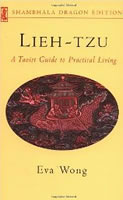
Lieh-Tzu: A Taoist Guide to Practical Living
Revealing the Tao Te Ching: In-depth Commentaries on an Ancient Classic
Cloud Hands Blog
Mike Garofalo writes about Mind-Body Arts, Philosophy, Taoism, Gardening, Taijiquan, Walking, Mysticism,
Qigong, and the Eight Ways.
The Whole Heart of Tao:
The Complete Teachings From the Oral Tradition of Lao Tzu.

Gushen Grove Notebooks for the Tao Te Ching
Green Way Research, Valley Spirit
Center, Gushen Grove Notebooks, Vancouver, Washington
Green Way Research, 2011-2021.
Indexed and Compiled by
Michael P. Garofalo
Red Bluff, CA 2011-2017; Vancouver, WA 2017-2021.
This webpage was last edited, changed,
reformatted, improved, modified or updated on
February 5, 2021.
This webpage was first distributed online on March 3, 2011.
Created by Michael P. Garofalo, Green Way Research, Valley Spirit Center, Gushen Grove Notebooks, Vancouver, Washington © 2011-2021 CCA 4.0
Brief Biography of Michael P. Garofalo, M.S.
Valley Spirit Center, Red Bluff, California
Study Chi Kung or Tai Chi with Mike Garofalo

Ripening Peaches: Daoist Studies and Practices
Zhuangzi (Chuang Tzu, Zhuang Zhou, Master Chuang) 369—286 BCE
Taoist Perspectives: My Reading List
Bodymind Theory and Practices, Somaesthetics
How to Live a Good Life: Advice from Wise Persons
Pleasures, Satisfaction, Desires
Qigong (Chi Kung) Health Practices
One Old Daoist Druid's Final Journey: Notebooks of the Librarian of Gushen Grove
Index to Cloud Hands and Valley Spirit Websites
Index to English Language Translators of the Tao Te Ching
Recurring Themes (Terms, Concepts, Leimotifs) in the Tao Te Ching
Spanish Language Translations of the Tao Te Ching
The Tao Te Ching (Dao De Jing) by Lao Tzu (Laozi) circa 500 BCE
|
Tao Te
Ching |
|||||||||
| 1 | 2 | 3 | 4 | 5 | 6 | 7 | 8 | 9 | 10 |
| 11 | 12 | 13 | 14 | 15 | 16 | 17 | 18 | 19 | 20 |
| 21 | 22 | 23 | 24 | 25 | 26 | 27 | 28 | 29 | 30 |
| 31 | 32 | 33 | 34 | 35 | 36 | 37 | 38 | 39 | 40 |
| 41 | 42 | 43 | 44 | 45 | 46 | 47 | 48 | 49 | 50 |
| 51 | 52 | 53 | 54 | 55 | 56 | 57 | 58 | 59 | 60 |
| 61 | 62 | 63 | 64 | 65 | 66 | 67 | 68 | 69 | 70 |
| 71 | 72 | 73 | 74 | 75 | 76 | 77 | 78 | 79 | 80 |
| 81 | |||||||||
Return to the Top of this Webpage