Classic of the Way and Virtue
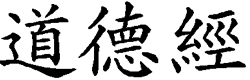
By Lao Tzu (Laozi)
Green Way Research, Valley Spirit Center, Gushen Grove Notebooks, Vancouver, Washington
Chapter 35 Chapter 37 Index to All the Chapters Daoism Concordance Cloud Hands Blog Commentary
Classic Book (Ching) about the Tao (Way, Nature, Patterns, Processes) and Te (Virtue, Potency, Power, Integrity, Wise Person, Sage)
Concordance: Indexing, Search Terms, Topics, Themes, Keys, Subjects
English and Chinese (Wade-Giles) Terms, Chapter #36:
Abandon or Reject (fei),
Breath, Complimentary, Concealment, Darken, Deep or Abyss (yüan), Deprive
or Take (to), Empire or State (kuo), Enlightened or Discerning (ming),
Exhale, Exposed, Expand or Open (chang), Fish (yü), Give or Endow
(yü), Government, Hard or Stiff (kang), Hidden, Necessary (ku),
Ignorance, Inhale, Insight, Lighten, Lower, Must or Surely (pi), Mystery
or Secret (wei), Opposite, Overturning, Paradox, People or Others (jên),
Profit or Benefit (li), Raise, Reversal, Sea, Secret, Security, Shown or
Revealed (shih), Shrink or Reduce (hsi), Soft, State, Raise or
Uplift (hsing), Strong or Power (ch'iang), Subtle, Taken or
Separated (t'o), Tender or Gentle (jou), Transform, Treasures,
Victory or Conquer (shêng), Want or Wish (yü), Weaken, Strengthen,
Weapons or Tools or Vessels (ch'i), Week or Feeble (jo), Wisdom,
微明. Contract, Humility,
Flexibility, Gift, Compromise, Subtle, Overcome, Dim, Rise, Fall.
Chapter #36 Tao Te Ching 2/11m/2021
Términos en Español, Capítulo #36:
Debilitar,
Fortalecer, Baja, Levante, Oculto, Expuesto,
Suave, Duro, Fuerte, Paradoja,
Secreto, Pez, Mar, Estado,
Gobierno, Tesoros, Aclarar, Oscurecer,
Opuesto, Transformar, Armas, Perspicacia,
Sabiduría, Seguridad, Inhalar,
Exhalar, Respircación,
Ignorancia,
Ocultación,
Vuelco, Inversión,
Sutil, Quiere, Desear, Encoger,
Reducir,
Debe, Seguramente,
es Necesario, Expanda, Abierto, Débil,
Fuerte, Poder, Abandono,
Rechazo,
Levantar, Levantamiento, Privar,
Tome,
Misterio, Secreto, Iluminado,
Discernimiento, Tierno, Suave,
Victoria, Conquer,
duro, Rígido,
Pescado, Tomado,
Separado, Profundo,
Abismo,
Imperio, Estado, Armas,
Herramientas, Instrumentos, Mostrado, Revelado,
Personas,
Otros. Contrato, Humildad, Flexibilidad, Regalo,
Compromiso, Sutil, Superar, Atenuar, Levantarse, Caída.
Capítulo #36
Daodejing 2/11m/2021
Electronic Concordance for all 81 Chapters of the Tao Te Ching
English Language Translations of the Tao Te Ching
"When one is about to take an inspiration, he is sure to make a previous
expiration.
When he is going to weaken another, he will first strengthen him.
When he is going to overthrow another, he will first have raised him up.
When he he is going to despoil another, he will first have made gifts to him.
This is called 'hiding the light' of his procedure.
The soft overcomes the hard; and the weak the strong.
Fishes should not be taken from the deep.
The instruments for the profit of a state should not be shown to the people."
- Translated by
James Legge, 1891,
Chapter 36
"Contraction pulls at that which extends too far
Weakness pulls at that which strengthens too much
Ruin pulls at that which rises too high
Loss pulls at life when you fill it with too much stuff
The lesson here is called he wisdom of obscurity
The gentle
outlast the strong
The obscure outlast the obvious
Hence, a fish that ventures from deep water is soon snagged by a
net
A country that reveals its strength is soon conquered by an
enemy"
- Translated by Jonathan
Star, 2001, Chapter 36
"If we want to fold something up, we must first spread it out.
If we want to weaken something, we must first strengthen it.
If we want to get rid of something, we must first encourage it.
If we want to have something, we must first let it go.
This is called The Secret Wisdom:
That the soft and the weak shall overcome the hard and the strong.
As a fish should not be taken from its pool,
so a country’s resources should not be displayed."
- Translated by
Roderic and Amy Sorrell, 2003, Chapter 36
"When one feels a desire to concentrate it in one's own heart, it is
imperatively necessary to display it openly.
When one feels a desire to cultivate it in its pliant phase, it is imperatively
necessary to fortify and strengthen one's own powers.
When one feels a
desire to abandon or neglect it, it is imperatively necessary to stir up one's
mind afresh in its pursuit.
If anyone feels a desire to obtain it, it is imperatively necessary that it
should be imparted to him.
By this means, the hidden phases of Tao will become clear.
The weak and pliable overcomes the strong and hard.
A fish cannot leave the depths.
The treasures of a State should not be employed to influence the people."
- Translated by
Henry Balfour,
1884, Chapter 36
"That which shall contract
Must have long expanded;
That which shall weaken
Must have long strengthened;
That which shall depart
Must have long partaken;
That which shall take
Must have long given.
This is called subtle insight.
Softness and weakness overcome strength:
Fish cannot leap out of deep water;
So cannot the state's sharp weapons
Be displayed to men."
- Translated by
Huang Chichung, Chapter 36
"A man who wants his opponent to become a greedy man should allow him the
chance to expand his benefit first.
He who wants to weaken his competitor should let his ambitions grow first.
He who wants to demolish his adversary should let him achieve first.
He who wants to plunder his enemy should let him have the storage place
first.
These are subtle but effective stratagems.
The feeble will overcome the strong.
But fishes shouldn't leave the deep; a state's strategy shouldn't be shown
to any person who is not concerned with it."
- Translated by
Hwang Shi Fu, Chapter 36
"What you want shrunk
Must first be allowed to expand.
What you want weakened
Must first be strengthened.
What you want destroyed
Must first be allowed to flourish.
That which you want to take
Must first be given.
Seeing this is an understanding of the subtle.
What is soft and weak overcomes what is hard and strong.
Just as a fish should keep to deep waters,
So a country's weapons should be kept out of sight, so as not to tempt
people."
- Translated by
John R. Mabry, 944, Chapter 36
"Shrink
to extend
exercise in order to weaken
stabilize for revolt
give in order to receive
die to live.
This is the balance of nature
soft
overcomes hard,
weak overcomes strong.
Like
a fish below the surface,
power should remain hidden."
- Translated by
Tom Kunesh, Chapter 36

Created by Michael P. Garofalo, Green Way Research, Valley Spirit Center, Gushen Grove Notebooks, Vancouver, Washington © 2011-2021 CCA 4.0
 By Alexander Simkins.
  By Derek Lin.
 By Ming-Dao Deng.
 By Benjamin Hoff.
 By Ming-Dao Deng.
 Translated by Thomas Cleary.


"That which is about to contract has surely been expanded.
That which is about to weaken has surely been strengthened.
That which is about to fall has surely been raised.
That which is about to be despoiled has surely been endowed.
This is an explanation of the secret that the tender and the weak conquer the
hard and the strong.
As the fish should not escape from the deep, so with the country's sharp tools
the people should not become acquainted."
- Translated by
Daisetsu Teitaro Suzuki and
Paul Carus, 1913, Chapter 36
"In order to contract a thing, one should surely expand it first.
In order to weaken, one will surely strengthen first.
In order to overthrow, one will surely exalt first.
'In order to take, one will surely give first.'
This is called subtle wisdom.
The soft and the weak can overcome the hard and the strong.
As the fish should not leave the deep
So should the sharp implements of a nation not be shown to anyone."
- Translated by
Ch'u Ta-Kao, 1904, Chapter 36
"If you would have a thing shrink,
You must first stretch it;
If you would have a thing weakened,
You must first strengthen it;
If you would have a thing laid aside,
You must first set it up;
If you would take from a thing,
You must first give to it.
This
is called subtle discernment:
The submissive and weak will overcome the hard and strong.
The
fish must not be allowed to leave the deep;
The instruments of power in a state must not be revealed to anyone."
- Translated by
D. C. Lau, 1963, Chapter 36
"That which shrinks must first expand.
That which fails must first be strong.
That which is cast down must first be raised up.
In order to receive, you first must give.
This is called Subtle Light.
Gentleness overcomes strength:
Like fish stay underwater,
weapons should stay invisible."
- Translated by
Ned Ludd, Chapter 36
"In order to shrink it, it must first be stretched out.
In order to weaken it, it must first be made strong.
In order to throw down it, it must first be set on high.
In order to obtain it, it must first be given.
That is subtle and wise.
The soft overcomes the hard.
The weak overcomes the strong.
The fish cannot leave the deep.
The useful instruments of the nation must not be displayed to the people."
- Translated by
Tien Cong Tran, Chapter 36
 Translated by Eva Wong
  Translated by Philip Ivahoe
 By James Miller
 Translated by Stephen Bokencamp
By Alexander and Annellen Simpkins
Translated by Stephen Bokencamp
By Alexander and Annellen Simpkins Translated by Thomas Cleary
 By Livia Kohn
"Whatever is gathered in
Must first be stretched out;
Whatever is weakened
Must first be made strong;
Whatever is abandoned
Must first be joined;
Whatever is taken away
Must first be given.
This is what is called the subtle within what is evident.
The soft and weak vanquish the hard and strong.
Fishes should not relinquish the depths.
The sharpest instruments of state should not be revealed to others."
- Translated by
Roger T. Ames and
Donald L. Hall, 2003, Chapter 36
A Chinese Language Version of Chapter 36 of
the Tao Te Ching by Lao Tzu
A
note
on my style of displaying the Chinese characters of the Tao Te Ching
將欲歙之, 必固張之.
將欲弱之, 必固強之.
將欲廢之, 必固興之.
將欲奪之, 必固與之.
是謂微明.
柔弱勝剛強.
魚不可脫於淵.
國之利器不可以示人.
- Chinese characters, Tao Te Ching, Chapter 36
chiang yü hsi chih, pi ku chang chih.
chiang yü jo chih, pi ku ch'iang chih.
chiang yü fei chih, pi ku hsing chih.
chiang yü to chih, pi ku yü chih.
shih wei wei ming.
jou jo shêng kang ch'iang.
yü pu k'o t'o yü yüan.
kuo chih li ch'i, pu k'o yi shih jên.
- Wade-Giles Romanization, Tao Te Ching, Chapter 36
Audio
Version in Chinese of Chapter 36 of the Tao Te Ching
jiang yu xi zhi, bi gu zhang zhi.
jiang yu ruo zhi, bi gu qiang zhi.
jiang yu fei zhi, bi gu xing zhi.
jiang yu duo zhi, bi gu yu zhi.
shi wei wei ming.
rou ruo sheng gang qiang.
yu bu ke tuo yu yuan.
guo zhi li qi, bu ke yi shi ren.
- Pinyin Romanization, Daodejing, Chapter 36
Tao Te Ching in Chinese characters and English (includes a word by word key) from YellowBridge
Tao Te Ching in Chinese characters, Pinyin Romanization, English and German by Dr. Hilmar Alquiros.
Laozi Daodejing: Chapters with Chinese characters, seal script, detailed word by word concordance, Pinyin (tone#), German, French and English.
Chinese and English Dictionary, MDGB
Dao De Jing Wade-Giles Concordance by Nina, Dao is Open
Dao De Jing English and Wade-Giles Concordance by Mike Garofalo
Tao Te Ching in Pinyin Romanization with Chinese characters, WuWei Foundation
Tao Te Ching in Pinyin Romanization
Tao Te Ching in Chinese characters and English
Tao Te Ching in Chinese characters, English, Word by word analysis, Zhongwen
Tao Te Ching: The Definitive Edition
Tao Te Ching in Chinese characters: Big 5 Traditional and GB Simplified
Chinese Characters, Wade-Giles and Pinyin Romanizations, and 16 English Translations for Each Chapter of the Daodejing by Mike Garofalo.
Tao Te Ching in Chinese characters, Pinyin and Wade Giles Romanization spellings, English; a word for word translation of the Guodian Laozi Dao De Jing Version.
Lao Zi's Dao De Jing: A Matrix Translation with Chinese Text by Bradford Hatcher.
"That which is to be shrunk
must first be stretched out.
That which is to be weakened
must first be strengthened.
That which is to be cast down
must first be raised up.
That which is to be taken
must first be given.
There
is wisdom in dimming your light.
For the soft and gentle
will overcome the hard and powerful.
Fish
are best left in deep waters.
And, weapons are best kept out of sight."
- Translated by
Tolbert McCarroll, 1982, Chapter 36
 Translation and elucidation by Hua Ching Ni.
 Translated by Brian Walker.
 Tao Te Ching Index by Mike Garofalo
 Translated by Lionel and and Herbert Giles.
 By Eva Wong.
"When you wish to contract something,
You must momentarily expand it;
When you wish to weaken something,
You must momentarily strengthen it;
When you wish to reject something,
You must momentarily join with it;
When you wish to seize something,
You must momentarily give it up.
This is called "subtle insight."
The soft and weak conquer the strong.
Fish cannot be removed from the watery depths;
The profitable instruments of state cannot be shown to the people."
- Translated by
Victor H. Mair,
1990, Chapter 36
How to Live a Good Life: Advice from Wise Persons
"What is in the end to be shrunken,
Begins by being first stretched out.
What is in the end to be weakened,
Begins by being first made strong.
What is in the end to be thrown down,
Begins by being first set on high.
What is in the end to be despoiled,
Begins by being first richly endowed.
Herein is the subtle wisdom of life:
The soft and weak overcomes the hard and strong.
Just as the fish must not leave the deeps,
So the ruler must not display his weapons."
- Translated by
John C. H. Wu, 1961, Chapter 36
"In order to draw breath, first empty the lungs.
To weaken another, first
strengthen him.
To overthrow another, first exalt him.
To despoil
another, first load him with gifts; this is called the Occult Regimen.
The
soft conquereth the hard; the weak pulleth down the strong.
The
fish that leaveth ocean is lost; the method of government must be
concealed from the people."
- Translated by
Aleister Crowley, 1918, Chapter 36
Created by Michael P. Garofalo, Green Way Research, Valley Spirit Center, Gushen Grove Notebooks, Vancouver, Washington © 2011-2021 CCA 4.0
 By Hu Xuzehi
 Annotated translation by Victor Mair
  By Ha Poong Kim
 By Hans-Georg Moeller
 Ripening Peaches: Taoist Studies and Practices By Mike Garofalo
 By Roger T. Ames and David T. Hall
 By Arthur Waley
Lifestyle Advice from Wise Persons
"What's in the end to be shrunk can first be stretched.
The one who is to be made to dwindle in power can first be caused to expand; and
then it's necessary
first to expand.
Whatever is to be weakened must begin by being made strong.
He who is to be laid low can first be exalted to power.
So: first promote, next destroy. Or: To destroy, first promote.
What's to be overthrown must begin by being set up.
He who would be a taker must begin as a giver.
And this is the fine art of dimming one's light.
According to this the soft overcomes the hard; and the weak, the strong.
Fish should be left in the deep pool, not taken away from water.
Sharp weapons of the state should not be displayed, but left where nobody can
see them."
- Translated by
T. Byrn, 1997,
Chapter 36
"Whatever shrinks
Must first have expanded.
Whatever becomes weak
Must first have been strong.
That which is to be destroyed
Must first have flourished.
In order to receive,
One must first give.
This is called seeing the nature of things.
The soft overcomes the hard, and the weak overcomes the strong.
As fish cannot be taken from the water,
So a ruler should not reveal to the people his means of government."
- Translated by
Keith H. Seddon, Chapter 36
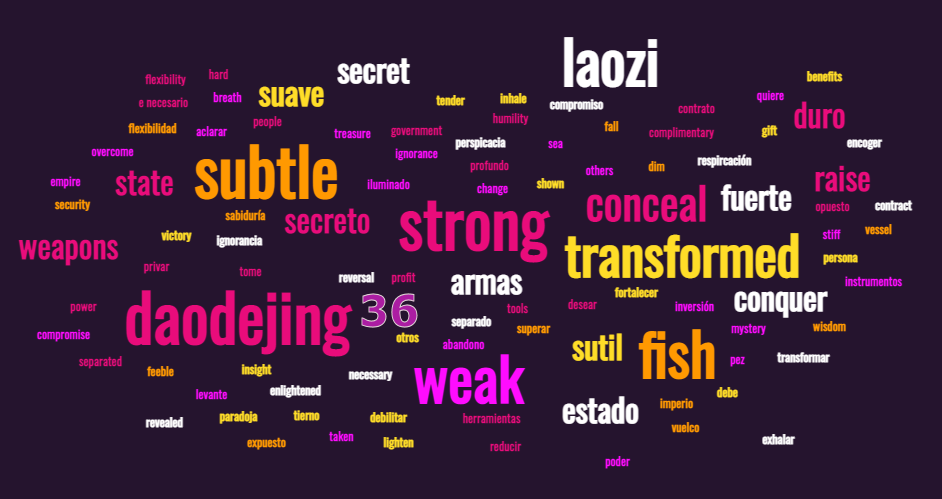
Text Art and Mind Maps by Michael P. Garofalo
"To what you mean to draw in, first give slack
And make strong what you would weaken;
Raise up whom you would remove,
And provide when you mean to deprive.
That is to do the unseen, unseen.
For over the hard and the strong
The soft and the weak shall prevail.
Like fish down deep that cannot be lured,
Hold craft of policy far from view."
- Translated by
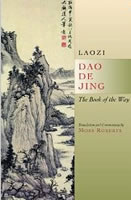
Moss Roberts, 2001, Chapter 36
"If a thing is capable of being contracted, no doubt is was previously expanded;
It a thing is capable of being weakened, no doubt it was previously strengthened.
Exaltation precedes abasement.
He who would take must first give.
This is the Secret Law,
Whereby the soft and the weak overcome the hard and the strong.
Leave the fish in the depths of the water, out of harm's way;
And leave the nation's sharpest weapons where they cannot be seen."
- Translated by
Herman Ould, 1946, Chapter 36
Tao Te Ching
Lao Tzu: Tao Te Ching
Tao Te Ching Index by Mike Garofalo
Lao-Tzu and the Tao-Te-Ching Translated by Livia Kohn
Dao De Jing: The Book of the Way
"The Way of Subtle Light ...
What is to be shrunken
Is first stretched out;
What is to be weakened
Is first made strong;
What will be thrown over
Is first raised up;
What will be withdrawn
Is first bestowed.
This indeed is
Subtle Light;
The gentle way
Will overcome
The hard and strong.
As fish should not
Get out of pools,
The realm's edged tools
Should not be shown
To anybody."
- Translated by Raymond Blackney, Chapter 36
"What is to be contracted may need to be expanded;
what is to be weakened may need to be strengthened;
what is to be reduced may need to be increased;
and what is to be reformed may need to be impaired.
This is called "Starting enlightenment".
A fish cannot live out of water.
A country with deadly weapons should never demonstrate them before others."
- Translated by
Tang Zi Chang, Chapter 36
"If you want something to return to the source,
you must first allow it to spread out.
If you want something to weaken,
you must first allow it to become strong.
If you want something to be removed,
you must first allow it to flourish.
If you want to possess something,
you must first give it away.
This is called the subtle understanding
of how things are meant to be.
The soft and pliable overcomes the hard and inflexible.
Just as fish remain hidden in deep waters,
it is best to keep weapons out of sight."
- Translated by
John H. McDonald, 1996, Chapter 36
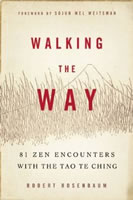
Walking the Way: 81 Zen Encounters with the Tao Te Ching
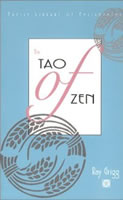
The Tao of Zen
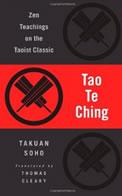
Tao Te Ching: Zen Teachings on the Taoist Classic
Tao Te Ching Index by Mike Garofalo
Buddhism and Taoism Face to Face: Scripture, Ritual, and Iconographic Exchange in Medieval China
"If
one would contract something, then one must first resolutely spread it out.
If one would weaken something, then one must first resolutely strengthen it.
If one would have a thing be discarded one must first resolutely cause it to
flourish.
If one would seize something one must first resolutely give it away.
This approach is called subtle discernment.
The pliant and weak overcome the
rigid and strong.
So fish cannot leave the depths and the sharp instruments
of the state cannot be shown to threaten the people."
- Translated by
Patrick E. Moran, Chapter 36
"What is in the end to be shrunk
Must first be stretched.
Whatever is to be weakened
Must begin by being made strong.
What is to be overthrown
Must begin by being set up.
He who would be a taker
Must begin as a giver.
This is called “dimming” one's light.
It is thus that the soft overcomes the hard
And the weak, the strong.
“It is best to leave the fish down in his pool;
Best to leave the State's sharpest weapons where none can see them.”
- Translated by
Arthur Waley, 1934, Chapter 36
Further Teachings of Lao-Tzu: Understanding the Mysteries (Wen
Tzu)
The Lunar Tao: Meditations in Harmony with the Seasons
 By Lui I-Ming (1780) and translated by Thomas Cleary
Ripening Peaches: Taoist Studies and Practices By Mike Garofalo
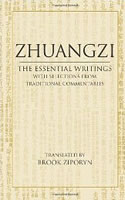
Zhuangzi: The Essential Writings with Selections from Traditional Commentaries
"What is about to contract itself is sure to lengthen itself,
What is about to weaken itself is sure to strengthen itself,
What is about to ruin itself assuredly first uplifts,
And what is about to despoil itself it first endows with gifts.
To hidden enlightenment it is that truths like these belong,
The tender and weak overcome and conquer the rigid and the strong,
As fishes perish miserably, escaping from the deep,
The sharp tools of the State, from
sight of the people keep!"
- Translated by
Isaac Winter Heysinger, 1903, Chapter 36
|
Tao Te
Ching |
|||||||||
| 1 | 2 | 3 | 4 | 5 | 6 | 7 | 8 | 9 | 10 |
| 11 | 12 | 13 | 14 | 15 | 16 | 17 | 18 | 19 | 20 |
| 21 | 22 | 23 | 24 | 25 | 26 | 27 | 28 | 29 | 30 |
| 31 | 32 | 33 | 34 | 35 | 36 | 37 | 38 | 39 | 40 |
| 41 | 42 | 43 | 44 | 45 | 46 | 47 | 48 | 49 | 50 |
| 51 | 52 | 53 | 54 | 55 | 56 | 57 | 58 | 59 | 60 |
| 61 | 62 | 63 | 64 | 65 | 66 | 67 | 68 | 69 | 70 |
| 71 | 72 | 73 | 74 | 75 | 76 | 77 | 78 | 79 | 80 |
| 81 | |||||||||
"That which will be shrunk
Must first be
stretched.
That which will be weakened
Must first be strengthened.
That
which will be torn down
Must first be raised up.
That which will be
taken
Must first be given.
This is called "subtle
illumination."
The gentle and soft overcomes the hard and
aggressive.
A fish cannot leave the water.
The country's potent
weapons
Should not be shown to its people."
- Translated by
Charles Muller, 1891, Chapter 36
"Was du zusammendrücken willst,
das mußt du erst richtig sich ausdehnen lassen.
Was du schwächen willst,
das mußt du erst richtig stark werden lassen.
Was du vernichten willst,
das mußt du erst richtig aufblühen lassen.
Wem du nehmen willst,
dem mußt du erst richtig geben.
Das heißt Klarheit über das Unsichtbare.
Das Weiche siegt über das Harte.
Das Schwache siegt über das Starke.
Den Fisch darf man nicht der Tiefe entnehmen.
Des Reiches Förderungsmittel
darf man nicht den Leuten zeigen."
- Translated by
Richard Wilhelm, 1911, Chapter 36
"Was man einengen will, muß man zuvor sich entfalten lassen.
Was man schwächen will, muß man zuvor sich erstarkenlassen.
Was man fallen lassen will, muß man zuvor erhöht haben.
Was man nehmen will, muß man zuvor gegeben haben.
Das Ausreifenlassen ist ein tiefes Geheimnis:
Das Schwache und Biegsame
ist immer stärker und widerstandsfähiger
als das Starke und Starre.
Doch wie der Fisch in seinem Element gelassen werden muß,
so muß auch der Herrscher
im Bereich dieses Geheimnisses bleiben,
wenn er sein Reich fördern will."
- Translated
by Rudolf
Backofen, 1949, Chapter 36
"In order to reduce it, first expand it.
In order to weaken it, first strengthen it.
In order to abolish it, first establish it.
In order to take it, first give it.
This is called subtle wisdom.
Flexibility and compromise win out over stiffness and aggressiveness.
Fish cannot leave water.
Never show the country's best weapons to the enemy."
- Translated by
Thomas
Z. Zhang, Chapter 36
Created by Michael P. Garofalo, Green Way Research, Valley Spirit Center, Gushen Grove Notebooks, Vancouver, Washington © 2011-2021 CCA 4.0
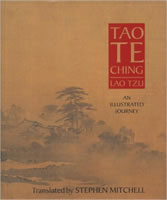
Tao Te Ching: An Illustrated Journey
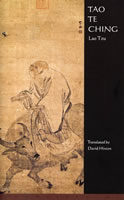
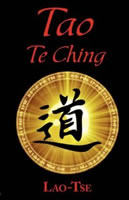
Tao Te Ching
The Book of Tao: Tao Te Ching - The Tao and Its Characteristics
Ripening Peaches: Taoist Studies and Practices
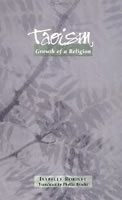
Taoism: Growth of a Religion
Zhuangzi (Chuang Tsu), Daoist Scripture: Bibliography, Links, Resources, Quotations, Notes
Zhuangzi: Basic Writings
Zhuangzi Speaks: The Music of Nature
Lifestyle Advice from Wise Persons
"When about to inhale it is certainly
necessary to open the mouth;
when about to weaken it is
certainly necessary to strengthen;
when about to discard it is
certainly necessary to promote;
when about to take away it is
certainly necessary to impart – this is atomic perception.
The weak overcome the strong.
Fish cannot leave the deeps.
The innerness of the government cannot be shown to the people."
- Translated by
C.
Spurgeon Medhurst, 1905, Chapter 36
"What is to be reduced,
Must first be expanded.
What is to be weakened,
Must first be made strong (ch'iang).
What is to be abolished,
Must first be established.
What is to be taken away,
Must first be given.
This is called the subtle illumination (wei ming).
The soft and weak overcome the hard and strong.
Fish must not leave the stream.
Sharp weapons (ch'i) of a state,
Must not be displayed."
- Translated by
Ellen Marie Chen, 2000, Chapter 36
The soft and the weak conquer the strong.
Fish
cannot be removed alive from their watery depths;
the profit-making instruments
of State cannot be shown to the masses."
- Translated by
Jerry C. Welch, 1998, Chapter 36
"Lorsqu'une créature est sur le point de se contracter,
on reconnaît avec certitude que dans l'origine elle a eu de l'expansion.
Est-elle sur le point de s'affaiblir, on reconnaît avec certitude que dans
l'origine elle a eu de la force.
Est-elle sur le point de dépérir, on reconnaît avec certitude que dans
l'origine elle a eu de la splendeur.
Est-elle sur le point d'être dépouillée de tout, on reconnaît avec certitude
que dans l'origine elle a été comblée de dons.
Cela s'appelle une doctrine à la fois cachée et éclatante.
Ce qui est mou triomphe de ce qui est dur; ce qui est faible triomphe de ce
qui est fort.
Le poisson ne doit point quitter les abîmes; l'arme acérée du royaume ne
doit pas être montrée au peuple."
- Translated by
Stanislas
Julien, 1842, Chapter 36
"That which is about to contract has
surely been expanded.
That which is about to weaken has surely been strengthened.
That which is about to fall has surely been raised.
That which is about to be despoiled has surely been endowed.
This is an explanation of the secret that the tender and
the weak conquer the hard and the strong.
As the fish should not escape from the deep, so with the
country’s sharp tools the people should not become acquainted."
- Translated by
D. T.
Suzuki, 1913, Chapter 36
Spanish
Language Versions of the Tao Te Ching (Daodejing)
Tao Te Ching en Español
Lao Tsé Tao Te Ching 
Tao Te Ching Traducido por Stephen Mitchell, versión española
Tao Te Ching Traducido al español por el Padre Carmelo Elorduy
Lao Tzu-The Eternal Tao Te Ching
Ripening Peaches: Taoist Studies and Practices By Mike Garofalo Maduración Duraznos: Estudios y Prácticas Taoístas por Mike Garofalo
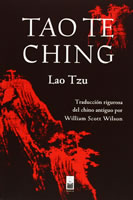
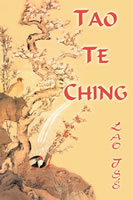
Tao Te Ching
Lao Tzu - Tao Te Ching
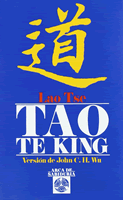
Tao te king
Daodejing Español, Inglés, y Chino Versiones Lingüísticas de la Daodejing
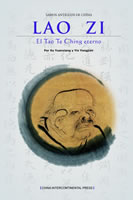
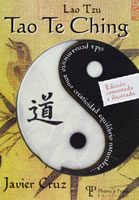
Spanish Language Translations of the Tao Te Ching
"Lo que ha de ser al final contraído, tiene que ser
primero dilatado.
Lo que ha de ser al final debilitado, tiene que ser primero fortalecido.
Lo que ha de ser al final deschado, comienza por ser primero ensalzado.
Lo que ha de ser al final despojado, comienza primero por ser dotado.
Aguí radica la sutil sabiduria de la vida.
Lo blando y lo débil triunfa sobre lo duro y lo fuerte.
Lo mismo que el pez no debe abandonar las profundidades, el gobernante no debe
mostrar sus armas."
- Translation from Chinese to English by
John C. H. Wu,
translated into Spanish by Alfonso Colodrón, Capítulo
36
"Debe expandirse primero lo que se contrae.
Debe fortalecerse primero lo que falla.
Debe crecer primero lo que es podado.
Debe ser otorgado antes de recibir
Esto se denomina percepción de la naturaleza de las cosas.
Lo suave y débil se sobrepone a lo duro y lo fuerte.
Los peces no pueden abandonar las aguas profundas.
y las armas de una nación no deben ser exhibidas."
- Translated by
Cristina Bosch, 2002, Capítulo 36
"Para que algo sea contraído,
antes debe ser expandido.
Para que algo sea debilitado,
antes debe ser fortalecido.
Para que algo sea destruido,
antes debe ser levantado.
Para que alguien obtenga algo,
antes alguien debe haberlo dado.
Este es el Misterio Oculto.
Lo tierno y lo débil
vencen lo duro y fuerte.
Los peces no deben salir de las profundidades de las aguas,
al igual que el reino no debe exhibir sus armas."
- Translation from
Wikisource, 2013, Capítulo
36
"A la contracción precede necesariamente la expansión.
A la blandura
[debilidad] precede la dureza y la fuerza.
A la ruina precedela prosperidad.
Al quitar precede el dar.
Es lo que se llama la evidencia oculta:
que lo
tierno y blando vence lo duro y fuerte.
El pez no puede dejar sus
profundidades.
Los tesoros de la naciónno pueden ser exhibidos."
- Translated by
Carmelo Elorduy,
2006, Capítulo 36
"Si desea respirar profundamente, primero debe vaciar
los pulmones.
Si deseas ser fuerte, primero debes aprender a ser débil.
Si desea estar en una posición elevada, primero debe aprender a tomar una
posición humilde.
Si deseas ser enriquecido por los dones, primero debes regalar todo lo que
tienes.
Esto se llama ocultación e iluminación.
El suave supera lo duro.
El débil vence a los fuertes.
Los peces no pueden nadar con seguridad en aguas poco profundas.
Los secretos del gobierno de un reino no deben ser revelados al pueblo".
- Translated into English by
Isabella
Mears,
1916, Chapter 30
Spanish version from
Michael P.
Garofalo.
"Si quieres qué algo se contraiga,antes tienes que
dejar que se expanda.
Si quieres que algo se debilite, antes necesitas hacerlo
fuerte.
Si quieres que algo caiga hacia abajo es menester que lo levantes en
alto.
Si quieres despojar a alguien de algo, antes tienes que enriquecerlo.
Esta
es la sutil sabiduría de la vida.
Lo débil y lo frágil vencen a lo duro y a lo
fuerte.
Que nunca salga el pez de la profundidad del agua.
Las armas del reino no se muestran al extranjero."
- Translation from
Logia Medio Dia, 2015,
Capítulo 36
Created by Michael P. Garofalo, Green Way Research, Valley Spirit Center, Gushen Grove Notebooks, Vancouver, Washington © 2011-2021 CCA 4.0
Coming Later ... 2022
I welcome email with commentary on this topic of Chapter 36 of the Tao Te Ching.
Next Chapter of the Tao Te Ching #37
Previous Chapter of the Tao Te Ching #35
Chapter and Thematic Index to the Tao Te Ching
Tao Te Ching
Commentary, Interpretations, Research Tools, Resources
Chapter 36
Das Tao Te King von Lao Tse. Complete versions of all 81 Chapters of the Tao Te Ching by many different translators in many languages: 124 English, 24 German, 14 Russian, 7 Spanish, 5 French and many other languages. Links are organized first by languages, and then alphabetically by translators. Formatting varies somewhat. The original website at Onekellotus went offline in 2012; but, the extensive collection of these Tao Te Ching versions was saved for posterity by the Internet Archive Wayback Machine and available as of 9/9/2015. This is an outstanding original collection of versions of the Daodejing─ the Best on the Internet. Caution: copyright infringement may sometimes be an issue at this website.
Tao Te Ching, Translations into English: Terebess Asia Online (TAO). 124
nicely formatted complete English language translations, on separate webpages, of the Daodejing.
Alphabetical index by translators. Each webpage has all 81 chapters of the Tao Te
Ching translated into English. A useful collection! Many
reformatted and colored versions from the original collection at
Das Tao Te King von Lao Tse. Caution: copyright infringement may
sometimes be an
issue at this website.
Lao Tzu: Te-Tao Ching - A New Translation Based on the Recently Discovered Ma-wang-tui
Texts (Classics of Ancient China)
Daodejing by Laozi: Chapters with Chinese characters, seal script,
detailed word by word concordance, Pinyin (tone#), German, French and English.
This is an outstanding resource for serious students of the Tao Te Ching.
Tao Te
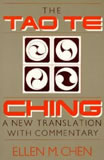
Ching: A New Translation and Commentary. By Ellen Chen. Paragon
House, 1998. Detailed glossary, index, bibliography, notes, 274 pages.
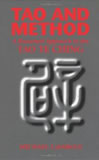
The Tao
and Method: A Reasoned Approach to the Tao Te Ching. By Michael
Lafargue. New York, SUNY Press, 1994. 640 pages. Detailed
index, bibliography, notes, and tables. An essential research tool.
Two Visions of the Way: A Study of the Wang Pi and the Ho-Shang Kung Commentaries on the Lao-Tzu.
By Professor by Alan Kam-Leung Chan. SUNY Series in Chinese
Philosophy and Culture. State University of New York Press, 1991.
Index, bibliography, glossary, notes, 314 pages.
ISBN: 0791404560.
Tao Te Ching: The Definitive Edition
Chinese Reading of the Daodejing
Wang Bi's Commentary on the Laozi with Critical Text and Translation.
By Professor Rudolf G. Wagner. A SUNY Series in Chinese Philosophy and
Culture. English and Mandarin Chinese Edition.
State University of New York Press; Bilingual edition (October 2003). 540
pages. ISBN: 978-0791451823.
Wang Bi (Wang Pi, Fusi), 226-249 CE,
Commentary on the Tao Te
Ching.
Tao Te Ching

The Taoism Reader
Change Your Thoughts - Change Your Life: Living the Wisdom of the Tao
The Tao of Being: A Think and Do Workbook
The Lunar Tao: Meditations in Harmony with the Seasons
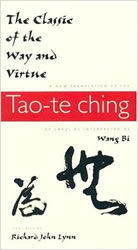
The Classic of the Way and Virtue: A New Translation of the Tao-te Ching of Laozi as Interpreted by Wang Bi.
Translated by Richard John Lynn. Translations from the Asian Classics
Series. New York, Columbia University Press, 1999. Extensive index,
glossaries, notes, 244 pages.
Tao Te Ching in Chinese characters,
Pinyin Romanization, English and German by Dr. Hilmar
Alquiros.
Stoicism and Hellenistic
Philosophy
How to Live a Good Life:
Advice from Wise Persons
One Old Philosopher's
Notebooks Research, Reading, and Reflections by Mike Garofalo.
Yellow Bridge
Dao De Jing Comparison Table Provides side by side comparisons of
translations of the Tao Te Ching by James Legge, D. T. Suzuki, and Dwight
Goddard. Chinese characters for each paragraph in the Chapter are on the
left; place your cursor over the Chinese characters to see the Pinyin
Romanization of the Chinese character and a list of meanings.
Translators Index,
Tao Te Ching Versions in English, Translators Sorted Alphabetically by Translator, Links to Books and
Online Versions of the Chapters
Taoism and the Tao Te
Ching: Bibliography, Resources, Links
Spanish Language
Translations of the Tao Te Ching, Daodejing en Español, Translators Index
The Tao of Zen
Chapter 41 in the
Rambling
Taoist Commentaries by Trey Smith. The
Rambling Taoists are Trey Smith and Scott Bradley.
By Hans-Georg Moeller. Columbia University Press, 2006, 176 pages.
Valley Spirit, Gu Shen,
Concept, Chapter 6
Valley Spirit Center in Red
Bluff, California.
Sacred
Circle in the Gushen Grove.
Lao-tzu's Taoteching
Reading Lao Tzu: A Companion to the Tao Te Ching with a New Translation
Dao De Jing: A Philosophical Translation
Thematic Index to the
81 Chapters of the Tao Te Ching
Lieh-Tzu: A Taoist Guide to Practical Living
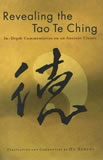
Revealing the Tao Te Ching: In-depth Commentaries on an Ancient Classic
Cloud Hands Blog
Mike Garofalo writes about Mind-Body Arts, Philosophy, Taoism, Gardening, Taijiquan, Walking, Mysticism,
Qigong, and the Eight Ways.
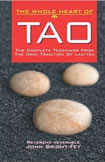
The Whole Heart of Tao:
The Complete Teachings From the Oral Tradition of Lao Tzu.
Gushen Grove Notebooks for the Tao Te Ching
Green Way Research, Valley Spirit Center, Gushen Grove Notebooks, Vancouver, Washington
Red Bluff, California (1998-2017).
Vancouver, Washington (2017-2021)
Indexed and Compiled by
Michael P. Garofalo
This webpage was last edited, changed, reformatted, improved, modified or updated on
March 25, 2021.
This webpage was first distributed online on April 9, 2011.
Created by Michael P. Garofalo, Green Way Research, Valley Spirit Center, Gushen Grove Notebooks, Vancouver, Washington © 2011-2021 CCA 4.0
Brief Biography of Michael P. Garofalo, M.S.

Ripening Peaches: Daoist Studies and Practices
Zhuangzi (Chuang Tzu, Zhuang Zhou, Master Chuang) 369—286 BCE
Taoist Perspectives: My Reading List
Bodymind Theory and Practices, Somaesthetics
How to Live a Good Life: Advice from Wise Persons
Pleasures, Satisfaction, Desires
Qigong (Chi Kung) Health Practices
One Old Daoist Druid's Final Journey: Notebooks of the Librarian of Gushen Grove
Index to Cloud Hands and Valley Spirit Websites
Index to English Language Translators of the Tao Te Ching
Recurring Themes (Terms, Concepts, Leimotifs) in the Tao Te Ching
Spanish Language Translations of the Tao Te Ching
The Tao Te Ching (Dao De Jing) by Lao Tzu (Laozi) circa 500 BCE
|
Tao Te
Ching |
|||||||||
| 1 | 2 | 3 | 4 | 5 | 6 | 7 | 8 | 9 | 10 |
| 11 | 12 | 13 | 14 | 15 | 16 | 17 | 18 | 19 | 20 |
| 21 | 22 | 23 | 24 | 25 | 26 | 27 | 28 | 29 | 30 |
| 31 | 32 | 33 | 34 | 35 | 36 | 37 | 38 | 39 | 40 |
| 41 | 42 | 43 | 44 | 45 | 46 | 47 | 48 | 49 | 50 |
| 51 | 52 | 53 | 54 | 55 | 56 | 57 | 58 | 59 | 60 |
| 61 | 62 | 63 | 64 | 65 | 66 | 67 | 68 | 69 | 70 |
| 71 | 72 | 73 | 74 | 75 | 76 | 77 | 78 | 79 | 80 |
| 81 | |||||||||