Classic of the Way and Virtue
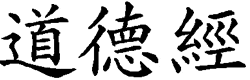
By Lao Tzu (Laozi)
Green Way Research, Valley Spirit Center, Gushen Grove Notebooks, Vancouver, Washington
Chapter 75 Chapter 77 Index to All the Chapters Taoism Cloud Hands Blog
Classic Book (Ching) about the Tao (Way, Nature, Patterns, Processes) and Te (Virtue, Potency, Power, Integrity, Wise Person, Sage)
Indexing, Concordance, Search Terms, Topics, Themes, Keys, Subjects
English and Chinese (Wade-Giles) Terms:
Grass (ts'ao), Trees (mu),
Soft and Supple is Best, Stay or Stop or Rest (ch'u), Companion or
Comrade (t'u), Man or Person (jên), Yielding is Wise, Tenderness, Army or
Soldiers (ping), Growing or Born (shêng), Withered, Weak or Gentle (jo), Dry, Rigid
or Decayed (k'u), Yielding, Unyielding or Stiff (ch'iang), Below
or Lower or Beneath (hsia),
Caution Against Strength, Military Power, Tender or Soft or Pliant (jou), Flexibility, Death
(ssu), Delicate or Supple (ts'ui), Above or Higher or Superior (shang), Beware of Strength,
Ten Thousand (wan), Things or Beings (wu), Fell, Chop Down,
Weapons, Hard or Stiff or Rigid (chien), Dry or Rotten (kao),
Great or Big (ta), 戒強
Términos en Español: Árboles,
Hierba, Suave y Flexible es
Mejor, Estancia, Parada, Descanso, Compañero, Hombre,
Persona, Ceder, Ternura,
Ejército, Creciente, Nacido, Marchito, Débil, Suave,
Rígido, Decaído, Inflexible, Inferior, Esconde,
Precación, Fuerza, Potencia Militar,
Pliant, Flexibilidad,
Muerte, Delicado, Por Encima, Superior, Guardaos de
Fuerza, Diez Mil, Cosas,
Tronchar, Armas, Duro, Seco, Podrido,
Grande.
Electronic Concordance for Chapters 1 - 81 of the Tao Te Ching
English Language Translations of the Tao Te Ching
"At birth, a man is soft and weak.
At death, he is strong and powerful.
From grass to trees, all things begin life weak and frail.
At death, they are withered and dry.
Therefore, the Strong and Powerful are disciples of Death.
The Soft and Weak are disciples of Life.
Thus military strength does not ensure Victory.
A tree's strength is like the army;
the Big and Strong decline,
the Soft and Weak prevail."
- Translation by
Karl Kromal,
Chapter 76
"Man alive is tender, gentle,
Hard and fast in death.
Living plants are tender, fragile,
Dry and frail in death.
For fast and hard are marks of dying,
And gentle, tender marks of life.
Strength in arms bring destruction,
And the strong branch will be broken.
Let strength and might be put below,
And tender, gentle in control."
- Translated by
Moss Roberts,
2001, Chapter 76
"Abstain from Hardness
Chieh Ch'iang
Man is soft and weak at birth;
At death he is hard and rigid.
The ten thousand things, herbs and trees,
Are soft and delicate when growing up;
In dying, they wither and look haggard.
Thus hardness and rigidity are companions of death;
Softness and weakness are companions of life.
Therefore armies, having become rigid, will not win;
Trees, having become rigid, will break asunder.
The big and rigid will be laid low;
The soft and weak will be lifted up."
- Translated by
Henry Wei, 1982, Chapter 76
"When alive, people are pliable and soft; at death, people become rigid and hard.
When alive, grasses and trees are flexible and tender; at death, they become withered and rotten.
Therefore, rigidity leads to death, flexibility results in survival.
It is because of this, the inflexible army would be defeated, like stiff trees would be broken by wind.
The big and rigid would be overtaken by the nimble and flexible."
- Translated by
Thomas Z. Zhang, Chapter 76
"A living person is gentle and tender, while a dying person is rigid and
hard.
A living plant is gentle and tender, while a dying plant is dry and
withered.
Thus, one who is rigid and hard is on the way to die.
One who is gentle and tender is on the way to live.
Thus, a strong army will soon be annihilated.
A hard stick of wood will soon be broken.
A piece of hard leather will soon be split.
Teeth are stronger than lips, yet the teeth decay first.
Therefore, hardness and strength are inferior, gentleness and tenderness are
superior."
- Translated by
Tang Zi-Chang, Chapter 76
"A human body is weak and pliable at birth, and is stiff and hard at death.
Grass and trees are tender and soft at birth, and are dry and brittle at death.
Therefore,
The hard and strong belong to the company of death;
The soft and weak belong to the company of life.
It follows then:
A strong army is destined to be destroyed;
A hard wood tree is doomed to be broken.
The hard and strong are in an inferior position,
The soft and weak are in a superior position."
- Translated by
David Hong Cheng, 2000, Chapter 76
"Humans are born soft and weak.
They die stiff and strong.
The ten thousand plants and trees
Are born soft tender,
And die withered and sere.
The stiff and strong
Are Death's companions
The soft and weak
Are Life's companions.
Therefore the strongest armies do not conquer,
The greatest trees are cut down.
The strong and great sink down.
The soft and weak rise up."
- Translated by
Stephen Addis, 1993, Chapter 76
"Alive, a man is supple, soft;
In death, unbending, rigorous.
All creatures, grass and trees, alive
Are plastic but are pliant too,
And dead, are friable and dry.
Unbending rigor is the mate of death,
And wielding softness, company of life:
Unbending soldiers get no victories;
The stiffest tree is readiest for the axe.
The strong and mighty topple from their place;
The soft and yielding rise above them all."
- Translated by
Raymond Blakney, 1955, Chapter 76

Created by Michael P. Garofalo, Green Way Research, Valley Spirit Center, Gushen Grove Notebooks, Vancouver, Washington © 2020 CCA 4.0
Tao Te Ching
Lao Tzu: Tao Te Ching
 Translated by Livia Kohn
Dao De Jing: The Book of the Way
"When people are born they are supple, and when they die
they are stiff..
When trees are born they are tender, and when they die they are brittle.
Stiffness is thus a companion of death, flexibility a companion of life.
So when an army is strong it doe not prevail. When a tree is strong, it is cut
for use.
So the stiff and strong are below, the supple and yielding on top."
- Translated by
Thomas Cleary,
1991, Chapter 76
"When people are born, they are soft and yielding.
When people die, they are stiff and unyielding.
Ten-thousand things (everything) like grass and trees, when they are born, they
are soft and supple.
When they die, they are rigid and dry.
Stiffness and unyielding are death’s companions.
Softness and yielding are life’s companions.
Unyielding armies will not win.
Unyielding trees become weapons.
Great strength dwells below.
Weakness dwells above."
- Translated by
Alan Sheets, 2002,
Chapter 76
"At birth
one is soft and flexible; at death
one is stiff and brittle.
A fresh
shoot is perfect supple; a
weathered branch snaps in a wind.
Flexibility is life; rigidity
is death.
If your
weapon is too strong, it will
bring your own destruction.
If a
tree is too strong, it will
fall.
The
mighty are scum.
The low
are exalted."
- Translated by
Crispin Starwell, Chapter 76
"When a person is living
they are soft and easy to bend.
When they are dead,
they become hard and stiff.
When a plant is living,
it is soft and tender.
When it is dead,
it becomes withered and dry.
The hard and stiff
belongs to the company of the dead.
The soft and easy to bend
belongs to the company
of the living.
A mighty army
can to fall
by its own weight;
Just as dry wood
is ready
for the ax.
The mighty
and great
will be put low;
The humble
and weak
will be raised high."
- Translated by
J. L. Trottier, 1994, Chapter 76
"While alive, humans are soft and pliable, but, when dead, they are hard and stiff.
While alive, plants, trees, and all the other myriad things are also
soft and fragile, but, when dead, they are dried up and withered.
Thus it is that the hard and stiff are adherents of death, and the soft and pliable are adherents of life.
This is why, if military power is stiff, it will not be victorious.
If a tree is stiff, it will be attacked.
The stiff [strong] and great occupy a position below.
The soft and pliant occupy a position above."
- Translated by
Richard John Linn, Chapter 76
"When people are born they are supple and
soft
When they die they are stiff and hard
What is full of life is lithe and moist and resilient
What is drained of it is brittle, withered, dry
The former are the marks of life
While the latter are the marks of death
If a soldier is stiff, whether with fear or pride, he will be defeated
If a tree is stiff, it will fall to the next wind
If you become stiff to raise yourself above others, you will fall
Let yourself fall, be supple and responsive, and you will be lifted"
- Translated by
Ted Wrigley, Chapter 76
 By Alexander Simkins.
  By Derek Lin.
 By Ming-Dao Deng.
 By Benjamin Hoff.
 By Ming-Dao Deng.
 Translated by Thomas Cleary.
"A man living is yielding and receptive.
Dying, he is rigid and inflexible.
All Things, the grass and trees:
Living, they are yielding and fragile;
Dying, they are dry and withered.
Thus those who are firm and inflexible
Are in harmony with dying.
Those who are yielding and receptive
Are in harmony with living.
Therefore an inflexible strategy will not triumph;
An inflexible tree will be attacked.
The position of the highly inflexible will descend;
The position of the yielding and receptive will ascend."
- Translated by
R. L. Wing, 1986, Chapter 76
A Chinese Language Version of Chapter 76 of the Tao Te
Ching by Lao Tzu
A
note
on my style of displaying the Chinese characters of the Tao Te Ching
人之生也柔弱.
其死也堅強.
萬物草木之生也柔脆.
其死也枯槁.
故堅強者死之徒.
柔弱者生之徒.
是以兵強則不勝.
木強則共.
強大處下.
柔弱處上.
- Chinese characters, Tao Te Ching, Chapter 76
jên chih shêng yeh jou jo.
ch'i ssu yeh chien ch'iang.
wan wu ts'ao mu chih shêng yeh jou ts'ui.
ch'i ssu yeh k'u kao.
ku chien ch'iang chê ssu chih t'u.
jou jo chê shêng chih t'u.
shih yi ping ch'iang tsê pu shêng.
mu ch'iang tsê ping.
ch'iang ta ch'u hsia.
jou jo ch'u shang.
- Wade-Giles Romanization (1892), Tao Te Ching, Chapter 76
Audio
Version in Chinese of Chapter 76 of the Tao Te Ching
ren zhi sheng ye rou ruo.
qi si ye jian qiang.
cao mu zhi sheng ye rou cui.
qi si ye ku gao.
gu jian qiang zhe si zhi tu.
rou ruo zhe shang zhi tu.
shi yi bing qiang ze mie.
mu qiang ze zhe.
jian qiang chu xia.
rou ruo chu shang.
- Hanyu Pinyin (1982) Romanization, Daodejing, Chapter 76
Tao Te Ching in Chinese characters and English (includes a word by word key) from YellowBridge
Tao Te Ching in Chinese characters, Pinyin Romanization, English and German by Dr. Hilmar Alquiros.
Laozi Daodejing: Chapters with Chinese characters, seal script, detailed word by word concordance, Pinyin (tone#), German, French and English.
Chinese and English Dictionary, MDGB
Dao De Jing Wade-Giles Concordance by Nina, Dao is Open
Dao De Jing English and Wade-Giles Concordance by Mike Garofalo
Tao Te Ching in Pinyin Romanization with Chinese characters, WuWei Foundation
Tao Te Ching in Pinyin Romanization
Tao Te Ching in Chinese characters and English
Tao Te Ching in Chinese characters, English, Word by word analysis, Zhongwen
Tao Te Ching: The Definitive Edition
Tao Te Ching in Chinese characters: Big 5 Traditional and GB Simplified
Chinese Characters, Wade-Giles and Pinyin Romanizations, and 16 English Translations for Each Chapter of the Daodejing by Mike Garofalo.
Tao Te Ching in Chinese characters, Pinyin and Wade Giles Romanization spellings, English; a word for word translation of the Guodian Laozi Dao De Jing Version.
Lao Zi's Dao De Jing: A Matrix Translation with Chinese Text by Bradford Hatcher.
"While a person is alive, he is soft and yeilding;
When dead, in the end they become stretched out stiff and rigid.
All living things including trees and plants are flexible and fragile while
alive;
When dead, they become dry, withered and rotten.
Therefore it is said that those who are stiff and rigid are companions of death;
while those who are soft, yeilding, flexible and fragile are companions of life.
A rigid weapon thus will be defeated;
A rigid tree thus will break.
What is rigidly large dwells below;
What is soft, yielding, flexible and fragile dwells above."
- Translated by
Nina Correa, 2005,
Chapter 76
"Man, born tender
and yielding,
Stiffens and hardens in death.
All living growth is
pliant,
Until death transfixes it.
Thus men who have hardened are 'kin of
death'
And men who stay gentle are 'kin of life.'
Thus a hard-hearted army
is doomed to lose.
A tree hard-fleshed is cut down:
Down goes the tough
and big,
Up comes the tender sprig."
- Translated by
Witter Bynner, 1944, Chapter 76
Walking the Way: 81 Zen Encounters with the Tao Te Ching
The Tao of Zen
Tao Te Ching: Zen Teachings on the Taoist Classic
Buddhism and Taoism Face to Face: Scripture, Ritual, and Iconographic Exchange in Medieval China
"Human beings are soft and supple when alive, stiff and
straight when dead.
The myriad creatures, the grasses and trees are soft and fragile when alive, dry
and withered when dead.
Therefore, it is said:
The rigid person is a disciple of death;
The soft, supple, and delicate are lovers of life.
An army that is inflexible will not conquer;
A tree that is inflexible will snap.
The unyielding and mighty shall be brought low;
The soft, supple, and delicate will be set above."
- Translated by
Victor H. Mair,
Chapter 76
"The human body is born soft and supple;
after death it is hard and stiff.
Plants and trees are pliant and limber
when they sprout,
after death they are inflexible and
rigid.
Therefore, hard and inflexible
are characteristics of death.
Pliant and flexible
are characteristics of life.
Thus, an army that is inflexible will be conquered
and a tree that does not yield to
the wind will snap.
The hard and inflexible will succumb.
The pliant and flexible will endure."
- Translated by John Worldpeace, Chapter 76
"Men are born soft and supple;
dead, they are stiff and hard.
Plats are born tender and pliant;
dead, they are brittle and dry.
Thus whoever is stiff and inflexible
is a disciple of death.
Whoever is soft and yielding
is a disciple of life.
The hard and stiff will be broken.
The soft and supple will prevail.
- Translated by
Stephen Mitchell,
1988, Chapter 76
Created by Michael P. Garofalo, Green Way Research, Valley Spirit Center, Gushen Grove Notebooks, Vancouver, Washington © 2020 CCA 4.0
 By Hu Xuzehi
 Annotated translation by Victor Mair
  By Ha Poong Kim
 By Hans-Georg Moeller
  By Roger T. Ames and David T. Hall
 By Wes Burgess
 By Arthur Waley
"When people are born they are gentle and soft.
At death they are hard and stiff.
When plants are alive they are soft and delicate.
When they die, they wither and dry up.
Therefore the hard and stiff are followers of death.
The gentle and soft are the followers of life.
Thus, if you are aggressive and stiff, you won't win.
When a tree is hard enough, it is cut. Therefore
The hard and big are lesser,
The gentle and soft are greater."
- Translated by
Charles Muller,
Chapter 76
"At birth a person is soft and supple; at their deaths they are firm and strong.
All creatures, plants and trees are born tender and flexible,
when they are dead they become brittle and dried.
Thus it is that people who are stiff and hard are companions of death.
The soft and yielding are the followers of life.
It can be seen that a great inflexible army will fall under it's own weight,
just as a stiff unyielding tree will break in the wind.
Dwelling in an inflexible unyielding manner will bring downfall.
The pliant and supple will survive."
- Translated by
Rivenrock, Chapter 76
"People are soft and weak in life,
hard and strong in death.
The ten thousand plants and trees are soft and frail in life,
withered and brittle in death.
Things hard and strong follow death's ways and things soft and weak follow
life's:
so it is that strong armies never overcome and strong trees always suffer the
axe.
Things great and strong dwell below.
Things soft and weak dwell above."
- Translated by
David Hinton,
Chapter 76
 Translation and elucidation by Hua Ching Ni
 Translated by Brian Walker
 Translated by Arthur Waley
 Translated by Lionel and and Herbert Giles
 By Eva Wong
"Man at his birth is supple and weak: at his death, firm
and strong.
So it is with all things.
Trees and plants, in their early growth, are soft and brittle; at their death,
dry and withered.
Thus it is that firmness and strength are the concomitants of death;
softness
and weakness, the concomitants of life.
Hence he who relies on the strength of his forces does not conquer;
and a tree
which is strong will fill the outstretched arms, (and thereby invites the
feller.)
Therefore the place of what is firm and strong is below, and that of what is
soft and weak is above."
- Translated by
Andre Gauthier,
Chapter 76
"the ancient child asks
how do you get out of the body-mind's way and let it live
by allowing your soul to take the lead of your life
the ancient child asks
how do you let the soul take the lead of your life
be as gentle and tender as a newborn
soft, yielding, supple, and full of life force
avoid stiffness, rigidity, and naked force
emulate the living things in the world delicately
and at a distance
avoid hardening your bodymind and spirit
avoid those unyielding things that stink of decay
embody those things that are tender and pliant
which grant life and freedom
avoid mustering your talents and collecting your strengths
in a forceful or headstrong manner
remember
an unyielding tree will snap under a strong wind
or fall easily under a dull axe
pattern yourself after a great tree
will deep roots and strong branches
and you will exalt your bodymind and spirit."
- Translated by
John Bright-Fey, Chapter 76
"When a person is living
they are soft and easy to bend.
When they are dead,
they become hard and stiff.
When a plant is living,
it is soft and tender.
When it is dead,
it becomes withered and dry.
The hard and stiff
belongs to the company of the dead.
The soft and easy to bend
belongs to the company
of the living.
A mighty army
can to fall
by its own weight,
Just as dry wood
is ready
for the ax.
The mighty
and great
will be put low;
The humble
and weak
will be raised high."
- Translated by
J. L. Trottier, 1994, Chapter 76
 Translated by Eva Wong
  Translated by Philip Ivahoe
 By James Miller
 Translated by Stephen Bokencamp
By Alexander and Annellen Simpkins
Translated by Stephen Bokencamp
By Alexander and Annellen Simpkins Translated by Thomas Cleary
 By Livia Kohn
"In life, man is soft and tender,
In death, he is rigid and hard.
In life, plants and trees are soft and pliant,
In death, they are withered and tough.
Thus rigidity and hardness are companions of death.
Softness and tenderness are companions of life.
That is why the soldier who trusts only in strength does not conquer,
The tree that relies on its strength invites the axe.
Great strength dwells below,
Softness and tenderness dwell above."
- Translated by
Isabella Mears, 1916, Chapter 76
"While alive, a man's body is supple;
When dead, it becomes hard.
While alive, grass and trees are supple;
When dead, they become dry and stiff.
Thus the hard and strong is of the dying sort;
The supple and weak is of the living sort.
That is why the army, having grown strong, will be wiped out,
And the tree, when grown up, will be cut down.
Thus the strong and big is inferior
To the weak and supple."
- Translated by
Gu Zhengkun, Chapter 76
"Men, when born, are weak and soft; when
dead, they are stiff and hard.
When inanimate object say, the vegetable
creation first produced, they are soft and tender; when dead,
they are hard and dry.
Wherefore hardness and rigidity are
associated with death; softness and weakness with life.
So, when
soldiers are violent, they gain no victories; when the tree is
strong, a combination of strength is used to fell it.
Its big
parts are below; its soft and tender parts above."
- Translated by
Frederic Henry Balfour, 1884, Chapter 76
Further Teachings of Lao-Tzu: Understanding the Mysteries (Wen Tzu)
 Translated by Thomas Cleary
The Lunar Tao: Meditations in Harmony with the Seasons
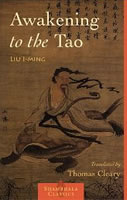
 By Lui I-Ming (1780) and translated by Thomas Cleary
Ripening Peaches: Taoist Studies and Practices By Mike Garofalo
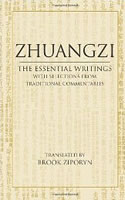
Zhuangzi: The Essential Writings with Selections from Traditional Commentaries
"Man in his life is tender and weak,
|
Tao Te
Ching |
|||||||||
| 1 | 2 | 3 | 4 | 5 | 6 | 7 | 8 | 9 | 10 |
| 11 | 12 | 13 | 14 | 15 | 16 | 17 | 18 | 19 | 20 |
| 21 | 22 | 23 | 24 | 25 | 26 | 27 | 28 | 29 | 30 |
| 31 | 32 | 33 | 34 | 35 | 36 | 37 | 38 | 39 | 40 |
| 41 | 42 | 43 | 44 | 45 | 46 | 47 | 48 | 49 | 50 |
| 51 | 52 | 53 | 54 | 55 | 56 | 57 | 58 | 59 | 60 |
| 61 | 62 | 63 | 64 | 65 | 66 | 67 | 68 | 69 | 70 |
| 71 | 72 | 73 | 74 | 75 | 76 | 77 | 78 | 79 | 80 |
| 81 | |||||||||
The
myriad creatures, grasses and trees are
soft and supple when alive,
dry and withered when dead.
Therefore
it is said:
the rigid person is a disciple of death;
the soft, supple
and delicate are lovers of life.
The
army that is inflexible will not conquer;
the tree that cannot bend will
snap!
The
unyielding and mighty will be brought low;
the soft, supple and delicate
will rise above them."
- Translated by
Jerry C. Welch, 1998, Chapter 76
"Der Mensch, wenn er ins Leben tritt,
ist weich und schwach,
und wenn er stirbt,
so ist er hart und stark.
Die Pflanzen, wenn sie ins Leben treten,
sind weich md zart,
und wenn sie sterben,
sind sie dürr und starr.
Darum sind die Harten und Starken
Gesellen des Todes,
die Weichen und Schwachen
Gesellen des Lebens.
Darum:
Sind die Waffen stark, so siegen sie nicht.
Sind die Bäume stark, so werden sie gefällt.
Das Starke und Große ist unten.
Das Weiche und Schwache ist oben."
- Translated by Richard Wilhelm, 1911, Chapter
76
"Die Wirkungskraft des Lebendigen
Weich und zart ist der Mensch bei seiner Geburt,
starr und knöchern, wenn er stirbt.
Fein und biegsam sind die Pflanzen, wenn sie entstehen,
hart und saftlos, wenn sie absterben.
Starr und hart ist, was dem Tod anheimfällt,
weich und zart ist, was vom Leben erfüllt ist.
Wer glaubt, nur durch Waffen stark sein zu können,
wird nicht siegen;
mächtig scheinende Bäume sind immer am Ende.
Daher gilt:
Was groß und mächtig scheint,
ist schon auf dem Weg zum Zerfall,
was aber unscheinbar, zart und weich ist, das wächst."
- Translated
by Rudolf
Backofen, 1949, Chapter 76
"Man when living is soft and tender; when dead he is hard and tough.
All
animals and plants when living are tender and fragile; when dead they
become withered and dry. Therefore it is said: the hard and the tough
are parts of death, the soft and the tender are parts of life.
This is
the reason why soldiers when they are too tough cannot carry the day;
the tree when it is too tough will break.
The position of the strong and
great is low, and the position of the weak and tender is high."
- Translated by
Ch'u Ta-Kao, 1904, Chapter 76
Created by Michael P. Garofalo, Green Way Research, Valley Spirit Center, Gushen Grove Notebooks, Vancouver, Washington © 2020 CCA 4.0
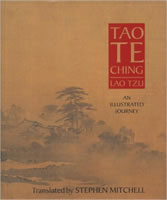
Tao Te Ching: An Illustrated Journey
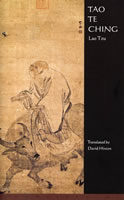
Tao Te Ching
The Book of Tao: Tao Te Ching - The Tao and Its Characteristics
Ripening Peaches: Taoist Studies and Practices
Taoism: Growth of a Religion
Zhuangzi (Chuang Tsu), Daoist Scripture: Bibliography, Links, Resources, Quotations, Notes
Zhuangzi: Basic Writings
Zhuangzi Speaks: The Music of Nature
Lifestyle Advice from Wise Persons
"Man at his birth is supple and tender, but in death he is rigid and strong.
It is the same with everything.
Trees and plants in their early growth are pliant and soft, but at the end they are withered and tough.
Thus rigidity and strength are concomitants of death, but softness and gentleness are companions of life.
Therefore the warrior who relies on his strength cannot conquer death, while the powerful tree becomes a mere timber support.
For the place of the strong and the firm is below, while that of the gentle and yielding is above."
- Translated by
Walter Gorn Old, 1904, Chapter 76
"The living are soft and yielding;
the dead are rigid and stiff.
Living plants are flexible and tender;
the dead are brittle and dry.
Those who are stiff and rigid
are the disciple of death.
Those who are soft and yielding
are the disciples of life.
The rigid and stiff will be broken.
The soft and yielding will overcome."
- Translated by
John H. McDonald, 1996, Chapter 76
"At birth man is supple and weak, at
death rigid and strong.
So with inanimate nature.
Say the
vegetable creation, in its early growth it is pliable and
brittle, at death it is decayed and withered.
It follows that
rigidity and strength are the way to death; pliability and
gentleness the way to life.
Hence a soldier who is arrogant cannot conquer; the tree which
is strong is doomed.
The firm and the great occupy the lower place, the pliable and
the meek the higher."
- Translated by
C.
Spurgeon Medhurst, 1905, Chapter 76
"Quand l'homme vient au monde, il est souple et faible;
quand il meurt, il est roide et fort.
Quand les arbres et les plantes naissent, ils sont souples et tendres; quand ils
meurent, ils sont secs et arides.
La roideur et la force sont les compagnes de la mort; la souplesse et la
faiblesse sont les compagnes de la vie.
C'est pourquoi, lorsqu'une armée est forte, elle n'emporte pas la victoire.
Lorsqu'un arbre est devenu fort, on l'abat.
Ce qui est fort et grand occupe le rang inférieur; ce qui est souple et faible
occupe le rang supérieur."
- Translated by Stanislas Julien, 1842, Chapter
76
Spanish
Language Versions of the Tao Te Ching (Daodejing)
Tao Te Ching en Español
Lao Tsé Tao Te Ching 
Tao Te Ching Traducido por Stephen Mitchell, versión española
Tao Te Ching Traducido al español por el Padre Carmelo Elorduy
Lao Tzu-The Eternal Tao Te Ching
Ripening Peaches: Taoist Studies and Practices By Mike Garofalo Maduración Duraznos: Estudios y Prácticas Taoístas por Mike Garofalo
Tao Te Ching
Lao Tzu - Tao Te Ching
Tao te king
Daodejing Español, Inglés, y Chino Versiones Lingüísticas de la Daodejing
Spanish
Language Translations of the Tao Te Ching
"El hombre al nacer es blando y flexible,
y al morir queda duro y rígido.
Las plantas al nacer son tiernas y flexibles
y al morir quedan duras y secas.
Lo duro y lo rígido
son propiedades de la muerte.
Lo blando y flexible
son propiedades de la vida.
Por esto, la fortaleza de las armas
es la causa de su derrota,
y el árbol robusto es derribado por las hachas.
Lo grande y poderoso caerá;
lo humilde y débil se levantará."
- Translation from
Wikisource, 2013,
Capítulo 76
"El hombre al nacer es blando y débil;
cuando muere, rígido, firme y duro.
Las diez mil plantas y árboles son tiernos y frágilesal nacer;
cuando mueren están secos y consumidos.
De ahí el dicho:
'La firmeza y la dureza,
son atributos de la muerte;
la blandura y la debilidad,
son atributos de la vida.'
Por esta razón las armas fuertes no vencen,
el árbol vigoroso muere.
Lo firme y lo grande ocupan el lugar inferior;
lo blando y lo débil, el superior."
- Translated by
Juan Ignacio
Preciado, 1978, Capítulo 76
"Cuando una persona está viva, es blanda y flexible.
Cuando está muerta, se vuelve dura y rígida.
Cuando una planta está viva, es blanda y tierna.
Cuando está muerta, se vuelve marchita y seca.
Por ello, lo duro y lo rígido son compañeros de lo muerto:
lo bando y lo fexible son compañeros de lo vivo.
Así pues, un ejército ponderoso tiende a caer por su propio peso,
al igual que la madera seca está lista para el hacha.
Lo grande y poderoso será colocado abajo; lo humilide y débil será honrado."
- Translated into English by John C. H. Wu,
Spanish version
by Alfonso Colodrón, 2007, Capítulo 76
"Cuando el hombre nace es suave y flexible.
Cuando el
hombre muere se vuelve duro y rígido.
Las plantas y árboles nacen delicados y
tiernos.
Pero al morir se vuelven secos y ásperos.
Por eso lo duro y rígidos son
símbolos de la muerte;
lo suave y flexible son símbolos de la vida.
Por lo
tanto: Un ejército demasiado poderoso no vencerá.
Un árbol duro está condenado
a ser derribado.
Así: Los fuerte y poderoso deben estar abajo.
Lo débil y lo
tierno están arriba."
- Translation from
Logia Medio Dia, 2015,
Tao Te Ching, Capítulo 76
"El hombre, cuando entra en la vida,
es blando y débil,
mas muere rígido y fuerte.
Las plantas, cuando entran en la vida,
son tiernas y delicadas,
mas mueren secas y tiesas.
Los duros y fuertes
son compañeros de la muerte,
los blandos y flexibles,
de la vida
Con armas rígidas se puede vencer.
A los árboles fuertes les aguarda la tala.
Lo fuerte y grande es inferior.
Lo blando y flexible, superior."
- Translation into Spanish from
Richard Wilhelm's 1911 German Version by an Unknown Spanish Translator,
2015, Capítulo 76
Created by Michael P. Garofalo, Green Way Research, Valley Spirit Center, Gushen Grove Notebooks, Vancouver, Washington © 2020 CCA 4.0
Next Chapter of the Tao Te Ching #77
Previous Chapter of the Tao Te Ching #75
Chapter and Thematic Index to the Tao Te Ching
Tao Te Ching
Commentary, Interpretations, Research Tools, Resources
Chapter 76
Das Tao Te King von Lao Tse. Complete versions of all 81 Chapters of the Tao Te Ching by many different translators in many languages: 124 English, 24 German, 14 Russian, 7 Spanish, 5 French and many other languages. Links are organized first by languages, and then alphabetically by translators. Formatting varies somewhat. The original website at Onekellotus went offline in 2012; but, the extensive collection of these Tao Te Ching versions was saved for posterity by the Internet Archive Wayback Machine and available as of 9/9/2015. This is an outstanding original collection of versions of the Daodejing─ the Best on the Internet. Caution: copyright infringement may sometimes be an issue at this website.
Tao Te Ching, Translations into English: Terebess Asia Online (TAO). 124
nicely formatted complete English language translations, on separate webpages, of the Daodejing.
Alphabetical index by translators. Each webpage has all 81 chapters of the Tao Te
Ching translated into English. A useful collection! Many
reformatted and colored versions from the original collection at
Das Tao Te King von Lao Tse. Caution: copyright infringement may
sometimes be an
issue at this website.
Lao Tzu: Te-Tao Ching - A New Translation Based on the Recently Discovered Ma-wang-tui
Texts (Classics of Ancient China)
Daodejing by Laozi: Chapters with Chinese characters, seal script,
detailed word by word concordance, Pinyin (tone#), German, French and English.
This is an outstanding resource for serious students of the Tao Te Ching.
Tao Te
Ching: A New Translation and Commentary. By Ellen Chen. Paragon
House, 1998. Detailed glossary, index, bibliography, notes, 274 pages.
The Tao
and Method: A Reasoned Approach to the Tao Te Ching. By Michael
Lafargue. New York, SUNY Press, 1994. 640 pages. Detailed
index, bibliography, notes, and tables. An essential research tool.
Two Visions of the Way: A Study of the Wang Pi and the Ho-Shang Kung Commentaries on the Lao-Tzu.
By Professor by Alan Kam-Leung Chan. SUNY Series in Chinese
Philosophy and Culture. State University of New York Press, 1991.
Index, bibliography, glossary, notes, 314 pages.
ISBN: 0791404560.
Tao Te Ching: The Definitive Edition
Chinese Reading of the Daodejing
Wang Bi's Commentary on the Laozi with Critical Text and Translation.
By Professor Rudolf G. Wagner. A SUNY Series in Chinese Philosophy and
Culture. English and Mandarin Chinese Edition.
State University of New York Press; Bilingual edition (October 2003). 540
pages. ISBN: 978-0791451823.
Wang Bi (Wang Pi, Fusi), 226-249 CE,
Commentary on the Tao Te
Ching.
Tao Te Ching
The Taoism Reader
Change Your Thoughts - Change Your Life: Living the Wisdom of the Tao
The Lunar Tao: Meditations in Harmony with the Seasons
The Classic of the Way and Virtue: A New Translation of the Tao-te Ching of Laozi as Interpreted by Wang Bi.
Translated by Richard John Lynn. Translations from the Asian Classics
Series. Columbia University Press, 2004. 256 pages.
Tao Te Ching in Chinese characters,
Pinyin Romanization, English and German by Dr. Hilmar
Alquiros.
Yellow Bridge
Dao De Jing Comparison Table Provides side by side comparisons of
translations of the Tao Te Ching by James Legge, D. T. Suzuki, and Dwight
Goddard. Chinese characters for each paragraph in the Chapter are on the
left; place your cursor over the Chinese characters to see the Pinyin
Romanization of the Chinese character and a list of meanings.
Translators Index,
Tao Te Ching Versions in English, Translators Sorted Alphabetically by Translator, Links to Books and
Online Versions of the Chapters
Taoism and the Tao Te
Ching: Bibliography, Resources, Links
Spanish Language
Translations of the Tao Te Ching, Daodejing en Español, Translators Index
The Tao of Zen
Chapter 1 in the
Rambling
Taoist Commentaries by Trey Smith. The
Rambling Taoists are Trey Smith and Scott Bradley.
By Hans-Georg Moeller. Columbia University Press, 2006, 176 pages.
Valley Spirit, Gu Shen,
Concept, Chapter 6
Valley Spirit Center in Red
Bluff, California.
Sacred
Circle in the Gushen Grove.
Lao-tzu's Taoteching
Reading Lao Tzu: A Companion to the Tao Te Ching with a New Translation
Dao De Jing: A Philosophical Translation
Thematic Index to the
81 Chapters of the Tao Te Ching
Lieh-Tzu: A Taoist Guide to Practical Living
Revealing the Tao Te Ching: In-depth Commentaries on an Ancient Classic
Cloud Hands Blog
Mike Garofalo writes about Mind-Body Arts, Philosophy, Taoism, Gardening, Taijiquan, Walking, Mysticism,
Qigong, and the Eight Ways.
The Whole Heart of Tao:
The Complete Teachings From the Oral Tradition of Lao Tzu.
Gushen Grove Notebooks for the Tao Te Ching
Green Way Research, Valley Spirit
Center, Gushen Grove Notebooks (2001-2020)
East Los Angeles, California, 1946-1998;
Red Bluff, California from 1998-2017;
Vancouver, Washington from 2107-
Green Way Research, Tao Te Ching, Chapter 76, 2011-2020.
Indexed and Compiled by
Michael P. Garofalo
This webpage was last modified, edited,
maintained, expanded, improved or updated on
November 1, 2019.
This webpage was first distributed online on July 15, 2011.
Created by Michael P. Garofalo, Green Way Research, Valley Spirit Center, Gushen Grove Notebooks, Vancouver, Washington © 2020 CCA 4.0
Brief Biography of Michael P. Garofalo, M.S.

Ripening Peaches: Daoist Studies and Practices
Zhuangzi (Chuang Tzu, Zhuang Zhou, Master Chuang) 369—286 BCE
Taoist Perspectives: My Reading List
Bodymind Theory and Practices, Somaesthetics
How to Live a Good Life: Advice from Wise Persons
Qigong (Chi Kung) Health Practices
One Old Daoist Druid's Final Journey: Notebooks of the Librarian of Gushen Grove
Index to Cloud Hands and Valley Spirit Websites
Index to English Language Translators of the Tao Te Ching
Recurring Themes (Terms, Concepts, Leimotifs) in the Tao Te Ching
Spanish Language Translations of the Tao Te Ching
The Tao Te Ching (Dao De Jing) by Lao Tzu (Laozi) circa 500 BCE
|
Tao Te
Ching |
|||||||||
| 1 | 2 | 3 | 4 | 5 | 6 | 7 | 8 | 9 | 10 |
| 11 | 12 | 13 | 14 | 15 | 16 | 17 | 18 | 19 | 20 |
| 21 | 22 | 23 | 24 | 25 | 26 | 27 | 28 | 29 | 30 |
| 31 | 32 | 33 | 34 | 35 | 36 | 37 | 38 | 39 | 40 |
| 41 | 42 | 43 | 44 | 45 | 46 | 47 | 48 | 49 | 50 |
| 51 | 52 | 53 | 54 | 55 | 56 | 57 | 58 | 59 | 60 |
| 61 | 62 | 63 | 64 | 65 | 66 | 67 | 68 | 69 | 70 |
| 71 | 72 | 73 | 74 | 75 | 76 | 77 | 78 | 79 | 80 |
| 81 | |||||||||
Return to the Top of this Webpage


Mike Garofalo at the Klickitat River in Southwest Washington, 2019
Cloud Hands Blog of
Michael P. Garofalo

Facebook of
Michael P. Garofalo

Return to the Alphabetical
Index of Mike Garofalo's Hypertext Documents
Return to the Top of this Webpage