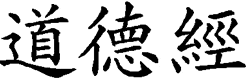
Compilation and Indexing by Michael P. Garofalo
Green Way Research, Valley Spirit Center, Gushen Grove Notebooks, Vancouver, Washington
Chapter 79 Chapter 81 Index to All 81 Chapters Taoism Cloud Hands Blog
Classic Book (Ching) about the Tao (Way, Nature, Patterns, Processes) and Te (Virtue, Potency, Power, Integrity, Wise Person, Sage)
Indexing, Concordance, Search Terms, Topics, Themes, Keys, Subjects
English and Chinese (Wade-Giles) Terms:
Community or Village (kuo),
Contentment,
Old Age or Aged (lao), Distant or Far Away (yüan), Peaceful Life,
Wear or Display (ch'ên), Rural Living, Joy or Rejoice (lo), County
or State (kuo), Remaining in Seclusion, Tenfold (shih), Simple Life,
Ride (ch'êng), Small Country,
No Wars,
Plain Living, Not Showing, Neighbors, Utilize or Use (yung), Weapons, Fewer People,
Chickens, Cocks or Rooster (chi), Dogs (ch'üan), Boats (chou),
Carts or Carriages (yü), Food, Clothes (fu), See or Sight (wang), Travel
Little, 100 or One Hundred (po), Stay at Home (chü), People or
Citizens (min), Spot or Place (so), Sound or Barking (shêng),
Simplicity, Small (hsiao), Go To or Visit or Back and Forth (lai),
Everyday Life or Practices or Customs (su), Don't be Too Intellectual,
Enjoy or Delight (kan), Implements or Utensils (ch'i), And or Yet
(erh), Take Seriously or Mind (chung), Beautiful (mei), Standing Alone,
獨立
Términos en Español:
Comunidad,
Pueblo, Alegría, Vejez,
Edad, Distante, Lejano, Vida Pacífica,
Usar, Exhibir, Ciudad, Estado,
Permaneciendo en Reclusión,
Diez Veces, Vida Sensilla, Paseo,
Pequeño País, Sin
Guerras, Llanura
Estar, Vecinos, Utilizar, Uso, Armas, Menos
Personas, Pollos, Perros, Barcos,
Carretas, Comida, Ropa, Ver, Vista, Viajes,
Ciento, Quedarse en Casa, Personas,
Ciudadanos, Lugar,
Sonido,
Sencillez, Pequeño, Ir,
Todos los Días Vida,
Aduanas, Disfrutar, Herramientas, Utensilios,
Embargo, Tomar en Serio, Mente,
Hermoso.
Electronic Concordance for Chapters 1 - 81 of the Tao Te Ching
English Language Translations of the Tao Te Ching
"The ideal land is small
Its people very few,
Where tools abound
Ten times or yet
A hundred-fold
Beyond their use;
Where people die
And die again
But never emigrate;
Have boats and carts
Which no one rides.
Weapons have they
And armor too,
But none displayed.
The folk returns
To use again
The knotted chords.
Their meat is sweet;
Their clothes adorned,
Their homes at peace,
Their customs charm.
And neighbor lands
Are juxtaposed
So each may hear
The barking dogs,
The crowing cocks
Across the way;
Where folks grow old
And folks will die
And never once
Exchange a call."
- Translated by
Raymond B. Blakney,
1955, Chapter 80
"A small country has fewer people.
Though there are machines that can work ten to a hundred times faster than man,
they are not needed.
The people take death seriously and do not travel far.
Though they have boats and carriages, no one uses them.
Though they have armor and weapons, no one displays them.
Men return to the knotting of rope in place of writing.
Their food is plain and good, their clothes fine but simple, their homes secure;
They are happy in their ways.
Though they live within sight of their neighbors,
And crowing cocks and barking dogs are heard across the way,
Yet they leave each other in peace while they grow old and die."
- Translated by
Jane English,
1972, Chapter 80
"You want a small state with a minimal population.
Have ready to hand weaponry for a sufficient number of
military units
Yet have no recourse to use them.
Make sure that the common people take dying seriously
So that they have no taste for venturing far from home.
Though you have ships and chariots enough
Have no reason to man them;
Though you have armor and weapons enough
Have no reason to parade them.
Bring the common people back to keeping their records
with knotted stong,
To relishing their food,
To finding beauty in their garments,
To enjoying their customs,
An to finding security in their homes.
Although your neighboring states are within eyesight
And the sounds of their dogs and cocks are within earshot,
Your people will grow old and die without having anything to do with them."
- Translated by
Roger T. Ames and David L. Hall, 2003, Chapter 80
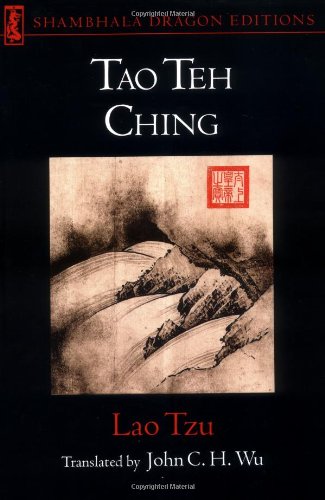
"Small countries with few people are best.
Give them all of the things they want,
and they will see that they do not need them.
Teach them that death is a serious thing,
and to be content to never leave their homes.
Even though they have plenty
of horses, wagons and boats,
they won't feel that they need to use them.
Even if they have weapons and shields,
they will keep them out of sight.
Let people enjoy the simple technologies,
let them enjoy their food,
let them make their own clothes,
let them be content with their own homes,
and delight in the customs that they cherish.
Although the next country is close enough
that they can hear their roosters crowing and dogs barking,
they are content never to visit each other
all of the days of their lives."
- Translated by
John H. McDonald, 1996, Chapter 80
"A
tiny nation, few people
Suppose the presence of ten or one hundred times too many tools
Yet they are unused
Suppose people heavy with death
Yet lack moving far.
Even
present with boats and carriages
There is an absence of a place to be riding
Even present with armor and weapons
There is an absence of a place to be displaying them.
Suppose
men return to knotting cords and using them
What is eaten is sweet
What serves as clothing is beautiful
What is a home is peaceful
What is common is joyful.
Nearby
nations overlook each other
Crowing, barking sounds are heard by each other
People reach old age and die
Without coming and going between each other."
- Translated by
David Lindauer, Chapter 80
"The wise person reduces the importance of governments
And simplifies the modes of living,
So that people use fewer tools and wares
And treasure simplicity in their lives,
So that, though there are vehicles,
People do not take them.
And, though there are weapons,
People do not carry them.
And, though there are records,
Tying knots will serve the record-keeping purpose.
Thus, the highest political achievement is one
In which people savor their food,
Like the beauty of their clothes,
Appreciate their safe and peaceful homes,
Enjoy their social customs;
And in which roosters and dogs
Can be heard between countries;
But people, all their lives,
Have no need to go across the borders."
- Translated by
Liu Qixuan, Chapter 80

Created by Michael P. Garofalo, Green Way Research, Valley Spirit Center, Gushen Grove Notebooks, Red Bluff, California, © 2017 CCA 4.0
 Translated by Eva Wong
  Translated by Philip Ivahoe
 By James Miller
 Translated by Stephen Bokencamp
 By Alexander and Annellen Simpkins
 Translated by Thomas Cleary
 By Livia Kohn
"Let there be a small country with few people,
Who, even having much machinery, don't use it.
Who take death seriously and don't wander far away.
Even though they have boats and carriages, they never ride in them.
Having armor and weapons, they never go to war.
Let them return to measurement by tying knots in rope.
Sweeten their food, give them nice clothes, a peaceful abode and a relaxed life.
Even though the next country can be seen and its doges and chickens can be heard,
The people will grow old and die without visiting each others land."
- Translated by
Charles Muller,
1997, Chapter 80
"A small state with few people.
Let the implements (ch'ih) for ten and hundred men be unused,
Let the people fear death such that they do not move far away.
Although there are boats and carriages,
There are no places to ride them to.
Although there are weapons and armours,
There are no occasions to display them.
Let the people again tie ropes and use them (as memory aids).
Let them enjoy their food,
Consider their clothing beautiful,
Be contented with their dwellings,
And happy with their customs.
The neighbouring states overlooking one another,
The dogs' barkings and cocks' crowings are heard from other states,
Yet till they are old and dying the people do not visit one another."
- Translated by
Ellen M. Chen,
Chapter 80
"Let there be a small country with few people.
Let there be ten times and a hundred times as many utensils and let them not be
used.
Let there be contrivances requiring ten times, a hundred times less labour; they
should not use them.
Let the people value their lives highly and not travel far.
Bring it about that the people are quite ready to lay down their lives at times
to defend their homes rather than emigrate.
As for ships and carriages, let there be none to ride.
There can still be weapons, but no one to drill seriously with them and none to
display them often.
People should have no use for any form of writing save knotted ropes:
Let the people again knot cords for reckoning.
Let them be very pleased with their food, beautify their clothing, be content
with their homes, take pleasure in rustic tasks,
and delight in such customs.
The neighbouring place can be overlooked, can be so near that one may hear the
cocks crowing in it, the dogs barking;
But the people would grow old and die without ever having been there, and never
outside their country."
- Translated by
Byrn Tromod, 1997, Chapter 80
"Independence
Tu Li
A state should be small in size and population.
It should teach the people not to use arms,
Even though arms may be found in abundance.
It should teach the people
To view death as a serious matter,
And not to move to a far-away place.
Though there are boats and carriages,
There is no occasion to use them;
Though there are arms and soldiers,
There is no occasion to stage public reviews.
The people are taught -
To resume the practice of tying knots;
To enjoy their daily food;
To wear beautiful clothes;
To enhance the comfort of their homes;
And to take delight in their social customs.
Neighbor states may be within sight of one another,
And the barking of dogs and the crowing of cocks
In one of them may be heard in the others,
Yet the people to the end of their days,
Do not maintain intercourse with their neighbors."
- Translated by
Henry Wei, 1982, Chapter 80
"Diminish the size of your inner nation;
Let it become as small as is needed.
Let its talents be manifold and diverse,
But never used or displayed.
Naturally treasure the life of your humanity,
But do not let death pursue you.
You have boats for sailing,
Wagons for loading,
But no need to guide them.
You have weapons to attack and defend,
Yet no need to bear them before others.
In communicating with people,
Return to the simplest means.
Eat well, and enjoy it;
Dress both for comfort and beauty.
Nurture harmony in your dwelling space.
Know the daily joy of simplicity.
You will see and be seen by others:
There may be crowing and barking among you,
As between roosters and dogs.
But you need not be trapped in this commerce,
For to the end of your days,
You will be completely sufficient unto yourself."
- Translated by
Brian
Donohue, 2005, Chapter 80
Tao Te Ching
Lao Tzu: Tao Te Ching
 Translated by Livia Kohn
Dao De Jing: The Book of the Way
"A country does well to remain small with few
inhabitants who are provided with everything yet need little who love life and
do not long to roam afar who have armor and weapons but do not use them who
possess culture and scholarship yet prefer the usage and wisdom of the ancients.
Their food is natural yet tasty.
Their clothes are plain yet beautiful.
Their dwellings are simple yet comfortable and peaceful.
Their way of life is free and tolerant and a source of unity and contentment.
Though the neighboring State lies within reach and the effervescence of its life
is calling temptingly to them they remain self-sufficient and serene and they
grow old in peace free from the desire to stray afar."
- Translated by
Schmidt, Chapter
80
A Chinese Language Version of Chapter 80 of the Tao Te
Ching by Lao Tzu
A
note
on my style of displaying the Chinese characters of the Tao Te Ching
小國寡民.
使有什伯之器而不用.
使民重死而不遠徙.
雖有舟輿無所乘之.
雖有甲兵無所陳之.
使民復結繩而用之.
甘其食.
美其服安其居.
樂其俗.
鄰國相望.
雞犬之聲相聞.
民至老死不相往來.
- Chinese characters, Chapter 80, Tao Te
Ching
hsiao kuo kua min.
shih yu shih po chih ch'i erh pu yung.
shih min chung ssu erh pu yüan hsi.
sui yu chou yü wu so ch'êng chih.
sui yu chia ping wu so ch'ên chih.
shih jên fu chieh shêng erh yung chih.
kan ch'i shih.
mei ch'i fu an ch'i chü.
lo ch'i su.
lin kuo hsiang wang.
chi ch'üan chih shêng hsiang wên.
min chih lao ssu pu hsiang wang lai.
- Wade-Giles Romanization, Chapter 80, Tao Te Ching
Audio Version in Chinese of Chapter 80 of the Tao Te Ching
xiao guo gua min.
shi you shi bo zhi qi er bu yong.
shi min zhong si er bu yuan xi.
sui you zhou yu wu suo chang zhi.
sui you jia bing wu suo chen zhi.
shi ren fu jie sheng er yong zhi.
gan qi shi.
mei qi fu an qi ju.
le qi su.
lin guo xiang wang.
ji quan zhi sheng xiang wen.
min zhi lao si bu xiang wang lai.
-  Pinyin Romanization, Chapter 80, Daodejing
Tao Te Ching in Chinese characters and English (includes a word by word key) from YellowBridge
Tao Te Ching in Chinese characters, Pinyin Romanization, English and German by Dr. Hilmar Alquiros.
Laozi Daodejing: Chapters with Chinese characters, seal script, detailed word by word concordance, Pinyin (tone#), German, French and English.
Chinese and English Dictionary, MDGB
Dao De Jing Wade-Giles Concordance by Nina, Dao is Open
Dao De Jing English and Wade-Giles Concordance by Mike Garofalo
Tao Te Ching in Pinyin Romanization with Chinese characters, WuWei Foundation
Tao Te Ching in Pinyin Romanization
Tao Te Ching in Chinese characters and English
Tao Te Ching in Chinese characters, English, Word by word analysis, Zhongwen
Tao Te Ching: The Definitive Edition
Tao Te Ching in Chinese characters: Big 5 Traditional and GB Simplified
Chinese Characters, Wade-Giles and Pinyin Romanizations, and 16 English Translations for Each Chapter of the Daodejing by Mike Garofalo.
Tao Te Ching in Chinese characters, Pinyin and Wade Giles Romanization spellings, English; a word for word translation of the Guodian Laozi Dao De Jing Version.
Lao Zi's Dao De Jing: A Matrix Translation with Chinese Text by Bradford Hatcher.
"Let nations grow smaller and smaller and people fewer
and fewer,
let weapons become rare
and superfluous,
let people feel death's gravity again
and never wander far from home.
Then boat and carriage will sit unused
and shield and sword lie unnoticed.
Let people knot ropes for notation again and never need anything more,
let them find pleasure in their food and beauty in their clothes, peace in their
homes and joy in their ancestral ways.
Then people in neighboring nations will look across to each other,
their chickens and dogs calling back and forth,
and yet they'll grow old and die without bothering to exchange visits."
- Translated by
David Hinton,
Chapter 80
Created by Michael P. Garofalo, Green Way Research, Valley Spirit Center, Gushen Grove Notebooks, Red Bluff, California, © 2017 CCA 4.0
By Alexander Simkins.  By Derek Lin.
 By Ming-Dao Deng.
 By Benjamin Hoff.
 By Ming-Dao Deng.
 Translated by Thomas Cleary.

"A small state has few people.
It has the people keep arms but not use them.
It has them regard death gravely and not go on distant campaigns.
Even if they have vehicles, they have nowhere to drive them.
Even if they have weapons, they have nowhere to use them.
It has the people go back to simple techniques, relish their food, like their
clothes, be comfortable in their ways, and enjoy their work.
Neighboring states may be so close they can hear each other's dogs and roosters,
but they make it so that the people have never gone back and forth."
- Translated by
Thomas Cleary,
1991, Chapter 80
"The ideal state is a small intimate community.
Where all the necessities of life are present in abundance.
There everyone is satisfied to live and die without looking around for greener
pastures.
Even if they have cats or boats, they do not use them for traveling abroad.
Even if they have police and fortifications, these are never put to use.
Business transactions are simple enough to be calculated on one's fingers rather
than requiring complicated bookkeeping.
The people are satisfied with their food,
Contented with their clothing,
Comfortable in their dwellings,
And happy with their customs.
Even though neighboring communities are within sight,
And the crowing of the neighbor's cocks and barking of the neighbor's dogs are
within hearing,
They grow old and die without ever troubling themselves to go outside of their
own communities."
- Translated by
Archie J. Bahm,
Chapter 80
"Let every state be simple like a small village with few
people
There may be tools to speed things up ten or a hundred times yet
no one will care to use them
There may be boats and carriages yet they will remain without
riders
There may be armour and weaponry yet they will sit collecting
dust
The people must take death seriously and not waste their lives
in distant lands
Let them return to the knotting of cord
Let them enjoy their food and care for their clothing
Let them be content in their homes and joyful in the way they
live
Neigbouring villages are within sight of each other
Roosters and dogs can be heard in the distance
Should a man grow old and die without ever leaving his village
let him feel as though there was nothing he missed "
- Translated by Jonathan Star, 2001, Chapter 80
 By Hu Xuzehi
 Annotated translation by Victor Mair
  By Ha Poong Kim
 By Hans-Georg Moeller
  By Roger T. Ames and David T. Hall
 By Wes Burgess
 By Arthur Waley
"Given a small country with few inhabitants,
He could bring it about that through
There should be among the people contrivances requiring ten times,
A hundred times less labor, they would not use them.
He could bring it about that the people would be ready
To lay down their lives and lay them down again in defense of their homes,
Rather than emigrate.
There might still be boats and carriage,
But no one would go in them;
There might still be weapons of war,
But no one would drill with them.
He could bring it about that
The people should have no use for any from of writing save knotted ropes,
Should be contented with their food, pleased with their clothing,
Satisfied with their homes,
Should take pleasure in their rustic tasks.
The next place might be so near at hand
That one could one could hear the cocks crowing in it, the dogs barking;
But the people would grow old and die without ever having been there”."
- Translated by
Arthur Waley,
1934, Chapter 80
"If a country is governed wisely,
its inhabitants will be content.
They enjoy the labor of their hands
and don't waste time inventing
labor-saving machines.
Since they dearly love their homes,
they aren't interested in travel.
There may be a few wagons and boats,
but these don't go anywhere.
There may be an arsenal of weapons,
but nobody ever uses them.
People enjoy their food,
take pleasure in being with their families,
spend weekends working in their gardens,
delight in the doings of the neighborhood.
And even though the next country is so close
that people can hear its roosters crowing and its dogs barking,
they are content to die of old age
without ever having gone to see it."
- Translated by
Edwin Shaw, 1996, Chapter 80
"Let there be a small country with a small population,
Where the supply of goods are tenfold or hundredfold,
more than they can use.
Let the people value their lives and not migrate far.
Though there be boats and carriages,
None be there to ride them.
Though there be armor and weapons,
No occasion to display them.
Let the people again tie ropes for reckoning,
Let them enjoy their food,
Beautify their clothing,
Be satisfied with their homes,
Delight in their customs.
The neighboring settlements overlook one another
So that they can hear the barking of dogs and crowing
of cocks of their neighbors,
And the people till the end of their days shall never
have been outside their country."
- Translated by
Lin Yutang, 1955,
Chapter 80
 Translation and elucidation by Hua Ching Ni
 Translated by Brian Walker
 Translated by Arthur Waley
 Translated by Lionel and and Herbert Giles
 By Eva Wong
"Keep the kingdom small, its people few;
Make sure they have no use for tools
That do the work of tens or hundreds.
Nor let the people travel far
And leave their homes and risk their lives.
Boat or cart, if kept at all, best not to ride;
Shield and blade best not to show.
Guide them back to early times
When knotted cords served for signs,
And they took relish in their food
And delight in their dress,
Secure in their dwellings,
Content in their customs,
Although a neighbor kingdom stood in view
And the barnyard cries of cocks and dogs
Echoed from village to village,
Their folk would never traffic to and fro –
Never, to the last of their days."
- Translated by
Moss Roberts,
2001, Chapter 80
"Small country, few people -
Hundreds of devices,
But none are used.
People ponder on death
And don't travel far.
They have carriages and boats,
But no one goes on board;
Weapons and armour,
But no one brandishes them.
They use knotted cords for counting.
Sweet is their food,
Beautiful their clothes,
Peaceful their homes,
Delightful their customs.
Neighboring countries are so close
You can hear their chickens and dogs.
But people grow old and die
Without needing to come and go."
- Translated by
Stephen Addiss,
1993, Chapter 80
"A country does well to remain small with few inhabitants who are provided
with everything yet need little<
who love life and do not long to roam afar,
who have armor and weapons but do not use them,
who possess culture and
scholarship yet prefer the usage and wisdom of the ancients.
Their food is natural yet tasty.
Their clothes are plain yet beautiful.
Their dwellings are simple yet comfortable and peaceful.
Their way of life is free and tolerant and a source of unity and
contentment.
Though the neighboring State lies within reach and the effervescence of its
life is calling temptingly to them they remain self-sufficient and serene.
They they grow old in peace free from the desire to stray afar."
- Translated by
K. O. Schmidt, 1975, Chapter 80
"A small nation diminishes people.
It causes the people to have hundreds of conveniences, but won't let them use
them.
It causes the people to be burdened by the thought of death, and they try to get
out of the way.
There are boats and cats, but no place to drive them to.
There are weapons, but no place to display them.
It causes the people to return to:
Tying knots and using them;
Be satisfied with their food;
See their clothing as beautiful;
Find joy in what is common;
Feel safe in their homes.
Each town looks forward to hearing from each other by the sounds of their
chickens and dogs; this is how they learn about each other.
The people get old and die, not coming into contact with each other."
- Translated by
Nina Correa, 2005,
Chapter 80
Created by Michael P. Garofalo, Green Way Research, Valley Spirit Center, Gushen Grove Notebooks, Red Bluff, California, © 2017 CCA 4.0
The Tao of Zen
Tao Te Ching: Zen Teachings on the Taoist Classic
Buddhism and Taoism Face to Face: Scripture, Ritual, and Iconographic Exchange in Medieval China

"Take a small kingdom and a few people,
Cause ten or a hundred of them to carry weapons,
But not to use them.
Cause the people to fear death,
Do not let them travel far,
Though they may have boats and carriages,
Let them use them only within the kingdom.
Though they may have soldiers in uniform,
Let them parade only within the kingdom.
Cause the people again to have knotted cords,
And to use them (instead of written characters).
Their food would be sweet,
Their clothing would be beautiful in their own eyes,
Their dwellings would be resting-places,
They would love their simple ways.
If another kingdom were so near
That they could hear the sounds of dogs and fowls,
They would not come into mutual contact
Until they all grew old and died."
- Translated by
Isabella Mears, 1916, Chapter 80
"In a little state with a small population, I would so order it,
that, though there were individuals with the abilities of ten or a
hundred men, there should be no employment of them; I would make the
people, while looking on death as a grievous thing, yet not remove
elsewhere to avoid it.
Though they had boats and carriages, they should have no occasion
to ride in them; though they had buff coats and sharp weapons, they
should have no occasion to don or use them.
I would make the people return to the use of knotted cords instead
of the written characters.
They should think their coarse food sweet; their plain clothes
beautiful; their poor dwellings places of rest; and their common simple ways sources of enjoyment.
There should be a neighboring state within sight, and the voices
of the fowls and dogs should be heard all the way from it to us, but I
would make the people to old age, even to death, not have any
intercourse with it."
- Translated by
James Legge, 1891, Chapter 80
"If the Tao held sway, nations would be
small and people few
There might be weapons enough, but no one would use them or display them
All would regard fighting as a serious, unpleasant affair
They might have boats and carriages enough, but no one would ride them
All would be content with what they see and know
There might be laws and contracts, but no one would write them
All would pay their debts as they could, because no one would care if they
didn't
Such a land would delight in their food,
their clothing, their traditions
And feel safe and secure in their homes
Though neighboring lands might be close enough that their songs are heard
One could grow old without ever having the urge to visit them"
- Translated by
Ted Wrigley, Chapter 80
Further Teachings of Lao-Tzu: Understanding the Mysteries (Wen
Tzu)
The Lunar Tao: Meditations in Harmony with the Seasons
 By Lui I-Ming (1780) and translated by Thomas Cleary
Ripening Peaches: Taoist Studies and Practices By Mike Garofalo
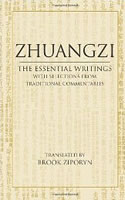
Zhuangzi: The Essential Writings with Selections from Traditional Commentaries
"If I had a small kingdom and but ten or a hundred men of ability, I would not administrate with them.
I would teach the people to look upon death as a grievous thing, and then they would not go abroad to meet it.
Though they had boats and carriages, yet they would not go away in them.
Though they had armour, yet they would never have occasion to wear it.
The people would return to the use of the quipu.
They should find their coarse food sweet, think their plain clothes
grand, regard their homes as places of rest, and take delight in their
own simple pleasures.
Though the neighbouring state could be seen by us, and the crowing of the cocks and the barking of the dogs could be heard,
Yet my people would grow old, and die before ever feeling the need of having intercourse with it."
- Translated by
Walter Gorn Old, 1904, Chapter 80
|
Tao Te
Ching |
|||||||||
| 1 | 2 | 3 | 4 | 5 | 6 | 7 | 8 | 9 | 10 |
| 11 | 12 | 13 | 14 | 15 | 16 | 17 | 18 | 19 | 20 |
| 21 | 22 | 23 | 24 | 25 | 26 | 27 | 28 | 29 | 30 |
| 31 | 32 | 33 | 34 | 35 | 36 | 37 | 38 | 39 | 40 |
| 41 | 42 | 43 | 44 | 45 | 46 | 47 | 48 | 49 | 50 |
| 51 | 52 | 53 | 54 | 55 | 56 | 57 | 58 | 59 | 60 |
| 61 | 62 | 63 | 64 | 65 | 66 | 67 | 68 | 69 | 70 |
| 71 | 72 | 73 | 74 | 75 | 76 | 77 | 78 | 79 | 80 |
| 81 | |||||||||
"Suppose I had a country small,
With people few, and I had there
Some officers of ten,
Or of a hundred men,
I'd not employ those men at all;
Though death were feared, unfrightened then,
My people would not emigrate elsewhere.
They might have carriages and boats,
But not in them to ride away,
They might have warlike arms,
But never war s alarms
Would call them with their hateful notes;
They d even forget how writing charms,
And knotted cords again they would display.
Then would they relish homely food,
Their plain clothes would seem elegant,
Though dwellings might be poor,
Content would guard the door,
And simple habits, plain and good, Far better than they knew before,
A sense of fresh enjoyment would implant.
A neighboring state might be in sight,
The voice of fowls and dogs be heard,
But life like that would make
My people such joy take
In their own state,
that till the night
Of age should their enjoyment slake,
And they should die,
they'd not exchange a word."
- Translated by
Isaac Winter Heysinger, 1903, Chapter 80
"Ein Land mag klein sein
und seine Bewohner wenig.
Geräte, die der Menschen Kraft vervielfältigen,
lasse man nicht gebrauchen.
Man lasse das Volk den Tod wichtig nehmen
und nicht in die Ferne reisen.
Ob auch Schiffe und Wagen vorhanden wären,
sei niemand, der darin fahre.
Ob auch Panzer und Waffen da wären,
sei niemand, der sie entfalte.
Man lasse das Volk wieder Stricke knoten
und sie gebrauchen statt der Schrift.
Mach süß seine Speise
und schön seine Kleidung,
friedlich seine Wohnung
und fröhlich seine Sitten.
Nachbarländer mögen in Sehweite liegen,
daß man den Ruf der Hähne und Hunde
gegenseitig hören kann:
und doch sollen die Leute im höchsten Alter sterben,
ohne hin und her gereist zu sein."
- Translated by Richard Wilhelm, 1911, Chapter
80
"Vom Eigenrecht des kleinsten Staates
Ist ein Land auch klein und hat es nur wenige Bewohner,
was liegt daran
Und hätte es nur Ausrüstung für zehn bis hundertMann,
die ihre Waffen nicht einmal benutzten,
man lasse seine Bewohner in Ruhe leben,
man lasse sie auf ihrer Scholle sitzen.
Und benützten sie ihre Schiffe und Streitwagen nicht
und würden sie nie ihre Waffen und Rüstungen gebrauchen,
man lasse sie ruhig zum Brauchtum ihrer Väter zurückkehren.
Sie sind zufrieden mit ihrer Nahrung,
freuen sich an ihrer Tracht,
finden ihre Behausung schön,
Sitte und Recht erscheinen ihnen in Ordnung.
Und wenn die Grenzen der Nachbargebiete so nahe wären,
daß Hahnenschrei und Hundegebell
von hüben und drüben gehört werden könnten,
man lasse sie fröhlich leben, zufrieden altern,
ruhig sterben, doch zwinge man sie nicht,
ihre Freiheit aufzugeben!"
- Translated by
Rudolf Backofen, 1949, Chapter 80
"The state should be small;
The population should be sparse.
Tools, though of many kinds,
Should not be used.
Teach the people to fear death
And not to migrate to remote places;
Although they have ships and carts,
They will have no need to use them;
Although they are well armed with weapons,
They will have no place to make them effective.
Encourage the people to return to the condition
Under which the knotted rope was used to record things.
The world best ruled is a place where
The people will have delicious food,
beautiful clothes,
comfortable living quarters,
cheerful customs.
Though within easy reach of neighbouring states,
The dog's barking and the cock's crowing in one state are heard in another;
The people of one state will never have dealings with those of another,
Even if they get old and die."
- Translated by
Gu Zengkun, Chapter 80
This webpage work is licensed under a Creative Commons Attribution-NonCommercial-NoDerivatives 4.0 International License.
Created by Michael P. Garofalo, Green Way Research, Valley Spirit Center, Gushen Grove Notebooks, Red Bluff, California, © 2017 CCA 4.0
Tao Te Ching: An Illustrated Journey
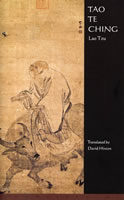
Tao Te Ching
The Book of Tao: Tao Te Ching - The Tao and Its Characteristics
Ripening Peaches: Taoist Studies and Practices
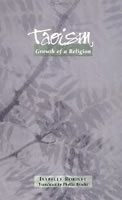
Taoism: Growth of a Religion
Zhuangzi (Chuang Tsu), Daoist Scripture: Bibliography, Links, Resources, Quotations, Notes
Zhuangzi: Basic Writings
Zhuangzi Speaks: The Music of Nature
Lifestyle Advice from Wise Persons


"With a small State, sparsely populated, supposing that I
had weapons for a thousand men, I would not use them.
I would rather teach my subjects to think seriously of death, and not to
emigrate to a distance.
Then, though they might have ships and chariots, nobody
would mount them; though they might have armour and weapons, nobody
would set them in array.
I would make them return to the use of the quipu, render their food toothsome, beautify their clothes by
cultivating the silkworm, live tranquilly at home, be happy in their
domestic usages, keep watch with neighbouring states for their mutual
safety, and let the crowing of cocks and barking of dogs be heard by one
another from their numbers and proximity.
Thus the people would die
of old age without ever coming into hostile collision with each other."
- Translated by
Frederic Henry Balfour, 1884, Chapter 80
"A
peaceful nation has few people and
flows in harmony and oneness.
They have weapons of war but they have no
inclination to use them.
They are indifferent to death and indifferent
to living elsewhere.
They have boats and carriages
but seldom use them.
They have weapons of war but
no one displays them.
They live a simple life:
their food is nourishing,
their clothes are adequate,
their dwellings are secure.
They are at peace and in harmony
with all things.
Even though they live within sight
of a neighboring nation
and hear the sounds of dogs and
children,
they grow old and perish
without ever desiring to go there."
- Translated by
John Worldpeace, Chapter 80
"Supposing here is a small state with few people.
Though there are various vessels I will not have them put in use.
I will make the people regard death as a grave matter and not go far away.
Though they have boats and carraiges they will not travel in them.
Though they have armour and weapons they will not show them.
I will let them restore the use of knotted cords (instead of writing).
They will be satisfied with their food.
Delighted in their dress;
Comfortable in their dwellings;
Happy with their customs.
Though the neighbouring states are within sight
And their cocks' crowing and dogs' barking within hearing;
The people (of the small state) will not go there their whole lives."
- Translated by
Ch'u Ta-Kao, 1904, Chapter 80
"Si je gouvernais un petit royaume et un peuple peu nombreux,
n'eût-il des armes que pour dix ou cent hommes,
je l'empêcherais de s'en servir.
J'apprendrais au peuple à craindre la mort et à ne pas émigrer au loin.
Quand il aurait des bateaux et des chars, il n'y monterait pas.
Quand il aurait des cuirasses et des lances, il ne les porterait pas.
Je le ferais revenir à l'usage des cordelettes nouées.
Il savourerait sa nourriture, il trouverait de l'élégance dans ses vêtements,
il se plairait dans sa demeure, il aimerait ses simples usages.
Si un autre royaume se trouvait en face du mien, et que les cris des coqs et des
chiens s'entendissent de l'un à l'autre,
mon peuple arriverait à la vieillesse et à la mort sans avoir visité le peuple
voisin."
- Translated by Stanislas Julien, 1842, Chapter
80
Spanish
Language Versions of the Tao Te Ching (Daodejing)
Tao Te Ching en Español
Lao Tsé Tao Te Ching 
Tao Te Ching Traducido por Stephen Mitchell, versión española
Tao Te Ching Traducido al español por el Padre Carmelo Elorduy
Lao Tzu-The Eternal Tao Te Ching
Ripening Peaches: Taoist Studies and Practices By Mike Garofalo Maduración Duraznos: Estudios y Prácticas Taoístas por Mike Garofalo
Tao Te Ching
Lao Tzu - Tao Te Ching
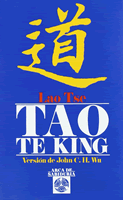
Tao te king
Daodejing Español, Inglés, y Chino Versiones Lingüísticas de la Daodejing
Spanish Language Translations of the Tao Te Ching
"Sobre la estructura del Estado, yo pienso lo siguiente:
Es major cuando el país es pequeño y la población es poca.
Aun cuando haya muchas armas, no deben usarse. Tampoco deben usarse los barcos y
los carros de guerra.
Para los guerreros es mejor no batallar.
La vida en el país debe ser tal que las personas no quieran dejarlo.
Es bueno si todos tienen comida sabrosa, ropa bonita, casas cómodas y una vida
alegre.
Es bueno mirar el país vecino con amor y escuchar como allí los gallos cantan y
los perros ladran.
Es bueno que las personas, al llegar a la vejez en este país,
alcancen la Perfección y se vayan de alli para no
volver más."
- Translated by Anton Teplyy, 2008, Capítulo 80
"Un pequeño estado con poca gente.
Si hay implementos para diez y cien hombres,
que no se usen,
Si el pueblo teme a la muerte, que sea tanto que no se aleje.
Aunque haya botes y carruajes,
que no haya adónde dirigirse con ellos.
Aunque haya armas y armaduras,
que no haya ocasiones donde exhibirlas.
Que el pueblo retorne al uso de los nudos de soga.
Que disfruten de la comida,
que consideren hermosos sus atuendos,
que estén satisfechos con sus moradas,
y felices con sus costumbres.
Aunque los estados vecinos estén al alcance de la vista,
y los ladridos de los perros y los cantos de los gallos se escuchen desde el
otro estado,
la gente envejecerá y morirá sin visitarse con los vecinos."
- Translated
by Álex Ferrara,
2003, Capítulo 80
"Aunque el país fuese pequeño
y tuviera pocos habitantes,
impide que se usen pocos instrumentos
que multipliquen la fuerza de los hombres.
Procura que el pueblo dé importancia a la
muerte y no viaje hacia la lejanía.
Aunque existieran buques y carros,
nadie debería ir en ellos.
Aunque hubiese armaduras y armas,
nadie debería desplegarlas.
En vez de emplear la escritura,
haz que el pueblo use de nuevo las cuerdas anudadas.
Procura que su comida sea sabrosa,
y hermosa su vestimenta, pacífica su morada,
y alegres sus costumbres.
Aunque los países vecinos estuvieran tan
cerca que se oyese el canto de los gallos y
los ladridos de los perros de uno y otro lado.
La gente debería morir, anciana, sin haber
cruzado la frontera."
- Translation into Spanish from
Richard Wilhelm's 1911 German Version by an Unknown Spanish Translator,
2015, Capítulo 80
"Imaginemos que gobierno un pequeño país de pocos
habitantes.
Mis súbditos tendrían embarcaciones que no utilizarían.l
Les enseñaría a temer a la muerte y a no alejarse.
Por muchos carruajes que hubiese, no viajarían en ellos.
Aunque tuviesen armas y corazas, no las mostrarían.
Les llevaría de nuevo al uso de cuerdas con nudos (en lugar de escritura).
Encontrarían sabroso su alimento;
Ricos sus vestidos;
Cómodas sus casas;
Felicidad en sus costumbres.
Aunque los reinos vecinos se hallasen tan cerca
Que pudiesen oír el ladrido de los perros y el canto de los gallos,
Los hombres de este pequeño reino no desearían nunca abandonarlo."
- Translated by
Caridad Diaz Faes, 1970, Capítulo 80
"Un reino pequeño, de poca población, no emplearía todas
sus cosas.
Los habitantes no se aventurarían a una expedición lejana, por temor a pérdidas
graves de vida.
Aunque tuvieran buques y carruajes, no tendrían necesidad de usarlos.
Aunque tuvieran armas y armaduras, no necesitarían valerse de estas.
El pueblo volvería a ocuparse de anudar cuerdas.
Encontraría su comida sencilla pero buena;
sus ropas, finas pero simples;
sus casas, tranquilas y seguras, sus costumbres sencillas y alegres.
En dos reinos vecinos, tan cercanos que mutuamente se oirían sus perros y gallos,
los pobladores morirían muy ancianos sin haberse
entrometido nunca los unos con los otros."
- Translation from
Wikisource, 2013, Capítulo 80
Created by Michael P. Garofalo, Green Way Research, Valley Spirit Center, Gushen Grove Notebooks, Red Bluff, California, © 2017 CCA 4.0
Next Chapter of the Tao Te Ching #81
Previous Chapter of the Tao Te Ching #79
Chapter and Thematic Index to the Tao Te Ching
Tao Te Ching
Commentary, Interpretations, Research Tools, Resources
Chapter 80
Das Tao Te King von Lao Tse. Complete versions of all 81 Chapters of the Tao Te Ching by many different translators in many languages: 124 English, 24 German, 14 Russian, 7 Spanish, 5 French and many other languages. Links are organized first by languages, and then alphabetically by translators. Formatting varies somewhat. The original website at Onekellotus went offline in 2012; but, the extensive collection of these Tao Te Ching versions was saved for posterity by the Internet Archive Wayback Machine and available as of 9/9/2015. This is an outstanding original collection of versions of the Daodejing─ the Best on the Internet. Caution: copyright infringement may sometimes be an issue at this website.
Tao Te Ching, Translations into English: Terebess Asia Online (TAO). 124
nicely formatted complete English language translations, on separate webpages, of the Daodejing.
Alphabetical index by translators. Each webpage has all 81 chapters of the Tao Te
Ching translated into English. A useful collection! Many
reformatted and colored versions from the original collection at
Das Tao Te King von Lao Tse. Caution: copyright infringement may
sometimes be an
issue at this website.
Lao Tzu: Te-Tao Ching - A New Translation Based on the Recently Discovered Ma-wang-tui
Texts (Classics of Ancient China)
Daodejing by Laozi: Chapters with Chinese characters, seal script,
detailed word by word concordance, Pinyin (tone#), German, French and English.
This is an outstanding resource for serious students of the Tao Te Ching.
Tao Te
Ching: A New Translation and Commentary. By Ellen Chen. Paragon
House, 1998. Detailed glossary, index, bibliography, notes, 274 pages.
The Tao
and Method: A Reasoned Approach to the Tao Te Ching. By Michael
Lafargue. New York, SUNY Press, 1994. 640 pages. Detailed
index, bibliography, notes, and tables. An essential research tool.
Two Visions of the Way: A Study of the Wang Pi and the Ho-Shang Kung Commentaries on the Lao-Tzu.
By Professor by Alan Kam-Leung Chan. SUNY Series in Chinese
Philosophy and Culture. State University of New York Press, 1991.
Index, bibliography, glossary, notes, 314 pages.
ISBN: 0791404560.
Tao Te Ching: The Definitive Edition
Chinese Reading of the Daodejing
Wang Bi's Commentary on the Laozi with Critical Text and Translation.
By Professor Rudolf G. Wagner. A SUNY Series in Chinese Philosophy and
Culture. English and Mandarin Chinese Edition.
State University of New York Press; Bilingual edition (October 2003). 540
pages. ISBN: 978-0791451823.
Wang Bi (Wang Pi, Fusi), 226-249 CE,
Commentary on the Tao Te
Ching.
Tao Te Ching

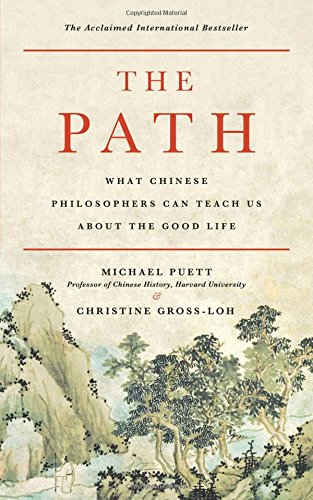
The Taoism Reader
The Path: What Chinese Philosophers Can Teach Us About the Good Life.
By Michael Puett and Christine Gross-Loh. Simon and Schuster, 2017.
240 pages.
Change Your Thoughts - Change Your Life: Living the Wisdom of the Tao
The Tao of Being: A Think and Do Workbook
The Lunar Tao: Meditations in Harmony with the Seasons
The Classic of the Way and Virtue: A New Translation of the Tao-te Ching of Laozi as Interpreted by Wang Bi.
Translated by Richard John Lynn. Translations from the Asian Classics
Series. New York, Columbia University Press, 1999. Extensive index,
glossaries, notes, 244 pages.
Tao Te Ching in Chinese characters,
Pinyin Romanization, English and German by Dr. Hilmar
Alquiros.
Stoicism and Hellenistic
Philosophy
How to Live a Good Life:
Advice from Wise Persons
One Old Philosopher's
Notebooks Research, Reading, and Reflections by Mike Garofalo.
Yellow Bridge
Dao De Jing Comparison Table Provides side by side comparisons of
translations of the Tao Te Ching by James Legge, D. T. Suzuki, and Dwight
Goddard. Chinese characters for each paragraph in the Chapter are on the
left; place your cursor over the Chinese characters to see the Pinyin
Romanization of the Chinese character and a list of meanings.
Translators Index,
Tao Te Ching Versions in English, Translators Sorted Alphabetically by Translator, Links to Books and
Online Versions of the Chapters
Taoism and the Tao Te
Ching: Bibliography, Resources, Links
Spanish Language
Translations of the Tao Te Ching, Daodejing en Español, Translators Index
The Tao of Zen
Chapter 41 in the
Rambling
Taoist Commentaries by Trey Smith. The
Rambling Taoists are Trey Smith and Scott Bradley.
By Hans-Georg Moeller. Columbia University Press, 2006, 176 pages.
Valley Spirit, Gu Shen,
Concept, Chapter 6
Valley Spirit Center in Red
Bluff, California.
Sacred
Circle in the Gushen Grove.
Lao-tzu's Taoteching
Reading Lao Tzu: A Companion to the Tao Te Ching with a New Translation
Dao De Jing: A Philosophical Translation
Thematic Index to the
81 Chapters of the Tao Te Ching
Lieh-Tzu: A Taoist Guide to Practical Living
Revealing the Tao Te Ching: In-depth Commentaries on an Ancient Classic
Cloud Hands Blog
Mike Garofalo writes about Mind-Body Arts, Philosophy, Taoism, Gardening, Taijiquan, Walking, Mysticism,
Qigong, and the Eight Ways.
The Whole Heart of Tao:
The Complete Teachings From the Oral Tradition of Lao Tzu.

Gushen Grove Notebooks for the Tao Te Ching
Green Way Research, Valley Spirit
Center, Gushen Grove Notebooks, Red Bluff, California, © 2011-2017 CCA 4.0
Indexed and Compiled by
Michael P. Garofalo
This webpage was last modified or updated on
May 18, 2017.
This webpage was first distributed online on February 2, 2011.
Created by Michael P. Garofalo, Green Way Research, Valley Spirit Center, Gushen Grove Notebooks, Red Bluff, California, © 2011-2017 CCA 4.0
Revised and updated by Mike Garofalo, Green Way Research, Cloud Hands Home, City of Vancouver, State of Washington, Northwestern USA, (2017-)
Brief Biography of Michael P. Garofalo, M.S.

Ripening Peaches: Daoist
Studies and Practices
Valley Spirit T'ai Chi Ch'uan - Cloud Hands
Valley Spirit Qigong (Chi
Kung, Dao Yin, Neidan, Yangsheng)
Zhuangzi (Chuang Tzu, Zhuang Zhou, Master Chuang) 369—286 BCE
Taoist Perspectives: My Reading List
Bodymind Theory and Practices, Somaesthetics
How to Live a Good Life: Advice from Wise Persons
Qigong (Chi Kung) Health Practices
One Old Daoist Druid's Final Journey: Notebooks of the Librarian of Gushen Grove
Cloud Hands: T'ai Chi Ch'uan and Martial Arts
Index to Cloud Hands and Valley Spirit Websites
Index to Translators of the Tao Te Ching
Concordance to the Tao Te Ching
The Tao Te Ching (Dao De Jing) by Lao Tzu (Laozi) circa 500 BCE
|
Tao Te
Ching |
|||||||||
| 1 | 2 | 3 | 4 | 5 | 6 | 7 | 8 | 9 | 10 |
| 11 | 12 | 13 | 14 | 15 | 16 | 17 | 18 | 19 | 20 |
| 21 | 22 | 23 | 24 | 25 | 26 | 27 | 28 | 29 | 30 |
| 31 | 32 | 33 | 34 | 35 | 36 | 37 | 38 | 39 | 40 |
| 41 | 42 | 43 | 44 | 45 | 46 | 47 | 48 | 49 | 50 |
| 51 | 52 | 53 | 54 | 55 | 56 | 57 | 58 | 59 | 60 |
| 61 | 62 | 63 | 64 | 65 | 66 | 67 | 68 | 69 | 70 |
| 71 | 72 | 73 | 74 | 75 | 76 | 77 | 78 | 79 | 80 |
| 81 | |||||||||
Return to the Top of this Webpage