Classic of the Way and Virtue
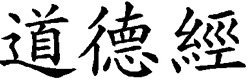
By Lao Tzu (Laozi)
Chapter 43 Chapter 45 Index to All the Chapters Taoism Cloud Hands Blog Commentary
Classic Book (Ching) about the Tao (Way, Nature, Patterns, Processes) and Te (Virtue, Potency, Power, Integrity, Wise Person, Sage)
Indexing, Concordance, Search Terms, Topics, Themes, Keys, Subjects
English and Chinese (Wade-Giles) Terms, Chapter #44:
Person or Self or Body (shên), Possessions, Close or Near (ch'in), Gain, Loss,
Sufficiency, Cautions, Contentment, Stopping, Loose or Loss (wang), Hoarding, Longevity, Fame, Loss,
Security,
Hoard or Hide (ts'ang), Stop or Stand (chih), Economy, Waste, Limits, Worse or
Painful (ping), Excess, Wealth, Wealth or Goods (huo), More (to), Gain or Worth
(tê), Vulnerable, Happiness, Simplicity, Fame (ming), Contentment or
Satisfaction (tsu), Consumerism, Excessive or Lavish (shên), Dishonor or
Disgrace (ju), Security, Immense or Intense (hou), Love or Fondness (ai), Waste
or Overuse (fei), Danger or Peril (tai), Lasting or Constant (ch'ang), Endure or
Ancient (chiu), Precepts, 立戒
Chapter #44 Tao Te Ching 2/19p/2021
Términos en Español, Capítulo #44: Cuerpo,
Posesiones, Ganancia,
Pérdida, Suficiencia,
Precauciones, Alegría, Detener,
Acaparamiento, Longevidad, Fama, Pérdida,
Seguridad, Economía,
Residuos, Límites,
Exceso, Riqueza,
Vulnerables, Felicidad,
Sencillez, Consumismo,
Seguridad, Preceptos,
Persona,
Cuerpo, Fama, Cerca, Riqueza,
Productos, Más,
Perdida, Dolorosa,
Excesiva, Amor, Cariño,
Residuos, Gastos, Tesoro, Inmenso,
Intenso, Deshonra, Desgracia,
Alegría, Satisfacción,
Peligro, Duradera, Soportar,
Antiguo, Cerrar, Ganancia, Valor, Prodigar, Alto, Estar.
Capítulo #44
Daodejing 2/19p/2021
Electronic Concordance for all 81 Chapters of the Tao Te Ching
English Language Translations of the Tao Te Ching
"Which is closer, your name or your body?
Which is more, your body or your possessions?
Which is more destructive, gain or loss?
Extreme fondness means great expense, and abundant possessions mean much loss.
If you know when you have enough, you will not be disgraced.
If you know when to stop, you will not be endangered.
It is possible thereby to live long."
- Translated by
Thomas Cleary,
1994, Chapter 44
"Do not talk of fame and reputation,
"As for your fame and your life, which matters more?
As for your life and your wealth, which is more precious?
As for gain or loss, which is more damaging?
He who is most endeared to something must pay dearest for it.
He who has hoarded much will suffer great loss.
He who knows when enough is enough saves himself from humiliation.
He who knows when to stop protects himself from peril.
To know this is to be long enduring."
- Translated by
Hua Ching Ni, 1995, Chapter 44
"Name or self what is closer to you?
Being or having what is more to you?
Acquiring or letting go what is better?
If desires and attachment grow Disaster also increases.
For a gain in having means a loss in being.
One who gives up the perishable escapes perishing.
One who stops finds inner support and with it fullness fulfillment and
duration."
- Translated by
K. O. Schmidt, 1975, Chapter 44
"Personal glory or your life,
Which do you treasure more?
Your life or worldly possessions,
Which is more precious to you?
Gaining one but losing the other, which is more deleterious?
Therefore, wanting something badly can cost you dearly.
The more goods you hoard, the more you can possibly lose.
By being contented, you will never suffer any humiliation.
Knowing when to stop, you will never put your life in jeopardy.
Hence, you will have a long and wonderful life."
- Translated by
Han Hiong Tan, Chapter 44
"Or fame or life,
Which do you hold more dear?
Or life or wealth,
To which would you adhere?
Keep life and lose those other things;
Keep them and lose your life:--which brings
Sorrow and pain more near?
Thus we may see,
Who cleaves to fame Rejects what is more great;
Who loves large stores
Gives up the richer state.
Who is content Needs fear no shame.
Who knows to stop Incurs no blame.
From danger free Long live shall he."
- Translated by
James Legge,
1891, Chapter 44
"Fame or integrity: which is more important?
Money or happiness: which is more valuable?
Success of failure: which is more destructive? If you look to others for fulfillment,
you will never truly be fulfilled.
If your happiness depends on money,
you will never be happy with yourself. Be content with what you have;
rejoice in the way things are.
When you realize there is nothing lacking,
the whole world belongs to you."
- Translated by
Stephen Mitchell, 1988. Chapter 44

This webpage work is licensed under a Creative Commons Attribution-NonCommercial-NoDerivatives 4.0 International License.
Created by Michael P. Garofalo, Green Way Research, Valley Spirit Center, Gushen Grove Notebooks, Vancouver, Washington © 2011-2021 CCA 4.0
 By Alexander Simkins.
  By Derek Lin.
 By Ming-Dao Deng.
 By Benjamin Hoff.
 By Ming-Dao Deng.
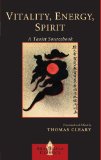
 Translated by Thomas Cleary.
"Name or person, which is more near?
Person or fortune, which is more dear?
Gain or loss, which is more pain?
Extreme dotage leadeth to squandering.
Hoarded wealth inviteth plundering.
Who is content incurs no humiliation,
Who knows when to stop risks no vitiation,
Forever lasteth his duration."
- Translated by
D. T. Suzuki and Paul
Carus,
1913, Chapter 44
"Fame or self: which is more important?
Your possessions or your person: which is worth more to you?
Gain or loss: which is worse?
Therefore, to be obsessed with "things" is a great waste,
The more you gain, the greater your loss.
Being content with what you have been given, You can avoid disgrace.
Knowing when to stop, You will avoid danger.
That way you can live a long and happy life."
- Translated by
John R. Mabry, Chapter 44
"Between your fame and yourself, which is closer to you?
Between yourself and your wealth, which is more dear to you?
Between gain and loss, which is more of a burden to you?
Thus, excessive lust will cost one a great deal in the end.
Excessive wealth will make one suffer a heavy loss.
One who knows satisfaction will not be disgraced.
One who knows when to stop will not reach a perilous end.
Then he can rule everywhere and forever."
- Translated by
Zi Chang Tang, Chapter 44
"Fame and health - which is dearer?
Health and wealth - which is more valuable?
Gain and loss - which is more damaging?
Excessive love demands large outlay.
Overabundant wealth results in heavy loss.
Thus,
knowing contentment brings about no disgrace;
knowing moderation brings about no danger.
One lasts long."
- Translated by
David H. Li, Chapter 44
 By Hu Xuzehi
 Annotated translation by Victor Mair
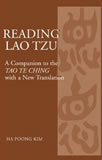
  By Ha Poong Kim
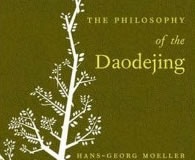
 By Hans-Georg Moeller
 Ripening Peaches: Taoist Studies and Practices By Mike Garofalo
 By Roger T. Ames and David T. Hall
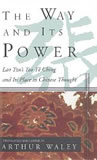
 By Arthur Waley
Lifestyle Advice from Wise Persons
"Is the name or the man more precious?
Does the man or his goods count for more?
Does the gain or loss bring more pain?
Extreme economies entail great waste,
And excess holding heavy losses;
But a humbling is spared by few wants,
A miscarriage by knowing the limits;
Thus one can abide and endure."
- Translated by
Moss Roberts,
2001, Chapter 44
A Chinese Language Version of Chapter 44 of
the Tao Te Ching by Lao Tzu
A
note
on my style of displaying the Chinese characters of the Tao Te Ching
名與身孰親?
身與貨孰多?
得與亡孰病?
是故甚愛必大費.
多藏必厚亡.
知足不辱.
知止不殆.
可以長久.
- Chinese characters, Tao Te Ching, Chapter 44
ming yü shên shu ch'in?
shên yü huo shu to?
tê yü wang shu ping?
shih ku shên ai pi ta fei.
to ts'ang pi hou wang.
chih tsu pu ju.
chih chih pu tai.
k'o yi ch'ang chiu.
- Wade-Giles Romanization, Tao Te Ching, Chapter 44
Audio Version in Chinese of Chapter 44 of the Tao Te Ching
ming yu shen shu qin?
shen yu huo shu duo?
de yu wang shu bing?
shih bu shen ai bi da fei.
duo cang bi hou wang.
gu zu bu ru.
zhi zhi bu dai.
ke yi chang jiu.
-  Pinyin Romanization, Daodejing, Chapter 44
Tao Te Ching in Chinese characters and English (includes a word by word key) from YellowBridge
Tao Te Ching in Chinese characters, Hanyu Pinyin (1982) Romanization, English and German by Dr. Hilmar Alquiros.
Laozi Daodejing: Chapters with Chinese characters, seal script, detailed word by word concordance, Pinyin (tone#), German, French and English.
Chinese and English Dictionary, MDGB
Dao De Jing Wade-Giles Concordance by Nina, Dao is Open
Dao De Jing English and Wade-Giles Concordance by Mike Garofalo
Tao Te Ching in Pinyin Romanization with Chinese characters, WuWei Foundation
Tao Te Ching in Pinyin Romanization
Tao Te Ching in Chinese characters and English
Tao Te Ching in Chinese characters, English, Word by word analysis, Zhongwen
Tao Te Ching: The Definitive Edition
Tao Te Ching in Chinese characters: Big 5 Traditional and GB Simplified
Chinese Characters, Wade-Giles and Pinyin Romanizations, and 16 English Translations for Each Chapter of the Daodejing by Mike Garofalo.
Tao Te Ching in Chinese characters, Wade-Giles and Pinyin Romanization spellings, English; a word for word translation of the Guodian Laozi Dao De Jing Version.
Lao Zi's Dao De Jing: A Matrix Translation with Chinese Text by Bradford Hatcher.
"Fame or self: Which matters more?
Self or wealth: Which is more precious?
Gain or loss: Which is more harmful?
The more that things are desired, the more they will cost.
The more that things are kept, the more they will be missed.
If you are content with yourself, no one can deprive you.
Know when to stop, and you will never run into danger."
- Translated by
Ned Ludd,
Chapter 44
 Translation and elucidation by Hua Ching Ni
 Translated by Brian Walker
 Translated by Arthur Waley
 Translated by Lionel and and Herbert Giles
 By Eva Wong
"What is more important to you
what others think of you or
what you think of your body, mind and spirit.
Is you natural energy, essence, and inspiration
worth more to you an acquired material things.
Is gaining more or less painful that losing.
Speaking with the mystery, refining your nature,
studying your emotions will inform you.
If you love well you will spend yourself well.
If you love too often you will exhaust yourself and die.
When the power of the Tao source of life flows into you from above
contentment and happiness abound.
When you know how to extend your love and live
in a way that does not impose itself on the universe
then you will flow into it
knowing when to move forward and backward
when to twist left or right
when it's time to float upward or settle downward
when it's best to move on or simply stand still.
Know these things and you will realize your limitlessness.
Be the sacred friend that joins the hands
of heaven and earth
accepting all the flaws and faults
with and without your bodymind
bearing on your shoulders
the good and the bad all around you
and you will preserve the bodymind of the world."
- Translated by John Bright-Fey, 2006, Chapter 44
"What is more necessary: life or glory?
What is more
valuable: life or wealth?
What hurts more: gain or loss?
If you accumulate much, you will lose much.
Show moderation and you will avoid failures.
Show moderation
and there will be no risk.
Thus, you can live life in calm, without worries.
He who shows moderation does not suffer failure.
He who knows
when to stop avoids affliction.
Thanks to this, he can manage to
know Primordial and Eternal Tao."
- Translated by
Mikhail Nilolenko, Chapter 44
"Which is neared to you, your name or your person?
Which is more precious, your person or your wealth?
Which is the greater evil, to gain or to lose?
Great devotion requires great sacrifice.
Great wealth implies great loss.
He who is content can never be ruined.
He who stands still will never meet danger.
These are the people who endure."
- Translated by
Walter Gorn Old, 1904, Chapter 44
This webpage work is licensed under a Creative Commons Attribution-NonCommercial-NoDerivatives 4.0 International License.
Created by Michael P. Garofalo, Green Way Research, Valley Spirit Center, Gushen Grove Notebooks, Vancouver, Washington © 2011-2021 CCA 4.0
 Translated by Eva Wong
  Translated by Philip Ivahoe
 By James Miller
 Translated by Stephen Bokencamp
By Alexander and Annellen Simpkins
Translated by Stephen Bokencamp
By Alexander and Annellen Simpkins Translated by Thomas Cleary
 By Livia Kohn
"Fortune or glory?
Which is better?
Answer and I will strike you.
All you need is already within you.
Leave things alone and you will be full."
- Translated by Ray Larose, 2000, Chapter 44
"Reputation or one's person, which is dear?
One's person or what he possesses, which is more?
Gain or loss, which is harm?
Thus it is that extreme meanness is sure to result in great expense, and much hoarding is sure to result in heavy loss.
One who knows contentment will not suffer damage to his reputation, and
one who knows how to stop will not place himself in danger.
As such, he will last long."
- Translated by
Richard John Linn, Chapter 44
"Which means more
to you,
You or your renown?
Which brings more to you,
You or what you
own?
And which would cost you more
If it were gone?
The niggard
pays,
The miser loses.
The least ashamed of men
Goes back if he
chooses:
He knows both ways,
He starts again."
- Translated by
Witter Bynner, 1944, Chapter 44
Tao Te Ching
Lao Tzu: Tao Te Ching
 Translated by Livia Kohn
Dao De Jing: The Book of the Way
"Name or self: which is precious?
Self or wealth: which is treasure?
Gain or loss: which is affliction?
Indulge love and the cost is dear.
Keep treasures and the loss is lavish.
Knowing contentment you avoid tarnish, and knowing when to stop you avoid
danger.
Try it and your life will last and last."
- Translated by
David Hinton,
Chapter 44
"Name or person, which is nearer?
Person or property, which is dearer?
Gain or loss, which is drearier?
Many loves entail great costs,
Many riches entail heavy losses.
Know contentment and you shall not be disgraced,
Know satisfaction and you shall not be imperiled;
then you will long endure."
- Translated by
Victor H. Mair, 1990, Chapter 44
"Fame or one's own self, which matters to one most?
One's own self or things bought, which should count most?
In the getting or the losing, which is worse?
Hence he who grudges expense pays dearest in the end;
He who has hoarded most will suffer the heaviest loss.
Be content with what you have and are, and no one can despoil you;
Who stops in time nothing can harm.
He is forever safe and secure."
- Translated by
Arthur Waley, 1934, Chapter 44
Walking the Way: 81 Zen Encounters with the Tao Te Ching
The Tao of Zen
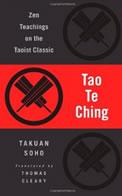
Tao Te Ching: Zen Teachings on the Taoist Classic
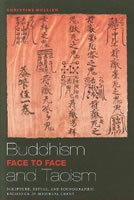
Buddhism and Taoism Face to Face: Scripture, Ritual, and Iconographic Exchange in Medieval China
"Which is more dear to you, your character or your body?
Which do you treasure more, your body or your wealth?
Which makes you more unhappy, to gain or to lose?
But we must sacrifice much to gain true love.
We must suffer great loss to obtain much treasure,
To know contentment is to fear no shame.
To know how to stop is to avoid destruction.
Thus doing, we shall long endure."
- Translated by
Isabella Mears, 1916, Chapter 44
"To have the world know of you or to know yourself, which is more important?
Money or your mind, which is more valuable?
Profit or loss, which is the
greater evil?
Overdoing leads to waste; great fortunes invite theft.
Being
content prevents harmful extremes.
Knowing where to stop prevents danger.
To
know this is to endure."
- Translated by
Frank J. MacHovec, 1962, Chapter 44
"Which is Dearer, fame or self?
Which is dearer, fame or self?
Which is worth more, man or self?
Which would hurt more, gain or loss?
The mean man pays the highest price;
The hoarder takes the greatest loss;
A man content is never shamed,
And self-restrained, is not in danger:
He will live forever."
- Translated by
Raymond Blakney, 1955, Chapter 44
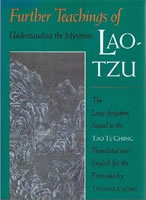
Further Teachings of Lao-Tzu: Understanding the Mysteries (Wen
Tzu)
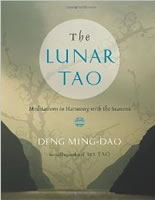
The Lunar Tao: Meditations in Harmony with the Seasons
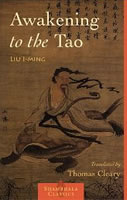
 By Lui I-Ming (1780) and translated by Thomas Cleary
Ripening Peaches: Taoist Studies and Practices By Mike Garofalo
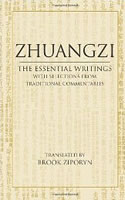
Zhuangzi: The Essential Writings with Selections from Traditional Commentaries
"A great name or self-knowledge:
To which of these does your heart respond?
Material goods or your natural virtues:
Which do you treasure more?
Profit or loss: which is more apt
To lead you toward destruction?
The love of excess lays Nature waste:
It spends the self and buys remorse.
Accumulation is the greatest loss.
Meet your needs and go no further,
And you will be a stranger to disgrace.
Recognize the limits of every situation,
And you'll be free from danger.
Thus can you fulfill the enduring harmony."
- Translated by
Brian Donohue, 2005, Chapter 44
|
Tao Te
Ching |
|||||||||
| 1 | 2 | 3 | 4 | 5 | 6 | 7 | 8 | 9 | 10 |
| 11 | 12 | 13 | 14 | 15 | 16 | 17 | 18 | 19 | 20 |
| 21 | 22 | 23 | 24 | 25 | 26 | 27 | 28 | 29 | 30 |
| 31 | 32 | 33 | 34 | 35 | 36 | 37 | 38 | 39 | 40 |
| 41 | 42 | 43 | 44 | 45 | 46 | 47 | 48 | 49 | 50 |
| 51 | 52 | 53 | 54 | 55 | 56 | 57 | 58 | 59 | 60 |
| 61 | 62 | 63 | 64 | 65 | 66 | 67 | 68 | 69 | 70 |
| 71 | 72 | 73 | 74 | 75 | 76 | 77 | 78 | 79 | 80 |
| 81 | |||||||||
"Fame or one's own self, which matters most?
Nay, which does one love more?
Which should one love more, fame or one's own life?
Which is more valuable, one's own life or wealth?
One's own self or things bought, the solid goods, which should really count
most?
Which is worse, gain or loss?
Could it be loss of self or possession which is the greater evil?
Which gain is the greater evil here?
Therefore: he who loves most spends most.
He who has lavish desires could spend extravagantly.
He who hoards much could lose much.
Who hoards much is in for losing heavily if who has hoarded most could suffer
the heaviest loss.
The contented man could meet no disgrace;
Who stops in time knows when to stop.
Who stops in time nothing can harm if free.
From danger he can long endure and feel forever safe and secure.
He can long endure who stays forever safe and secure."
- Translated by
Byrn Tromod, 1997, Chapter 44
"Selbstbegrenzung wirkt Beständigkeit
"Der Name oder die Person: was steht näher?
Die Person oder der Besitz: was ist mehr?
Gewinnen oder verlieren: was ist schlimmer?
Nun aber: Wer sein Herz an andres hängt, verbraucht notwendig Großes.
Wer viel sammelt, verliert notwendig Wichtiges.
Wer sich genügen lässt, kommt nicht in Schande.
Wer Einhalt zu tun weiß, kommt nicht in Gefahr und kann so ewig dauern."
- Translated by
Richard Wilhelm, 1911, Chapter
44
"The Power in Needing Less
Which is dearer,
Name or life?
Which means more,
Life or wealth?
Which is worse,
Gain or loss?
The stronger the attachments,
The greater the cost.
The more that is hoarded,
The deeper the loss.
Know what is enough;
Be without disgrace.
Know when to stop;
Be without danger.
In this way one lasts for a very long time."
- Translated by
R. L. Wing, 1986, Chapter 44
This webpage work is licensed under a Creative Commons Attribution-NonCommercial-NoDerivatives 4.0 International License.
Created by Michael P. Garofalo, Green Way Research, Valley Spirit Center, Gushen Grove Notebooks, Vancouver, Washington © 2011-2021 CCA 4.0
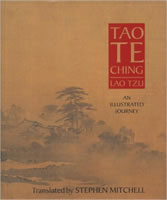
Tao Te Ching: An Illustrated Journey
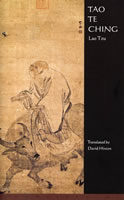
Tao Te Ching
The Book of Tao: Tao Te Ching - The Tao and Its Characteristics
Ripening Peaches: Taoist Studies and Practices
Taoism: Growth of a Religion
Zhuangzi (Chuang Tsu), Daoist Scripture: Bibliography, Links, Resources, Quotations, Notes
Zhuangzi: Basic Writings
Zhuangzi Speaks: The Music of Nature
Lifestyle Advice from Wise Persons
"Which is nearer you,
Your name or yourself?
Which is more to you,
Your person or your pelf?
And is your loss or gain
The more malicious elf?
Extreme love's price
Must be paid with sacrifice.
Hoarding to excess
Brings ruin its its place,
Who knows he has enough
Never knows disgrace,
Who knows when to stop
Danger will efface,
And long can endure,
Evermore secure."
- Translated by
Isaac Winter Heysinger, 1903, Chapter 44
"Fame or health, which is dearer to you?
Health or wealth, which is more important to you?
Gain or loss, which hurts you more?
The more you love something, the more you have to pay.
The more wealth you accumulate, the more likely you will lose it.
If you know when to be satisfied, you will not be insulted,
If you know when to stop, you will not be hurt,
This is how you last long."
- Translated by
Xiaolin Yang, Chapter 44
"Your name (ming) and your body (shen), which is dearer
(ch'in)?
Your body and material goods (huo), which is more abundant (to)?
Gain (tê) and loss (wang), which is illness (ping)?
Therefore in excessive love one necessarily goes to great expenses,
In hoarding much one necessarily loses heavily.
Knowing contentment (chih tsu) one does not suffer disgrace,
Knowing when to stop one does not become exhausted (tai).
This way one may last long."
- Translated by
Ellen Marie Chen, 2000, Chapter 44
"Qu'est-ce qui nous touche de plus près, de notre gloire
ou de notre personne?
Qu'est-ce qui nous est le plus précieux, de notre personne ou de nos
richesses?
Quel est le plus grand malheur, de les acquérir ou de les perdre?
C'est pourquoi celui qui a de grandes passion est nécessairement exposé à de
grands sacrifices.
Celui qui cache un riche trésor éprouve nécessairement de grandes pertes.
Celui qui sait se suffire est à l'abri du déshonneur.
Celui qui sait s'arrêter ne périclite jamais.
Il pourra subsister longtemps."
- Translated by
Stanislas
Julien, 1842, Chapter 44
Spanish
Language Versions of the Tao Te Ching (Daodejing)
Tao Te Ching en Español
Lao Tsé Tao Te Ching 
Tao Te Ching Traducido por Stephen Mitchell, versión española
Tao Te Ching Traducido al español por el Padre Carmelo Elorduy
Lao Tzu-The Eternal Tao Te Ching
Ripening Peaches: Taoist Studies and Practices By Mike Garofalo Maduración Duraznos: Estudios y Prácticas Taoístas por Mike Garofalo
Tao Te Ching
Lao Tzu - Tao Te Ching
Tao te king
Daodejing Español, Inglés, y Chino Versiones Lingüísticas de la Daodejing
Spanish Language Translations of the Tao Te Ching
"¿Qué es más íntimo a nuestra naturaleza,
la fama o el propio cuerpo?
¿Qué es más apreciable, la salud o la riqueza?
¿Qué nos duele más,
ganar una cosa o perder la otra?
Quien se apega a las cosas, mas sufre por ellas.
Quien acumula muchas cosas, mas peligra de perderlas.
Quien se contenta con lo justo nunca es agraviado.
Quien sabe medirse no sufre peligros
y vivirá largamente."
- Translation from
Wikisource, 2013, Capítulo
44
"Fama o Ego: ¿Qué es más querido?
Ego o riqueza: ¿Qué es más valioso?
Beneficio o pérdida: ¿Qué es más doloroso?
Una gran virtud se expone a un gran desgaste,
Una gran riqueza se expone a un gran robo,
Pero una gran contención no expone a ninguna pérdida.
Así pues: El que sabe cuando detenerse
No continúa hacia el peligro,
Y puede resistir mucho tiempo."
- Translated by
Antonio Rivas Gonzálvez, 1998, Capítulo
44
"Entre el nombre y el cuerpo, ¿quién tiene la
primacía?
Entre el cuerpo y la riqueza, ¿cuál es más apreciable?
Entre ganancia
y pérdida, ¿cuál es más doloroso?
El excesivo apego lo costará muy taro.
El
juntar muchos bienes implica grandes pérdidas.
Quien está satisfecho con lo que
tiene está fuera de peligros.
Quien sabe detenerse evita riesgos y puede
perdurar largamente."
- Translation from
Logia Medio Dia, 2015,
Capítulo 44
"¿Qué es más querido: tu nombre o tu cuerpo?
¿Qué es más apreciado: tu cuerpo o tu salud?
¿Qué es más doloroso: la ganancia o la pérdida?
Así pues, un excesivo amor por cualquier cosa te costarámás al final.
Acumular demasiados bienes te acarreará cuantiosas pérdidas.
Saber cuándo se tiene suficiente supone estar inmune a la desgracia.
Saber cuándo detenerse supone preservarse de los peligros.
Sólo de esta manera podrás vivir mucho tiempo."
- Translated into Spanish by
Alfonso Colodrón from
the
English translation by John C. H. Wu, 1993, Tao Te Ching, Capítulo
44
"El renombre o la persona,
¿qué es lo importante?
La persona o las posiciones,
¿qué vale más?.
Ganar o perder,
¿qué es peor?
Quien se apega a las cosas,
se desgasta inútilmente.
El que las acumula, pierde algo importante.
El que se contenta con lo que tiene,
no cae en desgracia.
Quien sabe detenerse no corre peligro,
y puede durar eternamente."
- Translation into Spanish from
Richard Wilhelm's 1911 German Version by an Unknown Spanish Translator,
2015, Capítulo 44
This webpage work is licensed under a Creative Commons Attribution-NonCommercial-NoDerivatives 4.0 International License.
Created by Michael P. Garofalo, Green Way Research, Valley Spirit Center, Gushen Grove Notebooks, Vancouver, Washington © 2011-2021 CCA 4.0
Coming Later ... 2022
I welcome email with commentary on Chapter 44 of the Tao Te Ching.

Next Chapter of the Tao Te Ching #45
Previous Chapter of the Tao Te Ching #43
Chapter and Thematic Index to the Tao Te Ching
Tao Te Ching
Commentary, Interpretations, Research Tools, Resources
Chapter 44
Das Tao Te King von Lao Tse. Complete versions of all 81 Chapters of the Tao Te Ching by many different translators in many languages: 124 English, 24 German, 14 Russian, 7 Spanish, 5 French and many other languages. Links are organized first by languages, and then alphabetically by translators. Formatting varies somewhat. The original website at Onekellotus went offline in 2012; but, the extensive collection of these Tao Te Ching versions was saved for posterity by the Internet Archive Wayback Machine and available as of 9/9/2015. This is an outstanding original collection of versions of the Daodejing─ the Best on the Internet. Caution: copyright infringement may sometimes be an issue at this website.
Tao Te Ching, Translations into English: Terebess Asia Online (TAO). 124
nicely formatted complete English language translations, on separate webpages, of the Daodejing.
Alphabetical index by translators. Each webpage has all 81 chapters of the Tao Te
Ching translated into English. A useful collection! Many
reformatted and colored versions from the original collection at
Das Tao Te King von Lao Tse. Caution: copyright infringement may
sometimes be an
issue at this website.
Lao Tzu: Te-Tao Ching - A New Translation Based on the Recently Discovered Ma-wang-tui
Texts (Classics of Ancient China)
Daodejing by Laozi: Chapters with Chinese characters, seal script,
detailed word by word concordance, Pinyin (tone#), German, French and English.
This is an outstanding resource for serious students of the Tao Te Ching.
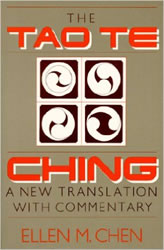
Tao Te
Ching: A New Translation and Commentary. By Ellen Chen. Paragon
House, 1998. Detailed glossary, index, bibliography, notes, 274 pages.
The Tao
and Method: A Reasoned Approach to the Tao Te Ching. By Michael
Lafargue. New York, SUNY Press, 1994. 640 pages. Detailed
index, bibliography, notes, and tables. An essential research tool.
Two Visions of the Way: A Study of the Wang Pi and the Ho-Shang Kung Commentaries on the Lao-Tzu.
By Professor by Alan Kam-Leung Chan. SUNY Series in Chinese
Philosophy and Culture. State University of New York Press, 1991.
Index, bibliography, glossary, notes, 314 pages.
ISBN: 0791404560.
Tao Te Ching: The Definitive Edition
Chinese Reading of the Daodejing
Wang Bi's Commentary on the Laozi with Critical Text and Translation.
By Professor Rudolf G. Wagner. A SUNY Series in Chinese Philosophy and
Culture. English and Mandarin Chinese Edition.
State University of New York Press; Bilingual edition (October 2003). 540
pages. ISBN: 978-0791451823.
Wang Bi (Wang Pi, Fusi), 226-249 CE,
Commentary on the Tao Te
Ching.
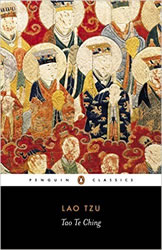
Tao Te Ching
The Taoism Reader
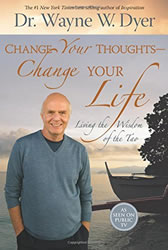
Change Your Thoughts - Change Your Life: Living the Wisdom of the Tao
The Lunar Tao: Meditations in Harmony with the Seasons
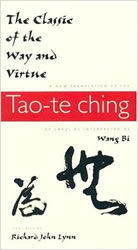
The Classic of the Way and Virtue: A New Translation of the Tao-te Ching of Laozi as Interpreted by Wang Bi.
Translated by Richard John Lynn. Translations from the Asian Classics
Series. New York, Columbia University Press, 1999. Extensive index,
glossaries, notes, 244 pages.
Tao Te Ching in Chinese characters,
Pinyin Romanization, English and German by Dr. Hilmar
Alquiros.
Yellow Bridge
Dao De Jing Comparison Table Provides side by side comparisons of
translations of the Tao Te Ching by James Legge, D. T. Suzuki, and Dwight
Goddard. Chinese characters for each paragraph in the Chapter are on the
left; place your cursor over the Chinese characters to see the Pinyin
Romanization of the Chinese character and a list of meanings.
Translators Index,
Tao Te Ching Versions in English, Translators Sorted Alphabetically by Translator, Links to Books and
Online Versions of the Chapters
Taoism and the Tao Te
Ching: Bibliography, Resources, Links
Spanish Language
Translations of the Tao Te Ching, Daodejing en Español, Translators Index
The Tao of Zen
Chapter 1 in the
Rambling
Taoist Commentaries by Trey Smith. The
Rambling Taoists are Trey Smith and Scott Bradley.
By Hans-Georg Moeller. Columbia University Press, 2006, 176 pages.
Valley Spirit, Gu Shen,
Concept, Chapter 6
Valley Spirit Center in Red
Bluff, California.
Sacred
Circle in the Gushen Grove.
Lao-tzu's Taoteching
Reading Lao Tzu: A Companion to the Tao Te Ching with a New Translation
Dao De Jing: A Philosophical Translation
Thematic Index to the
81 Chapters of the Tao Te Ching
Lieh-Tzu: A Taoist Guide to Practical Living
Revealing the Tao Te Ching: In-depth Commentaries on an Ancient Classic
Cloud Hands Blog
Mike Garofalo writes about Mind-Body Arts, Philosophy, Taoism, Gardening, Taijiquan, Walking, Mysticism,
Qigong, and the Eight Ways.
The Whole Heart of Tao:
The Complete Teachings From the Oral Tradition of Lao Tzu.
Gushen Grove Notebooks for the Tao Te Ching
Green Way Research, Valley Spirit Center, Gushen Grove Notebooks, Vancouver, Washington
Red Bluff, California (1998-2017).
Vancouver, Washington (2017-2021)
Indexed and Compiled by
Michael P. Garofalo
This webpage was last edited, changed, reformatted, improved, modified or updated on
February 19, 2021.
This webpage was first distributed online on April 25, 2011.
This webpage work is licensed under a Creative Commons Attribution-NonCommercial-NoDerivatives 4.0 International License.
Created by Michael P. Garofalo, Green Way Research, Valley Spirit Center, Gushen Grove Notebooks, Vancouver, Washington © 2011-2021 CCA 4.0
Brief Biography of Michael P. Garofalo, M.S.

Ripening Peaches: Daoist Studies and Practices
Zhuangzi (Chuang Tzu, Zhuang Zhou, Master Chuang) 369—286 BCE
Taoist Perspectives: My Reading List
Bodymind Theory and Practices, Somaesthetics
How to Live a Good Life: Advice from Wise Persons
Qigong (Chi Kung) Health Practices
One Old Daoist Druid's Final Journey: Notebooks of the Librarian of Gushen Grove
Index to Cloud Hands and Valley Spirit Websites
Index to English Language Translators of the Tao Te Ching
Recurring Themes (Terms, Concepts, Leimotifs) in the Tao Te Ching
Spanish Language Translations of the Tao Te Ching
Comments, Feedback, Kudos, Suggestions
Chinese Characters, Wade-Giles (1892) and Hanyu Pinyin (1982) Romanizations
The Tao Te Ching (Dao De Jing) by Lao Tzu (Laozi) circa 500 BCE
|
Tao Te
Ching |
|||||||||
| 1 | 2 | 3 | 4 | 5 | 6 | 7 | 8 | 9 | 10 |
| 11 | 12 | 13 | 14 | 15 | 16 | 17 | 18 | 19 | 20 |
| 21 | 22 | 23 | 24 | 25 | 26 | 27 | 28 | 29 | 30 |
| 31 | 32 | 33 | 34 | 35 | 36 | 37 | 38 | 39 | 40 |
| 41 | 42 | 43 | 44 | 45 | 46 | 47 | 48 | 49 | 50 |
| 51 | 52 | 53 | 54 | 55 | 56 | 57 | 58 | 59 | 60 |
| 61 | 62 | 63 | 64 | 65 | 66 | 67 | 68 | 69 | 70 |
| 71 | 72 | 73 | 74 | 75 | 76 | 77 | 78 | 79 | 80 |
| 81 | |||||||||


Mike Garofalo at the Klickitat River in Southwestern Washington in 2019.
Cloud Hands Blog of
Michael P. Garofalo

Facebook of
Michael P. Garofalo

Return to the Alphabetical Index of Mike Garofalo's Hypertext Documents
How to Live a Good Life:
Advice from Wise Persons
Return to the Top of this Webpage