Compiled and Indexed by Michael P. Garofalo
Green Way Research, Valley Spirit Center, Gushen Grove Notebooks, Vancouver, Washington
Chapter 7 Chapter 9 Index to All 81 Chapters Daoism Concordance Cloud Hands Blog
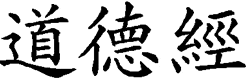
Classic Book (Ching) about the Tao (Way, Nature, Patterns, Processes) and Te (Virtue, Potency, Power, Integrity, Wise Person, Sage)
Concordance: Indexing, Search Terms, Topics, Themes, Keys, Subjects
English and Chinese (Wade-Giles) Terms:
The Nature of Goodness, Water (shui), Easy by Nature, Lower, Humble,
Humane or Benevolent (jên), Settles or Rests (ch'u), Placid and
Contented Nature, Flowing, Timing or Opportunity (shih),
Sage or Wise Person, Don't Contend, Superior or Supreme (shang), Earth or
Ground (ti), Be Peaceful, Humble, Efficient, Timeliness, Leadership,
Skillful, Hated or Despised (wu), Depth, Te, Faith, Order, Faultless,
Heart, Stillness, Truth, Profit or Gains (li), Leadership, Government,
Heart or Mind (hsin), Business, Resembles or Is Like (jo), State, Grounded,
Firm, Struggle or Contending (chêng), Kindliness, Virtue, Sincere,
Able, Action, Able or Competent (nêng), Timeliness, Speech, Goodness or
Excellence (shan), Near or Very Close (chi), Quarrel, Wisdom,
Governing or Administration (chêng), Master, Inner Life, Fault or Wrong (yu),
Relationships or Associates (yü), Deep or Profound (yüan), Ten
Thousand Things or Myriad Beings (wan wu), Low
like Water,
易性
Términos en Español: Bondad, Agua,
Baja, Humilde, Humane, Benevolente, Placid, Contento, Laguna,
Oportunidad, Sabio, Santo, No
Contienden, Superior, Supremo,
Tierra, Pacífico, Eficiente, Liderazgo,
Hábil, Odiado, Despreciado,
Profundidad, Orden,
Impecable,
Corazón, Quietud, Verdad,
Gobierno, Estado, Firme, Lucha,
Contendientes, Sincero, Capaz,
Acción, Competente, Puntualidad, Discurso,
Excelencia, Cerca, Pelea, Sabiduría, Maestro
de Vida Interior, Falla, Mal,
Relaciones, Asociados, Profunda, Diez
Mil Cosas.
Electronic Concordance for all 81 Chapters of the Tao Te Ching
English Language Translations of the Tao Te Ching
"One of universal nature is like water;
He benefits all things
But does not contend with them.
He unprotestingly takes the lowest position;
Thus, he is close to the universal truth.
One of universal virtue chooses to live
In a suitable environment.
He attunes his mind to become profound.
In his speech, he is sincere.
His rule brings about order.
His work is efficient.
His actions are opportune.
One of deep virtue does not contend with people:
Thus, he is above reproach."
- Translated by
Hua-Ching Ni, 1979, Chapter 8
"Highest good is like water.
Because water excels in benefiting the myriad creatures
without contending with them and settles where none would
like to be,
it comes close to the way.
In a home it is the site that matters;
In quality of mind it is depth that matters;
In an ally it is benevolence that matters;
In speech it is good faith that matters;
In government it is order that matters;
In affairs it is ability that matters;
In action it is timeliness that matters.
It is because it does not contend that it is never at fault."
- Translated by
D. C. Lau, 1963, Chapter 8
"The highest form of goodness is like water.
Water knows how to benefit all things without striving with them.
It stays in places loathed by all men.
Therefore, it comes near the Tao.
In choosing your dwelling, know how to keep to
the ground.
In cultivating your mind, know how to dive in
the hidden deeps.
In dealing with others, know how to be gentle and kind.
In speaking, know how to keep your words.
In governing, know how to maintain order.
In transacting business, know how to be efficient.
In making a move, know how to choose the right
moment.
If you do not strive with others,
You will be free from blame."
- Translated by
John C. H. Wu, 1961, Chapter 8
"The best of man is like water,
Which benefits all things, and does not contend with them,
Which flows in places that others disdain,
Where it is in harmony with the Way.
So the sage:
Lives within nature,
Thinks within the deep,
Gives within impartiality,
Speaks within trust,
Governs within order,
Crafts within ability,
Acts within opportunity.
He does not contend, and none contend against him."
- Translated by
Peter A. Merel, Chapter 8
"A person with superior goodness (shan) is like water,
Water is good in benefiting (li) all beings,
Without contending (cheng) with any.
Situated in places shunned (o) by many others,
Thereby it is near (chi) Tao.
(Such a person's) dwelling is the good earth,
(His/her) mind (hsin) is the good deep water (yuan),
(His/her) associates are good kind people (jen),
(His/her) speech shows good trust (hsin),
(His/her) governing is the good order,
(His/her) projects (shih) are carried out by good talents (neng),
(His/her) activities (tung) are good in timing.
Because he does not contend (pu cheng) with any,
He commits no wrong."
- Translated by
Ellen Marie Chen, 1989, Chapter 8
"The foremost goodness is like water.
Water is good at benefiting all living things,
even though there
are arguments about how it could reside
in places that most
people hate.
In that way it is very close to being like Dao.
It is good at residing in the earth; the mind sees that
goodness as bottomless.
It is good at giving through nature; words express that goodness
with sincerity.
It is good at showing the right course of governing.
It is good at enabling all work to be completed;
through motion
goodness adjusts to the time.
Well then, there is really no reason for arguments.
Because there is nothing that is at fault."
- Translated by
Nina
Correa, 2005, Chapter 8
"Undiscriminating Benevolence
The superior good man is like water.
Just as water enlivens all living creatures and
never contests with them,
dwelling in places disdained by others,
So the superior good man is prepared to situate himself where
nobody wants.
In this way he is close to the Dao.
To live on the good earth,
To cherish good thoughts,
To do a good turn to others,
To speak the good truth,
To let good governance find its right place,
To put the good ability to work,
To set in motion the good times,
Such is the way to live without contesting with others.
Such is the man free from complaints and anguish."
- Translated by Ho Lok Sang, 2002, Chapter 8
"The highest good is like water.
The goodness of water lies in benefiting the myriad things without
contention,
while locating itself in places that common people scorn.
Therefore it is almost exactly like the Dao.
Goodness in position depends on location;
goodness in heart/mind depends on profundity;
goodness in association depends on benevolence;
goodness in words depends on sincerity;
goodness in government depends on order;
goodness in affairs depends on ability;
goodness in action depends on timeliness.
And it is only by avoiding contention that no blame occurs."
- Translated by
Richard John Linn, Chapter 8
© Green Way Research,
Valley Spirit Center, Gushen Grove Notebooks, Vancouver, Washington © 2020 CCA 4.0
This work is licensed under a Creative Commons Attribution-NonCommercial-NoDerivatives 4.0 International License.
 By Hu Xuzehi
By Hu Xuzehi
By Hu Xuzehi Annotated translation by Victor Mair
  By Ha Poong Kim
 By Hans-Georg Moeller
 Ripening Peaches: Taoist Studies and Practices By Mike Garofalo
 By Roger T. Ames and David T. Hall
 By Arthur Waley
"True goodness is like water, in that it benefits
everything and harms nothing.
Like water it ever seeks the lowest place, the place that all others avoid.
It is closely kin to the Dao.
For a dwelling it chooses the quiet meadow; for a heart the circling eddy.
In generosity it is kind,
In speech it is sincere,
In authority it is order,
In affairs it is ability,
In movement it is rhythm.
In as much as it is always peaceable it is never rebuked."
- Translated by
Dwight Goddard and Henri Borel, 1919, Chapter 8
"The best way to life is to be like water
For water benefits all things and goes against none of them
It provides for all people and even cleanses those places a man
is loath to go
In this way it is just like Tao
Live in accordance with the nature of things
Build your house on solid ground
Keep your mind still
When giving, be kind
When speaking, be truthful
When ruling, be just
When working, be one-pointed
When acting, remember ?timing is everything
One who lives in accordance with nature does not go against the
way of things
He moves in harmony with the present moment always knowing the
truth of just what to do"
- Translated by
Johathan Star, 2001, Chapter 8
"The greatest virtue is like water; it is good to all
things.
It attains the most inaccessible places without strife.
Therefore it is like Tao.
It has the virtue of adapting itself to its place.
It is virtuous like the heart by being deep.
It is virtuous like speech be being faithful.
It is virtuous like government in regulating.
It is virtuous like a servant in its ability.
It is virtuous like action by being in season.
And because it does not strive it has no enemies."
- Translated by
Walter Gorn Old, 1904, Chapter 8
"That which is best is similar to the water.
Water profits ten thousand things and does not oppose them.
It is always at rest in humble places that people dislike.
Thus, it is close to Tao.
Therefore, for staying, we prefer a humble place.
For minds, we prefer profundity.
For companions, we prefer the kindness.
For words, we prefer sincerity.
For government, we prefer good order.
For affairs, we prefer ability.
For actions, we prefer the right time.
Because we do not strive,
We are free from fault."
- Translated by
Chang Chung-Yuan, Chapter 8
"The greatest attitude is like water;
Water is good at benefiting all things and yet it does not compete with them.
It seeks out those places regarded as evil by man.
Thereby, it is close to Tao.
For one's dwelling, choose the ground well.
In cultivating one's heart, search the depths well.
In dealing with people, treat them well.
When speaking, do so with sincerity.
In governing, keep order.
In serving, do to the best of your ability.
In acting, choose the timing well.
Only by not competing can one be beyond reproach."
- Translated by
Tam C. Gibbs, 1981, Chapter 8
"The supreme good man is like water.
Water is good at benefiting
The ten thousand things without contending,
Lying where the multitude loathes to:
Therefore, close to the Tao.
In habitation,
He is good at choosing the place;
In mind,
Good at profundity;
In giving,
Good at imitating heaven;
In speech,
Good at honesty;
In government,
Good at bringing order;
In duties,
Good at exerting his ability;
In making moves,
Good at timeliness.
Being uncontentious,
There is no resentment."
- Translated by
Huang Chichung, Chapter 8
"The supreme good is like water.
Water benefits the ten thousand things, yet contends with nothing.
It dwells where everyone is loath to be.
That is why it is near to Tao.
In dwelling, the good is the ground,
In thought, the good is depth,
In association, the good is gentleness,
In speech, the good is truthfulness,
In government, the good is order,
In work, the good is ability,
In movement, the good is timeliness.
Truly, because it [water] contends with nothing,
It is beyond reproach."
- Translated by
Kim Ha Poong, Chapter 8
 By Alexander Simkins
 By Derek Lin
 By Ming-Dao Deng.
 By Benjamin Hoff.
 By Ming-Dao Deng
 Translated by Thomas Cleary

"The highest excellence is like that of water.
The excellence of water appears in its benefiting all things, and in its
occupying,
Without striving to the contrary, the low place which all men dislike.
Hence its way is near to that of the Tao.
The excellence of a residence is in the suitability of the place;
That of the mind is in abysmal stillness;
That of associations is in their being with the virtuous;
That of government is in its securing good order;
That of the conduct of affairs is in its ability; and,
That of the initiation of any movement is in its timeliness.
And when one with the highest excellence does not wrangle about his low
position,
No one finds fault with him."
- Translated by
James Legge, 1891, Chapter 8
A Chinese Language Version of Chapter 8 of the Tao Te
Ching by Lao Tzu
A
note
on my style of displaying the Chinese characters of the Tao Te Ching
上善若水.
水善利萬物而不爭.
處衆人之所惡.
故幾於道.
居善地心善淵.
與善仁.
言善信.
正善治.
事善能.
動善時.
夫唯不爭, 故無尤.
- Chinese characters, Chapter 8, Tao Te Ching
shang shan jo shui.
shui shan li wan wu erh pu chêng.
ch'u chung jên chih so wu.
ku chi yü tao.
chü shan ti hsin shan yüan.
yü shan jên.
yen shan hsin.
chêng shan chih.
shih shan nêng.
tung shan shih.
fu wei pu cheng, ku wu wu.
- Wade-Giles Romanization, Tao Te Ching, Chapter 8
Audio
Version in Chinese of Chapter 8 of the Tao Te Ching
shang shan ruo shui.
shui shan li wan wu er bu zheng.
chu zhong ren zhi suo wu.
gu ji yu dao.
ju shan di xin shan yuan.
yu shan ren.
yan shan xin.
zheng shan zhi.
shi shan neng.
dong shan shi.
fu wei bu zheng, gu wu you.
- Pinyin Romanization, Chapter 8, Daodejing
Tao Te Ching in Chinese characters and English (includes a word by word key) from YellowBridge
Tao Te Ching in Chinese characters, Pinyin Romanization, English and German by Dr. Hilmar Alquiros.
Laozi Daodejing: Chapters with Chinese characters, seal script, detailed word by word concordance, Pinyin, German, French and English.
Chinese and English Dictionary, MDGB
Dao De Jing Wade-Giles Concordance by Nina, Dao is Open
Dao De Jing English and Wade-Giles Concordance by Mike Garofalo
Tao Te Ching in Pinyin Romanization with Chinese characters, WuWei Foundation
Tao Te Ching in Pinyin Romanization
Tao Te Ching in Chinese characters and English
Tao Te Ching in Chinese characters, English, Word by word analysis, Zhongwen
Tao Te Ching: The Definitive Edition
Tao Te Ching in Chinese characters: Big 5 Traditional and GB Simplified
Chinese Characters, Wade-Giles and Pinyin Romanizations, and 16 English Translations for Each Chapter of the Daodejing by Mike Garofalo.
Tao Te Ching in Chinese characters, Pinyin and Wade Giles Romanization spellings, English; a word for word translation of the Guodian Laozi Version.
Lao Zi's Dao De Jing: A Matrix Translation with Chinese Text by Bradford Hatcher.
"The highest goodness is like water.
Water is beneficent to all things but does not contend.
It stays in places which others despise.
Therefore it is near Tao.
In dwelling, think it a good place to live;
In feeling, make the heart deep;
In friendship, keep on good terms with men;
In words, have confidence;
In ruling, abide by good order;
In business, take things easy;
In motion, make use of the opportunity;
Since there is no contention, there is no blame."
- Translated by
Ch'u Ta-Kao, 1904, Chapter 8
 Translation and elucidation by Hua Ching Ni
 Translated by Brian Walker
 Translated by Arthur Waley
 Translated by Lionel and and Herbert Giles
 By Eva Wong
"The best are like water
bringing help to all
without competing
choosing what others avoid
hence approaching the Tao
dwelling with earth
thinking with depth
helping with kindness
speaking with truth
governing with peace
working with skill
moving with time
and because they don't compete
they aren't maligned."
- Translated by
Bill (Red Pine) Porter, 1996, Chapter 8
"The highest good of mankind, is like water -
- Without competition, gives Life to All Things.
- Flowing, it seeks and dwells in places rejected by mankind.
Thus it approaches close to the Tao.
Accordingly, the Sage -
- In dwelling, Seeks closeness to the earth.
- In heart, Seeks that which is profound.
- In relationships, Seeks gentleness and kindness.
- In speech, Seeks sincerity and truthfulness.
- In government, Seeks justice, order and peace.
- In business, Seeks ability and competence.
- In movement and action, Seeks timeliness.
The Sage -
Remaining free from competition and contention,
Is without blame - beyond reproach."
- Translated by
Alan B. Taplow, 1982, Chapter 8
"Man at his best, like water,
Serves as he goes
along:
Like water he seeks his own level,
The common level of life,
Loves living close to the earth,
Living clear down in his heart,
Loves
kinship with his neighbors,
The pick of words that tell the truth,
The
even tenor of a well-run state,
The fair profit of able dealing,
The right
timing of useful deeds,
And for blocking no one's way
No one blames him."
- Translated by
Witter Bynner, 1944, Chapter 8
© Green Way Research,
Valley Spirit Center, Gushen Grove Notebooks, Vancouver, Washington © 2020 CCA 4.0
This work is licensed under a Creative Commons Attribution-NonCommercial-NoDerivatives 4.0 International License.
 Translated by Eva Wong
  Translated by Philip Ivahoe
 By James Miller
 Translated by Stephen Bokencamp
By Alexander and Annellen Simpkins
Translated by Stephen Bokencamp
By Alexander and Annellen Simpkins Translated by Thomas Cleary
 By Livia Kohn
"The highest good is
like that of water.
The goodness of is that it benefits the ten thousand creatures;
Yet itself does not scramble,
But is content with the places that all men disdain.
It is this makes water so near to the Way.
And if men think the ground the best place for building a house upon,
If among thoughts they value those that are profound,
If in friendship they value gentleness,
In words, truth; in government, good order;
In deeds, effectiveness; in actions, timeliness -
In each case it is because they prefer what does not lead to strife,
And therefore does not go amiss."
- Translated by
Arthur Waley, 1934, Chapter 8
"The highest goodness,
water-like,
Does good to everything and goes
Unmurmuring to places men despise;
But so, is close in nature to the Way.
If the good of the house is from land,
Or the good of the mind is depth,
Or love is the virtue of friendship,
Or honesty blesses one's talk,
Or in government, goodness is order,
Or in business, skill is admired,
Or the worth of an act lies in timing,
Then peace is the goal of the Way
By which no one ever goes astray."
- Translated by
Raymond Blackney,
1955, Chapter 8
"Perfect excellence is like gentle water.
Gentle water benefits all things and yet it does not struggle.
Do away with what all people hate.
Thus this is approaching Dao.
Give to what is of perfect personnel.
Stay in a perfect place,
think in a perfect way,
cooperate with perfect people,
speak perfect truth,
govern in perfect order,
work for perfect potentiality,
move when the time is perfect.
Because of non-struggle, therefore, there is no blame."
- Translated by
Tang Zi-Chang,
Chapter 8
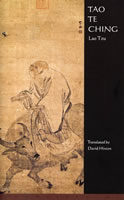
Tao Te Ching
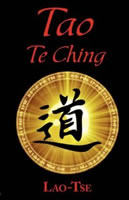
Lao Tzu: Tao Te Ching
 Translated by Livia Kohn
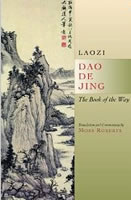
Dao De Jing: The Book of the Way
"Superior goodness resembleth water.
The water’s goodness benefiteth the ten thousand things, yet it
quarreleth not.
Water dwelleth in the places which the multitudes of men shun;
therefore it is near unto the eternal Reason.
The dwelling of goodness is in lowliness.
The heart of goodness is in commotion.
When giving, goodness showeth benevolence.
In words, goodness keepeth faith.
In government goodness standeth for order.
In business goodness exhibiteth ability.
The movements of goodness keep time.
It quarreleth not.
Therefore it is not rebuked."
- Translated by
D. T.
Suzuki, 1913, Chapter 8
"The best way to
conduct oneself may be observed in the behaviour of water.
Water is useful to every living thing, yet it does not demand pay in return for
its services.
It does not even require that it be recognized, esteemed, or appreciated for its
benefits.
This illustrates how intelligent behaviour so closely approximates the behaviour
of Nature itself.
If experience teaches that houses should be built close to the ground,
That friendship should be based on sympathy and good will,
That good government employs peaceful means of regulation,
That business is more successful if it employs efficient methods,
That wise behaviour adapts itself appropriately to the particular circumstances.
All this is because these are the easiest ways.
If one proceeds naturally, without ambition or envy, everything works out for
the best."
- Translated by
Archie J. Bahm, 1958, Chapter 8
"The supreme good is like water,
which benefits all of creation
without trying to compete with it.
It gathers in unpopular places.
Thus it is like the Tao.
The location makes the dwelling good.
Depth of understanding makes the mind good.
A kind heart makes the giving good.
Integrity makes the government good.
Accomplishment makes your labors good.
Proper timing makes a decision good.
Only when there is no competition
will we all live in peace."
- Translated by
John H. McDonald, 1996, Chapter 8
Walking the Way: 81 Zen Encounters with the Tao Te Ching
The Tao of Zen
Tao Te Ching: Zen Teachings on the Taoist Classic
Buddhism and Taoism Face to Face: Scripture, Ritual, and
Iconographic Exchange in Medieval China
"The best of men is like water;
Water benefits all things
And does not compete with them.
It dwells in the lowly places that all disdain -
Wherein it comes near to the Tao.
In his dwelling, the Sage loves the lowly earth;
In his heart, he loves what is profound;
In his relations with others, he loves kindness;
In his words, he loves sincerity;
In government, he loves peace;
In business affairs, he loves ability;
In his actions, he loves choosing the right time.
It is because he does not contend
That he is without reproach."
- Translated by
Lin Yutang, 1955, Chapter 8
|
Tao Te
Ching |
|||||||||
| 1 | 2 | 3 | 4 | 5 | 6 | 7 | 8 | 9 | 10 |
| 11 | 12 | 13 | 14 | 15 | 16 | 17 | 18 | 19 | 20 |
| 21 | 22 | 23 | 24 | 25 | 26 | 27 | 28 | 29 | 30 |
| 31 | 32 | 33 | 34 | 35 | 36 | 37 | 38 | 39 | 40 |
| 41 | 42 | 43 | 44 | 45 | 46 | 47 | 48 | 49 | 50 |
| 51 | 52 | 53 | 54 | 55 | 56 | 57 | 58 | 59 | 60 |
| 61 | 62 | 63 | 64 | 65 | 66 | 67 | 68 | 69 | 70 |
| 71 | 72 | 73 | 74 | 75 | 76 | 77 | 78 | 79 | 80 |
| 81 | |||||||||
"The seer flows like water
Lying low along the way
Nourishing whatever comes
To be held on display
The seer keeps to simple ways
And therefore is content
When joy or sorrow manifests
To give complete assent
If you can clearly be yourself
And never rise to interfere
Everyone will cherish you
And always hold you dear"
- Translated by
Jim Clatfelder, 2000, Chapter 8
"Höchste Gute ist wie das Wasser.
Des Wassers Güte ist es, allen Wesen zu nützen ohne Streit.
Es weilt an Orten, die alle Menschen verachten.
Drum steht es nahe dem Sinn.
Beim Wohnen zeigt sich die Güte an dem Platze.
Beim Denken zeigt sich die Güte in der Tiefe.
Beim Schenken zeigt sich die Güte in der Liebe.
Beim Reden zeigt sich die Güte in der Wahrheit.
Beim Walten zeigt sich die Güte in der Ordnung,
Beim Wirken zeigt sich die Güte im Können.
Beim Bewegen zeigt sich die Güte in der rechten Zeit.
Wer sich nicht selbst behauptet, bleibt eben dadurch frei von Tadel."
- Translated by Richard Wilhelm, 1911, Chapter
9
"Sichfügen -- das Geheimnis echten Lebens
Echtes Leben gleicht dem Wasser:
Still fügt es sich dem Grund, den Menschen verachten,
gütig und selbstlos allem dienend,
dem unergründlichen Urquell gleichend.
Echtes Leben ist:
Anspruchslos nach außen und wunschlos nach innen;
hingebend im Dienen und wahrhaftig im Reden;
ordnend im Führen und leistungsstark im Wirken;
gelassen im Tun.
Gütig sich fügend, ist es unantastbar."
- Translated
by Rudolf
Backofen, 1949, Chapter 8
"The highest goodness resembles water.
Water greatly benefits all things, but does not assert itself.
He approximates to the Tao, who abides by that which men
despise.
He revolutionizes the place in which he dwells; his depth is
immeasurable;
he strengthens moral qualities by what he bestows;
he augments sincerity by what he says;
he evokes peace by his
administration;
his transactions manifest ability, he is
opportune in all his movements.
Forasmuch as he does not assert himself he is free from blame."
- Translated by
C.
Spurgeon Medhurst, 1905, Chapter 8
Further Teachings of Lao-Tzu: Understanding the Mysteries (Wen Tzu)
 Translated by Thomas Cleary
The Lunar Tao: Meditations in Harmony with the Seasons
 By Lui I-Ming (1780) and translated by Thomas Cleary
Ripening Peaches: Taoist Studies and Practices By Mike Garofalo
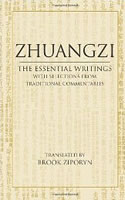
Zhuangzi: The Essential Writings with Selections from Traditional Commentaries
"The highest goodness that we know has water for its type,
It benefits all things, yet ever flows
To the spot which men disdain, the gutter and the plain,
And so is near the Tao, its archetype.
A residence is excellent according to its place,
A heart for eddies passion never knows,
Generosity for kindness, words for faithfulness,
A government for order, business for its gain,
And movements for their timeliness and grace.
As the man of excellence does not quarrel for his place,
There are none to find fault with him for the
places which remain."
- Translated by
Isaac Winter Heysinger, 1903, Chapter 8
"Admire thou the High Way of Water! Is not
Water the soul of the life of
things, whereby they change? Yet it seeketh its level, and abideth
content in obscurity. So also it resembleth the Tao, in this Way
thereof!
The virtue of a house is to be well-placed; of the mind, to be
at ease in
silence as of Space; of societies, to be well-disposed; of governments,
to maintain quietude; of work, to be skillfully performed; and of all
motion, to be made at the right time.
Also it is the virtue of a man to abide in his place without
discontent;
thus offendeth he no man."
- Translated by
Aleister Crowley, 1918 , Chapter 8
"The highest good is like water.
Water give life to the ten thousand things and does not strive.
It flows in places men reject and so is like the Tao.
In dwelling, be close to the land.
In meditation, go deep in the heart.
In dealing with others, be gentle and kind.
In speech, be true.
In ruling, be just.
In daily life, be competent.
In action, be aware of the time and the season.
No fight: No blame."
- Translated by
Gai-fu Feng and Jane English, 1989, Chapter 8
© Green Way Research,
Valley Spirit Center, Gushen Grove Notebooks, Vancouver, Washington © 2020 CCA 4.0
This work is licensed under a Creative Commons Attribution-NonCommercial-NoDerivatives 4.0 International License.
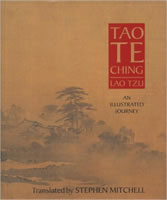
Tao Te Ching
The Book of Tao: Tao Te Ching - The Tao and Its Characteristics
Ripening Peaches: Taoist Studies and Practices
Taoism: Growth of a Religion
Zhuangzi (Chuang Tsu), Daoist Scripture: Bibliography, Links, Resources, Quotations, Notes
Zhuangzi: Basic Writings
Zhuangzi Speaks: The Music of Nature
"Heavenly Love is like water.
Water blesses all things,
It does not hurt them.
It loves the lowly place that men dislike,
Therefore it comes very near to Tao.
The Master loves to dwell upon the earth.
In his heart he loves Infinity,
In his benevolence he loves giving,
In his words he loves sincerity,
In his government he loves peace,
In his business affairs he loves ability,
In his movements he loves punctuality.
The Master, indeed, does not fight,
Therefore his Inner Life increases."
- Translated by
Isabella Mears, 1916, Chapter 8
"The highest Excellence is
like water.
Water, Excellent at being of benefit to the thousands of things, does not
contend.
It settles in places everyone else avoids.
Yes, it is just about Tao.
Excellence in a house: the ground.
Excellence in a mind: depth.
Excellence in companions: goodness.
Excellence in speaking: sincerity.
Excellence in setting things right: good management.
Excellence on the job: ability.
Excellence in making a move: good timing.
Simply do not contend, then there will be no fault."
- Translated by
Michael La Fargue, 1992, Chapter 8
"The highest goodness is
like water.
The goodness of water consists in benefiting the ten thousand things without
ever striving.
It stays in the lowest place which all men loathe.
Therefore it comes near to the Way.
What one values in a dwelling is the location;
What one values for the heart is depth;
What one values in human relations is humanity;
What one values in speaking is good faith;
What one values in ruling is good order;
What one values in serving others is ability;
What one values in action is timeliness.
Indeed, just because there is not striving, one may remain without blame."
- Translated by
Jan J. L. Duyvendak, 1954, Chapter 8
"L'homme d'une vertu supérieure est comme l'eau.
L'eau excelle à faire du bien aux êtres et ne lutte point.
Elle habite les lieux que déteste la foule.
C'est pourquoi le sage approche du Tao.
Il se plaît dans la situation la plus humble.
Son cœur aime à être profond comme un abîme.
S'il fait des largesses, il excelle à montrer de l'humanité.
S'il parle, il excelle à pratiquer la vérité.
S'il gouverne, il excelle à procurer la paix.
S'il agit, il excelle à montrer sa capacité.
S'il se meut, il excelle à se conformer aux temps.
Il ne lutte contre personne; c'est pourquoi il ne reçoit aucune marque de blâme."
- Translated by Stanislas Julien, 1842, Chapter
8
Spanish
Language Versions of the Tao Te Ching (Daodejing)
Tao Te Ching en Español
Lao Tsé Tao Te Ching 
Tao Te Ching Traducido por Stephen Mitchell, versión española
Tao Te Ching Traducido al español por el Padre Carmelo Elorduy
Lao Tzu-The Eternal Tao Te Ching
Ripening Peaches: Taoist Studies and Practices By Mike Garofalo Maduración Duraznos: Estudios y Prácticas Taoístas por Mike Garofalo
Tao Te Ching
Lao Tzu - Tao Te Ching
Tao te king
Daodejing Español, Inglés, y Chino Versiones Lingüísticas de la Daodejing
Spanish Language Translations of the Tao Te Ching
"La Suprema Bondad es como el agua.
El agua es buena y útil a los diez mil seres por igual.
No tiene preferencias por ninguno en especial.
Fluye en sitios que los hombres suelen rechazar,
al igual que sucede con el Tao.
Por esto, estar cerca del Tao implica que:
Al escoger tu morada,
has de saber cómo no apartarte de la tierra.
Al cultivar tu mente,
has de saber cómo bucear en las profundidades ocultas.
Al tratar con los demás,
has de saber ser amable y bondadoso.
Al hablar, has de saber medir tus palabras.
Al gobernar, has de saber cómo promover el equilibrio.
Al administrar, has de saber ser eficaz y justo.
Cuando actúes,
has de saber escoger el momento oportuno.
El Sabio que consiente en ello no rivaliza con los otros,
y Por lo tanto, no se equivoca."
- Translation from
Wikisource, 2013,
Capítulo 8
"La perfección suprema es como el agua.
La perfección del agua beneficia a diez mil cosas y carece de disputa.
Reside en lugares que muchos desprecian, con lo que se compara con el Dao.
En el residir, la perfección es la tierra, en la mente la perfección es lo
profundo,
en el dar la perfección es la benevolencia,
En las palabras la perfección es la verdad, en el gobierno la perfección es
aprovechar la fuerza,
En los asuntos la perfección es la capacidad, en la actividad la perfección es
la oportunidad.
Sólo un maestro sin disputa es un ejemplo libre de error."
- Translation by
HeBe, 2007,
Capítulo 8
"El hombre de bondad superior es como el agua.
El agua en su quietud favorece a todas las cosas,
ocupa el lugar despreciado por los hombres,
y así está cerca del dao.
Su lugar es favorable;
su corazón, sereno;
su don, del agrado del cielo;
su palabra, leal;
su gobierno, en orden;
en sus empresas, capaz;
sus movimientos, oportunos.
Sólo la falta de quietud
impide la superación."
- Translated by
Juan Ignacio
Preciado, 1978, Tao Te Ching, Capítulo 8
"La suprema bondad es como el agua, sin oposición
llega a todos.
Habita en los lugares que los hombres aborrecen.
Así,
acercándose al Tao uno se mantiene en armonía en su sitio,
ama lo profundo en
sus pensamientos,
ama la bondad en su trato con la gente, ama la veracidad en
sus palabras,
en el gobierno ama el justo orden,
actúa conforme a como debe
actuar, actúa en concordancia con el tiempo.
Porque no se impone, ningún
reproche le cabe."
- Translation from
Logia Medio Dia, 2015,
Tao Te Ching, Capítulo 8
"El mejor de los hombres es semejante al agua,
La cual beneficia a todas las cosas, sin ser contenida por ninguna,
Fluye por lugares que otros desdeñan,
Donde se acerca más deprisa al Tao.
Así, el sabio:
Donde mora, se acerca más deprisa a la tierra,
En el gobierno, se acerca más deprisa al orden,
Hablando, se acerca más deprisa a la verdad,
Haciendo tratos, se acerca más deprisa a los hombres,
Actuando, se acerca más deprisa a la oportunidad,
En el trabajo, se acerca más deprisa a lo competente,
En sentimientos, se acerca más deprisa al corazón;
No lucha, y así permanece libre de culpa."
- Translated by
Antonio Rivas Gonzálvez, 1998, Capítulo
8
© Green Way Research,
Valley Spirit Center, Gushen Grove Notebooks, Vancouver, Washington © 2020 CCA 4.0
This work is licensed under a Creative Commons Attribution-NonCommercial-NoDerivatives 4.0 International License.
Next Chapter of the Tao Te Ching #9
Previous Chapter of the Tao Te Ching #7
Chapter and Thematic Index to the Tao Te Ching
Tao Te Ching
Commentary, Interpretations, Research Tools, Resources
Chapter 8
Das Tao Te King von Lao Tse. Complete versions of all 81 Chapters of the Tao Te Ching by many different translators in many languages: 124 English, 24 German, 14 Russian, 7 Spanish, 5 French and many other languages. Links are organized first by languages, and then alphabetically by translators. Formatting varies somewhat. The original website at Onekellotus went offline in 2012; but, the extensive collection of these Tao Te Ching versions was saved for posterity by the Internet Archive Wayback Machine and available as of 9/9/2015. This is an outstanding original collection of versions of the Daodejing─ the Best on the Internet. Caution: copyright infringement may sometimes be an issue at this website.
Tao Te Ching, Translations into English: Terebess Asia Online (TAO). 124
nicely formatted complete English language translations, on separate webpages, of the Daodejing.
Alphabetical index by translators. Each webpage has all 81 chapters of the Tao Te
Ching translated into English. A useful collection! Many
reformatted and colored versions from the original collection at
Das Tao Te King von Lao Tse. Caution: copyright infringement may
sometimes be an
issue at this website.
Lao Tzu: Te-Tao Ching - A New Translation Based on the Recently Discovered Ma-wang-tui
Texts (Classics of Ancient China)
Daodejing by Laozi: Chapters with Chinese characters, seal script,
detailed word by word concordance, Pinyin (tone#), German, French and English.
This is an outstanding resource for serious students of the Tao Te Ching.
Tao Te
Ching: A New Translation and Commentary. By Ellen Chen. Paragon
House, 1998. Detailed glossary, index, bibliography, notes, 274 pages.
The Tao
and Method: A Reasoned Approach to the Tao Te Ching. By Michael
Lafargue. New York, SUNY Press, 1994. 640 pages. Detailed
index, bibliography, notes, and tables. An essential research tool.
Two Visions of the Way: A Study of the Wang Pi and the Ho-Shang Kung Commentaries on the Lao-Tzu.
By Professor by Alan Kam-Leung Chan. SUNY Series in Chinese
Philosophy and Culture. State University of New York Press, 1991.
Index, bibliography, glossary, notes, 314 pages.
ISBN: 0791404560.
Tao Te Ching: The Definitive Edition
Chinese Reading of the Daodejing
Wang Bi's Commentary on the Laozi with Critical Text and Translation.
By Professor Rudolf G. Wagner. A SUNY Series in Chinese Philosophy and
Culture. English and Mandarin Chinese Edition.
State University of New York Press; Bilingual edition (October 2003). 540
pages. ISBN: 978-0791451823.
Wang Bi (Wang Pi, Fusi), 226-249 CE,
Commentary on the Tao Te
Ching.
Tao Te Ching
The Taoism Reader
The Path: What Chinese Philosophers Can Teach Us About the Good Life.
By Michael Puett and Christine Gross-Loh. Simon and Schuster, 2017.
240 pages.
Change Your Thoughts - Change Your Life: Living the Wisdom of the Tao
The Tao of Being: A Think and Do Workbook
The Lunar Tao: Meditations in Harmony with the Seasons
The Classic of the Way and Virtue: A New Translation of the Tao-te Ching of Laozi as Interpreted by Wang Bi.
Translated by Richard John Lynn. Translations from the Asian Classics
Series. New York, Columbia University Press, 1999. Extensive index,
glossaries, notes, 244 pages.
Tao Te Ching in Chinese characters,
Pinyin Romanization, English and German by Dr. Hilmar
Alquiros.
Stoicism and Hellenistic
Philosophy
How to Live a Good Life:
Advice from Wise Persons
One Old Philosopher's
Notebooks Research, Reading, and Reflections by Mike Garofalo.
Yellow Bridge
Dao De Jing Comparison Table Provides side by side comparisons of
translations of the Tao Te Ching by James Legge, D. T. Suzuki, and Dwight
Goddard. Chinese characters for each paragraph in the Chapter are on the
left; place your cursor over the Chinese characters to see the Pinyin
Romanization of the Chinese character and a list of meanings.
Translators Index,
Tao Te Ching Versions in English, Translators Sorted Alphabetically by Translator, Links to Books and
Online Versions of the Chapters
Taoism and the Tao Te
Ching: Bibliography, Resources, Links
Spanish Language
Translations of the Tao Te Ching, Daodejing en Español, Translators Index
The Tao of Zen
Chapter 41 in the
Rambling
Taoist Commentaries by Trey Smith. The
Rambling Taoists are Trey Smith and Scott Bradley.
By Hans-Georg Moeller. Columbia University Press, 2006, 176 pages.
Valley Spirit, Gu Shen,
Concept, Chapter 6
Valley Spirit Center in Red
Bluff, California.
Sacred
Circle in the Gushen Grove.
Lao-tzu's Taoteching
Reading Lao Tzu: A Companion to the Tao Te Ching with a New Translation
Dao De Jing: A Philosophical Translation
Thematic Index to the
81 Chapters of the Tao Te Ching
Lieh-Tzu: A Taoist Guide to Practical Living
Revealing the Tao Te Ching: In-depth Commentaries on an Ancient Classic
Cloud Hands Blog
Mike Garofalo writes about Mind-Body Arts, Philosophy, Taoism, Gardening, Taijiquan, Walking, Mysticism,
Qigong, and the Eight Ways.
The Whole Heart of Tao:
The Complete Teachings From the Oral Tradition of Lao Tzu.
Commentary for Chapter 8 of the Dao De Jing
“The Path: What Chinese
Philosophers Can Teach Us About the Good Life,” 2017, by Michael Puett and
Christine Gross-Loh.
“Tao: The Watercourse Way,” 1977, by Alan
Watts and Al Chung-liang Huang. Illustrated by Lee Chih-chang.

Gushen Grove Notebooks for the Tao Te Ching
Green Way Research, Valley Spirit
Center, Gushen Grove Notebooks, Red Bluff, California
Green Way Research, 2010-2020.
Indexed and Compiled by
Michael P. Garofalo
© Green Way Research,
Valley Spirit Center, Gushen Grove Notebooks, Vancouver, Washington © 2020 CCA 4.0
This work is licensed under a Creative Commons Attribution-NonCommercial-NoDerivatives 4.0 International License.
This webpage was last modified or updated on
January 29, 2020.
This webpage was first distributed online on November 9, 2010.
Brief Biography of Michael P. Garofalo, M.S.

Ripening Peaches: Daoist Studies and Practices
Zhuangzi (Chuang Tzu, Zhuang Zhou, Master Chuang) 369—286 BCE
Taoist Perspectives: My Reading List
Bodymind Theory and Practices, Somaesthetics
How to Live a Good Life: Advice from Wise Persons
Pleasures, Satisfaction, Desires
Qigong (Chi Kung) Health Practices
One Old Daoist Druid's Final Journey: Notebooks of the Librarian of Gushen Grove
Index to Cloud Hands and Valley Spirit Websites
Index to English Language Translators of the Tao Te Ching
Recurring Themes (Terms, Concepts, Leimotifs) in the Tao Te Ching
Spanish Language Translations of the Tao Te Ching
The Tao Te Ching (Dao De Jing) by Lao Tzu (Laozi) circa 500 BCE
|
Tao Te
Ching |
|||||||||
| 1 | 2 | 3 | 4 | 5 | 6 | 7 | 8 | 9 | 10 |
| 11 | 12 | 13 | 14 | 15 | 16 | 17 | 18 | 19 | 20 |
| 21 | 22 | 23 | 24 | 25 | 26 | 27 | 28 | 29 | 30 |
| 31 | 32 | 33 | 34 | 35 | 36 | 37 | 38 | 39 | 40 |
| 41 | 42 | 43 | 44 | 45 | 46 | 47 | 48 | 49 | 50 |
| 51 | 52 | 53 | 54 | 55 | 56 | 57 | 58 | 59 | 60 |
| 61 | 62 | 63 | 64 | 65 | 66 | 67 | 68 | 69 | 70 |
| 71 | 72 | 73 | 74 | 75 | 76 | 77 | 78 | 79 | 80 |
| 81 | |||||||||
Return to the Top of this Webpage

Cloud Hands Blog of
Michael P. Garofalo

Facebook of
Michael P. Garofalo

Return to
the Alphabetical Index of Mike Garofalo's Hypertext Documents