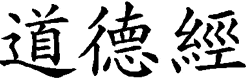
Compilation and Indexing by Michael P. Garofalo
Green Way Research, Valley Spirit Center, Gushen Grove Notebooks, Vancouver, Washington
Chapter 80 Chapter 1 Index to All 81 Chapters Taoism Cloud Hands Blog
Classic Book (Ching) about the Tao (Way, Nature, Patterns, Processes) and Te (Virtue, Potency, Power, Integrity, Wise Person, Sage)
Indexing, Concordance, Search Terms, Topics, Themes, Keys, Subjects
End of the Book of the Te (Virtue, Power) of the
Daodejing (Tao Te Ching), Classic of the Way and Virtue.
Book of the Te (Virtue, Powers) = Chapters 38-81. Book of the
Dao (Way, Path) = Chapters 1-37.
English and Chinese (Wade-Giles) Terms: The Nature of the Essential, Sincere or Truthful (hsin), Hidden Value, Good Home Life, Simple Living, Propounding the Essential, Sensible Man, Not Arguing, Dispute or Quarrel (pien), Honest Truth, Hoard or Accumulate (chi), Selfish, Long Life, Learned or Erudite (po), Good or Righteous (shan), Helping, Not Hoarding (chi), Hurt or Injure (hai), Way of the Sage, Avoid Scholarship, The Learned (po) May Not Know, Contend or Compete or Contest (chêng), Heavenly Tao, Dao, eloquence, Yielding, Beautiful or Pleasing (mei), Wisdom, Inner Truths, Meditation, Knowing or Aware or Wise (chih), Sharing, Giving, Kindness, Heaven, Tao, Reciprocating, Words (yen), The Manifestation of Simplicity, 顯質
Términos en Español:
La Naturaleza de la
Esencial, Sincero, Veraz, Bueno Casa,
Vida,
Vida Sencilla, Proponiendo
la Esencial,
Hombre Sensato, No Discutir,
Conflicto, Pelea, Pura Verdad,
Tesoro,
Acumula, Egoísta,
Larga Vida, Aprendida, Erudito, Bueno,
Justos, Ayudar, No
Acaparamiento,
Daño, Camino del Sabio,
Evitar la Beca,
los Sabios no Puede Saber,
Contender, Competir, Elocuencia, Ceder,
Hermoso, Agradable, Sabiduría, Meditación, Compartir, Dar, Generosidad,
Cielo, Alternativa,
Palabras, Simpleza, Naturalidad,
Mostrar lo
Esencial.
Electronic Concordance for Chapters 1 - 81 of the Tao Te Ching
English Language Translations of the Tao Te Ching
"They may have carts and boats
but there will be no need to ride in them;
they may have armor and weapons
but they will never need to display them.
Let the people go back to tying knots for record-keeping;
let their food be savory;
their clothing beautiful;
their customs pleasurable;
their homes secure.
Though they may gaze across at a neighbor's holdings
and hear the sounds of it's dogs and chickens,
they will not bother them, coming and going.
They will die of happy old age."
- Translated by
Jerry C. Welch,
Chapter 81
"Sincere words are not fine,
Fine words are not sincere,
The Faithful friend will stick to the end,
But the flatterer tickles the ear.
The skillful do not debate,
Debaters lack in skill,
For truth is found by looking around,
And words are weapons of ill.
The knowing are not most learned,
The most learned do not know,
For knowledge is grown from thought alone,
While learning from others must grow.
The sage lays up no treasure,
No hoard of goods or gold,
For they who keep a store-house deep,
A constant watch must hold.
The more he works for others
The more he works for his own,
For it grows by use, is lost by abuse,
And he gathers by what he has sown.
The more he gives away,
The more does he have himself,
For thought's a thing that from thought will spring,
Which is quite the reverse of pelf.
The Way of Heaven is sharp,
But it never will cut nor wound,
For they who swim with the flowing stream
Will ever be safe and sound.
T'is the way of the sage to act,
He acts but never strives,
For striving breaks whatever it makes,
And only a wreck survives."
- Translated by Isaac Winter Heysinger, 1903, Chapter 81
"Credible words do not sound pretty, pretty words are not credible.
"Sincere words are not beautiful; beautiful words are not sincere.
"Believed
words lack embellishment
Embellished words lack belief.
Those
who value lack argument
Those who argue lack valuing
Those who know lack learning
Those who learn lack knowing.
The
sages are without accumulating
Grasping, it happens they act
Others later gain presence
Grasping, it happens they give
Others later gain abundance.
The
Tao of the heavens
Benefitting yet without spoiling
The Tao of the sages
Acting yet without contending."
- Translated by
David Lindauer, Chapter 81
"True words are not beautiful;
Beautiful words are not true.
A good man does not argue;
He who argues is not a good man.
A wise man has no extensive knowledge;
He who has extensive knowledge is not a wise man.
The sage does not accumulate for himself.
The more he uses for others, the more he possesses of his own.
The Way of Heaven is to benefit others and not to injure.
The Way of the sage is to act but not to compete."
- Translated by
Chan Wing-Tsit, 1963, Chapter 81
"Real words are not vain,
Vain words not real;
And since those who argue prove nothing
A sensible man does not argue.
A sensible man is wiser than he knows,
While a fool knows more than is wise.
Therefore a sensible man does not devise resources:
The greater his use to others
The greater their use to him,
The more he yields to others
The more they yield to him.
The way of life cleaves without cutting:
Which, without need to say,
Should be man's way."
- Translated by
Witter Bynner,
Chapter 81

Created by Michael P. Garofalo, Green Way Research, Valley Spirit Center, Gushen Grove Notebooks, Red Bluff, California, © 2017 CCA 4.0
 Translation and elucidation by Hua Ching Ni
 Translated by Brian Walker
 Translated by Arthur Waley
 Translated by Lionel and and Herbert Giles
 By Eva Wong
"Truthful (hsin) words (yen) are not beautiful,
Beautiful (mei) words are not truthful.
The good (shan) does not distinguish,
One who distinguishes (pien) is not good.
One who knows (chih) does not accumulate knowledge,
One who accumulates knowledge (po) does not know.
The sage does not hoard.
Having worked (wei) for his fellow beings,
The more he possesses.
Having donated himself to his fellow beings,
The more abundant he becomes.
The way of heaven,
It benefits (li), but does not harm.
The way of the sage,
He works (wei), but does not contend."
- Translated by
Ellen M. Chen,
Chapter 81
"True words are not fancy.
Fancy words are not true.
The good do not debate.
Debaters are not good.
The one who really knows is not broadly learned,
The extensively learned do not really know.
The sage does not hoard,
She gives people her surplus.
Giving her surplus to others she is enriched.
The way of Heaven is to help and not harm."
- Translated by
Charles Muller,
Chapter 81
"Sincere words are not beautiful.
Beautiful words are not sincere.
Those who are good do not engage in disputation;
those who engage in disputation are not good.
Those who know are not broadly learned;
those who are broadly learned do not know.
The sage is not acquisitive.
The more he does for others, the more he himself has.
The more he gives to others, the more he himself possesses.
The Dao of Heaven is to provide benefit without doing harm.
The Dao of the sage is to act without causing contention."
- Translated by Richard John Linn, Chapter 81
"It is one thing to speak elegantly and
another to speak sincerely
Knowledge and insight are different things
The first accumulates fine distinctions, precise statements
And the other, well, it sees all as essentially the same
Whoever follows the way hoards nothing
Life is too long a journey to carry excess weight
He uses what he has for others
And finds his spirit lighter and his heart enriched
The tao sustains all without fear of
exhaustion
And virtue lies in letting it."
- Translated by
Ted Wrigley, Chapter 81
"True words are not beautiful
Beautiful words are not true
Those who are good do not debate
Those who debate are not good
Those who know are not broad of knowledge
Those who are broad of knowledge do not know
Sages do not accumulate
The more they assist others, the more they possess
The more they give to others, the more they gain
The Tao of heaven
Benefits and does not harm
The Tao of sages
Assists and does not contend"
- Translated by
Derek Linn,
2006, Chapter 81
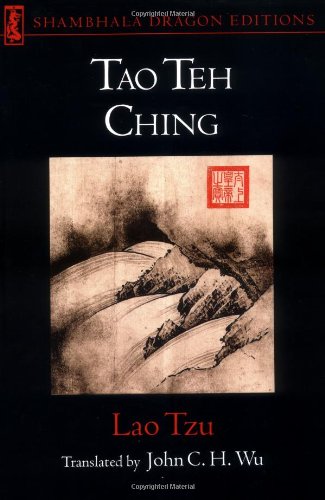
"True words are not beautiful, beautiful words are not true.
The good are not argumentative, the argumentative are not good.
Knowers do not generalize, generalists do not know.
Sages do not accumulate anything but give everything to others, having more the more they give.
The Way of heaven helps and does not harm. The Way for humans is to act without contention."
- Translated by
Thomas Cleary, 1991, Chapter 81
"True words aren't pretty; pretty words aren't true.
"Truthful words are not beautiful.
Beautiful words are not truthful.
Good men do not argue.
Those who argue are not good.
Those who know are not learned.
The learned do not know.
The sage never tries to store things up.
The more he does for others, the more he has.
The more he gives to others, the greater his abundance.
The Tao of heaven is pointed but does no harm.
The Tao of the sage is work without effort."
- Translated by
Jane English and Gai-fu Feng, 1989, Chapter 81
 By Alexander Simkins.
  By Derek Lin.
 By Ming-Dao Deng.
 By Benjamin Hoff.
 By Ming-Dao Deng.
 Translated by Thomas Cleary.
"True words are not beautiful;
Beautiful words are not true.
Those who are good do not argue;
Those who argue are not good.
Those who are wise are not learned;
Those who are learned are not wise.
The Sage does not store up possessions.
The more he helps others, the more he fulfils himself.
The more he gives to others, the more he has for himself.
The Way of Heaven is to benefit others whilst harming no one.
The Way of the Sage is to accomplish without striving."
- Translated by
Keith Seddon,
Chapter 81
A Chinese Language Version of Chapter 81 of the Tao Te
Ching by Lao Tzu
A
note
on my style of displaying the Chinese characters of the Tao Te Ching
信言不美,
美言不信.
善者不辯,
辯者不善.
知者不博,
博者不知,
聖人不積,
既以為人己愈有.
既以與人己愈多.
天之道,
利而不害.
聖人之道,
為而不爭.
- Chinese characters, Tao Te
Ching, Chapter 81
hsin yen pu mei,
mei yen pu hsin.
shan chê pu pien,
pien chê pu shan.
chih chê pu po,
po chê pu chih.
shêng jên pu chi,
chi yi wei jên chi yü yu,
chi yi yü jên chi yü to.
t'ien chih tao,
li erh pu hai.
shêng jên chih tao,
wei erh pu chêng.
- Wade-Giles Romanization, Tao Te Ching, Chapter 81
Audio
Version in Chinese of Chapter 81 of the Tao Te Ching
xin yan bu mei,
mei yan bu xin.
shan zhe bu bian,
bian zhe bu shan.
zhi zhe bu bo,
bo zhe bu zhi.
sheng ren bu ji.
ji yi wei ren ji yu you,
ji yi yu ren ji yu duo.
tian zhi dao,
li er bu hai.
sheng ren zhi dao,
wei er bu zheng.
-  Pinyin Romanization, Daodejing, Chapter 81
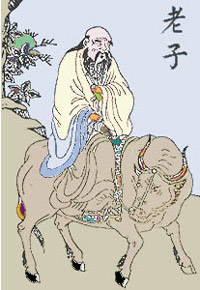
Tao Te Ching in Chinese characters and English (includes a word by word key) from YellowBridge
Tao Te Ching in Chinese characters, Pinyin Romanization, English and German by Dr. Hilmar Alquiros.
Laozi Daodejing: Chapters with Chinese characters, seal script, detailed word by word concordance, Pinyin (tone#), German, French and English.
Chinese and English Dictionary, MDGB
Dao De Jing Wade-Giles Concordance by Nina, Dao is Open
Dao De Jing: English and Spanish and Wade-Giles Concordance Indexing by Mike Garofalo. GWR Hypertext Notebooks.
Tao Te Ching in Pinyin Romanization with Chinese characters, WuWei Foundation
Tao Te Ching in Pinyin Romanization
Tao Te Ching in Chinese characters and English
Tao Te Ching in Chinese characters, English, Word by word analysis, Zhongwen
Tao Te Ching: The Definitive Edition
Tao Te Ching in Chinese characters: Big 5 Traditional and GB Simplified
Chinese Characters, Wade-Giles and Pinyin Romanizations, and 25 English Translations for Each Chapter of the Daodejing. Compiled and indexed by Mike Garofalo.
Tao Te Ching in Chinese characters, Pinyin and Wade Giles Romanization spellings, English; a word for word translation of the Guodian Laozi Dao De Jing Version.
Lao Zi's Dao De Jing: A Matrix Translation with Chinese Text by Bradford Hatcher.
"Faithful words may not be beautiful,
"Credible words are not sweet; sweet words are not credible.
Honest people do not need to argue for themselves;
those who argue for themselves are not honest.
Experts have deep knowledge about their specialties;
those who try to learn everything would know little about each.
Sages never accumulate wealth.
They believe the more they give up, the more they have;
And the more they give away, the more they accumulate.
Tao of the Nature is this: benefiting without harming.
Tao of People is this: achieving without rivaling."
- Translated by
Thomas Z. Zhang, Chapter 81
"Sincere words and not pretty.
Pretty words are not sincere.
Good people do not quarrel.
Quarrelsome people are not good.
The wise are not learned.
The learned are not wise.
The Sage is not acquisitive - Has enough By doing for others,
Has even more By giving to others.
Heaven's Tao Benefits and does not harm.
The Sage's Tao Acts and does not contend."
- Translated by
Stephen Addis, 1993, Chapter 81
Created by Michael P. Garofalo, Green Way Research, Valley Spirit Center, Gushen Grove Notebooks, Red Bluff, California, © 2017 CCA 4.0
 By Hu Xuzehi
 Annotated translation by Victor Mair
  By Ha Poong Kim
 By Hans-Georg Moeller
  By Roger T. Ames and David T. Hall
 By Wes Burgess
 By Arthur Waley
"No one likes the honest truth,
And all fine talk falls short of it.
Real words are never used to seduce you,
And those that do are no good.
The one who really knows, knows without books
- the so-called learned know nothing.
The sage holds nothing of himself back-
He uses all he has for you, and that is his reward.
He gives all he is
and that is why he's rich.
And the Tao of Heaven
feeds everything, and harms nothing
And the sage's Tao
completes it,
without doing anything."
- Translated by
Kwok, Palmer and
Ramsey, Chapter 81
"Sincere
words are not 'elegant.' Elegance of speech is insincere.
One who knows
is not 'learned;' Learnedness is not knowledge.
One who is 'good' does not
have much; Possessions are not virtue.
Sages
do not hoard.
The more they do for others,
the more they have, themselves;
the more they give to others,
the more their own bounty is increased.
Thus
the Path of Deity benefits without harming;
the way of ego 'acts' but without
effect."
- Translated by
Jerry C. Welch, 1998, Chapter 81
"As honest words may not sound fine,
Fine words may not be honest ones;
A good man does not argue, and
An arguer may not be good!
The knowers are not learned men
And learned men may never know.
The Wise Man does not hoard his things;
Hard-pressed, from serving other men,
He has enough and some to spare;
But having given all he had,
He then is very rich indeed.
God's Way is gain that works no harm;
The Wise Man's way, to do his work
Without contending for a crown."
- Translated by
Raymond Blakney,
Chapter 81
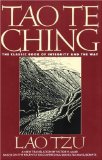
Tao Te Ching
Lao Tzu: Tao Te Ching
 Translated by Livia Kohn
Dao De Jing: The Book of the Way
"Words to trust and not refine.
Words refined are not to trust.
Good men are not gifted speakers.
Gifted speakers are not good.
Experts are not widely learned;
The widely learned not expert.
Wise rulers for themselves keep naught,
Yet gain by having done for all,
Have more for having freely shared;
Do good not harm is heaven’s Way;
The wise act for and not against."
- Translated by
Moss Roberts,
Chapter 81
"True words are not beautiful;
Beautiful words are not true.
A good man does not argue;
He who argues is not a good man.
A wise man has no extensive knowledge;
He who has extensive knowledge is not a wise man.
The sage does not accumulate for himself.
The more he uses for others, the more he possesses of his own.
The Way of Heaven is to benefit others and not to injure.
The Way of the sage is to act but not to compete."
- Translated by
Chang Wing-Tsit,
1963, Chapter 81
"Faithful words are not pleasant.
Pleasant, or specious, words are not faithful.
The virtuous do not bandy arguments.
Those who bandy arguments are not virtuous.
The wise do not seek
learning from outside.
Those who do so are not wise.
The Sage does not lay up hidden stores of Tao.
The more he employs it on behalf of others the more he
has for himself.
The more he imparts to others, the more his own
stores increase.
The Tao of Heaven confers benefit, and
injures not.
The Tao of the Sage acts, and does not strive."
- Translated by
Frederic Henry Balfour, 1884, Chapter 81
 Translated by Eva Wong
  Translated by Philip Ivahoe
 By James Miller
 Translated by Stephen Bokencamp
By Alexander and Annellen Simpkins
Translated by Stephen Bokencamp
By Alexander and Annellen Simpkins Translated by Thomas Cleary
 By Livia Kohn
"Truth need not be eloquent
And eloquence may not be true
There is no need to argue
When truth is shining through
Those who see may not be learned
The learned may not see
To see you merely need to look
In pure simplicity
The seer doesn't have to hoard
And does not fear to lose
The more you give, the more you have
So why should you refuse?
Why not give it all away?
For emptiness brings benefit
And as the seers always say
The more you give, the more you get."
- Translated by
Jim Clatfelter,
Chapter 81
"Sincere words are not sweet,
Sweet words are not sincere.
Good men are not argumentative,
The argumentative are not good.
The wise are not erudite,
The erudite are not wise.
The Sage does not take to hoarding.
The more he lives for others, the fuller is his life.
The more he gives, the more he abounds.
The Way of Heaven is to benefit, not to harm.
The Way of the Sage is to do his duty, not to strive
with anyone."
- Translated by
John C. H. Wu, 1961, Chapter 81
"True words are not beautiful.
Beautiful words are not true.
One who knows isn’t comprehensive.
One who is comprehensive doesn’t know.
One who is good doesn’t have numerous sides.
One who has numerous sides is not good.
A wise person accumulates nothing.
Having already acted for another person, her own individuality
has more reason for existing.
Having already given to another person, her own individuality
multiplies more and more.
Therefore, the heaven’s Dao is beneficial, and doesn’t harm.
A person’s Dao takes action, but isn’t willing to contend."
- Translated by
Nina
Correa, 2005, Chapter 81
"True words do not sound beautiful;
beautiful sounding words are not true.
Wise men don't need to debate;
men who need to debate are not wise.
Wise men are not scholars,
and scholars are not wise.
The Master desires no possessions.
Since the things she does are for the people,
she has more than she needs.
The more she gives to others,
the more she has for herself.
The Tao of Heaven nourishes by not forcing.
The Tao of the Wise person acts by not competing."
- Translated by
John H. McDonald, 1996, Chapter 81
Walking the Way: 81 Zen Encounters with the Tao Te Ching
The Tao of Zen
Tao Te Ching: Zen Teachings on the Taoist Classic
Buddhism and Taoism Face to Face: Scripture, Ritual, and
Iconographic Exchange in Medieval China
"He who knows, speaks not.
He who speaks, knows not.
He who is sincere, does not embellish.
He who embellishes, is not sincere.
He who is good, disputes not.
He who disputes, is not good.
He who knows, does not game.
He who games, knows not."
- Translated by
Jan Duyvendak,
Chapter 81
"True words aren't elaborate.
"True
words are not fine-sounding;
Fine-sounding words are not true.
A good man does not argue;
he who argues is not a good man.
The wise one does not know many things;
He who knows many things is not wise.
The
Sage does not accumulate for himself.
He lives for other people,
And grows richer himself;
He gives to other people,
And has greater abundance.
The
Tao of Heaven
Blesses, but does not harm.
The Way of the Sage
Accomplishes, but does not contend."
- Translated by
Lin Yutang, 1955, Chapter 81
Further Teachings of Lao-Tzu: Understanding the Mysteries (Wen Tzu)
 By Thomas Cleary
The Lunar Tao: Meditations in Harmony with the Seasons
 By Lui I-Ming (1780) and translated by Thomas Cleary
Ripening Peaches: Taoist Studies and Practices By Mike Garofalo
Zhuangzi: The Essential Writings with Selections from Traditional Commentaries
"He who knows does not speak;
He who speaks does not know.
He who is truthful is not showy;
He who is showy is not truthful.
He who is virtuous does not dispute.
He who disputes is not virtuous.
He who is learned is not wise.
He who is wise is not learned.
Therefore the Sage does not display his own merits."
- Translated by
Ch'u Ta-Kao, 1904, Chapter 81
|
Tao Te
Ching |
|||||||||
| 1 | 2 | 3 | 4 | 5 | 6 | 7 | 8 | 9 | 10 |
| 11 | 12 | 13 | 14 | 15 | 16 | 17 | 18 | 19 | 20 |
| 21 | 22 | 23 | 24 | 25 | 26 | 27 | 28 | 29 | 30 |
| 31 | 32 | 33 | 34 | 35 | 36 | 37 | 38 | 39 | 40 |
| 41 | 42 | 43 | 44 | 45 | 46 | 47 | 48 | 49 | 50 |
| 51 | 52 | 53 | 54 | 55 | 56 | 57 | 58 | 59 | 60 |
| 61 | 62 | 63 | 64 | 65 | 66 | 67 | 68 | 69 | 70 |
| 71 | 72 | 73 | 74 | 75 | 76 | 77 | 78 | 79 | 80 |
| 81 | |||||||||
"Sincere words are not grand.
Grand words are not faithful.
The man of Tao does not dispute.
Those who know it are not learned.
The learned do not know it.
The wise man does not lay up treasure.
The more he expends on others, the more he gains for himself.
The more he gives to others, the more he has for his own.
This is the Tao of Heaven, which penetrates but does not injure.
This is the Tao of the wise man, who acts but does not strive."
- Translated by Walter Gorn Old, 1904, Chapter 81
"Wahre Worte sind nicht schön,
schöne Worte sind nicht wahr.
Tüchtigkeit überredet nicht,
Überredung ist nicht tüchtig.
Der Weise ist nicht gelehrt,
der Gelehrte ist nicht weise.
Du Berufene häuft keinen Besitz auf.
Je mehr er für andere tut,
desto mehr besitzt er.
Je mehr er anderen gibt,
desto mehr hat er.
Des Himmels Sinn ist fördern, ohne zu schaden.
Des Berufenen Sinn ist wirken, ohne zu streiten."
- Translated by Richard Wilhelm, 1911, Chapter
81
"Alles Wesentliche vollendet sich im Alltag
Wahre Worte schmeicheln nicht.
Schöne Worte überzeugen nicht.
Echte Menschen blenden nicht.
Blender sind nicht echt und wahr.
Weyse Menschen sind keine Vielwisser.
Vielwisser sind keine Weysen.
Wer den Weg der Vollendung geht, sammelt keine Schätze;
ihm ist Besitz, was er für andere tut;
je mehr er sich verschenkt, desto mehr wird ihm.
Wie aus dem Unergründlichen das Leben quillt,
ohne zu schaden,
so wirkt der Weyse, ohne zu verletzen."
- Translated
by Rudolf
Backofen, 1949, Chapter 81
"Truthful words do not sound sweet;
Created by Michael P. Garofalo, Green Way Research, Valley Spirit Center, Gushen Grove Notebooks, Red Bluff, California, © 2017 CCA 4.0
Tao Te Ching: An Illustrated Journey
Tao Te Ching
The Book of Tao: Tao Te Ching - The Tao and Its Characteristics
Ripening Peaches: Taoist Studies and Practices
Taoism: Growth of a Religion
Zhuangzi (Chuang Tsu), Daoist Scripture: Bibliography, Links, Resources, Quotations, Notes
Zhuangzi: Basic Writings
Zhuangzi Speaks: The Music of Nature
Lifestyle Advice from Wise Persons
"Truth has no need for fine words;
"Words born of the mind are not true
True words are not born of the mind
Those who have virtue do not look for faults
Those who look for faults have no virtue
Those who come to know it do not rely on learning
Those who rely on learning do not come to know it
The Sage sees the world as an expansion of his own self
So what need has he to accumulate things?
By giving to others he gains more and more
By serving others he receives everything
Heaven gives and all things turn out for the best
The Sage lives, and all things go as Tao goes all things move as
the wind blows"
- Translated by
Jonathan Star, 2001, Chapter 81
Sincere words are not fine; fine words are not sincere.
Those
who are skilled in the Tao do not dispute about it; the
disputatious are not skilled in it.
Those who know the Tao are not
extensively learned; the extensively learned do not know it.
The sage does not accumulate for himself.
The more that he
expends for others, the more does he possess of his own;
The more that
he gives to others, the more does he have himself.
With all the sharpness of the Way of Heaven, it injures not;
Wth
all the doing in the way of the sage he does not strive."
- Translated by
James Legge, 1891, Chapter 81
"Les paroles sincères ne sont pas élégantes; les paroles
élégantes ne sont pas sincères.
L'homme vertueux n'est pas disert; celui qui est disert n'est pas vertueux.
Celui qui connaît le Tao n'est pas savant; celui qui est savant ne le connaît
pas.
Le Saint n'accumule pas les richesses.
Plus il emploie sa vertu dans l'intérêt des hommes, et plus elle augmente.
Plus il donne aux hommes et plus il s'enrichit.
Telle est la voie du ciel, qu'il est utile aux êtres et ne leur nuit point.
Telle est la voie du Saint, qu'il agit et ne dispute point."
- Translated by Stanislas Julien, 1842, Chapter
81
Spanish
Language Versions of the Tao Te Ching (Daodejing)
Tao Te Ching en Español
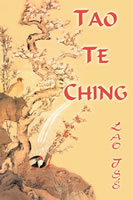
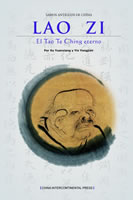
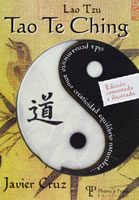
Lao Tsé. Tao Te Ching
Tao Te Ching Translated by Stephen Mitchell, Spanish version
Tao Te Ching Translated into Spanish by Father Carmelo Elorduy
Lao Tzu-The Eternal Tao Te Ching
Ripening Peaches: Taoist Studies and Practices By Mike Garofalo
Tao Te Ching - Translations into the Spanish Language
Tao Te Ching
Lao Tzu - Tao Te Ching
Tao te king
Spanish Language Translations of the Tao Te Ching
"Las palabras sinceras no son agradables, las palabras
agradables no son sinceras.
Las buenas personas no son discutidoras, las discutidoras no son buenas.
Las personas sabias no son eruditas, las eruditas no son sabias.
El Sabio no toma nada para acaparar, cuanto más vive para los demás, más plena
es su vida.
Cuanto más da, más nada en la abundancia.
La Ley del Cielo es beneficia, no perjudicar.
La Ley del sabio es cumplir su deber, no luchar contra nadie."
- Translated in English by John C. H. Wu,
Spanish version
by Alfonso Colodrón, 2007, Capítulo 81
"Las palabras verdaderas no son agradables;
las palabras agradables no son verdaderas.
Un hombre de bien no es un parlanchín;
Un parlanchín no es un hombre de bien.
La inteligencia no es la erudición;
La erudición no es la inteligencia.
El santo se guarda de amontonar;
al consagrarse a los demás, sen enriquece,
después de haber dado todo, todavía posee más.
El camino del cielo nos trae ventajas sin perjudicar;
la virtud del santo actúa sin reclamar nada."
- Translation by
Alba, 1998, Capítulo 81
"Las palabras veraces no son agradables;
Las palabras agradables no son veraces.
El hombre bueno no gusta de discutir;
El hombre que gusta de discutir, no es bueno.
El sabio no es erudito
y el erudito no es sabio.
El sabio nunca trata de atesorar cosas.
cuanto más vive para los demás, más plena es su vida.
El Tao del Cielo beneficia y no perjudica.
El Tao del Sabio es obrar, no rivalizar."
- Translation from
Wikisource, 2013, Capítulo
81
"Las palabras veraces no son hermosas.
Las palabras
hermosas no son veraces.
Lo bueno no es elocuente.
Lo elocuente no es bueno.
El sabio no es erudito.
El erudito no es sabio.
El sabio no actúa para
acumular.
Cuanto más entrega a los demás, tanto más posee para sí.
Cuanto más
dones ofrece a los demás, tanto más consigue para sí.
La norma del cielo es dar
beneficios y no dañar.
El proceder del sabio es actuar sin luchar."
- Translation from
Logia Medio Dia, 2015,
Capítulo 81
"Las palabras sinceras no son agradables y las agradables no son sinceras.
Created by Michael P. Garofalo, Green Way Research, Valley Spirit Center, Gushen Grove Notebooks, Red Bluff, California, © 2017 CCA 4.0
Previous Chapter of the Tao Te Ching #80
Chapter and Thematic Index to the Tao Te Ching
Tao Te Ching
Commentary, Interpretations, Research Tools, Resources
Chapter 81
Das Tao Te King von Lao Tse. Complete versions of all 81 Chapters of the Tao Te Ching by many different translators in many languages: 124 English, 24 German, 14 Russian, 7 Spanish, 5 French and many other languages. Links are organized first by languages, and then alphabetically by translators. Formatting varies somewhat. The original website at Onekellotus went offline in 2012; but, the extensive collection of these Tao Te Ching versions was saved for posterity by the Internet Archive Wayback Machine and available as of 9/9/2015. This is an outstanding original collection of versions of the Daodejing─ the Best on the Internet. Caution: copyright infringement may sometimes be an issue at this website.
Tao Te Ching, Translations into English: Terebess Asia Online (TAO). 124
nicely formatted complete English language translations, on separate webpages, of the Daodejing.
Alphabetical index by translators. Each webpage has all 81 chapters of the Tao Te
Ching translated into English. A useful collection! Many
reformatted and colored versions from the original collection at
Das Tao Te King von Lao Tse. Caution: copyright infringement may
sometimes be an
issue at this website.
Lao Tzu: Te-Tao Ching - A New Translation Based on the Recently Discovered Ma-wang-tui
Texts (Classics of Ancient China)
Daodejing by Laozi: Chapters with Chinese characters, seal script,
detailed word by word concordance, Pinyin (tone#), German, French and English.
This is an outstanding resource for serious students of the Tao Te Ching.
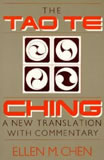
Tao Te
Ching: A New Translation and Commentary. By Ellen Chen. Paragon
House, 1998. Detailed glossary, index, bibliography, notes, 274 pages.
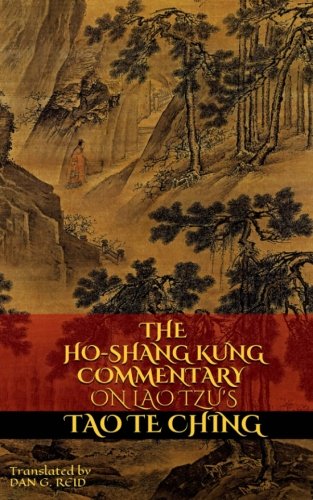
The Ho-Shang Kung Commentary on Lao Tzu's Tao Te Ching. Author:
Heshang Gong. Translated into English by Dan G. Reid. Center Ring
Publishing, 2016. 326 pages.
The Tao
and Method: A Reasoned Approach to the Tao Te Ching. By Michael
Lafargue. New York, SUNY Press, 1994. 640 pages. Detailed
index, bibliography, notes, and tables. An essential research tool.
Two Visions of the Way: A Study of the Wang Pi and the Ho-Shang Kung Commentaries on the Lao-Tzu.
By Professor by Alan Kam-Leung Chan. SUNY Series in Chinese
Philosophy and Culture. State University of New York Press, 1991.
Index, bibliography, glossary, notes, 314 pages.
ISBN: 0791404560.
Tao Te Ching: The Definitive Edition
Chinese Reading of the Daodejing
Wang Bi's Commentary on the Laozi with Critical Text and Translation.
By Professor Rudolf G. Wagner. A SUNY Series in Chinese Philosophy and
Culture. English and Mandarin Chinese Edition.
State University of New York Press; Bilingual edition (October 2003). 540
pages. ISBN: 978-0791451823.
Wang Bi (Wang Pi, Fusi), 226-249 CE,
Commentary on the Tao Te
Ching.
Tao Te Ching: The Taoism of Lao Tzu Explained. By Stefan Stenudd.
CreateSpace Independent Pub., 2015. 320 pages. ISBN: 9781514208045.
Tao Te Ching
The Taoism Reader
The Path: What Chinese Philosophers Can Teach Us About the Good Life.
By Michael Puett and Christine Gross-Loh. Simon and Schuster, 2017.
240 pages.
Change Your Thoughts - Change Your Life: Living the Wisdom of the Tao
The Tao of Being: A Think and Do Workbook
The Lunar Tao: Meditations in Harmony with the Seasons
The Classic of the Way and Virtue: A New Translation of the Tao-te Ching of Laozi as Interpreted by Wang Bi.
Translated by Richard John Lynn. Translations from the Asian Classics
Series. New York, Columbia University Press, 1999. Extensive index,
glossaries, notes, 244 pages.
Tao Te Ching in Chinese characters,
Pinyin Romanization, English and German by Dr. Hilmar
Alquiros.
Stoicism and Hellenistic
Philosophy
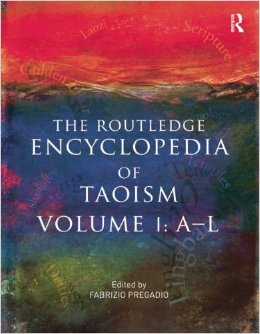
Encyclopedia of Taoism.
How to Live a Good Life:
Advice from Wise Persons
One Old Philosopher's
Notebooks Research, Reading, and Reflections by Mike Garofalo.
Yellow Bridge
Dao De Jing Comparison Table Provides side by side comparisons of
translations of the Tao Te Ching by James Legge, D. T. Suzuki, and Dwight
Goddard. Chinese characters for each paragraph in the Chapter are on the
left; place your cursor over the Chinese characters to see the Pinyin
Romanization of the Chinese character and a list of meanings.
Translators Index,
Tao Te Ching Versions in English, Translators Sorted Alphabetically by Translator, Links to Books and
Online Versions of the Chapters
Taoism and the Tao Te
Ching: Bibliography, Resources, Links
Spanish Language
Translations of the Tao Te Ching, Daodejing en Español, Translators Index
The Tao of Zen
Chapter 41 in the
Rambling
Taoist Commentaries by Trey Smith. The
Rambling Taoists are Trey Smith and Scott Bradley.
By Hans-Georg Moeller. Columbia University Press, 2006, 176 pages.
Valley Spirit, Gu Shen,
Concept, Chapter 6
Valley Spirit Center in Red
Bluff, California.
Sacred
Circle in the Gushen Grove.
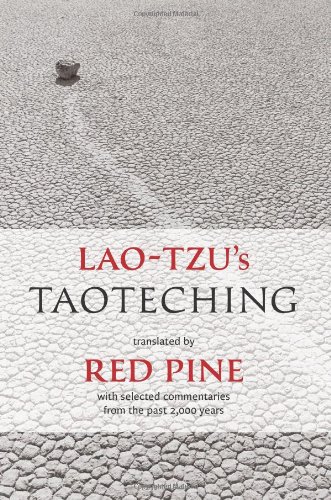
Lao-tzu's Taoteching
Reading Lao Tzu: A Companion to the Tao Te Ching with a New Translation
Dao De Jing: A Philosophical Translation
Thematic Index to the
81 Chapters of the Tao Te Ching
Lieh-Tzu: A Taoist Guide to Practical Living
Revealing the Tao Te Ching: In-depth Commentaries on an Ancient Classic
Cloud Hands Blog
Mike Garofalo writes about Mind-Body Arts, Philosophy, Taoism, Gardening, Taijiquan, Walking, Mysticism,
Qigong, and the Eight Ways.
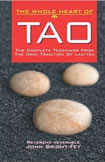
The Whole Heart of Tao:
The Complete Teachings From the Oral Tradition of Lao Tzu.
Commentary for Chapter 81 of the Dao De Jing
Lao-tzu's Taoteching
The Whole Heart of Tao:
The Complete Teachings From the Oral Tradition of Lao Tzu.
Dao De Jing: A Philosophical Translation
Lao Tzu: Te-Tao Ching - A New Translation Based on the Recently Discovered Ma-wang-tui
Texts (Classics of Ancient China)
Gushen Grove Notebooks for the Tao Te Ching
Green Way Research, 2010-2017, Valley Spirit
Center, Gushen Grove Notebooks, Red Bluff, California
Indexed and Compiled by
Michael P. Garofalo
This webpage was last modified or updated on
May 18, 2017.
This webpage was first distributed online on February 2, 2011.
Created and revised by Michael P. Garofalo,
Green
Way Research, Valley Spirit
Center, Gushen Grove Notebooks, Red Bluff, North Sacramento Valley, California,
USA (2010-2017)
Revised and updated by Mike Garofalo,
Green Way Research, Cloud Hands Home, City
of Vancouver, State of Washington, Northwestern USA, (2017-)
Brief Biography of Michael P. Garofalo, M.S.

Ripening Peaches: Daoist Studies and Practices
Zhuangzi (Chuang Tzu, Zhuang Zhou, Master Chuang) 369—286 BCE
Taoist Perspectives: My Reading List
Bodymind Theory and Practices, Somaesthetics
How to Live a Good Life: Advice from Wise Persons
Pleasures, Satisfaction, Desires
Qigong (Chi Kung) Health Practices
One Old Daoist Druid's Final Journey: Notebooks of the Librarian of Gushen Grove
Index to Cloud Hands and Valley Spirit Websites
Index to English Language Translators of the Tao Te Ching
Recurring Themes (Terms, Concepts, Leimotifs) in the Tao Te Ching
Spanish Language Translations of the Tao Te Ching
The Tao Te Ching (Dao De Jing) by Lao Tzu (Laozi) circa 500 BCE
|
Tao Te
Ching |
|||||||||
| 1 | 2 | 3 | 4 | 5 | 6 | 7 | 8 | 9 | 10 |
| 11 | 12 | 13 | 14 | 15 | 16 | 17 | 18 | 19 | 20 |
| 21 | 22 | 23 | 24 | 25 | 26 | 27 | 28 | 29 | 30 |
| 31 | 32 | 33 | 34 | 35 | 36 | 37 | 38 | 39 | 40 |
| 41 | 42 | 43 | 44 | 45 | 46 | 47 | 48 | 49 | 50 |
| 51 | 52 | 53 | 54 | 55 | 56 | 57 | 58 | 59 | 60 |
| 61 | 62 | 63 | 64 | 65 | 66 | 67 | 68 | 69 | 70 |
| 71 | 72 | 73 | 74 | 75 | 76 | 77 | 78 | 79 | 80 |
| 81 | |||||||||
Return to the Top of this Webpage