Compiled and Indexed by Michael P. Garofalo
Green Way Research, Valley Spirit Center, Gushen Grove Notebooks, Vancouver, Washington
Chapter 18 Chapter 20 Index to All 81 Chapters Daoism Concordance Cloud Hands Blog
Classic Book (Ching) about the Tao (Way, Nature, Patterns, Processes) and Te (Virtue, Potency, Power, Integrity, Wise Person, Sage)
Concordance: Indexing, Search Terms, Topics, Themes, Keys, Subjects, Words
English and Chinese (Wade-Giles) Terms: Return to Simplicity, Benevolence or Humane or
Kindly (jên), Renounce Scheming and Contriving, Holy or Sage (shêng), Lessen
Desires, Duties, Decorations or Adornments or Ornaments (wên), Rely or
Depend (shu), Benefit or Profit (li), Morality, Sorrow or Anxiety
(yu), Formalism, Purity or Natural or Unspoiled or Uncarved Wood (p'u),
Recover or Return (fu), Learning or Academic Knowledge (hsüeh), Naturalness, Kindly, Humility, Simplicity,
Everyone or People (min), Cleverness or Craftiness (ch'iao), Conventionality,
Filial Piety or Devotion (hsiao), Contrivances, Greed,
Theives or Robbers (tsê), Selfish, Purity, Clever or Erudite (chih),
Reduce or Lessen (shao), Hundred Times (pai pei), Equanimity, Non-Differentiation,
Morality or Duty or Righteous (yi), Holier Than Thou, Superiority,
Selfishness or Self-Interest (ssu), Enough or Adequate or Sufficient (tsu),
Etiquette or Propriety (li), Be Plain and True, Three Lessons (san chê),
Simplicity or Genuine or Plain (su), Desires or Wants (yü),
Abandon or Eliminate (chüeh), Diminish or Curb (kua), 還淳
Términos en Español:
Volver
a la Sencillez, Benevolencia,
Integridad, Amablemente, Santo, Sabio, Deseos, Deberes,
Decoraciones, Adornos, Ornamentos, Depender, Beneficio,
Lucro, Moral, Tristeza,
Ansiedad, Formalismo,
Pureza, Natural, Virgen, Sin Tallar, Recuperar, Retorno,
Aprendizaje, Académico Conocimiento,
Naturalidad,
Humildad, Todos, Personas, Inteligencia, Astucia,
Convencionalismo, la Piedad Filial,
Devoción, Artilugios,
Codicia, Ladrones, Egoísta,
Erudito, Reducir, Disminuir, Cien Veces, Ecuanimidad,
No Diferenciación, Impuestos, Justos,
Santo que Mil, Superioridad,
Egoísmo, Interés Propio, Suficiente,
Adecuado, Etiqueta, Decoro, Ser Claro
y Verdadero, Tres
Lecciones, Genuino, Normal, Deseos, Abandonar, Eliminar, Disminuir.
Electronic Concordance for all 81 Chapters of the Tao Te Ching
English Language Translations of the Tao Te Ching
"If we could renounce our sageness and discard our wisdom, it would be better
for the people a hundredfold.
If we could renounce our benevolence and discard our righteousness, the people
would again become filial and kindly.
If we could renounce our artful contrivances and discard our scheming for gain,
there would be no thieves nor robbers.
Those three methods of government
Thought olden ways in elegance did fail
And made these names their want of worth to veil;
But simple views,
And courses plain and true
Would selfish ends and many lusts eschew."
- Translated by
James Legge, 1891,
Chapter 19
"End sagacity; abandon knowledge
"Do away with learning, and grief will not be known.
Do away with sageness and eject wisdom, and the people will be more benefited a hundred times.
Do away with benevolence and eject righteousness, and the people will return to filial duty and parental love.
Do away with artifice and eject gains and there will be no robbers and theives.
These four, if we consider them as a culture, are not sufficient.
Therefore let there be what the people can resort to:
Appear in plainness and hold to simplicity;
Restrain selfishness and curtail desires."
- Translated by
Ch'u Ta-Kao, 1904, Chapter 19
"Abandon holiness
Discard cleverness and the people will benefit a hundredfold
Abandon the rules of "kindness"
Discard "righteous" actions
and the
people will return
to their own natural affections
Abandon book learning
Discard the rules of behavior
and the people will have no
worries
Abandon plots and schemes
Discard profit-seeking
and the people will not become thieves
These lessons are mere elaborations
The essence of my teachings is this:
See with original purity
Embrace with original simplicity
Reduce what you have
Decrease what you want."
- Translated by
Johathan Star, 2001, Chapter 19
Trying Too Hard: Ease up and don’t worry
Give up wisdom. Discard knowledge.
Then people will benefit a hundred fold.
Give up benevolence. Discard justice.
Then people will return to brotherly love and kindness.
Give up scheming. Discard profit.
Then there will be no bandits and thieves.
These three sayings, as principles, are not enough.
Therefore we must add the following:
Be natural and embrace simplicity.
Reduce selfishness and have few desires.
Give up learning and don’t worry.
- Translated by
Amy and Roderic Sorell, 2003, Chapter 19
"Abandon sagacity and drop intelligence, the welfare of people can be
increased hundredfold;
abandon benevolence and drop righteousness, the people will rejoice in
filial piety and parental love;
abandon crafts and profits, robbers and thieves will cease to exist.
These three are remedies for artificial civilization.
They can never bring about satisfaction:
people should be led to, where they belong - The Nature.
He stopped research, reduced desires, sought plainness, and embraced
original simplicity."
- Translated by
Tang Zi-Chang, Chapter 19
"Drop wisdom, abandon cleverness,
And the people will be benefited a hundredfold.
Drop humanity, abandon justice,
And the people will return to their natural affections.
Drop shrewdness, abandon sharpness,
And robbers and thieves will cease to be.
These three are the criss-cross of Tao,
And are not sufficient in themselves.
Therefore, they should be subordinated
To a Higher principle:
See the Simple and embrace the Primal,
Diminish the self and curb the desires!"
- Translated by
John C. H. Wu, 1951, Chapter 19

Created by Michael P. Garofalo, Green Way Research, Valley Spirit Center, Gushen Grove Notebooks, Vancouver, Washington © 2023 CCA 4.0
Walking the Way: 81 Zen Encounters with the Tao Te Ching
The Tao of Zen
Tao Te Ching: Zen Teachings on the Taoist Classic
Buddhism and Taoism Face to Face: Scripture, Ritual, and Iconographic Exchange in Medieval China
"Abandon your saintliness; put away your prudence; and the people will gain a
hundredfold!
Abandon your benevolence; put away your justice; and the people will return to
filial piety and paternal devotion.
Abandon smartness; give up greed; and thieves and robbers will no longer exist.
These are three things for which culture is insufficient.
Therefore it is said:
'Hold fast to that which will endure,
Show thyself simple,
Preserve thee pure,
And lessen self with desires fewer."
- Translated by
D. T. Suzuki and Paul Carus, 1913,
Chapter 19
"If the people renounce self-control and reject wisdom,
Let them gain simplicity and purity
If the people renounce duty to man and reject right conduct,
Let them return to filial piety deep, deep in the heart.
If they renounce skill and leave off search for profit,
Let them rob and by violence take possession of spiritual life.
These three things do not help our progress.
Therefore now let us seek
To perceive simplicity,
To conserve beauty in the heart,
To curb selfishness and to have few desires."
- Translated by Isabella Mears, 1916, Chapter 19
"Banish learning, discard knowledge:
People will gain a hundredfold.
Banish benevolence, discard righteousness:
People will return to duty and compassion.
Banish skill, discard profit:
There will be no more thieves.
These three statements are not enough.
One more step is necessary.
Look at plain silk; hold uncarved wood.
The self dwindles; desires fade."
- Translated by
Stephen Addis, 1993, Chapter 19
"Return to Innocence
Huan Ch'un
Forswear wisdom, discard knowledge,
And the people will gain a hundredfold.
Forswear benevolence, discard righteousness,
And the people will recover filial and parental love.
Forswear skill, discard profit,
And thieves and robbers will not appear.
These three steps are inadequate for culture.
They, therefore, have to encompass some others,
Such as:
Display plainness, embrace simplicity,
Reduce selfishness, and decrease desires."
- Translated by
Henry Wei, 1982, Chapter 19
"Drop sagacity, abandon intellection, and the people will be benefited a
hundredfold.
Drop benevolence, abandon righteousness, and the people will return to
filial piety and paternal kindness.
Drop shrewdness, abandon profit, and robbers and thieves will cease to be.
These three, being external adornments, are not enough.
Therefore, there must have something to which the people attach themselves:
see the pure, embrace the unadorned, diminish the self and curb the desires."
- Translated by
Tran Tien Cong, Chapter 19
"Discard and abandon formalized wisdom and knowledge,
And hundredfold benefits accrue.
Discard and abandon conventionalized righteousness, duty and morality,
And be graced with natural harmony.
Discard and abandon cunning skills - legalized profiteering,
And robbery as well as deception disappear
These three, of themselves insufficient -
Consider then,
- Original simplicity.
- Unadorned nature.
- Selflessness.
- Limited desire."
- Translated by
Alan B. Taplow, 1982, Chapter 19
"Refuse the wise, dismiss the intellects,
The folk will reap a hundredfold;
Refuse kin-kindness, dismiss due service,
The folk again will love as child and parent;
Refuse craft-skill, reject all gain,
No thief no robber will be found –
These three as text do not suffice.
Commandments must be put in practice:
Plain appearance, humble habits,
Owning little, craving less.
Reject the teaching of the young
And thereby suffer no distress."
- Translated by
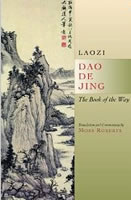
Moss Roberts, 2001, Chapter 19
Tao Te Ching
Lao Tzu: Tao Te Ching
 Translated by Livia Kohn
Dao De Jing: The Book of the Way
"When Sages are rejected as rulers, and the services of
the wise are discarded, the people's wealth will increase a hundredfold;
for
their hearts will all be set on covetousness.
When benevolence and rectitude in government are abjured, such will be the
height of disorder that the people
will revert to their natural qualities of
filial piety and compassion by sheer force of reaction.
When ingenuities of luxury and eagerness for gain are renounced, there will be
no more robbers—
for there will be no accumulations of wealth to be worth
stealing.
These three propositions show that mere externals are insufficient for good
government,
and therefore each man should be ordered to confine himself to
performing his own special work in life."
- Translated by
Frederic Henry Balfour, 1884, Chapter 19
A Chinese Language Version of Chapter 19 of the Tao Te
Ching by Lao Tzu
A
note
on my style of displaying the Chinese characters of the Tao Te Ching
絕聖棄智, 民利百倍.
絕仁棄義, 民復孝慈.
絕巧棄利, 民有無賊.
絕巧棄利, 盜無 ?者
此三者以為文不足,
故令有所屬.
見素抱樸.
少私寡欲.
- Chinese characters, Tao Te Ching, Chapter 19
chüeh shêng ch'i chih, min li pai pei.
chüeh jên ch'i yi, min fu hsiao tz'u.
chüeh hsüeh ch'i li, min yu wu yu.
chüeh ch'iao ch'i li, tao tsê wu yu.
tz'u san chê yi wei wên pu tsu, ku ling yu so shu.
chien su pao p'u.
shao ssu kua yü.
- Wade-Giles Romanization, Tao Te Ching, Chapter 19
Audio Version in Chinese of Chapter 19 of the Tao Te Ching
jue sheng qi zhi, min li bai bei.
jue ren qi yi, min fu xiao ci.
jue ren qi yi, jue xue wu you.
jue qiao qi li, dao zei wu you.
ci san zhe yi wei wen bu zu, gu ling you suo zhu.
jian su bao pu,
shao si gua yu.
-  Pinyin Romanization, Daodejing, Chapter 19
Tao Te Ching in Chinese characters and English (includes a word by word key) from YellowBridge
Tao Te Ching in Chinese characters, Pinyin Romanization, English and German by Dr. Hilmar Alquiros.
Laozi Daodejing: Chapters with Chinese characters, seal script, detailed word by word concordance, Pinyin (tone#), German, French and English.
Chinese and English Dictionary, MDGB
Dao De Jing Wade-Giles Concordance by Nina, Dao is Open
Dao De Jing English and Wade-Giles Concordance by Mike Garofalo
Tao Te Ching in Pinyin Romanization with Chinese characters, WuWei Foundation
Tao Te Ching in Pinyin Romanization
Tao Te Ching in Chinese characters and English
Tao Te Ching in Chinese characters, English, Word by word analysis, Zhongwen
Tao Te Ching: The Definitive Edition
Tao Te Ching in Chinese characters: Big 5 Traditional and GB Simplified
Chinese Characters, Wade-Giles and Pinyin Romanizations, and 16 English Translations for Each Chapter of the Daodejing by Mike Garofalo.
Tao Te Ching in Chinese characters, Pinyin and Wade Giles Romanization spellings, English; a word for word translation of the Guodian Laozi Dao De Jing Version.
Lao Zi's Dao De Jing: A Matrix Translation with Chinese Text by Bradford Hatcher.
"Forget about knowledge and wisdom,
and people will be a hundred times better off.
Throw away charity and righteousness,
and people will return to brotherly love.
Throw away profit and greed,
and there won't be any thieves.
These three are superficial and aren't enough
to keep us at the center of the circle, so we must also:
Embrace simplicity.
Put others first.
Desire little."
- Translated by
John H. McDonald, 1996, Chapter 19
 By Alexander Simkins.
  By Derek Lin.
 By Ming-Dao Deng.
 By Benjamin Hoff.
 By Ming-Dao Deng.
 Translated by Thomas Cleary.
"Rid of formalized
wisdom and learning
People would be a hundredfold happier,
Rid of conventionalized duty and honor
People would find their families dear,
Rid of legalized profiteering
People would have no thieves to fear.
These methods of life have failed, all three,
Here is the way, it seems to me:
Set people free,
As deep in their hearts they would like to be,
From private greeds
And wanton needs."
- Translated by
Witter Bynner, 1944, Chapter 19
"Advocate no sage knowledge,
And people can benefit one hundred times as much.
Advocate no public welfare,
And people will turn to good and kindly feelings again.
Advocate no art and profit,
And people will not commit theft.
Those three are just roughly relegated
And cannot be fully clarified through words:
The best policy is to strive for simplicity,
To reduce selfish desires,
And to apply no confusing knowledge."
- Translated by
Qixuan Liu, Chapter 19
"Therefore - If we ignore intricate learning and knowledge of petty distinctions, we shall be many times better off.
If we neglect to insist upon the formal proprieties of etiquette, our intuitive sympathies will return.
If we abolish opportunities for profiteering "within the law," incentive for political corruption will disappear.
If the foregoing three principles are unclear, then at least the following are understandable:
Simply be yourself.
Act naturally.
Refrain from self-assertiveness.
Avoid covetousness."
- Translated by
Archie J. Bahm, 1958, Chapter 19
"Abandon knowledge, discard wisdom.
The
people will gain a hundred fold.
Abandon the humanities, discard righteousness.
The people will
return to filial love.
Abandon cleverness, discard gain.
Robbers and thieves will be no
more.
These three, being considered not sufficiently aesthetic,
therefore many other devices were added.
Better observe simplicity, encourage primitiveness, lessen the
number of private projects, and moderate desire."
- Translated by
C.
Spurgeon Medhurst, 1905, Chapter 19
This webpage work is licensed under a Creative Commons Attribution-NonCommercial-NoDerivatives 4.0 International License.
Created by Michael P. Garofalo, Green Way Research, Valley Spirit Center, Gushen Grove Notebooks, Vancouver, Washington © 2023 CCA 4.0
 By Hu Xuzehi
 Annotated translation by Victor Mair
  By Ha Poong Kim
 By Hans-Georg Moeller
 Ripening Peaches: Taoist Studies and Practices By Mike Garofalo
 By Roger T. Ames and David T. Hall
 By Arthur Waley
"By giving up their self-righteousness and abandoning their wisdom the people would be immensely improved.
Forsaking Charity and Duty to the neighbours, they might revert to their natural relations.
Abandoning excellence and foregoing gain, the people would have no more thieves.
The cultivation of these things has been a failure, therefore they should go back whence they came.
And for you, do come forth in your natural simplicity, lay hold on verities, restrain selfishness, and rid yourself of ambition."
- Translated by
Walter Gorn Old, 1904, Chapter 19
"Discard the sacred, abandon strategies;
The people will benefit a hundredfold.
Discard philanthropy, abandon morality;
The people will return to natural love.
Discard cleverness, abandon the acquisitive;
The thieves will exist no longer.
However, if these three passages are inadequate,
Adhere to these principles:
Perceive purity;
Embrace simplicity;
Reduce self-interest;
Limit desires."
- Translated by
R. L. Wing, 1986, Chapter 19
"Exterminate learning and there will no longer be worries.
Exterminate
the sage, discard the wise,
And the people will benefit a hundredfold;
Exterminate benevolence, discard rectitude,
And the people will again be filial;
Exterminate ingenuity, discard profit,
And there will be no more thieves and bandits.
These
three, being false adornments, are not enough
And the people must have something to which they can attach themselves:
Exhibit the unadorned and embrace the uncarved block,
Have little thought of self and as few desires as possible."
- Translated by
D. C. Lau, 1963, Chapter 19
 Translation and elucidation by Hua Ching Ni
 Translated by Brian Walker
 Translated by Arthur Waley
 Translated by Lionel and and Herbert Giles
 By Eva Wong
"Banish wisdom, discard knowledge,
And the people will be benefited a hundredfold.
Banish human kindness, discard morality,
And the people will be dutiful and compassionate.
Banish skill, discard profit,
And thieves and robbers will disappear.
If when these three things are done they find life too plain and unadorned,
Then let them have accessories;
Give them Simplicity to look at, the Uncarved Black to hold,
Give them selflessness and fewness of desires.
Banish learning, and there will be no more grieving."
- Translated by
Arthur Waley, 1934, Chapter 19
"It is better merely to live one's life,
realizing one's potential,
rather than wishing
for sanctification.
He who lives in filial piety and love
has no need of ethical teaching.
When cunning and profit are renounced,
stealing and fraud will disappear.
But ethics and kindness, and even wisdom,
are insufficient in themselves.
Better by far to see the simplicity
of raw silk's beauty
and the uncarved block;
to be one with oneself,
and with one's brother.
It is better by far
to be one with the Tao,
developing selflessness,
tempering desire,
removing the wish,
but being compassionate."
-  Translated by Stan Rosenthal, 1984, Chapter 19
"Quit distinguishing the wise and their wisdom,
the saints and their holiness,
and the people will be a hundred times better
off.
Quit distinguishing morality, righteousness and
benevolence
and humanity will stay centered in its
oneness.
Abandon the pursuit of commercial profit
and the number of thieves and robbers will be
greatly reduced.
These are just three impediments to peace and
harmony
and abandoning them is not enough.
Peace and harmony reside in the simplicity
of an uncarved piece of wood.
Quit distinguishing the self and reside in oneness.
Curb your desires and aspirations
and experience the peace and harmony of
simplicity."
- Translated by
John Worldpeace, Chapter 19
 Translated by Eva Wong
  Translated by Philip Ivahoe
 By James Miller
 Translated by Stephen Bokencamp
By Alexander and Annellen Simpkins
Translated by Stephen Bokencamp
By Alexander and Annellen Simpkins Translated by Thomas Cleary
 By Livia Kohn
"Abolish saintliness and reject knowledge: the people will benefit a hundredfold.
Abolish humanity and reject justice: The people will return to filial piety and maternal affection.
Abolish skill and reject profit: thieves and robbers will disappear.
Lest these three be considered as mere words which are inadequate, let there be something to hold on to.
Display natural simplicity and cling to artlessness: decrease selfishness and diminish desires."
- Translated by
Jan J. L. Duyvendak, 1954, Chapter 19
"Don't devise tricks to rule people and people will benefit enormously.
Don't artificially set the rules for family relations and people will return to their nature of loving each other.
Don't reward cleverness and profit, the robberies and the thefts will disappear.
The three measures stated above are not enough.
We must fill people's mind with frugality, honesty, selflessness, and abstinence."
- Translated by
Thomas Z. Zhang, Chapter 19
"Stop being learned and your troubles will end.
Give
up wisdom, discard cleverness,
and the people will benefit a hundredfold.
Give up benevolence, discard moral judgments,
and the people will rediscover natural compassion.
Give
up shrewdness, discard gain,
and thieves and robbers will disappear.
These
three false adornments are not enough to live by.
They must give way to something more solid.
Look for what is simple and hold onto the Uncarved Block.
Diminish thoughts of self and restrain desires."
- Translated by
Tolbert McCarroll, 1982, Chapter 19
Further Teachings of Lao-Tzu: Understanding the Mysteries (Wen Tzu)
 By Thomas Cleary
The Lunar Tao: Meditations in Harmony with the Seasons
 By Lui I-Ming (1780) and translated by Thomas Cleary
Ripening Peaches: Taoist Studies and Practices By Mike Garofalo
Zhuangzi: The Essential Writings with Selections from Traditional Commentaries
"Get rid of "holiness" and abandon "wisdom" and
the people will benefit a hundredfold.
Get rid of "altruism" and abandon
"Justice" and the people will return to filial piety and compassion.
Get
rid of cleverness and abandon profit, and thieves and gangsters will not
exist.
Since the above three are merely words, they are not
sufficient.
Therefore there must be something to include them all.
See
the origin and keep the non-differentiated state.
Lessen selfishness and
decrease desire."
- Translated by
Charles Muller, 1891, Chapter 19
|
Tao Te
Ching |
|||||||||
| 1 | 2 | 3 | 4 | 5 | 6 | 7 | 8 | 9 | 10 |
| 11 | 12 | 13 | 14 | 15 | 16 | 17 | 18 | 19 | 20 |
| 21 | 22 | 23 | 24 | 25 | 26 | 27 | 28 | 29 | 30 |
| 31 | 32 | 33 | 34 | 35 | 36 | 37 | 38 | 39 | 40 |
| 41 | 42 | 43 | 44 | 45 | 46 | 47 | 48 | 49 | 50 |
| 51 | 52 | 53 | 54 | 55 | 56 | 57 | 58 | 59 | 60 |
| 61 | 62 | 63 | 64 | 65 | 66 | 67 | 68 | 69 | 70 |
| 71 | 72 | 73 | 74 | 75 | 76 | 77 | 78 | 79 | 80 |
| 81 | |||||||||
"Abandon holiness,
discard your plans,
and the people will improve.
Let go of duty,
and the people will find devotion.
Renounce learning and ceremony,
and the people will find peace.
Ditch your clever schemes and thirst for profit,
and thieves will disappear.
Better yet,
just return to the purity and simplicity,
of raw silk or unworked wood.
Lose your self-consciousness
and ease yourself away from desire."
- Translated by
Crispin Starwell, Chapter 19
"Tut ab die Heiligkeit, werft weg das
Wissen,
so wird das Volk hundertfach gewinnen.
Tut ab die Sittlichkeit, werft weg die Pflicht,
so wird das Volk zurückkehren zu Kinderpflicht und Liebe.
Tut ab die Geschicklichkeit, werft weg den Gewinn,
so wird es Diebe und Räuber nicht mehr geben.
In diesen drei Stücken
ist der schöne Schein nicht ausreichend.
Darum sorgt, daß die Menschen sich an etwas halten können,
Zeigt Einfachheit, haltet fest die Lauterkeit!
Mindert Selbstsucht, verringert die Begierden!
Gebt auf die Gelehrsamkeit!
So werdet ihr frei von Sorgen."
- Translated by Richard Wilhelm, 1911, Chapter 19
"Echtheit des Wesens Voraussetzung vollkommenerSittlichkeit
Hundertfach wird eine Gemeinschaft gesegnet,
wenn die Menschen nicht mehr wissen
und nicht mehr heilig sein wollen.
Wahre Ehrfurcht und natürliche Liebe
wachsen in einer Gemeinschaft, in der Recht und Sitte
nicht mehr gefordert werden.
Unmoral findet keinen Raum in einer Gemeinschaft,
in der Selbstlosigkeit das Wirken bestimmt.
Das sind drei Grundsätze,
die nicht gefordert, sondern gelebt werden wollen.
Nur wo sie gelebt werden, helfen sie dem Menschen.
Echte Sittlichkeit wird nur,
wo ursprünglich gelebt
und aus lauterem Herzen gehandelt wird;
wo sich die Echtheit des Wesens
in selbstloser Tat und in Wunschlosigkeit offenbart."
- Translated
by Rudolf
Backofen, 1949, Chapter 19
"If we forgot our statesmanship and our wisdom, it would be an hundred
times better for the people.
If we forgot our benevolence and our
justice, they would become again like sons, folk of good will.
If we
forget our machines and our business, there would be no knavery.
These
new methods despised the olden Way, inventing fine names to
disguise their baneness.
But simplicity in the doing of the will of
every man would put an end to vain ambitions and desires."
- Translated by
Aleister Crowley, 1918, Chapter 19
Created by Michael P. Garofalo, Green Way Research, Valley Spirit Center, Gushen Grove Notebooks, Vancouver, Washington © 2023 CCA 4.0
Tao Te Ching: An Illustrated Journey
Tao Te Ching
The Book of Tao: Tao Te Ching - The Tao and Its Characteristics
Ripening Peaches: Taoist Studies and Practices
Taoism: Growth of a Religion
Zhuangzi (Chuang Tsu), Daoist Scripture: Bibliography, Links, Resources, Quotations, Notes
Zhuangzi: Basic Writings
Zhuangzi Speaks: The Music of Nature
Lifestyle Advice from Wise Persons
"If men would lay aside their holiness
And wisdom, they would gain a hundred-fold,
And, if benevolence and righteousness,
Parental care and filial love would hold;
If they would drop their cleverness and gain,
Robbers would cease to trouble, as of old.
Here are three things where decorating fails,
Let them again embrace reality,
Let them restore the purity of old,
Let them return to their simplicity,
Curb selfishness, diminish their desires,
And in the genuine find felicity."
- Translated by
Isaac Winter Heysinger, 1903, Chapter 19
"For thirty years of His life on earth,
The Word was silent before the people.
For fifty centuries the world had waited for the word that its
Maker could speak.
And finally, with the people before Him
On a sloping meadow overlooking a lake,
The Word spoke His word.
The Way revealed His way.
And He Who had taken the lowest place
Spoke to His creatures of lowliness, saying:
"Blessed are the meek,
The poor in spirit,
Blessed are you who weep now."
He Who had come not seeking praise, said:
"Blessed are you when they revile and persecute you."
These were the first words that the Word spoke to mankind,
Being meek, being Himself reviled,
And weeping with those who weep."
- Interpolated by Hieromonk Damascene, 1999, Chapter 19
An Eastern Orthodox interpretation of the Dao and Christ
"Terminate 'sageliness', junk 'wisdom'
the people will benefit a hundred-fold.
Terminate 'humanity', junk 'morality'
the people will respond with 'filiality' and 'affection.'
Terminate 'artistry', junk 'benefit'
thieves and robbers will lack 'existence'.
These three
taken as slogans are insufficient.
Hence, leads us to postulate that to which they belong.
Visualize simplicity and embrace uncarved wood.
Downgrade 'selfishness' and diminish 'desire.'
Terminate learning and you will lack irritation."
- Translated by
Chad Hansen, Chapter 19
"Let the people be free from discernment and relinquish intellection,
Then they will be many times better off.
Stop the teaching of benevolence and get rid of the claim of justice,
Then the people will love each other once more.
Cease the teaching of cleverness and give up profit,
Then there will be no more stealing and fraud.
Discernment and intellection, benevolence and justice, cleverness and profit are nothing but outward refinements.
Hence we must seek something other than these.
Reveal simplicity,
Hold to one's original nature,
Rid one's self of selfishness,
Cast away covetousness,
Eliminate artificial learning and one will be free from anxieties."
- Translated by
Chang Chung-Yuan, Chapter 19
"Si vous renoncez à la sagesse et quittez la prudence,
le peuple sera cent fois plus heureux.
Si vous renoncez à l'humanité et quittez la justice, le peuple reviendra à la
piété filiale et à l'affection paternelle.
Si vous renoncez à l'habileté et quittez le lucre, les voleurs et les brigands
disparaîtront.
Renoncez à ces trois choses et persuadez-vous que l'apparence ne suffit pas.
C'est pourquoi je montre aux hommes ce à quoi ils doivent s'attacher.
Qu'ils tâchent de laisser voir leur simplicité, de conserver leur pureté,
d'avoir peu d'intérêts privés et peu de désirs."
- Translated by Stanislas Julien, 1842, Chapter 19
Spanish
Language Versions of the Tao Te Ching (Daodejing)
Tao Te Ching en Español
Lao Tsé Tao Te Ching 
Tao Te Ching Traducido por Stephen Mitchell, versión española
Tao Te Ching Traducido al español por el Padre Carmelo Elorduy
Lao Tzu-The Eternal Tao Te Ching
Ripening Peaches: Taoist Studies and Practices By Mike Garofalo Maduración Duraznos: Estudios y Prácticas Taoístas por Mike Garofalo
Tao Te Ching
Lao Tzu - Tao Te Ching
Tao te king
Daodejing Español, Inglés, y Chino Versiones Lingüísticas de la Daodejing
Spanish Language Translations of the Tao Te Ching
"Prescribe la sabiduría, descarta la santidad,
y el pueblo se beneficiará cien veces.
Prescribe la bondad humana, descarta la moralidad,
Y el pueblo será abnegado y compasivo.
Prescribe la habilidad, descarta el provecho,
y así bandidos y ladrones desaparecerán.
Pero estas tres normas no bastan.
Por esto, atiende a lo sencillo y genuino,
reduce tu egoísmo, y restringe los deseos."
- Translation from Wikisource, 2013, Tao Te Ching, Capítulo 19
"Renuncia a la sabiduría, abandona el ingenio, y la gente saldráganando con
creces.
Renuncia a la benevolencia, abandona la justicia, y la gente volveráa sus
sentimientos naturales.
Renuncia a la astucia, abandona la agudeza, y los ladrones y
malhechoresdejarán de existir.
Estos son los tres surcos del Tao, y no son suficientes en símismos.
Por ello, han de subordinarse a un Principio superior:
¡Ve lo Simple y abraza lo Primordial!
¡Disminuye el yo y modera los deseos!"
- Translated into Spanish by
Alfonso Colodrón from
the English translation by John C. H. Wu, 1993, Tao Te Ching, Capítulo
#19
"Corta con la sabiduría, rechaza la prudencia, y
la gente se beneficiará cien veces.
Corta con la "humanidad", rechaza la "justicia,"
y la gente recobrará la piedad y el cariño.
Corta con la habilidad, rechaza
la ganancia, y no habrá ladrones y bandoleros.
Estas tres normas son externas e
insuficientes.
Que tenga el pueblo lo que le conviene.
Muestra tu simple
hondura y guarda tu naturaleza primordial.
Haz que tu "yo" sea más pequeño y
limita tus deseos."
- Translation from
Logia Medio Dia, 2015,
Capítulo 19
"Si pudiesemos abandonar la sabiduría y la sagacidad
La gente podría disfrutar el ser todos iguales;
Si pudiesemos abandonar el deber y la justicia
Todo podría basarse en las relacciones de amor o amistad;
Si pudiesemos abandonar el artificio y el provecho
La corrupción y el robo podrían desaparecer.
Aún así, semejantes remedios solo tratarían los síntomas
Por tanto son inadecuados.
La gente necesita remedios personales:
Revela tu auténtico yo,
Abraza tu naturaleza original,
Abandona tu propio interés,
Controla tu deseo."
- Translated by
Antonio Rivas Gonzálvez, 1998, Tao Te Ching, Capítulo #19
"Si pudiesemos abandonar la sabiduría y la sagacidad
La gente podría disfrutar el ser todos iguales;
Si pudiesemos abandonar el deber y la justicia
Todo podría basarse en las relacciones de amor o amistad;
Si pudiesemos abandonar el artificio y el provecho
La corrupción y el robo podrían desaparecer.
Aún así, semejantes remedios solo tratarían los síntomas
Por tanto son inadecuados.
La gente necesita remedios personales:
Revela tu auténtico yo,
Abraza tu naturaleza original,
Abandona tu propio interés,
Controla tu deseo."
- Translated by
Antonio Rivas Gonzálvez, 1998, Tao Te Ching, Capítulo 19
Created by Michael P. Garofalo, Green Way Research, Valley Spirit Center, Gushen Grove Notebooks, Vancouver, Washington © 2023 CCA 4.0
Next Chapter of the Tao Te Ching #20
Previous Chapter of the Tao Te Ching #18
Chapter and Thematic Index to the Tao Te Ching
Comments on Chapter 19
"No doubt that I find "holier than thou" persons and
"true believers" annoying and pretentious. Encountering fewer of them
would be of more benefit to people around the world.
"Abandoning" or "eliminating" wisdom, philanthropy, proper behavior and being
clever seems an excessive demand for a Sage. The route seems very
unnatural. The wise person keeps an over reliance and worship of any
"virtue" under check, restraint, and caution. Sometimes the
anti-Confucian sentiment towards "conventional morality" makes sense, and at
other times it seems crude, selfish, anti-social, and destructive.
Overstatement can sometimes be both instructive and constructive, but we should
not rely to much on this technique.
Humility and minding your own business do have much merit. "Do Gooders"
often do much that produces distress and conflict."
- Mike Garofalo, 10/18/2013
Tao Te Ching
Commentary, Interpretations, Research Tools, Resources
Chapter 19
Lao Tzu: Te-Tao Ching - A New Translation Based on the Recently Discovered Ma-wang-tui
Texts (Classics of Ancient China)
Early Daoist Scriptures. Translated by Stephen R. Bokenkamp. Peter
Nickerson, Contributor. Berkeley, University of California Press, Revised
Edition, 1999. 520 pages. This compilation includes a translation of "The Xiang'er Commentary to the Laozi," pages 78-148, with a long introduction to the
same, pages 29-78. Scholars think this document was created in the late
5th century, CE. It was discovered in Buddhist Grottos in 1920, but parts
were missing.
Lao-Tzu: My Words are Very Easy to Understand. Lectures on the Tao Teh
Ching by Professor
Cheng Man-ch'ing (1902-1975). Translated from the Chinese by Tam C. Gibbs, 1981.
Berkeley, California, North Atlantic Books, 1981, 1991. 240 pages.
Includes the Chinese characters for each of the 81 Chapters. A brief
biography of Professor Cheng is included.
Concordance for the
Tao Te Ching. English, Spanish, and Wade-Giles Romanized Chinese
Subject Terms. By Michael P. Garofalo. 2018.
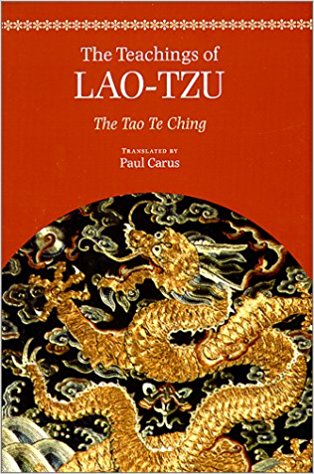
The
Teachings of Lao-Tzu: The Tao Te Ching.
Translation, commentary, and notes by Paul Carus, 1913. New York,
St. Martin's Press, 2000. D.T.
Suzuki worked and studied with Paul Carus around 1905 in Illinois, and
translated together their version the Tao Te Ching.
Daodejing by Laozi: Chapters with Chinese characters, seal script,
detailed word by word concordance, Pinyin (tone#), German, French and English.
This is an outstanding resource for serious students of the Tao Te Ching.
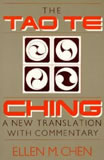
Tao Te
Ching: A New Translation and Commentary. By Ellen M. Chen. Paragon
House, 1989. Detailed glossary, index, bibliography, notes, 274 pages.
One of my favorites.
The New Lao Tzu: A Contemporary Tao Te Ching. By Ray Grigg. Interpretation, comments,
notes by Ray Grigg. Tuttle, 1995. 187 pages.
Das Tao Te King von Lao Tse. Complete versions of all 81 Chapters of
the Tao Te Ching by many different translators in many languages: 124
English, 24 German, 14 Russian, 7 Spanish, 5 French and many other languages.
Links are organized first by languages, and then alphabetically by translators. Formatting
varies somewhat. The original website at Onekellotus went offline in 2012; but, the
extensive collection of these Tao Te Ching versions was
saved for posterity by the Internet Archive Wayback Machine and available as of
9/9/2015. This is an outstanding original collection of
versions of the Daodejing─ the Best on the Internet. Caution:
copyright infringement may sometimes be an issue at this website.
The Tao
and Method: A Reasoned Approach to the Tao Te Ching. A translation and
commentary by Professor Michael Lafargue. New York, SUNY Press, 1994. 640 pages. Detailed
index, bibliography, notes, and tables. An essential research tool.
The Tao
of the Tao Te Ching. A Translation and Commentary by Profesor Michael LaFargue.
State University of New York Press, 1992. Detailed glossary, extensive bibliography, 270 pages. This translation is based on the oldest version ( 168 BCE) of
the Tao Te Ching found in King Ma's tomb - the famous Magwandali
manscript.
81 Chapters arranged in a topical order by the author.
Two Visions of the Way: A Study of the Wang Pi and the Ho-Shang Kung Commentaries on the Lao-Tzu.
By Professor by Alan Kam-Leung Chan. SUNY Series in Chinese
Philosophy and Culture. State University of New York Press, 1991.
Index, bibliography, glossary, notes, 314 pages.
Tao Te Ching
The Taoism Reader
The Lunar Tao: Meditations in Harmony with the Seasons
The Classic of the Way and Virtue: A New Translation of the Tao-te Ching of Laozi as Interpreted by Wang Bi.
Translated by Richard John Lynn. Translations from the Asian Classics
Series. New York, Columbia University Press, 1999. Extensive index,
glossaries, notes, 244 pages.
Tao Te Ching in Chinese characters,
Pinyin Romanization, English and German by Dr. Hilmar
Alquiros.
Tao Te
Ching: Annotated and Explained. Translation and Annotation by Derek
Lin. Foreword by Lama Surya Das. "An inspiring, precise translation
of the ancient Chinese wisdom classic─ with facing-page commentary that brings
the text to life for you." Woodstock, Vermont, 2006, 2010. 167 pages.
How to Live a Good Life:
Advice from Wise Persons
One Old Philosopher's
Notebooks Research, reading, and reflections by Mike Garofalo.
Yellow Bridge
Dao De Jing Comparison Table Provides side by side comparisons of
translations of the Tao Te Ching by James Legge, D. T. Suzuki, and Dwight
Goddard. Chinese characters for each paragraph in the Chapter are on the
left; place your cursor over the Chinese characters to see the Pinyin
Romanization of the Chinese character and a list of meanings.
Translators Index,
Tao Te Ching Versions in English, Translators Sorted Alphabetically by Translator, Links to Books and
Online Versions of the Chapters
Taoism and the Tao Te
Ching: Bibliography, Resources, Links
Spanish Language
Translations of the Tao Te Ching, Daodejing en Español, Translators Index
Chapter 17 in the
Rambling
Taoist Commentaries by Trey Smith. The
Rambling Taoists are Trey Smith and Scott Bradley.
Tao Te Ching, Translations into English: Terebess Asia Online (TAO). 124
nicely formatted complete English language translations, on separate webpages, of the Daodejing.
Alphabetical index by translators. Each webpage has all 81 chapters of the Tao Te
Ching translated into English. A useful collection! Many
reformatted and colored versions from the original collection at
Das Tao Te King von Lao Tse. Caution: copyright infringement may
sometimes be an
issue at this website.
Tao Te Ching: The Definitive Edition
Chinese Reading of the Daodejing
Wang Bi's Commentary on the Laozi with Critical Text and Translation.
By Professor Rudolf G. Wagner. A SUNY Series in Chinese Philosophy and
Culture. English and Mandarin Chinese Edition.
State University of New York Press; Bilingual edition (October 2003). 540
pages. Wang Bi (Wang Pi, Fusi), 226-249 CE,
Commentary on the Tao Te
Ching.
By Hans-Georg Moeller. Columbia University Press, 2006, 176 pages.
Valley Spirit, Gu Shen,
Concept, Chapter 6
Valley Spirit Center in Red
Bluff, California.
Sacred
Circle in the Gushen Grove.
Lao-tzu's Taoteching
The Way and Its Power: Lao Tzu's Tao Te Ching and Its Place in Chinese
Thought. By Arthur
Waley, 1889-1966. Translation and commentary by Arthur Waley in 1934.
Part of the UNESCO collection of representative works, 1994. Grove Press,
First Edition, 1994. 262 pages.
Reading Lao Tzu: A Companion to the Tao Te Ching with a New Translation
Dao De Jing: A Philosophical Translation
Thematic Index to the
81 Chapters of the Tao Te Ching
Lieh-Tzu: A Taoist Guide to Practical Living
Revealing the Tao Te Ching: In-depth Commentaries on an Ancient Classic
Cloud Hands Blog
Mike Garofalo writes about Mind-Body Arts, Philosophy, Taoism, Gardening, Taijiquan, Walking, Mysticism,
Qigong, and the Eight Ways.
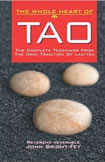
The Whole Heart of Tao:
The Complete Teachings From the Oral Tradition of Lao Tzu.
Gushen Grove Notebooks for the Tao Te Ching
Green Way Research, Valley Spirit
Center, Fir Grove, Gushen Grove Notebooks, Vancouver, Washington
Green Way Research, 2011-2018.
Indexed and Compiled by
Michael P. Garofalo
This webpage was last improved, reformatted,
changed, modified or updated on
February 19, 2023.
This webpage was first distributed online on February 13, 2011.
Created by Michael P. Garofalo, Green Way Research, Valley Spirit Center, Gushen Grove Notebooks, Vancouver, Washington © 2023 CCA 4.0
Brief Biography of Michael P. Garofalo, M.S.

Ripening Peaches: Daoist Studies and Practices
Zhuangzi (Chuang Tzu, Zhuang Zhou, Master Chuang) 369—286 BCE
Taoist Perspectives: My Reading List
Bodymind Theory and Practices, Somaesthetics
How to Live a Good Life: Advice from Wise Persons
Pleasures, Satisfaction, Desires
Qigong (Chi Kung) Health Practices
One Old Daoist Druid's Final Journey: Notebooks of the Librarian of Gushen Grove
Index to Cloud Hands and Valley Spirit Websites
Index to English Language Translators of the Tao Te Ching
Recurring Themes (Terms, Concepts, Leimotifs) in the Tao Te Ching
Spanish Language Translations of the Tao Te Ching
The Tao Te Ching (Dao De Jing) by Lao Tzu (Laozi) circa 500 BCE
|
Tao Te
Ching |
|||||||||
| 1 | 2 | 3 | 4 | 5 | 6 | 7 | 8 | 9 | 10 |
| 11 | 12 | 13 | 14 | 15 | 16 | 17 | 18 | 19 | 20 |
| 21 | 22 | 23 | 24 | 25 | 26 | 27 | 28 | 29 | 30 |
| 31 | 32 | 33 | 34 | 35 | 36 | 37 | 38 | 39 | 40 |
| 41 | 42 | 43 | 44 | 45 | 46 | 47 | 48 | 49 | 50 |
| 51 | 52 | 53 | 54 | 55 | 56 | 57 | 58 | 59 | 60 |
| 61 | 62 | 63 | 64 | 65 | 66 | 67 | 68 | 69 | 70 |
| 71 | 72 | 73 | 74 | 75 | 76 | 77 | 78 | 79 | 80 |
| 81 | |||||||||
Return to the Top of this Webpage