Classic of the Way and Virtue
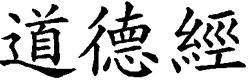
By Lao Tzu (Laozi)
Compiled and Indexed by Michael P. Garofalo
Green Way Research, Valley Spirit Center, Gushen Grove Notebooks, Vancouver, Washington
Chapter 57 Chapter 59 Index to All the Chapters Taoism Cloud Hands Blog
Classic Book (Ching) about the Tao (Way, Nature, Patterns, Processes) and Te (Virtue, Potency, Power, Integrity, Wise Person, Sage)
Indexing, Concordance, Search Terms, Topics, Themes
English and Chinese (Wade-Giles) Terms: Government or Politics (chêng), Transformations According to
Circumstances, Dull or Muddled (mên), Sages, Simple or Sincere or Honest
(shun), Good and Bad, People (min, jên), Effortless, Searching or
Prying (ch'a), Self-Regulating, Needy or Wanting (ch'üeh), Good
Government, Misery or Misfortune (huo), Happiness or Luck (fu), State, Law, Sage, Less Government,
Place or Home (so), Facilitate, Hidden or Concealed (fu), Adaptation to Change,
Liberal Government, Know (chih), Wise Leader, Limit or End (chi), Modeling, Kindness,
Correct or Standard (chêng), Cutting, Process, Facilitating, Non-Harming,
Abnormal (ch'i), Hiding One's Light, Make or Do (wei), Justice, Peace,
Goodness or Excellence (shan), Straightforward, Direct, Illuminate, Bright, Dazzle, Goodness,
Unlucky or Sinister or Evil (yao),
Confused or Deluded (mi), Rectitude, Daily (jih), Just, Strong or
Firm (ku), Lasting (chiu), Upright, Holy Man or Wise Man (shêng
jên), Sharp or Pointed (fang), Injure or Cut (ko), Enlightened,
Corner or Angular (lien), Hurt or Injure (k'uei), Straight or True
(chih), Severe or Strained (ssu), Fair, Bright or Brilliant (kuang),
Shine or Flash (yao), Candor, 順化
Términos en Español: Transformaciones, Sabios, Buenos, Malos, Facilidad, Autorregulado, Buen Gobierno, Estado, Derecho, Menos Gobierno, Facilitar, Adaptación al Cambio, Gobierno Liberal, Modelando, Generosidad, Corte, Proceso, Felicidad , Justicia, Paz, Honestidad, Sencillo, Directo, Illuminate, Brillante, Bondad, Maldad, Rectitud, Iluminado, Feria, Política, Dull, Patas Arriba, Gente, Oculto, Sencilla, Sincera, Límite, En Búsqueda, Conocer, Fisgón, Necesitar, Querer, Infortunio, Felicidad, Suerte, Lugar, Hogar, Embotado, Casa, Fin, Correcta, Excelencia, Bondad, Estándar, Anormal, Hacer, Mala Suerte, Siniestro, Confundido, Engañados, Diario, Fuerte, Firme, Duradera, Santo, Puntiagudo, Herir, Agudo, Cortada, Daño, Esquina, Ángulo, Recto, Cierto, Grave, Tensa, Brillante, Brillo, Destello, Centella.
Electronic Concordance for Chapters 1 - 81 of the Tao Te Ching
English Language Translations of the Tao Te Ching
"When the ruler looks repressed the people will be happy
and satisfied;
When the rule looks lively and self-assured the people will be carping and
discontented.
“It is upon bad fortune that good fortune leans, upon good fortune that bad
fortune rests.”
But though few know it, there is a bourn where there is neither right nor wrong;
In a realm where every straight is doubled by a crooked,
And every good by an ill, surely mankind has gone long enough astray?
Therefore the Sage
Squares without cutting,
Shapes the corners without lopping,
Straightens without stretching,
Gives forth light without shining."
- Translated by
Arthur Waley,
1934, Chapter 58
"When
the government is lazy and dull,
Its people are unspoiled;
When the government is efficient and smart,
Its people are discontented.
Disaster
is the avenue of fortune,
And fortune is the concealment for disaster.
Who would be able to know its ultimate results?
As it is, there would never be the normal.
But the normal would immediately revert to the deceitful.
And the good revert to the sinister.
Thus long has mankind gone astray!
Therefore
the Sage is square and has firm principles,
but not cutting sharp-corners,
Has integrity but does not hurt others,
Is straight, but not high-handed,
Bright, but not dazzling."
- Translated by
Lin Yutang,
1948, Chapter 58
"Transformation Without Friction
Shun Hua
When the government is shrouded in gloom,
The people will be simple and honest.
When the government is sharp and officious,
The people will get disgusted and discontented.
Misfortune is what fortune leans on;
Fortune is where misfortune conceals itself.
Who can know the ultimate result?
Is there no justice?
Anyway, justice will become injustice again,
And good will turn into evil once more.
Mankind has been thus deluded for a long time.
That's why the Sage acts four-square,
But does not "cut" people to his own shape;
He has a high sense of integrity,
But is not offensive to people;
He is upright and straightforward,
But does not push people around;
He is bright and brilliant,
But does not outshine people."
- Translated by
Henry Wei, 1982, Chapter 58
"Where the leader is quiet, quiet,
The people are simple and happy.
Where the leader is dishonest, dishonest,
The people are tricky and unhappy.
Bad fortune is what
good fortune leans on,
Good fortune is what
bad fortune hides in.
Who knows the final end of this process?
Is there not a normal of right?
What is normal, soon
becomes not normal,
And what is good soon
turns bad.
Long indeed have the
people been in difficulty.
The Complete Thinker:
makes even without cutting,
Is honest without hurting,
Is direct without effort,
Teaches without causing the mind to be excited."
- Translated by
J. L. Trottier, 1994, Chapter 58
"Great Expectations: No rules, no regulations
When government is restrained, people are pure and simple.
When government is meddlesome, people are found wanting.
Disaster arises from good fortune.
Good fortune hides within disaster.
Who can say how things will turn out in the end?
Life is just not fair.
Normal becomes abnormal. Good becomes evil.
People are as confused as the day is long.
This is why wise people
are straight with us, but do not put us down.
Are honest but not hurtful.
Are direct but not reckless.
Are bright but not flashy.
- Translated by
Amy and Roderic Sorrell, 2003, Chapter 58
"The less administration the more beneficial is the harmony.
The more administration the more unpleasant confusion grows.
Trusting letting-go produces agreement and happiness.
Decisive attempt at control causes disagreement and misfortune.
One who does not give thought to what he does turns order into disorder,
fortune into misfortune enlightenment into blinding and dazzling.
How different is the Sage:
He is just without judging.
He guides without regulating.
He is a model without deforming.
He shines without blinding."
- Translated by
K. O. Schmidt, 1975, Chapter 58
"Group process evolves naturally.
It is self-regulating.
Do not interfere.
It will work itself out.
Efforts to control process usually fail.
Either they block process or make it
chaotic.
Learn to trust what is happening.
If there is silence, let it grow; something
will emerge.
If there is a storm, let it rage, it will resolve into calm.
Is the group discontented?
You can't make it happy.
Even if you could, your
efforts might well deprive the group of a very creative struggle.
The wise leader knows how to facilitate the unfolding group process, because the
leader is also a process.
The group's process and the leader's process unfold in
the same way, according to the same principle.
The leader knows how to have a profound influence without making things happen.
For example, facilitating what is happening is more potent than pushing for what
you wish were happening.
Demonstrating or modeling behaviour is more potent than
imposing morality.
Unbiased positions are stronger than prejudice.
Radiance
encourages people, but outshining everyone else inhibits them."
- Translated by
John Heider,
Chapter 58

Created by Michael P. Garofalo, Green Way Research, Valley Spirit Center, Gushen Grove Notebooks, Vancouver, Washington © 2020 CCA 4.0
Tao Te Ching
Lao Tzu: Tao Te Ching
Tai Chi Chuan, Qigong, Taoist Body-Mind Arts and Practices
How to Live a Good Life: Advice from Wise Persons
Lao-Tzu and the Tao-Te-Ching Translated by Livia Kohn
Dao De Jing: The Book of the Way
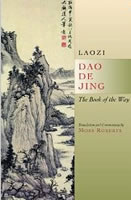
"When the government is unobtrusive, the people will be
simple and honest.
When the government is dictatorial, the people will be seized with panic.
Fortune depends on misfortune.
Misfortune is hidden in fortune.
He who knows how to stay within the limits will not have misfortune.
Correctness will lead to deceit.
Good will lead to evil.
Nothing can remain always the same.
People have been confused by this since ancient times.
That is why the sage
behaves correctly without hurting others,
behaves honestly without damaging others,
behaves straightforwardly without vilifying others,
behaves brightly without dazzling others."
- Translated by
Chao-Hsiu Chen,
Chapter 58
"When the government (cheng) is dull,
Its people are wholesome;
When the government is efficient (ch'a),
Its people are deficient (ch'üeh).
Calamities (huo) are what blessings depend on,
In blessings are latent calamities (huo).
Who knows where is the turning point (chi)?
Because there is no longer the normal (cheng),
The normal reverts and appears as the strange (ch'i),
The good reverts and appears as the uncanny.
Rulers (jen) have lost their way,
For a long stretch of days.
Therefore the sage is square but not cutting (ko),
Sharp but not injurious,
Straight but not overreaching,
Bright (kuang) but not dazzling."
- Translated by
Ellen M. Chen,
Chapter 58
"The government that seems the most unwise,
Oft
goodness to the people best supplies;
That which is meddling, touching
everything,
Will work but ill, and disappointment bring.
Misery! -happiness
is to be found by its side!
Happiness! - misery lurks beneath it!
Who knows what
either will come in the end?
Shall we then dispense with correction?
The method
of correction shall by a turn become distortion, and the good in it shall by a
turn become evil.
The delusion of the people on this point has indeed
subsisted for a long time.
Therefore the sage is like a square which cuts no
one with its angles:
like a corner which injures no one with its
sharpness.
He is straightforward, but allows himself no license;
he is bright,
but does not dazzle."
- Translated by
Unbekannten, Chapter 58
"Modest, and modest will be the government, then prosperous, and prosperous
will be the people!
Shrewd will be the government, then discontented, and discontented will be
the people!
Catastrophe rests upon fortune.
Fortune underlies catastrophe.
Who knows the ultimate answers?
What is normal soon becomes abnormal.
What is auspicious soon becomes ominous.
Do away with dogmatism!
Indeed, it is a long, long time ago since Man lost his way of Dao!
Therefore, a Sage is:
solidly square but has no sharp corners;
purely austere but not harmful;
straightly upright but not offensive;
humbly modest but not submissive;
and harmoniously bright but not dazzling."
- Translated by
Tang Zi-Chang, Chapter 58
"When the nation is ruled with a light hand,
The people are simple.
When the nation is ruled harshly,
The people are cunning.
The sage is sharp but not cutting,
pointed but not piercing,
straightforward but not unrestrained,
bright but not glittery."
- Translated by
Ned Ludd, Chapter 58
"When the ruler knows his own heart the people are simple and
pure
When he meddles with their lives they become restless and
disturbed
Bad fortune, yes ?it rests upon good fortune
Good fortune, yes ?it hides within bad fortune
Oh the things that Heaven sends ?br> Who can know their final
aim?
Who can tell of their endless ways?
Today the righteous turn to trickery
Tomorrow the good turn to darkness
Oh what delusion abounds and every day it grows worse!
But the Sage is here upon the Earth to gently guide us back
He cuts but does not harm
He straightens but does not disrupt
He illumines but does not dazzle"
- Translated by
Jonathan Star, 2001, Chapter 58
 Translation and elucidation by Hua Ching Ni
 Translated by Brian Walker
Tai Chi Chuan, Qigong, Taoist Body-Mind Arts and Practices
How to Live a Good Life: Advice from Wise Persons
 Translated by Arthur Waley
 Translated by Lionel and and Herbert Giles
 By Eva Wong
"When the government is dull,
The people are simple.
When the government is keen,
The people are discontented.
Bad fortune is what good fortune leans on;
Good fortune is where bad fortune lurks.
Who knows the fortune's end?
There is nothing straight.
What is straight turns monstrous.
What is beautiful turns grotesque.
Man has been deluded
From time immemorial.
Therefore the sage
Is square without cutting;
Honest without scraping;
Straight without overbearing;
Bright without dazzling."
- Translated by
Ha Poong Kim,
Chapter 58
A Chinese Language Version of Chapter 58 of the Tao Te
Ching by Lao Tzu
A
note
on my style of displaying the Chinese characters of the Tao Te Ching
其政悶悶, 其民淳淳.
其政察察, 其民缺缺.
禍兮福之所倚.
福兮禍之所伏.
孰知其極.
其無正.
正復為奇.
善復為妖.
人之迷其日固久.
是以聖人方而不割.
廉而不劌.
直而不肆.
光而不燿.
- Chinese characters, Tao Te Ching,
Chapter 58
ch'i chêng mên mên, ch'i min shun shun.
ch'i chêng ch'a ch'a, ch'i min ch'üeh ch'üeh.
huo hsi fu chih so yi.
fu hsi huo chih so fu.
shu chih ch'i chi.
ch'i wu chêng.
chêng fu wei ch'i
shan fu wei yao.
jên chih mi ch'i jih ku chiu.
shih yi shêng jên fang erh pu ko.
lien erh pu k'uei.
chih erh pu ssu.
kuang erh pu yao.
- Wade-Giles Romanization, Tao Te Ching,
Chapter 58
Audio
Version in Chinese of Chapter 58 of the Tao Te Ching
qi zheng men men, qi min chun chun.
qi zheng cha cha, qi min que que.
huo xi fu zhi suo yi.
fu xi huo zhi suo fu.
shu zhi qi ji.
qi wu zheng.
zheng fu wei qi.
shan fu wei yao.
ren zhi mi qi ri gu jiu.
shi yi sheng ren fang er bu ge.
lian er bu gui.
zhi er bu si.
guang er bu yao.
-  Pinyin Romanization, Daodejing, Chapter 58
Tao Te Ching in Chinese characters and English (includes a word by word key) from YellowBridge
Tao Te Ching in Chinese characters, Hanyu Pinyin (1982) Romanization, English and German by Dr. Hilmar Alquiros.
Laozi Daodejing: Chapters with Chinese characters, seal script, detailed word by word concordance, Pinyin (tone#), German, French and English.
Chinese and English Dictionary, MDGB
Dao De Jing Wade-Giles Concordance by Nina, Dao is Open
Dao De Jing English and Wade-Giles Concordance by Mike Garofalo
Tao Te Ching in Pinyin Romanization with Chinese characters, WuWei Foundation
Tao Te Ching in Pinyin Romanization
Tao Te Ching in Chinese characters and English
Tao Te Ching in Chinese characters, English, Word by word analysis, Zhongwen
Tao Te Ching: The Definitive Edition
The Feminine Tao: Early Women Masters East and West Includes seal script, and English-Chinese translation scheme.
Tao Te Ching in Chinese characters: Big 5 Traditional and GB Simplified Includes seal script and English-Chinese glossary.
Chinese Characters, Wade-Giles and Pinyin Romanizations, and 16 English Translations for Each Chapter of the Daodejing by Mike Garofalo.
Tao Te Ching in Chinese characters, Wade-Giles and Pinyin Romanization spellings, English; a word for word translation of the Guodian Laozi Dao De Jing Version.
Lao Zi's Dao De Jing: A Matrix Translation with Chinese Text by Bradford Hatcher.
"When the government is blunt and inactive the people will be happy and prosperous;
When the government is discriminative, the people will be dissatisfied and restless.
It is upon misery that happiness rests;
It is under happiness that misery lies.
Who then can know the supremacy (good government)?
Only when the government does no rectifying.
Otherwise the rectitude will again become stratagem,
And good become evil.
Men have been ignorant of this, since long ago.
Therefore the Sage is square but does not cut others;
He is angled but does not chip others;
He is straight but does not stretch others;
His is bright but does not dazzle others."
- Translated by
Ch'u Ta-Kao, 1904, Chapter 58
"When the country is governed through simplicity and leniency,
The people are genuine and honest.
When the country is governed through harshness and sharp investigation,
The people are more deceitful and dishonest.
From misfortune, good fortune is derived.
In good fortune, misfortune is conceived.
Who can determine the ultimate truth?
Or is there no ultimate truth at all?
As truth often turns out to be untruth,
Goodness often turns out to be evil.
This has long confused the people.
Thus, when the wise deals with things he is firm in his principles,
Yet not sharp.
He is pure, yet not harmful.
He is straightforward, yet not violent.
He is illuminated, yet not glittery."
- Translated by
Chang Chung-Yuan, Chapter 58
"When leaders do not install too
many law restrictions,
People are happy,
Otherwise people are unhappy.
From greater abundance, poverty follows,
From greater poverty,
abundance will arise.
Thus the middle way is the best.
The Wise
Person follows the middle way,
He is himself a live example.
He does not
push his will, thus people follow him,
Correct in actions, good results are
achieved.
He follows discipline, but tolerant with others,
People will
notice his contentment."
- Translated by
Sarbatoare, Chapter 58
"When the hand of the ruler is light,
the people do not contrive,
but when the country is severely ruled,
the people grow in cunning.
The actions of the sage are sharp,
but they are never cutting,
they are pointed, though never piercing,
they are straightforward, not contrived,
and not without restraint,
brilliant but not blinding.
This is the action of the sage,
because he is aware
that where happiness exists,
there is also misery and strife;
that where honesty may be found,
there is occasion for dishonesty,
and that men may be beguiled.
The sage knows that no-one can foretell
just what the future holds."
- Translated by
Stan Rosenthal, 1984, Chapter 58
 Translated by Eva Wong
  Translated by Philip Ivahoe
 By James Miller
 Translated by Stephen Bokencamp
Tai Chi Chuan, Qigong, Taoist Body-Mind Arts and Practices
How to Live a Good Life: Advice from Wise Persons
 By Alexander and Annellen Simpkins
 Translated by Thomas Cleary
 By Livia Kohn
"The government that exerciseth the least care serveth
the people best;
that which meddleth with everybody's business worketh all manner of harm.
Sorrow and joy are bedfellows; who can divine the final result of either?
Shall we avoid restriction?
Yea; restriction distorteth nature, so that
even what seemeth good in it is evil.
For how long have men suffered
from misunderstanding of this.
The wise man is foursquare, and avoideth aggression; his corners do not
injure others.
He moveth in a straight line and turneth not aside therefrom;
he is brilliant but doth not blind with his brightness."
- Interpolation by
Aleister Crowley,
Chapter 58
"When the government is muddled and confused,
The people are genuine and sincere.
When the government is discriminate and clear,
The state is crafty and cunning.
Disaster is that on which good fortune depends.
Good fortune is that in which disaster is concealed.
Who knows where it will end?
For there is no [fixed] "correct".
The correct turns into the "deviant".
And good turns into evil.
People's state of confusion
Has certainly existed for a long time.
Therefore be square but do not cut,
Be sharp but do not stab,
Be straightforward but not unrestrained,
Be bright but do not dazzle."
- Translation by
Bram den Hond, Chapter 58
"If a government is unobtrusive,
the people become whole.
If a government is repressive,
the people become treacherous.
Good fortune has its roots in disaster,
and disaster lurks with good fortune.
Who knows why these things happen,
or when this cycle will end?
Good things seem to change into bad,
and bad things often turn out for good.
These things have always been hard to comprehend.
Thus the Master makes things change
without interfering.
She is probing yet causes no harm.
Straightforward, yet does not impose her will.
Radiant, and easy on the eye."
- Translated by
J. H. McDonald, 1996, Chapter 58
Created by Michael P. Garofalo, Green Way Research, Valley Spirit Center, Gushen Grove Notebooks, Vancouver, Washington © 2020 CCA 4.0
By Alexander Simkins.  By Derek Lin.
 By Ming-Dao Deng.
 By Benjamin Hoff.
 By Ming-Dao Deng.
Tai Chi Chuan, Qigong, Taoist Body-Mind Arts and Practices
How to Live a Good Life: Advice from Wise Persons
 Translated by Thomas Cleary.



"When the governor is magnanimous,
The people will become simple;
When the governor is harsh,
The people will become cunning.
Disaster hides itself behind good fortune;
Good fortune leans against disaster.
Who knows the secret?
There is no definite answer.
The normal changes into the abnormal;
The good changes into the evil.
People have been long perplexed.
Thus the sage is square and upright
But does not wound the people;
He is edged but does not cut the people;
He is candid but does not behave wantonly;
He gives light but does not dazzle."
- Translated by
Gu Zhengkun,
Chapter 58
"When a government is unobtrusive and tolerant the people will be happy and
prosperous;
when a government is suspicious and strict the people are dissatisfied and
crafty.
Good fortune is linked to calamity; misery is tied to happiness.
So who can tell when the end of this will come?
Is there no measuring-stick for the norm?
What is seen now as right and true will certainly someday be seen as wrong and
false.
The people have labored under this sea of vexations for a long time.
Therefore the Master is square without sharp cutting corners.
His straightness is not strained; he is pointed without being piercing.
And he is bright but not blinding."
- Translation by
John Dicus, 2002, Chapter 58
"When the government is not in evidence the people are honest and loyal.
When the government is meddlesome the people are in want.
Misery! Happiness lies by its side! Happiness!
Misery lurks underneath.
He who understands the end has progressed beyond limitations.
The regular becomes irregular; the good becomes unpropitious.
This has bewildered men from time immemorial!
Hence the Holy Man is a square which has not been cut, and whose corners have
not been planed;
he is straightforward without being reckless, and
bright without being dazzling."
- Translated by
C. Spurgeon Medhurst, 1905, Chapter 58
 By Hu Xuzehi
 Annotated translation by Victor Mair
  By Ha Poong Kim
Tai Chi Chuan, Qigong, Taoist Body-Mind Arts and Practices
How to Live a Good Life: Advice from Wise Persons
 By Hans-Georg Moeller
 Ripening Peaches: Taoist Studies and Practices By Mike Garofalo
 By Roger T. Ames and David T. Hall
 By Arthur Waley
"When a nation is ruled with a light touch, people lead simple lives.
"When the government is sluggish and dull,
The people are honest and content;
When the government is discriminating and exacting,
The people are wily and restless.
Calamity is what good fortune depends on.
Good fortune is what calamity hides in.
Who knows their utmost?
Is it not better to have no rectitude?
Rectitude returns to trickery;
And goodness returns to evil.
The people's delusion has long existed.
Therefore, the Sage is square but not cutting;
is honest but does not hurt;
is straight but does not bully;
is bright but does not shine."
- Translated by
Paul J. Lin, Chapter 58
"When the government is laid back
The people
are relaxed.
When the government is nitpicking
The people have
anxiety.
Misfortune depends upon fortune.
Fortune conceals
misfortune.
What has a definite delimitation?
Or abnormality?
The
normal reverts to strangeness.
Goodness reverts to perversion.
People
certainly have been confused for a long time.
Therefore the sage squares
things without cutting.
Edges without separating.
Straightens without
lining up.
Shines but does not glare."
- Translated by
Charles Muller, 1891, Chapter 58
Walking the Way: 81 Zen Encounters with the Tao Te Ching
The Tao of Zen
Tai Chi Chuan, Qigong, Taoist Body-Mind Arts and Practices
How to Live a Good Life: Advice from Wise Persons
Tao Te Ching: Zen Teachings on the Taoist Classic
Buddhism and Taoism Face to Face: Scripture, Ritual, and Iconographic Exchange in Medieval China

"If the government is from the heart the people will be richer and richer.
If the government is full of restrictions the people will be poorer and poorer.
Miserable! you rely on coming happiness.
Happy! you crouch under dread of coming misery.
You may know the end from the beginning.
If a ruler is in line with Inner Life his strategy will come right, his
bad luck will become good,
and the people will be astonished.
Things have been so for a long time.
That is why the self-controlled man is just and hurts no one, is true
and takes no license;
he shines, and offends not by his brightness."
- Translated by
Isabella Mears, 1916, Chapter 58
"When government is lazy and informal
The people are kind and honest;
When government is efficient and severe
The people are discontented and deceitful.
Good fortune follows upon disaster;
Disaster lurks within good fortune;
Who can say how things will end?
Perhaps there is no end.
Honesty is ever deceived;
Kindness is ever seduced;
Men have been like this for a long time.
So the sage is firm but not cutting,
Pointed but not piercing,
Straight but not rigid,
Bright but not blinding."
- Translated by
Peter A. Merel, Chapter 58
"When the government does not interfere, the people are simple and happy.
When the government does interfere, the people are tense and cunning.
Disaster is what blessing perches on.
Blessing is where disaster abides.
Who can say what the ultimate end of all possibilities will be?
Appropriate means soon become unfitting.
Good means soon turn to evil.
Long indeed have the people been perplexed by the endless, topsy-turvy movement of life.
Therefore, one of subtle virtue dissolves and eliminates the vicious cycle of duality.
He may have sharp corners, but he does not jab.
He may extend himself, but not at the expense of others.
He may shine, but he does not dazzle."
- Translated by
Hua-Ching Ni, 1995, Chapter 58
Further Teachings of Lao-Tzu: Understanding the Mysteries (Wen Tzu)
 Translated by Thomas Cleary
Tai Chi Chuan, Qigong, Taoist Body-Mind Arts and Practices
How to Live a Good Life: Advice from Wise Persons
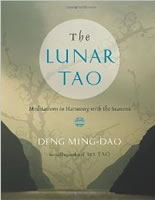
The Lunar Tao: Meditations in Harmony with the Seasons
 By Lui I-Ming (1780) and translated by Thomas Cleary
Ripening Peaches: Taoist Studies and Practices By Mike Garofalo
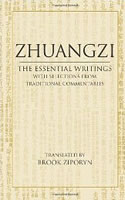
Zhuangzi: The Essential Writings with Selections from Traditional Commentaries
"With a government of liberality
The people all enjoy prosperity,
When government has keen and prying eyes,
Then poverty and misery arise.
For happiness, alas! but only hides
The place behind where misery abides,
And misery ever leans on happiness;
Who knows its end? or is it limitless?
When uprightness in turn appears as strange,
Then goodness, too, to strangeness soon will change,
Confusion of mankind! its day of wrong!
Assuredly it has continued long.
Therefore, the sage is square, hut injures none,
Is angular, but hurt has never done,
Is strict, yet no restriction undertakes,
And dazzles not while he
illuminates."
- Translated by
Isaac Winter Heysinger, 1903, Chapter 58
|
Tao Te
Ching |
|||||||||
| 1 | 2 | 3 | 4 | 5 | 6 | 7 | 8 | 9 | 10 |
| 11 | 12 | 13 | 14 | 15 | 16 | 17 | 18 | 19 | 20 |
| 21 | 22 | 23 | 24 | 25 | 26 | 27 | 28 | 29 | 30 |
| 31 | 32 | 33 | 34 | 35 | 36 | 37 | 38 | 39 | 40 |
| 41 | 42 | 43 | 44 | 45 | 46 | 47 | 48 | 49 | 50 |
| 51 | 52 | 53 | 54 | 55 | 56 | 57 | 58 | 59 | 60 |
| 61 | 62 | 63 | 64 | 65 | 66 | 67 | 68 | 69 | 70 |
| 71 | 72 | 73 | 74 | 75 | 76 | 77 | 78 | 79 | 80 |
| 81 | |||||||||
"When the government is non-discriminative and dull,
The people are
contented and generous.
When the government is searching and
discriminative,
The people are disappointed and contentious.
Calamity is that upon which happiness depends;
Happiness is that in which calamity is latent.
Who knows when the limit will be reached?
Is there no correctness
used to govern the world?
Then the correct again becomes the perverse.
And the good again will become evil.
The people have been deluded for a
long time.
Therefore the sage is as pointed as a square but does not pierce.
He
is as acute as a knife but does not cut.
He is as straight as an unbent
line but does not extend.
He is as bright as light but does not dazzle."
- Translated by
Wing-Tsit Chan, 1963, Chapter 58
"Das Geheimnis gegensätzlichen Werdens
Eine Verwaltung, die man nicht merkt, macht das Volk froh.
Eine Verwaltung, die alles bestimmen will,
macht das Volk schlecht.
Glück ruht auf Leid. Leid harrt im Glück.
Wer weiß, was eintreffen wird?
Ordnung führt zu Unordnung.
Gutes verkehrt sich in Schlechtes.
Der Mensch erkennt in seiner Verblendung
nicht den Wechsel aller Dinge.
Der Weyse ist:
rechtwinklig von Art - doch stösst nicht an,
unantastbar - doch nicht unnahbar,
offen und gerade - doch nicht verletzend,
leuchtend - doch nicht blendend."
- Translated
by Rudolf
Backofen, 1949, Chapter 58
"Wessen Regierung still und unaufdringlich ist,
dessen Volk ist aufrichtig und ehrlich.
Wessen Regierung scharfsinnig und stramm ist,
dessen Volk ist hinterlistig und unzuverlässig.
Das Unglück ist's, worauf das Glück beruht;
das Glück ist es, worauf das Unglück lauert.
Wer erkennt aber, daß es das Höchste ist,
wenn nicht geordnet wird?
Denn sonst verkehrt die Ordnung sich in Wunderlichkeiten,
und das Gute verkehrt sich in Aberglaube.
Und die Tage der Verblendung des Volkes
dauern wahrlich lange.
Also auch der Berufene:
Er ist Vorbild, ohne zu beschneiden,
er ist gewissenhaft, ohne zu verletzen,
er ist echt, ohne Willkührlichkeiten,
er ist licht, ohne zu blenden."
- Translated by Richard Wilhelm, 1911, Chapter
58
"Whose government is unostentatious,
quite unostentatious, his people will be prosperous, quite
prosperous.
Whose government is prying, quite prying, his people will be
needy, quite needy.
Misery, alas! rests upon happiness.
Happiness, alas! underlies misery.
But who foresees the catastrophe?
It will not be prevented!
What is ordinary becomes again extraordinary.
What is good becomes again unpropitious.
This bewilders people, and it happens constantly since times
immemorial.
Therefore the holy man is square but not sharp, strict but not
obnoxious, upright but not restraining, bright but not
dazzling."
- Translated by
D. T.
Suzuki, 1913, Chapter 58
Created by Michael P. Garofalo, Green Way Research, Valley Spirit Center, Gushen Grove Notebooks, Vancouver, Washington © 2020 CCA 4.0
Tao Te Ching: An Illustrated Journey
Tao Te Ching
The Book of Tao: Tao Te Ching - The Tao and Its Characteristics
Ripening Peaches: Taoist Studies and Practices
Taoism: Growth of a Religion
Zhuangzi (Chuang Tsu), Daoist Scripture: Bibliography, Links, Resources, Quotations, Notes
Zhuangzi: Basic Writings
Zhuangzi Speaks: The Music of Nature
Tai Chi Chuan, Qigong, Taoist Body-Mind Arts and Practices
How to Live a Good Life: Advice from Wise Persons

"A free and generous government gives the people a chance to develop.
When a government is rigid and exacting the people are cramped and miserable.
Misery is but the shadow of happiness.
Happiness is but the cloak of misery.
When will there be an end to them?
If we dispense with rectitude, distortion will assert itself; and what was good in its way will give place to what is evil.
Verily the people have been under a cloud for a long time.
Therefore the wise man is full of rectitude, but he does not chirp and carve at others.
He is just, but he does not admonish others.
He is upright, but he does not straighten others.
He is enlightened, but he does not offend with his brightness."
- Translated by
Walter Gorn Old, 1904, Chapter 58
"When government is anarchic, the people are honest;
When government is meddlesome, the state is lacking.
Disaster is that whereon good fortune depends,
Good fortune is that wherein disaster lurks.
Who knows their limits?
When there is no uprightness, correct reverts to crafty, good reverts to gruesome.
The delusion of mankind,
How long have been its days!
For this reason, be
Square but not cutting,
Angular but not prickly,
Straight but not arrogant,
Bright but not dazzling."
- Translated by
Victor H. Mair, 1990, Chapter 58
"When the government seems hesitant and lacking in vitality,
The people are free and happy.
When the government is active and interfering,
The people are discontented and critical.
"Misery," it is said, "rests on happiness, and happiness underlies misery";
But who sees that there is a supreme state where nothing is imposed?
For if right action becomes mere expediency
And belief in goodness becomes mere superstition,
The people will pass their days in a fog of bewilderment.
Therefore the Sage:
Though square himself, does not seek to shape others;
Thought he has his own angles, he does not ask others to match them;
Though he is himself straight, he does not seek to stretch others;
He shines, but he does not make a display of himself."
- Translated By
Herman Ould, 1946, Chapter 58
"Lorsque l'administration paraît dépourvue de lumières, le
peuple devient riche.
Lorsque l'administration est clairvoyante, le peuple manque de tout.
Le bonheur naît du malheur, le malheur est caché au sein du bonheur.
Qui peut en prévoir la fin?
Si le prince n'est pas droit, les hommes droits deviendront trompeurs, et les
hommes vertueux, pervers.
Les hommes sont plongés dans l'erreur, et cela dure depuis bien longtemps!
C'est pourquoi le Saint est juste et ne blesse pas le peuple.
Il est désintéressé et ne lui fait pas de tort.
Il est droit et ne le redresse pas.
Il est éclairé et ne l'éblouit pas."
- Translated by Stanislas Julien, 1842, Chapter
58
Spanish Language Versions of the Tao Te
Ching (Daodejing)
Tao Te Ching en
Español
Lao Tsé Tao Te Ching

Tao Te Ching Traducido por Stephen Mitchell, versión española
Tao Te Ching Traducido al español por el Padre Carmelo Elorduy
Lao Tzu-The Eternal Tao Te Ching
Ripening Peaches: Taoist Studies and Practices By Mike Garofalo Maduración Duraznos: Estudios y Prácticas Taoístas por Mike Garofalo
Tao Te Ching
Lao Tzu - Tao Te Ching
Tao te king
Daodejing Español, Inglés, y Chino Versiones Lingüísticas de la Daodejing
Spanish Language Translations of the Tao Te Ching
"Cuanto más lento e inactivo sea un gobierno, más feliz
y próspero será un pueblo.
Cuanto más exigente sea un gobierno, más a disgusto estará el pueblo.
Pues en el sufrimiento se forja la felicidad,
Y en la felicidad se esconde la desgracia.
¿Cómo conoceremos al mejor gobierno?
Sólo cuando éste no aplica correctivos.
De otro modo la rectitud se convertirá en astucia,
Y el bien, en mal.
Los hombres han ignorado por mucho tiempo estas verdades.
Luego el Sabio es afilado, pero no corta;
Recto, sin imponer su rectitud;
Brillante, se deslumbrar."
- Translated into Spanish by
Caridad Diaz Faes (2003) from the English translation by Ch'u Ta-Kao (1904), Capítulo
58
"Cuando el gobierno es discreto,
el pueblo es diligente.
Cuando el gobierno es vigilante,
el pueblo es indolente.
La desdicha tiene su origen en la dicha.
La dicha acecha a la desdicha.
Lo supremo es no dar órdenes
¿Pero quien se da cuenta de ello?
Lo correcto se convierte en incorrecto
y el bien se convierte en calamidad.
Pero el hombre no lo entiende,
porque desde hace tiempo es engañado.
Por eso el sabio es recto pero no tajante,
es anguloso pero no hiriente,
es firme pero no insolente,
es iluminado pero no encandila."
- Translation from
Wikisource, 2013,
Tao Te Ching, Capítulo 58
"Cuando el gobernante es discreto, el pueblo es simple y feliz.
Cuando el gobernante es perspicaz, el pueblo es astuto e infeliz.
La desdicha es lo que la dicha presiona, la dicha es lo que la
desdichaesconde.
¿Quién puede conocer el final definitivo de este proceso?
¿Acaso no existe una norma de justicia?
Pero lo que es normal pronto se convierte en anormal, y lo que es
propiciopronto
se vuelve de mal augurio; durante mucho tiempo ha estado la
genteen un dilema.
Por ello, el Sabio cuadra las cosas sin cortar, esculpe sin
desfigurar,
endereza sin forzar, y esclarece sin deslumbrar."
- Translated into Spanish by
Alfonso Colodrón from
the English translation by John C. H. Wu, 1993, Tao Te Ching, Capítulo
58
"Cuando el gobernante es indulgente, el pueblo se halla en la abundancia.
Cuanto más severo es un gobernante, más se encuentra el
pueblo en la indigencia.
La felicidad se apoya en la desgracia.
La infelicidad
está latente en el seno de la fortuna.
¿Quién conoce sus límites?
Lo que es
normal se convierte en anormal.
Los buenos auspicios se vuelven ominosos.
La bondad se transforma en hipocrecía.
Por lo tanto: El hombre sabio es cuadrado
pero no cortante.
Es anguloso pero no hiere a nadie.
Es recto pero no duro.
Resplandece pero no deslumbra."
- Translation from
Logia Medio Dia, 2015,
Capítulo 58
"A gobierno flojo e indolente, pueblo diligente.
A gobierno activo,pueblo
perezoso.
La desdicha se apoya en la dicha y la dicha se agazapa detrásde la
desdicha.
¿Quién conoce el punto extremo la líneadivisoria?
No hay regla.
La rectitud se vuelve extravagancia y lo buenomonstruosidad.
Esto ha traído
confuso al hombre mucho tiempo.
Por eso, el sabio es cuadrado recto, pero
sin aristas cortantes;
anguloso, pero sin ángulos punzantes;
recto, pero no
intemperante:luz, pero no resplandor."
- Translated by
Carmelo Elorduy,
2006, Capítulo 58
Created by Michael P. Garofalo, Green Way Research, Valley Spirit Center, Gushen Grove Notebooks, Vancouver, Washington © 2020 CCA 4.0
Next Chapter of the Tao Te Ching #59
Previous Chapter of the Tao Te Ching #57
Chapter and Thematic Index to the Tao Te Ching
Tao Te Ching
Commentary, Interpretations, Research Tools, Resources
Chapter 58
Das Tao Te King von Lao Tse. Complete versions of all 81 Chapters of the Tao Te Ching by many different translators in many languages: 124 English, 24 German, 14 Russian, 7 Spanish, 5 French and many other languages. Links are organized first by languages, and then alphabetically by translators. Formatting varies somewhat. The original website at Onekellotus went offline in 2012; but, the extensive collection of these Tao Te Ching versions was saved for posterity by the Internet Archive Wayback Machine and available as of 9/9/2015. This is an outstanding original collection of versions of the Daodejing─ the Best on the Internet. Caution: copyright infringement may sometimes be an issue at this website.
Tao Te Ching, Translations into English: Terebess Asia Online (TAO). 124
nicely formatted complete English language translations, on separate webpages, of the Daodejing.
Alphabetical index by translators. Each webpage has all 81 chapters of the Tao Te
Ching translated into English. A useful collection! Many
reformatted and colored versions from the original collection at
Das Tao Te King von Lao Tse. Caution: copyright infringement may
sometimes be an
issue at this website.
Lao Tzu: Te-Tao Ching - A New Translation Based on the Recently Discovered Ma-wang-tui
Texts (Classics of Ancient China)
Daodejing by Laozi: Chapters with Chinese characters, seal script,
detailed word by word concordance, Pinyin (tone#), German, French and English.
This is an outstanding resource for serious students of the Tao Te Ching.
Tao Te
Ching: A New Translation and Commentary. By Ellen Chen. Paragon
House, 1998. Detailed glossary, index, bibliography, notes, 274 pages.
The Tao
and Method: A Reasoned Approach to the Tao Te Ching. By Michael
Lafargue. New York, SUNY Press, 1994. 640 pages. Detailed
index, bibliography, notes, and tables. An essential research tool.
Two Visions of the Way: A Study of the Wang Pi and the Ho-Shang Kung Commentaries on the Lao-Tzu.
By Professor by Alan Kam-Leung Chan. SUNY Series in Chinese
Philosophy and Culture. State University of New York Press, 1991.
Index, bibliography, glossary, notes, 314 pages.
ISBN: 0791404560.
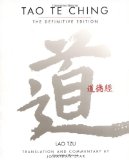
Tao Te Ching: The Definitive Edition
Chinese Reading of the Daodejing
Wang Bi's Commentary on the Laozi with Critical Text and Translation.
By Professor Rudolf G. Wagner. A SUNY Series in Chinese Philosophy and
Culture. English and Mandarin Chinese Edition.
State University of New York Press; Bilingual edition (October 2003). 540
pages. ISBN: 978-0791451823.
Wang Bi (Wang Pi, Fusi), 226-249 CE,
Commentary on the Tao Te
Ching.
Tao Te Ching


The Taoism Reader
The Routledge Encyclopedia of Taoism.
Lao Tzu's Tao Teh Ching, A Parallel Translation Collection. Compiled by B.
Boisen.
Tao Te Ching: The Book of the Way. Revised by Sam Torode based on the
translation by Dwight Goddard, 1919. Independent Pub., 2009, 88 pages.
Tao Te Ching: Annotated
and Explained. By Derek Lin. Foreword by Lama Surya Das.
Skylight Illuminations, SkyLight Paths, 2006. 208 pages.
Comparison and Analysis of Selected English Interpretations of the Tao Te Ching.
By Damian J. Bebell and Shannon M. Fera.
Tao Te Ching
Studies, Translated by Bruce R., Linnell, 2015. Chinese, English,
Glossary, and Notes.
Practicing the Tao Te Ching: 81 Steps on the Way. By Solala Towler.
Foreword by Chunglang Al Huang. Sounds True, 2016. 320 pages.
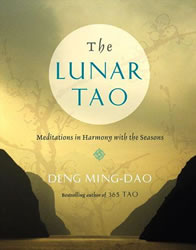
The Lunar Tao: Meditations in Harmony with the Seasons
Change Your Thoughts - Change Your Life: Living the Wisdom of the Tao
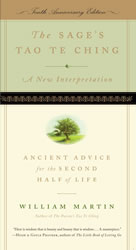
The Sage's Tao Te Ching: Ancient Advice for the Second Half of Life
Center Tao.
Includes a brief commentary on each Chapter. A keyword glossary for each
chapter is provided.
Tao Te Ching in Chinese characters,
Pinyin Romanization, English and German by Dr. Hilmar
Alquiros.
Yellow Bridge
Dao De Jing Comparison Table Provides side by side comparisons of
translations of the Tao Te Ching by James Legge, D. T. Suzuki, and Dwight
Goddard. Chinese characters for each paragraph in the Chapter are on the
left; place your cursor over the Chinese characters to see the Pinyin
Romanization of the Chinese character and a list of meanings.
Translators Index,
Tao Te Ching Versions in English, Translators Sorted Alphabetically by Translator, Links to Books and
Online Versions of the Chapters
Taoism and the Tao Te
Ching: Bibliography, Resources, Links
Spanish Language
Translations of the Tao Te Ching, Daodejing en Español, Translators Index
The Tao of Zen
Chapter 1 in the
Rambling
Taoist Commentaries by Trey Smith. The
Rambling Taoists are Trey Smith and Scott Bradley.
By Hans-Georg Moeller. Columbia University Press, 2006, 176 pages.
Valley Spirit, Gu Shen,
Concept, Chapter 6
Valley Spirit Center in Red
Bluff, California.
Sacred
Circle in the Gushen Grove.
Lao-tzu's Taoteching
Reading Lao Tzu: A Companion to the Tao Te Ching with a New Translation
Dao De Jing: A Philosophical Translation
Thematic Index to the
81 Chapters of the Tao Te Ching
Lieh-Tzu: A Taoist Guide to Practical Living
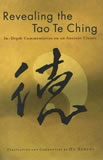
Revealing the Tao Te Ching: In-depth Commentaries on an Ancient Classic
Cloud Hands Blog
Mike Garofalo writes about Mind-Body Arts, Philosophy, Taoism, Gardening, Taijiquan, Walking, Mysticism,
Qigong, and the Eight Ways.
The Whole Heart of Tao:
The Complete Teachings From the Oral Tradition of Lao Tzu.

Gushen Grove Notebooks for the Tao Te Ching
Green Way Research, Valley Spirit
Center, Gushen Grove Notebooks (2001-2020)
Red Bluff, California from 1998-2017;
Vancouver, Washington from 2017-2020
Green Way Research, Tao Te Ching, Chapter 58, 2011-2020.
Compiled and
Indexed by
Michael P. Garofalo
This webpage was last modified, edited,
maintained, expanded, reformatted, improved or updated on
November 25, 2019.
This webpage was first distributed online on June 28, 2011.
Created by Michael P. Garofalo, Green Way Research, Valley Spirit Center, Gushen Grove Notebooks, Vancouver, Washington © 2020 CCA 4.0
Brief Biography of Michael P. Garofalo, M.S.

Ripening Peaches: Daoist Studies and Practices
Zhuangzi (Chuang Tzu, Zhuang Zhou, Master Chuang) 369—286 BCE
Taoist Perspectives: My Reading List
Bodymind Theory and Practices, Somaesthetics
How to Live a Good Life: Advice from Wise Persons
Qigong (Chi Kung) Health Practices
One Old Daoist Druid's Final Journey: Notebooks of the Librarian of Gushen Grove
Index to Cloud Hands and Valley Spirit Websites
Index to English Language Translators of the Tao Te Ching
Recurring Themes (Terms, Concepts, Leimotifs) in the Tao Te Ching
Spanish Language Translations of the Tao Te Ching
Chinese Characters, Wade-Giles (1892) and Hanyu Pinyin (1982) Romanizations
The Tao Te Ching (Dao De Jing) by Lao Tzu (Laozi) circa 500 BCE
|
Tao Te
Ching |
|||||||||
| 1 | 2 | 3 | 4 | 5 | 6 | 7 | 8 | 9 | 10 |
| 11 | 12 | 13 | 14 | 15 | 16 | 17 | 18 | 19 | 20 |
| 21 | 22 | 23 | 24 | 25 | 26 | 27 | 28 | 29 | 30 |
| 31 | 32 | 33 | 34 | 35 | 36 | 37 | 38 | 39 | 40 |
| 41 | 42 | 43 | 44 | 45 | 46 | 47 | 48 | 49 | 50 |
| 51 | 52 | 53 | 54 | 55 | 56 | 57 | 58 | 59 | 60 |
| 61 | 62 | 63 | 64 | 65 | 66 | 67 | 68 | 69 | 70 |
| 71 | 72 | 73 | 74 | 75 | 76 | 77 | 78 | 79 | 80 |
| 81 | |||||||||
Return to the Top of this Webpage


Mike Garofalo at the Klickitat River in Southwest Washington, 2019
Cloud Hands Blog of
Michael P. Garofalo

Facebook of
Michael P. Garofalo

Return to the Alphabetical
Index of Mike Garofalo's Hypertext Documents
Return to the Top of this Webpage