Classic of the Way and Virtue
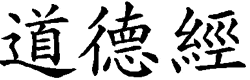
By Lao Tzu (Laozi)
Compiled and Indexed by Michael P. Garofalo
Green
Way Research, Valley Spirit
Center, Gushen Grove Notebooks, Vancouver, Washington
Chapter 64
Chapter 66
Index to All the Chapters
Taoism
Cloud Hands Blog
Classic Book (Ching) about the Tao (Way, Nature, Patterns, Processes) and Te (Virtue, Potency, Power, Integrity, Wise Person, Sage)
Indexing, Concordance, Search Terms, Topics, Themes, Keys
English and Chinese (Wade-Giles) Terms:
The Virtue of Simplicity, Know the Eternal Standard, Ancient (ku), Effortless Excellence,
Good or Well (shan), Practice (wei), Way or Order (tao,
dao), Enlighten (ming), People (min), Will (chiang), Straightforward, Secret, Wisdom,
Ignorant or Unsophisticated (yü), Model, Excellence, Reversal, Difficult
(nan), Virtue, Value of Ignorance (yü),
Hiding, Te, Learning Overrated, Heaven's Rule (chi shih), Harmonize,
Clarifies (ch'ing), Sage, Educate, Guide, Govern or Rule (chih), Pure Unmixed Elegance,
Clever or Know (chih), Many or Much (to), Country or State (kuo), Plainness,
Ruin or Curse (tsê), Blessing or Treasure (fu), Pair (liang),
Model or Pattern (chi), Constant (ch'ang), Profound or Deep or Dark (hsüan),
Abstruse or Mystical (shên), Virtue or Power (te), Distant or Far
(yüan), Things (wu), Revert or Contrary (fan), Obtain or
Reach (chih), Alignment with the Way, Master, Know (chih),
Profound, Polarity, Reverts (fan), Unity, Leadership, Great (ta), Harmony
or Oneness (shun),
Teaching, Honesty, Avoid Cleverness, 淳德
Términos en Español:
La Virtud de la
Simplicidad, Sin Esfuerzo
Excelencia, Directo, Secreto,
Sabiduría, Modelo, Excelencia,
Inversión, lirtud, Valor de la
Ignorancia, Esconder, Aprendizaje
Sobrevalorado, Regla
del Cielo, Armonizar, Iluminado,
Aclara, Educar, Guía, Antiguo,
Sencillez, Maestro,
Saber, Profundo, Modelo, Polaridad,
Revierte, Unidad, Liderazgo,
Armonía, Enseñanza, Honestidad,
Estado, Oscuro,
Bueno, Práctica, Acción,
Camino, Orden, Personas,
Difícil, Regla,
Inteligente, Sabes,
Muchos, Condado, Estado, Voluntad,
Ruina,
Maldición, Bendición, Par,
Modelo, Diseño, Profundo,
Virtud, Poder, Abstruso,
Místico, Tesoro,
Revertir,
Retorno, Contrariamente,
Grande, Unidad.
Electronic Concordance for Chapters 1 - 81 of the Tao Te Ching
English Language Translations of the Tao Te Ching
"The ancients who showed their skill in practicing the Tao did so, not to
enlighten the people,
but rather to make them simple and ignorant.
The difficulty in governing the people arises from their having much knowledge.
He who tries to govern a state by his wisdom is a scourge to it;
While he who does not try to do so is a blessing.
He who knows these two things finds in them also his model and rule.
Ability to know this model and rule constitutes what we call the mysterious
excellence of a governor.
Deep and far-reaching is such mysterious excellence, showing indeed its
possessor as opposite to others,
but leading them to a great conformity to him."
- Translated by
James Legge, 1891,
Chapter 65
"The ancients who were well versed in Reason did not thereby enlighten the
people;
They intended thereby to make them simple-hearted.
If people are difficult to govern, it is because they are too smart.
To govern the country with smartness is the country's curse.
To govern the country without smartness is the country's blessing.
He who knows these two things is also a model like the ancients.
Always to know the model is called profound virtue.
Spiritual virtue, verily, is profound.
Verily, it is far-reaching.
Verily, it is to everything reverse.
But then it will procure great recognition."
- Translated by
D. T. Suzuki and Paul Carus,
1913, Chapter 65
"Those ancients who were skilled in the Way
Did not enlighten people by their rule
But had them ever held in ignorance:
The more the folk know what is going on
The harder it becomes to govern them.
For public knowledge of the government
Is such a thief that it will spoil the realm;
But when good fortune brings good times to all
The land is ruled without publicity.
To know the difference between these two
Involves a standard to be sought and found.
To know that standard always, everywhere,
Is mystic Virtue, justly known as such;
Which Virtue is so deep and reaching far,
It causes a return, things go back
To that prime concord which at first all shared."
- Translated by
Raymond Blakney, 1955, Chapter 65
"There were those of old who knew the Way,
And loved it in their daily lives.
They did not preach enlightenment,
Or practice deceit among the people.
They lived well because they lived simply.
Now with trickery and brilliance
Are the people governed,
And yet with the utmost difficulty!
A country ruled with cleverness
Is a country gone to waste.
Govern your country in simple innocence,
And it will be blessed among nations.
Remaining aware of the alternatives,
Our conduct may be correctly guided.
Holding fast to this guiding awareness
Is the action of natural virtue.
Natural virtue comes from clarity-
The resonant clarity of the Cosmic Source.
It draws us back within, to the Original Essence-
The great Harmonic, which may be touched
Every day in loving gratitude."
- Translated by
Brian
Donohue, 2005, Chapter 65
"The ancient rulers who followed the Tao
did not try to enlighten the people,
but rather aimed at making them dull.
People are hard to govern because they are so clever.
Rulers who seek to enlighten the people
are like bandits who prey upon the land.
Rulers who forget about enlightening the people
are a real blessing to the nation.
Remember these two enduring principles:
they represent the power Te of the Tao.
Te goes deep and far.
All things turn back and reach original harmony."
- Translated by
George Cronk, 1999, Chapter 65
"In antiquity, those who conformed themselves to the Principle
did not
seek to make the people clever, but aimed at keeping them simple.
When people are difficult to govern, it is because they know too much.
Those who claim to procure the good of a country by disseminating
instruction,
are wrong, and ruin the country.
This is the formula of mysterious action, of great profundity, of great bearing.
It is not to the taste of the curious but, thanks to it, everything turns out well, peacefully."
- Translated by
Derek Bryce, 1999, Chapter 65
"The ancients who ruled skillfully
did not try to enlighten people but kept them in the dark.
People are hard to lead when they are too clever.
Those who lead with cleverness rob the country.
Those who lead without cleverness bless the country.
Understanding these two is to know the eternal standard.
Knowing the eternal standard is mystical power.
Mystical power is deep and far-reaching,
leading all things to return to perfect harmony."
- Translated by
Sanderson Beck, 1996, Chapter 65

Created by Michael P. Garofalo, Green Way Research, Valley Spirit Center, Gushen Grove Notebooks, Vancouver, Washington © 2020 CCA 4.0
 By Alexander Simkins.
  By Derek Lin.
 By Ming-Dao Deng.
 By Benjamin Hoff.
 By Ming-Dao Deng.
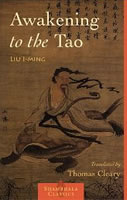
 Translated by Thomas Cleary.
"The ancients who were most adept at ruling did not try
to enlighten the people,
but instead gradually made them stupid.
The people are difficult to govern because they are clever.
Hence, the nation's malefactor is one who uses cleverness to govern.
While the nation's benefactor is one who does not use cleverness to govern.
To understand both of these is also to harmonize with an eternal pattern.
To understand and harmonize with that pattern is called Profound Te.
Profound Te is so deep, so far-reaching.
It causes things to return and eventually reach Great Confluence."
- Translated by
Tam Gibbs, 1981,
Chapter 65
"Those who, in ancient times, were eminent for the
practice of Tao,
abstained from enlightening the people, and kept them simple.
The difficulty of governing the people arises from their excess of shrewdness.
He who employs shrewdness in governing a State, becomes a robber of the State;
he who does not do so, is a blessing to it.
The man who knows both these things presents an ideal of good government,
and a
knowledge of this ideal
constitutes Sublime Virtue.
Sublime Virtue is deep and far-reaching, and is in direct opposition to all
objects of desire;
thus it is able to bring about universal accordance with the Tao."
- Translated by
Frederic Henry Balfour,
1884, Chapter 65
"Therefore, it is said:
"Those who implemented the Tao
Did not use it to make the people shrewd;
Rather, they used it to make them simple."
The reason why the people are difficult to rule
Is that they are crafty.
Therefore, using craft to govern a state
Is a pest to the state;
Using noncraft to govern a state
Is a blessing to the state.
Constantly remember: these two constitute a guideline;
Constantly remembering this guideline
Is called a deep and remote virtue.
The deep and remote virtue
Is deep indeed, remote indeed;
And, though contrary to all things,
Will eventually reach Grand Harmony."
- Translated by
Chichung Huang, Chapter 65
"The ancients who knew Truth well did not make the people acquire learning,
but kept them in the state of simplicity.
The people become difficult to govern when they are full of wiles.
Therefore,
the ruler who relies on learning does harm to the State;
the ruler who relies not on learning does good to the State.
These two ways are the ways of government.
When one always follows the right course,
he acts in accordance with the
mysterious Nature.
The mysterious Nature is profound and far-reaching."
- Translated by
Cheng Lin, Chapter 65
"Men who knew Direction in olden days
did not teach the populace to be
clever, but teach them to be simple.
A populace that is clever is difficult to govern.
Thus,
governing with cleverness robs a state;
governing not with cleverness benefits a state.
One who knows [the difference between] these two sets the standard.
Knowing the standard at all times is Profoundest Virtue.
Profoundest Virtue is deep; it is far.
Profoundest Virtue returns matters to naturalness, to the Grand Gentleness.
When things revert to it, there is great concord."
- Translated by
David H. Li, Chapter 65
"Those
ancients who valued acting in Tao
Did not come to be luminous
People attaining it came to be foolish.
The
difficulty with governing people?
It happens that what is wise is abundant.
So if it happens that wisdom governs the nation
It is the enemy of the nation
If it does not happen that wisdom governs the nation
It is the good luck of the nation
Those
who know both these things
Also investigate the patterns of entireness
To know and investigate patterns
Is appropriately called insightful ideal.
Insightful
ideal goes with the penetrating,
with the far-reaching
With
it things go with turning back
And will reach the great alignment."
- Translated by
David Lindauer, Chapter 65
"Those in the past who were good at practicing Tao,
Did not want to enlighten (ming) the people,
But to keep them in ignorance (yü).
People are hard to rule,
Because they know (chih) too much.
Therefore, to rule a nation by knowledge,
Is to be the nation's thief.
Not to rule a nation by knowledge,
Is to be the nation's blessing.
To know these two is to know heaven's rule (chi shih).
Always knowing heaven's rule,
Is called the dark (hsüan) te.
The dark te clarifies (ch'ing) and is far away (yüan).
It reverts (fan) with things.
Then there arrives the great harmony."
- Translated by
Ellen Marie Chen, 1989, Chapter 65
 By Hu Xuzehi
 Annotated translation by Victor Mair
  By Ha Poong Kim
 By Hans-Georg Moeller
 Ripening Peaches: Taoist Studies and Practices By Mike Garofalo
 By Roger T. Ames and David T. Hall
 By Arthur Waley
Lifestyle Advice from Wise Persons
"In days gone by, those who knew how to follow the Dao
did not seem enlightened but ignorant.
The reason why people are hard to govern is because they know too much.
And so to use knowledge to govern a country is to be its curse.
Not to use knowledge to govern a country is to be its blessing.
There are two primal principles, and to understand them always brings the
deepest virtue (De).
How hidden, deep and far-reaching virtue (De) is.
It makes all things return to their source and so attain oneness."
- Translated by
Tim Chilcott,
2005, Chapter 65
A Chinese Language Version of Chapter 65 of the Tao Te
Ching by Lao Tzu
A
note
on my style of displaying the Chinese characters of the Tao Te Ching
古之善為道者, 非以明民, 將以愚之.
民之難治, 以其智多.
故以智治國, 國之賊.
不以智治國, 國之福.
知此兩者亦 式.
常知 式, 是謂玄德.
玄德深矣遠矣.
與物反矣.
然後乃至大順.
- Chinese characters, Tao Te Ching,
Chapter 65
ku chih shan wei tao chê, fei yi ming min, chiang yi yü
chih.
min chih nan chih, yi ch'i chih to.
ku yi chih chih kuo, kuo chih tsê.
pu yi chih chih kuo, kuo chih fu.
chih tz'u liang chê yi chi shih.
ch'ang chih chi shih, shih wei hsüan tê.
hsüan tê shên yi yüan yi.
yü wu fan yi.
jan hou nai chih ta shun.
- Wade-Giles Romanization, Tao Te Ching, Chapter 65
Audio
Version in Chinese of Chapter 65 of the Tao Te Ching
qu zhi shan wei dao zhe, fei yi ming min, jiang yi yu zhi.
min zhi nan zhi, yi qi zhi duo.
gu yi zhi zhi guo, guo zhi zei.
bu yi zhi zhi guo, guo zhi fu.
zhi ci liang zhe yi ji shi.
chang zhi ji shi, shi wei xuan de.
xuan de shen yi yuan yi.
yu wu fan yi.
ran hou nai zhi da shun.
-  Pinyin Romanization, Daodejing, Chapter 65
Tao Te Ching in Chinese characters and English (includes a word by word key) from YellowBridge
Tao Te Ching in Chinese characters, Hanyu Pinyin (1982) Romanization, English and German by Dr. Hilmar Alquiros.
Laozi Daodejing: Chapters with Chinese characters, seal script, detailed word by word concordance, Pinyin (tone#), German, French and English.
Chinese and English Dictionary, MDGB
Dao De Jing Wade-Giles Concordance by Nina, Dao is Open
Dao De Jing English and Wade-Giles Concordance by Mike Garofalo
Tao Te Ching in Pinyin Romanization with Chinese characters, WuWei Foundation
Tao Te Ching in Pinyin Romanization
Tao Te Ching in Chinese characters and English
Tao Te Ching in Chinese characters, English, Word by word analysis, Zhongwen
Tao Te Ching: The Definitive Edition
Tao Te Ching in Chinese characters: Big 5 Traditional and GB Simplified
Chinese Characters, Wade-Giles and Pinyin Romanizations, and 16 English Translations for Each Chapter of the Daodejing by Mike Garofalo.
Tao Te Ching in Chinese characters, Wade-Giles and Pinyin Romanization spellings, English; a word for word translation of the Guodian Laozi Dao De Jing Version.
Lao Zi's Dao De Jing: A Matrix Translation with Chinese Text by Bradford Hatcher.
"In olden times those who were most practiced in the Tao
did not use their knowledge to instruct the people;
they used it rather to keep them simple.
It is when they are overstocked with learning that the people are hard to
govern.
To govern by adding to the people's store of learning is to prey on the country;
To govern by decreasing the people's store of learning is to be a blessing to
the country.
He who is familiar with these two methods will not want for a touchstone.
Always bearing this in mind, he will be able to draw on the Mysterious Power;
This power is infinitely deep and far-reaching, and, unlike all things else,
goes back and back,
Until it attains to complete Unity."
- Translated by
Herman Ould, 1946,
Chapter 65
"In the days of old those who practiced Tao with success did not,
By means of it,
Enlighten the people, but on the contrary sought to make them ignorant.
The more knowledge people have, the harder they are to rule.
Those who seek to rule by giving knowledge
Are like bandits preying on the land.
Those who rule without giving knowledge
Bring a stock of good fortune to the land.
To have understood the difference between these who things
Is to have a test and standard
To be always able to apply this test and standard
Is called the mysterious “power”, so deep-penetrating,
So far-reaching,
That can follow things back —
All the way back to the Great Concordance."
- Translated by
Arthur Waley, 1934, Chapter 65
"The
ancients who knew how to follow the Tao
Aimed not to enlighten the people.,
But to keep them ignorant.
The reason it is difficult for the people to leave in peace
Is because of too much knowledge.
Those who seek to rule a country by knowledge
Are the nation's curse.
Those who seek not to rule a country by knowledge
Are the nation's blessing.
Those who know these two (principles)
Also know the ancient standard,
And to know always the ancient standard
Is called the Mystic Virtue.
When the Mystic Virtue becomes clear, far-reaching,
And things revert back (to their source)
Then and then only emerges the Grand Harmony."
- Translated by
Lin Yutang, 1948, Chapter 65
"The old Sages doers of the Tao did not bring to men the multiplicity of
learning but taught the simplicity of wisdom.
Because those knowing much are not sure of the goal and hard to lead.
One who tries to advance men by increasing their learning only leads them to
perdition.
One who increases their wisdom serves their liberation.
One who considers both is a pointer to the goal and a model.
To be a pointer to the goal means to be a carrier of virtue.
Teh the fullness of virtue wells up from the depth flowing far
surmounts
ignorance and resistance leading all life to the sea of fulfillment."
- Translated by
K. O. Schmidt, 1975, Chapter 65
"In ancient times those who practiced Tao well
Did not seek to enlighten people, but to make them ignorant.
People are difficult to govern because they have too much knowledge.
Therefore he who rules the state through knowledge is a robber of the
state;
He who rules a state not through knowledge is a blessing to the
state.
One who knows these two things also (knows) the standard.
Always to know the standard is called profound and secret virtue.
Virtue becomes deep and far-reaching,
And with it all things return to
their original state.
Then complete harmony will be reached."
- Translated by
Wing Tsit Chan, 1963, Chapter 65
"In ancient times rulers knew how to follow Tao.
The did not try to enlighten (ming) the people
but kept things simple.
People are difficult to rule
if they are too clever.
If the ruler tries to use too much cleverness to rule
the county will be full of thieves and brigands.
Those who try to us too much cleverness
to rule the country will not succeed.
Understanding these tow principles
is called profound virtue.
Profound virtue is deep
and far-reaching.
It enables all things to return to Tao
and leads to great harmony."
- Translation by
Solala Towler, 2016, Chapter 65
 Translation and elucidation by Hua Ching Ni
 Translated by Brian Walker
 Translated by Arthur Waley, 1934
 Translated by Lionel and and Herbert Giles
 By Eva Wong
"Those skillful in the ancient Tao
Are not obvious to the people.
They appear to be simple-minded.
People are difficult to lead
Because they are too clever.
Hence, to lead the organization with cleverness
Will harm the organization.
To lead the organization without cleverness
Will benefit the organization.
Those who know these two things
Have investigated the patterns of the Absolute.
To know and investigate the patterns
Is called the Subtle Power.
The Subtle Power is profound and far-reaching.
Together wtih the Natural Law of polarity,
It leads to the Great Harmony."
- Translated by
R. L. Wing, 1986,
Chapter 65
"The ancient practitioners of the Tao did not try to educate or enlighten the
people;
they led them instead to a return to a natural simplicity.
The more sophisticated the people, the harder it is to control and rule them.
It follows also that a clever ruler can be a scourge to his nation.
Therefore it is a blessing to the nation and the people if the rulers and the
people alike are simple,
unsophisticated, and full of the virtue of the Tao.
To know these two things is to have a rule and a model to guide oneself, and to
guide the nation.
And to understand the rule and the model is to be practicing the mystical
virtue.
This deep and profound mystical virtue is so far reaching;
it causes all things to return to the source of harmony."
- Translated by
John Dicus, 2002, Chapter 65
"The ancients who mastered the Tao did not make the
people sharp and clever.
Instead, they made the people simple and deep.
The people are hard to govern
When they are too clever and know too much.
To govern the people with cleverness is to bring about calamities.
To govern the people with simplicity is to bring about blessings.
To know these two alternatives is to have the standard of governance.
To understand the standard of governance is to have sublime virtue.
Sublime virtue is deep and far-reaching.
Though it runs counter to the common way,
It follows the great way of the Tao Eternal."
- Translated by
Yasuhiko Genku Kimura,
Chapter 65
Created by Michael P. Garofalo, Green Way Research, Valley Spirit Center, Gushen Grove Notebooks, Vancouver, Washington © 2020 CCA 4.0
Tao Te Ching
Lao Tzu: Tao Te Ching
 Translated by Livia Kohn
Dao De Jing: The Book of the Way
"Those ancients skilled at practicing the way
Did not try to enlighten the people
But would have tried to simplify them
The difficulties of governing the people
Are due to their great cleverness
And so to use cleverness in governing a realm
Is an injury to the realm
To avoid using cleverness in governing a realm
Is a favor to the realm
Those who comprehend both of these
Also examine for patterns
Always to know to look for patterns
May be called a mystic power
A mystic power so deep & so far reaching
As to help creation to turn itself around
Natural succession then reaches perfect harmony."
- Translated by
Bradford Hatcher,
2005, Chapter 65
"In ancient times,
leaders who were right with Tao
didn’t teach everybody
how to become enlightened.
They kept people’s lives simple.
People who know too much
can’t be taught anything.
Leaders who try to be clever
always screw things up.
Leaders who keep things simple
always make things right.
If you get that,
you’ll understand
the mysterious power of Tao.
That kind of power is so deep,
so extensive,
it penetrates into every level of existence."
- Translated by
Ron
Hogan, 1995, Chapter 65
"The ancient Masters
who understood the way of the Tao,
did not educate people, but made them forget.
Smart people are difficult to guide,
because they think they are too clever.
To use cleverness to rule a country,
is to lead the country to ruin.
To avoid cleverness in ruling a country,
is to lead the country to prosperity.
Knowing the two alternatives is a pattern.
Remaining aware of the pattern is a virtue.
This dark and mysterious virtue is profound.
It is opposite our natural inclination,
but leads to harmony with the heavens."
- Translated by
John H. McDonald, 1996, Chapter 65
 Translated by Eva Wong
  Translated by Philip Ivahoe
 By James Miller
 Translated by Stephen Bokencamp
By Alexander and Annellen Simpkins
Translated by Stephen Bokencamp
By Alexander and Annellen Simpkins Translated by Thomas Cleary
 By Livia Kohn
"The ancient adepts of the Way
did not teach the people everything,
freeing them from confusion.
People are hard to govern
when they have too much learning.
Who governs academically
deprives the people.
Who governs sympathically
enriches the people.
Between these two is set a measure,
To respect it always,
such is the wonder of integrity.
How deep, how far-reaching!
It receives all things
and leads them to great oneness."
- Translated by
Douglas Allchin,
2002, Chapter 65
"From of old those who have carried out the principle of Tao do not
enlighten the people with it,
but make them foolish and simple with it.
What makes it difficult to govern the people is that they have too much knowledge,
Therefore to govern the state by wisdom is a disaster for the state,
And not to govern the state by wisdom is a blessing for the state.
It is a principle to now the two by wisdom and not by wisdom.
Carrying out the principle forever is called the mysterious "De."
The mysterious "De" is very deep and far-reaching.
It is contrary to the nature of concrete things,
But leads to the greatest conformity."
- Translated by
Ren Jiyu, 1985, Chapter 65
"In olden times the best practitioners of Tao did not use it to awaken people to knowledge,
But used it to restore them to simplicity.
People are difficult to govern because they have much knowledge.
Therefore to govern the country by increasing the people's knowledge is to be the destroyer of the country;
To govern the country by decreasing knowledge is to be the blesser of the country.
To be acquainted with these two ways is to know the standard;
To keep the standard always in mind is to have sublime virtue.
Sublime virtue is infinitely deep and wide.
It goes to reverse all things;
And so it attains perfect peace."
- Translated by
Ch'u Ta-Kao, 1904, Chapter 65
Walking the Way: 81 Zen Encounters with the Tao Te Ching
The Tao of Zen
Tao Te Ching: Zen Teachings on the Taoist Classic
Buddhism and Taoism Face to Face: Scripture, Ritual, and Iconographic Exchange in Medieval China
"Of Old, he who was active in Tao did not use it to make people enlightened, but to make them more kind.
If people are difficult to govern it is because they have too much knowledge.
Therefore if you govern a kingdom by knowledge, you will be an oppressor of the kingdom.
But if you govern a kingdom by wisdom, you will give happiness to the kingdom.
If you know and do these things you will be a pattern for men.
Knowledge of how to be always a pattern for men is called profound Teh.
Profound Teh is in the very source of life, it pervades the utmost limits of life, it returns and dwells in every being.
When fully manifested, it unites all beings in a great harmony."
- Translated by
Isabella Mears, 1916, Chapter 65
"Those Excellent at doing Tao in ancient times - it was not to enlighten the people, but to keep them stupid.
The difficulty in governing the people - because of their knowledge.
Yes: By "Knowledge!" govern the state - a crime against the state.
By
"Ignorance!" govern the state - a boon to the state.
Always: To understand these two lines, is also to understand the Ideal
Pattern.
Always: To understand the Ideal Pattern, is to have mysterious
Te.
Mysterious Te is deep, far-reaching, in opposition to things - only afterward comes the Great Harmony."
- Translated by
Michael LaFargue, 1992, Chapter 65
"From the most ancient of times those who
have practiced the Tao have depended on the simplicity
of the
people rather than on their adroitness.
When the people are difficult to control it is because they
possess too much worldly wisdom.
Who governs by worldly wisdom is a robber in the land; who
governs without out is a blessing to the state.
To know these two axioms is to become a model.
To understand how
to be a model is indeed the mystery of energy.
Verily, deep and far-reaching is this mystery of energy.
It is
the opposite of all that is visible, but it leads to universal
concord."
- Translated by
C.
Spurgeon Medhurst, 1905, Chapter 65
Further Teachings of Lao-Tzu: Understanding the Mysteries (Wen Tzu)
 Translated by Thomas Cleary
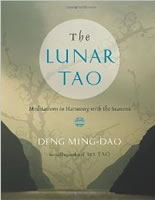
The Lunar Tao: Meditations in Harmony with the Seasons
 By Lui I-Ming (1780) and translated by Thomas Cleary
Ripening Peaches: Taoist Studies and Practices By Mike Garofalo
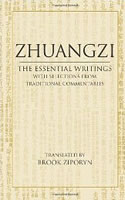
Zhuangzi: The Essential Writings with Selections from Traditional Commentaries
"In centuries of old the men who used the light
Of the Tao to its goodness were not blinded,
They used to practice it not to make the people bright,
But, better still, to make them simple-minded.
In the governing of men the very hardest thing
To encounter is their sapience redundant,
To govern by this sapience a robber rule will bring,
And, to rule without it, blessing most abundant.
Who knows of these two things has the key of government,
There is benefit profound in their rehearsal,
Far-reaching in extent, from all else different,
It will swiftly bring agreement
universal."
- Translated by
Isaac Winter Heysinger, 1903, Chapter 65
|
Tao Te
Ching |
|||||||||
| 1 | 2 | 3 | 4 | 5 | 6 | 7 | 8 | 9 | 10 |
| 11 | 12 | 13 | 14 | 15 | 16 | 17 | 18 | 19 | 20 |
| 21 | 22 | 23 | 24 | 25 | 26 | 27 | 28 | 29 | 30 |
| 31 | 32 | 33 | 34 | 35 | 36 | 37 | 38 | 39 | 40 |
| 41 | 42 | 43 | 44 | 45 | 46 | 47 | 48 | 49 | 50 |
| 51 | 52 | 53 | 54 | 55 | 56 | 57 | 58 | 59 | 60 |
| 61 | 62 | 63 | 64 | 65 | 66 | 67 | 68 | 69 | 70 |
| 71 | 72 | 73 | 74 | 75 | 76 | 77 | 78 | 79 | 80 |
| 81 | |||||||||
"In ancient times, one who was good at practicing the Way
Did not make the people clever
But kept them in ignorance.
If the people are hard to govern,
It is because they have too much knowledge.
Therefore,
one who governs the state with knowledge is a malefactor to the state;
one who does not govern the state with knowledge is a benefactor to the state.
Knowing both of these is also knowing to follow the pattern.
Constantly knowing to follow the pattern
Is called mystical virtue.
Mystical virtue reaches deep and far;
It returns with all things,
After which, supreme harmony will be attained."
- Translated by
Yi Wu, Chapter 65
"Die vor alters tüchtig waren
im Walten nach dem sinn,
taten es nicht durch Aufklärung des Volkes,
sondern dadurch, daß sie das Volk töricht hielten.
Daß das Volk schwer zu leiten ist,
kommt daher, daß es zuviel weiß.
Darum: Wer durch Wissen den Staat leitet,
ist der Räuber des Staats.
Wer nicht durch Wissen den Staat leitet,
ist das Glück des Staats.
Wer diese beiden Dinge weiß, der hat ein Ideal.
Immer dies Ideal zu kennen, ist verborgenes Leben.
Verborgenes Leben ist tief, weitreichend,
anders als alle Dinge;
aber zuletzt bewirkt es das große Gelingen."
- Translated by Richard Wilhelm, 1911, Chapter
65
"Der Segen der Herzensbildung und die Gefährlichkeitder
Scheinbildung
Die Alten, im Unergründlichen wurzelnd,
(wußten um das Wesen der echten Bildung,
darum) gaben (sie) dem Volke Herzens-
und nicht Verstandesbildung.
Für eine Staatsführung gibt es nichts Gefährlicheres
als ein aufgeklärt erscheinendes Volk.
Einen Staat mit aufgeklärten Massen lenken zu wollen,
führt zu Unheil.
Segen wird nur, wo man auf Scheinwissen verzichtet.
Wer dies beachtet, handelt vorbildlich.
Solch vorbildliches Wirken
läßt einen stets auf dem rechten Wege sein.
Denn es weiß um die geheimnisvolle Macht
aller selbstwirkenden Kräfte,
die den Massen immer fremd bleiben.
Der Gehorsam aber gegenüber den selbstwirkenden Kräften
bewirkt der Welt Ordnung."
- Translated
by Rudolf
Backofen, 1949, Chapter 65
"Sound old
rulers, it is said,
Left people to themselves, instead
Of wanting to teach
everything
And start the people arguing.
With mere instruction in
command,
So that people understand
Less than they know, woe is the
land;
But happy the land that is ordered so
That they understand more than
they know.
For everyone's good this double key
Locks and unlocks
equally.
If modern man would use it, he
Could find old wisdom in his
heart
And clear his vision enough to see
From start to finish and finish
to start
The circle rounding perfectly."
- Translated by
Witter Bynner, 1944, Chapter 65
Created by Michael P. Garofalo, Green Way Research, Valley Spirit Center, Gushen Grove Notebooks, Vancouver, Washington © 2020 CCA 4.0
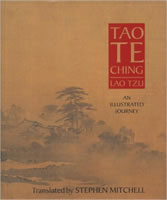
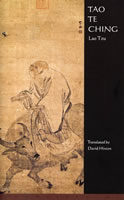
Tao Te Ching: An Illustrated Journey
Tao Te Ching
The Book of Tao: Tao Te Ching - The Tao and Its Characteristics
Ripening Peaches: Taoist Studies and Practices
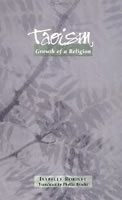
Taoism: Growth of a Religion
Zhuangzi (Chuang Tsu), Daoist Scripture: Bibliography, Links, Resources, Quotations, Notes
Zhuangzi: Basic Writings
Zhuangzi Speaks: The Music of Nature
Lifestyle Advice from Wise Persons
"The ancients who practiced the Tao did not make use of it to render the people brilliant,
but to make them simple and natural.
The difficulty in governing the people is through overmuch policy.
He who tries to govern the kingdom by policy is only a scourge to it;
while he who governs without it is a blessing.
To know these two things is the perfect knowledge of government,
and to
keep them continually in view is called the virtue of simplicity.
Deep and wide is this simple virtue; and though opposed to other methods
it can bring about a perfect order."
- Translated by
Walter Gorn Old, 1904, Chapter 65
"Taoist rulers of old
Did not enlighten people
But left them dull.
People are difficult to govern
Because they are very clever.
Therefore,
Ruling through cleverness leads to rebellion.
Not leading through
cleverness
Brings good fortune.
Know these two things
And understanding the enduring pattern.
Understand the enduring pattern:
This is called original Te.
Original Te goes deep and far.
All things reverse
Return
And reach the great headwaters."
- Translated by
Stephen Addis, 1993, Chapter 65
"Originally people knew how to follow Nature,
For they did not try to
arouse in the people an interest in cunning, but let them remained
unspoiled.
The shrewder people are, the harder they are to govern.
Therefore, to
try to improve government by means of increasing cleverness in people is
to endanger it.
But to improve government by encouraging honesty in the
people is beneficial.
The comprehend the significance of these two ways is to be profoundly intelligent.
Profound intelligence is that penetrating and pervading power
To restore all things to their original harmony."
- Translated by
Archie J. Bahm, 1958, Chapter 65
"Dans l'Antiquité, ceux qui excellaient à pratiquer le Tao
ne l'employaient point à éclairer le peuple;
ils l'employaient à le rendre
simple et ignorant.
Le peuple est difficile à gouverner parce qu'il a trop de prudence.
Celui qui se sert de la prudence pour gouverner le royaume est le fléau du
royaume.
Celui qui ne se sert pas de la prudence pour gouverner le royaume fait le
bonheur du royaume.
Lorsqu'on connaît ces deux choses, on est le modèle (de l'empire).
Savoir être le modèle (de l'empire), c'est être doué d'une vertu céleste.
Cette vertu céleste est profonde, immense, opposée aux créatures.
Par elle on parvient à procurer une paix générale."
- Translated by Stanislas Julien, 1842, Chapter
65
Spanish
Language Versions of the Tao Te Ching (Daodejing)
Tao Te Ching en Español
Lao Tsé Tao Te Ching 
Tao Te Ching Traducido por Stephen Mitchell, versión española
Tao Te Ching Traducido al español por el Padre Carmelo Elorduy
Lao Tzu-The Eternal Tao Te Ching
Ripening Peaches: Taoist Studies and Practices By Mike Garofalo Maduración Duraznos: Estudios y Prácticas Taoístas por Mike Garofalo
Tao Te Ching
Lao Tzu - Tao Te Ching
Tao te king
Daodejing Español, Inglés, y Chino Versiones Lingüísticas de la Daodejing
Spanish Language Translations of the Tao Te Ching
"Los antiguos que seguían el Tao
no necesitaban esclarecer con ello al pueblo,
ya que lo conservaban en su sencillez natural.
El pueblo se volvió dificil de gobernar
cuando recibió el adoctrinamiento.
Quien gobierna adoctrinando
arruina el Estado.
Quien gobierna sin servirse de la astucia
enriquece el Estado.
Conocer estas dos cosas
es conocer la verdadera norma.
Conocer esta norma
es poseer la Misteriosa Virtud.
La Misteriosa Virtud es profunda y extensa;
es lo inverso a todas las cosas,
pero por ella todo se armoniza."
- Translation from
Wikisource, 2013,
Tao Te Ching, Capítulo 65
"Quien practicaba el Tao entre los antiguos no se preocupaba
de ilustrar al pueblo,
sino de que permaneciera humilde a inocente.
La dificultad de gobernar un pueblo surge de los conocimientos que éste tenga.
Aquél que trata de gobernar un reino con su sabiduría es un azote pare él.
Aquél que tu gobierna sin esa sabiduría es su bienhechor.
Aquél que sabe
estas dos cosas encuentra en ellas su modelo y su norma.
La habilidad de
conocer este modelo y norma constituye tu que se llama la virtud secreta.
Esta
virtud es tan profunda a inasible.
Porque está opuesta a Io manifestado inevitablemente se realiza."
- Translation from
Logia Medio Dia, 2015,
Tao Te Ching, Capítulo 65
"En tiempos antiguos, los que estaban versados en la prácticadel
Tao no
intentaban instruir a la gente, sino mantenerla en el estadode simplicidad.
Entonces, ¿por qué es el pueblo tan difícilde gobernar?
Porque es demasiado
inteligente!
Por ello, el que gobiernaa su estado mediante la inteligencia
es un malhechor;
pero quien lo gobiernasin recurrir a la inteligencia es su
benefactor.
Conocer estos principioses poseer una norma y una medida.
Mantener constantemente en tu mente lanorma y la medida es lo que llamamos
la Virtud Mística.
Vastay profunda es la Virtud Mística!
Lleva todas las
cosas a retornar, hasta que vuelven a la Gran Armonía!"
- Translated into Spanish by
Alfonso Colodrón from
the English translation by John C. H. Wu, 1993, Tao Te Ching, Capítulo
65
"Los que antiguamente eran buenos practicando el Tao
no necesitaban iluminar a la gente,
sino que la mantenían en la ignorancia.
La gente es difícil de gobernar cuando sabe demasiado.
Por lo tanto, gobernar un reino por medio del conocimiento
es ser el ladrón del reino.
No gobernar el reino por medio del conocimiento
es ser la bendición del reino.
El que conoce ambas cosas
verdaderamente escudriña la regla.
Conocer siempre la regla se denomina
la Naturaleza Profunda.
La Naturaleza Profunda es recóndita, perdurable.
Se relaciona con el retorno de las cosas!
Después, sólo asi, llega el Gran Contento."
- Translated
by Álex Ferrara,
2003, Capítulo 65
This work is licensed under a Creative Commons Attribution-NonCommercial-NoDerivatives 4.0 International License.
Created by Michael P. Garofalo, Green Way Research, Valley Spirit Center, Gushen Grove Notebooks, Vancouver, Washington © 2020 CCA 4.0
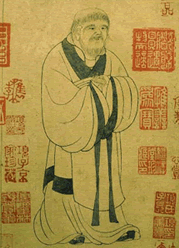
Next Chapter of the Tao Te Ching #66
Previous Chapter of the Tao Te Ching #64
Chapter and Thematic Index to the Tao Te Ching
Tao Te Ching
Commentary, Interpretations, Research Tools, Resources
Chapter 65
Das Tao Te King von Lao Tse. Complete versions of all 81 Chapters of the Tao Te Ching by many different translators in many languages: 124 English, 24 German, 14 Russian, 7 Spanish, 5 French and many other languages. Links are organized first by languages, and then alphabetically by translators. Formatting varies somewhat. The original website at Onekellotus went offline in 2012; but, the extensive collection of these Tao Te Ching versions was saved for posterity by the Internet Archive Wayback Machine and available as of 9/9/2015. This is an outstanding original collection of versions of the Daodejing─ the Best on the Internet. Caution: copyright infringement may sometimes be an issue at this website.
Tao Te Ching, Translations into English: Terebess Asia Online (TAO). 124
nicely formatted complete English language translations, on separate webpages, of the Daodejing.
Alphabetical index by translators. Each webpage has all 81 chapters of the Tao Te
Ching translated into English. A useful collection! Many
reformatted and colored versions from the original collection at
Das Tao Te King von Lao Tse. Caution: copyright infringement may
sometimes be an
issue at this website.
Lao Tzu: Te-Tao Ching - A New Translation Based on the Recently Discovered Ma-wang-tui
Texts (Classics of Ancient China)
Daodejing by Laozi: Chapters with Chinese characters, seal script,
detailed word by word concordance, Pinyin (tone#), German, French and English.
This is an outstanding resource for serious students of the Tao Te Ching.
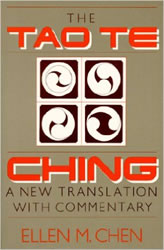
Tao Te
Ching: A New Translation and Commentary. By Ellen Chen. Paragon
House, 1998. Detailed glossary, index, bibliography, notes, 274 pages.
The Tao
and Method: A Reasoned Approach to the Tao Te Ching. By Michael
Lafargue. New York, SUNY Press, 1994. 640 pages. Detailed
index, bibliography, notes, and tables. An essential research tool.
Two Visions of the Way: A Study of the Wang Pi and the Ho-Shang Kung Commentaries on the Lao-Tzu.
By Professor by Alan Kam-Leung Chan. SUNY Series in Chinese
Philosophy and Culture. State University of New York Press, 1991.
Index, bibliography, glossary, notes, 314 pages.
ISBN: 0791404560.
Tao Te Ching: The Definitive Edition
Chinese Reading of the Daodejing
Wang Bi's Commentary on the Laozi with Critical Text and Translation.
By Professor Rudolf G. Wagner. A SUNY Series in Chinese Philosophy and
Culture. English and Mandarin Chinese Edition.
State University of New York Press; Bilingual edition (October 2003). 540
pages. ISBN: 978-0791451823.
Wang Bi (Wang Pi, Fusi), 226-249 CE,
Commentary on the Tao Te
Ching.
Tao Te Ching
The Taoism Reader
Change Your Thoughts - Change Your Life: Living the Wisdom of the Tao
The Routledge Encyclopedia of Taoism.
Lao Tzu's Tao Teh Ching, A Parallel Translation Collection. Compiled by B.
Boisen.
Tao Te Ching: The Book of the Way. Revised by Sam Torode based on the
translation by Dwight Goddard, 1919. Independent Pub., 2009, 88 pages.
Tao Te Ching: Annotated
and Explained. By Derek Lin. Foreword by Lama Surya Das.
Skylight Illuminations, SkyLight Paths, 2006. 208 pages.
Comparison and Analysis of Selected English Interpretations of the Tao Te Ching.
By Damian J. Bebell and Shannon M. Fera.
Practicing the Tao Te Ching: 81 Steps on the Way. By Solala Towler.
Foreword by Chunglang Al Huang. Sounds True, 2016. 320 pages.
The Lunar Tao: Meditations in Harmony with the Seasons
The Classic of the Way and Virtue: A New Translation of the Tao-te Ching of Laozi as Interpreted by Wang Bi.
Translated by Richard John Lynn. Translations from the Asian Classics
Series. New York, Columbia University Press, 1999. Extensive index,
glossaries, notes, 244 pages.
Tao Te Ching in Chinese characters,
Pinyin Romanization, English and German by Dr. Hilmar
Alquiros.
Yellow Bridge
Dao De Jing Comparison Table Provides side by side comparisons of
translations of the Tao Te Ching by James Legge, D. T. Suzuki, and Dwight
Goddard. Chinese characters for each paragraph in the Chapter are on the
left; place your cursor over the Chinese characters to see the Pinyin
Romanization of the Chinese character and a list of meanings.
Translators Index,
Tao Te Ching Versions in English, Translators Sorted Alphabetically by Translator, Links to Books and
Online Versions of the Chapters
Taoism and the Tao Te
Ching: Bibliography, Resources, Links
Spanish Language
Translations of the Tao Te Ching, Daodejing en Español, Translators Index
The Tao of Zen
Chapter 1 in the
Rambling
Taoist Commentaries by Trey Smith. The
Rambling Taoists are Trey Smith and Scott Bradley.
By Hans-Georg Moeller. Columbia University Press, 2006, 176 pages.
Valley Spirit, Gu Shen,
Concept, Chapter 6
Valley Spirit Center in Red
Bluff, California.
Sacred
Circle in the Gushen Grove.
Lao-tzu's Taoteching
Reading Lao Tzu: A Companion to the Tao Te Ching with a New Translation
Dao De Jing: A Philosophical Translation
Thematic Index to the
81 Chapters of the Tao Te Ching
Lieh-Tzu: A Taoist Guide to Practical Living
Revealing the Tao Te Ching: In-depth Commentaries on an Ancient Classic
Cloud Hands Blog
Mike Garofalo writes about Mind-Body Arts, Philosophy, Taoism, Gardening, Taijiquan, Walking, Mysticism,
Qigong, and the Eight Ways.
The Whole Heart of Tao:
The Complete Teachings From the Oral Tradition of Lao Tzu.
Gushen Grove Notebooks for the Tao Te Ching
Green Way Research, Valley Spirit
Center, Gushen Grove Notebooks (2001-2020)
East Los Angeles, California, 1946-1998;
Red Bluff, California from 1998-2017;
Vancouver, Washington from 2017-2020
Green Way Research, Tao Te Ching, Chapter 65, 2011-2020.
Compiled and
Indexed by
Michael P. Garofalo
This webpage was last modified, edited,
maintained, expanded, improved or updated on
November 24, 2019.
This webpage was first distributed online on July 6, 2011.
Created by Michael P. Garofalo, Green Way Research, Valley Spirit Center, Gushen Grove Notebooks, Vancouver, Washington © 2020 CCA 4.0
Brief Biography of Michael P. Garofalo, M.S.

Ripening Peaches: Daoist Studies and Practices
Zhuangzi (Chuang Tzu, Zhuang Zhou, Master Chuang) 369—286 BCE
Taoist Perspectives: My Reading List
Bodymind Theory and Practices, Somaesthetics
How to Live a Good Life: Advice from Wise Persons
Qigong (Chi Kung) Health Practices
One Old Daoist Druid's Final Journey: Notebooks of the Librarian of Gushen Grove
Index to Cloud Hands and Valley Spirit Websites
Index to English Language Translators of the Tao Te Ching
Recurring Themes (Terms, Concepts, Leimotifs) in the Tao Te Ching
Spanish Language Translations of the Tao Te Ching
Chinese Characters, Wade-Giles (1892) and Hanyu Pinyin (1982) Romanizations
The Tao Te Ching (Dao De Jing) by Lao Tzu (Laozi) circa 500 BCE
|
Tao Te
Ching |
|||||||||
| 1 | 2 | 3 | 4 | 5 | 6 | 7 | 8 | 9 | 10 |
| 11 | 12 | 13 | 14 | 15 | 16 | 17 | 18 | 19 | 20 |
| 21 | 22 | 23 | 24 | 25 | 26 | 27 | 28 | 29 | 30 |
| 31 | 32 | 33 | 34 | 35 | 36 | 37 | 38 | 39 | 40 |
| 41 | 42 | 43 | 44 | 45 | 46 | 47 | 48 | 49 | 50 |
| 51 | 52 | 53 | 54 | 55 | 56 | 57 | 58 | 59 | 60 |
| 61 | 62 | 63 | 64 | 65 | 66 | 67 | 68 | 69 | 70 |
| 71 | 72 | 73 | 74 | 75 | 76 | 77 | 78 | 79 | 80 |
| 81 | |||||||||
Return to the Top of this Webpage

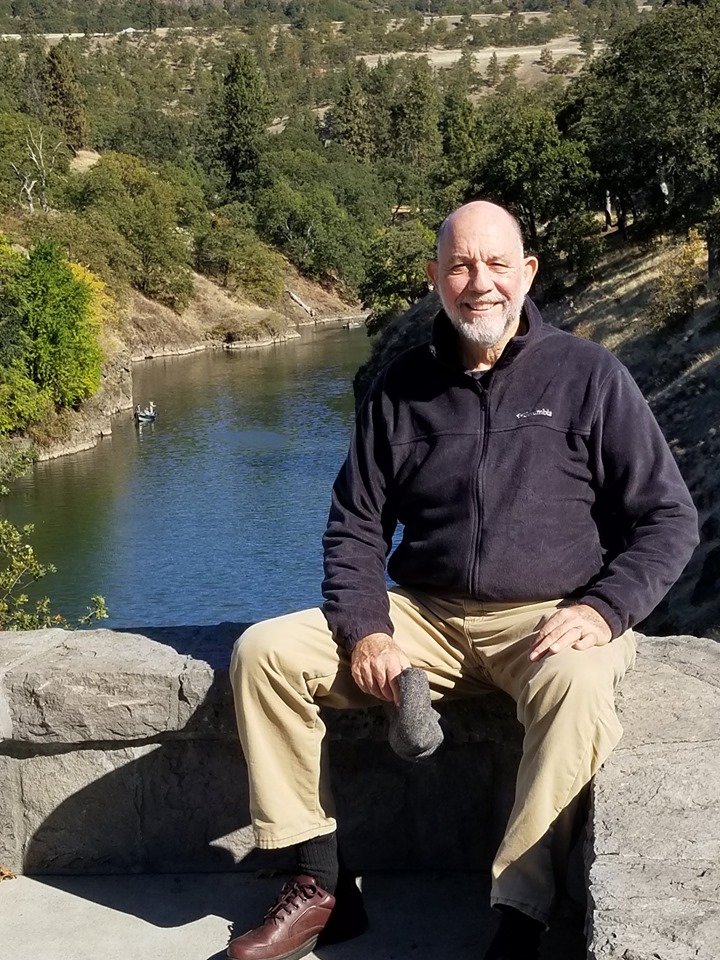
Mike Garofalo at the Klickitat River in Southwest Washington, 2019
Cloud Hands Blog of
Michael P. Garofalo

Facebook of
Michael P. Garofalo

Return to the Alphabetical
Index of Mike Garofalo's Hypertext Documents
Return to the Top of this Webpage