Compiled and Indexed by Michael P. Garofalo
Green Way Research, Valley Spirit Center, Gushen Grove Notebooks, Vancouver, Washington
Chapter 15 Chapter 17 Index to All 81 Chapters Daoism Concordance Cloud Hands Blog
Classic Book (Ching) about the Tao (Way, Nature, Patterns, Processes) and Te (Virtue, Potency, Power, Integrity, Wise Person, Sage)
Concordance: Indexing, Search Terms, Topics, Themes, Keys, Subjects, Words
English and Chinese (Wade-Giles) Terms:
Emptiness or Void or Openness (hsü), Resting, Know or Understand (chih),
Destiny or Fate (ming), Returning to the Root, Knowing the Eternal,
Kingly or Royal (wang), Ten Thousand Things Arising and
Returning to the Source,
Danger or Peril (tai), Community of Feeling, Disaster or Calamity (hsiung), Longevity, Sage, Leader,
Returns or Recovers (kuei), Abode of Eternal Tao, Sky,
Eternal, Enlightenment (ming), Eternal or Everlasting (ch'ang), Rest, Tao,
Inner Life, Heaven, Peace, Emptiness, Watch or See or Recognize (kuan),
Highest or Utmost or Ultimate (chi), Root or Source (kên), Free (pu), Stillness
or Quietude or Tranquility (ching), Receptivity, Root,
Arise or Grow (tso), Unchanging, Together or United (ping), Tao or
Dao, Return or Returning (fu), Things, Keep or Hold or Cling (shou), Enlightened,
Serenity, Death, Flourish or Bloom or Grow (yün), Impartial or
Unprejudiced (kung), Freedom from Fear of Aging, Immortality,
Open-minded or Broad or Tolerant (jung), Self or Body or Individual (shên),
Error or Falsehood (wang), Constant or Essence or Absolute (tu),
歸根
Términos en Español:
Vacío, Apertura,
Descansar, Saber, Entender, Destino, Suerte,
Volviendo a la Raíz,
Conociendo el Eterno,
Regio, Diez Mil Cosas, Surgen y
que Vuelven a la Fuente, Peligro,
Comunidad de Sentimiento,
Desastre, Calamidad, Longevidad, Sabio, Líder,
Devoluciones, Recupera, Morada del Tao Eterno,
Cielo, Ilustración,
Resto, Vida Interior,
Paz, Reloj, Reconocer, Más Alta,
Máxima, Raíz, Origen,
Gratuito , Silencio,
Quietud, Receptividad, Crecer, Juntos, Estados,
Retorno, Llegada, Cosas,
Mantener, Retener, Serenidad, Muerte,
Imparcial, Sin Prejuicios,
Inmortalidad, Mentalidad Abierta, Amplia, Tolerante,
Ser, Error, Falsedad, Entidad, Persona, Esencia, Absoluto,
Floración,
Flor.
Electronic Concordance for all 81 Chapters of the Tao Te Ching
English Language Translations of the Tao Te Ching
"By attaining the height of abstraction we gain fullness of rest.
All the ten thousand things arise, and I see them return.
Now they bloom in bloom but each one homeward returneth to its root.
Returning to the root means rest.
It signifies the return according to destiny.
Return according to destiny means the eternal.
Knowing the eternal means enlightenment.
Not knowing the eternal causes passions to rise; and that is evil.
Knowing the eternal renders comprehensive.
Breadth renders royal.
Royalty renders heavenly.
Heaven renders Reason-like.
Reason renders lasting.
Thus the decay of the body implies no danger."
- Translated by
D. T. Suzuki and Paul Carus, 1913,
Chapter 16
"It is only by means of being
that non-being may be found.
When society changes
from its natural state of flux,
to that which seems like chaos,
the inner world of the superior man
remains uncluttered and at peace.
By remaining still, his self detatched,
he aids society in its return
to the way of nature and of peace.
The value of his insight may be clearly seen
when chaos ceases.
Being one with the Tao is to be at peace,
and to be in conflict with it,
leads to chaos and dysfunction.
When the consistency of the Tao is known,
the mind is receptive to its states of change.
It is by being at one with the Tao,
that the sage holds no prejudice
against his fellow man.
If accepted as a leader of men,
he is held in high esteem.
Throughout his life,
both being and non-being,
the Tao protects him."
- Translated by
Stan Rosenthal, 1984,
Chapter 16
"Seek to attain an open mind─ the summit of vacuity.
Seek composure─ the
essence of tranquility.
All things are in process, rising and returning.
Plants come to blossom, but
only to return to the root.
Returning to the root is like seeking tranquility;
It is moving towards its destiny.
To move toward destiny is like eternity.
To
know eternity is enlightenment,
And not to recognize eternity brings disorder
and evil.
Knowing eternity makes one comprehensive;
Comprehension makes one
broadminded;
Breadth of vision brings nobility;
Nobility is like heaven.
The heavenly is like Tao.
Tao is the Eternal.
The decay of the body is not to
be feared."
- Translated by
Dwight Goddard and Henri Borel, 1919, Chapter 16
"To quiet down the heart to stay at a constant
stillness,
To settle down the heart to remain in infinite emptiness,
All the myriad things are involved in constant motion, but I just gaze
into emptiness to unintentionally wait for the coming of the Mysterious Pass.
Yes, though all things flourish with myriad variations,
each one will eventually return to the very root of birth and death.
To return to the root needs constant stillness.
Only by staying in constant stillness can Congenital Nature be recovered.
To fully recover Congenital Nature is called 'Chang.'
To know Chang is called enlightenment.
To no know Chang and to act blindly will result in disaster.
Only knowing Change, can one tolerate all;
Only tolerating all, can one be impartial.
By being impartial, can one be all-accomodating;
By being all-accommodating, one can equal Heaven;
By equaling Heaven, one can accomplish Tao, which lasts without death.
Only by accomplishing Tao, can one be rid of death and birth,
lasting eternally without any danger."
- Translated by
Hu Xuezhi, 2005, Chapter 16
"Be completely empty; be tranquil to the core
The creatures of the world are all born
And by this I see their deaths
Things pour forth from the earth and each returns to it
Know this and you know tranquility, for your own fate is clear
See what is, accept it, and you are free of all burdens
No good can come from rejecting this
Without such burdens you have no prejudice
Without prejudice you give to all equally and fully
Giving equally and fully is a step along the way
And being so, you will fear nothing to the end of your days"
- Translated by
Ted Wrigley, Chapter 16
"Attain complete emptiness,
Hold fast to stillness.
The ten thousand things stir about;
I only watch for their going back.
Things grow and grow,
But each goes back to its root.
Going back to the root is stillness.
This means returning to what is.
Returning to what is
Means going back to the ordinary.
Understanding the ordinary: Enlightenment.
Not understanding the
ordinary:
Blindness creates evil.
Understanding the ordinary: Mind
opens.
Mind opening leads to compassion,
Compassion to nobility,
Nobility to heavenliness,
Heavenliness to Tao.
Tao endures.
Your body dies.
There is no danger."
- Translated by
Stephen Addis, 1993, Chapter 16
"Attain to the goal of absolute vacuity;
Keep to the state of perfect peace.
All things come into existence,
And thence we see them return.
Look at the things that have been flourishing;
Each goes back to its origin.
Going back to the origin is called peace;
It means reversion to destiny.
Reversion to destiny is called eternity.
He who knows eternity is called enlightened.
He who does not know eternity is rushing blindly into miseries.
Knowing eternity he is all-embracing.
Being all-embracing he can attain magnanimity.
Being magnanimous he can attain omnipresence.
Being omnipresent he can attain supremacy.
Being supreme he can attain Tao.
He who attains Tao is everlasting.
Though his body may decay he never perishes."
- Translated by
Ch'u Ta-Kao, 1904, Chapter 16
"Empty the mind by not thinking of gain or loss.
Follow your heart in
all matters and the mind isn't stirred.
Even though the misery of others
is apparent, you contemplate their ultimate destiny.
That destiny is
enlightenment.
Being one with the Tao is enlightenment.
Here you are
serenely impartial.
Being someone is a delusion.
Here you are separate
and confused.
Impartial, you shine on existence like the sun, caring not
what or who you shine on.
At one with the Tao, birth and death cannot
touch you."
- Translated by
David Bullen, Chapter 16
"Attaining the utmost vacuity and earnestly observing quietness,
while
the ten thousand things all together are operating,
I thus contemplate
their return (to nothingness).
Indeed, things flourish luxuriantly, each to return again to the root
(from which it sprang).
To return to the root is called stillness; this
may be described as surrendering one's trust.
Surrendering one's trust is called the constant (law).
He who knows
this constant (law), is called enlightened.
He who does not know this
constant (law), is foolishly active and comes to grief.
He who knows
this constant (law) forbears;
Forbeairng, he is unprejudiced;
Unprejudiced, he is all-embracing;
All-embracing, he is great;
Great, he
knows the Way;
Knowing the Way, he lasts;
Until the end of his life
he is not in peril."
- Translated by
Jan J. L. Duyvendak, 1954, Chapter 16
"Empty yourself.
Be calm.
The ten thousand things come and go.
Just watch them.
All things return to the Source, where there is stillness.
To return to the Source is to recover what is permanent.
Knowing what is permanent: enlightenment.
Not knowing what is permanent: disaster.
Knowing what is permanent opens the mind.
Open mind, open heart.
Open heart, magnanimity.
Magnanimity, a virtue of queens and kings.
A true queen or king lives in accord with Nature.
To live in accord with Nature is to find the Tao.
Following the Tao makes death harmless."
- Translated by
George Cronk, 1999, Chapter 16

Created by Michael P. Garofalo, Green Way Research, Valley Spirit Center, Gushen Grove Notebooks, Vancouver, Washington © 2018 CCA 4.0
 By Hu Xuzehi
 Annotated translation by Victor Mair
  By Ha Poong Kim
 By Hans-Georg Moeller
 Ripening Peaches: Taoist Studies and Practices By Mike Garofalo
 By Roger T. Ames and David T. Hall
 By Arthur Waley
"Make emptiness in yourself complete and achieve the
full calm!
Let everything around move by itself.
Let everyone bloom spiritually and advance to cognition of their true Essence.
Those who cognized their true Essence — achieve full calm.
Thus they attain the common Abode of All Who Attained.
One’s being in this Abode has to become constant.
He, who fulfilled this, is called Enlightened, Perfect, possessing the Higher
Wisdom.
Those Who attained that Abode represent the United “We” which is the Highest
Ruler.
That Abode is also called the Sky.
This is the Abode of the Eternal Tao.
Tao is non-corporeal.
It cannot be caught by anyone.
Thus, It is invincible."
- Translated by
Mikhail Nikolenko,
Chapter 16
"To arrive at ultimate quietness
Steadfastly maintain repose.
All creatures together have form;
I see them return again to their root.
The Master creatures come to perfect form,
Continuously they return to their root.
Continuous return to the root is called repose,
Repose is called the law of return,
The law of return is called eternity.
To know eternity is called illumination.
To ignore eternity is to draw misfortune on oneself,
To know eternity is to be great of Soul,
To be great of soul is to be a ruler,
To be a ruler is to be greater than all,
To be greater than all is to be conscious of Life,
To be conscious of Life is to endure.
The body shall disappear but not decay."
- Translated by
Isabella Mears, 1916, Chapter 16
"Attaining perfect emptiness
Remain patient and sincere
The myriad beings arise as one
Through this we observe the return
Of beings in numberless multitudes
Each coming home to its root
Return to the root means serenity
It may be called a return to a higher order
Return to higher order speaks of the enduring
To comprehend the enduring speaks of clarity
To not comprehend the enduring
Is to recklessly create suffering
To comprehend the enduring (is) tolerance
Tolerance becomes justice
Justice becomes sovereignty
Sovereignty becomes celestial
The celestial becomes the path
The path is then continuous
The death of self is nothing to fear"
- Translated by
Bradford Hatcher, 2005, Chapter 16
"Be humble to the utmost and be peaceful wholeheartedly.
Everything in the world is functioning, and I see the cycle of life and death.
Everything in the world will eventually go back to the root.
Going back to the root means peace, or going to destiny.
Going to destiny means following nature's way.
Understanding nature's way makes your mind clear.
If you do not understand nature's way and you violate it,
You will meet with disaster.
Understanding nature's way makes you tolerant;
Tolerance makes you fair,
Fairness makes you a good ruler,
Being a good ruler makes you conform to nature,
Conformity with nature leads you to the Dao.
The Dao lets you last long and never be defeated in your lifetime."
- Translated by
Xiaolin Yang, Chapter 16
"Trancending nature
To reach Emptyness is what we mean by the extreme.
To maintain tranquility is what we mean by the center
Side by side, the ten thousand things rise and fall
And by this I see their return.
Things come forth in great numbers;
Each one returns to its source.
This is called tranquility,
"Tranquility" - This mean to return to your fate.
To return to your fate is to be constant.
To know the constant is to be wise.
Not to know the constant is to be reckless and wild.
If you're reckless and wild,
Your actions will lead to misfortune.
To know the constant, is to be open-minded.
To be open-minded, is to be impartial.
To be impartial, is to act royally.
To be royal, is to be like Heaven.
To be like Heaven is to be [one with] the Tao.
If you are one with the Tao,
You will suffer no harm till the end of your days."
- Translated by
Bram den Hond, Chapter 16
"Attain the utmost emptiness of mind,
Maintain the utmost stillness.
While all things are simultaneously developing,
I can observe their cycles.
Though everything is flourishing, each will return to its root,
Returning to the root means stillness, and
Stillness marks the cycle of life.
The cycle of life is an eternal truth,
Knowing the truth is called enlightenment,
Not knowing the truth and acting blindly results in disaster.
Knowing the truth enhances forbearance,
Forbearance leads to objectivity,
Objectivity becomes the universal rule,
The universal rule is in accord with Nature, and
Nature is in harmony with Tao.
Tao is everlasting, and
Prevails over one's lifetime."
- Translated by
David Hong Cheng, 2000, Chapter 16
"Who ascends the peak of Emptiness
Will reach serenity. All Beings do I see
arise and then return whence they came.
To return to one's origin means to
acquiesce.
To acquiesce means to have fulfilled one's destiny.
To fulfill
one's destiny means to have comprehended eternity.
To comprehend eternity
means to be enlightened.
Not to comprehend eternity means to bes ubject of
passions, and that is evil.
Comprehending eternity makes one magnanimous.
Magnanimity makes one just.
To be just is Kingly.
The Kingly is Heavenly.
The
Heavenly is the Spiritual.
The Spirit is Immortal.
And thus the ephemerality
of the body can not harm us."
- Translated by
Andre von Gauthier, Chapter 16
Tao Te Ching
Lao Tzu: Tao Te Ching
 Translated by Livia Kohn
Dao De Jing: The Book of the Way
"The state of vacancy should be brought to the utmost degree, and that of
stillness guarded with unwearying vigor.
All things alike go through their processes of activity, and then we see them
return to their original state.
Then things in the vegetable world have displayed their luxuriant growth, we see
each of them return to its root.
This returning to their root is what we call the state of stillness;
And that stillness may be called a reporting that they have fulfilled their
appointed end.
The report of that fulfillment is the regular, unchanging rule.
To know that unchanging rule is to be intelligent;
Not to know it leads to wild movements and evil issues.
The knowledge of that unchanging rule produces a grand capacity and forbearance,
And that capacity and forbearance lead to a community of feeling with all
things.
From this community of feeling comes a kingliness of character;
And he who is king-like goes on to be heaven-like.
In that likeness to heaven he possesses the Dao.
Possessed of the Dao, he endures long;
And to the end of his bodily life, is exempt from all danger of decay."
- Translated by
James Legge, 1891,
Chapter 16
A Chinese Language Version of Chapter 16 of the Tao Te
Ching by Lao Tzu
A
note
on my style of displaying the Chinese characters of the Tao Te Ching
致虛極.
守靜篤.
萬物並作.
吾以觀復.
夫物芸芸, 各復歸其根.
歸根曰靜.
是謂復命.
復命曰常.
知常曰明.
不知常, 妄作凶知常容.
容乃公.
公乃王.
王乃天.
天乃道.
道乃久.
沒身不殆.
- Chinese characters, Tao Te Ching,
Chapter 16
chih hsü chi.
shou ching tu.
wan wu ping tso.
wu yi kuan fu.
fu wu yün yün, ko fu kuei ch'i kên.
kuei kên yüeh ching.
shih wei fu ming.
fu ming yüeh ch'ang.
chih ch'ang yüeh ming.
pu chih ch'ang, wang tso hsiung chih ch'ang jung.
jung nai kung.
kung nai wang.
wang nai t'ien.
t'ien nai tao.
tao nai chiu.
mo shên pu tai.
- Wade-Giles Romanization, Tao Te Ching, Chapter 16
Audio Version in Chinese of Chapter 16 of the Tao Te Ching
zhi xu ji.
shou jing du.
wan wu bing zuo.
wu yi guan fu.
fu wu yun yun, ge fu gui qi gen.
gui gen yue jing.
shi yue fu ming.
fu ming yue chang.
zhi chang yue ming.
bu zhi chang, wang zuo xiong zhi chang rong.
rong nai gong.
gong nai quan.
quan nai tian.
tian nai dao.
dao nai jiu.
mo shen bu dai.
-  Pinyin translation, Daodejing, Chapter 16
Tao Te Ching in Chinese characters and English (includes a word by word key) from YellowBridge
Tao Te Ching in Chinese characters, Pinyin Romanization, English and German by Dr. Hilmar Alquiros.
Laozi Daodejing: Chapters with Chinese characters, seal script, detailed word by word concordance, Pinyin (tone#), German, French and English.
Chinese and English Dictionary, MDGB
Dao De Jing Wade-Giles Concordance by Nina, Dao is Open
Dao De Jing English and Wade-Giles Concordance by Mike Garofalo
Tao Te Ching in Pinyin Romanization with Chinese characters, WuWei Foundation
Tao Te Ching in Pinyin Romanization
Tao Te Ching in Chinese characters and English
Tao Te Ching in Chinese characters, English, Word by word analysis, Zhongwen
Tao Te Ching: The Definitive Edition
Tao Te Ching in Chinese characters: Big 5 Traditional and GB Simplified
Chinese Characters, Wade-Giles and Pinyin Romanizations, and 16 English Translations for Each Chapter of the Daodejing by Mike Garofalo.
Tao Te Ching in Chinese characters, Pinyin and Wade Giles Romanization spellings, English; a word for word translation of the Guodian Laozi Dao De Jing Version.
Lao Zi's Dao De Jing: A Matrix Translation with Chinese Text by Bradford Hatcher.
"Effect emptiness to the extreme.
Keep
stillness whole.
Myriad things act in concert.
I therefore watch their
return.
All things flourish and each returns to its root.
Returning to
the root is called quietude.
Quietude is called returning to life.
Return
to life is called constant.
Knowing this constant is called
illumination.
Acting arbitrarily without knowing the constant is
harmful.
Knowing the constant is receptivity, which is
impartial.
Impartiality is kingship.
Kingship is Heaven.
Heaven is
Tao
Tao is eternal.
Though you lose the body, you do not
die."
- Translated by
Charles Muller, 1891, Chapter 16
 By Alexander Simkins
 By Derek Lin
 By Ming-Dao Deng.
 By Benjamin Hoff.
 By Ming-Dao Deng
 Translated by Thomas Cleary
"I adopt the following practice for
self-improvement:
To strive to be extremely humble and unassuming;
To retain Serenity single-mindedly;
Through such effort, I shall be able to maintain a serene state of mind so that
I can observe and judge most efficiently the simultaneous unfolding of
activities of each
and every creature and thing, as well as their recurrences.
Each and every innumerable individual living thing will flourish like weeds
every instant;
Each and every living thing will eventually return to its root;
The returning of an individual to his its root is called Serenity;
Serenity means to respond to the determining forces Tao;
Responding to the determining forces Tao leads to perpetuation;
Individuals who know how to perpetuate are brilliant;
Individuals who do not know how to perpetuate are prone to rash activities,
hence they are doomed.
A person who truly knows is comprehensive tolerant;
His comprehensiveness will make him an impartial person;
Impartiality is the essential quality of a good and proper king;
Kings of good standing came with the background of having recognized
the
importance of being in harmony with Heaven;
A person who recognizes the significance of being in harmony with Heaven is on
the right path of Tao;
Being on the path of Tao, a person will perpetuate his existence;
Throughout my life I have never had, and will never have, any doubt about
this
the above described progressive stages of existence."
- Translated by
Org, Lee Sun Chen,
Chapter 16
"Reach the pole of emptiness (hsü-chi),
Abide in genuine quietude (ching).
Ten thousand beings flourish together,
I am to contemplate (kuan) their return (fu).
Now things grow profusely,
Each again returns (kuei) to its root.
To return to the root is to attain quietude (ching),
It is called to recover life (ming).
To recover life is to attain the Everlasting (ch'ang),
To know the Everlasting (ch'ang) is to be illumined (ming).
Not knowing (chih) the Everlasting (ch'ang),
One commits evils wantonly.
Knowing the Everlasting one becomes all containing (yung).
To be all containing is to be public (kung).
To be public is to be kingly (wang).
To be kingly is to be like heaven.
To be like heaven is to be like Tao.
To be like Tao is to last long.
This is to lose the body without becoming exhausted (pu tai)."
- Translated by
Ellen Marie Chen, 1989, Chapter 16
"Seek to attain to absolute emptiness;
Maintain a state of perfect stillness.
See how all things come into being,
And see how they return!
They come to flower and fullness
And then go back to the roots whence they came.
To go home to the root is to achieve perfect stillness.
Thus, in attaining stillness, do they fulfill their destiny;
And thus, in turning back, they join the Never-changing.
To be aware of the Never-changing is to be enlightened.
Not to know the Never-changing is to stumble blindly into miseries.
He who knows the Never-changing embraces all;
Embracing all, shall he not accept all impartially?
To be impartial is an attribute of kingship,
And kingship is of Heaven.
He who is of Heaven can attain to the Tao.
He who is of the Tao endures forever,
And though his body decay, he never dies."
- Translated by
Herman Ould, 1946,
Chapter 16
Created by Michael P. Garofalo, Green Way Research, Valley Spirit Center, Gushen Grove Notebooks, Vancouver, Washington © 2018 CCA 4.0
 Translated by Eva Wong
  Translated by Philip Ivahoe
 By James Miller
 Translated by Stephen Bokencamp
By Alexander and Annellen Simpkins
Translated by Stephen Bokencamp
By Alexander and Annellen Simpkins Translated by Thomas Cleary
 By Livia Kohn
"When one is extremely stilled and free of vain desires,
All things will work together
So that one can watch the changes,
For all things return to their roots:
Their original states without poles.
Returning is completing the cycle of life's work.
The cycling of life is absolute,
Awareness of that absoluteness is wisdom.
Without that wisdom, one may do things willfully
And may hence meet with an early death.
With the wisdom, one can be tolerant.
Being tolerant, one can be just to everything.
Being just, one can be a wise leader,
Being a wise leader, one can fulfill the greatest cause.
Being able to fulfill, one is serving the Way.
By serving the Way, the cause can last,
And will not vanish even after one's death."
- Translated by
Qixuan, Liu
Chapter 16
"Achieve the highest goal by being passive;
Hold close to a state of perfect
serenity.
Everything comes into existence, but observe, returns to its source.
Thus,
vegetation flourishes and grows, but returns to the soil whence it came.
Returning to the source is serenity;
It is to realize one’s destiny.
To
realize one’s destiny is to know the Eternal Constant.
To know the Eternal
Constant is to be enlightened.
To be ignorant of this is blindness that
begets evil.
Whoever knows the Eternal Constant is open minded.
Being open minded is to
be impartial,
Being impartial is to be above nations and laws,
Being above
nations and laws is to be in accord with nature,
Being in accord with nature is to be in accord with Tao,
Being in accord with Tao is to be eternal.
Although your body dies and decays you live forever."
- Translated by
Frank J. Machovec,
1962,
Chapter 16
"If you can empty your mind of all thoughts
your heart will embrace the tranquility of peace.
Watch the workings of all of creation,
but contemplate their return to the source.
All creatures in the universe
return to the point where they began.
Returning to the source is tranquility
because we submit to Heaven's mandate.
Returning to Heaven's mandate is called being constant.
Knowing the constant is called 'enlightenment'.
Not knowing the constant is the source of evil deeds
because we have no roots.
By knowing the constant we can accept things as they are.
By accepting things as they are, we become impartial.
By being impartial, we become one with Heaven.
By being one with Heaven, we become one with Tao.
Being one with Tao, we are no longer concerned about
losing our life because we know the Tao is constant
and we are one with Tao."
- Translated by
John H. McDonald, 1996, Chapter 16
"Empty the self completely; Embrace perfect peace.
Realize that all beings alike go through their processes of activity and life,
and then they return to the original source.
Returning to the source brings peacefulness and stillness.
This stillness is the flow of nature, and signifies that
the beings have lived
their allotted span of life.
Accepting this brings enlightenment and tranquility,
ignoring this brings confusion and sorrow
If one can accept this flow of nature; one can cherish all things.
Being all-cherishing you become impartial;
Being impartial you become magnanimous;
Being magnanimous you become natural;
Being natural you become one with The Way;
Being one with The Way you become immortal:
Though the body will decay, the Way will not."
- Translated by
John Discus, 2002, Chapter 16
"Push far enough towards the Void,
Hold fast enough to Quietness,
And of the ten thousand things none but can be worked on by you.
I have beheld them, whither they go back.
See, all things howsoever they flourish
Return to the root from which they grew.
This return to the root is called Quietness;
Quietness is called submission to Fate;
What has submitted to Fate has become part of the always so.
To know the always-so is to be Illumined;
Not to know it, means to go blindly to disaster.
He who knows the always-so has room in him for everything;
He who has room in him for everything is without prejudice.
To be without prejudice is to be kingly;
To be kingly is to be of heaven;
To be of heaven is to be in Tao.
Tao is forever and he that possess it,
Though his body ceases, is not destroyed."
- Translated by
Arthur Waley, 1934, Chapter 17
 Translation and elucidation by Hua Ching Ni
 Translated by Brian Walker
 Translated by Arthur Waley
 Translated by Lionel and and Herbert Giles
 By Eva Wong
"Attain the climax of emptiness, preserve the utmost
quiet:
as myriad things act in concert, I thereby observe the return.
Things flourish, then each returns to its root.
Returning to the root is called stillness;
stillness is called return to Life, return to Life is called the constant;
knowing the constant is called enlightenment.
Acts at random, in ignorance of the constant, bode ill.
Knowing the constant gives perspective; this perspective is impartial.
Impartiality is the highest nobility; the highest nobility is divine, and the
divine is the Way.
This Way is everlasting, not endangered by physical death."
- Translated by
Thomas Cleary,
1991,
Chapter 16
"Take openness to the limit.
Hold tranquillity in our center.
As all things arise together, so I watch them all return.
Though all things exist in abundant profusion,
each one returns to its roots.
Returning to our roots, we become tranquil.
Being tranquil, we recover our true nature.
Recovering our true nature, we become eternal.
Knowing the eternal, we have understanding.
Not to know the eternal, is to recklessly invite disaster.
Know that the eternal is tolerant.
Tolerant, and therefore, impartial.
Impartial, and therefore, complete.
Complete, and thus, sacred.
Sacred, and so the Tao.
Tao, and thus, everlasting.
In the midst of life we will come to no harm."
- Translated by
Amy and Roderic Sorrell, 2003, Chapter 16
"In order to arrive at complete contentment, restrain your ambitions.
For everything which comes into being eventually returns again to the
source from which it came.
Each thing which grows and develops to the
fullness of its own nature completes its course
by declining again in a
manner inherently determined by its own nature.
Completing its life is as inevitable as that each thing shall have its
own goal.
Each thing having its own goal is necessary to the nature of
things.
He who knows that this is the ultimate nature of things is
intelligent; he who does not is not.
Being intelligent, he knows that
each has a nature which is able to take care of itself.
Knowing this, he
is willing that each thing follow its own course.
Being willing to let
each thing follow its own course, he is gracious.
Being gracious, he is
like the source which graciously gives life to all.
Being like the
gracious source of all, he embodies Nature's way within his own being.
And in thus embodying Nature's way within himself, he embodies its
perpetually recurrent principles within himself.
And so, regardless of what happens to his body, there is something about him which goes on forever."
- Translated by
Archie J. Bahm, 1958, Chapter 16
Walking the Way: 81 Zen Encounters with the Tao Te Ching
The Tao of Zen
Tao Te Ching: Zen Teachings on the Taoist Classic
Buddhism and Taoism Face to Face: Scripture, Ritual, and Iconographic Exchange in Medieval China
"I do my utmost to attain emptiness;
I hold firmly to stillness.
The myriad creatures all rise together
And I watch their return.
The teaming creatures
All return to their separate roots.
Returning to one’s roots is known as stillness.
This is what is meant by returning to one’s destiny.
Returning to one’s destiny is known as the constant.
Knowledge of the constant is known as discernment.
Woe to him who wilfully innovates
While ignorant of the constant,
But should one act from knowledge of the constant
One’s action will lead to impartiality,
Impartiality to kingliness,
Kingliness to heaven,
Heaven to the way,
The way to perpetuity,
And to the end of one’s days one will meet with no danger."
- Translated by
D. C. Lau,
1963, Chapter 16
|
Tao Te
Ching |
|||||||||
| 1 | 2 | 3 | 4 | 5 | 6 | 7 | 8 | 9 | 10 |
| 11 | 12 | 13 | 14 | 15 | 16 | 17 | 18 | 19 | 20 |
| 21 | 22 | 23 | 24 | 25 | 26 | 27 | 28 | 29 | 30 |
| 31 | 32 | 33 | 34 | 35 | 36 | 37 | 38 | 39 | 40 |
| 41 | 42 | 43 | 44 | 45 | 46 | 47 | 48 | 49 | 50 |
| 51 | 52 | 53 | 54 | 55 | 56 | 57 | 58 | 59 | 60 |
| 61 | 62 | 63 | 64 | 65 | 66 | 67 | 68 | 69 | 70 |
| 71 | 72 | 73 | 74 | 75 | 76 | 77 | 78 | 79 | 80 |
| 81 | |||||||||
"Emptiness must be perfect, and Silence made absolute with tireless
strength.
All things pass through the period of action; then they return
to repose.
They grow, bud, blossom and fruit; then they return to the
root.
This return to the root is this state which we name Silence;
And
this Silence is Witness of their Fulfillment.
This
cycle is the universal law.
To know it is the part of intelligence;
To ignore it bringeth folly of action, whereof the end is madness.
To know it
bringeth understanding and peace;
And these lead to the identification of
the Self with the Not-Self.
This identification maketh man a king; and
this kingliness groweth unto godhood.
That godhood beareth fruit in the
mastery of the Tao.
Then the man, the Tao permeating him, endureth;
And
his bodily principles are in harmony, proof against decay,
Until the
hour of his Change."
- Interpolated by
Aleister Crowley,
1918, Chapter 16
"Schaffe Leere bis zum Höchsten!
Wahre die Stille bis zum Völligsten!
Alle Dinge mögen sich dann zugleich erheben.
Ich schaue, wie sie sich wenden.
Die Dinge in all ihrer Menge,
ein jedes kehrt zurück zu seiner Wurzel.
Rückkehr zur Wurzel heißt Stille.
Stille heißt Wendung zum Schicksal.
Wendung zum Schicksal heißt Ewigkeit.
Erkenntnis der Ewigkeit heißt Klarheit.
Erkennt man das Ewige nicht,
so kommt man in Wirrnis und Sünde.
Erkennt man das Ewige,
so wird man duldsam.
Duldsamkeit führt zur Gerechtigkeit.
Gerechtigkeit führt zur Herrschaft.
Herrschaft führt zum Himmel.
Himmel führt zum SINN.
Sinn führt zur Dauer.
Sein Leben lang kommt man nicht in Gefahr."
- Translated by Richard Wilhelm, 1911, Chapter 16
"Die Erfüllung der ewigen Ordnungen
Wunschloses Aufwärtsstreben gibt Herzensstille.
Und kämen auf einen Wunschlosen auch alle Wesen zu,-
er bliebe still, ihr Kommen und Gehen schauend.
Denn alles Lebendige ist dem Wechsel unterworfen:
Es entfaltet sich - und kehret zum Urgrund zurück.
Zurückkehren zum Urgrund, das heißt: stille werden,
das heißt: heimkehren.
Heimkehr ist: Rückkehr ins Unvergängliche.
Wer dies erkennt, ist weise;
wer es nicht erkennt, stiftet Unheil.
Wer von der Unvergänglichkeit ergriffen wird,
der wird weitherzig.
Der Weitherzige ist duldsam.
Der Duldsame ist edel.
Der Edle erfüllt die ewigen Ordnungen.
Und wer diese erfüllt, der gleicht dem Unergründlichen,
und ist, wie dieses, unvergänglich.
Keinerlei Schicksal trifft ihn mehr."
- Translated
by Rudolf
Backofen, 1949, Chapter 16
"Arriving at emptiness is reaching an extreme.
Guarding what’s at neither extreme requires diligence.
All living things, side by side, appear suddenly;
Resting, as though waiting to return to something.
Nature and Dao go round and round, each one reverting to
where they began.
That is called being quiet and calm.
It’s correctly described as returning to destiny.
Returning to destiny constantly.
This knowledge is always obvious.
Ignorance of it will always cause recklessness.
Recklessness will cause sudden calamities.
This knowledge will always allow endurance;
Endurance, then equanimity;
Equanimity, then sovereignty;
Sovereignty, then naturalness;
Naturalness, then connection to Dao;
Connection to Dao, then the disappearance of the body isn’t at
jeopardy."
- Translated by
Nina
Correa, 2005, Chapter 16
Created by Michael P. Garofalo, Green Way Research, Valley Spirit Center, Gushen Grove Notebooks, Vancouver, Washington © 2018 CCA 4.0
Further Teachings of Lao-Tzu: Understanding the Mysteries (Wen Tzu)
 Translated by Thomas Cleary
The Lunar Tao: Meditations in Harmony with the Seasons
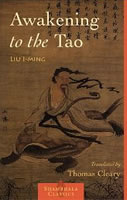
 By Lui I-Ming (1780) and translated by Thomas Cleary
Ripening Peaches: Taoist Studies and Practices By Mike Garofalo
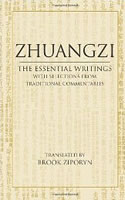
Zhuangzi: The Essential Writings with Selections from Traditional Commentaries
"Bring to its full effectiveness the state of vacancy,
Guard with unwearied watchfulness the stillness of the breast,
All things alike go through their stages of activity,
And then return again to their primordial state of rest.
Luxuriant vegetation blooms around on every hand,
But to its root returns again, where ever it may extend,
As though its growth had traveled forth at some supreme command,
And, returning home to stillness, had thus fulfilled its end.
These returnings of command are eternal in their course,
To know of the eternal is called enlightenment,
To know not the eternal of confusion is the source,
And so awakens wickedness, and evil discontent.
To know brings comprehension and a great capacity,
A breadth of comprehension brings a kingliness of way,
The king-like grows to heaven-like, like Tao it comes to be,
Everlasting, though the body
perish and decay."
- Translated by
Isaac Winter Heysinger, 1903, Chapter 16
"Having emptied yourself of everything, remain where you are.
All things spring forth into activity with one accord, and wither do we see them return?
After blossoming for a while, everything dies down to its root.
This going back to one's origin is called peace: it is the giving of oneself over to the inevitable.
This giving of oneself over to the inevitable is called preservation.
He who knows this preservation is called enlightened.
He who knows it not continues in misery.
He who knows this preservation is great of soul.
He who is great of soul is prevailing.
Prevailing, he is a king.
Being a king, he is celestial.
Being celestial, he is of Tao.
Being of Tao, he endures for ever: for though his body perish, yet he suffers no hurt."
- Translated by
Walter Gorn Old, 1904, Chapter 16
"Empty yourself of everything.
Let the mind become still.
The ten thousand things rise and fall while the Self watches their return.
They grow and flourish and then return to the source.
Returning to the source is stillness, which is the way of nature.
The way of nature is unchanging.
Knowing constancy is insight.
Not knowing constancy leads to disaster.
Knowing constancy, the mind is open.
With an open mind, you will be openhearted.
Being openhearted, you will act royally.
Being royal, you will attain the divine.
Being divine, you will be at one with the Tao.
Being at one with the Tao is eternal.
And though the body dies, the Tao will never pass away."
- Translated by
Gai-fu Feng and Jane English, 1989, Chapter 16
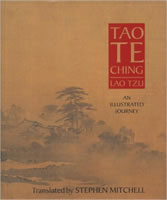
Tao Te Ching: An Illustrated Journey
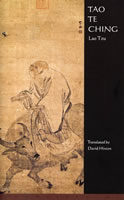
Tao Te Ching
The Book of Tao: Tao Te Ching - The Tao and Its Characteristics
Ripening Peaches: Taoist Studies and Practices
Taoism: Growth of a Religion
Zhuangzi (Chuang Tsu), Daoist Scripture: Bibliography, Links, Resources, Quotations, Notes
Zhuangzi: Basic Writings
Zhuangzi Speaks: The Music of Nature
Lifestyle Advice from Wise Persons
"When the extreme of emptiness is reached as by Heaven, and
quiescence rigidly preserved as by Earth,
then all things are simultaneously
produced;
and by this example I observe their revolutions. All things, after
flourishing like the herb yün, return each to what it sprang from.
Returning to this source is called quiescence,
and this implies a reversion to the original ordinance of Heaven.
Reversion to the original ordinance of Heaven is called the basis or
pivot of Tao.
Knowledge of this may be called
enlightenment, while ignorance of it leads to a reckless working-out of
one's own ruin.
He who knows it, bears with others.
Bearing with others,
he is just; being just, he is fit to be a king; being a king, he is the
associate of Heaven whose decree he holds
and whose ordinance he
carries out.
Heaven is the offspring of Tao; and Tao survives the death of him who is the embodiment of it, living on unharmed for ever."
- Translated by
Frederic Henry Balfour, 1884, Chapter 16
"Touch ultimate emptiness,
Hold steady and still.
All things work together:
I have watched them reverting,
And have seen how they flourish
And return again, each to his roots.
This, I say, is the stillness:
A retreat to one's roots;
Or better yet, return
To the will of God,
Which is, I say, to constancy.
The knowledge of constancy
I call enlightenment and say
That not to know it
Is blindness that works evil.
But when you know
What eternally is so,
You have stature
And stature means righteousness
And righteousness is kingly
And kingliness divine
And divinity is the Way
Which is final.
Then, though you die,
You shall not perish."
- Translated by
Raymond Blakney, 1955, Chapter 16
"Bring about emptiness to the extreme.
Guard true stillness.
The ten-thousand things rise together.
I therefore observe their return:
Those ten-thousand plants—each plant—returns
Going back to its root.
Going back to the root is said to be stillness.
This is called returning to life.
Returning to life is called the Constant.
Understanding the Constant is called clarity.
Not understanding the Constant:
Reckless actions—misfortune.
Understanding the Constant, forgive.
Forgive, then be unbiased.
Be unbiased, then be whole.
Be whole, then be Heaven.
Be Heaven, then be Tao.
Be Tao, then be eternal.
Not having a body, there is no danger."
- Translated by
Aalar Fex, 2006, Chapter 16
"Be utterly
humble
And you shall hold to the foundation of peace.
Be at one with all
these living things which, having arisen and flourished,
Return to the quiet
whence they came,
Like a healthy growth of vegetation
Falling back upon
the root.
Acceptance of this return to the root has been called
'quietism,'
Acceptance of quietism has been condemned as 'fatalism.'
But
fatalism is acceptance of destiny
And to accept destiny is to face life with
open eyes,
Whereas not to accept destiny is to face death blindfold.
He
who is open-eyed is open-minded-
He who is open-minded is open-hearted,
He
who is open-hearted is kingly,
He who is kingly is godly,
He who is godly
is useful,
He who is useful is infinite,
He who is infinite is
immune,
He who is immune is immortal."
- Translated by
Witter Bynner, 1944, Chapter 16
"Celui qui est parvenu au comble du vide garde fermement le
repos.
Les dix mille êtres naissent ensemble; ensuite je les vois s'en retourner.
Après avoir été dans un état florissant, chacun d'eux revient à son origine.
Revenir à son origine s'appelle être en repos.
Être en repos s'appelle revenir à la vie.
Revenir à la vie s'appelle être constant.
Savoir être constant s'appelle être éclairé.
Celui qui ne sait pas être constant s'abandonne au désordre et s'attire des
malheurs.
Celui qui sait être constant a une âme large.
Celui qui a une âme large est juste.
Celui qui est juste devient roi.
Celui qui est roi s'associe au ciel.
Celui qui s'associe au ciel imite le Tao.
Celui qui imite le Tao subsiste longtemps; jusqu'à la fin de sa vie, il n'est
exposé à aucun danger."
- Translated by Stanislas Julien, 1842, Chapter 16
Spanish
Language Versions of the Tao Te Ching (Daodejing)
Tao Te Ching en Español
Lao Tsé Tao Te Ching 
Tao Te Ching Traducido por Stephen Mitchell, versión española
Tao Te Ching Traducido al español por el Padre Carmelo Elorduy
Lao Tzu-The Eternal Tao Te Ching
Ripening Peaches: Taoist Studies and Practices By Mike Garofalo Maduración Duraznos: Estudios y Prácticas Taoístas por Mike Garofalo
Tao Te Ching
Lao Tzu - Tao Te Ching
Tao te king
Daodejing Español, Inglés, y Chino Versiones Lingüísticas de la Daodejing
Spanish Language Translations of the Tao Te Ching
"Vacía tu mente de deseos y ambiciones
para conservar la paz.
De la aparición bulliciosa de todas las cosas,
contempla su retorno.
Todos los seres crecen agitadamente,
pero luego, cada uno vuelve a su raíz.
Volver a su raíz es hallar el reposo.
Reposar es volver a su destino.
Volver a su destino es conocer la eternidad.
Conocer la eternidad es ser iluminado.
Quien no conoce la eternidad
camina ciegamente a su desgracia.
Quien conoce la eternidad
da cabida a todos.
Quien da cabida a todos es universalista.
Quien es universalista es parte de la Naturaleza.
Quien es parte de la Naturaleza es como el Tao
Quien es como el Tao alcanza la inmortalidad,
ya que el cuerpo perecerá, pero el Tao no."
- Translation from
Wikisource, 2013, Tao Te Ching, Capítulo 16
"Alcanzar el polo de la vacuidad,
Practicar la quietud genuinamente.
Los diez mil seres surgen juntos.
Yo contemplo entonces su retorno.
Ahora bien, las cosas, siendo numerosas y diversas,
Retornan cada una a su raíz.
Retornar a la raíz significa quietud.
Se lo llama restablecer la vida.
Restablecer la vida significa alcanzar lo eterno.
Conocer lo eterno significa estar iluminado.
Si no se conoce lo eterno,
Desordenadamente surge lo malo.
Conociendo lo eterno, se comprende todo.
Comprendiéndolo todo, se es universal.
Siendo universal, se es como el rey.
Siendo como el rey, se es como el Cielo.
Siendo como el Cielo, se es como el Tao.
Siendo como el Tao, se es perdurable.
Aunque el cuerpo desaparezca, no se está en peligro."
- Translated by
Álex Ferrara, 2003, Capítulo 16
"Alcanza al máximo el vacío.
Conserva la firmeza de la paz.
Nacen las cosas innumerables, pero las veo volver a su reposo.
Las cosas tienen desarrollos florecientes y cada una retorna a su raíz.
Volver a la raíz es encontrar el descanso, descanso que significa nuevo destino;
Nuevo destino es durar constantemente;
Conocer lo constante es la iluminación;
No conocer lo constante es caer en la ceguera y el desastre.
Quien conoce lo constante es tolerante, el tolerante es justo con todos;
Siendo justo con todos es universal,
Lo universal es el ritmo del cielo;
Lo que está conforme con el cielo, lo está con Tao.
Lo que está conforme con Tao perdura eternamente y toda su vida está fuera de
peligros."
- Translation from
Logia Medio Dia, 2015,
Capítulo 16
"Vacía tu Ego completamente;
Abraza la paz perfecta.
El Mundo se mueve y gira;
Observale regresar a la quietud.
Todas las cosas que florecen
Regresarán a su origen.
Este regreso es pacífico;
Es el camino de la Naturaleza,
Eternamente decayendo y renovandose.
Comprender ésto trae la iluminación,
Ignorar esto lleva a la miseria.
Aquel que comprende el camino de la Naturaleza llega a apreciarlo todo;
Apreciandolo todo, se convierte en imparcial;
Siendo imparcial, se convierte en magnánimo;
Siendo magnánimo, se convierte en parte de la Naturaleza;
Siendo parte de la Naturaleza, se hace uno con el Tao;
Siendo uno con el Tao, se alcanza la inmortalidad:
Piensa que el cuerpo perecerá, el Tao no."
- Translated by
Antonio Rivas Gonzálvez, 1998, Tao Te Ching, Capítulo 16
"Alcanza el supremo Vacío.
Abraza la paz interior con corazón decidido.
Cuando todas las cosas se agitan a la vez, sólo contemplo elRetorno.
Para florecer como lo hacen, cada una de ellas retornará a suraíz.
Retornar a su raíz es encontrar paz.
Encontrar paz es realizar el propio destino.
Realizar el propio destino es ser eterno.
A conocer lo Eterno se le llama Visión.
Si no se conoce lo Eterno, se sume uno ciegamente en la desgracia.
Si se conoce lo Eterno, todo se puede comprender y abarcar.
Si se puede comprender y abarcar todo, se es capaz de hacer justicia.
Ser justo es ser como un rey; ser como un rey es ser como el cielo.
Ser como el cielo es ser uno con el Tao; ser uno con el Tao es
permanecerpara siempre.
Alguien así estará a salvo y entero, incluso tras ladesintegración de su
cuerpo."
- Translated by
Alfonso Colodron, 1993, Tao Te Ching, Capítulo 16
Created by Michael P. Garofalo, Green Way Research, Valley Spirit Center, Gushen Grove Notebooks, Vancouver, Washington © 2018 CCA 4.0
Next Chapter of the Tao Te Ching #17
Previous Chapter of the Tao Te Ching #15
Chapter and Thematic Index to the Tao Te Ching
Tao Te Ching
Commentary, Interpretations, Research Tools, Resources
Chapter 16
"Reach the pole of emptiness (hsü-chi),
Abide in genuine quietude (ching).
Ten thousand beings flourish together,
I am to contemplate (kuan) their return (fu).
Now things grow profusely,
Each again returns (kuei) to its root.
To return to the root is to attain quietude (ching),
It is called to recover life (ming).
To recover life is to attain the Everlasting (ch'ang),
To know the Everlasting (ch'ang) is to be illumined (ming).
Not knowing (chih) the Everlasting (ch'ang),
One commits evils wantonly.
Knowing the Everlasting one becomes all containing (yung).
To be all containing is to be public (kung).
To be public is to be kingly (wang).
To be kingly is to be like heaven.
To be like heaven is to be like Tao.
To be like Tao is to last long.
This is to lose the body without becoming exhausted (pu tai)."
- Translated by
Ellen M.
Chen, 1989, Chapter 16
Commentary by Ellen M. Chen on Chapter 16:
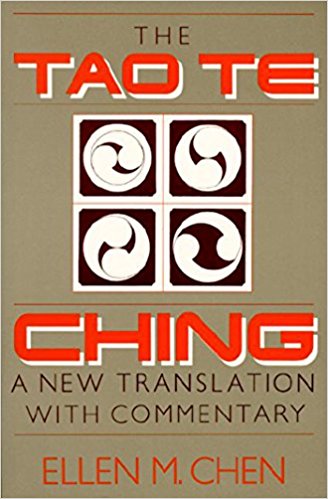
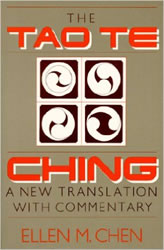
Tao Te Ching: A New Translation and Commentary. By Ellen M. Chen. Paragon House, 1989. Detailed glossary, index, bibliography, notes, 274 pages. ISBN: 978-1557780836. One of my favorites. VSCL. "Ellen M. Chen received her Ph.D. in philosophy from Fordham University. She taught philosophy at St. John's University, retiring in 1996."
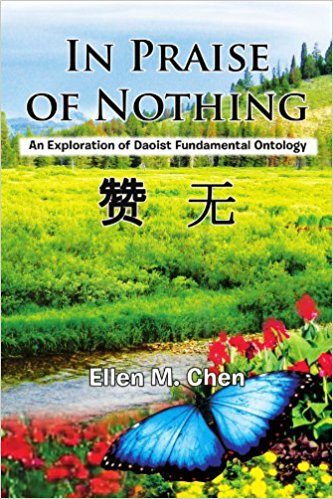
In Praise of Nothing: An Exploration of Daoist Fundamental Ontology.
By Ellen M. Chen. Xlibris, Corp., 2010. 250 pages. ISBN:
978-1456826093. VSCL. "Ellen M. Chen received her Ph.D. in
philosophy from Fordham University. She taught philosophy at St. John's
University, retiring in 1996. This volume, In Praise of Nothing, will be
followed by a volume on Daoist Cosmology: On the Harmony of Opposites.
Professor Chen wrote the
Tao Te
Ching: A New Translation and Commentary in 1989."
Other Commentaries on the Tao To Ching:
Lao Tzu: Te-Tao Ching - A New Translation Based on the Recently Discovered Ma-wang-tui
Texts (Classics of Ancient China)
Early Daoist Scriptures. Translated by Stephen R. Bokenkamp. Peter
Nickerson, Contributor. Berkeley, University of California Press, Revised
Edition, 1999. 520 pages. This compilation includes a translation of "The Xiang'er Commentary to the Laozi," pages 78-148, with a long introduction to the
same, pages 29-78. Scholars think this document was created in the late
5th century, CE. It was discovered in Buddhist Grottos in 1920, but parts
were missing.
Lao-Tzu: My Words are Very Easy to Understand. Lectures on the Tao Teh
Ching by Professor
Cheng Man-ch'ing (1902-1975). Translated from the Chinese by Tam C. Gibbs, 1981.
Berkeley, California, North Atlantic Books, 1981, 1991. 240 pages.
Includes the Chinese characters for each of the 81 Chapters. A brief
biography of Professor Cheng is included.
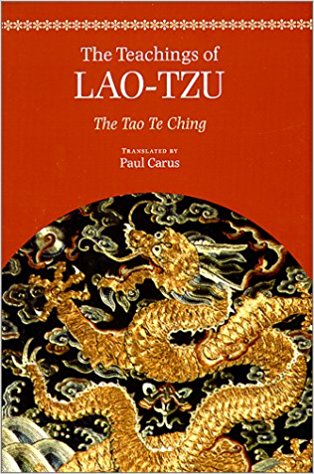
The
Teachings of Lao-Tzu: The Tao Te Ching.
Translation, commentary, and notes by Paul Carus, 1913. New York,
St. Martin's Press, 2000. D.T.
Suzuki worked and studied with Paul Carus around 1905 in Illinois, and
translated together their version the Tao Te Ching.
Daodejing by Laozi: Chapters with Chinese characters, seal script,
detailed word by word concordance, Pinyin (tone#), German, French and English.
This is an outstanding resource for serious students of the Tao Te Ching.
Tao Te
Ching: A New Translation and Commentary. By Ellen M. Chen. Paragon
House, 1989. Detailed glossary, index, bibliography, notes, 274 pages.
One of my favorites.
The New Lao Tzu: A Contemporary Tao Te Ching. By Ray Grigg. Interpretation, comments,
notes by Ray Grigg. Tuttle, 1995. 187 pages.
Das Tao Te King von Lao Tse. Complete versions of all 81 Chapters of
the Tao Te Ching by many different translators in many languages: 124
English, 24 German, 14 Russian, 7 Spanish, 5 French and many other languages.
Links are organized first by languages, and then alphabetically by translators. Formatting
varies somewhat. The original website at Onekellotus went offline in 2012; but, the
extensive collection of these Tao Te Ching versions was
saved for posterity by the Internet Archive Wayback Machine and available as of
9/9/2015. This is an outstanding original collection of
versions of the Daodejing─ the Best on the Internet. Caution:
copyright infringement may sometimes be an issue at this website.
The Tao
and Method: A Reasoned Approach to the Tao Te Ching. A translation and
commentary by Professor Michael Lafargue. New York, SUNY Press, 1994. 640 pages. Detailed
index, bibliography, notes, and tables. An essential research tool.
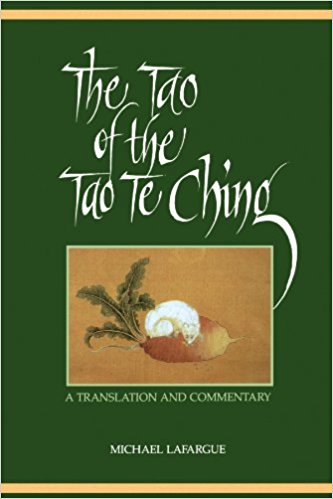
The Tao
of the Tao Te Ching. A Translation and Commentary by Profesor Michael LaFargue.
State University of New York Press, 1992. Detailed glossary, extensive bibliography, 270 pages. This translation is based on the oldest version ( 168 BCE) of
the Tao Te Ching found in King Ma's tomb - the famous Magwandali
manscript.
81 Chapters arranged in a topical order by the author.
Two Visions of the Way: A Study of the Wang Pi and the Ho-Shang Kung Commentaries on the Lao-Tzu.
By Professor by Alan Kam-Leung Chan. SUNY Series in Chinese
Philosophy and Culture. State University of New York Press, 1991.
Index, bibliography, glossary, notes, 314 pages.
Tao Te Ching
The Taoism Reader
The Lunar Tao: Meditations in Harmony with the Seasons
The Classic of the Way and Virtue: A New Translation of the Tao-te Ching of Laozi as Interpreted by Wang Bi.
Translated by Richard John Lynn. Translations from the Asian Classics
Series. New York, Columbia University Press, 1999. Extensive index,
glossaries, notes, 244 pages.
Tao Te Ching in Chinese characters,
Pinyin Romanization, English and German by Dr. Hilmar
Alquiros.
Tao Te
Ching: Annotated and Explained. Translation and Annotation by Derek
Lin. Foreword by Lama Surya Das. "An inspiring, precise translation
of the ancient Chinese wisdom classic─ with facing-page commentary that brings
the text to life for you." Woodstock, Vermont, 2006, 2010. 167 pages.
How to Live a Good Life:
Advice from Wise Persons
One Old Philosopher's
Notebooks Research, reading, and reflections by Mike Garofalo.
Yellow Bridge
Dao De Jing Comparison Table Provides side by side comparisons of
translations of the Tao Te Ching by James Legge, D. T. Suzuki, and Dwight
Goddard. Chinese characters for each paragraph in the Chapter are on the
left; place your cursor over the Chinese characters to see the Pinyin
Romanization of the Chinese character and a list of meanings.
Translators Index,
Tao Te Ching Versions in English, Translators Sorted Alphabetically by Translator, Links to Books and
Online Versions of the Chapters
Taoism and the Tao Te
Ching: Bibliography, Resources, Links
Spanish Language
Translations of the Tao Te Ching, Daodejing en Español, Translators Index
Chapter 16 in the
Rambling
Taoist Commentaries by Trey Smith. The
Rambling Taoists are Trey Smith and Scott Bradley.
Tao Te Ching, Translations into English: Terebess Asia Online (TAO). 124
nicely formatted complete English language translations, on separate webpages, of the Daodejing.
Alphabetical index by translators. Each webpage has all 81 chapters of the Tao Te
Ching translated into English. A useful collection! Many
reformatted and colored versions from the original collection at
Das Tao Te King von Lao Tse. Caution: copyright infringement may
sometimes be an
issue at this website.
Tao Te Ching: The Definitive Edition
Chinese Reading of the Daodejing
Wang Bi's Commentary on the Laozi with Critical Text and Translation.
By Professor Rudolf G. Wagner. A SUNY Series in Chinese Philosophy and
Culture. English and Mandarin Chinese Edition.
State University of New York Press; Bilingual edition (October 2003). 540
pages. Wang Bi (Wang Pi, Fusi), 226-249 CE,
Commentary on the Tao Te
Ching.
By Hans-Georg Moeller. Columbia University Press, 2006, 176 pages.
Valley Spirit, Gu Shen,
Concept, Chapter 6
Valley Spirit Center in Red
Bluff, California.
Sacred
Circle in the Gushen Grove.
Lao-tzu's Taoteching
The Way and Its Power: Lao Tzu's Tao Te Ching and Its Place in Chinese
Thought. By Arthur
Waley, 1889-1966. Translation and commentary by Arthur Waley in 1934.
Part of the UNESCO collection of representative works, 1994. Grove Press,
First Edition, 1994. 262 pages.
Reading Lao Tzu: A Companion to the Tao Te Ching with a New Translation
Dao De Jing: A Philosophical Translation
Thematic Index to the
81 Chapters of the Tao Te Ching
Lieh-Tzu: A Taoist Guide to Practical Living
Revealing the Tao Te Ching: In-depth Commentaries on an Ancient Classic
Cloud Hands Blog
Mike Garofalo writes about Mind-Body Arts, Philosophy, Taoism, Gardening, Taijiquan, Walking, Mysticism,
Qigong, and the Eight Ways.
The Whole Heart of Tao:
The Complete Teachings From the Oral Tradition of Lao Tzu.
Gushen Grove Notebooks for the Tao Te Ching
Green Way Research, Valley Spirit
Center, Gushen Grove Notebooks (2001-2018)
East Los Angeles, California, 1946-1998;
Red Bluff, California from 1998-2017;
Vancouver, Washington from 2107-
Green Way Research, Chapter 16, 2011-2018.
Indexed and Compiled by
Michael P. Garofalo
This webpage was last modified, edited,
maintained, improved or updated on
February 16, 2018.
This webpage was first distributed online on February 7, 2011.
Created by Michael P. Garofalo, Green Way Research, Valley Spirit Center, Gushen Grove Notebooks, Vancouver, Washington © 2018 CCA 4.0
Brief Biography of Michael P. Garofalo, M.S.

Ripening Peaches: Daoist Studies and Practices
Zhuangzi (Chuang Tzu, Zhuang Zhou, Master Chuang) 369—286 BCE
Taoist Perspectives: My Reading List
Bodymind Theory and Practices, Somaesthetics
How to Live a Good Life: Advice from Wise Persons
Pleasures, Satisfaction, Desires
Qigong (Chi Kung) Health Practices
One Old Daoist Druid's Final Journey: Notebooks of the Librarian of Gushen Grove
Index to Cloud Hands and Valley Spirit Websites
Index to English Language Translators of the Tao Te Ching
Recurring Themes (Terms, Concepts, Leimotifs) in the Tao Te Ching
Spanish Language Translations of the Tao Te Ching
The Tao Te Ching (Dao De Jing) by Lao Tzu (Laozi) circa 500 BCE
|
Tao Te
Ching |
|||||||||
| 1 | 2 | 3 | 4 | 5 | 6 | 7 | 8 | 9 | 10 |
| 11 | 12 | 13 | 14 | 15 | 16 | 17 | 18 | 19 | 20 |
| 21 | 22 | 23 | 24 | 25 | 26 | 27 | 28 | 29 | 30 |
| 31 | 32 | 33 | 34 | 35 | 36 | 37 | 38 | 39 | 40 |
| 41 | 42 | 43 | 44 | 45 | 46 | 47 | 48 | 49 | 50 |
| 51 | 52 | 53 | 54 | 55 | 56 | 57 | 58 | 59 | 60 |
| 61 | 62 | 63 | 64 | 65 | 66 | 67 | 68 | 69 | 70 |
| 71 | 72 | 73 | 74 | 75 | 76 | 77 | 78 | 79 | 80 |
| 81 | |||||||||
Return to the Top of this Webpage