Classic of the Way and Virtue
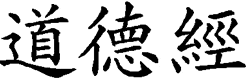
By Lao Tzu (Laozi)
Green Way Research, Valley Spirit Center, Gushen Grove Notebooks, Vancouver, Washington
Chapter 67 Chapter 69 Index to All the Chapters Taoism Cloud Hands Blog
Classic Book (Ching) about the Tao (Way, Nature, Patterns, Processes) and Te (Virtue, Potency, Power, Integrity, Wise Person, Sage)
Indexing, Concordance, Search Terms, Topics, Themes
English and Chinese (Wade-Giles) Terms:
Compliance with Heaven, Be a Peaceful Warrior, Good or Skillful (shan),
Act (wei), Soldier or Officer (shih), Don't
Contend, Without Desire, Not Warlike or Not Violent (pu wu), Battle (chan),
Angry (nu), Defeat (shêng), Enemy (ti), Blend with the Tao,
Engage or Join (yü), Employ or Utilize (yung), People (jên),
Below or Lower or Humble (hsia), Effective Military Leaders, Content or
Quarrel (chêng), Virtue or Power (tê), Leadership, Fighting, Battle, Strategy, Tactics,
Caution, Strength or Capacity (li), Avoid Anger, Humility,
Peacefulness, Not Wrathful, Power (Te),
Peaceful Persuasion, Conqueror, Way of Heaven, Calmness, Commander, Employer,
General, Perfection (chi), Pair or Mate (p'ei), Inferior, Heaven (t'ien),
Ancient (ku), Superior, Perfect or Ultimate or Sublime (chi), Enemy, Restraint, In Accord with Heaven,
Not Striving, 配天
Términos en Español:
Cielos,
Sea un Guerrero Pacífico,
No Contienden, Sin Deseo,
Liderazgo, Lucha, Estrategia, Táctica,
Humildad, Tranquilidad,
No Colérico, Potencia,
Persuasión, Conquistador,
Camino del Cielo, Calma, Comandante, Empleador,
General, Perfección, Inferior, Superior,
Enemigo, Restricción,
Bueno,
Hábil, Ley,
Soldado, Oficial, no Violencia,
Batalla, Enojado, Derrota,
Ingreso, Personas, Baja, Contratar, Humilde,
Oren,
Pelea, Virtud,
Poder, Fuerza, Capacidad,
Cielo, Antiguo, Perfecto, Ultimate,
Sublime,
Último,
Sublime.
Electronic Concordance for Chapters 1 - 81 of the Tao Te Ching
English Language Translations of the Tao Te Ching
"He who excels as a warrior is not warlike.
He who excels as a fighter is not wrathful.
He who excels in conquering the enemy does not strive.
He who excels in employing men is lowly.
This is called the virtue of not-striving.
This is called utilizing men's ability.
This is called complying with heaven-since olden times the highest."
- Translated by
D. T. Suzuki and Paul Carus, 1913,
Chapter 68
"He who in Tao's wars has skill
Assumes no martial port;
He who fights with most good will
To rage makes no resort.
He who vanquishes yet still
Keeps from his foes apart;
He whose hests men most fulfill
Yet humbly plies his art.
Thus we say, 'He ne'er contends,
And therein is his might.'
Thus we say, 'Men's wills he bends,
That they with him unite.'
Thus we say, 'Like Heaven's his ends,
No sage of old more bright.' "
- Translated by
James Legge, 1891, Chapter 68
"The best warrior does not give free reign to violence.
The most skillful fighter will not let anger cloud his mind.
The skilful tactician wins without a battle.
A great commander overcomes men by placing himself below them.
This is known as the 'virtue of not striving'.
It is also called the ability to manage others.
This is regarded as the earthly embodiment of the way of Heaven."
- Translated by
Rivenrock, Chapter 68
"A good general doesn't show off his power.
A good warrior doesn't get angry.
A good conqueror doesn't attack people.
A good employer puts himself below his employees.
This is called the power of noncontention.
This is called using the
strength of others.
This is called perfect emulation of heaven."
- Translated by
Brian Browne Walker, 1996, Chapter 68
"Warriors who excel do not parade;
Commanders who excel do not anger;
Victors who excel don’t lightly engage;
Skilled managers of men are humble:
This defines the power of no-conflict,
The way to manage men’s strength,
The union with heaven, the acme of old."
- Translated by
Moss Roberts, 2001, Chapter 68
"A
warrior in harmony is not contemptuous of life.
A prize fighter in harmony is not angry.
A winner in harmony understands the
oneness of winning and losing.
An employer in harmony is at one with
his employees.
This is called non-distinction and indifference.
It is known as being at peace and in harmony
with others.
It is the manifestation of the ultimate peace
and harmony of Infinity."
- Translated by
John Worldpeace, Chapter 68
"A good warrior is not warlike;
A good fighter does not lose his temper;
A good conqueror is not pugnacious;
A good leader of men is humble.
This is called the virtue of non-contention,
Also called the use of other's strength,
Also called harmony with Heaven's Eternal Supreme Will."
- Translated by
Henry Wei, 1982, Chapter 68

Created by Michael P. Garofalo, Green Way Research, Valley Spirit Center, Gushen Grove Notebooks, Vancouver, Washington © 2020 CCA 4.0
 By Alexander Simkins.
  By Derek Lin.
 By Ming-Dao Deng.
 By Benjamin Hoff.
 By Ming-Dao Deng.
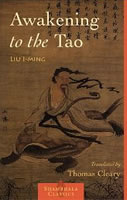
 Translated by Thomas Cleary.
"A canny soldier never provokes anyone,
And is never made to lose his temper.
A good fighter never confronts his enemy head-on:
And those who know how to handle people do it humbly.
This comes from the virtue of not-striving,
and from knowing how to link with other people's energy.
Since time gone in the mists
this has been the way to 'pair up' with Heaven."
- Translated by
Ramsey, Kwok and Palmer, 1993, Chapter 68
"Therefore a good leader, like a good
soldier
Sees no need to flaunt her might
Never lets his passions sway him out of balance
Allows her opponents to overextend themselves
And in all things places himself below others
If you don't compete, then you're dealing
with men correctly
And the tao, in all its antiquity, is on your side"
- Translated by
Ted Wrigley, Chapter 68
"The best captain does not plunge headlong
Nor is the best soldier a fellow hot to fight.
The greatest victor wins without a battle:
He who overcomes men understands them.
There is a quality of quietness
Which quickens people by no stress:
'fellowship with heaven,' as of old,
Is fellowship with man and keeps its hold."
- Translated by
Witter Bynner,
1944, Chapter 68
"A good warrior is not bellicose,
A good fighter does not anger,
A good conqueror does not contest his enemy,
One who is good at using others puts himself below them.
This is called "integrity without competition,"
This is called "using others,"
This is called "parity with heaven," - the pinnacle of the ancients."
- Translated by
Victor H. Mair, 1990, Chapter 68
"One good at being a warrior is not warlike.
One good at warfare avoids anger.
One good at conquering the enemy does not join with him.
One good at using men places himself below them.
We refer to these as the virtue in not fighting and the power in using men.
Such a one is called a companion worthy of Heaven, the ultimate attainment achieved for all time."
- Translated by
Richard John Linn, Chapter 68
 Translated by Eva Wong
  Translated by Philip Ivahoe
 By James Miller
 Translated by Stephen Bokencamp
By Alexander and Annellen Simpkins
Translated by Stephen Bokencamp
By Alexander and Annellen Simpkins Translated by Thomas Cleary
 By Livia Kohn
"An effective warrior acts
not from nihilistic anger,
nor from desire to kill.
He who wins should not be vengeful.
An employer should have humility.
If we wish for peace and unity,
our dealings with our fellow man
must be without desire for self-advantage,
and carried out without contention."
- Translated by
Stan Rosenthal,
1984, Chapter 68
A Chinese Language Version of Chapter 68 of the Tao Te
Ching by Lao Tzu
A
note
on my style of displaying the Chinese characters of the Tao Te Ching
善為士者不武.
善戰者不怒.
善勝敵者不與.
善用人者為之下.
是謂不爭之德.
是謂用人之力.
是謂配天古之極.
- Chinese characters, Tao Te Ching,
Chapter 68
shan wei shih chê pu wu.
shan chan chê pu nu.
shan shêng ti chê pu yü.
shan yung jên chê wei chih hsia.
shih wei pu chêng chih tê.
shih wei yung jên chih li.
shih wei p'ei t'ien ku chih chi.
- Wade-Giles Romanization, Tao Te Ching, Chapter 68
Audio
Version in Chinese of Chapter 68 of the Tao Te Ching
shan wei shi zhe bu wu.
shan zhan zhe bu nu.
shan sheng di zhe bu yu.
shan yong ren zhe wei zhi xia.
shi wei bu zheng zhi de.
shi wei yong ren zhi li.
shi wei pei tian
gu zhi ji.
- Pinyin Romanization, Daodejing, Chapter 68
Tao Te Ching in Chinese characters and English (includes a word by word key) from YellowBridge
Tao Te Ching in Chinese characters, Hanyu Pinyin (1982) Romanization, English and German by Dr. Hilmar Alquiros.
Laozi Daodejing: Chapters with Chinese characters, seal script, detailed word by word concordance, Pinyin (tone#), German, French and English.
Chinese and English Dictionary, MDGB
Dao De Jing Wade-Giles Concordance by Nina, Dao is Open
Dao De Jing English and Wade-Giles Concordance by Mike Garofalo
Tao Te Ching in Pinyin Romanization with Chinese characters, WuWei Foundation
Tao Te Ching in Pinyin Romanization
Tao Te Ching in Chinese characters and English
Tao Te Ching in Chinese characters, English, Word by word analysis, Zhongwen
Tao Te Ching: The Definitive Edition
Tao Te Ching in Chinese characters: Big 5 Traditional and GB Simplified
Chinese Characters, Wade-Giles and Pinyin Romanizations, and 16 English Translations for Each Chapter of the Daodejing by Mike Garofalo.
Tao Te Ching in Chinese characters, Wade-Giles and Pinyin Romanization spellings, English; a word for word translation of the Guodian Laozi Dao De Jing Version.
Lao Zi's Dao De Jing: A Matrix Translation with Chinese Text by Bradford Hatcher.
"The perfect warrior does not flaunt his bravery.
The perfect fighter does not get angry.
The perfect winner does not reveal his tactics.
The perfect employer is humble before his employees.
This is called the virtue of non-fighting.
This is called the ability to manage others.
This is called uniting with the law of Heaven.
Since ancient times, it has been the highest goal."
- Translated by
Chao-Hsiu Chen, Chapter 68
"The captain who is most accomplished does not make a display of warlike zeal;
The best fighter is not angry;
He who is most capable of conquering does not engage the enemy;
He who is most capable of using men places himself in a position inferior to them.
This may be called the Virtue of Non-striving,
The power to use men;
It is to work in consort with heaven itself,
And attain the highest ideal of the Ancients."
- Translated by
Herman Ould,
1946, Chapter 68
"The most skillful warriors are not
warlike;
the best fighters are not wrathful;
the mightiest
conquerors never strive;
the greatest masters are ever lowly.
This is the glory of non-strife;
and the might of utilization;
these equal heaven,
they were the goal of the ancients."
- Translated by
C.
Spurgeon Medhurst, 1905, Chapter 68
"The best soldier is not violent.
The best fighter is not driven by anger.
The true conqueror wins without confrontation.
The best employer is humble before his employees.
I say there is much good in not competing.
I call it using the power of the people.
This is known as being in tune with Heaven,
Like the Sages of old."
- Translated by
John R. Mabry, 1994, Chapter 68
 By Hu Xuzehi
 Annotated translation by Victor Mair
  By Ha Poong Kim
 By Hans-Georg Moeller
  By Roger T. Ames and David T. Hall
 By Wes Burgess
 By Arthur Waley
"The best soldier is not violent.
"The best warrior leads without haste fights without anger
overcomes without confrontation
He puts himself below and brings out the highest in his men
This is the virtue of not confronting of working with the
abilities you have of complying with the laws of Heaven
This is the ancient path that leads to perfection"
- Translated by Johathan Star, 2001, Chapter 68
"He who excels as a soldier is the one who is not
warlike;
he who fights the best fight is not wrathful;
he who best conquers an enemy is not quarrelsome;
he who best employs people is obedient himself.
This is the virtue of not-quarreling, this is the secret of bringing out other
men's ability, this is complying with Heaven.
Since of old it is considered the greatest virtue."
- Translated by
Dwight Goddard,
1919, Chapter 68
Created by Michael P. Garofalo, Green Way Research, Valley Spirit Center, Gushen Grove Notebooks, Vancouver, Washington © 2020 CCA 4.0
 Translation and elucidation by Hua Ching Ni
 Translated by Brian Walker
 Translated by Arthur Waley
 Translated by Lionel and and Herbert Giles
 By Eva Wong
"Those eminent for scholarly virtues are not fighting
men.
Those eminent in war do not lose their temper.
Those eminent for victory do not struggle.
Those eminent for making use of others descend to their level.
This may be called the virtue which does not contend;
the power of utilizing men;
the utmost limit that can be reached in equaling Heaven and the men of old."
- Translated by
Frederic Henry Balfour,
1884, Chapter 68
"Fight
without violence.
Fight
without rage.
Forget
the supposed hurts done to you and do
not seek vengeance.
Take
pride in your humility.
Real
decency is quiet, it
brings people together and empties the self.
It is
the same thing that holds the universe together."
- Translated by
Crispin Starwell, Chapter 68
"The accomplished person is not aggressive.
The good soldier is not hot tempered.
The best conqueror does not engage the enemy.
The most effective leader takes the lowest place.
This is called the Te of not contending.
This is called the power of the leader.
This is called matching Heaven's ancient ideal."
- Translated by
Stanley Lombardo and
Stephen Addiss, 1993, Chapter 68
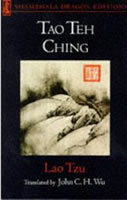
Tao Te Ching
Lao Tzu: Tao Te Ching
 Translated by Livia Kohn
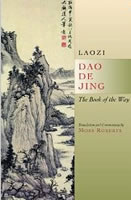
Dao De Jing: The Book of the Way
"The best soldier is not warlike the best fighter shows
no anger
The one best at defeating the enemy does not engage him.
The one best at managing people puts himself below them.
This is the Te of not contending, this is the power to manage people.
This is being the Counterpart of Heaven equaling the very best of the ancients."
- Translated by
Michael Lafargue,
1992, Chapter 68
"In the ancient times:
The perfect warriors were not warlike.
The perfect fighters were not angry.
The perfect winners were not aggressive and the perfect diplomats were
humble before the world.
This is called the practice of the virtue of non-struggle.
This is called the use of the wisdom of benevolence.
This is called to comply with the ultimate Nature."
- Translated by
Tang Zi-Chang, Chapter 68
"Those who are good at being knights are not martial.
Those who are good at warfare do not rage.
Those who are good at overcoming their adversaries do not join issue.
Those who are good at employing others put themselves beneath them.
That is called the virtue of non-contention.
That is called the power to employ others.
That is called the perfection attained by becoming a match with Heaven."
- Translated by
Patrick E. Moran,
Chapter 68
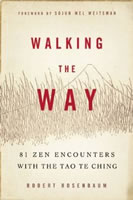
Walking the Way: 81 Zen Encounters with the Tao Te Ching
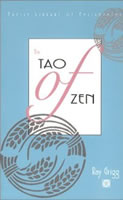
The Tao of Zen
Tao Te Ching: Zen Teachings on the Taoist Classic
Buddhism and Taoism Face to Face: Scripture, Ritual, and Iconographic Exchange in Medieval China
"He who loves, in being a soldier is not warlike.
He who loves, in fighting is not angry.
He who loves, in conquering does not grasp fo self.
He who loves, in employing men is lowly before them.
This is called Manifestation of non-greed.
It is called the power of using men.
It is called Unity with Heaven.
Of Old it was man's highest aim."
- Translated by
Isabella Mears, 1916, Chapter 68
"The best warrior does not give free reign to violence.
The most skillful fighter will not let anger cloud his mind.
The skilful tactician wins without a battle.
A great commander overcomes men by placing himself below them.
This is known as the 'virtue of not striving'.
It is also called the ability to manage others.
This is regarded as the earthly embodiment of the way of Heaven."
- Translated by
John Dicus, 2002, Chapter 68
"The best captain
does not plunge headlong
Nor is the best soldier a fellow hot to
fight.
The greatest victor wins without a battle:
He who overcomes men
understands them.
There is a quality of quietness
Which quickens people by
no stress:
'fellowship with heaven,' as of old,
Is fellowship with man and
keeps its hold."
- Translated by
Witter Bynner, 1944, Chapter 68
Further Teachings of Lao-Tzu: Understanding the Mysteries (Wen Tzu)
 Translated by Thomas Cleary
The Lunar Tao: Meditations in Harmony with the Seasons
 By Lui I-Ming (1780) and translated by Thomas Cleary
Ripening Peaches: Taoist Studies and Practices By Mike Garofalo
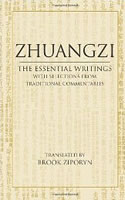
Zhuangzi: The Essential Writings with Selections from Traditional Commentaries
"The great commander is not a warlike man,
The hardest fighter is not a man of wrath,
The greatest conqueror shares not in the strife,
The great employer treads the workmen's path.
This is the virtue known as "striving not,"
The wondrous power of utilizing men,
And this is called the fellowship with Heaven,
The fellowship the ancients
followed then."
- Translated by
Isaac Winter Heysinger, 1903, Chapter 68
|
Tao Te
Ching |
|||||||||
| 1 | 2 | 3 | 4 | 5 | 6 | 7 | 8 | 9 | 10 |
| 11 | 12 | 13 | 14 | 15 | 16 | 17 | 18 | 19 | 20 |
| 21 | 22 | 23 | 24 | 25 | 26 | 27 | 28 | 29 | 30 |
| 31 | 32 | 33 | 34 | 35 | 36 | 37 | 38 | 39 | 40 |
| 41 | 42 | 43 | 44 | 45 | 46 | 47 | 48 | 49 | 50 |
| 51 | 52 | 53 | 54 | 55 | 56 | 57 | 58 | 59 | 60 |
| 61 | 62 | 63 | 64 | 65 | 66 | 67 | 68 | 69 | 70 |
| 71 | 72 | 73 | 74 | 75 | 76 | 77 | 78 | 79 | 80 |
| 81 | |||||||||
"He who is god at being a officer does not boast of his martialism;
He who is good at fighting does not resort to his rage;
He who is skillful in winning against the enemy does not wrestle with them;
He who is skillful in managing his men has a modest attitude toward them.
This is called the De of not contending with others;
This is called the power of making use of others' force;
This is called being in accord with the Way of Heaven,
Thus it has been a principle very long since."
- Translated by
Ren Jiyu, 1985, Chapter 68
"Herzgewirktes Tun wirkt Frieden
Ein wirklicher Fachmann überzeugt, aber streitet nicht.
Ein guter Soldat kämpft, aber wütet nicht.
Ein wahrer Sieger ist überlegen, aber reizt nicht.
Ein rechter Menschenführer
stellt die Menschen auf den richtigen Platz,
aber beherrscht sie nicht.
Solch herzgewirktes Tun wirkt Frieden.
Es enthält die hohe Kunst der Menschenführung.
Es ist ein Wirken im Sinn des Himmels.
Solches Tun gilt seit Vorzeiten als höchstes."
- Translated
by Rudolf
Backofen, 1949, Chapter 68
"Wer gut zu führen weiß,
ist nicht kriegerisch.
Wer gut zu kämpfen weiß,
ist nicht zornig.
Wer gut die Feinde zu besiegen weiß,
kämpft nicht mit ihnen.
Wer gut die Menschen zu gebrauchen weiß,
der hält sich unten.
Das ist das Leben, das nicht streitet;
das ist die Kraft, die Menschen zu gebrauchen;
das ist der Pol, der bis zum Himmel reicht."
- Translated by Richard Wilhelm, 1911, Chapter
68
"The best soldier is not soldierly;
The best fighter is not ferocious;
The best conqueror does not take part in war;
The best employer of men keeps himself below them.
This is called the virtue of not contending;
This is the ability of using men;
This is called the supremacy of consorting with heaven."
- Translated by
Ch'u Ta-Kao, 1904, Chapter 68
Created by Michael P. Garofalo, Green Way Research, Valley Spirit Center, Gushen Grove Notebooks, Vancouver, Washington © 2020 CCA 4.0
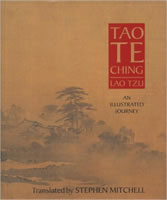
Tao Te Ching: An Illustrated Journey
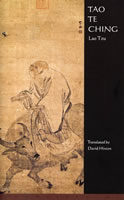
Tao Te Ching
The Book of Tao: Tao Te Ching - The Tao and Its Characteristics
Ripening Peaches: Taoist Studies and Practices
Taoism: Growth of a Religion
Zhuangzi (Chuang Tsu), Daoist Scripture: Bibliography, Links, Resources, Quotations, Notes
Zhuangzi: Basic Writings
Zhuangzi Speaks: The Music of Nature
Lifestyle Advice from Wise Persons
"The good commander is not imperious.
The good fighter is not wrathful.
The greatest conqueror does not wage war.
The best master governs by condescension.
This is the virtue of not contending.
This is the virtue of persuasion.
This is the imitation of Heaven, and this was the highest aim of the ancients."
- Translated by
Walter Gorn Old, 1904, Chapter 68
"A good captain is not impetuous.
A good fighter is not angry.
A good conqueror does not engage his adversaries.
A good user of men makes himself inferior to them.
This may be called the Virtue of not striving.
This may be called the
strength to use men.
This may be called the acme of conformity to
heaven."
- Translated by
Jan J. L. Duyvendak, 1954, Chapter 68
"Those who are good at management rarely use force.
Those who are good at battles rarely lose their tempers.
Those who are good at winning over their rivals never let rivals take control.
Those who are good at employing people are modest.
This is the noncompetitive virtue.
This is the use of people's abilities.
This is called the best conformation to nature and history."
- Translation by
Thomas Z. Zhang, Chapter 68
"Celui qui excelle à commander une armée n'a pas une ardeur
belliqueuse.
Celui qui excelle à combattre ne se laisse pas aller à la colère.
Celui qui excelle à vaincre ne lutte pas.
Celui qui excelle à emporter les hommes se met au-dessous d'eux.
C'est là ce qu'on appelle posséder la vertu qui consiste à ne point lutter.
C'est ce qu'on appelle savoir se servir des forces des hommes.
C'est ce qu'on appelle s'unir au ciel.
Telle était la science sublime des Anciens."
- Translated by Stanislas Julien, 1842, Chapter
68
Spanish
Language Versions of the Tao Te Ching (Daodejing)
Tao Te Ching en Español
Lao Tsé Tao Te Ching 
Tao Te Ching Traducido por Stephen Mitchell, versión española
Tao Te Ching Traducido al español por el Padre Carmelo Elorduy
Lao Tzu-The Eternal Tao Te Ching
Ripening Peaches: Taoist Studies and Practices By Mike Garofalo Maduración Duraznos: Estudios y Prácticas Taoístas por Mike Garofalo
Tao Te Ching
Lao Tzu - Tao Te Ching
Tao te king
Daodejing Español, Inglés, y Chino Versiones Lingüísticas de la Daodejing
Spanish Language Translations of the Tao Te Ching
"Un buen militar no es belicoso.
Un buen guerrero no es irascible.
Un buen vencedor evita la guerra.
Un buen empleador se supedita ante sus empleados.
Esta es la virtud del no-confrontar,
el método que los hombres deberían aplicar.
Este es el modo más perfecto
de entrar en Armonía con el Cielo."
- Translation from
Wikisource, 2013,
Tao Te Ching, Capítulo 68
"Un caudillo sabio nunca es belicoso.
Un guerrero sabio nunca se enfurece.
Quien sabe vencer no ataca primero.
Quien sabe guiar a las personas no las humilla,
sino que, por el contrario, se coloca a sí mismo
en una posición más baja.
Así son las leyes de Te que renuncian a la ira,
al propio enaltecimiento y a la violencia.
Así actúan Aquellos Que representan a Te guiando
a las personas al Tao Primordial y Eterno.
- Translated by Anton Teplyy, 2008,
Tao Te Ching, Capítulo 68
"Un buen soldado nunca es agresivo; un buen guerrero nunca es irascible.
La mejor manera de conquistar a un enemigo es ganarle sin enfrentarsea él.
La mejor manera de emplear a alguien es servir bajo sus órdenes.
¡A esto se llama la virtud de la no-lucha!
¡A esto se llama emplear las capacidades de los hombres!
¡A esto se llama estar casado con el Cielo desde siempre!"
- Translated into Spanish by
Alfonso Colodrón from
the English translation by John C. H. Wu, 1993, Tao Te Ching, Capítulo
68
"Buen general no ama la agresión.
Buen guerrero no
conoce el odio.
Si quieres vencer al enemigo, no te enfrentes a él.
Si
quieres dominar a los hombres ponte por debajo de ellos.
Esto se llama el
poder del no-luchar.
Esto es usar la habilidad de los hombres.
Esto se llama
desde la antigüedad estar en armonía con el cielo y es el poder más grande."
- Translation from
Logia Medio Dia, 2015,
Tao Te Ching, Capítulo 68
"Un buen soldado nunca es agresivo; un buen guerrero nunca
es irascible.
La mejor manera de conquistar a un enemigo es ganarle sin enfrentarse a él.
La mejor manera de emplear a alguien es servir bajo sus órdenes.
A esto se llama la virtud de la no-lucha!
A esto se llama emplear las capacidades de los hombres!
A esto se llama estar casado con el cielo desde siempre!"
- Translated into Spanish by
Alfonso Colodrón from
the John C. H. Wu English translation, 1993,
Capítulo 68
Created by Michael P. Garofalo, Green Way Research, Valley Spirit Center, Gushen Grove Notebooks, Vancouver, Washington © 2020 CCA 4.0
Next Chapter of the Tao Te Ching #69
Previous Chapter of the Tao Te Ching #67
Chapter and Thematic Index to the Tao Te Ching
Tao Te Ching
Commentary, Interpretations, Research Tools, Resources
Chapter 68
Das Tao Te King von Lao Tse. Complete versions of all 81 Chapters of the Tao Te Ching by many different translators in many languages: 124 English, 24 German, 14 Russian, 7 Spanish, 5 French and many other languages. Links are organized first by languages, and then alphabetically by translators. Formatting varies somewhat. The original website at Onekellotus went offline in 2012; but, the extensive collection of these Tao Te Ching versions was saved for posterity by the Internet Archive Wayback Machine and available as of 9/9/2015. This is an outstanding original collection of versions of the Daodejing─ the Best on the Internet. Caution: copyright infringement may sometimes be an issue at this website.
Tao Te Ching, Translations into English: Terebess Asia Online (TAO). 124
nicely formatted complete English language translations, on separate webpages, of the Daodejing.
Alphabetical index by translators. Each webpage has all 81 chapters of the Tao Te
Ching translated into English. A useful collection! Many
reformatted and colored versions from the original collection at
Das Tao Te King von Lao Tse. Caution: copyright infringement may
sometimes be an
issue at this website.
Lao Tzu: Te-Tao Ching - A New Translation Based on the Recently Discovered Ma-wang-tui
Texts (Classics of Ancient China)
Daodejing by Laozi: Chapters with Chinese characters, seal script,
detailed word by word concordance, Pinyin (tone#), German, French and English.
This is an outstanding resource for serious students of the Tao Te Ching.
Tao Te
Ching: A New Translation and Commentary. By Ellen Chen. Paragon
House, 1998. Detailed glossary, index, bibliography, notes, 274 pages.
The Tao
and Method: A Reasoned Approach to the Tao Te Ching. By Michael
Lafargue. New York, SUNY Press, 1994. 640 pages. Detailed
index, bibliography, notes, and tables. An essential research tool.
Two Visions of the Way: A Study of the Wang Pi and the Ho-Shang Kung Commentaries on the Lao-Tzu.
By Professor by Alan Kam-Leung Chan. SUNY Series in Chinese
Philosophy and Culture. State University of New York Press, 1991.
Index, bibliography, glossary, notes, 314 pages.
ISBN: 0791404560.
Tao Te Ching: The Definitive Edition
Chinese Reading of the Daodejing
Wang Bi's Commentary on the Laozi with Critical Text and Translation.
By Professor Rudolf G. Wagner. A SUNY Series in Chinese Philosophy and
Culture. English and Mandarin Chinese Edition.
State University of New York Press; Bilingual edition (October 2003). 540
pages. ISBN: 978-0791451823.
Wang Bi (Wang Pi, Fusi), 226-249 CE,
Commentary on the Tao Te
Ching.
Tao Te Ching
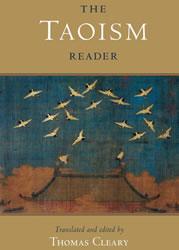
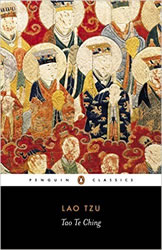
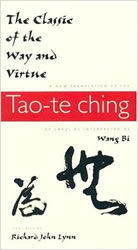
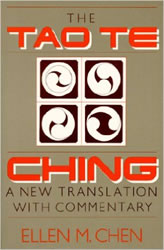
The Taoism Reader
Change Your Thoughts - Change Your Life: Living the Wisdom of the Tao
Lao Tzu's Tao Teh Ching, A Parallel Translation Collection. Compiled by B.
Boisen.
Comparison and Analysis of Selected English Interpretations of the Tao Te Ching.
By Damian J. Bebell and Shannon M. Fera.
The Lunar Tao: Meditations in Harmony with the Seasons
The Classic of the Way and Virtue: A New Translation of the Tao-te Ching of Laozi as Interpreted by Wang Bi.
Translated by Richard John Lynn. Translations from the Asian Classics
Series. Columbia University Press, 2004. 256 pages.
Tao Te Ching in Chinese characters,
Pinyin Romanization, English and German by Dr. Hilmar
Alquiros.
Yellow Bridge
Dao De Jing Comparison Table Provides side by side comparisons of
translations of the Tao Te Ching by James Legge, D. T. Suzuki, and Dwight
Goddard. Chinese characters for each paragraph in the Chapter are on the
left; place your cursor over the Chinese characters to see the Pinyin
Romanization of the Chinese character and a list of meanings.
Translators Index,
Tao Te Ching Versions in English, Translators Sorted Alphabetically by Translator, Links to Books and
Online Versions of the Chapters
Taoism and the Tao Te
Ching: Bibliography, Resources, Links
Spanish Language
Translations of the Tao Te Ching, Daodejing en Español, Translators Index
The Tao of Zen
Chapter 1 in the
Rambling
Taoist Commentaries by Trey Smith. The
Rambling Taoists are Trey Smith and Scott Bradley.
By Hans-Georg Moeller. Columbia University Press, 2006, 176 pages.
Valley Spirit, Gu Shen,
Concept, Chapter 6
Valley Spirit Center in Red
Bluff, California.
Sacred
Circle in the Gushen Grove.
Lao-tzu's Taoteching
Reading Lao Tzu: A Companion to the Tao Te Ching with a New Translation
Dao De Jing: A Philosophical Translation
Thematic Index to the
81 Chapters of the Tao Te Ching
Lieh-Tzu: A Taoist Guide to Practical Living
Revealing the Tao Te Ching: In-depth Commentaries on an Ancient Classic
Cloud Hands Blog
Mike Garofalo writes about Mind-Body Arts, Philosophy, Taoism, Gardening, Taijiquan, Walking, Mysticism,
Qigong, and the Eight Ways.
The Whole Heart of Tao:
The Complete Teachings From the Oral Tradition of Lao Tzu.
Gushen Grove Notebooks for the Tao Te Ching
Green Way Research, Valley Spirit
Center, Gushen Grove Notebooks (2001-2020)
East Los Angeles, California, 1946-1998;
Red Bluff, California from 1998-2017;
Vancouver, Washington from 2017-2020
Green Way Research, Tao Te Ching, Chapter 68, 2011-2020.
Indexed and Compiled by
Michael P. Garofalo
This webpage was last modified, edited,
maintained, expanded, improved or updated on
November 23, 2019.
This webpage was first distributed online on July 18, 2011.
Created by Michael P. Garofalo, Green Way Research, Valley Spirit Center, Gushen Grove Notebooks, Vancouver, Washington © 2020 CCA 4.0
Brief Biography of Michael P. Garofalo, M.S.

Ripening Peaches: Daoist Studies and Practices
Zhuangzi (Chuang Tzu, Zhuang Zhou, Master Chuang) 369—286 BCE
Taoist Perspectives: My Reading List
Bodymind Theory and Practices, Somaesthetics
How to Live a Good Life: Advice from Wise Persons
Qigong (Chi Kung) Health Practices
One Old Daoist Druid's Final Journey: Notebooks of the Librarian of Gushen Grove
Index to Cloud Hands and Valley Spirit Websites
Index to English Language Translators of the Tao Te Ching
Recurring Themes (Terms, Concepts, Leimotifs) in the Tao Te Ching
Spanish Language Translations of the Tao Te Ching
Chinese Characters, Wade-Giles (1892) and Hanyu Pinyin (1982) Romanizations
The Tao Te Ching (Dao De Jing) by Lao Tzu (Laozi) circa 500 BCE
|
Tao Te
Ching |
|||||||||
| 1 | 2 | 3 | 4 | 5 | 6 | 7 | 8 | 9 | 10 |
| 11 | 12 | 13 | 14 | 15 | 16 | 17 | 18 | 19 | 20 |
| 21 | 22 | 23 | 24 | 25 | 26 | 27 | 28 | 29 | 30 |
| 31 | 32 | 33 | 34 | 35 | 36 | 37 | 38 | 39 | 40 |
| 41 | 42 | 43 | 44 | 45 | 46 | 47 | 48 | 49 | 50 |
| 51 | 52 | 53 | 54 | 55 | 56 | 57 | 58 | 59 | 60 |
| 61 | 62 | 63 | 64 | 65 | 66 | 67 | 68 | 69 | 70 |
| 71 | 72 | 73 | 74 | 75 | 76 | 77 | 78 | 79 | 80 |
| 81 | |||||||||
Return to the Top of this Webpage

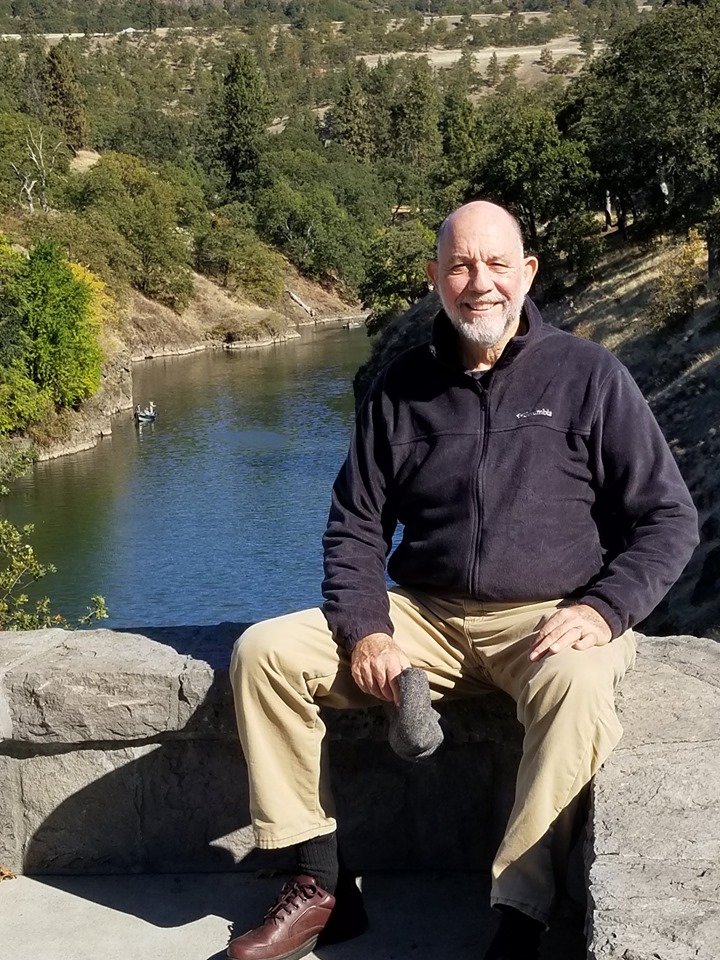
Mike Garofalo at the Klickitat River in Southwest Washington, 2019
Cloud Hands Blog of
Michael P. Garofalo

Facebook of
Michael P. Garofalo

Return to the Alphabetical
Index of Mike Garofalo's Hypertext Documents
Return to the Top of this Webpage