Classic of the Way and Virtue
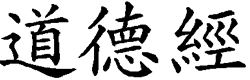
By Lao Tzu (Laozi)
Green Way Research, Valley Spirit Center, Gushen Grove Notebooks, Vancouver, Washington
Chapter 69 Chapter 71 Index to All the Chapters Taoism Cloud Hands Blog
Classic Book (Ching) about the Tao (Way, Nature, Patterns, Processes) and Te (Virtue, Potency, Power, Integrity, Wise Person, Sage)
Indexing, Concordance, Search Terms, Topics, Themes
English and Chinese (Wade-Giles) Terms:
Difficult to Understand, They Who Know Me Are Few, Hide Your Jewels, Difficulty
of Being Rightly Known,
Understanding (i-chih), Practice, Followers, Kept to One's Heart,
Heaven Below or Earth or Worldly (t'ien hsia), Practice (i-hsing, chih), Hidden,
Ancestor or Source (tsung), Simple Clothes, Few (kuei),
Deeds or Action (shih), Wool, Not or No (wu, pu), Jewels, Hidden Treasure,
Self Control,
Wisdom, Sage, Nature, Dao, Ruler (chün), Ancestor, Language, Leadership,
Ordinary, Words or Teaching or Doctrines (yen), Gems or Jade (yü), Principles,
Rare or Few (hsi), Follow or Imitate (tsê), Treasured or Honored (kuei), Underappreciated, Progenitor (tsung),
Wise Man or Sage (shêng), Wears or Dresses (pei), Homespun or
Plain or Rough (ho), Hides or Conceals (huai), Rare, Educating,
Teaching, Learning, Easy (yi)
to Know (chih) and Easy to Practice (hsing), 知難
Términos en Español:
Difícil de Entender, Entendimiento,
Práctica, Seguidores, Práctica,
Joyas, Tesoro Escondido,
Sabiduría, Sabio, Naturaleza,
Lana, Jade, Regla, Idioma, Liderazgo,
Ordinarios, Palabras,
Principios, Progenitor, Fuente,
Oculto, Antiguo, Seguimiento, Educación, Enseñanza,
Aprendizaje, Fácil Saber, Fácil de Practicar,
Enseñanza,
Doctrinas, Mundano, Tierra,
Ancestro, Fuente,
Acciones, Negativo, No, Pocos,
Siga, Imitar, Raro,
Atesorado,
Honrado, Sabio, Vestidos,
Llano, Simple,
Cueros, Oculta,
Gemas.
Electronic Concordance for Chapters 1 - 81 of the Tao Te Ching
English Language Translations of the Tao Te Ching
"My words are very easy to understand and very easy to practice:
but in the world no one can understand, no one can practice them.
Words have an ancestor; Deeds have a master - Reason.
Since he is not understood, therefore I am not understood.
Those who understand me are few, and thus I am distinguished.
Therefore the holy man wears wool, and hides in his bosom his jewels."
- Translated by D. T. Suzuki and Paul Carus, 1913,
Chapter 70
"My words are very easy to know,
Very easy to follow.
Yet the world is unable to know them,
Unable to follow them.
My words have a source,
My efforts have mastery.
Indeed, since none know this,
They do not know me.
The rare ones who know me
Must treasure me.
Therefore, Evolved Individuals
Wear a coarse cloth covering
With precious jade at the center."
- Translated by
R. L. Wing, 1986, Chapter 70
"My
words are easy to understand and very easy to apply.
But no Ego is able to
understand them or apply them.
Words
have authority.
Affairs have a history!
It
is simply because of their ignorance
that Egos do not understand me.
Those who understand me are few, and
thus I am ennobled.
For
this reason, Sages may wear homespun cloth over their shoulders,
but they
carry a jewel beyond price in their heart."
- Translated by
Jerry C. Welch, 1998, Chapter 70
"My teaching is very easy to understand and very easy to practise.
Yet the world does not understand or practise it!
My teaching has its basis, and my conduct has its reason.
Because the world is ignorant of them, I am misunderstood.
There are few who understand me, and those who abuse me are placed in
positions of honour.
Therefore the Sage must dress in coarse robes while hiding precious jewels
within his breast!"
- Translated by
Cheng Lin, Chapter 70
"My words are very easy to understand and very easy to put into practice,
Yet no one in the world can understand them or put them into practice.
Words
have an ancestor and affairs have a sovereign.
It
is because people are ignorant that they fail to understand me.
Those who understand me are few;
Those who harm me are honoured.
Therefore
the sage, while clad in homespun, conceals on his person a priceless piece of
jade."
- Translated by
D. C. Lau, 1963, Chapter 70
"This way of living and leading groups is easy to
understand.
It is easy to do.
But not many leaders understand this approach.
Very few use it in their work.
Frankly, it is too simple and ancient to attract much attention.
As a rule, the greatest interest goes to the greatest novelty.
The wise leader, sticking to the single principle of how everything happens,
does nothing new or original.
The wise leader appeals to a very few followers,
to those who recognize that
traditional wisdom is a treasure
which often lies hidden beneath an ordinary
appearance."
- Translated by
John Heider, 1985,
Chapter 70
"My words are very easy to understand, and very easy to practice.
But the world cannot understand them, nor practice them.
My words have a root.
My deeds have a lord.
Because people are not aware of this, they do not understand me.
Those who understand me are few, those who follow me are honored.
Therefore, the sage wears coarse clothes, while keeping the jade in his
bosom."
- Translated by
Tien Cong Tran, Chapter 70

Created by Michael P. Garofalo, Green Way Research, Valley Spirit Center, Gushen Grove Notebooks, Vancouver, Washington © 2020 CCA 4.0
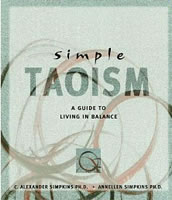
 By Alexander Simkins.
  By Derek Lin.
 By Ming-Dao Deng.
 By Benjamin Hoff.
 By Ming-Dao Deng.
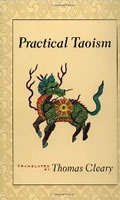
 Translated by Thomas Cleary.
"My words are very easy to understand, very easy to
practice, yet none among all under Heaven can understand them, and none can
practice them.
My words have a progenitor, and my undertakings have a sovereign.
It is just because there is no understanding of this that they do not understand
me.
As long as those who understand me are rare, someone like me is precious.
Thus it is that the sage wears coarse woolen cloth but harbors jade in his
bosom."
- Translated by
Richard John Lynn,
Chapter 70
"The way of the master is simple, and easy to practice.
But your mind cannot understand, and you can’t try to attain it.
Ordinary people are interested in the mundane world, and even if they hear of
the Tao they don’t grasp its depth.
Few and far between are those who follow the way.
They realise those who don’t follow, aren’t ready, so don’t try to persuade
them.
Those who become ready have to lose all hope.
Once all hope is lost, there is hope."
- Translated by
David Bullen,
Chapter 70
"Being very easy to comprehend,
These teachings are simple to practice.
Yet, few are they who will release ego
sufficiently to achieve understanding,
let alone the ability to practice.
These teachings have their source in nature,
Their master is the Tao.
Not comprehending this,
People find great difficulty in understanding the Sage.
So, with few people really understanding him,
He is most highly valued.
Thus the Sage,
Tho' presenting a poor appearance, to the world,
Yet carries the riches of nature embedded in his core."
- Translated by
Alan B. Taplow, 1982, Chapter 70
"My words (yen) are very easy to understand (i-chih),
Very easy to put into practice (i-hsing).
But no one under heaven can understand (chih) them,
No one can put them into practice.
Words (yen) have their ruler (chün);
Events (shih) have their progenitor (tsung).
Because people do not understand (chih) this,
Therefore they do not understand me.
Those who understand me are rare,
Those who follow (tsê) my teaching are (preciously) few (kuei).
Therefore the sage wears hair-cloth,
While carrying jade in his breast."
- Translated by
Ellen Marie Chen, 1989, Chapter 70
"The things I am saying are very easy to understand and very easy to
practice.
Yet no one in the world can comprehend them fully nor practice
them perfectly.
The things I am saying did not originate with me but have their source
in Nature.
It is because men do not understand this source that they do
not understand me.
Since those who understand me are few, they are, for
that reason, all the more worthy of emulation.
Therefore the intelligent man presents a poor exterior, yet carries Nature's riches embedded in his core."
- Translated by
Archie J. Bahm, 1958, Chapter 70
"My way is so
simple to feel, so easy to apply,
That only a few will feel it or apply
it.
If it were not the lasting way, the natural way to try,
If it were a
passing way, everyone would try it.
But however few shall go my way
Or
feel concerned with me,
Some there are and those are they
Who witness what
they see:
Sanity is a haircloth sheath
With a jewel
underneath."
- Translated by
Witter Bynner, 1944, Chapter 70
"Embarrassingly
obvious
And always near at hand
It is this nothingness you see
But never understand
Though
truth within is ageless
Very few will ever see
My face is what I give to you
The jewel within is me "
- Translated by
Jim Clatfelder, 2000, Chapter 70
"Tao is easy to understand and even easier to practice.
Yet no one knows it, and no one practices it.
Words have an origin, like actions have an origin.
It is because you do not know the origin that you do not know Tao.
Since few people know it, Tao is very rare."
- Translated by
Ned Ludd, Chapter 70
 By Hu Xuzehi
 Annotated translation by Victor Mair
  By Ha Poong Kim
 By Hans-Georg Moeller
  By Roger T. Ames and David T. Hall
 By Wes Burgess
 By Arthur Waley
"My words are very easy to understand
And very easy to put into practice.
Yet no one under heaven understands them;
No one puts them into practice.
But my words have an ancestry, my deeds have a lord;
And it is precisely because men do not understand this
That they are unable to understand me.
Few then understand me, but it is upon this very fact my value depends.
It is indeed in this sense that “the Sage wears hair-cloth on top,
But carries jade under neath his dress.”"
- Translated by
Arthur Waley,
1934, Chapter 70
A Chinese Language Version of Chapter 70 of the Tao Te
Ching by Lao Tzu
A
note
on my style of displaying the Chinese characters of the Tao Te Ching
吾言甚易知, 甚易行.
天下莫能知, 莫能行.
言有宗.
事有君.
夫唯無知, 是以不我知.
知我者希.
則我者貴.
是以聖人被褐懷玉.
- Chinese characters, Tao Te Ching, Chapter 70
wu yen shên yi chih, shên yi hsing.
t'ien hsia mo nêng chih, mo nêng hsing.
yen yu tsung.
shih yu chün.
fu wei wu chih, shih yi pu wu chih.
chih wu chê hsi.
tsê wu chê kuei.
shih yi shêng jên pei ho huai yü.
- Wade-Giles Romanization, Tao Te Ching, Chapter 70
Audio
Version in Chinese of Chapter 70 of the Tao Te Ching
wu yan shen yi zhi, shen yi xing.
tian xia mo neng zhi, mo neng xing.
yan you zong.
shi you jun.
fu wei wu zhi, shi yi bu wo zhi.
zhi wo zhe xi.
ze wo zhe gui.
shi yi sheng ren pi he er huai yu.
- Pinyin Romanization, Daodejing, Chapter 70
Tao Te Ching in Chinese characters and English (includes a word by word key) from YellowBridge
Tao Te Ching in Chinese characters, Hanyu Pinyin (1982) Romanization, English and German by Dr. Hilmar Alquiros.
Laozi Daodejing: Chapters with Chinese characters, seal script, detailed word by word concordance, Pinyin (tone#), German, French and English.
Chinese and English Dictionary, MDGB
Dao De Jing Wade-Giles Concordance by Nina, Dao is Open
Dao De Jing English and Wade-Giles Concordance by Mike Garofalo
Tao Te Ching in Pinyin Romanization with Chinese characters, WuWei Foundation
Tao Te Ching in Pinyin Romanization
Tao Te Ching in Chinese characters and English
Tao Te Ching in Chinese characters, English, Word by word analysis, Zhongwen
Tao Te Ching: The Definitive Edition
Tao Te Ching in Chinese characters: Big 5 Traditional and GB Simplified
Chinese Characters, Wade-Giles and Pinyin Romanizations, and 16 English Translations for Each Chapter of the Daodejing by Mike Garofalo.
Tao Te Ching in Chinese characters, Wade-Giles and Pinyin Romanization spellings, English; a word for word translation of the Guodian Laozi Dao De Jing Version.
Lao Zi's Dao De Jing: A Matrix Translation with Chinese Text by Bradford Hatcher.
"My words are very easy to know, and very easy to practice;
But there is no one in the world who is able to know and able to practice them.
There is an originating and all-comprehending (principle) in my words,
And an authoritative law for the things which I enforce.
It is because they do not know these, that men do not know me.
They who know me are few, and I am on that account the more to be prized.
It is thus that the sage wears a poor garb of hair cloth, while he carries his
signet of jade in his bosom."
- Translated by
James Legge, 1891, Chapter 70
 Translated by Eva Wong
  Translated by Philip Ivahoe
 By James Miller
 Translated by Stephen Bokencamp
By Alexander and Annellen Simpkins
Translated by Stephen Bokencamp
By Alexander and Annellen Simpkins Translated by Thomas Cleary
 By Livia Kohn
"My words are very easy to understand and very easy to
put into practice;
but in all the world there is no one who can understand them
and can put them into practice.
My words have a system, my actions have a governor.
Indeed, it is just because they are not understood, that men do not understand
me.
Those who understand me are rare, those who pattern themselves after me are
highly prized.
Thus the Saint wears hair-cloth, but carries jade in his breast."
- Translated by
Jan Julius Duyvendak,
Chapter 70
"My
words
Are very easy to know
Are very easy to practice.
In the world
None is able to know
None is able to practice."
- Translated by
David Lindauer, Chapter 70
"My words are easy to understand and easy
to perform,
Yet no one under Heaven is able to know them or practice them.
My words touch the fundamental,
The things concerned include all under Heaven.
Because ignorance exists,
There is no knowledge of me, my true self.
Those that know me are so very few,
Thus accomplishing my value,
Therefore, Sage wear coarse clothing and carry a priceless jewel in their
bosom."
Translated by Hu
Xuezhi, 2005, Chapter 70
"Honour comes when least I'm Known ...
My words are easy just to understand:
To live by them is very easy too;
Yet it appears that none in all the world
Can understand or make them come to life.
My words have ancestors, my works a prince;
Since none know this, unknown I too remain.
But honor comes to me when least I'm known:
The Wise Man, with a jewel in his breast,
Goes clad in garments made of shoddy stuff."
- Translated by
Raymond Blakney, 1955, Chapter 70
"My
teachings are very easy to understand
and very easy to practice,
But no one can understand them and
no one can practice them.
In my words there is a principle.
In the affairs of men there is a system.
Because they know not these,
They also know me not.
Since there are few that know me,
Therefore I am distinguished.
Therefore the Sage wears a coarse cloth on top
And carries jade within his bosom."
- Translated by Lin Yutang, 1948, Chapter 70
"My words are easy to understand and easy to practice.
However, people in the world rarely understand and practice them.
The words have their origins.
The events have their causes.
People can hardly understand this.
Therefore they rarely understand me.
Few people understand me.
Those who do follow me are prized.
This is why sages dress in crude clothes but carry jades."
- Translated by
Thomas Z. Zhang, Chapter 70
Created by Michael P. Garofalo, Green Way Research, Valley Spirit Center, Gushen Grove Notebooks, Vancouver, Washington © 2020 CCA 4.0
 Translation and elucidation by Hua Ching Ni
 Translated by Brian Walker
 Translated by Arthur Waley
 Translated by Lionel and and Herbert Giles
 By Eva Wong
"It is very easy to comprehend my teachings and to put
them into practice.
Yet there is no one in the world who is able either to comprehend, or to
practice them.
There is an originating principle for speech, an authoritative law for conduct,
but because this knowledge is lacking I am unknown. Those who know Me are few;
those who imitate Me are worthy.
Hence the Holy Man wears coarse garments, but carries a jewel in his bosom."
- Translated by
C. Spurgeon Medhurst,
1905, Chapter 70
"My teaching is very easy to be understood and very easy to be followed,
Yet very few people in the world can understand and follow it.
My teaching is to trace the origin of all things and my service is to serve
the fundamentals of Nature.
If one does not understand Nature, surely, he cannot understand me.
If I am known only by a few, I feel envious of it.
Therefore, the Sage ruler even wore coarse clothes but embraced his jadelike
personality."
- Translated by
Tang Zi-Chang, Chapter 70
"My sayings are easy to recognize, and very easy to
apply.
But no one in the world can recognize them, and no one can apply them.
Sayings have a source, events have a leader.
It is only through ignorance that I am not known.
Those who know me are rare; those who emulate me are noble.
This is why sages dress plainly, and conceal what is precious."
- Translated by
Thomas Cleary,
1991, Chapter 70
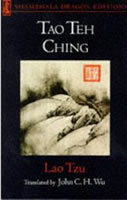
Tao Te Ching
Lao Tzu: Tao Te Ching
 Translated by Livia Kohn
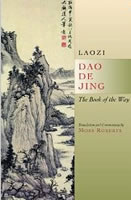
Dao De Jing: The Book of the Way
"Though the words of the sage are simple,
and his actions easily performed,
they are few among many,
who can speak or act as a sage.
For the ordinary man it is difficult
to know the way of a sage,
perhaps because his words
are from the distant past,
and his actions naturally disposed.
Those who know the way of the sage
are few and far between,
but those who treat him with honesty,
will be honoured by him and the Tao.
He knows he makes no fine display,
and wears rough clothes, not finery.
It is not in his expectancy of men
that they should understand his ways,
for he carries his jade within his heart."
- Translated by
Stan Rosenthal,
1984, Chapter 70
"My words are so simple to understand
and so easily put into practice
that no one in all beneath heaven understands them
and no one puts them into practice.
Words have their ancestral origins and actions their sovereign:
it's only because people don't understand this that they don't understand me.
And the less people understand me the more precious I become.
So it is that a sage wears sackcloth, keeping pure jade harbored deep."
- Translated by
David Hinton,
Chapter 70
"My words are very easy to understand, and very
easy to practice.
But the world cannot understand them, nor practice
them.
My words have an Ancestor.
My deeds have a Lord.
The people have no knowledge of this.
Therefore, they have no knowledge of me.
The fewer persons know me,
The nobler are they that follow me.
Therefore, the Sage wears coarse clothes,
While keeping the jade in his bosom."
- Translated by
John C. H. Wu, 1961, Chapter 70
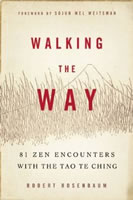
Walking the Way: 81 Zen Encounters with the Tao Te Ching
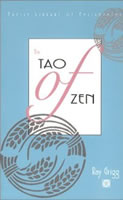
The Tao of Zen
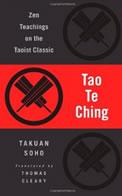
Tao Te Ching: Zen Teachings on the Taoist Classic
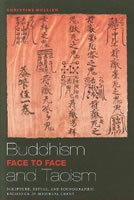
Buddhism and Taoism Face to Face: Scripture, Ritual, and Iconographic Exchange in Medieval China
"My words are very easily known.
They are very easily practiced.
No one in the world can fully know them,
No one in the world can fully practice them.
My words come from one Source,
My service is to one Ruler.
The Master indeed knows the Inner Kingdom,
That is why he knows the negation of self.
Few there are who know the self.
Because they know it not, they prize the self.
That is why the self-controlled man wears wool.
But in his bosom are jewels."
- Translated by
Isabella Mears, 1916, Chapter 70
"My teaching is very easy to understand,
And very easy to carry out.
Yet the world is incapable of understanding it,
And incapable of carrying it out.
My teaching has an ancient source,
My practices have a ruling principle.
As people are ignorant of this,
So they fail to understand me.
When those who understand me are few,
Then I am distinguished indeed.
That's why the Sage wears a coarse cotton robe,
To conceal the jade ornament worn on his bosom."
- Translated by
Henry Wei, 1982, Chapter 70
"My words are easy to understand, easy to
put in practice; yet the world can neither understand nor
practice them.
My words have an underlying intent; my
actions have a ruling motive.
It is only ignorance that causes
men not to understand my doctrine.
Those who understand me are few; those
who copy me are worthy.
Wherefore the Sage dresses in coarse
robes while hiding a jewel in his breast."
- Translated by
Frederic Henry Balfour, 1884, Chapter 70
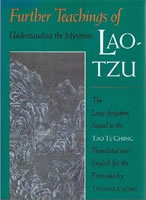
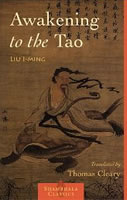
Further Teachings of Lao-Tzu: Understanding the Mysteries (Wen Tzu)
 Translated by Thomas Cleary
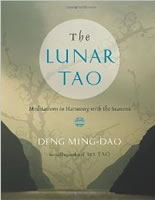
The Lunar Tao: Meditations in Harmony with the Seasons
 By Lui I-Ming (1780) and translated by Thomas Cleary
Ripening Peaches: Taoist Studies and Practices By Mike Garofalo
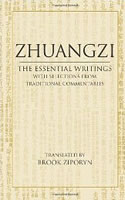
Zhuangzi: The Essential Writings with Selections from Traditional Commentaries
"My words are most easily known,
Most easy to practice, too,
But none in the world my words can know,
And their practice can pursue.
There's an Ancestry in my words,
There's a Head for the things I preach,
But, because they are all misunderstood,
They know not what I teach.
The ones who know me are few,
But the few who know me prize,
Though the sage may wear a hair-cloth garb,
The gem in his bosom lies."
- Translated by
Isaac Winter Heysinger, 1903, Chapter 70
|
Tao Te
Ching |
|||||||||
| 1 | 2 | 3 | 4 | 5 | 6 | 7 | 8 | 9 | 10 |
| 11 | 12 | 13 | 14 | 15 | 16 | 17 | 18 | 19 | 20 |
| 21 | 22 | 23 | 24 | 25 | 26 | 27 | 28 | 29 | 30 |
| 31 | 32 | 33 | 34 | 35 | 36 | 37 | 38 | 39 | 40 |
| 41 | 42 | 43 | 44 | 45 | 46 | 47 | 48 | 49 | 50 |
| 51 | 52 | 53 | 54 | 55 | 56 | 57 | 58 | 59 | 60 |
| 61 | 62 | 63 | 64 | 65 | 66 | 67 | 68 | 69 | 70 |
| 71 | 72 | 73 | 74 | 75 | 76 | 77 | 78 | 79 | 80 |
| 81 | |||||||||
"My teaching is very easy to understand and very easy to practice.
However, in this world, no one understands it and no one practices it.
Your speech must be based on facts, your actions must follow principles.
Only because people do not understand the DAO, do they not understand me.
Few people know my teaching; even fewer people follow my cause.
Therefore, the great men wore coarse clothing, but hid treasures inside."
- Translated by
Xiaolin Yang, Chapter 70
"Geringe Zahl der Berufenen
Das Wahre ist einfach zu verstehen und leicht zu befolgen,
und doch hört es keiner und befolgt es niemand.
Wort und Werk wollen aus dem Urgrund aufsteigen.
Wer dies nicht erkennt,
erkennt auch das Unergründliche in meiner Lehre nicht.
Immer verstehen nur wenige das Tiefste,
darin liegt auch meine Würde.
Der Weyse trägt nach außen ein unscheinbares Gewand,
doch birgt er in seinem Inneren edelsten Schmuck."
- Translated
by Rudolf
Backofen, 1949, Chapter 70
"Meine Worte sind sehr leicht zu verstehen,
sehr leicht auszuführen.
Aber niemand auf Erden kann sie verstehen,
kann sie ausführen.
Die Worte haben einen Ahn.
Die Taten haben einen Herrn.
Weil man die nicht versteht,
versteht man mich nicht.
Eben daß ich so selten verstanden werde,
darauf beruht mein Wert.
Darum geht der Berufene im härenen Gewand;
aber im Busen birgt er ein Juwel."
- Translated by Richard Wilhelm, 1911, Chapter
70
"Words have an ancestor; deeds have a governor.
My words are very easy to know, and very easy to practice,
Yet all men in the world do not know them nor practice them.
It is because they have knowledge that they do not know me.
When those who know me are few, eventually I am beyond all praise.
Therefore the Sage wears clothes of coarse cloth but carries jewels in his bosom;
He knows himself but does not display himself;
He loves himself but does not hold himself in high esteem.
Thus he rejects the latter and takes the former."
- Translated by
Ch'u Ta-Kao, 1904, Chapter 70
"My words are very easy to understand; very easy to put into
practice.
Yet no one in the world has the ability to understand; no one
has the ability to put them into practice.
Well, words have been handed down from antiquity; affairs
have been controlled by others.
That’s merely stupidity.
That’s not my understanding.
One who understands is a rarity, so I hold them dear to my
heart.
That’s why a wise person covers himself with coarse clothing
while carrying a precious gem within."
- Translated by
Nina
Correa, 2005, Chapter 70
Created by Michael P. Garofalo, Green Way Research, Valley Spirit Center, Gushen Grove Notebooks, Vancouver, Washington © 2020 CCA 4.0
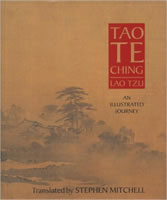
Tao Te Ching: An Illustrated Journey
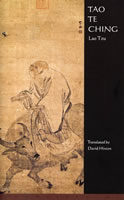
Tao Te Ching
The Book of Tao: Tao Te Ching - The Tao and Its Characteristics
Ripening Peaches: Taoist Studies and Practices
Taoism: Growth of a Religion
Zhuangzi (Chuang Tsu), Daoist Scripture: Bibliography, Links, Resources, Quotations, Notes
Zhuangzi: Basic Writings
Zhuangzi Speaks: The Music of Nature
Lifestyle Advice from Wise Persons
"Easy are my words to know, and also to practice.
Yet none is able to understand nor yet to practice them.
For there is a remote origin for my words, and a supreme law for my actions.
Not knowing these, men cannot know me.
Those who know me are few, and by them I am esteemed.
For the wise man is outwardly poor, but he carries his jewel in his bosom."
- Translated by
Walter Gorn Old, 1904, Chapter 70
My words are very easy to understand and very easy to put into practice, yet
in all the world no one appears to understand them or to practice them.
Words have an ancestor (a preceding idea), deeds have a master (a preceding
purpose), and just as these are often not understood, so I am not understood.
They who understand me are very few, and on that account I am worthy of
honor.
The wise man wears wool (rather than silk) and keeps his gems out of
sight."
- Translated by
Dwight Goddard and Henri Borel, 1919, Chapter 70
"My words are very easy to understand,
And very easy to put into practice,
Yet there should have been no one in the world
Who can understand them
Or can put them into practice.
Words must be purpose-oriented,
Deeds must be reasonably grounded.
People cannot understand me
Because they fail to understand what is said above.
Those who understand me are few;
Those who can follow my advice are even less.
That is why the sage
Is always dressed in coarse cloth
But conceals about him a beautiful piece of jade (the Tao)."
- Translated by
Gu Zengkun, Chapter 70
"Mes paroles sont très faciles à comprendre, très
faciles à pratiquer.
Dans le monde personne ne peut les comprendre, personne ne peut les pratiquer.
Mes paroles ont une origine, mes actions ont une règle.
Les hommes ne les comprennent pas, c'est pour cela qu'ils m'ignorent.
Ceux qui me comprennent sont bien rares.
Je n'en suis que plus estimé.
De là vient que le Saint se revêt d'habits grossiers et cache des pierres
précieuses dans son sein."
- Translated by Stanislas Julien, 1842, Chapter
70
Spanish
Language Versions of the Tao Te Ching (Daodejing)
Tao Te Ching en Español
Lao Tsé Tao Te Ching 
Tao Te Ching Traducido por Stephen Mitchell, versión española
Tao Te Ching Traducido al español por el Padre Carmelo Elorduy
Lao Tzu-The Eternal Tao Te Ching
Ripening Peaches: Taoist Studies and Practices By Mike Garofalo Maduración Duraznos: Estudios y Prácticas Taoístas por Mike Garofalo
Tao Te Ching
Lao Tzu - Tao Te Ching
Tao te king
Daodejing Español, Inglés, y Chino Versiones Lingüísticas de la Daodejing
Spanish Language Translations of the Tao Te Ching
"Mis palabras son fáciles de comprender
y fáciles de practicar.
Pero nadie bajo el Cielo las comprende,
y nadie en la Tierra las practica.
Mis palabras tienen orígenes ancestrales,
Mis acciones son disciplinadas,
Pero todos ignoran mis enseñanzas,
porque todos me ignoran a mí.
Raros son los que me siguen
y eso resalta mi valor.
El sabio oculta bajo sus pobres ropajes
piedras preciosas en su corazón."
- Translation from
Wikisource, 2013,
Tao Te Ching,
Capítulo 70
"Mis palabras son fáciles de entender y poner en
práctica.
No obstante, muchas personas no pueden entenderlas y no pueden ponerlas en
práctica.
Detrás de mis palabras, está el Origen de todo.
En vista de que estas personas no Lo conocen, ellas no me comprenden.
Quien ha conocido a Tao es silencioso y no llama la atención,
aunque se porta con dignidad.
Esta persona se viste con ropa sencilla, pero lo precioso lo esconde adentro."
- Translated by Anton Teplyy, 2008,
Tao Te Ching, Capítulo 70
"Mis palabras,
son fáciles de comprender,
fáciles de practicar;
pero en el mundo no hay nadie capaz de comprenderlas,
no hay nadie capaz de practicarlas.
Mis palabras tienen un origen,
mis actos tienen un señor.
Como no los conocen,
tampoco me comprenden a mí.
Raros son los que comprenden,
con lo que resalta mi valor.
Por eso el sabio vestido de harpillera
alberga un jade en su pecho."
- Translated by
Juan Ignacio
Preciado, 1978, Tao Te Ching, Capítulo 70
"Lo que yo enseño es fácil de aprender, fácil
de practicar,
Pero en el mundo nadie lo entiende y nadie sabe practicarlo
bien.
Mis palabras provienen de una tradición primordial.
Mis acciones
dependen de un señor.
El vulgo no las puede comprender y por eso no me
comprenden.
Muy pocos me conocen y en eso reside mi gloria.
De allí que el
sabio ande mal trajeado y oculte el jade en su espalda."
- Translation from
Logia Medio Dia, 2015,
Tao Te Ching, Capítulo 70
"La palabras tienen un origen; los hechos, una ley.
Mis palabras son fáciles de comprender y fáciles de seguir,
Y, sin embargo, nadie las comprende y nadie las practica.
Es la sabiduría la que impide al hombre acercarse a mi.
Son pocos los que me siguen, porque estoy más allá de toda alabanza.
Por ello el Sabio se cubre con una tela tosca, pero guarda joyas en su seno.
Conoce su valor, pero no lo ostenta.
Se ama a sí mismo, pero no se tiene en alta estima.
Rechaza lo último y se ciñe a lo primero."
- Translated from Chinese into English by Ch'u Ta-Kao, Translated from
English into Spanish by
Caridad Diaz Faes,
Capítulo 70
Created by Michael P. Garofalo, Green Way Research, Valley Spirit Center, Gushen Grove Notebooks, Vancouver, Washington © 2020 CCA 4.0
Next Chapter of the Tao Te Ching #71
Previous Chapter of the Tao Te Ching #69
Chapter and Thematic Index to the Tao Te Ching
Tao Te Ching
Commentary, Interpretations, Research Tools, Resources
Chapter 70
Das Tao Te King von Lao Tse. Complete versions of all 81 Chapters of the Tao Te Ching by many different translators in many languages: 124 English, 24 German, 14 Russian, 7 Spanish, 5 French and many other languages. Links are organized first by languages, and then alphabetically by translators. Formatting varies somewhat. The original website at Onekellotus went offline in 2012; but, the extensive collection of these Tao Te Ching versions was saved for posterity by the Internet Archive Wayback Machine and available as of 9/9/2015. This is an outstanding original collection of versions of the Daodejing─ the Best on the Internet. Caution: copyright infringement may sometimes be an issue at this website.
Tao Te Ching, Translations into English: Terebess Asia Online (TAO). 124
nicely formatted complete English language translations, on separate webpages, of the Daodejing.
Alphabetical index by translators. Each webpage has all 81 chapters of the Tao Te
Ching translated into English. A useful collection! Many
reformatted and colored versions from the original collection at
Das Tao Te King von Lao Tse. Caution: copyright infringement may
sometimes be an
issue at this website.
Lao Tzu: Te-Tao Ching - A New Translation Based on the Recently Discovered Ma-wang-tui
Texts (Classics of Ancient China)
Daodejing by Laozi: Chapters with Chinese characters, seal script,
detailed word by word concordance, Pinyin (tone#), German, French and English.
This is an outstanding resource for serious students of the Tao Te Ching.
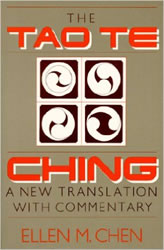
Tao Te
Ching: A New Translation and Commentary. By Ellen Chen. Paragon
House, 1998. Detailed glossary, index, bibliography, notes, 274 pages.
The Tao
and Method: A Reasoned Approach to the Tao Te Ching. By Michael
Lafargue. New York, SUNY Press, 1994. 640 pages. Detailed
index, bibliography, notes, and tables. An essential research tool.
Two Visions of the Way: A Study of the Wang Pi and the Ho-Shang Kung Commentaries on the Lao-Tzu.
By Professor by Alan Kam-Leung Chan. SUNY Series in Chinese
Philosophy and Culture. State University of New York Press, 1991.
Index, bibliography, glossary, notes, 314 pages.
ISBN: 0791404560.
Tao Te Ching: The Definitive Edition
Chinese Reading of the Daodejing
Wang Bi's Commentary on the Laozi with Critical Text and Translation.
By Professor Rudolf G. Wagner. A SUNY Series in Chinese Philosophy and
Culture. English and Mandarin Chinese Edition.
State University of New York Press; Bilingual edition (October 2003). 540
pages. ISBN: 978-0791451823.
Wang Bi (Wang Pi, Fusi), 226-249 CE,
Commentary on the Tao Te
Ching.
Tao Te Ching
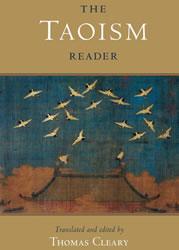
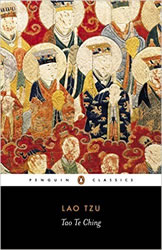
The Taoism Reader
The Lunar Tao: Meditations in Harmony with the Seasons
Lao Tzu's Tao Teh Ching, A Parallel Translation Collection. Compiled by B.
Boisen.
Comparison and Analysis of Selected English Interpretations of the Tao Te Ching.
By Damian J. Bebell and Shannon M. Fera.
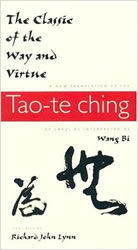
The Classic of the Way and Virtue: A New Translation of the Tao-te Ching of Laozi as Interpreted by Wang Bi.
Translated by Richard John Lynn. Translations from the Asian Classics
Series. Columbia University Press, 2004. 256 pages.
Tao Te Ching in Chinese characters,
Pinyin Romanization, English and German by Dr. Hilmar
Alquiros.
Yellow Bridge
Dao De Jing Comparison Table Provides side by side comparisons of
translations of the Tao Te Ching by James Legge, D. T. Suzuki, and Dwight
Goddard. Chinese characters for each paragraph in the Chapter are on the
left; place your cursor over the Chinese characters to see the Pinyin
Romanization of the Chinese character and a list of meanings.
Translators Index,
Tao Te Ching Versions in English, Translators Sorted Alphabetically by Translator, Links to Books and
Online Versions of the Chapters
Taoism and the Tao Te
Ching: Bibliography, Resources, Links
Spanish Language
Translations of the Tao Te Ching, Daodejing en Español, Translators Index
The Tao of Zen
Chapter 1 in the
Rambling
Taoist Commentaries by Trey Smith. The
Rambling Taoists are Trey Smith and Scott Bradley.
By Hans-Georg Moeller. Columbia University Press, 2006, 176 pages.
Valley Spirit, Gu Shen,
Concept, Chapter 6
Valley Spirit Center in Red
Bluff, California.
Sacred
Circle in the Gushen Grove.
Lao-tzu's Taoteching
Reading Lao Tzu: A Companion to the Tao Te Ching with a New Translation
Dao De Jing: A Philosophical Translation
Thematic Index to the
81 Chapters of the Tao Te Ching
Lieh-Tzu: A Taoist Guide to Practical Living
Revealing the Tao Te Ching: In-depth Commentaries on an Ancient Classic
Cloud Hands Blog
Mike Garofalo writes about Mind-Body Arts, Philosophy, Taoism, Gardening, Taijiquan, Walking, Mysticism,
Qigong, and the Eight Ways.
The Whole Heart of Tao:
The Complete Teachings From the Oral Tradition of Lao Tzu.
Gushen Grove Notebooks for the Tao Te Ching
Green Way Research, Valley Spirit
Center, Gushen Grove Notebooks (2001-2020)
East Los Angeles, California, 1946-1998;
Red Bluff, California from 1998-2017;
Vancouver, Washington from 2107-2020
Green Way Research, Tao Te Ching, Chapter 70, 2011-2020.
Indexed and Compiled by
Michael P. Garofalo
This webpage was last modified, edited,
maintained, expanded, improved or updated on
November 23, 2019.
This webpage was first distributed online on July 10, 2011.
Created by Michael P. Garofalo, Green Way Research, Valley Spirit Center, Gushen Grove Notebooks, Vancouver, Washington © 2020 CCA 4.0
Brief Biography of Michael P. Garofalo, M.S.

Ripening Peaches: Daoist Studies and Practices
Zhuangzi (Chuang Tzu, Zhuang Zhou, Master Chuang) 369—286 BCE
Taoist Perspectives: My Reading List
Bodymind Theory and Practices, Somaesthetics
How to Live a Good Life: Advice from Wise Persons
Qigong (Chi Kung) Health Practices
One Old Daoist Druid's Final Journey: Notebooks of the Librarian of Gushen Grove
Index to Cloud Hands and Valley Spirit Websites
Index to English Language Translators of the Tao Te Ching
Recurring Themes (Terms, Concepts, Leimotifs) in the Tao Te Ching
Spanish Language Translations of the Tao Te Ching
Chinese Characters, Wade-Giles (1892) and Hanyu Pinyin (1982) Romanizations
The Tao Te Ching (Dao De Jing) by Lao Tzu (Laozi) circa 500 BCE
|
Tao Te
Ching |
|||||||||
| 1 | 2 | 3 | 4 | 5 | 6 | 7 | 8 | 9 | 10 |
| 11 | 12 | 13 | 14 | 15 | 16 | 17 | 18 | 19 | 20 |
| 21 | 22 | 23 | 24 | 25 | 26 | 27 | 28 | 29 | 30 |
| 31 | 32 | 33 | 34 | 35 | 36 | 37 | 38 | 39 | 40 |
| 41 | 42 | 43 | 44 | 45 | 46 | 47 | 48 | 49 | 50 |
| 51 | 52 | 53 | 54 | 55 | 56 | 57 | 58 | 59 | 60 |
| 61 | 62 | 63 | 64 | 65 | 66 | 67 | 68 | 69 | 70 |
| 71 | 72 | 73 | 74 | 75 | 76 | 77 | 78 | 79 | 80 |
| 81 | |||||||||
Return to the Top of this Webpage


Mike Garofalo at the Klickitat River in Southwest Washington, 2019
Cloud Hands Blog of
Michael P. Garofalo

Facebook of
Michael P. Garofalo

Return to the Alphabetical
Index of Mike Garofalo's Hypertext Documents
Return to the Top of this Webpage