Classic of the Way and Virtue
By Lao Tzu (Laozi)
Green Way Research, Valley Spirit Center, Gushen Grove Notebooks, Vancouver, Washington
Chapter 68 Chapter 70 Index to All the Chapters Taoism Cloud Hands Blog
Classic Book (Ching) about the Tao (Way, Nature, Patterns, Processes) and Te (Virtue, Potency, Power, Integrity, Wise Person, Sage)
Indexing, Concordance, Search Terms, Topics, Themes
English and Chinese (Wade-Giles) Terms:
The Function of the Mysterious (Dao), Act as a Guest with Reserve, Use or Employ
(yung), Host or Initiator (chu), Guest or Follow (k'o),
Maxim or Saying (yen), Advance (chin), Underestimate, Dare or
Venture (kan), Inch or Little Bit (ts'un), Tactics, Battle, Enemy, War,
Fighting, Treasure (pao), Arms or Weapons (ping), Warriors,
Retreat or Withdraw (t'ui), Proceed or Advance (hsing), Sieze or
Grab (jang), Arms (pi), Force or Confront (jêng), Enemy or
Opponent (ti), Hold or Carry (chih), Light or Frivolous (ching),
Disputes, Loss (sang), Treasure (pao), Matched or Equal (k'ang),
Encounter or Engage (chia), Peacemakers, Yielding, Military Strategy, Use of the Mystery,
Reconciliation,
Compromise, Healing, Compassion, Uselessness of War,
Attitude, Inch, Foot, Calamities or Misfortune (huo), Win or Outdue or
Couquer (shêng), Weakened or Ruined (ai), Rival, Foe, Restraint, Withdraw,
Advance, Respect, Defend, Sorrow, Never
Make Light of an Enemy, 玄用
Términos en Español:
La función
de la
misteriosa, Reserva, Hospedador, Huésped,
Tácticas, Batalla, Enemigo, Guerra,
Lucha, Armas, Guerreros, Retirada,
Disputas, Pacificadores, Ceder,
Militar Estrategia,
Uso
del Misterio, Reconciliación,
Compromiso, Curación, Compasión,
Actitud, Pulgadas, Pies,
Calamidades, Restricción, Retirar,
Anticipación, Respetar, Defender,
Dolor,
Utilice, Emplee, Atreverse,
Máxima, Diciendo, Iniciador,
Reisgo, Siga, Defensa, Pulgadas,
Retiro, Proceda, Avance,
Prenderle, Armas,
Fuerza,
Confrontar,
Enemigo,
Adversario, Llevar,
Fívolo,
Pérdida, Tesoro,
Infortunio, Emparejados, Igualdad,
Ecuentro,
Engage, Debilitado, Arruinado,
Ganar, Contratar, Agarrar, Conquistar.
Electronic Concordance for Chapters 1 - 81 of the Tao Te Ching
English Language Translations of the Tao Te Ching
"A master of the art of war has said, 'I do not dare to be the host to
commence the war;
I prefer to be the guest to act on the defensive.
I do not dare to advance an inch;
I prefer to retire a foot.'
This is called marshalling the ranks where there are no ranks;
Baring the arms to fight where there are no arms to bare;
Grasping the weapon where there is no weapon to grasp;
Advancing against the enemy where there is no enemy.
There is no calamity greater than lightly engaging in war.
To do that is near losing the gentleness which is so precious.
Thus it is that when opposing weapons are actually crossed, he who deplores the
situation conquers."
- Translated by
James Legge, 1891, Chapter 69
"The strategists have a saying:
‘I dare not take the offensive, but would rather take the defensive.'
‘I dare not advance an inch, but would rather retreat a foot.’
This is called marching without moving,
Rolling up one’s sleeve without showing one’s arm,
Defeating an enemy without confrontation,
Being armed without weapons.
No misfortune is greater than underestimating an enemy.
Underestimating my enemy almost makes me lose my treasures.
Therefore, when two sides takes arms against each other,
It is the side with the most reluctance which wins."
- Translated by
Keith H. Seddon,
Chapter 69
"Strategists
possess words
I am without venturing to act as lord yet act as guest
Without venturing to enter an inch yet fall back a foot.
Appropriately
called
Going absent of going
Grabbing absent of an arm
Throwing absent of opposition
Taking hold of absent of an enemy.
No
misfortune is greater than relating to light opposition
Light opposition severs and destroys my principles.
So
when opposing strategies escalate each other
Conquering goes with those who mourn."
- Translated by
David Lindauer, Chapter 69
"Military strategists have a saying,
"I dare not be a host; rather, a guest.
I dare not advance an inch; rather, retreat a foot."
This can be called
marching without formation,
striving without arms,
overthrowing without enmity,
capturing without weapons.
There is no greater calamity than to underestimate an enemy.
To underestimate an enemy is to lose one's treasures.
Therefore, when opposing armies try to overcome each other,
One who sorrows will win."
- Translated by
Yi Wu, Chapter 69
"There is a saying among the militarists:
"I would rather defend than initiate an attack.
I would be most reluctant to advance an inch but quite ready to retreat a
foot."
The ultimate ideal is as follows:
Not having any battalions to form a configuration,
Not having to initiate an attack,
Not needing to take up arms,
And not having to fight a war.
There is no disaster worse than to underestimate your enemy,
For this could endanger your life.
Hence, if two evenly-matched armies fight against each other,
The aggrieved side that feels poignantly oppressed will win."
- Translated by
Han Hiong Tan, Chapter 69
"The strategists have a saying:
"I dare not act as a host,
Yet I act as a guest,
I dare not advance an inch,
Yet I retreat a foot."
This is called
Traveling without moving,
Rising up without arms,
Projecting without resistance,
Capturing without strategies.
No misfortune is greater than underestimating resistance;
Underestimating resistance will destroy my Treasures.
Thus when mutually opposing strategies escalate,
The one who feels sorrow will triumph."
- Translated by
R. L. Wing, 1986, Chapter 69
"A strategist says:
I dare not launch an attack but strengthen defense capabilities;
I dare not advance an inch but retreat a foot instead.
This means to deploy battle array by showing no battle array;
To wield one's arm to attack by showing no arm to lift;
To face the enemy by showing no enemy to attack;
To hold weapons by showing no weapons to hold.
No disaster is greater than underestimating the enemy.
Underestimating the enemy nearly cost me my treasure (i. e. three treasured weapons, see 67).
That is why the sorrow-laden side wins
When two armies are at war."
- Translated by
Gu Zengkun, Chapter 69

Created by Michael P. Garofalo, Green Way Research, Valley Spirit Center, Gushen Grove Notebooks, Vancouver, Washington © 2020 CCA 4.0
 By Alexander Simkins.
  By Derek Lin.
 By Ming-Dao Deng.
 By Benjamin Hoff.
 By Ming-Dao Deng.
 Translated by Thomas Cleary.



"In conflict just be cautious
And always on your guard
Rather than advance an inch
Instead retreat a yard
In this way you go along
And make your gain without advancing
You deal with the rival
As your position is enhancing
Remember that it's possible
Your rival just may yield
So don't advance on such a foe
Let differences be healed."
- Translated by
Jim Caltfelter,
2000, Chapter 69
"It is easier to retreat ten meters than to advance one,
Disputes could be solved by being in waiting.
Instead of an aggressive advancement it is better to retreat and wait,
Without displaying power and being aggressive,
Battles could be won.
Do not underestimates your enemy, neither those courageous in battle.
In the beginning aggressiveness seems to win,
But at the end, he who is compassionate wins."
- Translated by
Octavian Sarbatoare,
2002, Chapter 69
"The strategists have a saying:
I dare not be a host, but rather a guest;
I dare not advance an inch, but rather retreat a foot.
This is called marching without moving,
Rolling up one's sleeves without baring one's arms,
Capturing the enemy without confronting him,
Holding a weapon that is invisible.
There is no greater calamity than to under-estimate
the strength of your enemy.
For to under-estimate the strength of your enemy is
to lose your treasure.
Therefore, when opposing troops meet in battle,
victory belongs to the grieving side."
- Translated by
John C. Wu, 1961, Chapter 69
"The ancient wise generals all held:
"Start no war.
Fight only when forced to.
A foot back instead of an inch forward."
Such military creeds all boil down to this:
Advance invisible ranks;
Raise invisible arms;
Poise invisible armies;
Fight as if one is not fighting with enemies.
The biggest military disaster is this:
To attack an enemy thoughtlessly
With threats, menaces and challenges.
For such an attack means the loss of all advantages.
When two armies battle, one against the other,
The army that fights out of love and sadness wins."
- Translated by
Liu Qixuan, Chapter 69
"There
is a saying about using armed forces.
"I dare not be the host (i.e., the initiator)
and instead become the guest.
I dare not advance an inch, but rather retreat
a foot.''
That is called to make troop movements without form, shoving aside
without a forearm,
destroying without involving an enemy, and wielding arms
without there being a weapon.
There is no greater disaster than underestimating
one's enemy.
If one were to underestimate one's enemy that would be tantamount
to losing one's treasures.
So when troops of equivalent strength are opposed,
the side that goes into battle with sorrow will win."
- Translated by
Patrick E. Moran, Chapter 69
"A proverb from the military: Better to defend than attack.
Better to withdraw a foot than advance an inch.
Thus, march without advancing,
counterattack without weapons,
subdue without battlelines.
To the victor goes the mourning."
- Translated by
Ned Ludd, Chapter 69
 By Hu Xuzehi
 Annotated translation by Victor Mair
  By Ha Poong Kim
 By Hans-Georg Moeller
  By Roger T. Ames and David T. Hall
 By Wes Burgess
 By Arthur Waley
"The generals have a saying:
"Rather than make the first move
it is better to wait and see.
Rather than advance an inch
it is better to retreat a yard."
This is called
going forward without advancing,
pushing back without using weapons.
There is no greater misfortune
than underestimating your enemy.
Underestimating your enemy
means thinking that he is evil.
Thus you destroy your three treasures
and become an enemy yourself.
When two great forces oppose each other,
the victory will go
to the one that knows how to yield."
- Translated by
Stephen Mitchell,
1988, Chapter 69
A Chinese Language Version of Chapter 69 of the Tao Te
Ching by Lao Tzu
A
note
on my style of displaying the Chinese characters of the Tao Te Ching
用兵有言:
"吾不敢為主而為客.
不敢進寸而退尺."
是謂行無行,
攘無臂扔無敵,
執無兵.
禍莫大於輕敵,
輕敵幾喪吾寶.
故抗兵相加,
哀者勝矣.
- Chinese characters, Tao Te Ching,
Chapter 69
yung pin yu yen:
"wu pu kan wei chu erh wei k'o,
pu kan chin ts'un erh t'ui ch'ih."
shih wei hsing wu hsing,
jang wu pi jêng wu ti,
chih wu ping.
huo mo ta yü ch'ing ti,
ch'ing ti chi sang wu pao.
ku k'ang ping hsiang chia,
ai chê shêng yi.
- Wade-Giles Romanization, Tao Te Ching, Chapter 69
Audio
Version in Chinese of Chapter 69 of the Tao Te Ching
yong bing you yan:
"wu bu gan wei zhu er wei ke,
bu gan jin cun er tui chi."
shi wei hang wu hang,
rang wu bi
reng wu di,
zhi wu bing.
huo mo da yu qing di,
qing di ji sang wu bao.
gu kang bing xiang jia,
ai zhe sheng yi.
- Pinyin Romanization, Daodejing, Chapter 69
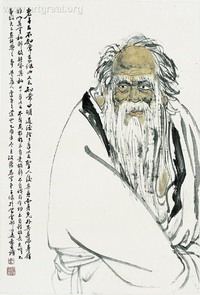
Tao Te Ching in Chinese characters and English (includes a word by word key) from YellowBridge
Tao Te Ching in Chinese characters, Hanyu Pinyin (1982) Romanization, English and German by Dr. Hilmar Alquiros.
Laozi Daodejing: Chapters with Chinese characters, seal script, detailed word by word concordance, Pinyin (tone#), German, French and English.
Chinese and English Dictionary, MDGB
Dao De Jing Wade-Giles Concordance by Nina, Dao is Open
Dao De Jing English and Wade-Giles Concordance by Mike Garofalo
Tao Te Ching in Pinyin Romanization with Chinese characters, WuWei Foundation
Tao Te Ching in Pinyin Romanization
Tao Te Ching in Chinese characters and English
Tao Te Ching in Chinese characters, English, Word by word analysis, Zhongwen
Tao Te Ching: The Definitive Edition
Tao Te Ching in Chinese characters: Big 5 Traditional and GB Simplified
Chinese Characters, Wade-Giles and Pinyin Romanizations, and 16 English Translations for Each Chapter of the Daodejing by Mike Garofalo.
Tao Te Ching in Chinese characters, Wade-Giles and Pinyin Romanization spellings, English; a word for word translation of the Guodian Laozi Dao De Jing Version.
Lao Zi's Dao De Jing: A Matrix Translation with Chinese Text by Bradford Hatcher.
"A military expert used to say:
'I dare not act as host who takes the initiative but act as guest with reserve.
I dare not advance an inch, but I withdraw a foot."
This is called marching without marching, threatening without arms, charging
without hostility, seizing without weapons.
No greater misfortune than making light of the enemy!
When we make light of the enemy, it is almost as though we had lost our treasure
- compassion.
Thus, if matched armies encounter one another, the one who does so in sorrow is
sure to conquer."
- Translated by
D. T. Suzuki and Paul Carus, 1913,
Chapter 69
"Military maxims say: "It is easier to defend than to attack."
"It is
better to back away a foot than to assault to gain an inch."
This means that the best way to advance is to retreat.
He who bares
his flesh will appear to have no need for carrying weapons.
He who does
not flourish weapons appears to have nothing to defend.
He who does not
prepare to defend himself appears to have no enemies.
No one will attack a person unless he appears to be an enemy,
For to attack one who is not an enemy is to lose a friend.
Therefore, when opposing enemies meet for open battle,
he who runs away to hide is the one who wins."
- Translated by
Archie J. Bahm, 1958, Chapter 69
"There
is the maxim of military strategists;
I dare not be the first to invade, but rather be the invaded.
Dare not press forward an inch, but rather retreat a foot.
That is, to march without formations,
To roll up the sleeves,
To charge not in frontal attacks,
To arm without weapons.
There is no greater catastrophe than to underestimate the enemy.
To underestimate the enemy might entail the loss of my treasures.
Therefore when two equally matched armies meet,
It is the man of sorrow who wins."
- Translated by
Lin Yutang, 1948, Chapter 69
"The planners of fights
have a saying:
I do not want to receive guests,
but I would like to be a guest;
I do not want to go forward an inch,
but I would like to go back a foot.
This is called marching without moving,
Rolling up one's sleeves without baring one's arms,
Capturing the enemy without facing them,
Holding a weapon that is invisible.
There is no greater disaster
than to under-estimate
the strength of your enemy.
For to under-estimate the strength
of your enemy
is to lose your treasure.
When disagreeing armies
meet in battle,
victory belongs to
the sorrowing side."
- Translated by
J. L. Trottier, 1994, Chapter 69
 Translated by Eva Wong
  Translated by Philip Ivahoe
 By James Miller
 Translated by Stephen Bokencamp
By Alexander and Annellen Simpkins
Translated by Stephen Bokencamp
By Alexander and Annellen Simpkins Translated by Thomas Cleary
 By Livia Kohn

"The strategists have a saying,
I dare not play the host but play the guest,
I dare not advance an inch but retreat a foot instead.
This is known as marching forward when there is no road,
Rolling up one's sleeves when there is no arm,
Dragging one's adversary by force when there is no adversary,
And taking up arms when there are no arms.
There is no disaster greater than taking on an enemy too easily.
So doing nearly cost me my treasure.
Thus of two sides raising arms against each other,
It is the one that is sorrow-stricken that wins."
- Translated by
D. C. Lau, 1963,
Chapter 69
"Military strategists have said -
I dare not be the host,
But prefer to be the guest.
I dare not advance one inch,
But prefer to retreat a foot.
This is called -
Marching as if without motion;
Brandishing arms as if having none;
Attacking as if without enmity;
Seizing as if without weapons.
No disaster is greater than belittling the enemy.
Belittling the enemy almost ruins my treasures.
Therefore, when two armies encounter each other,
The side that laments war will win."
- Translated by
Henry Wei, 1982, Chapter 69
"There was a saying among the military
commanders of old,
'I do not venture to act the host, to
give battle; I prefer to be the guest to await the attack.'
I do
not venture to advance an inch; I prefer to retire a foot.
This
may be called operating negatively, and appropriating the
enemy's possessions without infringing propriety.
Were this
policy pursued, there would be no withstanding of our arms,
and capture might be effected without striking a blow.
There is no greater calamity than that
of despising an enemy.
By underestimating the enemy one brings
about the loss of the three things I prize.
Wherefore when
opposing forces meet in battle, it is the compassionate who
conquer."
- Translated by
Frederic Henry Balfour, 1884, Chapter 69
Created by Michael P. Garofalo, Green Way Research, Valley Spirit Center, Gushen Grove Notebooks, Vancouver, Washington © 2020 CCA 4.0
 Translation and elucidation by Hua Ching Ni
 Translated by Brian Walker
 Translated by Arthur Waley
 Translated by Lionel and and Herbert Giles
 By Eva Wong
"Military tacticians have a saying:
"I dare not be the aggressor, but rather the defender.
I dare not advance an inch, but would rather retreat a foot."
This is to move without moving,
To raise one's fists without showing them,
To lead the enemy on but against no adversary,
To wield a weapon but not clash with the enemy's.
No disaster is greater than taking the enemy lightly.
If I take the enemy lightly, I am on the verge of losing my treasures.
Hence, when opposing troops resist each other, the one stung by grief will be
the victor."
- Translated by
Tam Gibbs, 1981,
Chapter 69
"There is a saying on using military force:
'I dare not be the host, but rather a guest.
I dare not advance an inch, but rather retreat a foot.'
This is called performing without performing, rolling up one's sleeves without
showing the arms.
By not holding on to an enemy, there is no enemy.
There is no disaster greater than having no enemy.
Having no enemy almost destroys my treasure.
When opposing armies clash, those who cry win!"
- Translated by
Tao Huang, Chapter
69
"There is a saying in
the army: I do not presume to be the master,
But become the guest.
I do not dare advance an inch, but retreat a foot.
This is called moving without moving, rolling up sleeves without showing your
arms,
Repelling without opposing,
Wielding without a weapon.
There is no disaster greater than
Contempt for the enemy.
Contempt for the enemy - what a treasure is lost!
Therefore,
When the fighting gets hot,
Those who grieve will conquer."
- Translated by
Stephen Addis,
1993, Chapter 69
Tao Te Ching
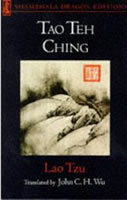
Lao Tzu: Tao Te Ching
 Translated by Livia Kohn
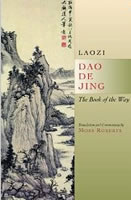
Dao De Jing: The Book of the Way
"The strategists' saying:
"I dare not play the host but play the guest,
I dare not advance an inch but retreat a foot."
This is called marching no-marching,
Stretching no-arms,
Arming with no-weapons,
Charging at no-enemy.
No disaster is greater than making light of the enemy.
When I make light of the enemy, I may lose my treasure.
Therefore, when two sides confront each other with arms,
The one who grieves wins."
- Translated by
Ha Poong Kim,
Chapter 69
"The handbook of the strategist has said:
'Do not invite the fight, accept it instead,'
'Better a foot behind than an inch too far ahead,'
Which means:
Look a man straight in the face and make no move,
Roll up your sleeve and clench no fist,
Open your hand and show no weapon,
Bare your breast and find no foe.
But as long as there be a foe, value him,
Respect him, measure him, be humble toward him;
Let him not strip from you, however strong he be,
Compassion, the one wealth which can afford him."
- Translated by
Witter Bynner,
1944, Chapter 69
"On military operations we have:
"I do not boldly attack others first,
But take action only after being attacked."
"I do not boldly move forward even an inch,
But withdraw a foot."
This is called the operation of non-operation,
Bearing the arms of non-arms,
Charging the enemy of non-enemy,
Carrying the weapons of non-weapons.
There is no more serious misfortune
Than to engage in war lightly.
To engage in war lightly is to violate my essential teachings of
compassion,
renunciation, and never longing to be first in the world.
Therefore, when two armies join in battle,
The one that is compassionate wins."
- Translated by
Chang Chung-Yuan, Chapter 69
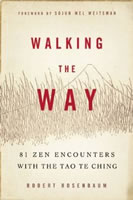
Walking the Way: 81 Zen Encounters with the Tao Te Ching
The Tao of Zen
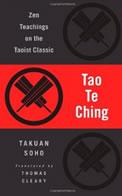
Tao Te Ching: Zen Teachings on the Taoist Classic
Buddhism and Taoism Face to Face: Scripture, Ritual, and Iconographic Exchange in Medieval China

"A great soldier used to say:
"I plan not to be a Lord, but to be a follower; I plan not to advance an inch, but to recede a foot.
This is called:
Advancing with the advantage of Inner Life, baring the arm with the
energy of Inner Life,
grasping a weapon with the force of Inner Life,
meeting the foe as a soldier of Inner Life.
There is no calamity greater than lightly to engage in war.
To engage lightly in war is to lose our treasure of gentleness.
Therefore, when soldiers meet who are equally strong,
He who is compassionate shall conquer."
- Translated by
Isabella Mears, 1916, Chapter 69
"In
conflict just be cautious
And always on your guard
Rather than advance an inch
Instead retreat a yard
In
this way you go along
And make your gain without advancing
You deal with the rival
As your position is enhancing
Remember
that it's possible
Your rival just may yield
So don't advance on such a foe
Let differences be healed"
- Translated by
Jim Clatfelder, 2000, Chapter 69
"An ancient tactician has said:
'I dare not act as a host, but would rather act as a guest;
I dare not advance an inch, but would rather retreat a foot.'
This implies that he does not marshal the ranks as if there were no ranks;
He does not roll up his sleeves as if he had no arms;
He does not seize as if he had no weapons;
He does not fight as if there were no enemies.
No calamity is greater than under-estimating the enemy.
To under-estimate the enemy is to be on the point of losing our treasure.
Therefore, when opposing armies meet in the field the ruthful will win."
- Translated by
Ch'u Ta-Kao, 1904, Chapter 69
Further Teachings of Lao-Tzu: Understanding the Mysteries (Wen Tzu)
 Translated by Thomas Cleary
The Lunar Tao: Meditations in Harmony with the Seasons
 By Lui I-Ming (1780) and translated by Thomas Cleary
Ripening Peaches: Taoist Studies and Practices By Mike Garofalo
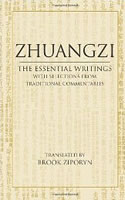
Zhuangzi: The Essential Writings with Selections from Traditional Commentaries
"An experienced soldier said, 'I dare not be
The host in war, I' d rather be the guest;
I dare not, at the first, advance an inch,
But rather would retire a foot if pressed.'
It is to march when there' s nowhere to march,
To threat with arms when there are arms nowhere,
To charge without an enemy in sight,
To take by sword and spear when none are there.
Misfortune never greater can there be
Than to make light of enemies in war,
Thereby we lose our all, for then when meet
Embattled hosts, the weak is
conqueror."
- Translated by
Isaac Winter Heysinger, 1903, Chapter 69
|
Tao Te
Ching |
|||||||||
| 1 | 2 | 3 | 4 | 5 | 6 | 7 | 8 | 9 | 10 |
| 11 | 12 | 13 | 14 | 15 | 16 | 17 | 18 | 19 | 20 |
| 21 | 22 | 23 | 24 | 25 | 26 | 27 | 28 | 29 | 30 |
| 31 | 32 | 33 | 34 | 35 | 36 | 37 | 38 | 39 | 40 |
| 41 | 42 | 43 | 44 | 45 | 46 | 47 | 48 | 49 | 50 |
| 51 | 52 | 53 | 54 | 55 | 56 | 57 | 58 | 59 | 60 |
| 61 | 62 | 63 | 64 | 65 | 66 | 67 | 68 | 69 | 70 |
| 71 | 72 | 73 | 74 | 75 | 76 | 77 | 78 | 79 | 80 |
| 81 | |||||||||
There is a saying:
”It is sometimes better to wait and see than to act
first. It is safer to retreat a foot, than to advance and inch.”
Following this saying, energy is conserved.
When the correct course of
action becomes apparent, you are able to act.
In trying to overcome the
ego, it can't be defeated directly.
Don't see it as bad, and there will
be no conflict in you.
If you create conflict, your three treasures
will be lost, and you will become an enemy to yourself.
To overcome the
ego, yield to it, and simply be aware of its motivations.
Once its
motivations are apparent, it is discredited and will lose all power over
you."
- Translated by
David Bullen, Chapter 69
"Siege durch kluges Sichbescheiden
Wer seinen Gegner gewinnen will,
der spiele in Feindesland nicht den Hausherrn,
sondern betrage sich wie ein Gast.
Er weiche lieber einen Fuß zurück,
als daß er einen Zoll vorrücke.
So kommt er voran, ohne zu marschieren.
So kann er zurückweisen, ohne zu drohen.
So kann er vordringen, ohne zu kämpfen.
So kann er Besitz ergreifen, ohne die Waffen zu gebrauchen.
Es gibt kein größeres Übel, als den Feind zu unterschätzen.
Wer den Feind leicht nimmt, verliert seine Schätze.
Sind die Heere gleich stark, siegt der besonnenere Feldherr."
- Translated
by Rudolf
Backofen, 1949, Chapter 69
"Bei den Soldaten gibt es un Wort:
Ich wage nicht, den Herrn zu machen,
sondern mache lieber den Gast.
Ich wage nicht, einen Zoll vorzurücken,
sondern ziehe mich lieber einen Fuß zurück.
Das heißt gehen ohne Beine,
fechten ohne Arme,
werfen, ohne anzugreifen,
halten, ohne die Waffen zu gebrauchen.
Es gibt kein größeres Unglück,
als den Feind zu unterschätzen.
Wenn ich den Feind unterschätze,
stehe ich in Gefahr, meine Schätze zu verlieren.
Wo zwei Armeen kämpfend aufeinanderstoßen,
da siegt der, der es schweren Herzens tut."
- Translated by Richard Wilhelm, 1911, Chapter
69
"A strategist of old has said:
"I dare not be host, I prefer being guest. I dare not advance one inch, I prefer withdrawing one foot."
This is called: to march without marching, to roll up one's sleeves
without having an arm, to draw without having a sword, to attack without
having an adversary.
There is no greater calamity than underestimating one's adversary.
If I underestimate my adversary, I risk losing my treasures.
For, when the opposing arms are crossed, he who yields, will win."
- Translated by
Jan J. L. Duyvendak, 1954, Chapter 69
Created by Michael P. Garofalo, Green Way Research, Valley Spirit Center, Gushen Grove Notebooks, Vancouver, Washington © 2020 CCA 4.0
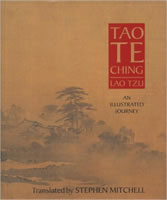
Tao Te Ching: An Illustrated Journey
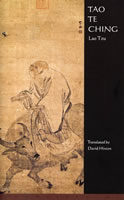
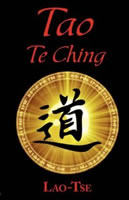
Tao Te Ching
The Book of Tao: Tao Te Ching - The Tao and Its Characteristics
Ripening Peaches: Taoist Studies and Practices
Taoism: Growth of a Religion
Zhuangzi (Chuang Tsu), Daoist Scripture: Bibliography, Links, Resources, Quotations, Notes
Zhuangzi: Basic Writings
Zhuangzi Speaks: The Music of Nature
Lifestyle Advice from Wise Persons
"A great warrior has said, "I dare not be the host, I would rather be the
guest;
I dare not advance an inch, I would rather retire a foot."
Now this I call filling in without marshalling the ranks;
baring the
arms without preparing to fight; grasping the sword without unsheathing
it;
and advancing upon the enemy without coming into conflict.
There is nothing so unfortunate as entering lightly into battle.
For in doing so we are in danger of losing that which is most precious.
Thus it happens that when opposing forces meet in battle, he who feels the pity of is assuredly conquers."
- Translated by
Walter Gorn Old, 1904, Chapter 69
"From using force a saying emerges: I dare not act like a ruler, but instead
I must act like a guest.
Do not venture an inch when you can withdraw a foot.
This is called progress without progressing.
Seize without seizing.
Apply force to no opponent.
Manage without weapons.
There is no greater calamity than disregarding the enemy.
Disregarding your enemy brings you close to the death of what you treasure.
When two armies meet and inspect each other, grieve for the winner!"
- Translated by
Alan Sheets and Barbara Tovey, 2002, Chapter 69
"A military expert has said:
'I do not dare put myself forward as a host, but
always act as a guest. I hesitate to advance an inch, but am willing to withdraw
a foot.'
This is advancing by not advancing, it is winning without arms, it is
charging without hostility, it is seizing without weapons.
There is no mistake
greater than making light of an enemy.
By making light of an enemy we lose our
treasure.
Therefore when well-matched armies come to conflict, the one who is conscious
of his weakness conquers."
- Translated by
Dwight Goddard and Henri Borel, 1919, Chapter 69
"Voici ce que disait un ancien guerrier:
Je n'ose donner le signal, j'aime mieux le recevoir.
Je n'ose avancer d'un pouce, j'aime mieux reculer d'un pied.
C'est ce qui s'appelle n'avoir pas de rang à suivre, de bras à étendre,
d'ennemis à poursuivre, ni d'arme à saisir.
Il n'y a pas de plus grand malheur que de résister à la légère.
Résister à la légère, c'est presque perdre notre trésor.
Aussi, lorsque deux armées combattent à armes égales, c'est l'homme le plus
compatissant qui remporte la victoire."
- Translated by Stanislas Julien, 1842, Chapter
69
Spanish
Language Versions of the Tao Te Ching (Daodejing)
Tao Te Ching en Español
Lao Tsé Tao Te Ching 
Tao Te Ching Traducido por Stephen Mitchell, versión española
Tao Te Ching Traducido al español por el Padre Carmelo Elorduy
Lao Tzu-The Eternal Tao Te Ching
Ripening Peaches: Taoist Studies and Practices By Mike Garofalo Maduración Duraznos: Estudios y Prácticas Taoístas por Mike Garofalo
Tao Te Ching
Lao Tzu - Tao Te Ching
Tao te king
Daodejing Español, Inglés, y Chino Versiones Lingüísticas de la Daodejing
Spanish Language Translations of the Tao Te Ching
"Los estrategas militares tienen un proverbio:
'Es preferible ser huésped que anfitrión.
Es preferible retroceder un pie
que avanzar una pulgada'.
Esto implica no hacer el primer movimiento.
A esto se llama
avanzar sin que lo parezca,
arremangarse sin desnudar los brazos,
capturar al enemigo sin enfrentarse a él,
empuñar las armas como si no estuvieran.
No hay peligro mayor
que subestimar al enemigo,
ya que el que lo hace pierde lo que atesora.
Los que toman las armas para pelear,
llevan la aflicción a muchas casas."
- Translation from
Wikisource, 2013,
Tao Te Ching,
Capítulo 69
"Hay un dicho sobre el uso de las armas:
No te apresures a ser anfítrión;
Ejerce, más bien, de huésped.
No te apresures a avanzar una pulgada;
Retrocede, máa bien, un pie.
Se dice que esto es avanzar sin avancar,
Golpear y retroceder sin extender el codo.
Apoderarte de tu adversario sin arma
Y conquistar sin tener adversario alguno.
No hay mayor desastre que despreciar a tud adversario;
Despreciar a tu adversario te conduce casi siempre
a perder tus tsoros
con la facilidad con que caen las hojas de los árboles.
Así cuando se enfrentan do rivales alzando las armas,
Vencerá el que lamenta luchar."
- Translated from Chinese to English by William Scott Wilson, Spanish
version by Alejandro Pareja, 2012,
Capítulo 69
"Existe un dicho entre los soldados:
“No me atrevo a hacer el primer movimiento;
preferiría ser el huésped.
No me atrevo avanzar una pulgada; más bien
preferiría retroceder un pie.”
Esto es avanzar sin aparentar moverse;
capturar el enemigo sin atacar;
estar armado sin armas.
No existe mayor catástrofe que desestimar al enemigo.
por desestimar al enemigo casi pierdo lo que valoro:
por lo mismo, cuando la batalla se libra,
el más débil vencerá."
- Translated by
Cristina Bosch, 2002, Capítulo 69
"Al recurrir a las armas hay un proverbio que dice :
“Mejor ser invitado que anfitrión,
mejor retroceder un metro que avanzar un centímetro”.
Esto se denomina: avanzar sin avanzar,
arremangarse sin mostrar los brazos,
dirigir sin armas,
lanzarse pero no contra el enemigo.
De todas las calamidades,
ninguna es mayor que subestimar al enemigo.
Al subestimar al enemigo,
corro el riesgo de perder mis tesoros.
Por lo tanto, cuando los ejércitos contrarios
se enfrentan en la batalla,
el que se apena, vence,
y eso es todo."
- Translated
by Álex Ferrara,
2003, Capítulo 69
"Entre los guerreros existe este proverbio: Mejor
es ser huésped que anfitrión.
Mejor es retroceder un pie que avanzar una
pulgada.
Esto se llama avanzar sin moverse.
Rechazar sin agitar los brazos.
Capturar al enemigo sin enfrentarse a él.
Conquistar sin emplear las armas.
No existe mal mayor que atacar con temeridad.
Desestimando al enemigo se
pierden los tesoros.
Por eso, entre dos ejércitos que combaten, aquél que no
ama la violencia, vencerá."
- Translation from
Logia Medio Dia, 2015,
Tao Te Ching, Capítulo 69
Created by Michael P. Garofalo, Green Way Research, Valley Spirit Center, Gushen Grove Notebooks, Vancouver, Washington © 2020 CCA 4.0
Next Chapter of the Tao Te Ching #70
Previous Chapter of the Tao Te Ching #68
Chapter and Thematic Index to the Tao Te Ching
Tao Te Ching
Commentary, Interpretations, Research Tools, Resources
Chapter 69
Das Tao Te King von Lao Tse. Complete versions of all 81 Chapters of the Tao Te Ching by many different translators in many languages: 124 English, 24 German, 14 Russian, 7 Spanish, 5 French and many other languages. Links are organized first by languages, and then alphabetically by translators. Formatting varies somewhat. The original website at Onekellotus went offline in 2012; but, the extensive collection of these Tao Te Ching versions was saved for posterity by the Internet Archive Wayback Machine and available as of 9/9/2015. This is an outstanding original collection of versions of the Daodejing─ the Best on the Internet. Caution: copyright infringement may sometimes be an issue at this website.
Tao Te Ching, Translations into English: Terebess Asia Online (TAO). 124
nicely formatted complete English language translations, on separate webpages, of the Daodejing.
Alphabetical index by translators. Each webpage has all 81 chapters of the Tao Te
Ching translated into English. A useful collection! Many
reformatted and colored versions from the original collection at
Das Tao Te King von Lao Tse. Caution: copyright infringement may
sometimes be an
issue at this website.
Lao Tzu: Te-Tao Ching - A New Translation Based on the Recently Discovered Ma-wang-tui
Texts (Classics of Ancient China)
Daodejing by Laozi: Chapters with Chinese characters, seal script,
detailed word by word concordance, Pinyin (tone#), German, French and English.
This is an outstanding resource for serious students of the Tao Te Ching.
Tao Te
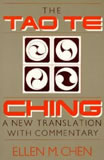
Ching: A New Translation and Commentary. By Ellen Chen. Paragon
House, 1998. Detailed glossary, index, bibliography, notes, 274 pages.
The Tao
and Method: A Reasoned Approach to the Tao Te Ching. By Michael
Lafargue. New York, SUNY Press, 1994. 640 pages. Detailed
index, bibliography, notes, and tables. An essential research tool.
Two Visions of the Way: A Study of the Wang Pi and the Ho-Shang Kung Commentaries on the Lao-Tzu.
By Professor by Alan Kam-Leung Chan. SUNY Series in Chinese
Philosophy and Culture. State University of New York Press, 1991.
Index, bibliography, glossary, notes, 314 pages.
ISBN: 0791404560.
Tao Te Ching: The Definitive Edition
Chinese Reading of the Daodejing
Wang Bi's Commentary on the Laozi with Critical Text and Translation.
By Professor Rudolf G. Wagner. A SUNY Series in Chinese Philosophy and
Culture. English and Mandarin Chinese Edition.
State University of New York Press; Bilingual edition (October 2003). 540
pages. ISBN: 978-0791451823.
Wang Bi (Wang Pi, Fusi), 226-249 CE,
Commentary on the Tao Te
Ching.
Tao Te Ching
The Taoism Reader
Lao Tzu's Tao Teh Ching, A Parallel Translation Collection. Compiled by B.
Boisen.
Comparison and Analysis of Selected English Interpretations of the Tao Te Ching.
By Damian J. Bebell and Shannon M. Fera.
The Lunar Tao: Meditations in Harmony with the Seasons
The Classic of the Way and Virtue: A New Translation of the Tao-te Ching of Laozi as Interpreted by Wang Bi.
Translated by Richard John Lynn. Translations from the Asian Classics
Series. Columbia University Press, 2004. 256 pages.
Tao Te Ching in Chinese characters,
Pinyin Romanization, English and German by Dr. Hilmar
Alquiros.
Yellow Bridge
Dao De Jing Comparison Table Provides side by side comparisons of
translations of the Tao Te Ching by James Legge, D. T. Suzuki, and Dwight
Goddard. Chinese characters for each paragraph in the Chapter are on the
left; place your cursor over the Chinese characters to see the Pinyin
Romanization of the Chinese character and a list of meanings.
Translators Index,
Tao Te Ching Versions in English, Translators Sorted Alphabetically by Translator, Links to Books and
Online Versions of the Chapters
Taoism and the Tao Te
Ching: Bibliography, Resources, Links
Spanish Language
Translations of the Tao Te Ching, Daodejing en Español, Translators Index
The Tao of Zen
Chapter 1 in the
Rambling
Taoist Commentaries by Trey Smith. The
Rambling Taoists are Trey Smith and Scott Bradley.
By Hans-Georg Moeller. Columbia University Press, 2006, 176 pages.
Valley Spirit, Gu Shen,
Concept, Chapter 6
Valley Spirit Center in Red
Bluff, California.
Sacred
Circle in the Gushen Grove.
Lao-tzu's Taoteching
Reading Lao Tzu: A Companion to the Tao Te Ching with a New Translation
Dao De Jing: A Philosophical Translation
Thematic Index to the
81 Chapters of the Tao Te Ching
Lieh-Tzu: A Taoist Guide to Practical Living
Revealing the Tao Te Ching: In-depth Commentaries on an Ancient Classic
Cloud Hands Blog
Mike Garofalo writes about Mind-Body Arts, Philosophy, Taoism, Gardening, Taijiquan, Walking, Mysticism,
Qigong, and the Eight Ways.
The Whole Heart of Tao:
The Complete Teachings From the Oral Tradition of Lao Tzu.
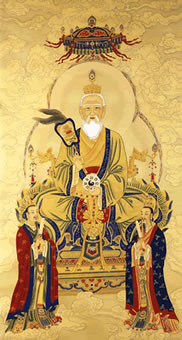
Gushen Grove Notebooks for the Tao Te Ching
Green Way Research, Valley Spirit
Center, Gushen Grove Notebooks (2001-2020)
East Los Angeles, California, 1946-1998;
Red Bluff, California from 1998-2017;
Vancouver, Washington from 2107-2020
Green Way Research, Tao Te Ching, Chapter 69, 2011-2020.
Indexed and Compiled by
Michael P. Garofalo
This webpage was last modified, edited,
maintained, expanded, improved or updated on
November 23, 2019.
This webpage was first distributed online on July 9, 2011.
Created by Michael P. Garofalo, Green Way Research, Valley Spirit Center, Gushen Grove Notebooks, Vancouver, Washington © 2020 CCA 4.0
Brief Biography of Michael P. Garofalo, M.S.

Ripening Peaches: Daoist Studies and Practices
Zhuangzi (Chuang Tzu, Zhuang Zhou, Master Chuang) 369—286 BCE
Taoist Perspectives: My Reading List
Bodymind Theory and Practices, Somaesthetics
How to Live a Good Life: Advice from Wise Persons
Qigong (Chi Kung) Health Practices
One Old Daoist Druid's Final Journey: Notebooks of the Librarian of Gushen Grove
Index to Cloud Hands and Valley Spirit Websites
Index to English Language Translators of the Tao Te Ching
Recurring Themes (Terms, Concepts, Leimotifs) in the Tao Te Ching
Spanish Language Translations of the Tao Te Ching
Chinese Characters, Wade-Giles (1892) and Hanyu Pinyin (1982) Romanizations
The Tao Te Ching (Dao De Jing) by Lao Tzu (Laozi) circa 500 BCE
|
Tao Te
Ching |
|||||||||
| 1 | 2 | 3 | 4 | 5 | 6 | 7 | 8 | 9 | 10 |
| 11 | 12 | 13 | 14 | 15 | 16 | 17 | 18 | 19 | 20 |
| 21 | 22 | 23 | 24 | 25 | 26 | 27 | 28 | 29 | 30 |
| 31 | 32 | 33 | 34 | 35 | 36 | 37 | 38 | 39 | 40 |
| 41 | 42 | 43 | 44 | 45 | 46 | 47 | 48 | 49 | 50 |
| 51 | 52 | 53 | 54 | 55 | 56 | 57 | 58 | 59 | 60 |
| 61 | 62 | 63 | 64 | 65 | 66 | 67 | 68 | 69 | 70 |
| 71 | 72 | 73 | 74 | 75 | 76 | 77 | 78 | 79 | 80 |
| 81 | |||||||||
Return to the Top of this Webpage

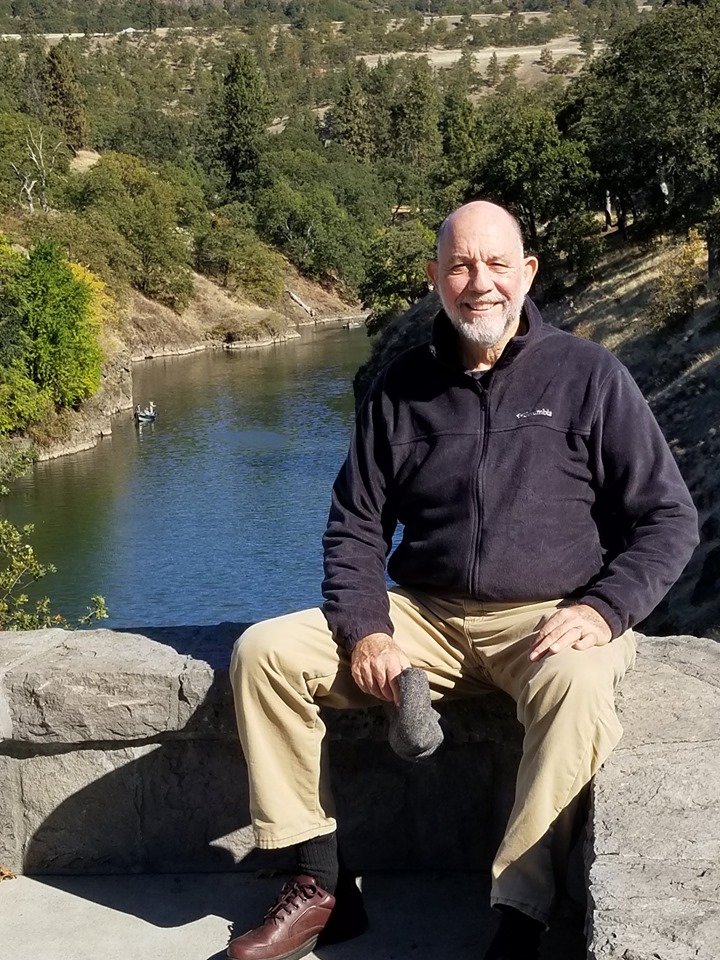
Mike Garofalo at the Klickitat River in Southwest Washington, 2019
Cloud Hands Blog of
Michael P. Garofalo

Facebook of
Michael P. Garofalo

Return to the Alphabetical
Index of Mike Garofalo's Hypertext Documents
Return to the Top of this Webpage