Classic of the Way and Virtue
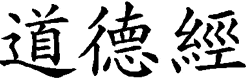
By Lao Tzu (Laozi)
Green Way Research, Valley Spirit Center, Gushen Grove Notebooks, Vancouver, Washington
Chapter 63 Chapter 65 Index to All the Chapters Taoism Cloud Hands Blog
Classic Book (Ching) about the Tao (Way, Nature, Patterns, Processes) and Te (Virtue, Potency, Power, Integrity, Wise Person, Sage)
Indexing, Concordance, Search Terms, Topics, Themes
English and Chinese (Wade-Giles) Terms: Don't Cling, Govern (chih),
Content or Peaceful or Rest or Sitting (an), The Journey of a Thousand Miles Begins
with a Single Step (ch'ien li chih hsing shih yü tsu), Easy (yi),
Hold or Grasp (ch'ih), Not Grasping, Appear or Manifest (chao),
Brittle or Fragile (ts'ui), Melt or Dissolve (p'an), Small or Minute (wei),
Disperse or Scatter (san), Act or Do (wei), Exist or Being (yu),
Govern or Rule (chih), Trouble or Disorder (luan), Join or Unite (ho),
Embrace or Hold (pao), Tree (mu), Embrace the Big Tree (pao mu),
Grows or Springs (shêng), Tiny (hao), Seed or Sprout (mo),
Nine Stories or Nine Levels (chiu ts'êng), Tower (t'ai), Rises or
High (ch'i), Heap or Pile (lei), Earth or Dirt (t'u), Thousand or
Many (ch'ien), Distance or .3 Mile (li), Journey (hsing), Feet
(tsu), Below (hsia), Fail or Ruin (pai), Seize (chih), Loss
(shih), Master or Sage (shêng jên), Transgressions (kuo),
Remain Careful to the End, Guarding the Small, Plan or Prevent (mou),
Great Things Have Humble Beginnings, Be Present Now,
Takes No Action or Does Not Act to Change (wu wei), Follow (ts'ung),
Affairs or Projects or Business (shih), Basics,
Twigs, Beginning, Constant or Always (ch'ang), Near (chi), Success
(ch'êng), Desire or Want (yü), Honor (kuei), Difficult (nan),
Obtain (tê), Treasures (huo), Learn (hsüeh), Return (fu),
All (chung), Missed (kuo), Assists (fu), Dare or Venture (kan), Naturalness, Simplicity, Few Desires, Do No Harm,
Careful or Cautious or Attention (shên), Concentration, Not Grasping, Break, Heedful, Leading, Guard the Minute,
Act (wei), Motionless, Sage, Ends, Heedful, Virtue, Order, Self Becoming (tzu-jan), Spontaneous (zifa), Ten
Thousand Things, Non-Attachment, 守微
Términos en Español:
No
te Aferres, Gobierno, El Viaje de Mil Millas Comienza con un Solo Ppaso, No
Agarrando, Árbol, Torre, Transgresiones, Sabio, Santo, Trastorno, Guarda el
Pequeño,
Trastorno, Grandes Cosas Tienen Principios Humildes, Estar Presentes Ahora,
Fundamentos, Ramitas, Viaje, Comienzo, Trabajo, Maestro, Deseo, Naturalidad,
Sencillez, Dispersión, Pocos Deseos, No Hacer Daño, Sentado,
Frágil, Atención, Concentración, No Agarrando, Atento, Fracaso, Facil, Liderar,
Guardia del Minuto, Ley, de Aprendizaje, Inmóvil, Extremos, Acción, Virtud,
Espontáneo, Diez Mil Cosas,
Contenido,
Pacífica, Resto, Sentado, Fácil,
Agarre, Aparecer,
Manifiesto, Prevenir, Frágil,
Disolver, Pequeño,
Minuto, Disperso,
Fundir, Dispersión,
Mantener,
Si lo hace, Existir,
Ser, Govern,
Regla, Trouble, Ingreso, ,
Mantenga, Árbol, Crece,
Springs, Tiny, Semilla, Brote,
Nueve Niveles, Rises,
Alta,
Unite, Embrace,
Brotar, Diminuto,
Pila, Tierra, Tierra,
Mil, Muchos,
Distancia, Milla, Fetichismo,
Paso, Abajo, Ruina, Pérdida,
Maestro, Sabio, Siga,
Relaciones, Proyectos, Empresas,
Siempre,
Cerca de, Éxito, Cuidadosa,
Prudente, Atención,
Quieres, Honra,
Obtener, Tesoros, Aprender,
Retorno, Todas, Perdidas, Asistencias,
Arteverse, Riesgo.
Electronic Concordance for Chapters 1 - 81 of the Tao Te Ching
English Language Translations of the Tao Te Ching
"When sitting still, they are easy to hold down
No omens yet, it is easy to plan
When fragile, they are easy to break
When small, they are easy to scatter.
Work on it when it isn't yet
Put it in order when it is not yet disordered.
A tree you can barely get your arms around grows from a tiny shoot
A nine-story tower begins as a heap of earth
A thousand mile journey begins under your feet.
Working ruins, grasping loses.
The wise person does not work, so does not ruin
Does not grasp, so does not lose.
'When the people are engaged in some task,
They are always on the point of finishing when they ruin it.'
Careful at the end just as at the beginning,
Then there will be no ruining of the work.
The wise person desires to be desireless
Does not prize goods hard to come by
Learns to be un-learned
Turns back to the place all others have gone on from.
So as to help the naturalness
Of the thousands of things
Without presuming to be a worker."
- Translated by
Michael
LaFargue, 1992, Chapter 64
"It is easier to maintain the status quo when things are established and
stabilised.
It is easier to correct things when the incipient signs of trouble have just
occurred.
Fragile things disintegrate quickly.
Minute things disperse readily.
You should act well before the rot has set in.
You should take effective measures before chaos arises.
A tree broader than a man's embrace grows from a tiny seedling.
The tallest tower starts from a clod of earth.
The longest journey begins with the first step.
He who schemes will fail, and he who grasps tightly will lose it.
Hence, the sage does not scheme and will not fail.
He does not hold fast so he will not lose it.
Failure usually occurs at the cusp of succeeding.
If you pay careful attention from start to finish, there will be few
failures.
What the sage wants is the opposite of what others want.
Hence, the sage does not covet rare objects.
The sage learns what others don't want to learn.
Thus, he avoids making mistakes that others commonly make.
The sage only facilitates.
He lets things evolve, but he does not interfere."
- Translated by Han Hiong Tan, Chapter 64
"Troubles can be avoided even before arising.
When harmony is maintained
beforehand,
Confusion is not able to surface.
By closing the door,
the entry is not possible,
A big tree was in its beginning a tiny offshoot,
Thus a great expedition starts with a little step.
The Wise Person
is not looking to gain anything,
He does not want glory or reputation.
Thus he cannot loose anything.
This is his living proof of achievements
without efforts."
- Translated by Sarbatoare, Chapter 64
"The Small Step
"What is secure is easily grasped,
What has no omens is easily forestalled,
What is brittle is easily split,
What is minuscule is easily dispersed.
Act before there is a problem;
Bring order before there is disorder.
A tree that fills the arms' embrace is born from a downy shoot;
A terrace nine layers high starts from a basketful of earth;
An ascent of a hundred strides begins beneath one's foot.
Who acts fails;
Who grasps loses.
For this reason,
The sage does not act.
Therefore,
He does not fail.
He does not grasp.
Therefore,
He does not lose.
In pursuing their affairs, people often fail when they are close to success.
Therefore,
If one is as cautious at the end as at the beginning, there will be no failures.
For this reason,
The sage desires to be without desire and does not prize goods that are hard to obtain;
He learns not to learn and reverts to what the masses pass by.
Thus,
he can help the myriad creatures be natural, but dares not act."
- Translated by
Victor H. Mair, 1990, Chapter 64
"When it is peaceful, it is easy to maintain
When it shows no signs, it is easy to plan
When it is fragile, it is easy to break
When it is small, it is easy to scatter
Act on it when it has not yet begun
Treat it when it is not yet chaotic
A tree thick enough to embrace
Grows from the tiny sapling
A tower of nine levels
Starts from the dirt heap
A journey of a thousand miles
Begins beneath the feet
The one who meddles will fail
The one who grasps will lose
Therefore, sages do not meddle and thus do not fail
They do not grasp and thus do not lose
People, in handling affairs
Often come close to completion and fail
If they are as careful in the end as the beginning
Then they would have no failure
Therefore, sages desire not to desire
They do not value goods that are hard to acquire
They learn to unlearn
To redeem the fault of the people
To assist the nature of all things
Without daring to meddle"
- Translated by
Derek Linn,
2006, Chapter 64
"It is easy to sustain what is at rest.
It is easy to plan for that of which there is not even a sign.
What is fragile is easily broken.
What is minute is easily dispersed.
Act upon it before it exists.
Regulate it before it becomes chaos.
A massive tree grows from a little sprout.
A nine-story building rises from a clod of earth.
A thousand fathoms begin with a single step.
Those who impose action upon it will fail.
Thos who cling to it will loose it.
So the sage, through non-action, does not fail.
Not clinging, he does not lose.
The common people's engagement in affairs fails prior to success.
So the saying goes,
"give as much careful attention to the end as to the beginning: then the affairs
will not fail"
It is on that account that the sage desires not to desire and does not value
goods that are hard to get.
He learns not to learn and restores the common people's losses.
He is able to support the nature of all things and , not by daring, to impose
action."
- Translated by
Edward Brennan and Tao Huang, 2002, Chapter 64

Created by Michael P. Garofalo, Green Way Research, Valley Spirit Center, Gushen Grove Notebooks, Vancouver, Washington © 2020 CCA 4.0
 By Alexander Simkins.
  By Derek Lin.
 By Ming-Dao Deng.
 By Benjamin Hoff.
How to Live a Good Life: Advice from Wise Persons
 By Ming-Dao Deng.
 Translated by Thomas Cleary.


"That which is at rest is easily kept hold of;
Before a thing has given indications of its presence, it is easy to take
measures against it;
That which is brittle is easily broken;
That which is very small is easily dispersed.
Action should be taken before a thing has made its appearance;
Order should be secured before disorder has begun.
The tree which fills the arms grew from the tiniest sprout;
The tower of nine stories rose from a small heap of earth;
The journey of a thousand li commenced with a single step.
He who acts with an ulterior purpose does harm;
He who takes hold of a thing in the same way loses his hold.
The sage does not act so, and therefore does no harm;
He does not lay hold so, and therefore does not lose his bold.
But people in their conduct of affairs are constantly ruining them when they are
on the eve of success.
If they were careful at the end, as they should be at the beginning, they would
not so ruin them.
Therefore the sage desires what other men do not desire, and does not prize
things difficult to get;
He learns what other men do not learn, and turns back to what the multitude of
men have passed by.
Thus he helps the natural development of all things, and does not dare to act
with an ulterior purpose of his own."
- Translated by
James Legge, 1891,
Chapter 64
"What is still at rest is easily kept quiet.
What has not as yet appeared is easily prevented.
What is still feeble is easily broken.
What is still scant is easily dispersed.
Treat things before they exist.
Regulate things before disorder begins.
The stout tree has originated from a tiny rootlet.
A tower of nine stories is raised by heaping up bricks of clay.
A thousand miles' journey begins with a foot.
He that makes mars.
He that grasps loses.
The holy man does not make; therefore he mars not.
He does not grasp; therefore he loses not.
The people when undertaking an enterprise are always near completion, and
yet they fail.
Remain careful to the end as in the beginning and you will not fail in your
enterprise.
Therefore the holy man desires to be desireless, and does not prize articles
difficult to obtain.
He learns, not to be learned, and seeks a home where multitudes of people
pass by.
He assists the ten thousand things in their natural development, but he does
not venture to interfere."
- Translated by
D. T. Suzuki and Paul Carus, 1913,
Chapter 64
"What is at rest is easy to maintain.
What has not yet happened is easy to plan.
That which is fragile is easily shattered
That which is tiny is easily scattered.
Correct problems before they occur.
Intervene before chaos erupts.
A tree too big around to hug is produced from a tiny sprout.
A nine-story tower begins with a mound of dirt.
A thousand-mile journey begins with your own two feet.
Whoever tries will fail.
Whoever clutches, loses.
Therefore the Sage, not trying, cannot fail
Not clutching, she cannot lose.
When people try,
They usually fail just on the brink of success.
If one is as cautious at the outset as at the end,
One cannot fail.
Therefore the Sage desires nothing so much
as to be desireless.
She does not value rare and expensive goods.
She unlearns what she was once taught
And helps the people regain what they have lost;
To help every being assume its natural way of being,
And not dare to force anything."
- Translated by
John R. Mabry, 1994, Chapter 64
"Silence is easy to break
future is easy to plan
gentle is easy to hurt
tiny is easy to lose
Look ahead, see forms before they become things
deal with them before they become
set them in order before they collide
See
the sequoia began as small as a bean sprout
the skyscraper began as a hole in the earth
the longest trip begins with the first step.
Act,
and you hurt
grab, and it slips away
own, and it is stolen
believe, and it is shown false.
The wise
do not act, and nothing is hurt
do not grab, and nothing slips
do not own, and nothing is lost
do not believe, and nothing is false
Others
fall short right before their long-awaited success.
The end is as important as the beginning,
thus the wise person
wants only the unwanted;
values the common, not the scarce;
teaches the things that others don't;
returns others to the past they left behind,
such that everything is valued for itself by itself
all done by not doing."
- Translated by Tom Kunesh, Chapter 64
"It's easy to embrace the tranquil
and easy to prevent trouble before omens appear.
It's easy for the trifling to melt away
and easy for the slight to scatter away.
Work at things before they've begun
and establish order before confusion sets in,
for a tree you can barely reach around
grows from the tiniest rootlet,
a nine-tiered tower
starts as a basket of dirt,
a thousand-mile journey
begins with a single step.
Work at things and you ruin them; cling to things and you lose them.
That's why a sage does nothing and so ruins nothing, clings to nothing and
so loses nothing.
When people devote themselves to something they always ruin it on the verge
of success.
Finish with the same care you took in beginning and you'll avoid ruining
things.
This is why a sage desires without desire,
never longing for rare treasures,
learns without learning,
always returning to what people have passed by,
helps the ten thousand things occur of themselves by never presuming to work
at them."
- Translated by
David Hinton, Chapter 64
"When things are stable, it is easy to hold.
When problems have not occurred, they are easy to cope with.
When things are brittle, they break easily.
When things are tiny, they dissolve easily.
Prepare for problems before they appear.
Put things in order before they become chaotic.
Giant trees grow from tiny seeds.
High-rise buildings start from the first mound of earth.
Long journeys begin with a first step.
People often fail when the tasks are close to complete.
If they keep working as diligently as the beginning, then they would not fail.
Sages want things others do not want.
They do not treasure rare goods.
They study things others ignore.
They remind themselves of others' mistakes.
They let everything develops naturally and do not dare to force it."
- Translated by
Thomas Zhang, Chapter 64
 By Hu Xuzehi
 Annotated translation by Victor Mair
  By Ha Poong Kim
 By Hans-Georg Moeller
 Ripening Peaches: Taoist Studies and Practices By Mike Garofalo
 By Roger T. Ames and David T. Hall
 By Arthur Waley
How to Live a Good Life: Advice from Wise Persons
"Tackle difficulties when they are easy,
Accomplish great things when they are small.
Handle what is going to be rough
when it is still smooth.
Control what has not yet formed its force.
Deal with a dangerous situation while it is safe.
Manage what is hard while it is soft.
Eliminate what is vicious
before it becomes destructive.
This is called "attending to great things at small beginnings.
A tree so big it can fill the span of a man's arms
grows from a tiny sprout.
A terrace nine stories high
rises from a shovel-full of earth.
A journey of a thousand miles
begins with a single step.
Thus, one of integral virtue
never sets about grandiose things,
yet is able to achieve great things.
Lightly made promises inspire little confidence.
Making light of things at the beginning,
one will meet with failure in the end.
Being prepared for hardship,
one will not be overcome by it.
In handing their affairs, people often ruin them
just as they are on the verge of success.
With heedfulness in the beginning
and all the way through to the end,
nothing is ruined."
- Translation by Hua-Ching Ni, 1979, Chapter 64
The Complete Works of Lao Tzu: Tao Teh Ching and Hua Hu Ching.
A Chinese Language Version of Chapter 64 of the Tao Te
Ching by Lao Tzu
A
note
on my style of displaying the Chinese characters of the Tao Te Ching
其安易持.
其未兆易謀.
其脆易泮.
其微易散.
為之於未有.
治之於未亂.
合抱之木, 生於毫末.
九層之臺, 起於累土.
千里之行, 始於足下.
為者敗之.
執者失之.
是以聖人無為故無敗.
無執故無失.
民之從事, 常於幾成而敗之.
慎終如始, 則無敗事.
是以聖人欲不欲, 不貴難得之貨.
學不學, 復衆人之所過, 以輔萬物之自然而不敢為.
- Chinese characters, Tao Te Ching,
Chapter 64
ch'i an yi ch'ih.
ch'i wei chao yi mou.
ch'i ts'ui yi p'an.
ch'i wei yi san.
wei chih yü wei yu.
chih chih yü wei luan.
ho pao chih mu, shêng yü hao mo.
chiu ts'eng chih t'ai, ch'i yü lei t'u.
ch'ien li chih hsing, shih yü tsu hsia.
wei chê pai chih.
chih chê shih chih.
shih yi shêng jen wu wei ku wu pai.
wu chih ku wu shih.
min chih ts'ung shih, ch'ang yü chi ch'êng erh pai chih.
shên chung ju shih tsê wu pai shih.
shih yi shêng jên yü pu yü, pu kuei nan tê chih huo.
hsüeh pu hsüeh, fu chung jên chih so kuo, yi fu wan wu chih tzu jan erh pu kan
wei.
- Wade-Giles Romanization, Tao Te Ching, Chapter 64
Audio
Version in Chinese of Chapter 64 of the Tao Te Ching
qi an yi chi.
qi wei zhao yi mou.
qi cui yi pan.
qi wei yi san.
wei zhi yu wei you.
zhi zhi yu wei luan.
he bao zhi mu, sheng yu hao mo.
jiu ceng zhi tai,
qi yu lei tu.
qian li zhi xing,
shi yu zu xia.
wei zhe bai zhi.
zhi zhe shi zhi.
shi yi sheng ren
wu wei gu wu bai.
wu zhi gu wu shi.
min zhi cong shi, chang yu ji cheng er bai zhi.
shen zhong ru shi
ze wu bai shi.
shi yi sheng ren yu bu yu, bu gui nan de zhi huo.
xue bu xue,
fu zhong ren zhi suo guo,
yi fu wan wu zhi zi ran er bu gan wei.
- Hanyu Pinyin Romanization, Daodejing, Chapter 64
Tao Te Ching in Chinese characters and English (includes a word by word key) from YellowBridge
Tao Te Ching in Chinese characters, Hanyu Pinyin (1982) Romanization, English and German by Dr. Hilmar Alquiros.
Laozi Daodejing: Chapters with Chinese characters, seal script, detailed word by word concordance, Pinyin (tone#), German, French and English.
Chinese and English Dictionary, MDGB
Dao De Jing Wade-Giles Concordance by Nina, Dao is Open
Dao De Jing English and Wade-Giles Concordance by Mike Garofalo
Tao Te Ching in Pinyin Romanization with Chinese characters, WuWei Foundation
Tao Te Ching in Pinyin Romanization
Tao Te Ching in Chinese characters and English
Tao Te Ching in Chinese characters, English, Word by word analysis, Zhongwen
Tao Te Ching: The Definitive Edition
Tao Te Ching in Chinese characters: Big 5 Traditional and GB Simplified
Chinese Characters, Wade-Giles and Pinyin Romanizations, and 16 English Translations for Each Chapter of the Daodejing by Mike Garofalo.
Tao Te Ching in Chinese characters, Wade-Giles and Pinyin Romanization spellings, English; a word for word translation of the Guodian Laozi Dao De Jing Version.
Lao Zi's Dao De Jing: A Matrix Translation with Chinese Text by Bradford Hatcher.
"What is at rest is easy to hold.
What is not yet manifested is easy to forestall.
What is brittle is easy to melt.
What is minute is easy to disperse.
Act before a thing is there; create order before there is disorder.
A tree of an arm's span has grown from a tiny fibre.
A tower nine storey's high was raised from a heap of earth.
A journey of a thousand leagues started with what was under one footstep.
In promoting their affairs men often spoil them when they are about to succeed.
Heed the end as much as the beginning, then no affairs will be spoiled.
Therefore the Saint desires not to desire and does not prize goods
that are difficult to obtain.
He learns not to learn and reverts to what
all men pass by.
Thus he sustains the natural course of the ten thousand thing, but he dares not act."
- Translated by
Jan J. L. Duyvendak, 1954, Chapter 64
"What is at rest is easy to grasp.
What has not yet happened is easy to plan for.
What is fragile is easily broken.
What is minute is easily scattered.
Act before it happens.
Exert control before it gets out of hand.
A tree that takes both arms to embrace starts off as a tiny shoot.
A nine story terrace starts with a basket of earth.
A journey of a thousand miles starts with a single step.
Those who force things to happen are defeated by them.
Those who cling to things lose them.
This is why wise people do not force issues and are not defeated.
They do not cling and they do not lose.
When people are engaged in enterprises;
it is always when they have nearly succeeded that they fail.
If we are as careful at the end as we were at the beginning,
then we will not fail in our ventures.
This is why wise people want not to want,
and do not value rare and expensive goods.
They learn what is not studied
and return to what others have ignored.
They assist all things in realizing their true nature,
yet they do not presume to interfere with them."
- Translated by
Roderic and Amy Sorrell, 2003, Chapter 64
"A tall tree requires deep roots, otherwise it will topple.
If a
problem is prevented, it doesn't arise.
If your attainment is brittle it
will easily shatter.
Small things are easily lost.
Don't take short
cuts, but deal with everything fully before moving on.
If you do this
your progress will be steady.
A mighty oak rises out of an acorn.
A
human develops out of a microscopic egg.
A thousand mile journey starts
with one step.
These processes cannot be completed in one act.
If you
try to make something great happen and overlook the processes involved,
you will fail.
Only by letting the process play out naturally can you
achieve the Tao.
Therefore the master doesn't try to achieve.
He simply
follows the process calmly from start to finish.
Death is stalking him,
so he has nothing to cling to.
His only desire is non-desire; his only
learning is to unlearn.
He shows people what they have always been.
He
loves nothing except the Tao.
Therefore he can love everything."
- Translated by
David Bullen, Chapter 64
"What stays still is easy to hold.
Without omens it is easy to plan.
The brittle is easy to shatter.
The minute is easy to scatter.
Handle things before they appear.
Organize things before there is confusion.
A tree as big as a person's embrace grows from a tiny shoot.
A tower nine stories high begins with a mound of earth.
A journey of a thousand miles begins under one's feet.
To act is to fail.
To grab is to lose.
Therefore the wise do not act and do not fail.
They do not grab and do not lose.
In handling things people usually fail
when they are about to succeed.
Be as careful at the end as at the beginning,
and there will be no failure.
Therefore the wise desire to have no desires.
They do not value rare treasures.
They learn what is unknown,
returning to what many have missed
so that all things may be natural without interference."
- Translated by
Sanderson Beck, 1996, Chapter 64, "Do Not Grab."
“What stays still is easy to hold;
Before there has been an omen it is easy to lay plans.
What is tender is easily torn,
What is minute is easy to scatter.”
Deal with things in their state of not-yet-being,
Put them in order before they have got into confusion.
For “the tree big as a man's embrace began as a tiny sprout,
The tower nine stories high began with a heap of earth,
The journey of a thousand leagues began with what was under the feet”.
He who acts, harms; he who grabs, lets slip.
Therefore the Sage does not act, and so does not harm;
Does not grab, and so does not let slip.
Whereas the people of the world, at their tasks,
Constantly spoil things when within an ace of completing them.
“Heed the end no less than the beginning,”
And your work will not be spoiled.
Therefore the Sage wants only things that are unwanted,
Sets no store by products difficult to get,
And so teaches things untaught,
Turning all men back to the things they have left behind,
That the ten thousand creatures may be restored to their Self-so.
This he does; but dare not act."
- Translated by
Arthur Waley, 1934, Chapter 64

"Remaining still, it is easy to hold.
Unmanifest and unforetold, there are no limits for the making of plans.
Being brittle, it is easy to shatter.
Being small, it is easy to disperse.
Deal then with formative troubles before catastrophic events occur -
Create order before confusion can begin.
Truly -
The giant tree begins as a tiny sprout.
The high tower begins as a heap of earth.
The long journey begins as a single step from where one stands.
Overt acting causes harm and failure.
Overt grasping causes loss.
Thus the Sage,
Acting not, neither harms or fails
. Grasping not, does not lose.
How often people fail as, using overt action,
They are just about to succeed.
Being as careful at the end as at the beginning,
Not interfering with the natural course of things,
Failure is averted.
Therefore The Sage:
- Desires to have what is unwanted.
- Values not objects which are difficult to obtain.
- Learns spontaneously without overt "Learning".
- Returns to the tried and true of old,
So that All Things are restored to their own true nature.
Acting spontaneously from inborn direction,
He avoids overt action."
- Translated by
Alan B. Taplow, 1982, Chapter 64
"What is at rest is easy to hold.
What has not shown up is easy to take
into account.
What is frail is easy to break. What is vague is easy to
dispel.
Do it before it exists; govern it before there's disorder.
The most massive tree grows from a sprout;
the highest building rises from a pile of earth;
a journey of a thousand miles begins with a single
step.
Those who contrive spoil it; those who cling lose it.
Thus sages
contrive nothing, and so spoil nothing.
They cling to nothing, and so
lose noting.
Therefore people's works are always spoiled on the verge of completion.
Be as careful of the end as of the beginning, and nothing will be
spoiled.
Thus sages want to have no wants;
they do not value goods hard to get.
They learn not learning to recover from people's excesses,
thereby to
assist the naturalness of all beings, without daring to contrive."
- Translated by
Thomas Cleary, 1991, Chapter 64
"What is at rest is easy to hold.
What manifests no omens is easily forestalled.
What is fragile is easily shattered.
What is small is easily scattered.
Tackle things before they have appeared.
Cultivate peace and order before confusion and disorder have set in.
A
tree as big as a man's embrace springs from a tiny sprout.
A tower nine stories high begins with a heap of earth.
A journey of a thousand leagues starts from where your feet stand.
He who fusses over anything spoils it.
He who grasps anything loses it.
The Sage fusses over nothing and therefore spoils nothing.
He grips at nothing and therefore loses nothing.
In handling affairs, people often spoil them just at the point of success.
With heedfulness in the beginning and patience
at the end, nothing will be spoiled.
Therefore, the Sage desires to be desireless,
Sets no value on rare goods,
Learns to unlearn his learning,
And induces the masses to return from where they have overpassed.
He only helps all creatures to find their own nature,
But does not venture to lead them by the nose."
- Translated by
John C. H. Wu, 1961, Chapter 64
"That which is motionless can be easily held;
That which has not been forecast can be easily planned;
Hat which is still tender can be easily broken;
That which is minute can be easily scattered.
Take things in hand before they come into existence;
Put things in order before they are in a state of confusion.
The tree which fills your arms' embrace brew from a tine shoot;
The nine-storey tower arose from a heap of earth.
The journey of a thousand miles began with the spot of earth covered by one's own feet.
He who acts, spoils. He who grasps, loses.
The Sage does ot act: therefore he does not spoil things.
He does no grasp; therefore he does not lose things.
But ordinary people, eagerly going about their business,
Often fail when the are on the verge of succeeding.
Keep watch on the end as well as on the beginning;
Then you will not fail.
Therefore the Sage:
Desires only the undesiring;
He does not value things that are hard to come by.
He learns how not to learn,
Turning back to those things which others have passed through,
And thus helps all creatures to fulfil their own natures.
But he does not venture to act."
- Translated by
Herman Ould, 1946, Chapter 64
"It is easy to control a situation when it is tranquil.
It is easy to deal with a matter before the omen is cast.
It is easy to break something when it is fragile.
It is easy to scatter something when it is minute.
Deal with things before they arise.
Govern a situation before it descends into disorder.
A huge tree as great as a man's arm-span grows from a tiny seed.
A nine-storey terrace rises from a pile of earth.
A thousand-mile journey starts from a single footstep.
He who acts to reach something will lead to its decline.
He who tries hard to hold on to something will lose it.
That is why the sage does nothing, and leads nothing to decline.
He does not hold on to anything, therefore he does not lose anything.
People often lead their actions to the verge of success, then fail.
Be careful to treat the end with equal care as the beginning.
Then you will not fail.
Therefore the sage desires not to desire, not to value precious goods,
to learn how not to learn, to cover the mistakes of the multitude,
to assist the myriad creatures according to the law of Nature.
Yet he dares not act."
- Translated by Chao-Hsiu Chen, Chapter 64
"It is easy to grasp what is not yet in motion, to withstand what is not
yet manifest, to break what is not yet compact, to disperse what is not
yet coherent. Act against things before they become visible; attend to
order before disorder ariseth.
The
tree which filleth the embrace grew from a small shoot; the tower
nine-storied rose from a low foundation; the ten-day journey began with a
single step.
He
who acteth worketh harm; he who graspeth findeth it a slip. The wise
man acteth not, so worketh no harm; he doth not grasp, and so doth not
let go. Men often ruin their affairs on the eve of success, because they
are not as prudent at the end as in the beginning.
The
wise man willeth what others do not will, and valueth not things
rare. He learneth what others learn not, and gathered up what they despise.
Thus he is in accord with the natural course of events, and is not overbold
in action."
- Translated (Interpolated) by
Aleister Crowley,
1918, Chapter 64
 Translation and elucidation by Hua Ching Ni
 Translated by Brian Walker
 Translated by Arthur Waley
How to Live a Good Life: Advice from Wise Persons
 Translated by Lionel and and Herbert Giles
 By Eva Wong

"Before it move, hold it,
Before it go wrong, mould it,
Drain off water in winter before it freeze,
Before weeds grow, sow them to the breeze.
You can deal with what has not happened, can foresee
Harmful events and not allow them to be.
Though-- as naturally as a seed becomes a tree of arm-wide girth-
There can rise a nine-tiered tower from a man's handful of earth
Or here at your feet a thousand-mile journey have birth,
Quick action bruises,
Quick grasping loses.
Therefore a sane man's care is not to exert
One move that can miss, one move that can hurt.
Most people who miss, after almost winning,
Should have 'known the end from the beginning.'
A sane man is sane in knowing what things he can spare,
In not wishing what most people wish,
In not reaching for things that seem rare.
The cultured might call him heathenish,
This man of few words, because his one care
Is not to interfere but to let nature renew
The sense of direction men undo."
- Translated by
Witter Bynner,
1944, Chapter 64
"That which lies still is easy to hold;
That which is not yet manifest is easy to forestall;
That which is brittle (like ice) easily melts;
That which is minute easily scatters.
Deal with a thing before it is there;
Check disorder before it is rife.
A tree with a full span's girth begins from a tiny sprout;
A nine-storied terrace begins with a clod of earth.
A journey of a thousand li beings at one's feet.
He who acts, spoils;
He who grasps, lets slip.
Because the Sage does not act, he does not spoil,
Because he does not grasp, he does not let slip.
The affairs of men are often spoiled within an ace of
completion.
By being careful at the end as at the beginning
Failure is averted.
Therefore the Sage desires to have no desire,
And values not objects difficult to obtain.
Learns that which is unlearned,
And restores what the multitude have lost.
That he may assist in the course of Nature
And not presume to interfere."
- Translated by
Lin Yutang, 1955,
Chapter 64
"What is at rest is easy to hold;
What is not yet begun is easy to plan.
What is thin is easy to melt;
What is minute is easy to disperse.
Deal with things before they emerge;
Put them in order before there is disorder.
A tree of many arm spans is produced from a tiny sprout.
A tower of nine stories is raised from a pile of earth.
A journey of a thousand miles begin with a footstep.
Those who act on things, spoil them;
Those who seize things, lose them.
Thus Evolved Individuals do nothing;
Hence they spoil nothing.
They seize nothing;
Hence they lose nothing.
People often spoil their work at the point of its completion.
With care at the end as well as the beginning,
No work will be spoiled.
Thus Evolved Individuals desire to be desireless
And do not treasure goods that are hard to get.
They learn without learning,
By returning to the place where the Collective Mind passes.
In this way they assist All Things naturally
Without venturing to act."
- Translated by
R. L. Wing, 1986, Chapter 64
This webpage work is licensed under a Creative Commons Attribution-NonCommercial-NoDerivatives 4.0 International License.
Created by Michael P. Garofalo, Green Way Research, Valley Spirit Center, Gushen Grove Notebooks, Vancouver, Washington © 2020 CCA 4.0
Tao Te Ching
Lao Tzu: Tao Te Ching
 Translated by Livia Kohn
How to Live a Good Life: Advice from Wise Persons
Dao De Jing: The Book of the Way
"What is secure is easy to hold
What has yet to begin is easy to plan for
What is thin is easy to break up
What is minute is easy to scatter
Attend to things before they come to be
Arrange things before they entangle
A tree which fills the joined embrace
Has grown from a slender shoot
A tower which reaches nine stories
Begins as a basket of earth
A journey of a thousand li
Begins from beneath the feet
Those who interfere spoil things
Those who grab lose things
This is why wise ones do not interfere and so do not spoil
Do not grab and so do not lose
People in their pursuits & affairs
(are) ever on the verge of achieving and still ruin things
Take care at the end as well as at the beginning
And then there will be no ruined affairs
This is why wise ones desire to have no desires
Do not prize goods which are hard to obtain
Learn to unlearn
And return to what everyone else has passed by
Thus helping the myriad beings to realize themselves
While not presuming to interfere"
- Translated by
Bradford Hatcher,
2005, Chapter 64
"What’s stable is easy to secure,
The unmanifest to plan against,
The fragile to splinter,
The incipient to dissolve.
Act before events occur:
Decision can prevent disorder.
A tree of girth
Grows from a twig.
A nine-tier tower
From a basket of earth;
And a thousand-mile journey
Begins where one stands.
Those who take the lead shall fail.
Those who cling lose hold.
This is why men of wisdom,
Taking no lead, do not fail,
Not clinging, do not lose hold.
How often do people, assuming a task,
Ruin it at the verge of success?
Hence the saying,
“Careful at the end as at the start,
And your task shall not abort.”
This is why the worldly wise
Seek what others do not seek,
“Prize not goods hard to find,”
Learn what others do not learn:
Redeem the wrongs many have done.
In this way support and sustain
The self-becoming of the myriad,
And do not presume to act upon them."
- Translated by
Moss Roberts,
2001, Chapter 64
"What has equilibrium is easy to maintain.
What hasn't begun is easy to
plan.
What is fragile is easy to shatter.
What is small is easy to
scatter.
Deal with things before they arise.
Cultivate order before confusion sets in.
The tallest tree springs from a tiny shoot.
The tallest tower is built
from a pile of dirt.
A journey of a thousand miles begins at your feet.
Interfere with things, and you'll be defeated by them.
Hold on to
things, and you'll lose them.
The sage doesn't interfere, so he doesn't
fail; doesn't hold on, so he doesn't lose.
Because projects often come to ruin just before completion, he takes as
much care at the end as he did at the beginning, and thereby succeeds.
His only desire is to be free of desire.
Fancying nothing, learning not
to know, electing not to interfere, he helps all beings become
themselves."
- Translated by
Brian Browne Walker, 1996, Chapter 64
 Translated by Eva Wong
  Translated by Philip Ivahoe
 By James Miller
 Translated by Stephen Bokencamp
How to Live a Good Life: Advice from Wise Persons
By Alexander and Annellen Simpkins Translated by Thomas Cleary
 By Livia Kohn


"That which has balance is easy to maintain.
That which has not arisen is easy to forestall.
That which is brittle is easy to shatter.
That which is minuscule is easy to scatter.
Therefore, manage problems before they arise;
Create order before disorder sets in.
A tree as large as the arms' embrace grows from a downy shoot.
A terrace nine stories high rises from a shovelful of earth.
A journey of a thousand miles begins with a single step.
One who acts from the delusion of grandiosity fails.
One who clings to the delusion of grandiosity loses.
The sage does not act from delusion, and therefore he does not fail,
Nor does he cling to delusion, and therefore he does not lose.
Because of the delusion of grandiosity,
On the verge of success, people often fail.
If they would take as much care at the end as at the beginning,
They would not fail in their affairs.
The sage does not desire what the masses desire;
He does not treasure what the masses treasure.
He studies what the masses do not study;
He returns to the source of knowledge ignored by the masses.
Thus, without acting in delusion,
The sage supports all beings as they naturally exist."
- Translated by
Yasuhiko Genku Kimura,
Chapter 64
"Easy it is to guide what is still at rest to forestall what is not yet
manifest to bend what is still weak to master what is still small.
Therefore, put order into things in their not-yet-being.
Guide in the bud what will later be awkward and unmanageable.
The strongest tree grows from a tiny rootlet the highest house rises from a
clod of earth a journey of a thousand miles begins with the first step.
Interfering disturbs and spoils grasping causes disappearance and loss.
Therefore the Sage:
Not grasping he does not disturb and spoil.
Not interfering he does not lose.
The masses instead busily greedily interfering grasping for plenitude are at
an end before completion ...
They would not fail before the goal if they took care of the beginning
as of the end of the small as of the great!
Follow the Sage:
Content with little he does not fail.
Heeding what is unheeded letting things ripen and biding his time he follows
the wisdom of non-action and attains what belongs to him."
- Translated by
K. O. Schmidt, 1975, Chapter 64
"Things are easier to control while things are quiet.
Things are easier to plan far in advance.
Things break easier while they are still brittle.
Things are easier hid while they are still small.
Prevent problems before they arise.
Take action before things get out of hand.
The tallest tree
begins as a tiny sprout.
The tallest building
starts with one shovel of dirt.
A journey of a thousand miles
starts with a single footstep.
If you rush into action, you will fail.
If you hold on too tight, you will lose your grip.
Therefore the Master lets things take their course
and thus never fails.
She doesn't hold on to things
and never loses them.
By pursing your goals too relentlessly,
you let them slip away.
If you are as concerned about the outcome
as you are about the beginning,
then it is hard to do things wrong.
The master seeks no possessions.
She learns by unlearning,
thus she is able to understand all things.
This gives her the ability to help all of creation."
- Translated by
John H. McDonald, 1996, Chapter 64
Walking the Way: 81 Zen Encounters with the Tao Te Ching
The Tao of Zen
How to Live a Good Life: Advice from Wise Persons
Tao Te Ching: Zen Teachings on the Taoist Classic
Buddhism and Taoism Face to Face: Scripture, Ritual, and Iconographic Exchange in Medieval China

"His Restfulness is easily maintained.
Events foreseen by him are easily arranged for.
By him weak things are easily bent,
And small things are easily scattered.
He can stop an evil before it comes into existence.
He can keep a twig straight before it becomes crooked.
Behold the girth of this tree!
It grew from a small filament of a stalk.
This tower of nine stories has its base upon a small space on the earth.
The journey of a thousand miles began with a footstep on the ground.
He who makes, unmakes.
He who grasps, lets go.
That is why the self-controlled man by Inner Life can make and by Inner
life unmake,
by Inner Life can grasp and by Inner Life let go.
Men in business affairs come near perfection, then fail.
If they were as attentive at the end as at the beginning their business would succeed.
That is why the self-controlled man desires to have no wishes;
he sets
no value upon rare objects; he learns without study;
he helps all beings
by the outflow of his personality;
and he does this without planning to
do it."
- Translated by
Isabella Mears, 1916, Chapter 64
"When everything is peaceful, don't forget the danger;
When things are safe, don't lose your edge -
A brittle thing can break
easily
And a small thing fragment.
So
'act before it happens'.
'order things before chaos breaks out'.
A
great tree which takes a crowd to span its base
Started from being a tiny seed;
And a tower nice sections high began in the ground.
A journey of a thousand miles starts with the first step.
To
act as if you know it all is catastrophic:
and if you try to control it
you
will stare into your empty hand."
- Translated by
Man Ho Kwok, Martin Palmer, and Jay Ramsay, 1993, Chapter 64
"What is motionless is easy to hold;
What is not yet foreshadowed is easy to form plans for;
What is fragile is easy to break;
What is minute is easy to disperse.
Deal with a thing before it comes into existence;
Regulate a thing before it gets into confusion.
The common people in their business often fail on the verge of succeeding.
Take care with the end as you do with the beginning,
And you will have no failure."
- Translated by
Ch'u Ta-Kao, 1904, Chapter 64
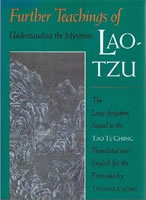
Further Teachings of Lao-Tzu: Understanding the Mysteries (Wen Tzu)
 Translated by Thomas Cleary
The Lunar Tao: Meditations in Harmony with the Seasons
 By Lui I-Ming (1780) and translated by Thomas Cleary
Ripening Peaches: Taoist Studies and Practices By Mike Garofalo
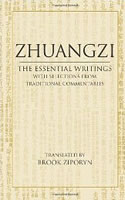
Zhuangzi: The Essential Writings with Selections from Traditional Commentaries
How to Live a Good Life: Advice from Wise Persons
The Inner Chapters of Chuang Tzu (Zhuangzi) Translated by A. C. Graham


"That which is at rest is easy to be kept hold of,
And what has made no sign, and is yet concealed from all,
Is easy to be taken care of then by proper measures,
Break it while it is feeble, scatter it while it is small.
Act before it exists, regulate before disorder,
The mighty tree that fills the arms has grown from a tiny sprout,
From a little mound of earth was raised the tower of nine stories,
And the journey of a thousand miles began with the first step out.
He that makes mars, he that grasps loses;
The sage will neither make, nor mar, nor grasp, and cannot lose,
But people fail in business, on the verge of its succeeding,
By losing at the end the care they first began to use.
And so the sage does not desire the things desired by others,
He does not prize the treasures that are difficult to obtain,
He learns what others do not learn, he turns back to their leavings,
And helps spontaneous nature, but
dares not to constrain."
- Translated by
Isaac Winter Heysinger, 1903, Chapter 64
|
Tao Te
Ching |
|||||||||
| 1 | 2 | 3 | 4 | 5 | 6 | 7 | 8 | 9 | 10 |
| 11 | 12 | 13 | 14 | 15 | 16 | 17 | 18 | 19 | 20 |
| 21 | 22 | 23 | 24 | 25 | 26 | 27 | 28 | 29 | 30 |
| 31 | 32 | 33 | 34 | 35 | 36 | 37 | 38 | 39 | 40 |
| 41 | 42 | 43 | 44 | 45 | 46 | 47 | 48 | 49 | 50 |
| 51 | 52 | 53 | 54 | 55 | 56 | 57 | 58 | 59 | 60 |
| 61 | 62 | 63 | 64 | 65 | 66 | 67 | 68 | 69 | 70 |
| 71 | 72 | 73 | 74 | 75 | 76 | 77 | 78 | 79 | 80 |
| 81 | |||||||||
"What is at rest is easy to hold;
What has not yet appeared is easy to plan.
What is fragile is easy to shatter;
What is small is easy to scatter.
Act before the problem happens;
Manage before disorder arises.
A tree as big as one's embrace springs from a tiny sprout;
A tower with nine stories starts from a heap of earth;
A walk of a thousand miles begins from where one stands.
One who acts will fail;
One who becomes attached will lose.
Therefore, the sage, without acting, does not fail,
Without becoming attached, does not lose.
The people, in doing, fail at the point of success.
One should be as cautious at the end as at the beginning;
Then there will be no failure.
Therefore, the sage desires to be desireless
And does not value rare treasures,
Learns to be unlearned
And reforms the faults of people.
He aids all things in their natural development
And dares to not act on them."
- Translated by
Yi Wu, Chapter 64
"Was noch ruhig ist, läßt sich
leicht ergreifen.
Was noch nicht hervortritt, läßt sich leicht bedenken.
Was noch zart ist läßt sich leicht zerbrechen.
Was noch klein ist läßt sich leicht zerstreuen.
Man muß wirken auf das, was noch nicht da ist.
Man muß ordnen, was noch nicht in Verwirrung ist.
Ein Baum von einem Klafter Umfang entsteht aus einem haarfeinem Hälmchen.
Ein neun Stufen hoher Turm entsteht aus einem Häuflein Erde.
Eine tausend Meilen weite Reise beginnt vor deinen Füßen.
Wer handelt, verdirbt es.
Wer festhält, verliert es.
Also auch der Berufene:
Er handelt nicht, so verdirbt er nichts.
Er hält nicht fest, so verliert er nichts.
Die Leute gehen an ihre Sachen, und immer wenn sie fast fertig sind,
so verderben sie es.
Das Ende ebenso in acht nehmen wie den Anfang, dann gibt es keine verdorbenen
Sachen.
Also auch der Berufene: Er wünscht Wunschlosigkeit.
Er hält nicht wert schwer zu erlangende Güter.
Er lernt das Nichtlernen.
Er wendet sich zu dem zurück, an dem die Menge vorüber geht.
Darum fördert er den natürlichen Lauf der Dinge und wagt nicht zu handeln."
- Translated by Richard Wilhelm, 1911, Chapter
64
"Lebensmeisterung durch Beachten der Lebensgesetze
Was noch verharrt, kann leicht festgehalten werden.
Was noch nichts gilt, kann leicht beeinflusst werden.
Was noch schwach ist, kann leicht gebrochen werden.
Was noch federleicht ist, kann leicht verweht werden.
Bevor etwas wird, muß man auf es wirken.
Bevor etwas verwirrt ist, muß man es ordnen.
Jeder Riese unter den Bäumen
hatte einmal ein einziges Wurzelhaar.
Auch ein neunstöckiger Bau erstand auf einer Scholle.
Eine Reise von tausend Meilen
beginnt mit einem ersten Schritt.
Wer etwas (wider die Gesetze des Lebens) erreichen will,
der muß scheitern.
Wer etwas mit Gewalt gewinnen will, der muß es verlieren.
Daher ist der Weyse nicht eigenwillig,
und daher scheitert er auch nicht.
Er reisst nichts an sich, daher verliert er nichts.
Die andern scheitern oft kurz vor dem Ziel,
weil sie nicht auf die rechte Stunde warten können.
Würden sie Anfang und Ende bedenken,
würde es ihnen auch gelingen.
Darum erstrebt der Weyse die Wunschlosigkeit;
er erstrebt nichts, was andern erstrebenswert erscheint.
Ihm bedeutet Verstandeswissen nichts.
Was nicht beachtet wird, beachtet er.
So erwirkt er des Lebens Ordnung in sich
und andern und stört niemals die Entwicklung aus sich selbst."
- Translated
by Rudolf
Backofen, 1949, Chapter 64
"At rest is easy to hold.
Not yet impossible is easy to plan.
Brittle is easy to break.
Fine is easy to scatter.
Create before it exists.
Lead before it goes astray.
A tree too big to embrace Is born from a slender shoot.
A nine-story
rises from a pile of earth.
A thousand-mile journey Begins with a single
step.
Act and you ruin it.
Grasp and you lose it.
Therefor,e the Sage Does not
act
And so does not ruin
Does not grasp
And so does not lose.
People commonly ruin their work When they are near success.
Proceed at
the end as at the beginning
And your work won't be ruined.
Therefore the Sage Desires no desires
Prizes no prizes
Studies no
studies
And returns
To what others pass by.
The Sage helps all beings
find their nature,
But does not presume to act."
- Translated by
Stephen Addiss, 1993, Chapter 64
This webpage work is licensed under a Creative Commons Attribution-NonCommercial-NoDerivatives 4.0 International License.
Created by Michael P. Garofalo, Green Way Research, Valley Spirit Center, Gushen Grove Notebooks, Vancouver, Washington © 2020 CCA 4.0
Tao Te Ching: An Illustrated Journey
 Translated by David Hinton
The Book of Tao: Tao Te Ching - The Tao and Its Characteristics
Ripening Peaches: Taoist Studies and Practices
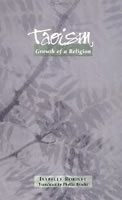
Taoism: Growth of a Religion
How to Live a Good Life: Advice from Wise Persons
Zhuangzi (Chuang Tsu), Daoist Scripture: Bibliography, Links, Resources, Quotations, Notes
Zhuangzi: Basic Writings
Zhuangzi Speaks: The Music of Nature



"What is small is easily held.
What is expected is easily provided for.
What is brittle is easily broken.
What is small is soon dispersed.
Transact your business before it takes shape.
Regulate things before confusion begins.
The tree which fills the arms grew from a tender shoot.
The castle of nine stories was raised on a heap of earth.
The journey of a thousand miles begins with one step.
Whoever designs only destroys.
Whoever grasps, loses.
The Sage does not act thus, therefore he does no harm.
He does not grasp, and therefore he never loses.
But the common people, in their undertakings, fail on the eve of success.
If they were as prudent at the end as they are at the beginning, there would be no such failures.
Therefore the Sage is only ambitious of what others despise, and sets no value on things difficult to obtain.
He acquires no common learning, but returns to that which people have passed by.
Thus he aims at simple development in all things, and acts without design."
- Translated by
Walter Gorn Old, 1904, Chapter 64
"It is easy to maintain a situation while it is still secure;
It is easy to deal with a situation before symptoms develop;
It is easy to break a thing when it is yet brittle;
It is easy to dissolve a thing when it is yet minute.
Deal
with a thing while it is still nothing;
Keep a thing in order before disorder sets in.
A
tree that can fill the span of a man's arms
Grows from a downy tip;
A terrace nine storeys high
Rises from hodfuls of earth;
A journey of a thousand miles
Starts from beneath one's feet.
Whoever
does anything to it will ruin it;
Whoever lays hold of it will lose it.
Therefore
the sage, because he does nothing, never ruins anything;
And, because he does not lay hold of anything, loses nothing.
In
their enterprises the people
Always ruin them when on the verge of success.
Be as careful at the end as at the beginning
And there will be no ruined enterprises.
Therefore
the sage desires not to desire
And does not value goods which are hard to come by;
Learns to be without learning
And makes good the mistakes of the multitude
In order to help the myriad creatures to be natural and to refrain from daring
to act."
- Translated by
D. C. Lau, 1963, Chapter 64
"Ce qui est calme est aisé à maintenir; ce
qui n'a pas encore paru est aisé à prévenir
Ce qui est faible est aisé à briser; ce qui est menu est aisé à disperser.
Arrêtez le mal avant qu'il n'existe; calmez le désordre avant qu'il n'éclate.
Un arbre d'une grand circonférence est né d'une racine aussi déliée qu'un
cheveu;
Une tour de neuf étages est sortie d'une poignée de terre; un voyage de mille
lis à commencé par un pas!
Celui qui agit échoue, celui qui s'attache à une choses la perd.
De là vient que le Saint n'agit pas, c'est pourquoi il n'échoue point.
Il ne s'attache à rien, c'est pourquoi il ne perd point.
Lorsque le peuple fait une chose, il échoue toujours au moment de réussir.
Soyez attentif à la fin comme au commencement, et alors vous n'échouerez jamais.
De là vient que le Saint fait consister ses désirs dans l'absence de tout désir.
Il n'estime point les biens d'une acquisition difficile.
Il fait consister son étude dans l'absence de toute étude, et se préserve des
fautes des autres hommes.
Il n'ose pas agir afin d'aider tous les êtres à suivre leur nature."
- Translated by Stanislas Julien, 1842, Chapter
64
Spanish
Language Versions of the Tao Te Ching (Daodejing)
Tao Te Ching en Español
Lao Tsé Tao Te Ching 
Tao Te Ching Traducido por Stephen Mitchell, versión española
Tao Te Ching Traducido al español por el Padre Carmelo Elorduy
How to Live a Good Life: Advice from Wise Persons Consejos de Estilo de Vida de Sabios
Lao Tzu-The Eternal Tao Te Ching
Ripening Peaches: Taoist Studies and Practices By Mike Garofalo Maduración Duraznos: Estudios y Prácticas Taoístas por Mike Garofalo
Tao Te Ching
Lao Tzu - Tao Te Ching
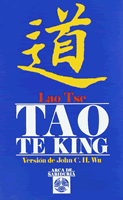
Tao te king
Daodejing Español, Inglés, y Chino Versiones Lingüísticas de la Daodejing



Spanish Language Translations of the Tao Te Ching
"Lo que está en reposo es fácil de retener.
Lo que no ha sucedido es fácil de resolver.
Lo que es frágil es fácil de romper.
Lo que es pequeño es fácil de dispersar.
Prevenir antes de que suceda,
y ordenar antes de que aparezca el desorden.
El árbol que casi no puede rodearse con los brazos,
brotó de una semilla minúscula.
La torre de nueve pisos,
comenzó siendo un montón de tierra.
Un viaje de mil leguas,
comienza con el primer paso.
Al manejar sus asuntos, la gente suele estropearlos
justo al borde de su culminación.
Prestando total atención al principio y con paciencia al final,
nada se echa a perder.
Por eso, el Sabio carece de deseos,
no codicia los bienes de difícil alcance,
aprende a olvidar lo que le habían inculcado.
Le devuelve a los hombres la fluidez que han perdido,
y así, sin dominarlos,
favorece la evolución natural de los diez mil seres."
- Translation from
Wikisource, 2013,
Tao Te Ching, Capítulo 64
"Lo que aún está quieto es fácil de coger.
Lo que aún no se manifiesta es fácil de tener en cuenta.
Lo que aún es frágil se puede quebrar con facilidad.
Lo que aún es pequeño puede dispersarse fácilmente.
Hay que influir en lo que no existe todavía.
Hay que ordenar lo que aún no está desordenado.
Un árbol cuyo grosor es de una braza,
nace de un tallo fino como un cabello.
Una torre de nueve plantas
se levantará con un montículo de tierra.
Un viaje de mil millas
empieza con un solo paso.
Actuar es estropear.
Retener es perder.
El Sabio no actúa, y así no estropea nada.
No se aferra, y nada pierde.
La gente se ocupa de sus asuntos,
y siempre, poco antes de acabar,
lo estropean todo.
Si se cuidara tanto el final como el principio,
no habría asuntos arruinados.
Lo que el Sabio desea es no tener deseos.
No valora los bienes de difícil alcance.
Aprende el No-aprender.
Se vuelve y ve aquello en que la gente no repara.
Así, favorece el curso natural de las cosas,
y no se arriesga a actuar."
- Translation into Spanish from
Richard Wilhelm's 1911
German
Version by an Unknown Spanish Translator,
2015, Capítulo 64
"Lo que está en reposo es fácil de retener.
Lo que no ha sucedido es fácil de resolver.
Lo que es frágil es fácil de romper.
Lo que es menudo es fácil de dispersar.
Prevenir antes de que suceda,
y ordenar antes de la confusión.
El árbol que casi no puede rodearse con los brazos,
brotó de un germen minúsculo.
La torre de nueve pisos,
comenzó por un montón de tierra. El viaje de mil,
empezó con un paso.
Quien actúa, fracasa.
Quien tiene, pierde,
Por esto, el sabio nada hace y no fracasa;
nada posee, y nada pierde.
El hombre suele malograr la obra cuando va a concluirla.
Cuidando del final como del principio,
ninguna obra se perdería.
Por esto, el sabio aspira a no desear nada
y a despreciar lo valioso.
Aprende a no aprender,
regresa por el camino que los demás ya han recorrido,
y así, sin atreverse a obrar,
favorece la evolución natural de todos los seres."
- Spanish Version Online at
RatMachines,
Tao Te Ching, Capítulo 64
"Lo que está en equilibrio es fácil de mantener.
Lo que aún no ha emergido es fácil de concebir.
Lo frágil es fácil de disolver.
Lo diminuto es fácil de dispersar.
Actuar cuando aún no hay nada que hacer.
Gobernar cuando aún nada está en desorden.
Un árbol de enorme perímetro
comienza con un brote muy pequeño.
Una torre de nueve pisos
se construye a partir de un puñado de tierra.
Un viaje de miles de LI
se inicia con un paso.
El que interfiere, fracasa.
El que se aferra, pierde.
Por lo tanto el sabio no interfiere y entonces no fracasa,
no se aferra y entonces no pierde.
Cuando la gente lanza sus proyectos,
a menudo fracasa a punto de terminarlos.
Si fueran tan cuidadosos al final como lo fueron al principio, no habría
fracasos.
Por lo tanto el sabio desea no desear,
no atesora bienes difíciles de conseguir;
aprende a no aprender,
restaura las transgresiones de la gente.
Ayudando en la espontaneidad de los diez mil seres,
no osa actuar."
- Translated
by Álex Ferrara,
2003, Capítulo 64
"Las cosas pasivas son fáciles de plasmar.
Lo que
no manifiesta malos indicios es fácil de predecir.
Lo que es frágil es fácil de
romper.
Lo que es liviano es fácil de dispersar.
Haz los utensilios que aún no
se han hecho.
Ordena las cosas antes que se hayan desordenado.
Un árbol que
apenas se puede abrazar nació de una minúscula raíz.
Una torre de nueve pisos
nació de un montículo de tierra.
Un viaje de mil millas comenzó con un solo
paso.
El que mucho se agita en hacer algo, terminará equivocándose.
El que se
apega a algo terminará perdiéndolo.
Por eso el hombre sabio no se agita por
nada y nunca se equivoca, no se apega a nada y nada pierde.
En sus negocios, el hombre vulgar siempre termina malogrando las cosas.
Si cuidas el final como
el comienzo, nada perderás.
Por lo tanto, el hombre sabio: Desea no desear.
No da valor a las cosas difíciles de obtener.
Aprender lo que no se puede
aprender, es su doctrina.
Enseña al pueblo a volver sobre sus pasos.
Ayuda a
las cosas de acuerdo a su naturaleza y no hace nada para forzarlas."
- Translation from
Logia Medio Dia, 2015,
Tao Te Ching, Capítulo 64
Created by Michael P. Garofalo, Green Way Research, Valley Spirit Center, Gushen Grove Notebooks, Vancouver, Washington © 2020 CCA 4.0
Next Chapter of the Tao Te Ching #65
Previous Chapter of the Tao Te Ching #63
Chapter and Thematic Index to the Tao Te Ching
Tao Te Ching
Commentary, Interpretations, Research Tools, Resources
Chapter 64
Das Tao Te King von Lao Tse. Complete versions of all 81 Chapters of the Tao Te Ching by many different translators in many languages: 124 English, 24 German, 14 Russian, 7 Spanish, 5 French and many other languages. Links are organized first by languages, and then alphabetically by translators. Formatting varies somewhat. The original website at Onekellotus went offline in 2012; but, the extensive collection of these Tao Te Ching versions was saved for posterity by the Internet Archive Wayback Machine and available as of 9/9/2015. This is an outstanding original collection of versions of the Daodejing─ the Best on the Internet. Caution: copyright infringement may sometimes be an issue at this website.
Tao Te Ching, Translations into English: Terebess Asia Online (TAO). 124
nicely formatted complete English language translations, on separate webpages, of the Daodejing.
Alphabetical index by translators. Each webpage has all 81 chapters of the Tao Te
Ching translated into English. A useful collection! Many
reformatted and colored versions from the original collection at
Das Tao Te King von Lao Tse. Caution: copyright infringement may
sometimes be an
issue at this website.
Lao Tzu: Te-Tao Ching - A New Translation Based on the Recently Discovered Ma-wang-tui
Texts (Classics of Ancient China)
Daodejing by Laozi: Chapters with Chinese characters, seal script,
detailed word by word concordance, Pinyin (tone#), German, French and English.
This is an outstanding resource for serious students of the Tao Te Ching.
Tao Te
Ching: A New Translation and Commentary. By Ellen Chen. Paragon
House, 1998. Detailed glossary, index, bibliography, notes, 274 pages.
The Tao
and Method: A Reasoned Approach to the Tao Te Ching. By Michael
Lafargue. New York, SUNY Press, 1994. 640 pages. Detailed
index, bibliography, notes, and tables. An essential research tool.
Two Visions of the Way: A Study of the Wang Pi and the Ho-Shang Kung Commentaries on the Lao-Tzu.
By Professor by Alan Kam-Leung Chan. SUNY Series in Chinese
Philosophy and Culture. State University of New York Press, 1991.
Index, bibliography, glossary, notes, 314 pages.
ISBN: 0791404560.
Tao Te Ching: The Definitive Edition
Chinese Reading of the Daodejing
Wang Bi's Commentary on the Laozi with Critical Text and Translation.
By Professor Rudolf G. Wagner. A SUNY Series in Chinese Philosophy and
Culture. English and Mandarin Chinese Edition.
State University of New York Press; Bilingual edition (October 2003). 540
pages. ISBN: 978-0791451823.
Wang Bi (Wang Pi, Fusi), 226-249 CE,
Commentary on the Tao Te
Ching.
Tao Te Ching



The Taoism Reader
Change Your Thoughts - Change Your Life: Living the Wisdom of the Tao
The Routledge Encyclopedia of Taoism.
Lao Tzu's Tao Teh Ching, A Parallel Translation Collection. Compiled by B.
Boisen.
Tao Te Ching: The Book of the Way. Revised by Sam Torode based on the
translation by Dwight Goddard, 1919. Independent Pub., 2009, 88 pages.
Tao Te Ching: Annotated
and Explained. By Derek Lin. Foreword by Lama Surya Das.
Skylight Illuminations, SkyLight Paths, 2006. 208 pages.
Comparison and Analysis of Selected English Interpretations of the Tao Te Ching.
By Damian J. Bebell and Shannon M. Fera.
Practicing the Tao Te Ching: 81 Steps on the Way. By Solala Towler.
Foreword by Chunglang Al Huang. Sounds True, 2016. 320 pages.
The Lunar Tao: Meditations in Harmony with the Seasons
The Classic of the Way and Virtue: A New Translation of the Tao-te Ching of Laozi as Interpreted by Wang Bi.
Translated by Richard John Lynn. Translations from the Asian Classics
Series. New York, Columbia University Press, 1999. Extensive index,
glossaries, notes, 244 pages.
Tao Te Ching in Chinese characters,
Pinyin Romanization, English and German by Dr. Hilmar
Alquiros.
Yellow Bridge
Dao De Jing Comparison Table Provides side by side comparisons of
translations of the Tao Te Ching by James Legge, D. T. Suzuki, and Dwight
Goddard. Chinese characters for each paragraph in the Chapter are on the
left; place your cursor over the Chinese characters to see the Pinyin
Romanization of the Chinese character and a list of meanings.
Translators Index,
Tao Te Ching Versions in English, Translators Sorted Alphabetically by Translator, Links to Books and
Online Versions of the Chapters
Taoism and the Tao Te
Ching: Bibliography, Resources, Links
Spanish Language
Translations of the Tao Te Ching, Daodejing en Español, Translators Index
The Tao of Zen
Chapter 1 in the
Rambling
Taoist Commentaries by Trey Smith. The
Rambling Taoists are Trey Smith and Scott Bradley.
By Hans-Georg Moeller. Columbia University Press, 2006, 176 pages.
Valley Spirit, Gu Shen,
Concept, Chapter 6
Valley Spirit Center in Red
Bluff, California.
Sacred
Circle in the Gushen Grove.
Lao-tzu's Taoteching
Reading Lao Tzu: A Companion to the Tao Te Ching with a New Translation
Dao De Jing: A Philosophical Translation
Thematic Index to the
81 Chapters of the Tao Te Ching
Lieh-Tzu: A Taoist Guide to Practical Living
Revealing the Tao Te Ching: In-depth Commentaries on an Ancient Classic
Cloud Hands Blog
Mike Garofalo writes about Mind-Body Arts, Philosophy, Taoism, Gardening, Taijiquan, Walking, Mysticism,
Qigong, and the Eight Ways.
The Whole Heart of Tao:
The Complete Teachings From the Oral Tradition of Lao Tzu.
Chapter 64 of the Dao De Jing by Laozi
Commentary, Study Aides, Resources, Related Thoughts, Reflections
"Precisely the least, the
softest, lightest, a lizard's rustling, a breath, a flash, a moment - a
little makes the way of the best happiness."
- Frederich Nietzsche, Thus Spake Zarathustra


Gushen Grove Notebooks for the Tao Te Ching
Green Way Research, Valley Spirit
Center, Gushen Grove Notebooks (2001-2020)
East Los Angeles, California, 1946-1998;
Red Bluff, California from 1998-2017;
Vancouver, Washington from 2017-2020
Green Way Research, Tao Te Ching, Chapter 64, 2011-2020.
Compiled and
Indexed by
Michael P. Garofalo
This webpage was last modified, edited,
maintained, expanded, improved or updated on
November 25, 2019.
This webpage was first distributed online on July 4, 2011.
Created by Michael P. Garofalo, Green Way Research, Valley Spirit Center, Gushen Grove Notebooks, Vancouver, Washington © 2020 CCA 4.0
Brief Biography of Michael P. Garofalo, M.S.

Ripening Peaches: Daoist Studies and Practices
Zhuangzi (Chuang Tzu, Zhuang Zhou, Master Chuang) 369—286 BCE
Taoist Perspectives: My Reading List
Bodymind Theory and Practices, Somaesthetics
How to Live a Good Life: Advice from Wise Persons
Qigong (Chi Kung) Health Practices
One Old Daoist Druid's Final Journey: Notebooks of the Librarian of Gushen Grove
Index to Cloud Hands and Valley Spirit Websites
Index to English Language Translators of the Tao Te Ching
Recurring Themes (Terms, Concepts, Leimotifs) in the Tao Te Ching
Spanish Language Translations of the Tao Te Ching
Chinese Characters, Wade-Giles (1892) and Hanyu Pinyin (1982) Romanizations
The Tao Te Ching (Dao De Jing) by Lao Tzu (Laozi) circa 500 BCE
|
Tao Te
Ching |
|||||||||
| 1 | 2 | 3 | 4 | 5 | 6 | 7 | 8 | 9 | 10 |
| 11 | 12 | 13 | 14 | 15 | 16 | 17 | 18 | 19 | 20 |
| 21 | 22 | 23 | 24 | 25 | 26 | 27 | 28 | 29 | 30 |
| 31 | 32 | 33 | 34 | 35 | 36 | 37 | 38 | 39 | 40 |
| 41 | 42 | 43 | 44 | 45 | 46 | 47 | 48 | 49 | 50 |
| 51 | 52 | 53 | 54 | 55 | 56 | 57 | 58 | 59 | 60 |
| 61 | 62 | 63 | 64 | 65 | 66 | 67 | 68 | 69 | 70 |
| 71 | 72 | 73 | 74 | 75 | 76 | 77 | 78 | 79 | 80 |
| 81 | |||||||||
Return to the Top of this Webpage

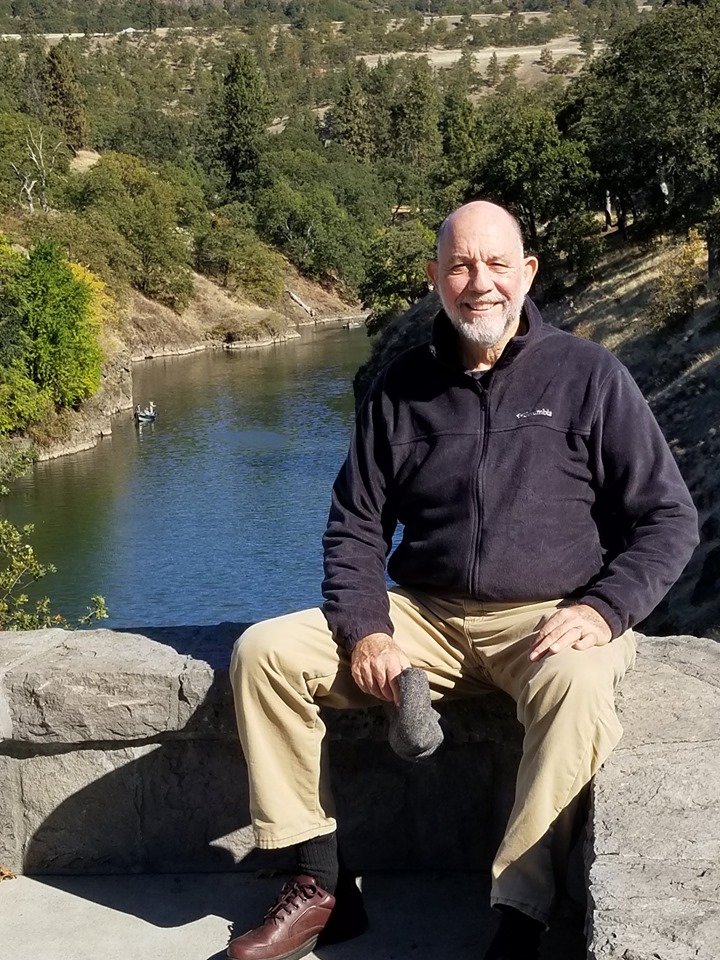
Mike Garofalo at the Klickitat River in Southwest Washington, 2019
Cloud Hands Blog of
Michael P. Garofalo

Facebook of
Michael P. Garofalo

Return to the Alphabetical
Index of Mike Garofalo's Hypertext Documents
Return to the Top of this Webpage