Classic of the Way and Virtue
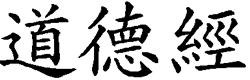
By Lao Tzu (Laozi)
Green Way Research, Valley Spirit Center, Gushen Grove Notebooks, Vancouver, Washington
Chapter 46 Chapter 48 Index to All the Chapters Daoism Concordance Cloud Hands Blog Commentary
Classic Book (Ching) about the Tao (Way, Nature, Patterns, Processes) and Te (Virtue, Potency, Power, Integrity, Wise Person, Sage)
Indexing, Concordance, Search Terms, Topics, Themes, Keys, Subjects
English and Chinese (Wade-Giles) Terms, Chapter #47:
Not (pu), Going Out or Stepping Out (ch'u), Sage or Holy Man or
Wise Man (shêng jên), Know (chih), Door, Watch or Look (k'uei), Window
(yu), Present, Here and Now,
Discovering the Distant, See (chien), Seeing the Distant, Heaven (t'ien),
Distant or Removed (yüan), Staying Present and Aware,
Avoid
Theorizing, Go Out or Go Forth (ch'u), Stay Home, Travel, Dao, Non-Action,
Little or Few (shao), Wandering, Immediate,
Surroundings, Holy or Saintly (shêng), Acting, Names or Comprehends (ming), Accomplishment
or Completes (ch'êng),
Self-Discovery, Tao, Heaven, Naming, Do or Does (wei), Self-Discovery, Awareness, Quiet,
Discovery, 鑒遠
Chapter #47 Tao Te Ching 2/22D/2021
Términos en Español, Capítulo #47: Sabio, Santos,
Puerta, Ventana,
Presente, Aquí y Ahora, Descubriendo el
Distante, Ver el
Distante, Estar
Presentes y Conscientes, Evite
Teorización,
Quédese en Casa, Viajes, No-acción,
Inmediata, Entorno, Actuar,
Realización, Cielo,
Conciencia, Descubrimiento, Vagar, Tranquilo, Pacífico,
No,
Que Va, Paso a Paso,
Conocer, Comentar, Cielo,
Distante, Coimpletes, Hacer.
Capítulo #47
Daodejing 2/22D/2021
Electronic Concordance for all 81 Chapters of the Tao Te Ching
English Language Translations of the Tao Te Ching
"The wise leader knows what is happening in a group by
being aware of what is happening here and now.
This is more potent than wandering off into various theories or making complex
interpretations of the situation at hand.
Stillness, clarity, and consciousness are more immediate than any number of
expeditions into the distant lands of one's mind.
Such expeditions, however stimulating, distract both the leader and the group
members from what is actually happening.
By staying present and aware of what is happening, the leader can do less yet
achieve more."
- Translated by
John Heider, 1985,
Chapter 47
"Without stepping (ts'u) out the door,
Know (chih) the world.
Without looking out the window,
See (chien) the Tao of Heaven.
The farther one comes out,
The less one knows.
Therefore the sage knows (chih) without travelling,
Names (ming) things without seeing (chien) them,
Accomplishes (cheng) without work (wei)."
- Translated by
Ellen Marie Chen, 1989, Chapter 47
"Without going out of the gate,
One is aware of the world.
Without peering outside,
One sees the way of heaven.
The farther away one is,
The less one is aware.
Therefore, the wise is aware of all things
Without moving a step.
He identifies all things
Without looking at them.
He completes all things
Without action."
- Translated by
Chung-Yuan Chang, Chapter 47
"Without going out of your door, you are aware of the world.
Without looking out of your window, you see the Way of Heaven.
The farther one goes, the less one knows.
Thus, the sage knows without going out, sees without looking, and achieves
without doing."
- Translated by
Tien Cong Tran, Chapter 47
"They know the world without even going out the door.
They see the sky and its pattern without even looking out the window.
The further out it goes, the less knowledge is;
Therefore sages know
without going, name without seeing, complete without striving."
- Translated by
Thomas Cleary, 1991, Chapter 47
"Without going out the door, know the world.
Without peeking out the windows, see the Celestial Tao.
The more distant one’s going-out
The less one’s knowledge is.
Therefore, the sages
Do not travel, and yet know
Do not see, and yet clearly understand
Do not “do,” and yet complete their work."
- Translated by
Aalar Fex, 2006, Chapter 47
"No need to go outside a door
To see totality
Or look out of a window
For seeing what will always be
Going out you go astray
At home and center all is one
The seer doesn't have to do
To see that everything is done."
- Translated by
Jim Clatfelter, 2001, Chapter 47

This webpage work is licensed under a Creative Commons Attribution-NonCommercial-NoDerivatives 4.0 International License.
Created by Michael P. Garofalo, Green Way Research, Valley Spirit Center, Gushen Grove Notebooks, Vancouver, Washington © 2011-2021 CCA 4.0
 By Hu Xuzehi
 Annotated translation by Victor Mair
  By Ha Poong Kim
 By Hans-Georg Moeller
 Ripening Peaches: Taoist Studies and Practices By Mike Garofalo
 By Roger T. Ames and David T. Hall
 By Arthur Waley
Lifestyle Advice from Wise Persons
"Without traveling, we
could know the world.
Without looking through the window, we could see the Tao of heaven.
The farther you go, the less you know.
Thus the sage knows without traveling.
He knows things without actually seeing them.
He success without effort."
- Translated by
Tienzen Gong,
Chapter 47
"Don't step outside your
door. Know the social world.
Don't look out the window. See the natural guide.
The farther you go
the less you know what to do.
Using this: Sages don't go anywhere and yet know what to do.
Don't see and yet name things.
Don't deem-act and yet accomplish. "
- Translated by
Chad Hansen,
Chapter 47
"Without leaving his door one can understand the world.
Without glancing out the window one can see the Tao of heaven.
The further one travels the less one knows.
That is why the Sage does not travel and yet understands.
Does not look and yet names.
Does not act and yet completes."
- Translated by
Tam C. Gibbs, 1981, Chapter 47
"Without leaving the door one may know the course of the world.
Without looking through the window one may see the law of nature.
The maximum extreme possesses a minimum of knowledge.
Hence a sage ruler knew without traveling;
designated without seeing;
and accomplished without interfering."
- Translated by
Tang Zi-Chang, Chapter 47
"Without stirring out of the house,
One can know everything in the world;
Without looking out of the window,
One can see the Tao of heaven.
The further one travels,
The less one knows.
That is why the sage
Knows everything without going out;
Sees the Tao of heaven without looking out of the window;
Succeeds without resorting to action."
- Translated by
Gu Zengkun, Chapter 47
 Translation and elucidation by Hua Ching Ni
 Translated by Brian Walker
 Translated by Arthur Waley
 Translated by Lionel and and Herbert Giles
 By Eva Wong

"You don't have to leave
your room
to understand what's happening in the world.
You don't have to look out the window
to appreciate the beauty of heaven.
The farther you wander,
the less you know.
The Masters don't wander around
They know.
They don't just look.
They understand.
They don't do anything,
but the work gets done."
- Translated by
Ron Hogan, Chapter
47
A Chinese Language Version of Chapter 47 of
the Tao Te Ching by Lao Tzu
A
note
on my style of displaying the Chinese characters of the Tao Te Ching
不出戶, 知天下.
不闚牖, 見天道.
其出彌遠, 其知彌少.
是以聖人不行而知.
不見而名,
不為而成.
- Chinese characters, Tao Te Ching, Chapter 47
pu ch'u hu, chih t'ien hsia.
pu k'uei yu, chien t'ien tao.
ch'i ch'u mi yüan, ch'i chih mi shao.
shih yi shêng jên pu hsing erh chih.
pu chien erh ming,
pu wei erh ch'êng.
- Wade-Giles Romanization, Tao Te Ching, Chapter 47
Audio
Version in Chinese of Chapter 47 of the Tao Te Ching
bu chu hu, zhi tian xia.
bu kui you, jian tian dao.
qi chu mi yuan, qi zhi mi shao.
shi yi sheng ren bu xing er zhi.
bu jian er ming,
bu wei er cheng.
-  Pinyin Romanization, Daodejing, Chapter 47
Tao Te Ching in Chinese characters and English (includes a word by word key) from YellowBridge
Tao Te Ching in Chinese characters, Hanyu Pinyin (1982) Romanization, English and German by Dr. Hilmar Alquiros.
Laozi Daodejing: Chapters with Chinese characters, seal script, detailed word by word concordance, Pinyin (tone#), German, French and English.
Chinese and English Dictionary, MDGB
Dao De Jing Wade-Giles Concordance by Nina, Dao is Open
Dao De Jing English and Wade-Giles Concordance by Mike Garofalo
Tao Te Ching in Pinyin Romanization with Chinese characters, WuWei Foundation
Tao Te Ching in Pinyin Romanization
Tao Te Ching in Chinese characters and English
Tao Te Ching in Chinese characters, English, Word by word analysis, Zhongwen
Tao Te Ching: The Definitive Edition
Tao Te Ching in Chinese characters: Big 5 Traditional and GB Simplified
Chinese Characters, Wade-Giles and Pinyin Romanizations, and 16 English Translations for Each Chapter of the Daodejing by Mike Garofalo.
Tao Te Ching in Chinese characters, Wade-Giles and Pinyin Romanization spellings, English; a word for word translation of the Guodian Laozi Dao De Jing Version.
Lao Zi's Dao De Jing: A Matrix Translation with Chinese Text by Bradford Hatcher.
"A man may know the world without leaving his own home.
Through his windows he can see the supreme Tao.
The further afield he goes the less likely is he to find it.
Therefore the wise man knows without travelling,
names things without seeing them, and accomplishes everything without action."
- Translated by
Robert Gorn-Old,
1904, Chapter 47
 By Alexander Simkins.
  By Derek Lin.
 By Ming-Dao Deng.
 By Benjamin Hoff.
 By Ming-Dao Deng.
 Translated by Thomas Cleary.

"Without going out the door, you can know Heaven below
(the sacred body).
Without looking through a window, you can see Heaven’s Tao.
The more you go away from yourself, the less you perceive.
The sage does not go out, yet knows;
does not look, yet names;
does not do, yet finishes."
- Translated by
Barbara Tovey,
2002, Chapter 47
"Because you are at one with Infinity,
you can experience the world without
leaving your home.
Without looking out the window
you can see the manifestations of Infinity.
The further you carry your distinctions
and your judgments,
the more confused and lost you become.
Thus the sage experiences all things
without traveling;
without looking she sees Infinity.
She works without laboring."
- Translated by
John Worldpeace, Chapter 47
"Without opening your door,
you can know the whole world.
Without looking out your window,
you can understand the way of the Tao.
The more knowledge you seek,
the less you will understand.
The Master understands without leaving,
sees clearly without looking,
accomplishes much without doing anything."
- Translated by
John H. McDonald, 1996, Chapter 47
This webpage work is licensed under a Creative Commons Attribution-NonCommercial-NoDerivatives 4.0 International License.
Created by Michael P. Garofalo, Green Way Research, Valley Spirit Center, Gushen Grove Notebooks, Vancouver, Washington © 2011-2021 CCA 4.0
 Translated by Eva Wong
  Translated by Philip Ivahoe
 By James Miller
 Translated by Stephen Bokencamp
By Alexander and Annellen Simpkins
Translated by Stephen Bokencamp
By Alexander and Annellen Simpkins Translated by Thomas Cleary
 By Livia Kohn


"Without
leaving your house
without looking outside
you can understand
the whole world.
The more you search
the less you will find
the more information you acquire
the less you will know
the more you travel
the less you will feel at home.
Arrive without leaving
see without looking
do nothing yet everything."
- Translated by
Tom Kunesh,
Chapter 47
"Without stepping out of the house,
You can know what is going on in the world.
Without peering out the window,
You can understand the way of Dao.
The farther you travel, the less you really know.
Therefore, the sage knows without having to travel.
Without seeing for himself, he can understand the law of nature.
Without meddling, he accomplishes easily."
- Translated by
Han Hiong Tan, Chapter 47
"One need not pass his threshold to comprehend all that is under Heaven,
nor to look out from his lattice to behold the Tao Celestial.
Nay! but
the farther a man goeth, the less he knoweth.
The
sages acquired their knowledge without travel; they named all things
aright without beholding them; and, acting without aim, fulfilled their wills."
- Translated by
Aleister Crowley, 1918, Chapter 47
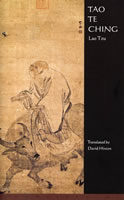
Tao Te Ching
Lao Tzu: Tao Te Ching
 Translated by Livia Kohn
Dao De Jing: The Book of the Way

"You can know the whole world without going out the
door,
You can know the Way of Heaven without looking out the window.
The further afield you go, the less you know.
The Tao–Master knows without going out;
understands without looking;
achieves without ado."
- Translated by
George Cronk,
1999, Chapter 47
"Everything under heaven may be known by
Searching no further than one's doorstep.
All ways of heaven may be known
Despite shutters blacking the window's view.
The further one pursues knowledge by
traveling apart from the unity of the Tao,
The less is one's true knowledge and understanding.
The Sage:
Knows without searching about.
Understands without looking about.
Wu-Wei ! - Doing nothing, all is attained."
- Translated by
Alan B. Taplow, 1982, Chapter 47
"Without going out-of-doors, one can know all he needs to know.
Without
even looking out of his window, one can grasp the nature of everything.
Without going beyond his own nature, one can achieve ultimate wisdom.
Therefore the intelligent man knows all he needs to know without going
away,
And he sees all he needs to see without looking elsewhere,
And
does all he needs to do without undue exertion."
- Translated by
Archie J. Bahm, 1958, Chapter 47
Walking the Way: 81 Zen Encounters with the Tao Te Ching
The Tao of Zen
Tao Te Ching: Zen Teachings on the Taoist Classic
Buddhism and Taoism Face to Face: Scripture, Ritual, and Iconographic Exchange in Medieval China


"Without going out of my door I know the Universe.
Without opening my window I perceive Heavenly Tao.
The more I go abroad, the less I understand.
That is why the self-controlled man arrives without going,
names things without seeing them, perfects without activity."
- Translated by
Isabella Mears, 1916, Chapter 47
"Without opening your door,
you can open your heart to the world.
Without looking out your window,
you can see the essence of the Tao.
The more you know,
the less you understand.
The Master arrives without leaving,
sees the light without looking,
achieves without doing a thing."
- Translated by
Edwin Shaw, 1996, Chapter 47
"There is no need
to run outside
For better seeing,
Nor to peer from a window. Rather
abide
At the center of your being;
For the more you leave it, the less you
learn.
Search your heart and see
If he is wise who takes each turn:
The
way to do is to be."
- Translated by
Witter Bynner, 1944, Chapter 47
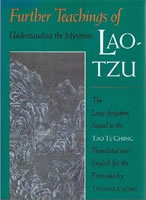
Further Teachings of Lao-Tzu: Understanding the Mysteries (Wen
Tzu)
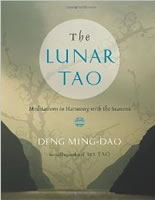
The Lunar Tao: Meditations in Harmony with the Seasons
 By Lui I-Ming (1780) and translated by Thomas Cleary
Ripening Peaches: Taoist Studies and Practices By Mike Garofalo
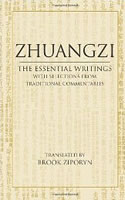
Zhuangzi: The Essential Writings with Selections from Traditional Commentaries

"Without going beyond his doorway
One may know all beneath the sky,
Without peeping out from his window
See the Tao of Heaven go by;
And the farther he goes from home he finds
That knowledge becomes less nigh.
So the sages did not travel
To acquire a knowledge of things,
They named them aright without wasting
Their life in vain journeyings;
And, striving not, accomplished ends
By the power which quietude
brings."
- Translated by
Isaac Winter Heysinger, 1903, Chapter 47
|
Tao Te
Ching |
|||||||||
| 1 | 2 | 3 | 4 | 5 | 6 | 7 | 8 | 9 | 10 |
| 11 | 12 | 13 | 14 | 15 | 16 | 17 | 18 | 19 | 20 |
| 21 | 22 | 23 | 24 | 25 | 26 | 27 | 28 | 29 | 30 |
| 31 | 32 | 33 | 34 | 35 | 36 | 37 | 38 | 39 | 40 |
| 41 | 42 | 43 | 44 | 45 | 46 | 47 | 48 | 49 | 50 |
| 51 | 52 | 53 | 54 | 55 | 56 | 57 | 58 | 59 | 60 |
| 61 | 62 | 63 | 64 | 65 | 66 | 67 | 68 | 69 | 70 |
| 71 | 72 | 73 | 74 | 75 | 76 | 77 | 78 | 79 | 80 |
| 81 | |||||||||
"Without going out the door,
Know the world.
Without peeping through the
window,
See heaven's Tao.
The further you travel,
The less you know.
This is why the Sage
Knows without budging,
Identifies without looking,
Does without trying."
- Translated by Stephen Addis, 1993, Chapter 47
"Der Weg zur Menschen- und Welterkenntnis
Um die Welt zu erkennen, brauch' ich nicht in sie zu gehen.
Das Geheimnis der Welt kann ich erschauen,
ohne aus dem Fenster zu sehen.
Je weiter einer in die Ferne schweift,
um so geringer wird sein Erkennen.
Der Weyse kommt zu seiner Erkenntnis ohne Wissensdrang;
er kommt an Seyn Ziel ohne Anstrengung;
er vollendet seinen Weg mühelos."
- Translated
by Rudolf
Backofen, 1949, Chapter 47
"Ohne aus der Tür zu gehen, kennt man die Welt.
Ohne aus dem Fenster zu schauen, sieht man den Sinn des Himmels.
Je weiter einer hinausgeht, desto geringer wird sein Wissen.
Darum braucht der Berufene nicht zu gehen und weiß doch alles.
Er braucht nicht zu sehen und ist doch klar.
Er braucht nichts zu machen und vollendet doch."
- Translated by
Richard Wilhelm, 1911, Chapter
47
"There are those who understand all about the Empire
without going out of doors.
There are those who see the course of Heaven without peeping through the
lattice.
The further one goes in pursuit of Tao the less one knows of it.
Thus the Sage has knowledge without going in quest;
he can identify things without seeing them;
and he achieves results
without working."
- Translated by
Frederic Henry Balfour, 1884, Chapter 47
This webpage work is licensed under a Creative Commons Attribution-NonCommercial-NoDerivatives 4.0 International License.
Created by Michael P. Garofalo, Green Way Research, Valley Spirit Center, Gushen Grove Notebooks, Vancouver, Washington © 2011-2021 CCA 4.0
Tao Te Ching: An Illustrated Journey
Tao Te Ching
The Book of Tao: Tao Te Ching - The Tao and Its Characteristics
Ripening Peaches: Taoist Studies and Practices
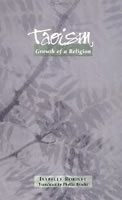
Taoism: Growth of a Religion
Zhuangzi (Chuang Tsu), Daoist Scripture: Bibliography, Links, Resources, Quotations, Notes
Zhuangzi: Basic Writings
Zhuangzi Speaks: The Music of Nature
Lifestyle Advice from Wise Persons


"Without going out of the door
One can know the whole world;
Without peeping out of the window
One can see the Tao of heaven.
The further one travels
The less one knows.
Therefore the Sage knows everything without travelling;
He names everything without seeing it;
He accomplishes everything without doing it."
- Translated by
Ch'u Ta-Kao, 1904, Chapter 47
"Without going out by the door, one can know the whole world;
Without
looking through the window, one can become aware of the way of heaven
(principles which rule all things).
The further one goes, the less one
learns.
The Sage gets there without having taken a step to reach it.
He knows
before having seen, through superior principles.
He achieves, without
having acted, through his transcendent action."
- Translated by
Derek Bryce, 1999, Chapter 47
"Without leaving his door
He knows everything under heaven.
Without looking out of his window
He knows all the ways of heaven.
For the further one travels
The less one knows.
Therefore the Sage arrives without going,
Sees all without looking,
Does nothing, yet achieves everything."
- Translated by
Arthur Waley, 1934, Chapter 47
"Sans sortir de ma maison, je connais l'univers;
Sans regarder par ma fenêtre, je découvre les voies du ciel.
Plus l'on s'éloigne et moins l'on apprend.
C'est pourquoi le sage arrive où il veut sans marcher;
Il nomme les objets sans les voir;
Sans agir, il accomplit de grandes choses."
- Translated by
Stanislas
Julien, 1842, Chapter 47
Spanish
Language Versions of the Tao Te Ching (Daodejing)
Tao Te Ching en Español
Lao Tsé Tao Te Ching 
Tao Te Ching Traducido por Stephen Mitchell, versión española
Tao Te Ching Traducido al español por el Padre Carmelo Elorduy
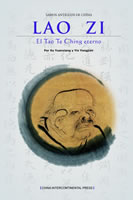
Lao Tzu-The Eternal Tao Te Ching
Ripening Peaches: Taoist Studies and Practices By Mike Garofalo Maduración Duraznos: Estudios y Prácticas Taoístas por Mike Garofalo
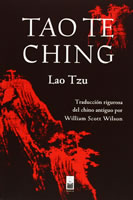
Tao Te Ching
Lao Tzu - Tao Te Ching
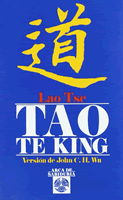
Tao te king
Daodejing Español, Inglés, y Chino Versiones Lingüísticas de la Daodejing

Spanish Language Translations of the Tao Te Ching
"Sin salir al exterior, uno puede conocer el mundo entero.
Sin mirar a través de la ventana, uno puede ver los caminos al cielo.
Cuanto más nos alejamos, menos conocemos.
De este modo, el sabio conoce sin desplazarse,
ve sin mirar, trabaja sin hacer."
- Translated by
Cristina Bosch, 2002, Capítulo 47
"Sin salir de la puerta
se conoce el mundo.
Sin mirar por la ventana
se ve el camino del cielo.
Cuanto más lejos se va,
menos se aprende.
Así, el sabio,
No da un paso y llega,
No mira y conoce,
No interfiere y cumple."
- Translation from
Wikisource, 2013, Capítulo
47
"Se puede conocer el mundo
sin salir de la casa.
Sin mirar por la ventana
puede conocerse el Sentido del Cielo.
Cuanto más mundo se recorre
tanto menos se sabe.
El Sabio para conocerlo todo,
no necesita viajar.
No necesita observar para ser lúcido,
tampoco necesita actuar,
y sin embargo, realiza."
- Translation into Spanish from
Richard Wilhelm's 1911 German Version by an Unknown Spanish Translator,
2015, Capítulo 47
"Sin un solo paso más allá de la puerta
Puedes conocer el Mundo.
Sin una mirada hacia la ventana
Puedes ver el color del cielo.
Cuanto más experimentas, menos sabes.
El sabio vagabundea sin conocer,
Mira sin ver,
Alcanza sin actuar."
- Translated by
Antonio Rivas Gonzálvez, 1998, Tao Te Ching, Capítulo 47
"Conoce el mundo sin salir por la puerta.
Observa el Camino del cielo sin asomarte por la ventana.
Cuando sales a viajar, cada ves más lejos,
Se reduce lo que sabes con certeza.
Por eso, el sabio
No sale, pero sabe concerteza;
No mira a un lado y a otro, pero ientifíca las cosas.
No manípula, per las cosas maduran."
- Translated from Chinese to English by William Scott Wilson, Spanish
version by Alejandro Pareja, 2012, Capítulo
47
This webpage work is licensed under a Creative Commons Attribution-NonCommercial-NoDerivatives 4.0 International License.
Created by Michael P. Garofalo, Green Way Research, Valley Spirit Center, Gushen Grove Notebooks, Vancouver, Washington © 2011-2021 CCA 4.0
Coming Later ... 2022
I welcome email with commentary on Chapter 47 of the Tao Te Ching.

Next Chapter of the Tao Te Ching #48
Previous Chapter of the Tao Te Ching #46
Chapter and Thematic Index to the Tao Te Ching
Tao Te Ching
Commentary, Interpretations, Research Tools, Resources
Chapter 47
Das Tao Te King von Lao Tse. Complete versions of all 81 Chapters of the Tao Te Ching by many different translators in many languages: 124 English, 24 German, 14 Russian, 7 Spanish, 5 French and many other languages. Links are organized first by languages, and then alphabetically by translators. Formatting varies somewhat. The original website at Onekellotus went offline in 2012; but, the extensive collection of these Tao Te Ching versions was saved for posterity by the Internet Archive Wayback Machine and available as of 9/9/2015. This is an outstanding original collection of versions of the Daodejing─ the Best on the Internet. Caution: copyright infringement may sometimes be an issue at this website.
Tao Te Ching, Translations into English: Terebess Asia Online (TAO). 124
nicely formatted complete English language translations, on separate webpages, of the Daodejing.
Alphabetical index by translators. Each webpage has all 81 chapters of the Tao Te
Ching translated into English. A useful collection! Many
reformatted and colored versions from the original collection at
Das Tao Te King von Lao Tse. Caution: copyright infringement may
sometimes be an
issue at this website.
Lao Tzu: Te-Tao Ching - A New Translation Based on the Recently Discovered Ma-wang-tui
Texts (Classics of Ancient China)
Daodejing by Laozi: Chapters with Chinese characters, seal script,
detailed word by word concordance, Pinyin (tone#), German, French and English.
This is an outstanding resource for serious students of the Tao Te Ching.
Tao Te
Ching: A New Translation and Commentary. By Ellen Chen. Paragon
House, 1998. Detailed glossary, index, bibliography, notes, 274 pages.
The Tao
and Method: A Reasoned Approach to the Tao Te Ching. By Michael
Lafargue. New York, SUNY Press, 1994. 640 pages. Detailed
index, bibliography, notes, and tables. An essential research tool.
Two Visions of the Way: A Study of the Wang Pi and the Ho-Shang Kung Commentaries on the Lao-Tzu.
By Professor by Alan Kam-Leung Chan. SUNY Series in Chinese
Philosophy and Culture. State University of New York Press, 1991.
Index, bibliography, glossary, notes, 314 pages.
ISBN: 0791404560.
Tao Te Ching: The Definitive Edition
Chinese Reading of the Daodejing
Wang Bi's Commentary on the Laozi with Critical Text and Translation.
By Professor Rudolf G. Wagner. A SUNY Series in Chinese Philosophy and
Culture. English and Mandarin Chinese Edition.
State University of New York Press; Bilingual edition (October 2003). 540
pages. ISBN: 978-0791451823.
Wang Bi (Wang Pi, Fusi), 226-249 CE,
Commentary on the Tao Te
Ching.
Tao Te Ching


The Taoism Reader
Change Your Thoughts - Change Your Life: Living the Wisdom of the Tao
The Lunar Tao: Meditations in Harmony with the Seasons
The Classic of the Way and Virtue: A New Translation of the Tao-te Ching of Laozi as Interpreted by Wang Bi.
Translated by Richard John Lynn. Translations from the Asian Classics
Series. New York, Columbia University Press, 1999. Extensive index,
glossaries, notes, 244 pages.
Tao Te Ching in Chinese characters,
Pinyin Romanization, English and German by Dr. Hilmar
Alquiros.
Yellow Bridge
Dao De Jing Comparison Table Provides side by side comparisons of
translations of the Tao Te Ching by James Legge, D. T. Suzuki, and Dwight
Goddard. Chinese characters for each paragraph in the Chapter are on the
left; place your cursor over the Chinese characters to see the Pinyin
Romanization of the Chinese character and a list of meanings.
Translators Index,
Tao Te Ching Versions in English, Translators Sorted Alphabetically by Translator, Links to Books and
Online Versions of the Chapters
Taoism and the Tao Te
Ching: Bibliography, Resources, Links
Spanish Language
Translations of the Tao Te Ching, Daodejing en Español, Translators Index
The Tao of Zen
Chapter 1 in the
Rambling
Taoist Commentaries by Trey Smith. The
Rambling Taoists are Trey Smith and Scott Bradley.
By Hans-Georg Moeller. Columbia University Press, 2006, 176 pages.
Valley Spirit, Gu Shen,
Concept, Chapter 6
Valley Spirit Center in Red
Bluff, California.
Sacred
Circle in the Gushen Grove.
Lao-tzu's Taoteching
Reading Lao Tzu: A Companion to the Tao Te Ching with a New Translation
Dao De Jing: A Philosophical Translation
Thematic Index to the
81 Chapters of the Tao Te Ching
Lieh-Tzu: A Taoist Guide to Practical Living
Revealing the Tao Te Ching: In-depth Commentaries on an Ancient Classic
Cloud Hands Blog
Mike Garofalo writes about Mind-Body Arts, Philosophy, Taoism, Gardening, Taijiquan, Walking, Mysticism,
Qigong, and the Eight Ways.
The Whole Heart of Tao:
The Complete Teachings From the Oral Tradition of Lao Tzu.



Gushen Grove Notebooks for the Tao Te Ching
Green Way Research, Valley Spirit Center, Gushen Grove Notebooks, Vancouver, Washington
Red Bluff, California (1998-2017).
Vancouver, Washington (2017-2021)
Indexed and Compiled by
Michael P. Garofalo
This webpage was last edited, changed, reformatted, improved, modified or updated on
February 22, 2021.
This webpage was first distributed online on April 28, 2011.
This webpage work is licensed under a Creative Commons Attribution-NonCommercial-NoDerivatives 4.0 International License.
Created by Michael P. Garofalo, Green Way Research, Valley Spirit Center, Gushen Grove Notebooks, Vancouver, Washington © 2011-2021 CCA 4.0
Brief Biography of Michael P. Garofalo, M.S.

Ripening Peaches: Daoist Studies and Practices
Zhuangzi (Chuang Tzu, Zhuang Zhou, Master Chuang) 369—286 BCE
Bodymind Theory and Practices, Somaesthetics
How to Live a Good Life: Advice from Wise Persons
Qigong (Chi Kung) Health Practices
One Old Daoist Druid's Final Journey: Notebooks of the Librarian of Gushen Grove
Taoist Perspectives: My Reading List
Index to Cloud Hands and Valley Spirit Websites
Index to English Language Translators of the Tao Te Ching
Recurring Themes (Terms, Concepts, Leimotifs) in the Tao Te Ching
Spanish Language Translations of the Tao Te Ching
Comments, Feedback, Kudos, Suggestions
Chinese Characters, Wade-Giles (1892) and Hanyu Pinyin (1982) Romanizations
The Tao Te Ching (Dao De Jing) by Lao Tzu (Laozi) circa 500 BCE
|
Tao Te
Ching |
|||||||||
| 1 | 2 | 3 | 4 | 5 | 6 | 7 | 8 | 9 | 10 |
| 11 | 12 | 13 | 14 | 15 | 16 | 17 | 18 | 19 | 20 |
| 21 | 22 | 23 | 24 | 25 | 26 | 27 | 28 | 29 | 30 |
| 31 | 32 | 33 | 34 | 35 | 36 | 37 | 38 | 39 | 40 |
| 41 | 42 | 43 | 44 | 45 | 46 | 47 | 48 | 49 | 50 |
| 51 | 52 | 53 | 54 | 55 | 56 | 57 | 58 | 59 | 60 |
| 61 | 62 | 63 | 64 | 65 | 66 | 67 | 68 | 69 | 70 |
| 71 | 72 | 73 | 74 | 75 | 76 | 77 | 78 | 79 | 80 |
| 81 | |||||||||