Classic of the Way and Virtue
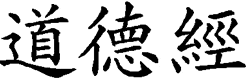
By Lao Tzu (Laozi)
Compiled and Indexed by Michael P. Garofalo
Green Way Research, Valley Spirit Center, Gushen Grove Notebooks, Vancouver, Washington
Chapter 54 Chapter 56 Index to All the Chapters Daoism Cloud Hands Blog
Classic Book (Ching) about the Tao (Way, Nature, Patterns, Processes) and Te (Virtue, Potency, Power, Integrity, Wise Person, Sage)
Indexing, Concordance, Search Terms, Topics, Themes, Keys, Subjects
English and Chinese (Wade-Giles) Terms:
Invincibility,
Possess or Embody (han), Virtue or Power or Character (tê), Safety,
Full or Abundant (hou), Male, Female, Comparable or Resembles (yü), Harmony, Virtue,
Baby or Child (tzu), Vitality, Newborn Child or Infant (ch'ih),
Useless Arts, Bee or Wasp (fêng), Scorpion (ch'ai), Snake or
Serpent (shê), Sting (shih), Wild or Fierce (mêng), Seize
or Pounce (chü), Beasts or Animals (shou), Prey (chüeh), Birds (niao),
Attack or Strike (po), Bones (ku), Weak or Flexible (jo),
Tender or Soft (jou), Firm or Strong (ku), Sexual Vitality,
Dao, Know or Understand (chih), Natural Path, Accept Aging, Conserve Energy, Breathing, Infant's Energy,
Chi, Death, Decay,
Muscles or Sinews or Tendons (chin),
Grasp or Hold (wo), Female (p'in), Male (mu), Complete or
Whole (ch'uan), Arise or Erect (tso), Sexual Erection, Follow the Tao, Misusing Strength, Qi,
Utmost or Zenith (chih), Day (jih), Cries or Wails (hao),
Hoarse (sha), Harmony or Peace (ho), Eternal or Everlasting (ch'ang),
Enlightened, Light or Lumininous (ming), Intercourse, Mating,
Procreation, Life Force or Virility (ching), Energy, Enhancing, Increase
or Gain (yi), Life (shêng), Blessing or Omen (hsiang), Mind
or Heart (hsin), Longevity, Direct or Order (shih), Vital Force or
Vital Breath (Ch'i or Qi), Strength (ch'iang), Robust or
Grown (chuang), Aging or Decay or Old (lao), Ends or Ceases (yi), Sign of the Mysterious, 玄符
Términos en Español: Invencibilidad,
Virtud
Misteriosa, Seguridad, Hombre, Mujer,
Armonía, Vitalidad, Niño, Artes Inútil,
Serpientes, Pájaros,
Vitalidad Sexual,
Sendero Natural, Acepta
el Envejecimiento, Ahorro de Energía,
Respiración,
del Infant
Energía, Muerte, Huesos, Músculos,
Erección Sexual, Sigue el
Tao, Eterno,
Iluminado, Coito, Apareamiento,
Procreación, Erección,
Energía, Mejora,
Longevidad, Corazón, Símbolo
Misterioso,
Poseer,
Energía, Carácter, Encarnar,
Completo, Abundante, Se Asemeja,
Cmparable,
Infantil,
Abeja,
Avispa, Escorpión,
Serpiente, Picadura, Salvaje,
Feroz, Aprovechar, Saltar,
Bestias,
Animales, Presa, Ataque,
Huelga, Débil,
Flexible, Blando,
Suave, Agarre,
Mantener, Firme, Fuerte,
Conocer,
Comprender, Mujer, Hombre,
Completo,
Etero, Levántate,
Erguido, Virilidad,
Vigor, Máxima,
Zenith, Día, Gritos,
Lamentos,
Ronca,
Armonía, Paz Eterna, Luz,
Vida,
Bendición, Omen, Mente,
Corazón, Directo, Orden, Vida,
Fuerza, Robusto, Envejecimiento,
Viejo, Final,
Cesa.
Electronic Concordance for Chapters 1 - 81 of the Tao Te Ching
English Language Translations of the Tao Te Ching
"Whoever is filled with Virtue
is like a new-born child.
Wasps and scorpions will not sting it;
snakes and serpents will not bite it;
wild animals will not attack it;
birds of prey will not swoop down on it.
Its bones are soft, its muscles weak,
and yet its grip is firm.
It does not know of male and female union
and yet its organ stirs;
its vital energy is at its height.
It cries throughout the day
and yet is never hoarse;
its harmony is at its height.
To know harmony is to know the eternal.
To know the eternal is to know enlightenment.
To speed the growth of life is an omen of disaster;
to control the breath by will-power is to overstrain it;
to grow too much is to decay.
All this is against the Dao
and whatever is against the Dao soon dies."
- Translated by
Tom Chilcott,
2005,
Chapter 55
"He who embodies the fullness of the Tao is like a ruddy infant.
No poisonous wasps will sting him.
No fierce beasts will seize him.
No rapacious birds will maul him.
His bones are tender and muscles soft,
Yet his grip is tight.
He knows not of the union of male and female,
Yet, filled with vitality,
His manhood becomes vigorously erect.
He can howl all day without becoming hoarse,
Because he is the embodiment of perfect balance.
To know balance is to know the eternal.
To know the eternal is to be illumined.
To overprotect life is to invite sure disaster.
To overuse the mind is to invite lopsided strength.
To overdevelop a thing is to invite early decay.
All are out of balance, and thus contrary to the Tao.
Being contrary to the Tao, things soon cease to be."
- Translated by
Yasuhiko Genku Kimura, Chapter 55
"He who possesses Virtue in abundance is
like a newly born infant.
Poisonous insects will not sting him;
Wild beasts will not seize him;
Birds of prey will not attack him.
His bones are soft, his muscles weak, but his grasp is strong.
He has not experienced the union of male and female,
And yet is fully virile:
His essence is complete.
He can cry all day without getting hoarse.
This is harmony at its height.
Knowing harmony is to know what is eternal.
Knowing what is eternal is to be enlightened.
It is inauspicious to try to improve on life,
And harmful to regulate breathing by conscious control.
To strive for too much results in exhaustion.
These actions are contrary to Tao.
And what is contrary to Tao soon comes to an early end."
- Translated by
Keith Seddon,
Chapter 55
"Action in its profundity is like a newborn baby.
Poisonous insects and venomous snakes do not sting it.
Predatory birds and ferocious animals do not seize it.
Its bones are soft and its sinews supple, yet its grasp is firm;
Without knowing the union of male and female, its organs become aroused.
Its vital essence comes to the point;
Crying all day, its voice never becomes hoarse.
Its harmony comes to the point.
Harmony is eternal.
Knowing harmony is discernment.
Enhancing life is equanimity.
Generating vitality through mind is strength.
When things reach their climax, they are suddenly old.
This is "Non-Tao."
"Non-Tao" dies young."
- Translated by
Tao Huang, Chapter 55
"
'Those who have true te
Are like a newborn baby.'
-
and if they seem like this, they will not be stung
by wasps or snakes, or pounced on
by animals in the wild or birds of prey.
A
baby is weak and supple, but his hand can grasp your finger.
He has no desire as yet, and yet he can be erect -
he can cry day and night without even getting hoarse
such is the depth of his harmony.
It's
stupid to rush around.
When you fight against yourself, it shows in your face.
But if you draw your sap
from your heart
then you will be truly strong.
You
will be great."
- Translated by
Man Ho Kwok, Martin Palmer and Jay Ramsay, 1993, Chapter 55
"People who surrender all their blocks and conflicts experience a free flow
of vital energy.
They look as radiant as a baby, and they employ a childlike immunity to
injury. Bugs don't bite them. Dogs don't attack them. Trouble-makers leave
them alone.
Their bodies seem relaxed and pliant, but their stamina and strength are
remarkable. They are sexually moving without being overly erotic. They can
sing or even yell for a long time and never get hoarse.
It is as if they were newly in love, not with one person, but with all
creation, and their energies are as abundant as all creation.
It is a mistake to confuse excitement or arousal with the vital flow of
enlightenment. Stimulants and emotional adventures arouse people, but such
arousal does not enhance one's energies. On the contrary, excitement spends
energy and exhausts vitality.
Think of excitement as tension that comes when stimulation meets resistance.
The exciting experience ends when the stimulation stops or when a person
wears out.
But the vitality of enlightenment is a continuous flow. It meets no
resistance and goes on and on without stress.
Excitement is rooted in passing desires. Vital energy springs from the
eternal."
- Translated by
John Heider, 1985, Chapter 55
"The Character of The Child
Lao Tze says,
He who has in himself abundant Teh, the attribute of the Tao, is like a
baby.
Poisonous insects will not sting him;
fierce beasts will not seize him;
and birds of prey will not pounce upon him.
A baby is weak with tender bones and feeble sinews, but his grasp is firm
and tight.
He doesn't know men and women's affairs, yet his virile member may be
excited, showing the perfection of his vigor.
He cries all day long without his throat becoming hoarse, thus showing the
perfection of his harmonious constitution.
When one knows harmony, he knows the absolute.
When he knows the absolute, he deserves to be called the enlightened.
But he who knows the life-increasing arts transforms himself by having an
evil heart.
He who lets his emotions go through impulse is called strong.
When things become strong in maturity, they become old,
which may be said to be contrary to the Tao.
Whatever is contrary to the Tao ends soon."
- Translated by
Shi Fu Hwang, Chapter 55
"He who contains virtue in abundance
resembles a newborn child
wasps don't sting him beasts don't claw him
birds of prey don't carry him off
his bones are weak and his tendons are soft and yet his grip is firm
he hasn't known the union of sexes and yet his penis is stiff so full of essence
is he
he cries all day yet ever gets hoarse
so full of breath is he who knows how to breath
endures who knows how to endure is wise
who lengthens his life tempts luck
who breathes with his will is strong
but virility means old age this isn't the Way
what isn't the Way ends early"
- Translated by
Bill Porter (Red Pine),
1996,
Chapter 55

Created by Michael P. Garofalo, Green Way Research, Valley Spirit Center, Gushen Grove Notebooks, Red Bluff, California, © 2015 CCA 4.0
 By Alexander Simkins.
  By Derek Lin.
 By Ming-Dao Deng.
 By Benjamin Hoff.
 By Ming-Dao Deng.
 Translated by Thomas Cleary.
"One who is filled with goodness is like a
freshly-born infant.
Wasps, scorpions and snakes will not bite her.
Wild beasts will not attack her, nor will birds of prey pounce on her.
Her bones may be fragile and her skin soft,
But her grasp is firm.
She does not recognize the union of male and female
For she knows it only as an undivided whole.
This is the essence of perfection.
She can how All day and not get hoarse.
This is perfect harmony.
Knowing harmony is faithfulness.
Knowing faithfulness is salvation.
Trying to extend one's life-span is dangerous and unnatural.
To manipulate one's energy with the mind is a powerful thing
But whoever possesses such strength invariably grows old and withers.
This is not the way of the Tao.
All those who do not follow the Tao will come to an early end."
- Translated by
John R. Mabry,
Chapter 55
"One who possesses true virtue
Is like a new-born infant.
Poisonous insects won’t sting it.
Savage creatures won’t bite it.
Birds of prey won’t claw it.
Though its bones are weak,
And its muscles feeble,
Its grip is still strong.
Though it doesn’t know about sexual union
Its sexual parts are already active,
This is because it has perfect vitality.
It cries all day without becoming hoarse,
This is because it’s in perfect harmony.
To know this harmony is called the constant.
To know the constant is called enlightenment.
Fuelling the vital spirits is called disastrous.
Mind impelling the breath is called violence.
The creature that ignores what exists from of old
Is described as going against the Way.
What goes against the Way
Will come to a swift end."
- Translated by
A. S. Kline,
Chapter 55
"He who possesses Te in abundance
May be likened to a newborn baby.
Bees, scorpions and vipers do not sting it;
Ferocious beasts do not seize it;
Birds of prey do not attack it.
Its bones are weak and its sinews soft, yet its grip is firm.
It doesn't yet know the union of male and female, yet its organ is erect.
Its vital energy is perfect.
It screams all day yet never becomes hoarse.
Its harmony is perfect.
To know harmony is called [to know the] constant.
To know the constant is called enlightenment.
To improve upon one's life is called ill omen.
When the mind dictates the vital breath, it is called forcing.
When a thing reaches its prime, it becomes old.
Forcing is called contrary to Tao.
What is contrary to Tao expires early."
- Translated by
Ha Poong Kim, Chapter 55
"One possessing virtue may be compared to an infant.
Poisonous insects will not bite, ferocious animals will not pounce,
Fetching birds will not prey.
Though weak in bones and soft in muscles, his hold is firm;
Though ignorant of union, his instrument is turgid.
This is supreme energy.
Crying all day without turning hoarse, this is supreme harmony.
Knowing harmony is normalcy;
knowing normalcy is discernment.
Enriching oneself is ominous;
overexerting oneself is ruinous.
Matter withers after saturation;
This is not in line with Direction.
Not in line with Direction, early demise is the expectation."
- Translated by
David H. Li, Chapter 55
"When the inherent qualities are completely preserved, one is like a new-born
babe.
Poisonous insects will not bite him, ferocious beasts will not crouch in
wait for him, predatory birds will not attack him.
Though his body is weak and supple, yet he has a firm grip.
Though he is ignorant about the reproductive organs, yet he possesses them
all.
This is because he is full of the elemental force.
He may cry all day, yet he never loses his voice.
This is because he attains the perfect harmony.
When the elemental force is in perfect harmony, there is normalcy.
When one knows normalcy, there is enlightenment.
When one tampers with life, there is calamity.
When the heart is subservient to the will, there is compulsion."
- Translated by
Cheng Lin, Chapter 55
"He who embodies the fullness of integrity is like a ruddy infant.
Wasps, spiders, scorpions, and snakes will not sting or bite him;
Rapacious birds and fierce beasts will not seize him.
His bones are weak and his sinews soft, yet his grip is tight.
He knows not the joining of male and female, yet his penis is aroused.
His essence has reached a peak.
He screams the whole day without becoming hoarse;
His harmony has reached perfection.
Harmony implies constancy;
Constancy requires insight.
Striving to increase one's life is ominous;
To control the vital breath with one's mind entails force.
Something that grows old while still in its prime is said to be not in accord with the Way;
Not being in accord with the Way leads to an early demise."
- Translated by
Victor H. Mair, 1990, Chapter 55
 By Hu Xuzehi
 Annotated translation by Victor Mair
  By Ha Poong Kim
 By Hans-Georg Moeller
 Ripening Peaches: Taoist Studies and Practices By Mike Garofalo
 By Roger T. Ames and David T. Hall
 By Arthur Waley
Lifestyle Advice from Wise Persons
"The one who has virtue in its fullness
Is like a newborn babe.
Hornets and snakes do not sting him.
Savage beasts don't attack him.
Birds of prey don't pounce on him.
His bones are soft and his muscles weak
But his grasp is firm.
He knows nothing yet of mating
But his organ stirs
For his vigor is at its height.
He will cry all day
But his voice will remain loud.
For his harmony is at its height.
If you know harmony you know what is constant.
If you know what is constant you are enlightened.
If your mind forces your breath you misuse your strength.
You misuse your strength.
What expands too much is bound to collapse.
This is not the way of Tao.
What goes against Tao soon declines."
- Translated by
Agnieszka Solska,
2005,
Chapter 55
A Chinese Language Version of Chapter 55 of the Tao Te
Ching by Lao Tzu
A
note
on my style of displaying the Chinese characters of the Tao Te Ching
含德之厚.
比於赤子.
蜂蠆虺蛇不螫.
猛獸不據.
攫鳥不搏.
骨弱筋柔而握固.
未知牝牡之合而全作.
精之至也.
終日號而不嗄.
和之至也.
知和曰常.
知常曰明.
益生曰祥.
心使氣曰強.
物壯則老.
謂之不道.
不道早已.
- Chinese characters, Tao Te Ching,
Chapter 55
han tê chih hou.
pi yü chi'ih tzu.
fêng ch'ai hui shê pu shih.
mêng shou pu chü.
chüeh niao pu po.
ku jo chin jou erh wo ku.
wei chih p'in mu chih ho erh ch'üan tso.
ching chih chih yeh.
chung jih hao erh pu sha.
ho chih chih yeh.
chih ho yüeh ch'ang.
chih ch'ang yüeh ming.
yi shêng yüeh hsiang.
hsin shih ch'i yüeh ch'iang.
wu chuang tsê lao.
wei chih pu tao.
pu tao tsao yi.
- Wade-Giles Romanization, Tao Te
Ching, Chapter 55
Audio Version in Chinese of Chapter 55 of the Tao Te Ching
han de zhi hou.
bi yu chi zi.
du chong hui she bu shi.
meng shou bu ju.
jue niao bu bo.
gu ruo jin rou er wo gu.
wei zhi pin mu zhi he er zui zuo.
jing zhi zhi ye.
zhong ri hao er bu sha.S
he zhi zhi ye.
zhi he yue chang.
zhi chang yue ming.
yi sheng yue xiang,
xin shi qi yue qiang.
wu zhuang ze lao.
wei zhi bu dao.
bu dao zao yi.
-  Pinyin Romanization, Daodejing, Chapter 55
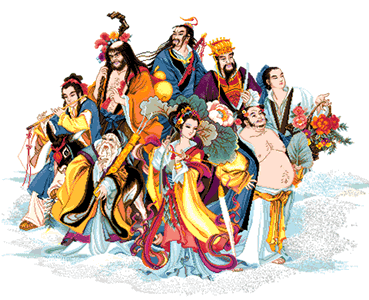
The Eight Immortals of Chinese Mythology
Tao Te Ching in Chinese characters and English (includes a word by word key) from YellowBridge
Tao Te Ching in Chinese characters, Hanyu Pinyin (1982) Romanization, English and German by Dr. Hilmar Alquiros.
Laozi Daodejing: Chapters with Chinese characters, seal script, detailed word by word concordance, Pinyin (tone#), German, French and English.
Chinese and English Dictionary, MDGB
Dao De Jing Wade-Giles Concordance by Nina, Dao is Open
Dao De Jing English and Wade-Giles Concordance by Mike Garofalo
Tao Te Ching in Pinyin Romanization with Chinese characters, WuWei Foundation
Tao Te Ching in Pinyin Romanization
Tao Te Ching in Chinese characters and English
Tao Te Ching in Chinese characters, English, Word by word analysis, Zhongwen
Tao Te Ching: The Definitive Edition
Tao Te Ching in Chinese characters: Big 5 Traditional and GB Simplified
Chinese Characters, Wade-Giles and Pinyin Romanizations, and 16 English Translations for Each Chapter of the Daodejing by Mike Garofalo.
Tao Te Ching in Chinese characters, Wade-Giles and Pinyin Romanization spellings, English; a word for word translation of the Guodian Laozi Dao De Jing Version.
Lao Zi's Dao De Jing: A Matrix Translation with Chinese Text by Bradford Hatcher.
"Who holds within the fullest power
To a newborn may compare,
Which no insects stings,
No wild beast seizes,
No taloned bird snatches.
Though soft-boned and weak-limbed, its grip is firm.
Before it ever knows of intercourse,
Its standing phallus knows its full life force.
It cries all day without a loss of voice,
A sign of its perfect balance.
Knowing balance means constant norm;
Knowing the norm means inner vision;
Enhancing life means good fortune;
Mind controlling spirit means inner strength.
“Beware old age in pride of manly might,”
For that means working against the Way.
“Work against the Way, die before your day.”"
- Translated by
Moss Roberts,
Chapter 55
 Translated by Eva Wong
  Translated by Philip Ivahoe
 By James Miller
 Translated by Stephen Bokencamp
By Alexander and Annellen Simpkins
Translated by Stephen Bokencamp
By Alexander and Annellen Simpkins Translated by Thomas Cleary
 By Livia Kohn
"One who possesses the fullness of De can
be compared to a newborn baby.
Bees, scorpions and poisonous snakes will not sting him.
Hunting birds and ferocious animals will not grab him.
His bones are weak, his muscles are soft, yet he can grasp objects with great
strength.
He has no knowledge of sexual intercourse, yet his penis becomes enlarged: so
extreme is his life force.
He can yell all day, yet he doesn't get hoarse.
There is ultimate harmony in his expressiveness.
This harmony of expressiveness is said to be constant;
Knowing this harmony is said to be obvious.
Increasing life is said to be lucky.
Using the mind to control the natural energy of life is said to show strength.
A living creature who who pretends to be stronger than they are will quickly
age.
This may be described as one who doesn't follow Dao.
Don't follow Dao and you'll come to an early end."
- Translated by
Nina Correa, 2005,
Chapter 55
"He who has in himself abundantly the
attributes of the Tao is like an infant.
Poisonous insects will not sting him; fierce beasts will not seize him; birds of
prey will not strike him.
The infant's bones are weak and its sinews soft, yet
its grasp is firm.
It knows not yet the union of male and female, and yet its virile member may be
excited;
showing the perfection of its physical essence.
All day long it will cry without its throat becoming hoarse; showing the harmony
in its constitution.
To him by whom this harmony is known, the secret of the unchanging Tao is shown,
And in the knowledge wisdom finds its throne.
All life-increasing arts to evil turn;
Where the mind makes the vital breath to burn,
False is the strength, and over it we should mourn.
When things have become strong, they then become old, which may be said to be
contrary to the Tao.
Whatever is contrary to the Tao soon ends."
- Translated by
Andre Gauthier,
Chapter 55
"One who contains te in fullness,
Is to be compared to an infant.
Wasps, scorpions, and snakes do not bite it,
Fierce beasts do not attack it,
Birds of prey do not pounce upon it.
Its bones weak, its sinews tender,
But its grip is firm;
Knowing not the union of the female and male animals,
Yet its organ stirs.
Such is the perfection of its life-force (ching).
Crying all day, yet it does not get hoarse.
Such is the Perfection of its harmony (ho).
To know harmony is to know the everlasting (ch'ang);
To know the everlasting is to be illumined (ming).
To help life along is to bring ill portend;
To use mind (hsin) to direct the life breath (ch'i) is called the strong (ch'iang).
When things are full-grown they become old,
It is called not following the Way (Tao).
Not following the Way one dies early."
- Translated by
Ellen Marie Chen, 1989, Chapter 55
Created by Michael P. Garofalo, Green Way Research, Valley Spirit Center, Gushen Grove Notebooks, Red Bluff, California, © 2015 CCA 4.0
 Translation and elucidation by Hua Ching Ni
 Translated by Brian Walker
 Translated by Arthur Waley
 Translated by Lionel and and Herbert Giles
 By Eva Wong
"He whom life fulfills,
Though he remains a child,
Is immune to the poisonous sting
Of insects, to the ravening
Of wild beasts or to vultures' bills.
He needs no more bone or muscle than a baby's for sure hold.
Without thought of joined organs, he is gender
Which grows firm, unfaltering.
Though his voice should cry out at full pitch all day, it would not rasp but
would stay tender
Through the perfect balancing
Of a man at endless ease with everything
Because of the true life that he has led.
To try for more than this bodes ill.
It is said, 'there's a way where there's a will;'
But let life ripen and then fall.
Will is not the way at all:
Deny the way of life and you are dead."
- Translated by
Witter Bynner,
1944, Chapter 55
"A person filled with the power of Tao
is like a baby boy:
bees can’t sting him,
wild beasts can’t attack him.
A baby has soft bones
and weak muscles,
but a firm grip.
He hasn’t had sex,
but he can get an erection.
That’s because he’s got lots of energy.
He can cry all day
and never lose his voice.
That’s because he’s at one with his world.
If you’re at one with the world,
you know constancy.
And if you know constancy,
you’ve been enlightened.
It’s not healthy
to try to prolong your life.
It’s unnatural to impose the mind’s will
upon the body.
People waste time and energy
trying to be strong or beautiful,
and their strength and beauty fade.
They’ve lost touch with Tao,
and when you lose touch with Tao,
you might as well be dead."
- Translated by
Ron
Hogan, 1995, Chapter 55
"He who embodies the fullness of integrity is like a
ruddy infant.
Wasps, spiders, scorpions, and snakes will not sting or bite him;
Rapacious birds and fierce beasts will not seize him.
His bones are weak and his sinews soft, yet his grip is tight.
He knows not the joining of male and female, yet his penis is aroused.
His essence has reached a peak.
He screams the whole day without becoming hoarse;
His harmony has reached perfection.
Harmony implies constancy;
Constancy requires insight.
Striving to increase one's life is ominous;
To control the vital breath with one's mind entails force.
Something that grows old while still in its prime is said to be not in accord
with the Way;
Not being in accord with the Way leads to an early demise."
- Translated by
Victor H. Mair,
Chapter 55
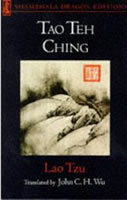
Tao Te Ching
 Translated by Stephen Addiss and Stanley Lombardo
Lao Tzu: Tao Te Ching
 Translated by Livia Kohn
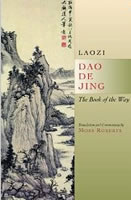
Dao De Jing: The Book of the Way
"Measure the fullness of one's virtue against an
infants:
Neither scorpion nor snake will attack it.
Nor does the tiger maul it.
Nor do the birds of prey clutch it.
Its bones and sinews soft,
Yet its grip is firm.
It does not know the union of male and female,
Yet its reproductive organ is fully formed:
Its essence is whole.
It can cry all day without getting hoarse;
This is total harmony.
To know harmony is constancy.
To know constancy is enlightening.
That which is beneficial to life is auspicious.
To direct ch'i by heart is steadfastness.
Things mature and then decay.
This is contra-Tao.
That which runs counter to the Tao is soon finished."
- Translated by
Tam Gibbs, Chapter
55
"One who embraces Tao becomes pure and innocent like a newborn
babe
Deadly insects will not sting him
Wild beasts will not attack him
Birds of prey will not strike him
He is oblivious to the union of male and female yet his vitality
is full his inner spirit is complete
He can cry all day without straining so perfect is his harmony
so magically does he blend with this world
Know this harmony ?it brings the Eternal
Know the Eternal ?it brings enlightenment
A full life ?this is your blessing
A gentle heart ?this is your strength
Things in harmony with the Tao remain
Things that are forced, grow for a while but then wither away
This is not in keeping with Tao
Whatever is not in keeping with Tao comes to an early end."
- Translated by
Johathan Star, 2001, Chapter 55
"He who is endowed with ample virtue may be compared to an infant.
No venomous insects sting him;
Nor fierce beasts seize him;
Nor birds of prey strike him;
His bones are frail, his sinews tender, but his grasp is strong.
He does not know the conjugation of male and female, and yet he has sexual development;
It means he is in the best vitality.
He may cry all day without growing hoarse;
It means that he is in the perfect harmony.
To know this harmony is to approach eternity.
To know eternity is to attain enlightenment.
To increase life is to lead to calamity.
To let the heart exert the breath is to become stark."
- Translated by
Ch'u Ta-Kao, 1904, Chapter 55
Walking the Way: 81 Zen Encounters with the Tao Te Ching
The Tao of Zen
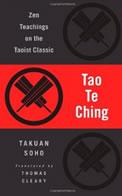
Tao Te Ching: Zen Teachings on the Taoist Classic
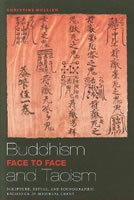
Buddhism and Taoism Face to Face: Scripture, Ritual, and Iconographic Exchange in Medieval China
"He who has his foundation in Teh is like a little child.
Poisonous insects do not sting him, Wild beasts do not seize him, Birds of prey do not strike at him.
His bones are weak, his muscles soft, Yet he can take hold firmly.
He is ignorant of sex, but is full of vitality.
He will grow to maturity.
All day long he shouts and sings.
He will arrive at a knowledge of harmony.
The knowledge of harmony is called eternal.
The knowledge of eternal things is called clear vision.
Increase of life does not always bring happiness.
The life-force that gives birth to human emotion is strong.
Human emotion comes to full power and then grows old.
It is not Tao.
If it is not Tao, it will quickly perish."
- Translated by
Isabella Mears, 1916, Chapter 55
"He that hath the Magick powers of the Tao is like a young child.
Insects will not sting him or beasts or birds of prey attack him.
The
young child's bones are tender and its sinews are elastic, but its
grasp is firm.
It knoweth nothing of the Union of Man and Woman, yet its
Organ may be excited.
This is because of its natural perfection.
It will
cry all day long without becoming hoarse, because of the harmony of its
being.
He
who understandeth this harmony knoweth the mystery of the Tao, and
becometh a True Sage.
All devices for inflaming life, and increasing the
vital Breath, by mental effort are evil and
factitious.
Things
become strong, then age.
This is in discord with the Tao, and
what is not at one with the Tao soon cometh to an end."
- Translated by
Aleister Crowley, 1918, Chapter 55
"Be Receptive Like an Infant; Be Congruent with the Eternal
To be receptive to the benefit of the Virtue,
Like an infant is receptive to the mother,
One would be spared of the stings and bites
from bees, scorpions, and snakes;
One would be spared of being harmed
by fierce beasts;
And of being clawed by the predatory birds.
To be so receptive,
Then even if one has weak bones and soft sinews
One can grip things firmly.
People do not realize that
the union of the male and female with moderation
Represents energy at its height; and that
Being together all day sounding natural calls
and not losing voice through screaming
Represents harmony at its best.
To know the harmony of the universe is
be congruent with the Eternal;
To know the Eternal is to be illuminated.
To preserve and to promote life is to bring good fortune;
To let the mind take command of the life-breath is to be strong.
Any living thing that indulges in excesses soon gets old.
Indulging in excesses is against the Dao.
Going against the Dao, one soon dies."
- Translated by
Lok Sang Ho, 2002, Chapter 55
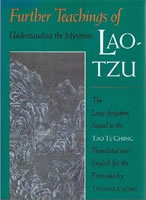
Further Teachings of Lao-Tzu: Understanding the Mysteries (Wen Tzu)
 Translated by Thomas Cleary
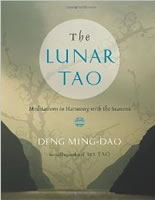
The Lunar Tao: Meditations in Harmony with the Seasons
 By Lui I-Ming (1780) and translated by Thomas Cleary
Ripening Peaches: Taoist Studies and Practices By Mike Garofalo
Zhuangzi: The Essential Writings with Selections from Traditional Commentaries
"Who has abundantly the attributes
Of Tao an infant child is like,
Poisonous insects will not sting,
wild beasts
Not seize, and birds of prey not
strike.
His bones are tender and the
sinews weak,
Yet firmly grasp, the sexual
Unconscious sleeps, and yet it
still is there,
A perfect spirit physical,
With throat unharmed he cries the
whole day long,
Each perfect part is linked with
all.
To know this harmony is called
eternal;
To know the eternal, this is
called
Brightness supernal.
Increase of life is blessedness,
they say,
They call the heart-directed
spirit strength,
But these things reach their
fullest growth, at length,
And plunge to swift decay;
We call all this contrary to the
Tao,
Whatever is contrary to the Tao
Soon will pass away."
- Translated by
Isaac Winter Heysinger, 1903, Chapter 55
|
Tao Te
Ching |
|||||||||
| 1 | 2 | 3 | 4 | 5 | 6 | 7 | 8 | 9 | 10 |
| 11 | 12 | 13 | 14 | 15 | 16 | 17 | 18 | 19 | 20 |
| 21 | 22 | 23 | 24 | 25 | 26 | 27 | 28 | 29 | 30 |
| 31 | 32 | 33 | 34 | 35 | 36 | 37 | 38 | 39 | 40 |
| 41 | 42 | 43 | 44 | 45 | 46 | 47 | 48 | 49 | 50 |
| 51 | 52 | 53 | 54 | 55 | 56 | 57 | 58 | 59 | 60 |
| 61 | 62 | 63 | 64 | 65 | 66 | 67 | 68 | 69 | 70 |
| 71 | 72 | 73 | 74 | 75 | 76 | 77 | 78 | 79 | 80 |
| 81 | |||||||||
"He who is in harmony with the Tao
is like a newborn child.
Its bones are soft, its muscles are weak,
but its grip is powerful.
It doesn't know about the union
of male and female,
yet its penis can stand erect,
so intense is its vital power.
It can scream its head off all day,
yet it never becomes hoarse,
so complete is its harmony.
The Master's power is like this.
He lets all things come and go
effortlessly, without desire.
He never expects results;
thus he is never disappointed.
He is never disappointed;
thus his spirit never grows old."
- Translated by
Edwin Shaw, 1996, Chapter 55
"Das Kind-Vorbild der Selbstordnung des Lebens
Wer aus seines Ursprungs Fülle lebt,
der gleicht dem neugeborenen Kinde.
Giftige Nattern beißen es nicht,
wildes Getier zerreisst es nicht,
Raubvogel-Fänge erstoßen es nicht.
Weich sind noch seine Knochen
und die Muskeln zart, doch schon fest ist sein Griff.
Es ist sich der Geschlechter noch nicht bewusst
und hat doch Geschlecht,
und seines Geschlechtes Keimkräfte ruhen in ihm.
Es kann den ganzen Tag schreien
und wird doch nicht heiser: Vollendeter Einklang!
Die zum Einklang drängende Kraft des Lebens
erkennen, heißt: Seyn Unvergängliches finden;
dieses finden, heißt: erleuchtet sein.
Sich so von der Ganzheit des Lebens durchdringen lassen,
das gibt Segen.
Eigenwillig aber seines Lebens Kräfte
zur Erhöhung des Genußes zu verwenden,
scheint zwar von Stärke zu zeugen; ist aber Täuschung.
Alles eigenwillige Handeln ist widersinnig.
Was nicht echt ist, das zerfällt."
- Translated
by Rudolf
Backofen, 1949, Chapter 55
"Wer festhält des Lebens Völligkeit,
der gleicht einem neugeborenen Kindlein:
Giftige Schlangen stechen es nicht.
Reißende Tiere packen es nicht.
Raubvögel stoßen nicht nach ihm.
Seine Knochen sind schwach, seine Sehnen weich,
und doch kann es fest zugreifen.
Es weiß noch nichts von Mann und Weib,
md doch regt sich sein Blut,
weil es des Samens Fülle hat.
Es kann den ganzen Tag schreien,
und doch wird seine Stimme nicht heiser,
weil es des Friedens Fülle hat.
Den Frieden erkennen heißt ewig sein.
Die Ewigkeit erkennen heißt klar sein.
Das Leben mehren nennt man Glück.
Für sein Begehren seine Kraft einsetzen nennt man stark.
Sind die Dinge stark geworden, altern sie.
Denn, das ist Wider-SINN.
Und Wider-SINN ist nahe dem Ende."
- Translated
by Richard
Wilhelm, 1911, Chapter 55
"The plenitude of one who contains Virtue within himself, may be likened to that of an infant.
Poisonous insects will not sting it, fierce beasts will not seize it,
nor will birds of prey claw it. Though its bones are weak and its sinews
soft, it has a firm grip.
Though it knows not yet of the union of male
and female, its male member will stir.
This is because the fine essence
in it has attained the utmost potency.
Though it may scream all day
long, its voice will not become hoarse.
This is because the natural
harmony in it has attained the utmost potency.
To understand the natural harmony means being constant.
To understand being constant means being enlightened.
To increase life means inviting evil.
To control the vital breath with the mind means rigidity.
When things have matured they age.
Such control is contrary to the Way.
What is contrary to the Way will soon end."
- Translated by
Jan J. L. Duyvendak, 1954, Chapter 55
Created by Michael P. Garofalo, Green Way Research, Valley Spirit Center, Gushen Grove Notebooks, Red Bluff, California, © 2015 CCA 4.0
Tao Te Ching: An Illustrated Journey
Tao Te Ching
The Book of Tao: Tao Te Ching - The Tao and Its Characteristics
Ripening Peaches: Taoist Studies and Practices
Taoism: Growth of a Religion
Zhuangzi (Chuang Tsu), Daoist Scripture: Bibliography, Links, Resources, Quotations, Notes
Zhuangzi: Basic Writings
Zhuangzi Speaks: The Music of Nature
Lifestyle Advice from Wise Persons
"The man who is saturated with Virtue is like a little child.
Scorpions will not sting him, wild beasts will not seize him, nor will birds of prey pluck at him.
His young bones are not hard, neither are his sinews strong, yet his grasp is firm and sure.
He is full of vitality, though unconscious of his sex.
Though he should cry out all day, yet he is never hoarse.
Herein is shown his harmony with Nature.
The knowledge of this harmony is the eternal Tao.
The knowledge of the eternal Tao is illumination.
Habits of excess grow upon a man, and the mind, giving way to the passions, they increase day by day.
And when the passions have reached their climax, they fall.
This is against the nature of Tao.
And what is contrary to Tao soon comes to an end."
- Translated by
Walter Gorn Old, 1904, Chapter 55
"Who
is rich in character
Is like a child.
No poisonous insects sting him,
No wild beasts attack him,
And no birds of prey pounce upon him.
His bones are soft, his sinews tender, yet his grip is strong.
Not knowing the union of male and female, yet his organs are complete,
Which means his vigor is unspoiled.
Crying the whole day, yet his voice never runs hoarse,
Which means his natural harmony is perfect.
To know harmony is to be in accord with the eternal,
And to know eternity is called discerning.
But to improve upon life is called an ill-omen;
To let go the emotions through impulse is called assertiveness.
For things age after reaching their prime;
That assertiveness would be against Tao.
And he who is against Tao perishes young."
- Translated by
Lin Yutang, 1955, Chapter 55
"One
who sees full emptiness
Is like a child just born
With muscles weak and bones so soft
Yet with a grip that's strong
The
newborn hasn't been fulfilled
Its nature is pure vacancy
Nullity and nothingness
And potent spontaneity
It
can scream and cry all day
And yet it never does get hoarse
It only does what naturally
Emerges from the inner source
To
see this inner nature
Is seeing in a way that's bold
Into the only place there is
That cannot possibly grow old"
- Translated by
Jim Clatfelder, 2000, Chapter 55
"Celui qui possède une vertu solide
ressemble à un nouveau-né qui ne craint ni la piqûre des animaux venimeux,
ni les griffes des bêtes féroces, ni les serres des oiseaux de proie.
Ses os sont faibles, ses nerfs sont mous, et cependant il saisit fortement les
objets.
Il ne connaît pas encore l'union des deux sexes, et cependant certaines parties
de son corps éprouvent un orgasme viril.
Cela vient de la perfection du semen.
Il crie tout le jour et sa voix ne s'altère point, cela vient de la perfection
de l'harmonie de la force vitale.
Connaître l'harmonie s'appelle être constant.
Connaître la constance s'appelle être éclairé.
Augmenter sa vie s'appelle une calamité.
Quand le cœur donne l'impulsion à l'énergie vitale, cela s'appelle être fort.
Dès que les êtres sont devenus robustes, ils vieillissent.
C'est ce qu'on appelle ne pas imiter le Tao.
Celui qui n'imite pas le Tao périt de bonne heure."
- Translated by Stanislas Julien, 1842, Chapter
55
Spanish Language Versions of the Tao Te
Ching (Daodejing)
Tao Te Ching en Español
Lao Tsé Tao Te Ching 
Tao Te Ching Traducido por Stephen Mitchell, versión española
Tao Te Ching Traducido al español por el Padre Carmelo Elorduy
Lao Tzu-The Eternal Tao Te Ching
Ripening Peaches: Taoist Studies and Practices By Mike Garofalo Maduración Duraznos: Estudios y Prácticas Taoístas por Mike Garofalo
Tao Te Ching
Lao Tzu - Tao Te Ching
Tao te king
Daodejing Español, Inglés, y Chino Versiones Lingüísticas de la Daodejing
Spanish Language Translations of the Tao Te Ching
"Quien alcanza la mayor virtud
es como un recién nacido.
Los reptiles venenosos no le pican.
Las fieras salvajes no le atacan.
Las aves rapaces no le arrebatan.
Tiene blandos los huesos
y débiles los tendones,
pero agarra firmemente.
Ignora la unión de los sexos,
pero posee la íntegra plenitud de su hombría.
Grita todo el día,
pero no enronquece;
porque posee la perfecta armonía.
Conocer la armonía es eternidad.
Conocer la eternidad es ser iluminado.
Precipitar el crecimiento de la vida es nefasto.
Reprimir la Energía causa esfuerzo.
Si demasiada Energía es usada, le sigue el agotamiento.
Los diez mil seres, cuando crecen demasiado,
empiezan a envejecer.
Esto ocurre a todo lo contrario al Tao,
y lo que es contrario al Tao generará su propia destrucción."
- Translation from
Wikisource, 2013,
Tao Te Ching, Capítulo 55
"El que posee en sí mismo la plenitud de la virtud
es como el niño recién nacido:
los insectos venenosos no lo pican,
los animales salvajes no lo agarran,
las aves repaces no se lo llevan.
Tiene los huesos endebles y los múculos débiles,
pero su energía es todopoderosa.
Ignora la unión del macho y de la hembra,
pero su miembro viril se yergue,
tan extrema es su vitalidad.
Llora todo el día sin ponerse ronco,
tan perfecta es su armonía.
Conocer la armonía es captar lo Constante.
Conocer lo Constante es estar iluminado.
El abuso de la vida es nefasto.
Dominar el soplo vital con el espíritu es ser fuerte.
Los seres que han llegado a ser fuertes envejecen,
esto se opone al Tao.
Todo el que se opone al Tao muere prematuramente."
- Translated by Alba, 1998,
Tao Te Ching, Capítulo 55
"Quien tiene en sí la plenitud de la virtud es parecido
a un niño recién nacido.
Las serpientes venenosas no lo muerden.
Las fieras
salvajes no lo atrapan.
Las aves de rapiña no lo raptan.
Sus huesos son tiernos,
sus tendones flexibles, pero se aferra con fuerza.
No conoce la cópula entre el
macho y la hembra, pero su órgano sexual puede ser estimulado mostrando la
perfeción de su semen.
Llora todo el día y no se vuelve ronco.
Por eso él
encarna la armonía perfecta.
Conocer la armonía es conocer lo duradero.
Quien
conoce lo duradero es iluminado.
Abusar de la vida es nefasto.
Excitar el alma
vital produce fuerza.
Ser demasiado fuerte es empezar a decaer.
Todo esto está
en contra de Tao.
Y todo aquello que está en contra de Tao perece
prematuramente."
- Translation from
Logia Medio Dia, 2015,
Capitulo 55
"El que ha sido dotado de plena es como un niño.
Nigún insecto venenoso le clava su aguijón;
Ninguna bestia salvaje le ataca;
Ningún ave de rapiña cae sobre él.
Sus huesos son frágiles; sus tendones, débiles; pero su abrazo es fuerte.
No conoce la unión de varón y hembra, mas posee la plenitud de su sexo.
Vitalmente, es perfecto.
Puede gritar sin quedar ronco:
Porque posee la armonía,
Y el que conoce esta armonía conoce lo duradero.
Conocer lo duradera es acercarse a la claridad.
Vivir intensamente conduce a la desdicha.
Dejando palpitar al corazón, nos acercamos a la muerte."
- Translated into Spanish by
Caridad Diaz Faes (2003) from the English translation by Ch'u Ta-Kao (1904), Capítulo
55
"Quien alcanza la mayor virtud
es como un recién nacido.
Los reptiles venenosos no le pican.
Las fieras salvajes no le atacan.
Las aves rapaces no le arrebatan.
Tiene blandos los huesos
y débiles los tendones,
pero agarra firmemente.
Ignora la unión de los sexos,
pero posee la íntegra plenitud de su esperma.
Grita todo el día,
pero no enronquecer;
es la perfecta armonía.
Conocer la armonía es eternidad.
Conocer la eternidad es ser iluminado.
Intensificar la vida es nefasto.
Controlar el aliento es fortaleza.
Los seres, cuando han llegado a su madurez,
empiezan a envejecer.
Esto ocurre a todo lo opuesto a Tao.
Y lo puesto a Tao pronto acaba."
- Spanish Version Online at
RatMachines,
Tao Te Ching, Capítulo 55
Created by Michael P. Garofalo, Green Way Research, Valley Spirit Center, Gushen Grove Notebooks, Red Bluff, California, © 2015 CCA 4.0
Next Chapter of the Tao Te Ching #56
Previous Chapter of the Tao Te Ching #54
Chapter and Thematic Index to the Tao Te Ching
Tao Te Ching
Commentary, Interpretations, Research Tools, Resources
Chapter 55
Das Tao Te King von Lao Tse. Complete versions of all 81 Chapters of the Tao Te Ching by many different translators in many languages: 124 English, 24 German, 14 Russian, 7 Spanish, 5 French and many other languages. Links are organized first by languages, and then alphabetically by translators. Formatting varies somewhat. The original website at Onekellotus went offline in 2012; but, the extensive collection of these Tao Te Ching versions was saved for posterity by the Internet Archive Wayback Machine and available as of 9/9/2015. This is an outstanding original collection of versions of the Daodejing─ the Best on the Internet. Caution: copyright infringement may sometimes be an issue at this website.
Tao Te Ching, Translations into English: Terebess Asia Online (TAO). 124
nicely formatted complete English language translations, on separate webpages, of the Daodejing.
Alphabetical index by translators. Each webpage has all 81 chapters of the Tao Te
Ching translated into English. A useful collection! Many
reformatted and colored versions from the original collection at
Das Tao Te King von Lao Tse. Caution: copyright infringement may
sometimes be an
issue at this website.
Lao Tzu: Te-Tao Ching - A New Translation Based on the Recently Discovered Ma-wang-tui
Texts (Classics of Ancient China)
Daodejing by Laozi: Chapters with Chinese characters, seal script,
detailed word by word concordance, Pinyin (tone#), German, French and English.
This is an outstanding resource for serious students of the Tao Te Ching.
Tao Te
Ching: A New Translation and Commentary. By Ellen Chen. Paragon
House, 1998. Detailed glossary, index, bibliography, notes, 274 pages.
The Tao
and Method: A Reasoned Approach to the Tao Te Ching. By Michael
Lafargue. New York, SUNY Press, 1994. 640 pages. Detailed
index, bibliography, notes, and tables. An essential research tool.
Two Visions of the Way: A Study of the Wang Pi and the Ho-Shang Kung Commentaries on the Lao-Tzu.
By Professor by Alan Kam-Leung Chan. SUNY Series in Chinese
Philosophy and Culture. State University of New York Press, 1991.
Index, bibliography, glossary, notes, 314 pages.
ISBN: 0791404560.
Tao Te Ching: The Definitive Edition
Chinese Reading of the Daodejing
Wang Bi's Commentary on the Laozi with Critical Text and Translation.
By Professor Rudolf G. Wagner. A SUNY Series in Chinese Philosophy and
Culture. English and Mandarin Chinese Edition.
State University of New York Press; Bilingual edition (October 2003). 540
pages. ISBN: 978-0791451823.
Wang Bi (Wang Pi, Fusi), 226-249 CE,
Commentary on the Tao Te
Ching.
Tao Te Ching
The Taoism Reader
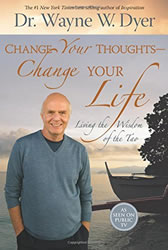
Change Your Thoughts - Change Your Life: Living the Wisdom of the Tao
The Lunar Tao: Meditations in Harmony with the Seasons
The Classic of the Way and Virtue: A New Translation of the Tao-te Ching of Laozi as Interpreted by Wang Bi.
Translated by Richard John Lynn. Translations from the Asian Classics
Series. New York, Columbia University Press, 1999. Extensive index,
glossaries, notes, 244 pages.
Tao Te Ching in Chinese characters,
Pinyin Romanization, English and German by Dr. Hilmar
Alquiros.
Yellow Bridge
Dao De Jing Comparison Table Provides side by side comparisons of
translations of the Tao Te Ching by James Legge, D. T. Suzuki, and Dwight
Goddard. Chinese characters for each paragraph in the Chapter are on the
left; place your cursor over the Chinese characters to see the Pinyin
Romanization of the Chinese character and a list of meanings.
Translators Index,
Tao Te Ching Versions in English, Translators Sorted Alphabetically by Translator, Links to Books and
Online Versions of the Chapters
Taoism and the Tao Te
Ching: Bibliography, Resources, Links
Spanish Language
Translations of the Tao Te Ching, Daodejing en Español, Translators Index
The Tao of Zen
Chapter 1 in the
Rambling
Taoist Commentaries by Trey Smith. The
Rambling Taoists are Trey Smith and Scott Bradley.
By Hans-Georg Moeller. Columbia University Press, 2006, 176 pages.
Valley Spirit, Gu Shen,
Concept, Chapter 6
Valley Spirit Center in Red
Bluff, California.
Sacred
Circle in the Gushen Grove.
Lao-tzu's Taoteching
Reading Lao Tzu: A Companion to the Tao Te Ching with a New Translation
Dao De Jing: A Philosophical Translation
Thematic Index to the
81 Chapters of the Tao Te Ching
Lieh-Tzu: A Taoist Guide to Practical Living
Revealing the Tao Te Ching: In-depth Commentaries on an Ancient Classic
Cloud Hands Blog
Mike Garofalo writes about Mind-Body Arts, Philosophy, Taoism, Gardening, Taijiquan, Walking, Mysticism,
Qigong, and the Eight Ways.
The Whole Heart of Tao:
The Complete Teachings From the Oral Tradition of Lao Tzu.
Gushen Grove Notebooks for the Tao Te Ching
Green Way Research, Valley Spirit
Center, Gushen Grove Notebooks, Red Bluff, California
Green Way Research, 2011-2015.
Indexed and Compiled by
Michael P. Garofalo
This webpage was last modified or updated on
September 24, 2015.
This webpage was first distributed online on June 25, 2011.
Created by Michael P. Garofalo, Green Way Research, Valley Spirit Center, Gushen Grove Notebooks, Red Bluff, California, © 2015 CCA 4.0
Brief Biography of Michael P. Garofalo, M.S.
Valley Spirit Center, Red Bluff, California
Study Yoga or Philosphy or Qigong with Mike Garofalo

Ripening Peaches: Daoist Studies and Practices
Zhuangzi (Chuang Tzu, Zhuang Zhou, Master Chuang) 369—286 BCE
Taoist Perspectives: My Reading List
Bodymind Theory and Practices, Somaesthetics
How to Live a Good Life: Advice from Wise Persons
Qigong (Chi Kung) Health Practices
One Old Daoist Druid's Final Journey: Notebooks of the Librarian of Gushen Grove
Index to Cloud Hands and Valley Spirit Websites
Index to English Language Translators of the Tao Te Ching
Recurring Themes (Terms, Concepts, Leimotifs) in the Tao Te Ching
Spanish Language Translations of the Tao Te Ching
Chinese Characters, Wade-Giles (1892) and Hanyu Pinyin (1982) Romanizations
The Tao Te Ching (Dao De Jing) by Lao Tzu (Laozi) circa 500 BCE
|
Tao Te
Ching |
|||||||||
| 1 | 2 | 3 | 4 | 5 | 6 | 7 | 8 | 9 | 10 |
| 11 | 12 | 13 | 14 | 15 | 16 | 17 | 18 | 19 | 20 |
| 21 | 22 | 23 | 24 | 25 | 26 | 27 | 28 | 29 | 30 |
| 31 | 32 | 33 | 34 | 35 | 36 | 37 | 38 | 39 | 40 |
| 41 | 42 | 43 | 44 | 45 | 46 | 47 | 48 | 49 | 50 |
| 51 | 52 | 53 | 54 | 55 | 56 | 57 | 58 | 59 | 60 |
| 61 | 62 | 63 | 64 | 65 | 66 | 67 | 68 | 69 | 70 |
| 71 | 72 | 73 | 74 | 75 | 76 | 77 | 78 | 79 | 80 |
| 81 | |||||||||