Compiled and Indexed by Michael P. Garofalo
Green Way Research, Valley Spirit Center, Gushen Grove Notebooks, Vancouver, Washington
Chapter 6 Chapter 8 Index to All 81 Chapters Daoism Concordance Cloud Hands Blog
Classic Book (Ching) about the Tao (Way, Nature, Patterns, Processes) and Te (Virtue, Potency, Power, Integrity, Wise Person, Sage)
Concordance: Indexing, Search Terms, Topics, Themes, Keys, Subjects
English and Chinese (Wade-Giles) Terms:
Eternal or Everlasting (ch'ang), Heaven (t'ien), Earth (ti),
Humility, Body (shen), Self or Person (shên), Dimming Radiance, Selfless
or Without Personal Concern (wu ssu), Indifferent, Restraint, Equanimity,
Inner Life, Self-Produced, Behind or Last (hou), Spontaneous, Impersonal, Durability, Realization,
Preserved or Remains (ts'un), Lasting or Ancient (chiu),
Preservation, Security, Front or First (hsien), Health, Enduring, Existence (ts'un),
Life or Live (shêng), Sage or Wise Person or Saint (shêng jên),
Longevity, Can or Able (nêng), Winning, Succeed or Accomplish (ch'êng), Intelligence, Universe, Cosmos,
韜光
Términos en Español: Eterna, Cielo, Tierra, Humildad, Cuerpo, Persona, Ego, Resplandor, Desinteresado, Sin Preocuparse de Carácter, Personal, Indiferente, Restricción, Ecuanimidad, Vida Interior, Detrás, Espontánea, Impersonal, Durabilidad, Realización, Conservados, Duración, Antiguo, Conservación, Seguridad, Primero, Salud, Duradera, Existencia, Vida, Sabio, Longevidad, Capaz, Ganar, Lograr, Inteligencia, Universo, Cosmos.
Electronic Concordance for all 81 Chapters of the Tao Te Ching
English Language Translations of the Tao Te Ching
"Heaven lasts long, and Earth
abides.
What is the secret of their durability?
Is it not because they do not live for themselves
That they can live so long?
Therefore, the Sage wants to remain behind,
But finds himself at the head of others;
Reckons himself out,
But finds himself safe and secure.
Is it not because he is selfless
That his Self is realized?"
- Translated by John C. H. Wu, Chapter 7
"Both Heaven and Earth endure a long time.
The cause of their endurance is their indifference to long life.
This is why the subsist.
Thus the wise man, indifferent to himself, is the greatest among men,
and taking no care for himself, he is nevertheless preserved.
By being the most unselfish he is the most secure of all."
- Translated by
Walter Gorn Old, 1904, Chapter 7
"As the Tao can never die, we call it eternal.
Receiving all, we call
it infinite.
The birthless is eternal.
The desireless is infinite.
Seeing this, a master seeks nothing so he has everything.
He doesn't
nourish the ego, so his nourishment it total."
- Translated by
David Bullen, Chapter 7
"The Tao is infinite and eternal.
Why is it eternal?
It was never born;
thus it can never die.
Why is it infinite?
It has no desires for itself;
thus it is present for all beings.
The Master stays behind;
that is why he is ahead.
He is removed from all things;
that is why he is one with them.
Because he has let go of himself,
he is perfectly fulfilled."
- Translated by
John Dicus, 2002, Chapter 7
"The heavens increase; the earth endures.
The universe in this way has the ability to increase, and at the
same time be something which endures.
Because it doesn’t exist solely for itself, it therefore has the
ability to increase life.
It is natural for the wise person to:
Refuse to take her physical body any further, yet her body still
moves forward.
Remain outside of her body, yet her body perseveres.
Doesn’t she seem to be unselfish?
That’s how she can attain true selfishness."
- Translated by
Nina
Correa, 2005, Chapter 7
"Heaven, earth, last forever.
Why? They are selfless, so forever more.
Thus, sages stay behind, yet ahead,
detached, yet with all.
Being selfless, his Self is fulfilled."
- Translated by
Gong Tienzen, Chapter 7
"Heaven is eternal: the Earth is ever-renewing.
Why?
Surely it is because they do not live for themselves:
That is why they endure.
And so it is with the Sage.
He keeps himself in the background,
And yet he is always to be found in the forefront.
He is ever unmindful of himself,
And yet he is preserved.
Is it not because he seeks no personal success that all his aims are fulfilled?"
- Translated by Herman Ould, 1946, Chapter 7
"Nature is complete because it does not serve itself.
The sage places himself after and finds himself before,
Ignores his desire and finds himself content.
He is complete because he does not serve himself."
- Translated by
Peter A. Merel,
Chapter 7

Created by Michael P. Garofalo, Green Way Research, Valley Spirit Center, Gushen Grove Notebooks, Vancouver, Washington © 2020 CCA 4.0
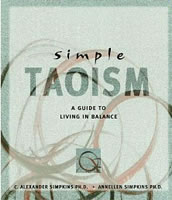
 By Alexander Simkins
 By Derek Lin
 By Ming-Dao Deng.
 By Benjamin Hoff.
 By Ming-Dao Deng
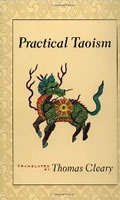
 Translated by Thomas Cleary
"Heaven is eternal, earth is lasting.
The reason why heaven and earth are eternal and lasting is because they do not
live for themselves,
That is the reason they will ever endure.
Therefore the wise man will keep his personality out of sight and because of so
doing he will become notable.
He subordinates his personality and therefore it is preserved.
Is it not because he is disinterested, that his own interests are conserved?"
- Translated by Dwight Goddard
and Henri Borel, 1919,
Chapter 7
"The Tao of Heaven is eternal,
and the earth is long enduring.
Why are they long enduring?
They do not live for themselves;
thus they are present for all beings.
The Master puts herself last;
And finds herself in the place of authority.
She detaches herself from all things;
Therefore she is united with all things.
She gives no thought to self.
She is perfectly fulfilled."
- Translated by
John H. McDonald, 1996, Chapter 7
"Heaven is longeval and earth is long lasting.
The reason why heaven
and earth and longeval
and long lasting is because they do not reproduce
themselves;
therefore they are able to be longeval and long lasting.
That is why the Saint puts himself behind and yet he comes to the
fore.
He puts himself outside and yet he is preserved.
Is it not because
he is without personal preference
that his personal preference is
fulfilled?"
- Translated by
Jan J. L. Duyvendak, 1954, Chapter 7
"Heaven is eternal, and the earth is very old.
They can be eternal and long lasting,
because they do not exist for themselves,
and for this reason can long endure.
Therefore the wise put themselves last,
but find themselves foremost.
They are indifferent to themselves,
and yet they always remain.
Is it not because they do not live for themselves
that they find themselves fulfilled?"
- Translated by
Beck Sanderson, 1996, Chapter 7
"Heaven lasts long, and Earth abides.
What is the secret of their durability?
Is it not because they do not live for themselves
That they can live so long?
Therefore, the Sage wants to remain behind,
But finds himself at the head of others;
Reckons himself out,
But finds himself safe and secure.
Is it not because he is selfless
That his Self is realized?"
- Translated by
John C. H. Wu, 1961, Chapter 7
"The heavens and the earth last forever.
They can do so because they do not exist for themselves.
Therefore, great men always let other people go first, but ended up being first themselves.
They put their lives out of consideration, but always survived.
Is it not because they were selfless,
That they benefited themselves at the end?"
- Translated by
Yang Xiaolin, Chapter 7
"When living by the Tao,
awareness of self is not required,
for in this way of life, the self exists,
and is also non-existent,
being conceived of, not as an existentiality,
nor as non-existent.
The sage does not contrive to find his self,
for he knows that all which may be found of it,
is that which it manifests to sense and thought,
which side by side with self itself, is nought.
It is by sheathing intellect's bright light
that the sage remains at one with his own self,
ceasing to be aware of it, by placing it behind.
Detached, he is unified with his external world,
by being selfless he is fulfilled;
thus his selfhood is assured."
-  Translated by Stan Rosenthal, 1984, Chapter 7
 Translation and elucidation by Hua Ching Ni
 Translated by Brian Walker
 Translated by Arthur Waley
 Translated by Lionel and and Herbert Giles
 By Eva Wong
"Heaven is long-enduring and earth continues long.
The reason why heaven and earth are able to endure and continue thus long is
Because they do not live of, or for, themselves.
This is how they are able to continue and endure.
Therefore the sage puts his own person last, and yet it is found in the foremost
place;
He treats his person as if it were foreign to him, and yet that person is
preserved.
Is it not because he has no personal and private ends, that therefore such ends
are realized?"
- Translated by
James Legge, 1891,
Chapter 7
A Chinese Language Version of Chapter 7 of the Tao Te
Ching by Lao Tzu
A
note
on my style of displaying the Chinese characters of the Tao Te Ching
天長地久.
天地所以能長且久者.
以其不自生.
故能長生.
是以聖人後其身而身先.
外其身而身存.
非以其無私耶.
故能成其私.
- Chinese characters, Tao Te
Ching, Chapter 7
t'ien ch'ang ti chiu.
t'ien ti so yi nêng ch'ang ch'ieh chiu chê.
yi ch'i pu tzu shêng.
ku nêng ch'ang shêng.
shih yi shêng jên hou ch'i shên erh shên hsien.
wai ch'i shên erh shên ts'un.
fei yi ch'i wu ssu hsieh.
ku nêng ch'êng ch'i ssu.
- Wade-Giles Romanization, Tao Te Ching, Chapter 7
Audio
Version in Chinese of Chapter 7 of the Tao Te Ching
tian chang di jiu.
tian di suo yi neng chang qie jiu zhe.
yi qi bu zi sheng.
gu neng chang sheng.
shi yi sheng ren hou qi shen er shen xian.
wai qi shen er shen cun.
fei yi qi wu si ye.
gu neng cheng qi si.
- Pinyin Romanization, Daodejing, Chapter 7
Tao Te Ching in Chinese characters and English (includes a word by word key) from YellowBridge
Tao Te Ching in Chinese characters, Pinyin Romanization, English and German by Dr. Hilmar Alquiros.
Laozi Daodejing: Chapters with Chinese characters, seal script, detailed word by word concordance, Pinyin (tone#), German, French and English.
Chinese and English Dictionary, MDGB
Dao De Jing Wade-Giles Concordance by Nina, Dao is Open
Dao De Jing: English and Spanish and Wade-Giles Concordance Indexing by Mike Garofalo. GWR Hypertext Notebooks.
Tao Te Ching in Pinyin Romanization with Chinese characters, WuWei Foundation
Tao Te Ching in Pinyin Romanization
Tao Te Ching in Chinese characters and English
Tao Te Ching in Chinese characters, English, Word by word analysis, Zhongwen
Tao Te Ching: The Definitive Edition
Tao Te Ching in Chinese characters: Big 5 Traditional and GB Simplified
Chinese Characters, Wade-Giles and Pinyin Romanizations, and 25 English Translations for Each Chapter of the Daodejing. Compiled and indexed by Mike Garofalo.
Tao Te Ching in Chinese characters, Pinyin and Wade Giles Romanization spellings, English; a word for word translation of the Guodian Laozi Dao De Jing Version.
Lao Zi's Dao De Jing: A Matrix Translation with Chinese Text by Bradford Hatcher.
"Heaven and earth are long lasting (chiu).
The reason why heaven and earth are long lasting:
Because they do not live for self (pu tzu sheng).
Therefore they last long.
Thus the sage puts his body (shen) behind,
Yet his body is in front.
He regards his body as external,
Yet his body remains in existence (ts'un).
Is it not because he is selfless (wu szu),
That he can fulfill himself (ch'eng ch'i szu)."
- Translated by
Ellen Marie Chen, 2000, Chapter 7
 By Hu Xuzehi
 Annotated translation by Victor Mair
  By Ha Poong Kim
 By Hans-Georg Moeller
 Ripening Peaches: Taoist Studies and Practices By Mike Garofalo
 By Roger T. Ames and David T. Hall
 By Arthur Waley
"Heaven is eternal, the Earth everlasting.
How come they to be so?
It is because they do not foster their own lives;
That is why they live so long.
Therefore the Sage
Puts himself in the background; but is always to the fore.
Remains outside; but is always there.
Is it not just because he does not strive for any personal end
That all his personal ends are fulfilled?"
- Translated by
Arthur Waley, 1934, Chapter 7
"Heaven and earth will exist forever.
The reason they exist forever is that they do not live for themselves
and they do not live because of themselves.
Therefore they live forever.
In the same way, the sage stays behind everything and finds himself
in
front of everything, he is not himself and he is preserved forever.
Since he has no self-interest, his self-interest can realize itself.
Even though it looks like heaven and earth give life to all creatures,
they do not live in order to preserve their own existence,
and therefore
they live forever and never die.
In his rule over the kingdom, the sage does everything for people,
ignoring his personal goals,
and ultimately earns glory, honor, and
everything he wanted for himself."
- Translated by
Chou-Wing Chohan,
Chapter 7
"Heaven endures and earth is lasting.
And why can heaven
and earth endure and be lasting?
Because they do not live for
themselves.
On that account can they endure.
Therefore,
The holy man puts his person behind and his person comes to the
front.
He surrenders his person and his person is preserved.
Is
it not because he seeks not his own?
For that reason he can
accomplish his own."
- Translated by
D. T.
Suzuki, 1913, Chapter 7
"Heaven is enduring and earth is lasting.
Why heaven and earth can be enduring and lasting is because
they do not live for themselves, thus, they can endure and last.
So that a Sage ruler put himself behind others, and he came to the front;
he excluded himself from struggle with others and he survived.
It is because he was selfless that he fulfilled himself."
- Translated by
Tang Zi-chang, Chapter 7
"The principle of initiation persists; and the principle of completion continues.
Why do such opposing principles persist?
Because they inhere in
Nature, rather than stand by themselves.
That is why opposites endure.
The intelligent man, when an issue arises, stands off
and observes both contentions.
Since he does not take sides, he never loses a battle.
By not favoring one side more than the other,
he is able to appreciate the virtues of both sides."
- Translation by
Archie J. Bahm,
1958, Chapter 7
Created by Michael P. Garofalo, Green Way Research, Valley Spirit Center, Gushen Grove Notebooks, Vancouver, Washington © 2020 CCA 4.0
Tao Te Ching
Lao Tzu: Tao Te Ching
 Translated by Livia Kohn
Dao De Jing: The Book of the Way
"Heaven and Earth can endure long.
If Heaven and Earth endure long,
It is because they do not live for self,
Therefore they can long endure.
That is why the self-controlled man puts himself last,
Yet he is found in the foremost place.
He regards his body as outside of himself,
Yet his body is preserved.
Is it not that his chief interest is in the Inner Life?
Therefore he can perfect his chief interest."
-  Translated by Isabella Mears, 1916, Chapter 7
"Heaven is endless, and Earth is durable.
"The universe is
deathless,
Is deathless because, having no finite self,
It stays
infinite.
A sound man by not advancing himself
Stays the further ahead of
himself,
By not confining himself to himself
Sustains himself outside
himself:
By never being an end in himself
He endlessly becomes
himself."
- Translated by
Witter Bynner, 1944, Chapter 7
 Translated by Eva Wong
  Translated by Philip Ivahoe
 By James Miller
 Translated by Stephen Bokencamp
By Alexander and Annellen Simpkins
Translated by Stephen Bokencamp
By Alexander and Annellen Simpkins Translated by Thomas Cleary
 By Livia Kohn
"Nature continues long.
What is the reason that Nature continues long?
Because it produces nothing for itself it is able to constantly produce.
It is for this reason that the Holy Man puts himself in the background; yet he comes to the front.
He is indifferent to himself; yet he is preserved.
Is it not because he has no interests of his own that he is able to secure his interests?"
-  Translated by C. Spurgeon Medhurst, 1905, Chapter 7
"The Tao is infinite, eternal.
Why is it eternal?
It was never born;
thus it can never die.
Why is it infinite?
It has no desires for itself;
thus it is present for all beings.
The Master stays behind;
that is why she is ahead.
She is detached from all things;
that is why she is one with them.
Because she has let go of herself,
she is perfectly fulfilled."
-  Translated by Edwin Shaw, 1996, Chapter 7
"Heaven is lasting and earth enduring.
The reason why they are lasting and enduring is that they do not live for themselves;
Therefore they live long.
In the same way the Sage keeps himself behind and he is in the front;
He forgets himself and is preserved.
Is it not because he is not self-interested
That his self-interest is established?"
-  Translated by Ch'u Ta-Kao, 1904, Chapter 7
Walking the Way: 81 Zen Encounters with the Tao Te Ching
The Tao of Zen
Tao Te Ching: Zen Teachings on the Taoist Classic
Buddhism and Taoism Face to Face: Scripture, Ritual, and Iconographic Exchange in Medieval China
"The
universe is everlasting.
The reason the universe is everlasting
Is that it does not life for Self.
Therefore it can long endure.
Therefore
the Sage puts himself last,
And finds himself in the foremost place;
Regards his body as accidental,
And his body is thereby preserved.
Is it not because he does not live for Self
That his Self is realized?"
- Translated by
Lin Yutang, 1955, Chapter 7
"Der Himmel ist ewig und die Erde dauernd.
Sie sind dauernd und ewig, weil sie nicht sich selber leben.
Deshalb können sie ewig leben.
Also auch der Berufene:
Es setzt sein Selbst hintan, und sein Selbst kommt voran.
Es entäußert sich seines Selbst, und sein Selbst bleibt erhalten.
Ist es nicht also:
Weil er nichts Eigenes will, darum wird sein Eigenes vollendet?"
- Translated by Richard Wilhelm, 1911, Chapter
7
"The universe is everlasting.
Not existing for itself, but giving life to all,
It endures forever.
Thus, the Sage -
- Remaining behind and in the background,
Finds himself ahead and in the foreground.
- Staying detached,
Finds himself at one with all.
- Being selfless,
Attains fulfillment."
- Translated by
Alan B. Taplow, 1982, Chapter 7
"Heaven and Earth are mighty in continuance, because their work is
delivered from the lust of result.
Thus
also the sage, seeking not any goal, attaineth all things;
He doth
not interfere in the affairs of his body, and so that body acteth without
friction.
It is because he meddles not with personal aims that these
come to pass with simplicity."
- Translated by
Aleister Crowley, 1918, Chapter 7
Created by Michael P. Garofalo, Green Way Research, Valley Spirit Center, Gushen Grove Notebooks, Vancouver, Washington © 2020 CCA 4.0
Further Teachings of Lao-Tzu: Understanding the Mysteries (Wen Tzu)
 Translated by Thomas Cleary
The Lunar Tao: Meditations in Harmony with the Seasons
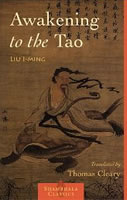
 By Lui I-Ming (1780) and translated by Thomas Cleary
Ripening Peaches: Taoist Studies and Practices By Mike Garofalo
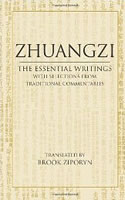
Zhuangzi: The Essential Writings with Selections from Traditional Commentaries
"Heaven is enduring and the earth continues on,
Because it is not for themselves they live,
So the sage who keeps behind, the foremost place will find,
Who puts himself aside, for himself will best provide,
And unselfishly is able to
achieve."
- Translated by
Isaac Winter Heysinger, 1903, Chapter 7
"Heaven is lasting, Earth endures.
What enables Heaven and Earth to last and endure?
Because they do not
live for themselves - so it is that they can live so long.
And so, the Wise Person: Puts himself last, and so finds himself in front.
He puts himself in the out group, and so maintains his place.
The personal does not exist for him.
Isn't this how he can perfect what for him is most personal?"
- Translated by
Michael LaFargue, 1992, Chapter 7
|
Tao Te
Ching |
|||||||||
| 1 | 2 | 3 | 4 | 5 | 6 | 7 | 8 | 9 | 10 |
| 11 | 12 | 13 | 14 | 15 | 16 | 17 | 18 | 19 | 20 |
| 21 | 22 | 23 | 24 | 25 | 26 | 27 | 28 | 29 | 30 |
| 31 | 32 | 33 | 34 | 35 | 36 | 37 | 38 | 39 | 40 |
| 41 | 42 | 43 | 44 | 45 | 46 | 47 | 48 | 49 | 50 |
| 51 | 52 | 53 | 54 | 55 | 56 | 57 | 58 | 59 | 60 |
| 61 | 62 | 63 | 64 | 65 | 66 | 67 | 68 | 69 | 70 |
| 71 | 72 | 73 | 74 | 75 | 76 | 77 | 78 | 79 | 80 |
| 81 | |||||||||
"Heaven and earth will pass away
but Infinity endures forever.
It had no beginning and so It can never end.
It is the inexhaustible essence of all things.
Because the sage remains behind
in her oneness with all things,
she anticipates all manifestations.
Being at one with Infinity,
she is indifferent.
Because she does not distinguish herself from
other beings,
she is completely fulfilled."
- Translated by
John Worldpeace, Chapter 7
"Selbstlosigkeit-das Tor zur Unvergänglichkelt
Langwährend sind Himmel und Erde.
Nie sich selbst lebend,
erfüllen sie die untergründigen Ordnungen.
Das ist der Grund ihrer Unvergänglichkeit.
So kennt auch der Weyse keinen Eigenwillen:
Er fragt nicht nach sich-und kommt doch zu sich.
Er achtet seiner selbst nicht --
und Seyn Selbst vollendet sich.
Muß es nicht so Seyn,
daß dem Selbstlosen allein Erfüllung wird?"
- Translated
by Rudolf
Backofen, 1949, Chapter 7
"Der Himmel ist ewig und die Erde dauernd.
Sie sind dauernd und ewig,
weil sie nicht sich selber leben.
Deshalb können sie ewig leben.
Also auch der Berufene:
Es setzt sein Selbst hintan,
und sein Selbst kommt voran.
Es entäußert sich seines Selbst,
und sein Selbst bleibt erhalten.
Ist es nicht also:
Weil er nichts Eigenes will,
darum wird sein Eigenes vollendet?"
- Translated by
Richard Wilhelm, 1911, Chapter 7
"The Power of Selflessness
Heaven is eternal., the Earth everlasing.
They can be eternal and everlasting
Because they do not exist for themselves.
For that reason tehy can exist eternally.
Therefore, Evolved Individuals
Put themselves last,
And yet they are first.
Put themselves outside,
And yet they remain.
Is it not because they are without self-interest
That their interests succeed?"
- Translated by
R. L. Wing, 1986, Chapter 7
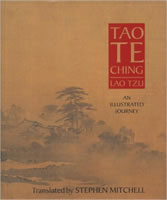
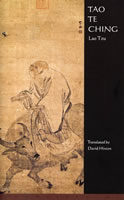
Tao Te Ching
The Book of Tao: Tao Te Ching - The Tao and Its Characteristics
Ripening Peaches: Taoist Studies and Practices
Taoism: Growth of a Religion
Zhuangzi (Chuang Tsu), Daoist Scripture: Bibliography, Links, Resources, Quotations, Notes
Zhuangzi: Basic Writings
Zhuangzi Speaks: The Music of Nature
Lifestyle Advice from Wise Persons
"Heaven is everlasting; Earth endures.
The reason of the endurance of Heaven and Earth is that
they were not
self-produced.
Therefore it is that they are able to endure for ever.
Thus, though the Sage in imitation of them regards
the cultivation of his body
as of secondary importance.
His his body still progresses of its own accord.
He he discards his body, and yet his body is preserved.
Is not this because he has no selfishness?
Wherefore he is able to realize all his wishes."
- Translated by
Frederic Henry Balfour, 1884, Chapter 7
"The
universe is everlasting.
The reason the universe is everlasting
Is that it does not life for Self.
Therefore it can long endure.
Therefore
the Sage puts himself last,
And finds himself in the foremost place;
Regards his body as accidental,
And his body is thereby preserved.
Is it not because he does not live for Self
That his Self is realized?"
- Translated by
Lin Yutang,
1955, Chapter 7
"Heaven endures and earth is lasting.
And why can heaven and earth endure and be lasting?
Because they do not live for themselves.
On that account can they endure.
Therefore, the holy man puts his person behind
and his person comes to the
front.
He surrenders his person and his person is preserved.
Is
it not because he seeks not his own?
For that reason he can
accomplish his own."
- Translated by
Paul
Carus and D.T. Suzuki, 1913, Chapter 7
"Le ciel et la terre ont une durée éternelle.
S'ils peuvent avoir une durée éternelle,
c'est parce qu'ils ne vivent pas pour
eux seuls.
C'est pourquoi ils peuvent avoir une durée éternelle.
De là vient que le saint homme se met après les autres,
et il devient le
premier.
Il se dégage de son corps, et son corps se conserve.
N'est-ce pas qu'il n'a point d'intérêt privés?
C'est pourquoi il peut réussir dans ses intérêts privés."
- Translated by Stanislas Julien, 1842, Chapter
7
Spanish
Language Versions of the Tao Te Ching (Daodejing)
Tao Te Ching en Español
Lao Tsé Tao Te Ching 
Tao Te Ching Traducido por Stephen Mitchell, versión española
Tao Te Ching Traducido al español por el Padre Carmelo Elorduy
Lao Tzu-The Eternal Tao Te Ching
Ripening Peaches: Taoist Studies and Practices By Mike Garofalo Maduración Duraznos: Estudios y Prácticas Taoístas por Mike Garofalo
Tao Te Ching
Lao Tzu - Tao Te Ching
Tao te king
Daodejing Español, Inglés, y Chino Versiones Lingüísticas de la Daodejing
Spanish Language Translations of the Tao Te Ching
"El cielo y la tierra son eternos.
El cielo y la tierra deben su eterna duración
a que no hacen de sí mismos
la razón de su existencia.
Por ello son eternos.
El sabio queda atrás, por lo mismo es el primero.
Está desapegado, por eso es uno con todo.
A través de sus acciones generosas logra la plenitud."
- Translation from
Wikisource, 2013, Capítulo
7
"El cielo y la tierra son eternos.
Por qué duran para siempre?
Porque nunca nacieron,
por lo cual siempre vivieron.
El sabio queda atrás, por lo mismo es el primero.
Está desapegado, por eso es uno con todo.
A través de sus acciones generosas logra la plenitud."
- Translated by
Cristina Bosch, 2002, Capítulo 7
"Largo es el Cielo, duradera es la Tierra.
El Cielo su larguray la Tierra su
duración lo deben a no vivir vida propia.
Por eso,pueden vivir mucho.
Así, también el hombre perfecto se antepone, porque se ha pospuesto.
Se queda, porque se ha apartado.
Logra sus interesesprivados, porque los ha
desatendido."
- Translated by
Carmelo Elorduy,
2006, Capítulo 7
"La Naturaleza es eterna debido a que carece de conciencia de sí misma.
De este modo, el sabio:
Se sirve a si mismo en último lugar, y se encuentra atendido;
Observa a su cuerpo como accidental, y encuentra que resiste.
Debido a que no atiende a su Ego, éste se encuentra satisfecho."
- Translated by
Antonio Rivas Gonzálvez, 1998, Capítulo
7
"El cielo dura eternamente, la tierra permanece.
Eternos y permanentes porque no viven para sí mismos.
Por eso son eternos y
duraderos.
Es así que el hombre sabio al ponerse en el último lugar, es el
primero.
No pensando en sí mismo, se mantiene.
No buscando su bien, lo realiza."
- Translation from
Logia Medio Dia, 2015,
Tao Te Ching, Capítulo 7
Created by Michael P. Garofalo, Green Way Research, Valley Spirit Center, Gushen Grove Notebooks, Vancouver, Washington © 2020 CCA 4.0
Next Chapter of the Tao Te Ching #8
Previous Chapter of the Tao Te Ching #6
Chapter and Thematic Index to the Tao Te Ching
Tao Te Ching
Commentary, Interpretations, Research Tools, Resources
Chapter 7
Das Tao Te King von Lao Tse. Complete versions of all 81 Chapters of the Tao Te Ching by many different translators in many languages: 124 English, 24 German, 14 Russian, 7 Spanish, 5 French and many other languages. Links are organized first by languages, and then alphabetically by translators. Formatting varies somewhat. The original website at Onekellotus went offline in 2012; but, the extensive collection of these Tao Te Ching versions was saved for posterity by the Internet Archive Wayback Machine and available as of 9/9/2015. This is an outstanding original collection of versions of the Daodejing─ the Best on the Internet. Caution: copyright infringement may sometimes be an issue at this website.
Tao Te Ching, Translations into English: Terebess Asia Online (TAO). 124
nicely formatted complete English language translations, on separate webpages, of the Daodejing.
Alphabetical index by translators. Each webpage has all 81 chapters of the Tao Te
Ching translated into English. A useful collection! Many
reformatted and colored versions from the original collection at
Das Tao Te King von Lao Tse. Caution: copyright infringement may
sometimes be an
issue at this website.
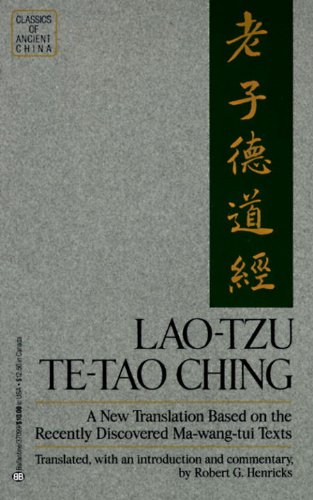
Lao Tzu: Te-Tao Ching - A New Translation Based on the Recently Discovered Ma-wang-tui
Texts (Classics of Ancient China)
Daodejing by Laozi: Chapters with Chinese characters, seal script,
detailed word by word concordance, Pinyin (tone#), German, French and English.
This is an outstanding resource for serious students of the Tao Te Ching.
Tao Te
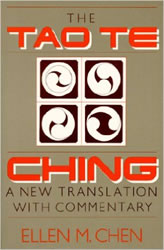
Ching: A New Translation and Commentary. By Ellen Chen. Paragon
House, 1998. Detailed glossary, index, bibliography, notes, 274 pages.
The Tao
and Method: A Reasoned Approach to the Tao Te Ching. By Michael
Lafargue. New York, SUNY Press, 1994. 640 pages. Detailed
index, bibliography, notes, and tables. An essential research tool.
Two Visions of the Way: A Study of the Wang Pi and the Ho-Shang Kung Commentaries on the Lao-Tzu.
By Professor by Alan Kam-Leung Chan. SUNY Series in Chinese
Philosophy and Culture. State University of New York Press, 1991.
Index, bibliography, glossary, notes, 314 pages.
ISBN: 0791404560.
Tao Te Ching: The Definitive Edition
Chinese Reading of the Daodejing
Wang Bi's Commentary on the Laozi with Critical Text and Translation.
By Professor Rudolf G. Wagner. A SUNY Series in Chinese Philosophy and
Culture. English and Mandarin Chinese Edition.
State University of New York Press; Bilingual edition (October 2003). 540
pages. ISBN: 978-0791451823.
Wang Bi (Wang Pi, Fusi), 226-249 CE,
Commentary on the Tao Te
Ching.
Tao Te Ching
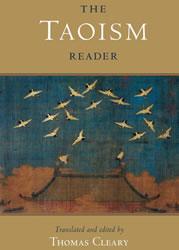
The Taoism Reader
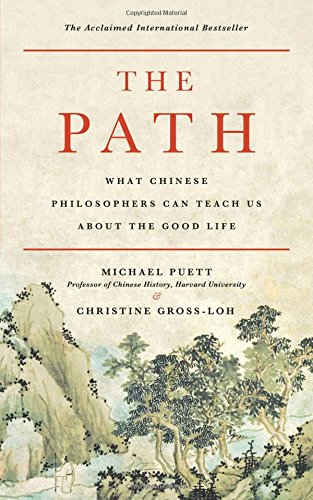
The Path: What Chinese Philosophers Can Teach Us About the Good Life.
By Michael Puett and Christine Gross-Loh. Simon and Schuster, 2018.
240 pages.
Change Your Thoughts - Change Your Life: Living the Wisdom of the Tao
The Tao of Being: A Think and Do Workbook
The Lunar Tao: Meditations in Harmony with the Seasons
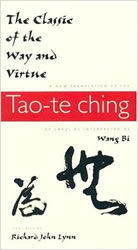
The Classic of the Way and Virtue: A New Translation of the Tao-te Ching of Laozi as Interpreted by Wang Bi.
Translated by Richard John Lynn. Translations from the Asian Classics
Series. New York, Columbia University Press, 1999. Extensive index,
glossaries, notes, 244 pages.
Tao Te Ching in Chinese characters,
Pinyin Romanization, English and German by Dr. Hilmar
Alquiros.
Stoicism and Hellenistic
Philosophy
How to Live a Good Life:
Advice from Wise Persons
The Ho-Shang Kung Commentary on Lao Tzu's Tao Te Ching. Author:
Heshang Gong. Translated into English by Dan G. Reid. Center Ring
Publishing, 2018. 326 pages.
One Old Philosopher's
Notebooks Research, Reading, and Reflections by Mike Garofalo.
Yellow Bridge
Dao De Jing Comparison Table Provides side by side comparisons of
translations of the Tao Te Ching by James Legge, D. T. Suzuki, and Dwight
Goddard. Chinese characters for each paragraph in the Chapter are on the
left; place your cursor over the Chinese characters to see the Pinyin
Romanization of the Chinese character and a list of meanings.
Translators Index,
Tao Te Ching Versions in English, Translators Sorted Alphabetically by Translator, Links to Books and
Online Versions of the Chapters
Taoism and the Tao Te
Ching: Bibliography, Resources, Links
Spanish Language
Translations of the Tao Te Ching, Daodejing en Español, Translators Index
The Tao of Zen
Chapter 41 in the
Rambling
Taoist Commentaries by Trey Smith. The
Rambling Taoists are Trey Smith and Scott Bradley.
By Hans-Georg Moeller. Columbia University Press, 2006, 176 pages.
Valley Spirit, Gu Shen,
Concept, Chapter 6
Valley Spirit Center in Red
Bluff, California.
Sacred
Circle in the Gushen Grove.
Lao-tzu's Taoteching
Reading Lao Tzu: A Companion to the Tao Te Ching with a New Translation
Dao De Jing: A Philosophical Translation
Thematic Index to the
81 Chapters of the Tao Te Ching
Lieh-Tzu: A Taoist Guide to Practical Living
Revealing the Tao Te Ching: In-depth Commentaries on an Ancient Classic
Cloud Hands Blog
Mike Garofalo writes about Mind-Body Arts, Philosophy, Taoism, Gardening, Taijiquan, Walking, Mysticism,
Qigong, and the Eight Ways.
The Whole Heart of Tao:
The Complete Teachings From the Oral Tradition of Lao Tzu.
Commentary for Chapter 7 of the Dao De Jing
Lao-tzu's Taoteching
“The Path: What Chinese
Philosophers Can Teach Us About the Good Life,” 2018, by Michael Puett and
Christine Gross-Loh.
“Tao: The Watercourse Way,” 1977, by Alan
Watts and Al Chung-liang Huang. Illustrated by Lee Chih-chang.
Gushen Grove Notebooks for the Tao Te Ching
Green Way Research, Valley Spirit
Center, Gushen Grove Notebooks, Vancouver, Washington
Green Way Research, 2010-2018.
Indexed and Compiled by
Michael P. Garofalo
Created and revised by Michael P. Garofalo,
Green
Way Research, Valley Spirit
Center, Gushen Grove Notebooks, Red Bluff, North Sacramento Valley, California,
USA (2010-2017)
Revised and updated by Mike Garofalo,
Green Way Research, Cloud Hands Home, City
of Vancouver, State of Washington, Northwestern USA, (2017-)
This webpage was last modified, changed, improved,
supplemented, reformatted, or updated on
January 22, 2020.
This webpage was first distributed online on November 8, 2010.
Brief Biography of Michael P. Garofalo, M.S.

Ripening Peaches: Daoist Studies and Practices
Zhuangzi (Chuang Tzu, Zhuang Zhou, Master Chuang) 369—286 BCE
Taoist Perspectives: My Reading List
Bodymind Theory and Practices, Somaesthetics
How to Live a Good Life: Advice from Wise Persons
Pleasures, Satisfaction, Desires
Qigong (Chi Kung) Health Practices
One Old Daoist Druid's Final Journey: Notebooks of the Librarian of Gushen Grove
Index to Cloud Hands and Valley Spirit Websites
Index to English Language Translators of the Tao Te Ching
Recurring Themes (Terms, Concepts, Leimotifs) in the Tao Te Ching
Spanish Language Translations of the Tao Te Ching
The Tao Te Ching (Dao De Jing) by Lao Tzu (Laozi) circa 500 BCE
|
Tao Te
Ching |
|||||||||
| 1 | 2 | 3 | 4 | 5 | 6 | 7 | 8 | 9 | 10 |
| 11 | 12 | 13 | 14 | 15 | 16 | 17 | 18 | 19 | 20 |
| 21 | 22 | 23 | 24 | 25 | 26 | 27 | 28 | 29 | 30 |
| 31 | 32 | 33 | 34 | 35 | 36 | 37 | 38 | 39 | 40 |
| 41 | 42 | 43 | 44 | 45 | 46 | 47 | 48 | 49 | 50 |
| 51 | 52 | 53 | 54 | 55 | 56 | 57 | 58 | 59 | 60 |
| 61 | 62 | 63 | 64 | 65 | 66 | 67 | 68 | 69 | 70 |
| 71 | 72 | 73 | 74 | 75 | 76 | 77 | 78 | 79 | 80 |
| 81 | |||||||||
Return to the Top of this Webpage


Cloud Hands Blog of
Michael P. Garofalo

Facebook of
Michael P. Garofalo

Return to
the Alphabetical Index of Mike Garofalo's Hypertext Documents