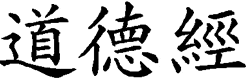
Compiled and Indexed by Michael P. Garofalo
Green Way Research, Valley Spirit Center, Gushen Grove Notebooks, Vancouver, Washington
Chapter 3 Chapter 5 Index to All 81 Chapters Daoism Concordance Commentary Cloud Hands Blog
Classic Book (Ching) about the Tao (Way, Nature, Patterns, Processes) and Te (Virtue, Potency, Power, Integrity, Wise Person, Sage)
Concordance: Indexing, Search Terms, Topics, Themes, Keys, Subjects
English and Chinese (Wade-Giles) Terms for Chapter 4:
Appearance, Birth,
Bottomless, Brightness or Light (kuang), Chaos, Child or Offspring (tzu),
Continuing or Enduring (ts'un), Cosmos, Creative, Dao, Deep or Dark or
Serene (chan), 無源 Deep
Pool, Dulls or Blunts (ts'o), Dust or Common (ch'ên), Earth,
Emptiness or Void or Vacant (ch'ung), Eternal, Exhausted or Depleted (ying),
Fathomless or Profound or Vast (yüan), First Born, First Cause, God (ti),
Great Obscurity, Harmonize or Blend (ho), Hidden, Identify or Unite (t'ung),
Images or Reflections (hsiang), Infinite, Knots or Tangled (fên),
Know (chih), Likely or Apparently or Perhaps (huo), Loosen or
Unravel or Untangle (chien), Lord of Heaven or Creator or God (ti),
Nature, Noumenon, Ocean, Order, Origin, Parentless, Permanent, Precede or
Antecedent (hsien), Primeval, Resembles or Like or As If (ssu),
Sharp, Sharpness or Point (jui), Tao, Ten Thousand Things (wan wu),
Theology, The Ancestor (tsung) of All Things, Thing In Itself, Timeless,
Totality, Tranquil, Uniting, Universe, Untangles Knots, Used or Applied (yung),
Vessel.
Términos en Español por Capítulo 4:
Aflojar,
Agotado, Antecedente, Antepasado, Apariencia,
Armonizar, Brillo, Caos, Complicado,
Continua, Cosmos, Creativo, Definición, Desafila, Dios,
Dioses, Duradera, Embarcación,
Empobrecido, Enredado, Eterno, Gran Oscuridad,
Hueco,
Identificar, Imágenes, Infinito,
Insondable, Las Diez mil Cosas, Luz, Mezcla,
Nacimiento, Naturaleza, Niño,
Noumenon, Nudos, Océano,
Oculto, Orden, Origen, Oscuro,
Parecer, Permanente, Polvo, Precedan, Primera
Causa, Primitivo,
Probable, Profunda, Reflexiones,
Saber, Señor, Sereno, Sin Fondo,
Sin Padres, Sin Tiempo,
Sostenido, Submarino, Tierra, Totalidad,
Tranquilidad,
Uniendo, Universo,
Vacante, Vacío, Vacuo.
Electronic Concordance for all 81 Chapters of the Tao Te Ching
English Language Translations of the Tao Te Ching, Chapter 4
"The Dao appears to be emptiness but it is never exhausted.
Oh, it is profound!
It appears to have preceded everything.
It dulls its own sharpness, unravels its own fetters,
softens its own
brightness, identifies itself with its own dust.
Oh, it is tranquil!
It appears infinite.
I do not know from what it proceeds.
It even appears to be antecedent to the Lord."
- Translated by Dwight Goddard
and Henri Borel, 1919,
Chapter 4
"The Tao is an inexhaustible container,
as much of itself that it pours out,
still there is more left.
It blunts the sharpness, untangles the knots and softens the glare.
Its depths are hidden, universal and eternal.
I don't know where it came from,
It existed before the beginning."
- Translated by
John Dicus, 2002, Chapter 4
"The Tao is full, exhaustless and complete;
yet in
operation as though not self-elated.
In its origin it is as it were the Ancestor of All Things.
It chastens asperity; it unravels confusion; it moderates the radiance,
And and it identifies itself with the sordid ones of the earth.
It enables a man to associate with the base without being defiled.
Pellucid like a spreading ocean, it yet has the semblance of permanence.
I know not whose offspring it is.
Its ειδωλον existed before God was."
- Translated by Frederic H. Balfour, 1884, Chapter
4
"Tao is empty- its use never exhausted.
Bottomless - the origin of all things.
It blunts sharp edges, Unties knots,
Softens glare, Becomes one with the dusty world.
Deeply subsistent -
I don't know whose child it is. It is older than the Ancestor."
- Translated by
Stephen Addis, 1993, Chapter 4
"The Tao is like a well:
used but never used up.
It is like the eternal void:
filled with infinite possibilities.
It is hidden but always present.
I don't know who gave birth to it.
It is older than God."
- Translated by
Stephen Mitchell, 1988, Chapter 4
"The Way is like an empty vessel which, in spite of being used, is
never filled.
How bottomless it is, like the progenitor of the ten
thousand things!
How deep it is, as if it will last forever!
Generated by I know not what, it is the Image of what was before the Emperors".
- Translated by
Jan J. L. Duyvendak, 1954, Chapter 4
"The Tao is the empty space of a vessel,
Yet, when used,
Never brims over.
How deep,
Like the ten thousand things' progenitor!
It files its sharpness,
Unravels its entanglements,
Softens its brightness,
And mingles with the dust.
How transparent,
As if existing!
I do not know whose son it was;
Seemed to precede the Emperor."
- Translated by
Chichung Huang, Chapter 4
"Source Non-Existent
Wu Yuan
Tao is hollow, yet its utility
Seems unlikely to reach the limit.
Profound indeed it is;
It seems to be the fount of all things.
It blunts the sharp;
It unravels the tangled;
It harmonizes with the light;
It mingles with the dust.
Calm like a deep pool it seems to remain.
I do not know whose son it is.
It apparently antecedes the Creator."
- Translated by
Henry Wei, 1982, Chapter 4
"Tao,
like an empty bowl
Being used somehow lacks fullness.
Such
breadth!
It seems to be a model for the 10,000 things.
Blunting what is sharp
Untying what is tangled
Harmonizing what is bright
Being together with the dusty earth.
Such
depth!
It seems to somehow exist.
I have no knowledge whose child it is
It appears to precede the emperors."
- Translated by
David Lindauer, Chapter 4
"Tao is empty! Use it
And it isn’t used up.
Deep! It seems like
The forebear of the ten thousand things.
It blunts edges,
Unties tangles,
Harmonizes lights,
Unites all dust.
Existent and deep!
I don’t know whose child it is.
It looks to be the source."
- Translated by
Herrymoon Maurer, 1985, Chapter 4
"The Tao is empty.
Used but never filled.
Deep source of the Ten Thousand Things.
Blunting our shapness.
Untying our bonds.
Dimming our light.
Merging with our dust.
Clear and deep
Ever present.
Those who know the Tao need not ask.
"Whose child is it?"
For the know
It is the mother of us all."
- Translated by
Cloud Hands Inc., 2003, Chapter 4

Created by Michael P. Garofalo, Green Way Research, Valley Spirit Center, Gushen Grove Notebooks, Vancouver, Washington, © 2020 CCA 4.0
 Translated by Eva Wong
  Translated by Philip Ivahoe
 By James Miller
 Translated by Stephen Bokencamp
Tai Chi Chuan, Qigong, Taoist Body-Mind Arts and Practices
How to Live a Good Life: Advice from Wise Persons
 By Alexander and Annellen Simpkins
 Translated by Thomas Cleary
 By Livia Kohn
"Tao, when put in use for its hollowness is not likely to be filled.
In its profundity it seems to be the origin of all things.
In its depth it seems ever to remain.
I do not know whose offspring it is;
But it looks like the predecessor of Nature."
- Translated by
Ch'u Ta-Kao, 1904, Chapter 4
"Tao is without limitation; its depth is the source of whatsoever is.
It makes shard things round, it brings order out of chaos,
it obscures the brilliant, it is wholly without attachment.
I do not know who gave it birth; it is more ancient than God."
- Translated by Walter Gorn Old, 1904, Chapter 4
"Tao floods, never over flow, we use it,
As a stream, as the source of everything.
Blunt the sharp,
Untangle the knotted,
Soften the glare,
Merge with dust.
Hidden, yet seemingly present!
I do not know from whence it comes.
Forefather of gods."
- Translated by
Tienzen Gong, Chapter 4
"Empty of all doctrines,
The Tao is wisdom eternally inexhaustible.
Fathomless for the mere intellect,
The Tao is the law wherewith all things come into being.
It blunts the edges of the intellect,
Untangles the knots of the mind,
Softens the glare of thinking,
And settles the dust of thought.
Transparent yet invisible,
The Tao exists like deep pellucid water.
Its origin is unknown,
For it existed before Heaven and Earth."
- Translated by
Yasuhiku Genku Kimura, Chapter 4
"The Way is full: use won’t empty it.
Deep is the matrix of the myriad creatures.
Blunt the sharp:
Loosen the knots:
Dim the glare:
Follow old tracks.
Shadowy, it seems hardly there.
I don’t know whose child it is.
It seems like the ancestral form."
- Translated by
A. S. Kline, 2003, Tao Te Ching, Chapter 4
"Tao is a container
Though used again and again
It is never full
Profound! As though the ancestor of all things
Rounding the points
Untying the knots
Softening the glare
Unifying the dust
Tranquil! Asthough having a life of its own
I do not know whose child it is
It appears to have preceded the primordial ruler"
- Translated by
Dan G. Reid, 2016, Chapter 4
"Tao is hollow emptiness.
The substance of All,
it is absent of substance.
Dimensionless Void,
it is the source of the ten thousand things.
It blunts sharpness,
unravels entanglements,
diffuses brightness,
merges with dust.
Dark, invisible, it only seems to be.
It is the child of no-thing
and the father of God."
- Translated by
Bart Marshall,
2006, Chapter 4
"The Way is like an empty bowl, which is never used up.
Fathomless, it seems to be the origin of all things.
It blunts all sharp edges; it unties all tangles;
it harmonizes all lights;
it unites the worldly dusts.
Hidden in the deeps, yet it seems to exist forever.
I do not know whose child it is;
it seems to be the common ancestor of all,
the father of things."
- Translated by
Tran Tien Cong, Chapter 4
By Alexander SimkinsTai Chi Chuan, Qigong, Taoist Body-Mind Arts and Practices
How to Live a Good Life: Advice from Wise Persons
 By Derek Lin
 By Ming-Dao Deng.
 By Benjamin Hoff.
 By Ming-Dao Deng
 Translated by Thomas Cleary
"The Tao is like the emptiness of a vessel; and in our employment of it
we
must be on our guard against all fullness.
How deep and unfathomable it is, as if it were the Honored Ancestor of all
things!
We should blunt our sharp points, and unravel the complications of things;
We should temper our brightness,
and bring ourselves into agreement with the
obscurity of others.
How pure and still the Tao is, as if it would ever so continue!
I do not know whose son it is. It might appear to have been before God."
- Translated by
James Legge, 1891,
Chapter 4
A Chinese Language Version of Chapter 4 of the Tao Te
Ching by Lao Tzu
A
note
on my style of displaying the Chinese characters of the Tao Te Ching
道沖而用之或不盈.
淵兮似萬物之宗.
挫其銳.
解其紛.
和其光同其塵.
湛兮似或存.
吾不知誰之子.
象帝之先.
- Chinese characters, Chapter 4, Tao Te
Ching
tao ch'ung erh yung chih huo pu ying.
yüan hsi ssu wan wu chih tsung.
ts'o ch'i jui.
chieh ch'i fên.
ho ch'i kuang t'ung ch'i ch'ên.
chan hsi ssu huo ts'un.
wu pu chih shui chih tzu.
hsiang ti chih hsien.
- Wade-Giles Romanization, Chapter 4, Tao Te Ching
Audio
Version in Chinese of Chapter 4 of the Tao Te Ching
dao chang er yong zhi huo bu ying.
yuan xi si wan wu zhi zong.
cuo qi rui.
jie qi fen.
he qi guang tong qi chen.
zhan xi si huo cun.
wu bu zhi shui zhi zi.
xiang di zhi xian.
- Pinyin
Romanization, Chapter 4, Daodejing
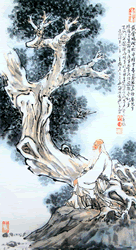
Tao Te Ching in Chinese characters and English (includes a word by word key) from YellowBridge
Tao Te Ching in Chinese characters, Pinyin Romanization, English and German by Dr. Hilmar Alquiros.
Laozi Daodejing: Chapters with Chinese characters, seal script, detailed word by word concordance, Pinyin, German, French and English. Excellent!
Chinese and English Dictionary, MDGB
Dao De Jing Wade-Giles Concordance by Nina, Dao is Open
Dao De Jing: English and Spanish and Wade-Giles Concordance Indexing by Mike Garofalo. GWR Hypertext Notebooks.
Tao Te Ching in Pinyin Romanization with Chinese characters, WuWei Foundation
Tao Te Ching in Pinyin Romanization
Tao Te Ching in Chinese characters and English
Tao Te Ching: The Definitive Edition
Tao Te Ching in Chinese characters, English, Word by word analysis, Zhongwen
Tao Te Ching in Chinese characters: Big 5 Traditional and GB Simplified
Chinese Characters, Wade-Giles and Pinyin Romanizations, and 25 English Translations for Each Chapter of the Daodejing. Compiled and indexed by Mike Garofalo.
Tao Te Ching in Chinese characters, Pinyin and Wade Giles Romanization spellings, English; a word for word translation of the Guodian Laozi Version.
Lao Zi's Dao De Jing: A Matrix Translation with Chinese Text by Bradford Hatcher.
"The Tao is empty, yet when applied it is never exhausted.
So deep it is, it seems to be the ancestor of all things.
Blunting sharp edges, resolving confusions,
Diffusing glare, uniting the world:
Such depth, something seems to exist there.
I do not know whose child it is.
It seems to have existed before the Ancestor."
- Translated by
Tam C. Gibbs, 1981, Chapter 4
"Tao is an empty vessel;
it is used but never exhausted.
It is the fathomless source
of the ten thousand beings!
It blunts the sharp
and untangles the knots.
It softens the glare
and unites with the dust of the world.
It is tranquil and serene
and endures forever.
I don't know form where it comes
yet it is the ancestor of all."
- Translated by
Solala Towler, 2016, Chapter 4
The Routledge Encyclopedia of Taoism
The Complete Works of Lao Tzu: Tao Teh Ching & Hua Hu Ching
Tai Chi Chuan, Qigong, Taoist Body-Mind Arts and Practices
The Dao De Jing: A Qigong Interpretation by Dr. Yang Jing-Ming
How to Live a Good Life: Advice from Wise Persons
Dao De Jing: A Philosophical Translation by Roger T. Ames and David L. Hall
Practicing the Tao Te Ching: 81 Steps on the Way by Solala Towler
Return to the Top of this Webpage
"Tao is a vast immeasurable void.
It can be used to infinity; it is truly inexhaustible.
Like nature, it appears to be the origin of everything.
In it, conflicts (sharp edges) are satisfied (rounded);
differences (tangles) are resolved (united);
observations (light) are clarified (tempered);
disturbances (turmoil) are quieted (submerged).
It is like a deep, dark pool. I do not know its source.
It is like a prelude to nature, a preface to God."
- Translated by
Frank J. MacHovec, 1962, Chapter 4
"The way is empty, yet use will not drain it.
Deep, it is like the ancestor of the myriad creatures.
Blunt
the sharpness;
Untangle the knots;
Soften the glare;
Let your wheels move only along old ruts.
Darkly
visible, it only seems as if it were there.
I know not whose son it is.
It images the forefather of God."
- Translated by
D. C. Lau, 1963, Chapter 4
Translation and elucidation by Hua Ching Ni Translated by Brian Walker
 Translated by Arthur Waley
Tai Chi Chuan, Qigong, Taoist Body-Mind Arts and Practices
How to Live a Good Life: Advice from Wise Persons
 Translated by Lionel and and Herbert Giles
 By Eva Wong
"Existence, by
nothing bred,
Breeds everything.
Parent of the universe,
It smoothes rough edges,
Unties hard knots,
Tempers the sharp sun,
Lays blowing dust,
Its image in the wellspring never fails.
But how was it conceived?--this image
Of no other sire."
- Translated by
Witter Bynner, 1944, Chapter 4
"Tao is empty, used yet never filled.
It is deep, like the forefather of all things.
It dulls sharpness, and sorts tangles,
Blends with the light, becoming one with the dust.
So serene, as if it hardly existed.
I do not know whose son it is.
It seems to have preceded God."
- Translated by
Paul J. Lin, Chapter 4
"Atheism
is an empty bowl:
it cannot be filled
neither does it need filling.
It is at the beginning of all human consciousness
and is even the origin of theism.
Soften the sharpness
stop the debate
dissolve the confusion
reduce the glare
become like dust.
Like
a spring-fed pool in a quiet forest
it has no bottom
no beginning
no end.
Is
atheism born from theism?
No one knows.
But it is
the natural state
of all being."
- Translated by
Tom Kunesh, Chapter 4
Created by Michael P. Garofalo, Green Way Research, Valley Spirit Center, Gushen Grove Notebooks, Vancouver, Washington © 2020 CCA 4.0
 By Hu Xuzehi
Tai Chi Chuan, Qigong, Taoist Body-Mind Arts and Practices
How to Live a Good Life: Advice from Wise Persons
 Annotated translation by Victor Mair
  By Ha Poong Kim
 By Hans-Georg Moeller
 Ripening Peaches: Taoist Studies and Practices By Mike Garofalo
 By Roger T. Ames and David T. Hall
 By Arthur Waley
"The Way is like an empty vessel
That yet may be drawn from
Without ever needing to be filled.
It is bottomless; the very progenitor of all things in the world.
In it all sharpness is blunted,
All tangles untied,
All glare tempered,
All dust soothed.
It is like a deep pool that never dries.
Was it too the child of something else?
We cannot tell.
But as a substanceless image it existed before the Ancestor."
- Translated by Arthur Waley, 1934, Chapter 4
"The subtle Way of the universe appears to lack strength,
yet its power is inexhaustible.
Fathomless, it could be the origin of all things.
It has no sharpness,
yet it rounds off all sharp edges.
It has no form,
yet it unties all tangles.
It has no glare,
yet it merges all lights.
It harmonizes all things and unites them as one integral whole.
It seems so obscure,
yet it is the Ultimate Clarity.
Whose offspring it is can never be known.
It is that which existed before any divinity."
- Translated by
Hua-Ching Ni,
1995, Chapter 4
"The Tao is like an empty container:
it can never be emptied and can never be filled.
Infinitely deep, it is the source of all things.
It dulls the sharp, unties the knotted,
shades the lighted, and unites all of creation with dust.
It is hidden but always present.
I don't know who gave birth to it.
It is older than the concept of God."
- Translated by
John H. McDonald,
1996, Chapter 4
Tao Te Ching
Lao Tzu: Tao Te Ching
 Translated by Livia Kohn
Dao De Jing: The Book of the Way
Tai Chi Chuan, Qigong, Taoist Body-Mind Arts and Practices
How to Live a Good Life: Advice from Wise Persons
"The Way is empty, yet never refills with use;
Bottomless it is, like the forefather of the myriad creatures.
It files away sharp points,
unravels tangles,
diffuses light,
mingles with the dust.
Submerged it lies,
seeming barely to subsist.
I know not whose child it is,
only that it resembles the predecessor of God."
- Translated by
Victor H. Mair, 1990, Chapter 4
"The Tao is invisibly empty,
But its use is extremely plentiful.
It is profound like the originator of all things.
It shows no sharpness,
stays away from entanglements,
glows with veiled radiance,
mingles with dust.
It is formless and invisible, but indeed exists.
I do not know where it comes,
It seems to have appeared before the existence of God."
- Translated by
Gu Zhengkun, Chapter 4
"The Way is a void,
Used but never filled:
An abyss it is,
From which all things come.
It blunts sharpness,
Resolves tangles;
It tempers light,
Subdues turmoil.
A deep pool it is,
Never to run dry!
Whose offspring it may be
I do not know:
It is like a preface to God."
- Translated by
Raymond Blackney, 1955, Chapter 4
Created by Michael P. Garofalo, Green Way Research, Valley Spirit Center, Gushen Grove Notebooks, Vancouver, Washington © 2020 CCA 4.0

"Tao is empty; and when used, never fills up.
It is Deep, like the ancestor of all things.
Round the edges,
end the separation,
merge with the light,
join with the dust.
It is clear, yet still seems to exist.
I do not know whose child it is.
It is older than the appearance of Ti.
- Translated by
Karl Kromal, 2002, Chapter 4
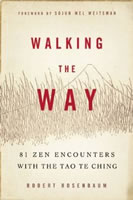
Walking the Way: 81 Zen Encounters with the Tao Te Ching
The Tao of Zen
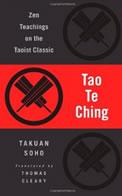
Tao Te Ching: Zen Teachings on the Taoist Classic
Tai Chi Chuan, Qigong, Taoist Body-Mind Arts and Practices
How to Live a Good Life: Advice from Wise Persons
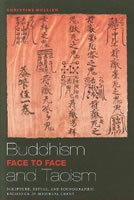
Buddhism and Taoism Face to Face: Scripture, Ritual, and Iconographic Exchange in Medieval China
"Tao is infinite.
If we use It, we find It inexhaustible,
Deep!
It appears to be Ancestor of all things.
It rounds our angles. It unravels our difficulties. It harmonizes our Light. It brings our atoms into Unity.
Pure!
It appears to be everlasting in principle.
I do not know whose Son It is,
It existed before God was manifest in Form."
- Translated by
Isabella Mears, 1916, Chapter 4
"The Tao is like an empty bowl,
Which in being used can never be filled up.
Fathomless, it seems to be the origin of all things.
It blunts all sharp edges,
It unties all tangles,
It harmonizes all lights,
It unites the world into one whole.
Hidden in the deeps,
Yet it seems to exist for ever.
I do not know whose child it is;
It seems to be the common ancestor of all, the father of things."
- Translated by
John C. H. Wu, 1961, Chapter 4
|
Tao Te
Ching |
|||||||||
| 1 | 2 | 3 | 4 | 5 | 6 | 7 | 8 | 9 | 10 |
| 11 | 12 | 13 | 14 | 15 | 16 | 17 | 18 | 19 | 20 |
| 21 | 22 | 23 | 24 | 25 | 26 | 27 | 28 | 29 | 30 |
| 31 | 32 | 33 | 34 | 35 | 36 | 37 | 38 | 39 | 40 |
| 41 | 42 | 43 | 44 | 45 | 46 | 47 | 48 | 49 | 50 |
| 51 | 52 | 53 | 54 | 55 | 56 | 57 | 58 | 59 | 60 |
| 61 | 62 | 63 | 64 | 65 | 66 | 67 | 68 | 69 | 70 |
| 71 | 72 | 73 | 74 | 75 | 76 | 77 | 78 | 79 | 80 |
| 81 | |||||||||
"Nature contains nothing but natures; and these natures are nothing over and above Nature.
In Nature, all natures originate,
all conflicts are settled, all differences are united, all disturbances are quieted.
Yet no matter how many natures come into being, they can never exhaust Nature.
To look for an external source of Nature is foolish, for Nature is the source of all else."
- Translated by
Archie J. Bahm, 1958, Chapter 4
"Der Sinn ist immer strömend.
Aber es läuft in seinem Wirken doch nie über.
Ein Abgrund ist er, wie der Ahn aller Dinge.
Er mildert ihre Schärfe.
Er löst ihre Wirrsale.
Er mäßigt ihren Glanz.
Er vereinigt sich mit ihrem Staub.
Tief ist er und doch wie wirklich.
Ich weiß nicht, wessen Sohn er ist.
Er scheint früher zu sein als Gott."
- Translated by Richard Wilhelm, 1911, Chapter
4
"Die Unerkennbarkeit des Weltenurgrundes
Wesenlos ist das Unergründliche,
die Wesen lösend von ihrem Seyn;
abgründig tief ist es, alles Seyenden Grund.
Es mildert das Scharfe,
klärt das Wirre,
dämpft das Grelle,
macht sich eins mit dem Unscheinbaren.
Quellgrund des Schweigen! Nicht scheinst Du zu wirken!
Ich weiß nicht, woher Du kommst.
Du scheinst älter zu sein als selbst der Gott des Himmels."
- Translated
by Rudolf
Backofen, 1949, Chapter
"Dao is akin to an empty vessel.
It is inexhaustible, as if the vessel can never be filled completely.
So deep and unfathomable,
It must be from where all things come forth.
Dao blunts its own sharpness,
Simplifies its own complexity,
Attenuates its own brilliance,
And mingles with the dirt.
Vast and profound, it appears that it could go on forever.
I do not know whose progeny it is.
It was there before the existence of the creator."
- Translated by
Han Hiong Tan, Chapter 4
Tao Te Ching
Tai Chi Chuan, Qigong, Taoist Body-Mind Arts and Practices
How to Live a Good Life: Advice from Wise Persons
The Book of Tao: Tao Te Ching - The Tao and Its Characteristics
Ripening Peaches: Taoist Studies and Practices
Taoism: Growth of a Religion
Zhuangzi (Chuang Tsu), Daoist Scripture: Bibliography, Links, Resources, Quotations, Notes
Zhuangzi: Basic Writings
Zhuangzi Speaks: The Music of Nature
"The Tao appears as emptiness, with unreplenished hands,
And in its vast profundity is like the sire of all,
It smoothes the angles in our path, unravels twisted strands,
Softens the glaring light, and fills the clouds of dust that fall.
How pure and still the Tao is! as if it would endure
Forever and forever, oh! whose offspring can it be?
I do not know whose son it is, its birth is so obscure
It seems it might have been before
God, in eternity!"
- Translated by Isaac Winter Heysinger, 1903, Chapter 4
"Tao is like an empty vessel,
yet use will not drain it.
Never needing to be filled,
it is the deep and unfathomable source
of the ten thousand things.
Blunt the sharpness.
Untangle the knots.
Soften the glare.
Settle like dust.
Let your wheels move only along old ruts.
Darkly visible,
it only seems as if it were there.
I know not its name.
It existed before the ten thousand things.
I call it Tao."
- Translated by
Kari Hohne, 2009, Chapter 4
"Tao is a whirling emptiness, yet when used it cannot be exhausted.
Out of this mysterious well flows everything in existence.
Blunting sharp edges, Untangling knots, Softening the glare, It evolves us all and makes the whole world one.
Something is there, hidden and deep!
But I do not know whose child it is.
It came even before God."
- Translated by
Brian Browne Walker, 1996, Chapter 4
"The Tao resembleth the emptiness of Space; to employ it, we must avoid
creating ganglia.
Oh Tao, how vast art Thou, the Abyss of Abysses, thou
Holy and Secret Father of all Fatherhoods of Things!
Let
us make our sharpness blunt; let us loosen our complexes; let us
tone down our brightness to the general obscurity.
Oh Tao, how still art
thou, how pure, continuous One beyond Heaven!
This
Tao hath no Father; it is beyond all other conceptions, higher than
the highest."
- Translated by
Aleister Crowley, 1918, Chapter 4
Further Teachings of Lao-Tzu: Understanding the Mysteries (Wen Tzu)
 Translated by Thomas Cleary
The Lunar Tao: Meditations in Harmony with the Seasons
 By Lui I-Ming (1780) and translated by Thomas Cleary
Ripening Peaches: Taoist Studies and Practices By Mike Garofalo
Zhuangzi: The Essential Writings with Selections from Traditional Commentaries
Tai Chi Chuan, Qigong, Taoist Body-Mind Arts and Practices
How to Live a Good Life: Advice from Wise Persons
"The Tao is as emptiness, so are its
operations.
It resembles non-fullness.
Fathomless!
It seems to be the ancestor of all form.
It removes sharpness, unravels confusion,
harmonizes brightness,
and becomes one with everything.
Pellucid!
It bears the appearance of permanence.
I know not whose son it is.
Its Noumenon was before the Lord."
- Translated by
C.
Spurgeon Medhurst, 1905, Chapter 4
"The way is fluid, and yet in its practice
Somehow there is nothing in excess
So deep-
As if ancestor to the myriad beings
Blunt in its sharpness
Resolved in its tangles
Shaded in its glare
One with this world
So deep & clear
Seeming as though seeming to exist
We do not know whose child this is
But imagine it divinity’s ancestor."
- Translated by Bradford Hatcher, 2005, Chapter 4
"Le Tao est vide; si l'on en fait usage, il paraît
inépuisable.
Ô qu'il est profond ! Il semble le patriarche de tous les êtres.
Il émousse sa subtilité, il se dégage de tous liens,
il tempère sa splendeur, il
s'assimile à la poussière.
Ô qu'il est pur!
Il semble subsister éternellement.
J'ignore de qui il est fils; il semble avoir précédé le maître du ciel."
- Translated by Stanislas Julien, 1842, Chapter
4
Spanish
Language Versions of the Tao Te Ching (Daodejing)
Tao Te Ching en Español
Lao Tsé Tao Te Ching 
Tao Te Ching Traducido por Stephen Mitchell, versión española
Tao Te Ching Traducido al español por el Padre Carmelo Elorduy
Lao Tzu-The Eternal Tao Te Ching
Ripening Peaches: Taoist Studies and Practices By Mike Garofalo Maduración Duraznos: Estudios y Prácticas Taoístas por Mike Garofalo
Tao Te Ching
Lao Tzu - Tao Te Ching
Tao te king
Daodejing Español, Inglés, y Chino Versiones Lingüísticas de la Daodejing
Spanish Language Translations of the Tao Te Ching, Chapter 4
"El Tao es como un jarrón
que el uso nunca llena.
Es iqual que un abismo,
origen de todas las cosas del mundo.
El embota cualquier filo,
El desmadeja cualquier ovillo,
El fusiona todas las cuces,
El unifica todos los polvos.
El parece muy frofundo,
parece durar siempre.
Higo de un no sé qué,
debe de ser el antepasado de los dioses."
- Translated by Alba, 1998,
Tao Te Ching, Capítulo 4
"El Tao es vacío,
imposible de colmar,
y por eso, inagotable en su acción.
En su profundidad reside el origen
de todas las cosas.
Suaviza sus asperezas,
disuelve la confusión,
atempera su esplendor,
y se identifica con el polvo.
Por su profundidad parece ser eterno.
No sé quién lo concibió,
pero es más antiguo que los dioses."
- Translation from
Wikisource, 2013, Capítulo
4
"Tao es una nave sin fondo;
Usado por sí mismo, no se llena con el Mundo;
No puede ser cortado, limitado, ocultado o inmovilizado;
Sus profundidades están escondidas, ubicuo y eterno;
Desconozco de donde proviene;
Llegó antes que la Naturaleza."
- Translated by
Antonio Rivas Gonzálvez, 1998, Capítulo
4
"El Tao es como una taza vacía que, al usarse, nunca se puedellenar.
Insondable, parece ser el origen de todas las cosas.
Embota las aristas afiladas, deshace los enredos,
armoniza todas lasluces,
une al mundo en un todo.
Oculto en las profundidades, parece existir eternamente.
Ignoro de quién es hijo; parece ser el antepasado comúna todos,
el padre de las cosas."
- Translated into Spanish by
Alfonso Colodrón from
the
English translation by John C. H. Wu, 1993, Tao Te Ching, Capítulo
4
El Tao es un recipiente hueco, lo usas y nunca se
llena.
¡Cuán profundo e insondable es!
Parece anterior a todo.
Redondea sus
ángulos, desenreda sus marañas,
suaviza su resplandor, se adapta a su polvo.
¡Tan hondo! y sin embargo siempre está presente.
Nadie sabe de quién es hijo, parece antepasado de los dioses."
- Translation from
Logia Medio Dia, 2015,
Capítulo 4
This webpage work is licensed under a Creative Commons Attribution-NonCommercial-NoDerivatives 4.0 International License.
Created by Michael P. Garofalo, Green Way Research, Valley Spirit Center, Gushen Grove Notebooks, Vancouver, Washington © 2020 CCA 4.0
Commentary, Notes, Links,
Comparisons, Resources
Chapter 4
By Mike Garofalo
Lao-tzu's Taoteching
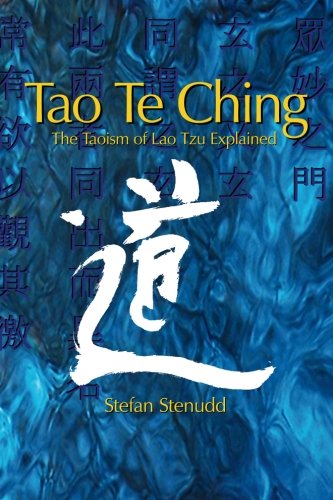
Tao Te Ching: The Taoism of Lao Tzu Explained. By Stefan Stenudd.
CreateSpace Independent Pub., 2015. 320 pages.
Tao Te
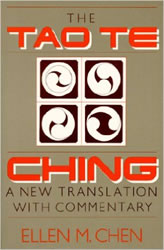
Ching: A New Translation and Commentary. By Ellen Chen. Paragon
House, 1998. 274 pages.
Practicing the Tao Te Ching: 81 Steps on the Way. By Solala Towler.
Foreword by Chunglang Al Huang. Sounds True, 2016. 320 pages.
The Whole Heart of Tao:
The Complete Teachings From the Oral Tradition of Lao Tzu.
Dao De Jing: A Philosophical Translation
Return to the Top of this Webpage

Next Chapter of the Tao Te Ching #5
Previous Chapter of the Tao Te Ching #3
Chapter and Thematic Index to the Tao Te Ching
Tao Te Ching
Bibliography, Links, Research Tools, Resources, Commentaries
Chapter 4
Das Tao Te King von Lao Tse. Complete versions of all 81 Chapters of the Tao Te Ching by many different translators in many languages: 124 English, 24 German, 14 Russian, 7 Spanish, 5 French and many other languages. Links are organized first by languages, and then alphabetically by translators. Formatting varies somewhat. The original website at Onekellotus went offline in 2012; but, the extensive collection of these Tao Te Ching versions was saved for posterity by the Internet Archive Wayback Machine and available as of 9/9/2015. This is an outstanding original collection of versions of the Daodejing─ the Best on the Internet. Caution: copyright infringement may sometimes be an issue at this website.
Tao Te Ching, Translations into English: Terebess Asia Online (TAO). 124
nicely formatted complete English language translations, on separate webpages, of the Daodejing.
Alphabetical index by translators. Each webpage has all 81 chapters of the Tao Te
Ching translated into English. A useful collection! Many
reformatted and colored versions from the original collection at
Das Tao Te King von Lao Tse. Caution: copyright infringement may
sometimes be an
issue at this website.
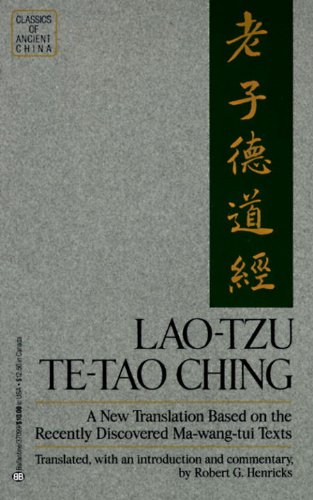
Lao Tzu: Te-Tao Ching - A New Translation Based on the Recently Discovered Ma-wang-tui
Texts (Classics of Ancient China)
Early Daoist Scriptures. Translated by Stephen R. Bokenkamp. Peter
Nickerson, Contributor. Berkeley, University of California Press, Revised
Edition, 1999. 520 pages. This compilation includes a translation of "The Xiang'er Commentary to the Laozi," pages 78-148, with a long introduction to the
same, pages 29-78. Scholars think this document was created in the late
5th century, CE. It was discovered in Buddhist Grottos in 1920, but parts
were missing.
Tao Te Ching: The Definitive Edition
Chinese Reading of the Daodejing
Wang Bi's Commentary on the Laozi with Critical Text and Translation.
By Professor Rudolf G. Wagner. A SUNY Series in Chinese Philosophy and
Culture. English and Mandarin Chinese Edition.
State University of New York Press; Bilingual edition (October 2003). 540
pages. Wang Bi (Wang Pi, Fusi), 226-249 CE,
Commentary on the Tao Te
Ching.
Lao-Tzu: My Words are Very Easy to Understand. Lectures on the Tao Teh
Ching by Professor
Cheng Man-ch'ing (1902-1975). Translated from the Chinese by Tam C. Gibbs, 1981.
Berkeley, California, North Atlantic Books, 1981, 1991. 240 pages.
Includes the Chinese characters for each of the 81 Chapters. A brief
biography of Professor Cheng is included. Professor Cheng was a
Master of Five Excellences: Taijiquan, Painting, Poetry ...
Taijiquan and
Qigong are considered Daoist practices.
The
Teachings of Lao-Tzu: The Tao Te Ching.
Translation, commentary, and notes by Paul Carus, 1913. New York,
St. Martin's Press, 2000. D.T.
Suzuki worked and studied with Paul Carus around 1905 in Illinois, and
translated together their version the Tao Te Ching.
Daodejing by Laozi: Chapters with Chinese characters, seal script,
detailed word by word concordance, Pinyin (tone#), German, French and English.
This is an outstanding resource for serious students of the Tao Te Ching.
The New Lao Tzu: A Contemporary Tao Te Ching. By Ray Grigg. Interpretation, comments,
notes by Ray Grigg. Tuttle, 1995. 187 pages.
The Tao
and Method: A Reasoned Approach to the Tao Te Ching. A translation and
commentary by Professor Michael Lafargue. New York, SUNY Press, 1994. 640 pages. Detailed
index, bibliography, notes, and tables. An essential research tool.
The Tao
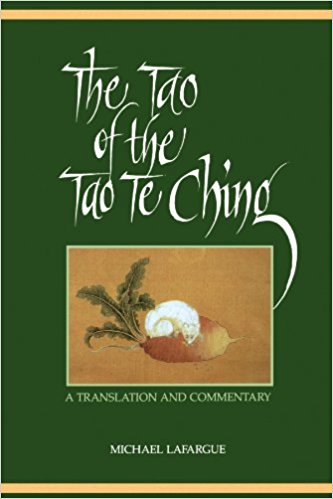
of the Tao Te Ching. A Translation and Commentary by Profesor Michael LaFargue.
State University of New York Press, 1992. Detailed glossary, extensive bibliography, 270 pages. This translation is based on the oldest version ( 168 BCE) of
the Tao Te Ching found in King Ma's tomb - the famous Magwandali
manscript.
81 Chapters arranged in a topical order by the author.
Two Visions of the Way: A Study of the Wang Pi and the Ho-Shang Kung Commentaries on the Lao-Tzu.
By Professor by Alan Kam-Leung Chan. SUNY Series in Chinese
Philosophy and Culture. State University of New York Press, 1991.
Index, bibliography, glossary, notes, 314 pages.
Tao Te Ching
The Classic of the Way and Virtue: A New Translation of the Tao-te Ching of Laozi as Interpreted by Wang Bi.
Translated by Richard John Lynn. Translations from the Asian Classics
Series. New York, Columbia University Press, 1999. Extensive index,
glossaries, notes, 244 pages.
Tao Te Ching in Chinese characters,
Pinyin Romanization, English and German by Dr. Hilmar
Alquiros.
Tao Te
Ching: Annotated and Explained. Translation and Annotation by Derek
Lin. Foreword by Lama Surya Das. "An inspiring, precise translation
of the ancient Chinese wisdom classic─ with facing-page commentary that brings
the text to life for you." Woodstock, Vermont, 2006, 2010. 167 pages.
How to Live a Good Life:
Advice from Wise Persons
The Taoism Reader
Tao Te
Ching: A New Translation and Commentary. By Ellen M. Chen. Paragon
House, 1989. Detailed glossary, index, bibliography, notes, 274 pages.
A substantial commentary and fine translation. One of my favorites.
Change Your Thoughts - Change Your Life: Living the Wisdom of the Tao
The Routledge Encyclopedia of Taoism.
Lao Tzu's Tao Teh Ching, A Parallel Translation Collection. Compiled by B.
Boisen.
Tao Te Ching: The Book of the Way. Revised by Sam Torode based on the
translation by Dwight Goddard, 1919. Independent Pub., 2009, 88 pages.
Tao Te Ching: Annotated
and Explained. By Derek Lin. Foreword by Lama Surya Das.
Skylight Illuminations, SkyLight Paths, 2006. 208 pages.
Comparison and Analysis of Selected English Interpretations of the Tao Te Ching.
By Damian J. Bebell and Shannon M. Fera.
Practicing the Tao Te Ching: 81 Steps on the Way. By Solala Towler.
Foreword by Chunglang Al Huang. Sounds True, 2016. 320 pages.
One Old Philosopher's
Notebooks Research, reading, and reflections by Mike Garofalo.
Concordance for the
Daodejing Indexed by Michael P. Garofalo in 2011. Updated
indexing in 2020 of one Chapter each week.
Yellow Bridge
Dao De Jing Comparison Table Provides side by side comparisons of
translations of the Tao Te Ching by James Legge, D. T. Suzuki, and Dwight
Goddard. Chinese characters for each paragraph in the Chapter are on the
left; place your cursor over the Chinese characters to see the Pinyin
Romanization of the Chinese character and a list of meanings.
Translators Index,
Tao Te Ching Versions in English, Translators Sorted Alphabetically by Translator, Links to Books and
Online Versions of the Chapters
Taoism and the Tao Te
Ching: Bibliography, Resources, Links
Spanish Language
Translations of the Tao Te Ching, Daodejing en Español, Translators Index
The Philosophy of the Daodejing
Valley Spirit, Gu Shen,
Concept, Chapter 6
Valley Spirit Center in Red
Bluff, California.
Sacred
Circle in the Gushen Grove.
Lao-tzu's Taoteching
The Way and Its Power: Lao Tzu's Tao Te Ching and Its Place in Chinese
Thought. By Arthur
Waley, 1889-1966. Translation and commentary by Arthur Waley in 1934.
Part of the UNESCO collection of representative works, 1994. Grove Press,
First Edition, 1994. 262 pages.
Reading Lao Tzu: A Companion to the Tao Te Ching with a New Translation
Dao De Jing: A Philosophical Translation
Thematic Index to the
81 Chapters of the Tao Te Ching
Epicurean and Stoicism
in Hellenistic
Philosophy
Lieh-Tzu: A Taoist Guide to Practical Living
Revealing the Tao Te Ching: In-depth Commentaries on an Ancient Classic
Cloud Hands Blog
Mike Garofalo writes about Mind-Body Arts, Philosophy, Taoism, Gardening, Taijiquan, Walking, Mysticism,
Qigong, and the Eight Ways.
The Whole Heart of Tao:
The Complete Teachings From the Oral Tradition of Lao Tzu.
Return to the Top of this Webpage
Gushen Grove Notebooks for the Tao Te Ching
Green Way Research, Valley Spirit
Center, Gushen Grove Notebooks (2010-2020)
Red Bluff, California from 1998-2017;
Vancouver, Washington from 2107-
Green Way Research, Chapter 4, 2010-2020.
Compiled and
Indexed by
Michael P. Garofalo
The indexing information for this webpage was originally
developed in 2011.
The indexing information was updated and expanded for both English and Spanish
on December 8, 2019.
The indexing information for this Chapter 73 was added to the
Concordance
master list (ttclzindex31.htm) on December 8, 2019.
This webpage was last modified, edited,
maintained, changed, reformatted, improved or updated on December 8, 2019.
This webpage was first distributed online on November 5, 2010.
This webpage work is licensed under a Creative Commons Attribution-NonCommercial-NoDerivatives 4.0 International License.
Created by Michael P. Garofalo, Green Way Research, Valley Spirit Center, Gushen Grove Notebooks, Vancouver, Washington © 2020 CCA 4.0
Return to the Top of this Webpage
Brief Biography of Michael P. Garofalo, M.S.

Ripening Peaches: Daoist Studies and Practices
Zhuangzi (Chuang Tzu, Zhuang Zhou, Master Chuang) 369—286 BCE
Taoist Perspectives: My Reading List
Bodymind Theory and Practices, Somaesthetics
How to Live a Good Life: Advice from Wise Persons
Pleasures, Satisfaction, Desires
Qigong (Chi Kung) Health Practices
One Old Daoist Neopagan's Final Journey: Notebooks of the Librarian of Gushen Grove
Index to Cloud Hands and Valley Spirit Websites
Index to English Language Translators of the Tao Te Ching
Recurring Themes (Terms, Concepts, Leimotifs) in the Tao Te Ching
Spanish Language Translations of the Tao Te Ching
The Tao Te Ching (Dao De Jing) by Lao Tzu (Laozi) circa 500 BCE
How to Live a Good Life: Advice from Wise Persons
|
Tao Te
Ching |
|||||||||
| 1 | 2 | 3 | 4 | 5 | 6 | 7 | 8 | 9 | 10 |
| 11 | 12 | 13 | 14 | 15 | 16 | 17 | 18 | 19 | 20 |
| 21 | 22 | 23 | 24 | 25 | 26 | 27 | 28 | 29 | 30 |
| 31 | 32 | 33 | 34 | 35 | 36 | 37 | 38 | 39 | 40 |
| 41 | 42 | 43 | 44 | 45 | 46 | 47 | 48 | 49 | 50 |
| 51 | 52 | 53 | 54 | 55 | 56 | 57 | 58 | 59 | 60 |
| 61 | 62 | 63 | 64 | 65 | 66 | 67 | 68 | 69 | 70 |
| 71 | 72 | 73 | 74 | 75 | 76 | 77 | 78 | 79 | 80 |
| 81 | |||||||||
Return to the Top of this Webpage
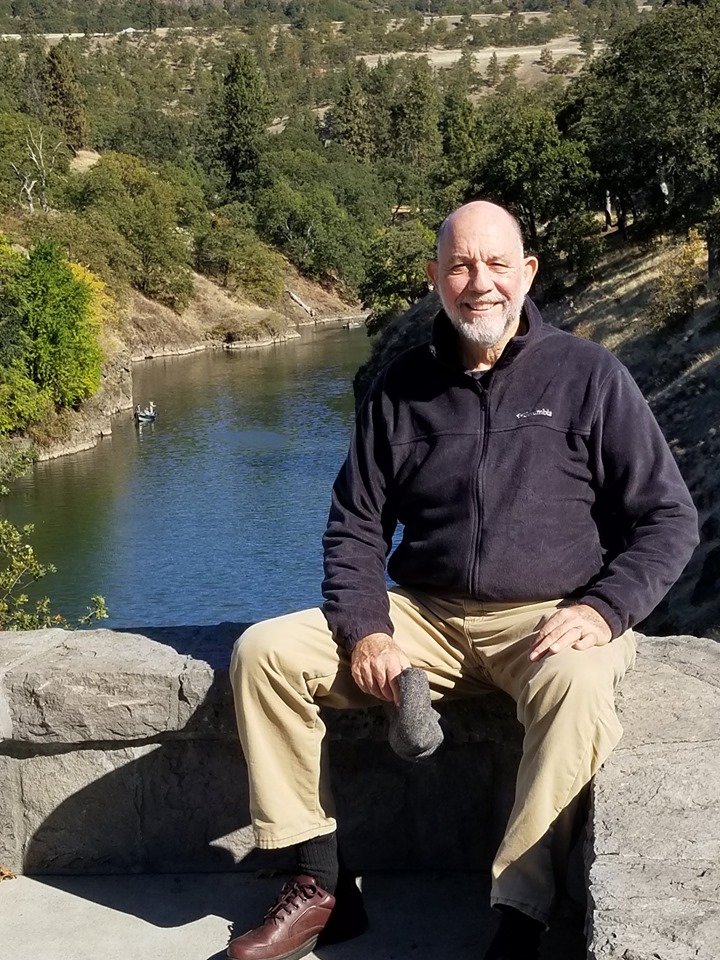
Mike Garofalo at the Klickitat River in Southwest Washington, 2019
Cloud Hands Blog of
Michael P. Garofalo

Facebook of
Michael P. Garofalo

Return to the Alphabetical
Index of Mike Garofalo's Hypertext Documents
Return to the Top of this Webpage