Sun Style of T'ai Chi Ch'uan
Standard International Competition 73 Movements Taijiquan Form (1991)
Sun Sword Sun Style Ba Gua Zhang (Pa Kua Chang) Sun Style Xing Yi Quan (Hsing I Chuan) Broadsword
How to Live a Good Life: Advice from Wise Persons Qigong/Chi Kung Fitness Yang Taijiquan Virtues
Cloud Hands Blog Sun Taiji Blog Posts Facebook
Research by
Michael P. Garofalo
Huo Bu Jia Taijiquan - The Taijiquan Form of the Flowing
Steps
Kai He Huo Bu Taijiquan - The Opening Closing Active Step Taijiquan Form
©
Green Way Research
Valley
Spirit Taijiquan, North Sacramento River Valley, Red Bluff, Tehama County, California, 2003-2017
Valley Spirit Taijiquan, Columbia River Valley, Vancouver, Clark County, Washington 2017-
By Michael P. Garofalo, M.S.. All Rights Reserved.
Introduction
Sun Style Taijiquan 73 Movements Competition Form
By Michael P. Garofalo, M.S.
Welcome to the Sun Taijiquan 73 Competition Form webpage. I hope this
webpage will benefit you in your study of this beautiful and lively Sun Taijiquan
Form. I welcome your comments,
feedback and suggestions.
Starting in July of 2017, David Dight volunteered to began work on Sections 41-73. David is learning the Sun Taijiquan 73 form from his teacher, instructional DVDs, and books. As soon as his contributions become substantial, I will credit him as a co-author of this webpage.
I first learned the Sun Taijiquan 73 International Competition Form by using instructional DVDs or VHS media produced by Taijiquan masters like Paul Lam, Jesse Tsao, Jiang Jian-ye, Lee De Yin, Guangzhi Xing. and Liang Shou-Yu. I found the book and DVD titled "The Competition Routine of Sun Style Taijiquan," edited by Zhong Shan, to be of great benefit. I have benefited from reading books and articles by Sun Lu Tang, Tim Cartmell, Paul Tam, Zhong Shan, Sun Jian Yun, and others. Viewing and studying UTube and Google videos has sometimes been very useful. I have also benefited from some direct personal instruction from two Sun Taijiquan teachers: Paul Lam and Troyce Thome. I was certified to teach Tai Chi for Arthritis, which makes use of 11 and 30 movement Sun Style Taijiquan forms developed by Paul Lam, M.D.. I was certified in Tai Chi for Arthritis, Part 2 (the 30 movement form) by Troyce Thome in April of 2006. I look forward to learning more in the future through my daily practice, research, study, correspondence, workshops, seminars, teaching, and occasional private lessons.
Personal instruction in the Sun Taijiquan 73 Competition Form or 98 Classical Form from a qualified teacher or Taijiquan master is difficult to obtain in the United States except in the largest of cities. Most Taijiquan enthusiasts in the USA will need to learn the basics of the Sun Taijiquan 73 Form on their own. People, like me, who live in a rural area, are extremely unlikely to have access to a Sun Taijiquan teacher for regular instruction. Fortunately, using the many outstanding English language media and book resources now readily available will make the task of learning the basics of the Sun Taijiquan 73 Form on your own much easier. Since there were many more English language DVD and print resources in 2005 for learning the Sun Taijiquan 73 International Competition Form than for learning the Sun Taijiquan Traditional 98 Form of Grandmaster Sun Lutang , it was wiser for me to begin with learning the 73 International Competition Form. I have provided suggestions regarding what I have found to be the best video and print instructional resources for learning the Sun Taijiquan 73 International Competition Form below. After you know the form well and wish to significantly advance your knowledge and skill, you will then need to train daily and diligently, get in top physical condition, and seek coaching from a Sun Taijiquan master. Keep in mind the advice of Zhong Shan,
"With the development of information technology, the learners should further enhance their knowledge and perfect their skills through reading books and using the multimedia resources, such as video tapes and VCDs. Sometimes, to some extent, you can master the competition routines even without a coach in person. Quite a number of people are known to have learned and practice Tai Ji Quan by using the multimedia teaching materials and some even won places in competitions besides keeping fit. But of course, if given a chance, it is always more beneficial to learn personally from masters."
- The Competition Routine of Sun Style Tai Ji Quan, Edited by Zhong Shan, p. 138.
Best Wishes,
Michael P. Garofalo,
M.S.
Valley Spirit Taijiquan,
Green Way Research, Columbia
River Valley, Vancouver, Washington
July 2017
Return to the Main Index for this Webpage

Historical Background
Sun Style Taijiquan Original 98 Movements Form and the 73
Movements Competition Form
Grandmaster
Sun Lu-Tang (1861-1933), was already a master of the internal martial arts
of Bagua Quan and Hsing Yi Quan,
an experienced fighter, a renowned author and teacher, and very familiar with many other
external and internal martial arts styles before he began a more detailed study
of Taijiquan. In 1911, Sun Lu-Tang learned Wu Yu-xiang style of Taijiquan from Hao Wei-Chen
(1849-1920).
By around 1916, Sun Lu-Tang had created his own version of a Taijiquan bare hand form;
and, it is reported, performed his own Taijiquan form every day until he died.
In 1921, Sun Lu-Tang published his book "A Study of Taijiquan."
Grandmaster Sun Lu Tang was
one of the first persons to write and publish books on all three of the core "internal"
Chinese martial arts (i.e., Xing Yi Quan, Ba Gua Quan, and Tai Ji Quan), one of the first
persons to openly teach both men and women these three arts in some major cities in
China, and
one of the first persons to actively and publicly promote the non-martial aspects of
these arts to help improve health and fitness, moral character, and spiritual
insight.
Sun Lutang's books Xing Yi
Quan Xue: The Study of Form-Mind Boxing (1915), Baguazhang (1916),
and A Study of Taijiquan (1921) were influential early works
about the internal martial arts (Nei Jia Quan). His teaching
and writing helped interest many modern "Scholar Warriors" in the many
interrelations (both real and imagined) between the internal martial arts and
Wudang and Emei Taoism, Daoyin (Qigong),
Shaolin Buddhism, and traditional Chinese medicine and philosophy (e.g., I
Ching, Five Elements, Ba Gua).
Sun Lu Tang says, "There is great emphasis on the method of
cultivating the body. All people - men, women, the old, the young - may
practice in order to replace temerity with bravery, and stiffness with
pliability. Those who are extremely weak, who suffer from fatigue and
injury or illness, or who have weakened your qi from the practice of
other martial arts to the point that you no longer have the strength to train,
all of you may practice Tai Ji Quan. With practice, the qi will
quickly come to a balanced state and will become strong, while the spirit
naturally returns to a state of wholeness. Disease will be eliminated, and
the length of life increased." (A Study of Taijiquan,
1921, p. 60).
Sun Lu-Tang's 1921 book, A Study of Taijiquan, was not very detailed in terms of descriptions of the movements, and there were relatively few photographs in the book, and usually only one black and white photograph of Sun Lu-Tang was provided for each movement. As with most Taijiquan forms, as the years passed after 1921, various Sun Taijiquan teachers modified movements and sequencing of the original 98 movement Sun Taijiquan form. Sun Lu-Tang's many fine students continued to teach the Sun Taijiquan 98 Movement Form long after his death. Three members of the Sun family taught the Sun Style of Taijiquan: his son, Sun Cunzhou, his daughter Sun Jian-Yun, and his granddaughter, Sun Shurong. By the late 1980's there were a number of versions of the Sun Taijiquan forms. This situation, of course, presented problems for those judging Taijiquan "competition" events.
In 1988, the National Wushu Sports Taijiquan Committee in China established a sub-committee to develop a standard Sun style of Taijiquan hand form for use as the international Sun Taijiquan competition form. The sub-committee was led by the expert chairperson, Professor Men Hui-Feng (1936-) of Beijing University. The sub-committee did a careful study of the original 98 movement hand form created by Grandmaster Sun Lu-Tang, and published in his 1921 book titled "The Study of Taijiquan." The knowledgeable members of this committee also consulted with Sun Lu-Tang's daughter, Sun Jian-Yun, and with many other experts on and teachers of the Sun Lu Tang Style of Taijiquan. The committee finished its research, created the new Sun 73 Taijiquan International Competition Form, obtained higher level review and approvals, and finally published in 1991 the Sun 73 Taijiquan Competition Form, in both print and media versions.
Nearly 74% of the movement sequences in the Sun Taijiquan International Competition 73 Movements Form are identical to the original 1921 Sun Taijiquan 98 Movement Form. Kicking remains about the same, although the 73 Form has a double jump kick (Movement #35) not found in the original 98 Form. For the main purpose of a standardized international competition form, the new 1991 Sun Style Taijiquan 73 International Competition Form has been judged by a number of martial arts experts as a reasonable and fair representation of Sun Lu Tang's Taijiquan in terms of style, techniques used, sequence, stances, postures, pace, and spirit.
"The Sun Style Competition Form was completed in 1991, in response to the lack of uniformity in content and structure of the traditional routine when it comes to competition. The competition form is, therefore, introduced with the intention to standardize its movements and raise standards of Taijiquan competition. It must be said that there has been a great deal of investigation, research and consultation put into the process of compiling the form, as was the case in compiling many other competition forms. This routine has been favorably received by athletes, coaches and judges."
- Faye Yip (Li)
Return to the Main Index for this Webpage
List of Movements
Sun Style Taijiquan 73 Movements Standard
International Competition Form
List of Movements: 1-73 Sun 73 Form. One name, in English, for each of the numbered 73
movements is provided. (PDF, 17 Kb, 1 Page, 2003)
List of Movements: 1-38 Sun 73 Form. One name, in English, for each of the numbered movements 1-38 is provided. (PDF, 15 Kb, 1 Page, 2003)
List of Movements: 39-73 Sun 73 Form. One name, in English, for each of the numbered movements 39-73 is provided. (PDF, 15 Kb, 1 Page, 2003)
List of Movements: 1-73 Sun 73 Form. One name, in English, for each of the 73 numbered movements is provided. Resource links are included. (PDF, 26 Kb, 3 Pages, 2008)
List of Movements: 1-73 Sun 73 Form. The number and name for each of the 73 movements is provided. Names are given in English, Chinese, and Chinese characters. Resource links are included. (PDF, 133 Kb, 4 Pages, 2008)
List of Movements: 1-73 Sun 73 Form. The number and name for each of the 73 movements is provided. Names are given in English, Chinese, Chinese characters, French, German and Spanish. Reference sources for the names for each of the 73 movements are cited. Alternative names are cited. Resource links are included. Research by Michael P. Garofalo, M.S.. (PDF, 284Kb, 31 Pages, 2008)
List of Movements, Sun Lu Tang's Original Long Hand Form, 98 Movements, 1921 (PDF, 18Kb, 1 Page, 2003)
Slide Show of Sun Lu Tang Performing the Sun 97 Taijiquan Form
1. Wu Ji Becomes Tai Ji (Wu Ji Bian Tai Ji) 无极变太极
Commencing Form (Qi Shi : 起势) [Zhong
2003]
Commencement Form [Lam 2000]
A Study of Wu Ji [Sun Lu Tang 1924, #1]
A Study of Tai Chi [Sun Lu Tang 1924, #2]
Commencing Posture [Sun Jian Yun 2003, #1]
Wu Ji Becomes Tai Ji [Garofalo 2008]
Wu Ji Devient Tai Ji (French)
Wu Ji Wird Tai Ji
(German)
Wu Ji Se Convierte Tai Ji
(Spanish)
无极变太极
: Wu Ji Bian Tai Ji : Wu Ji Becomes Tai Chi
Beginning Posture
Maintien Commençant
Anfangenlage
Postura Que Comienza
起式 : Qi Shi : Beginning Posture
无极 :
Wu Ji : Everlasting, unbounded, not limited, not finalized, not fixed,
indescribable.
变 :
Bian : Change, transform, alter, become.
太极 : Tai Ji :
Absolute or extreme ultimate, the source of all things.
2. Lazily Tying Clothes (Lan Zha Yi) 懶扎衣
Tuck in Robes (Lan Zha Yi:
掖扎衣) [Zhong 2003]
Leisurely Tying Coat [Lam 2000]
Lazily Tying Back the Clothes [Sun Lu Tang 1924, #3]
Too Lazy to Tie Coat [Sun Jian Yun 2003, #2]
Lazily Tying Clothers [Garofalo 2008]
Attacher Paresseux Des Vêtements
Kleidung Faul Binden
Perezoso Atar Las Ropas
懶扎衣 : Lan Zha Yi : Lazily Tying Back the Clothes
懒惰栓衣裳 : Lazily Tying Clothes
3. Opening Hands (Kai Shou) 开手
Open Hands [Zhong 2003]
Opening Hands [Lam 2000]
Opening Hands [Sun Lu Tang 1924, #4]
Open Hands [Sun Jian Yun 2003, #3]
Opening Hands [Garofalo 2008]
Mains D'Ouverture
Öffnung Hände
Manos de la Abertura
开手 : Kai Shou
Comparable information for each of the following movement names may be found in an Internet published 33 page PDF document. You can read and print nicely from the published PDF file. It will save some file space in this document.
List of Movements: 1-73 Number and name for each of the 73 movements is provided. Names are given in English, Chinese, Chinese characters, French, German and Spanish. Reference sources for the names for each of the 73 movements are cited. Alternative names are cited. Resource links are included. Research by Michael P. Garofalo, M.S.. (PDF, 295Kb, 33 Pages, 2008)
10. Brush Left Knee and Twist Step
12. Advance, Deflect, Parry, and Punch
13. Apparent Close Up (Ru Feng Si Bi) 如封似闭
Apparent Close Up [Zhong 2003]
Apparent Closing Up [Lam 2000]
Appearing to Seal and Close [Sun Lu Tang 1924, #14]
Step Back and Block [Sun Jian Yun 2003, #13]
Apparent Close Up [Garofalo 2008]
Apparent Close and Push
Étroit Apparent et Poussée
Offensichtliches Nahes und Stoß
Cercano Evidente y Empuje
如封似闭 : Ru Feng Si Bi :
Apparent Close Up
Appearing to Seal and Close
Sembler Sceller et Se Ferment
Das Scheinen zu Versiegeln und Schließen
El Aparecer Sellar y Se Cierra
看上去密封和关闭 : Appearing to Seal and Close
Comparable information for each of the following movement names may be found in a 33 page PDF document. You can read and print nicely from this PDF file. It will save some file space in this document.
List of Movements: 1-73 Number and name for each of the 73 movements is provided. Names are given in English, Chinese, Chinese characters, French, German and Spanish. Reference sources for the names for each of the 73 movements are cited. Alternative names are cited. Resource links are included. Research by Michael P. Garofalo, M.S.. (PDF, 295Kb, 33 Pages, 2008)
14. Carry Tiger and Push Mountain
15. Opening Hands
16. Closing Hands
17. Brush Right Knee and Twist Step
19. Opening Hands
20. Closing Hands
21. Single Whip Left
22. Fist Under Elbow
25. Brush Left Knee and Twist Step
27. Opening Hands
28. Closing Hands
32. Kick Left Foot
33. Kick Right Foot
34. Step Forward and Punch Down
35. Turn Over Body and Double Jump Kick
37. Toe Kick Left
39. Advance, Deflect, Parry and Punch (Jin Bu Ban Lan Chui) 进步搬拦捶
Advance, Parry and Punch [Zhong 2003]
Step Forward to Deflect Downwards, Parry and Punch [Lam 2000]
Advance Step, Deflect, Parry and Punch [Sun Lu Tang 1924, #47]
Step Forward, Parry and Punch [Sun Jian Yun 2003, #46]
Advance, Deflect, Parry and Punch [Garofalo 2008]
Deflect, Parry and Punch
Guidez, Parez et Poinçonnez
Lenken Sie ab, Whren Sie ab und Lochen Sie
Desvíe, Parry y Perfore
进步搬拦捶 : Jin Bu Ban Lan Chui :
Step Forward, Parry Block and Punch
Comparable information for each of the following movement names may be found in a 33 page PDF document. You can read and print nicely from the PDF file. It will save some filespace in this document.
List of Movements: 1-73 Number and name for each of the 73 movements is provided. Names are given in English, Chinese, Chinese characters, French, German and Spanish. Reference sources for the names for each of the 73 movements are cited. Alternative names are cited. Resource links are included. Research by Michael P. Garofalo, M.S.. (PDF, 295Kb, 33 Pages, 2008)
41. Carry Tiger and Push Mountain
42. Opening Hands
43. Closing Hands
44. Brush Left Knee and Twist Step
46. Opening Hands
47. Closing Hands
49. Parting the Wild Horse's Mane
51. Opening Hands
52. Closing Hands
53. Single Whip Left
54. Cloud Hands Left
56. Golden Rooster Stands on One Leg (Jin Ji Du Li) 金鸡独立
Golden Rooster Stands on One Leg [Zhong 2003]
Golden Cock Standing on One Leg [Lam 2000]
Rooster Standing on One Leg [Sun Lu Tang
1924, #71]
Golden Rooster Stands on One Leg [Sun Jian Yun 2003, #69]
Golden Rooster Stands on One Leg [Garofalo 2008]
Le Coq D'or se Tient sur une Jambe
Der Goldene Hahn Steht auf einem Bein
El Gallo de Oro Está Parado en Una Pierna
金鸡独立 : Jin Ji Du Li : Golden Rooster Stands
on One Leg
Comparable information for each of the following movement names may be found in a 33 page PDF document. You can read and print nicely from the PDF file. It will save some filespace in this document.
List of Movements: 1-73 Number and name for each of the 73 movements is provided. Names are given in English, Chinese, Chinese characters, French, German and Spanish. Reference sources for the names for each of the 73 movements are cited. Alternative names are cited. Resource links are included. (PDF, 295Kb, 33 Pages, 2008)
58. Jade Lady Works the Shuttles
62. Stepping, Lazily Tying Clothes
63. Opening Hands
64. Closing Hands
65. Single Whip Left
66. Single Whip and Lowering Down
67. Step Up to the Seven Stars
68. Step Back and Ride the Tiger
69. Turn Body, Swinging Lotus Kick
70. Bend the Bow and Shoot the Tiger
71. Double Crashing Fists Strike
73. Returning to Wu Ji
List of Movements: 1-73 Number and name
for each of the 73 movements is provided. Names are given in English, Chinese,
Chinese characters, French, German and Spanish. Reference sources for the names
for each of the 73 movements are cited. Alternative names are cited. Resource
links are included. Research by Michael P. Garofalo, M.S.. (PDF, 295Kb, 33 Pages, 2008)
Sources for the Names of the Movements of the Sun Taijiquan 73 Competition Form:
[Zhong 2003] The Competition Routine of Sun Style Taijiquan. Zhong Shan, Chief Editor. Wu Don, Executive Editor. Li Wei, Editor of English Version. Published in Beijing, China, 2003. 151 pages. ISBN: 7537720851.
[Lam 2000] Sun Style Tai Chi - 73 Forms. The Competition Forms. An instructional videotape by Dr. Paul Lam. Narwee, Australia, East Action Video, 2000.
[Sun Lu Tang 1924] A Study of Taijiquan. By Sun Lutang. Translated by Tim Cartmell. North Atlantic Books, 2003. 160 pages. ISBN: 1556434626. Translation based on a 1924 text. This form presented in this book is not the 73 Form; it is the classical Sun Taijiquan 98 Form.
[Sun Jian Yun 2003] Sun's Style Tai Chi Chuan. By Master Sun Jian-yun and Master Paul Lam (Tam Fung-ngar Paul). Translated by Peter Chan and Leung Ming-yuen. Published by Peter Chan and Co., Kowloon, Hong Kong, 2003. 141 pages. Distributed by Plum Publications. Hong Kong Registry No. 962-8665111. This form presented in this book is not the 73 Form; it is the classical Sun Taijiquan 97 Form.
[Garofalo 2008] Sun Style of T'ai Chi Ch'uan: Standard Competition 73 Movements Form. Research by Michael P. Garofalo, M.S.. Webpage: 350Kb, May 2008.
Sun Style Taijiquan, 73 Competition Form, List of Movements: 1-73 (PDF, 131 Kb, 4 Pages) Number and name of movement in English, Chinese Pinyin and Chinese Characters, and resource links
List of Movements: 1-73 Number and name for each of the 73 movements is provided. Names are given in English, Chinese, Chinese characters, French, German and Spanish. Reference sources for the names for each of the 73 movements are cited. Alternative names are cited. Resource links are included. Research by Michael P. Garofalo, M.S.. (PDF, 295Kb, 33 Pages, 2008)
Note: I used the following resources to prepare the translations found on this webpage. The best resource I have found online for working with Chinese and English translations is the MDBG Chinese-English Dictionary. I used the AltaVista Babel Fish Translation Service to translate from English into French, German and Spanish. I once started an online glossary for Sun Lu Tang's Internal Martial Arts. I also use a variety of internal martial arts books and online resources which provide similar charts, lists, and glossaries in varied languages. The book "The Competition Routine of Sun Style Taijiquan," by the Chief Editor, Zhong Shan, was especially useful. I welcome your suggestions and contributions for improving the translations or providing translations into other languages.
Return to the Main Index for this Webpage
Instructions
Sun Style Taijiquan, 73 Movements International Standard Competition Form
Section 1, Movements 1 -
10
Sun Style Taijiquan, 73 Movements Standard
International Competition Form
Section 1, Movements 1 - 10 This chart provides, for each movement, the number of the movement, the name of the movement, the final direction to face for each movement, a very brief description of the movement, and the summary chart (below) for movements 1-10. (PDF, 91 Kb, 2 Pages, 2008)
1. Wu Ji Becomes Tai Ji (Wu Ji Bian Tai Ji) 无极变太极
Name: Commencing Form (Qi Shi : 起式), Wu Ji then Tai Ji, Standing in Wuji and Opening Move, Commencing Form of Taiji (Taiji Qi Shi), A Study of Wu Ji and Tai Ji. 无极变太极 : Wu Ji Bian Tai Ji : Wu Ji Becomes Tai Chi.
Begin at position 1a, with the waist facing N12. Relax (Sung), clear the mind, find one's center and root, calm the spirit, be present here and now. Stand at attention with the arms at the sides (1a). The heels are touching and the toes are pointed outwards slightly, so that the feet make a V shape (1a). The crown of the head is lifted. The shoulders are relaxed. Root and center oneself. This (1a) is the position of Wuji.
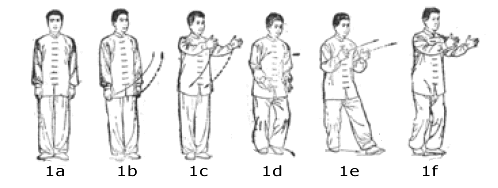
Description of movement sequence: Turn the right toe inward, and turn body towards NW11 (1a-1b). Raise the hands up with the fingers pointing down (1b). As as the hands move to about chest height (1b-1c) the fingers point forward (1c). Draw the hands in towards the body, point the fingers more upward, and lower the hands to the Dan Tien level (1c-1d). Bend the knees slightly (1c). Lift both arms up, keeping them close to the body, to about chest height with the finders pointing forward (1d-1e). Shift the weight into the right leg (1d-1e) and step forward towards NW11 with the left foot, heel first (1d-1e) Draw the right toe forward until the right toe is next to and behind the left (1f). The right heel is lifted slightly. As the right leg moves forward, push both hands forward towards NW11 (1e-1f). The waist and chest face in the direction of NW11.
The movement sequence from 1d-1f, stepping forward with one leg and then following with the other leg is common in Sun Taijiquan. It is referred to as "Step and Follow Step" or "Follow Step." The first leg steps and the heel is placed first. The second leg steps with the toe. The knees are slightly bend. The torso is upright and poised. The back toe is placed so that it touches the ground next to and slightly behind the front foot, back toe near front heel. The knees are slightly bent.
Most authorities identify position 1a with "Commencing Form" and with Movement #1. Most authorities combine the movements 1b-1f with 2a-2e and call them all "Lazily Tying Clothes" (1b-2e), or Movement #2. I differ from the authorities about what constitutes movements #1 and #2.
The most popular Taijiquan forms begin with the movement called "raising hands and lowering" hands. Each differs slightly in how the movement is done. Sun Taijiquan also begins with raising and lowering the hands.
I call positions 1a-1f, Movement #1, and give its name as "Wu Ji Becomes Tai Ji." In my opinion, position 1a represents Wu Ji: the empty state, the primordial fecund condition, that which cannot be named, the undifferentiated, Oneness, before the Big Bang, Zero, outside space and time, motionlessness, Wu. The body rises up and the hands circle up and down in positions 1b-1d, the typical opening move of raising the hands and lowering the hands of nearly all taijiquan forms, which represents: the opening, the differentiation into Yin and Yang, creation, emergence, the creation of complimentary forces, the essential beginning of space/time/being, Beginnings, the Grand Ultimate, the definitions of limits, the Tai Ji. The rising up and stepping forward and pushing forward (1d-1f) represent: the power of the universe, the five elements, the Bagua, the I Ching, complexity, evolution, the emergence of the ten-thousand things, will and intention, saying "Yes" to life, and the assertion of spirit. This is why I call this sequence (1a-1f) of movements "Wu Ji Becomes Tai Ji." I also think that this opening movement, Movement #1, Wu Ji Becomes Tai Ji, coordinates and blends well with the final two movements of the 73 Form, that is, Movement #72, Uniting Yin and Yang, and Movement #73, Returning to Wu Ji. This is how I interpret this sequence of moves, and this lifts my spirits. I find it charming and meaningful. Knowing of Sun Lu Tang's penchant for Taoist philosophy, I think he might smile and have some sympathy with my fanciful ideas. If you like, of course, you may also think that these movements (1b-1f) represent or are called or are part of "Lazily Tying the Clothes" (1b-1e). Indeed, I am probably just lazily trying to tie some ideas around the body of a dance.
"Creation and reversion are both expressed in Taiji quan forms. Practitioners begin by standing motionless and being free of thought [1a], then move in symbolic separation of yin and yang, lifting the hands as yang energy rises to create Heaven [1b] and lowering them [1d] as yin energy sinks to create Earth. Like the creation of the myriad beings, the movements transform from posture to posture without pause. In the end, the hands drop and the feet come together [72b]. Practitioners find stillness and return to formlessness [73c]."
- Daoist Body Cultivation, Edited by Livia Kohn, 2006, p. 195.
2. Lazily Tying Clothes (Lan Zha Yi) 懶扎衣
Name: Tuck in Robes (Lan Zha Yi), Leisurely Tying Clothes, Lazily Tying Back the Clothes, Lazily Tying Clothes : Lan Zha Yi : 懶扎衣.
Position 2a = 1f. Many authorities say that the movement sequence of 1b-2e is all part of Lazily Tying Clothes. However, other instances of Lazily Tying Clothes in the 73 Form, namely Movements 18, 26, and 45, all look rather like 2a-2e with the addition of drawing the hands down before striking with the fingers (26b-26d), then circling back and to the side and then striking forward with the palm along with a follow step (26d-26f) or (2c-2e).
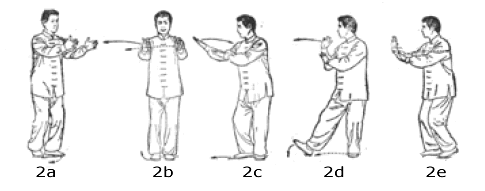
Description of movement sequence: From position 2a = 1f, rotate the arms at chest height in a clockwise manner towards the right side (2a-2c). The arms circle in a clockwise manner at chest height from left to right about 240° (2a-2c). Pivot on the left heel, then step back slightly with the right foot (2b) and position the right foot with toes facing E3. The left fingers touch the forearm of the right hand (2c). The right hand faces up, and left hand faces down (2c). The right hand makes a small clockwise inward circle and is drawn to the chest (2c-2d). Step forward with the right leg, heel first, and place the right foot facing E3 (2c-2d). As the weight moves into the right leg, the right hand moves forward, fingers up, towards E3 (2d-2e). Follow step with the left toe (2d-2e). The movement from 2d-2e is one continuous and coordinated movement with right hand moving forward as the left foot follow steps. At position 2d, the waist is facing E3.
Slide Show of Sun Lu Tang Performing the Sun 97 Taijiquan Form.
3. Opening Hands (Kai Shou) 开手
Name: Open Hands (开手 : Kai Shou), Opening Hands.
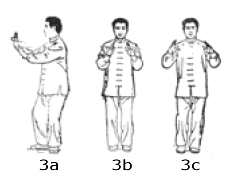
From 3a = 2e, turn the body to the left, 90° counterclockwise, to bring the front of the body to face N12 (3b). Move both hands to the left and bring the hands in front of body at chest height (3a-3b). Turn the right foot on the heel until both feet are facing N12 (3a-3b). Fingers are pointing up (3b). Palms face each other (3b). The hands are relaxed and the fingers are gently spread apart, and the thumbs point towards one another and are held about 2 inches apart (3b). Exhale gently through the nose while moving from 3a to 3b. The hands move from the side position (3a) until the hands are about shoulder width apart (3b), and then gently move towards each other (3b) until both hands hands are separated by about 6-8 inches or about the width of your head (3b). From position 3b, as you breathe in through the nose, gently and slowly move the hands apart (3b-3c). Keep the fingers pointing up and palms facing each other. Stop opening the hands when they are about shoulder width apart (3c). Keep your body standing tall, back straight. The knees are slightly bent. At position 3c, the waist is facing N12.
Moving from 3b to 3c is the act of "Opening Hands" (Kai Shou) and is an essential qigong move of Sun Taijiquan, and part of the essential transitional move between postures of the Sun Taijiquan Form.
Sun Lu Tang says, "The hands feel as if they are holding on to a balloon, and as the air in the balloon increases, the hands are slowly moved apart. The two thumbs are about an inch or two away from the chest. Move the hands apart until the tiger's mouth [i.e, the are from the inside tip of the index finger to the inside tip of the thumb] of each hand are in front of the shoulders, at shoulder height. The five fingers are separated. Pause for a moment." - A Study of Taijiquan, 1924, 2003, p. 81.
In photos of Sun Lu Tang in position 3e, his left heel is slightly raised; but
other current 73 Form instructors have you keep both feet flat on the floor in
Opening Hands. Instructors vary in how much distance to keep between the
feet when doing Opening and Closing Hands. Sun Lu Tang keeps his feet
close together (3b), while other instructors place the feet a comfortable
distance apart (6" to 15").
Breathe in through the nose when opening hands. Stand up straight.
Hold the head erect (3b-3c). Shoulders are slightly rounded inward. Knees are
slightly bent. Relax and settle; find the central equilibrium.
In Taijiquan, the complimentary concepts of "Opening" and "Closing," and their experiential correlates, are quite complex. Master Bruce Frantzis (Tai Chi Health for Life, 2006, pp.213-251) is a good source for starting to learn about these more advanced concepts in Tai Chi Chuan. Specifically, as related to opening and closing (pp.238-243), "Opening means to expand, grow larger, or flow outwards and emanate like a sun. Closing means to condense inwards, and get smaller along an inward direction of motion, like the gravity flow of a black hole or dwarf star. Closing carries no connotation of tension, contraction, or force in the movement, only a continuous inward flow toward a point of origination, like iron filings towards a magnet. Opening and closing actions can occur with any of the body's soft and hard physical tissues. Equally, opening and closing can occur anywhere within the body's subtle energy anatomy (channels, points, aura, etc.)."
4. Closing Hands (He Shou) 合手
Name: Close Hands (合手 : He Shou), Closing Hands, Draw Hands Together.
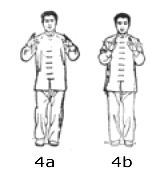
Move the hands from about shoulder width apart
(4a = 3e) to about 6-8 inches apart (4b). This movement is called Closing
Hands (He Shou). Gently breathe out through the nose when closing hands
(4a-4b).
Stand up straight. Hold the head erect. Shoulders are slightly
rounded inward. Knees are slightly bent. Relax and settle; find the
central equilibrium.
At position 4b, the waist is facing N12.
Moving from 4a to 4b is the act of "Closing Hands" (He Shou) and is the essential qigong move of Sun Taijiquan, and part of the essential transitional move between postures of the Sun Taijiquan Form.
In photos of Sun Lu Tang in position 4b, his left heel is slightly raised; but other current 73 Form instructors have you keep both feet flat on the floor in Closing Hands.
Sun Lu Tang says, "Lift the right toes off the ground and, pivoting on the right heel like an axle, turn your body to the left. As you turn, turn your right toes inward until they point directly forward. This turning movement must be done with the qi united, in one smooth movement without pauses or breaks. The jing must be balanced; do not use brute force. As you turn, the two hands maintain the position as if holding a balloon, as they close back together. The hands close until the thumbs are about an inch apart. The palms of the hands are empty, and they maintain the position as if holding a ball. The legs are bent. The right sole is placed flat on the ground and the left heel is lifted, with the ball of the foot on the ground. There must not be the slightest use of force in the entire body."
- A Study of Taijiquan, 1924, 2003, p. 82.
The Opening Hands (Kai Shou) and Closing Hands (He Shou) movements are repeated 9 times in the 73 Form at # 3/4, 8/9, 15/16, 19/20, 27/28, 42/43, 46/47, 51/52, and 63/64.
"Sun Shi Tai Ji has a very specific figure; Kai He (to open - to close) which is found neither in other forms of Tai Ji, nor in Ba Gua or Xing Yi. This Kai He appears with each connection and transition. It makes it possible to control and adjust breathing and to accumulate the Shi (energy potential) in order to prepare for the next change."
- Master Bob Melia, Sun Shi Tai Chi
5. Single Whip Left (Dan Bian Zou) 单鞭左
Name: Single Whip Left (单鞭左 : Zou Dan Bian), Single Whip to the Left Side (Dan Bian Zhou), Single Whip.
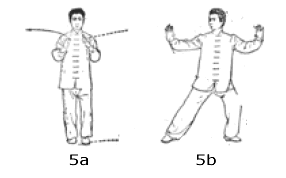
From position 4b = 5a, step out with left leg towards W9 (5a-5b). Open both of the the arms to sides, right hand towards E3 and left hand towards W9, with the fingers of both hands pointing upward (5a-5b). Look first at the left hand, then at the right hand (5b). Both arms are extended at about shoulder height (5b). End in 5b with left leg bent with 70% of weight in left left, in a left side bow stance. Gaze at the right hand (5b). At position 5b, the waist is facing N12.
In the Sun Style of Taijiquan, Single Whip always follows Opening Hands and Closing Hands (i.e., Movements 5, 21, 29, 48,53, and 65). In the Yang Style of Taijiquan, the Single Whip always follows the movement called "Grasping the Sparrow's Tail."
5b
6. Lifting Hands (Ti Shou) 提手
Name: Lift Hands and Step Up (Ti Shou Shang Shi); Lifting Hands (提手 : Ti Shou); Step In and Lift Hands; Raise Hands and Step Forward.
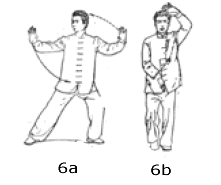
Step back to the right side towards W9 with the right foot, bringing it back next to the to the left foot (6a-6b) placing the right toe on the ground (6b). The right hand circles downward towards the waist (6a-6b). The left hand circles upwards (6a-6b) to a position slightly above the head with the palm facing towards N12 (6b). The right fingers point downward (6b), right thumb facing the Dan Tien, the right little finger facing forward. The left hand is about at forehead height, palm facing N12, left palm open (6b). At position 6b, the waist is facing N12.
7. White Swan Cools Its Wings (Bai He Liang Chi) 白鹤凉翅
Name: White Crane Spreads Wings (白鹤凉翅 : Bai He Liang Chi); White Crane Flashing Its Wings: White Swan Cools Its Wings
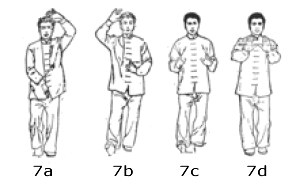
Slide the right hand up the body and raise it slightly above the head, with the
palm facing forward towards N12 (7a-7b). The left hand moves from the
forehead (7a = 6b) along the mid-line of the body down to the waist (7b).
Step forward with the right heel (7b-7c). Draw both hands to about chest
height (7c) with the palms facing forward (7c). Push forward with both
hands, palms facing N12 (7d). Follow step with the left foot to a left toe
stance with the left foot slightly behind the right heel (7d).
At position 7d, the waist is facing N12. Don't move the head up and
down very much.
Sun Lu Tang says, "As the hands move, the right foot simultaneously steps forward, touching down on the heel. The feet should be spaced a comfortable distance apart. As you move the right foot forward, the body remains upright and stable. Do not move the body or shift the weight as the right leg moves. [This method of stepping (7b-7d) is constant throughout the form. Whether advancing, retreating, or stepping to the side, the foot steps out first, with no movement of the hips or torso, the heel is placed down, and then the body weight is gradually shifted to the stepping leg. One must never "fall" into the foot when stepping out.] The energy of the waist presses downward (7b). Use the intent to pull in the roots of the shoulders and legs. This energy must not be obvious externally. The pressing up of the crown of the head (7b) must not be obvious [i.e., using too much force or tension]. The center of the heart is empty and quiet. Without thought, the body is naturally stable. This is know as the wondrous mystery."
- Sun Lu Tang, A Study of Taijiquan, 1924, p. 85.
8. Opening Hands (Kai Shou) 开手
Name: Open Hands (开手 : Kai Shou), Opening Hands.
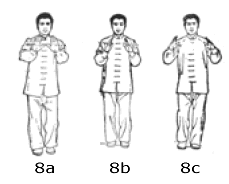
From 8a = 7d, draw the hands in towards the chest and turn the palms to face one another (8b). Move the hands together until they are about 6-8 inches apart, the width of your head, with the fingers facing up (8b). Exhale gently through the nose as you move from 7c - 8b. Inhale gently through the nose as the hands open to about shoulder width (8b-8c). Stand up straight. Hold the head erect. Shoulders are slightly rounded inward. Knees are slightly bent. Relax and settle; find the central equilibrium. At position 8c, the waist is facing N12.
A note on the source of these line drawings.
9. Closing Hands (He Shou) 合手
Name: Close Hands (合手 : He Shou), Closing Hands.
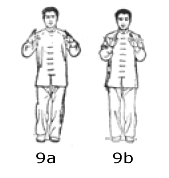
From position 9a = 8d, gently exhale as the hands move from about shoulder width (9a) to about 6-8 inches apart (9b), with the fingers facing up and the palms facing each other. The thumbs of both hands point towards each other and are about 2 inches apart. At position 9b, the waist is facing N12. Gaze forwards to N12.
10. Brush Left Knee and Twist Step (Zuo Lou Xi Ao Bu) 左搂膝拗步
Name: Left Brush Knee and Twist Step (左搂膝拗步 : Zou Lou Xi Ao Bu); Twist Step (Ao Bu), Brush Knee (Lou Xi) and Palm Strike; Brush Left Knee and Twist Step.
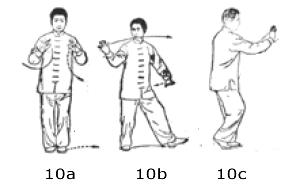
From position 10a = 9b, draw the right arm in a circle down and up to point to NE 10 as you turn the waist to the left side (10a-10b). The right hand is drawn up to about shoulder height (10b). Look at the right hand (10b). Step out with the left heel in the direction of W9. The left hand first moves so that the left fingers touch the right forearm as it moves towards NE10 (not shown in the illustration); then the left hand moves in a circle down and across the left thigh (10a-10b) - the classic "Brush Knee" movement. Turn the torso to the left as the right hand is draw at shoulder height past the face and in the direction of W9 (10b-10c). Follow step with the right foot by drawing the right toe to a position behind and to the side of the left foot (10c), as the right arm "Pushes" forward (10b-10c). The left hand ends beside the left thigh, palm facing down (10c). At position 10c, the waist is facing W9, and the eyes are looking in the direction of W9 (10c).
Section 1, Movements 1 - 10 This chart provides, for each movement, the number of the movement, the name of the movement, the final direction to face for each movement, a very brief description of the movement, and the summary chart (below) for movements 1-10. (PDF, 91 Kb, 2 Pages, 2008)
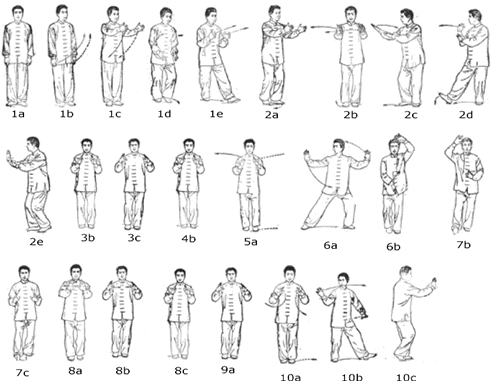
Sun Taijiquan 73 Form, Movements 1 - 10
Return to the Main Index for this Webpage
Return to the Sectional Index for the 73 Form
Section 2, Movements
11 -
20
Sun Style Taijiquan, 73 Movements Standard
International Competition Form
Section 2, Movements 11 - 20 This chart provides, for each movement, the number of the movement, the name of the movement, the final direction to face for each movement, a very brief description of the movement, and the summary chart (below) for movements 11-21. (PDF, 87 Kb, 2 Pages, 2008)
11. Hand Strums the Lute (Shou Hui Pi Pa) 手挥琵琶
Name: Hand Strums the Lute (手挥琵琶 : Shou Hui Pi Pa), Playing the Pi Pa, Play the Lute, Play the Guitar.
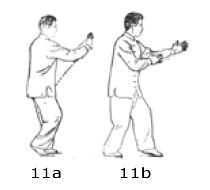
From position 11a = 10c, draw the right foot back towards E3 (11a-11b) and put more weight into the right foot. The left heel lifts so that only the left toe is on the ground (11b). Basically, assume a left empty stance (11b). As the right foot moves backward the left arm extends forward at about chest height with the fingers pointing forward (11b), and, at the same time, the right hand moves back towards the body and ends with the right fingers, pointing forward, near the left upper forearm near the elbow. At position 11b, the waist is facing W9.
12. Advance, Parry, and Punch (Jin Bu Ban Lan Chui) 进步搬拦捶
Name: Advance, Parry and Punch (进步搬拦捶 : Jin Bu Ban Lan Chui); Advance Step, Deflect, Parry and Punch; Deflect, Parry and Punch.
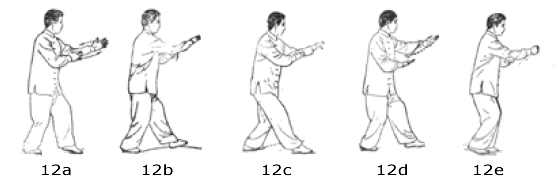
In this movement, we advance forward (12a-12e) towards W9 with four steps. At 12a = 11b, we begin by turning the left palm to face downward, and the right palm to face upward (12a). Step forward with the right foot (12b-12c), and the right hand moves forward and the hand turns over so that the palm faces down, and the left hand draws back into the waist and the left palm faces up. Then, step forward with the left leg (12c-12d), and the left hand moves forward with palm up, and the right hand moves backward towards the waist with the right palm turning down. As the weight settles into the left left, curl the left arm with palm facing inward at about chest height (12d-12e). Finally, punch forward with the right fist, thumb up, with right forearm finally resting on top of the left rounded arm. As the right punch is delivered the right foot follow steps to place the toe behind and at the side of the left heel (12e). At position 12e, the waist is facing W9. In the final stance the body should be upright, head up, knees bent.
Keep in mind we are practicing Huo Bu Sun Taijiquan - The Active Step Sun Taijiquan. This movement (12a-12e) is done rather quickly and smoothly, without any bouncing or jerkiness.
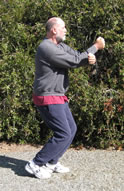
12e
13. Apparent Close Up (Ru Feng Si Bi) 如封似闭
Name: Apparent Close Up (如封似闭 : Ru Feng Si Bi); Appearing to Seal and Close; Withdraw and Seal.
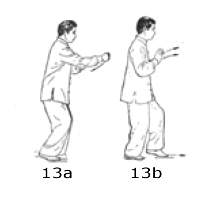
From the Punch position of 13a = 12e, separate both hands, bring hands to about chest height (13b), palms facing forward towards W9. Step back with the right foot and draw the elbows into the body (13b). Finally step back a half step with the left toe. Weight is in the back right leg. At position 13b, the waist is facing W9.
14. Carry Tiger and Push Mountain (Bao Hu Tui Shan) 抱虎归山
Name: Carry Tiger and Push Mountain (抱虎归山 : Bao Hui Tui Shan); Embrace Tiger, Push Mountain; Push (An)
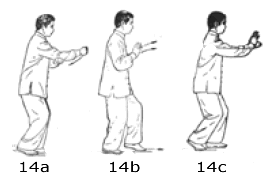
From the left toe stance of postion 14b = 13b, step forward a half step with the left foot (14b-14c). The both arms push forward, at about chest height, palms facing W9, as the back right foot follow steps forward to place the right toe next to the left heel. At position 14c, the waist is facing W9. 14a =12a and 14b = 13b. The body is held upright, head up, looking towards W9.
15. Opening Hands (Kai Shou) 开手
Name: Open Hands (开手 :Kai Shou), Opening Hands.
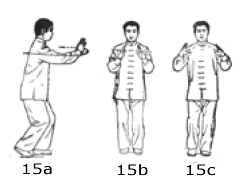
From 15a = 14c, turn clockwise to the right, pivoting on the right heel, and moving the left foot to the right (15a-15b). At position 8b, the waist is facing N12. The toes of both feet are on the same line. Exhale gently through the nose as you move from 15a-15b. There should be a comfortable distance between the two feet, but not too wide apart. Move the hands together until they are about 6-8 inches apart, the width of your head, with the fingers facing up (15b), thumbs about two inches apart. Inhale gently through the nose as the hands open to about shoulder width (15b-16c). Stand up straight. Hold the head erect. Shoulders are slightly rounded inward. Knees are slightly bent. Relax and settle; find the central equilibrium. At position 15c, the waist is facing N12.
16. Closing Hands (He Shou) 合手
Name: Close Hands (合手 : He Shou), Closing Hands, Withdrawing Hands.
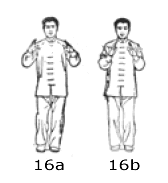
From position 16a = 15c, gently exhale as the hands move from about shoulder width (16a) to about 6-8 inches apart (16b), with the fingers facing up and the palms facing each other. The thumbs of both hands point towards each other and are about 2 inches apart (16b). At position 16b, the waist is facing N12.
Breathe out through the nose when closing hands. Stand up straight. Hold the head erect. Shoulders are slightly rounded inward. Knees are slightly bent. Relax and settle; find the central equilibrium.
17. Brush Right Knee and Twist Step (You Lou Xi Ao Bu) 右搂膝拗步
Name: Right Brush Knee and Twist Step (右搂膝拗步 : You Lou Xi Ao Bu); Brush Right Knee and Left Palm Strike; Twist Step, Brush Right Knee, Palm Strike with Left Strike; Brush Knee.
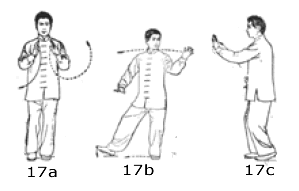
From position 17a = 16b, the hands flow in a downward arc. The left hand the lifts upward to about shoulder height, palm up, with the left fingers pointing towards NE10 (17b). The waist turns clockwise to the right side, and the right foot steps out to the side, with the toes pointing towards E3 (17a-17b). The right hand moves downward to about waist height and crosses over the left leg, with the right palm facing down (17b). The body is now facing E3. Push forward with the left arm, palm facing out, pushing in the direction of E3 (17b-17c). Follow step with the left foot, bringing the left toe to the side of the right heel (17b-17c). Look at the left hand (17b). At position 17c, the waist is facing E3.
18. Lazily Tying Clothes (Lan Zha Yi) 懶扎衣
Name: Tuck in Robes (懶扎衣 : Lan Zha Yi): Leisurely Tying Clothes; Lazily Tying Back the Clothes; Lazily Tying Clothes.
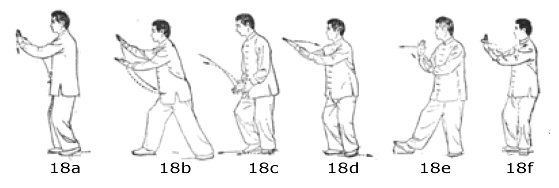
From position 18a=17c, draw the right hand up from the right thigh to about shoulder height, with the right palm facing down (18a-18b). The left hand turns over, palm up, at about chest height (18b). The left leg steps back (18a-18b) as the arms are draw down to about waist level, the left fingers touching the right wrist, and then stepping back with the right foot in a follow step move (18b-18c). Step forward with the right foot (18c-18d), and the hands are moved up and forward, right hand with palms up and left hand touching the right wrist, and then follow stepping with the left leg as the right fingers strike forward (18c-18d). The waist is facing E3 throughout this sequence (18a-18f). Finally, circle the right and left hands in a small clockwise manner back towards the body as the left foot steps back and the right toe lifts (18d-18e). Then push both hands forward, right palm facing E3, left fingers on the right wrist, and follow step with the left leg, bringing the left toe next to the right heel (18e-18f).
Inhale (18a-18b), exhale (18c-18d), inhale (18d-18e), and exhale (18e-18f).
Lazily Tying Clothes reminds me of the most frequently repeated movement in the Yang Style of Taijiquan, that is "Grasping the Sparrow's Tail" sans "Ward Off (Peng)" (18a). 18b-18c corresponds to Roll Back (Lu). 18d is reminiscent of Press (Ji). Finally, 18e-18f reminds me of Push (An). In Yang Style, Grasping the Sparrow's Tail is always followed by Single Whip; while in Sun Style, Single Whip always follows Opening Hands and Closing Hands (i.e., Movements 5, 21, 29, 48,53, and 65). Grasping the Sparrow's Tail is repeated 9 times in the Yang 108 Form and 2 times in the Standard Yang 24 Form; while Lazily Tying the Clothes is repeated 6 times in the Sun Taijiquan 73 Form.
"Another characteristic of the Sun Style is the stepping method: advancing or retreating steps are usually followed by a half step forwards or backwards. This is different from other styles of Taijiquan, such as Yang Style where bow stance is widely employed for postures. When you practice Sun Style movements, you will find the body weight is constantly shifted between the two legs. Sun Style Taijiquan emphasizes the good control of balance between the transference of body weight so that all movements can be performed smoothly without a jerk, pause or sudden increase in speed. This is why Sun Style Taijiquan is also referred to as "open and close" Taiji, or "nimble step" Taiji. It is important to understand that only when the mind, body and qi are in accord can you gain the power to generate and enhance the true qi and to heal."
- Fay Yip (Li), The Development and Practice of Sun Style
19. Opening Hands (Kai Shou) 开手
Name: Open Hands (开手 : Kai Shou), Opening Hands.
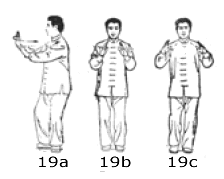
From 19a = 19a, turn counter-clockwise to the left, pivoting on the left heel, and moving the right foot to the left (19a-19b). At position 19b, the waist is facing N12. The toes of both feet are on the same line. Exhale gently through the nose as you move from 19a-19b. There should be a comfortable distance between the two feet, but not too wide apart (19b). Move the hands together until they are about 6-8 inches apart, the width of your head, with the fingers facing up (19b), thumbs about two inches apart. Inhale gently through the nose as the hands open to about shoulder width (19b-19c). Stand up straight. Hold the head erect. Shoulders are slightly rounded inward. Knees are slightly bent. Relax and settle; find the central equilibrium. At position 19c, the waist is facing N12.
20. Closing Hands (He Shou) 合手
Name: Close Hands (合手 : He Shou), Closing Hands.
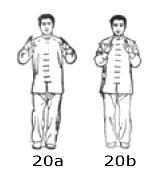
Beginning from the open hands position (20a = 19c), breathe out gently through the nose while you are closing your hands (20a-20b). The fingers are pointed upwards and separated, and thumbs are open. Bring the thumbs together until they are about two inches apart (20b). The fingers are about 6-8 inches apart. The feet are close together. Both hands are comfortably close to the body (20b). Stand up straight. Hold the head erect. Shoulders are slightly rounded inward. Knees are slightly bent. Relax and settle; find the central equilibrium. At position 20b, the waist is facing N12.
Section 2, Movements 11 - 20 This chart provides, for each movement, the number of the movement, the name of the movement, the final direction to face for each movement, a very brief description of the movement, and the summary chart (below) for movements 11-21. (PDF, 87 Kb, 2 Pages, 2008)
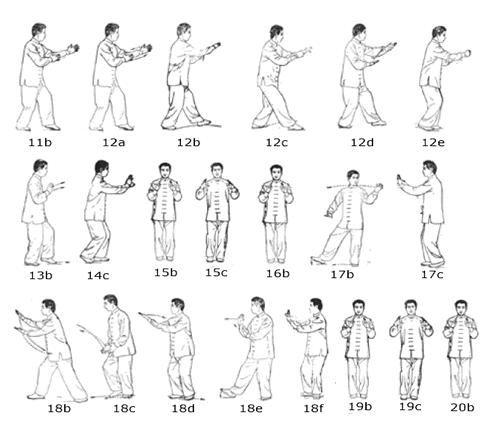
Sun Taijiquan 73 Form, Movements 11 - 20
Return to the Main Index for this Webpage
Return to the Sectional Index for the 73 Form
Section 3, Movements
21 -
30
Sun Style Taijiquan, 73 Movements Standard
International Competition Form
Section 3, Movements 21 - 30 This chart provides, for each movement, the number of the movement, the name of the movement, the final direction to face for each movement, a very brief description of the movement, and the summary chart (below) for movements 21-30. (PDF, 91 Kb, 2 Pages, 2008)
21. Single Whip Left (Dan Bian Zou) 单鞭 左
Name: Single Whip Left (单鞭 左 : Dan Bian Zou); Single Whip; Left Single Whip.
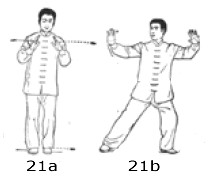
21a = 20b. At position 21b, the waist is facing N12.
"Single Whip"
(21b) always follows a sequence of two movements (19c, 20b) called "Opening
Hands" and "Closing Hands." In this position, the body is posed similar to
wu ji (empty stance) - a basic posture in xingyi. The palms face each other, as they
open and then
close. These movements are used to cultivate the qi, center the practitioner and
harmonize
the movements with the breathing. This movement is a variation on taiji
practices that
visualize the "energy ball," the sensation of qi in the hands. During
"Opening Hands" (19a) the
energy ball is expanded with an inhalation; during "Closing Hands (20b)," the
energy ball is
compressed and made denser, like a collapsing star. "Single Whip"
(21b)
expands the
energy ball once more, so that it engulfs the entire body."
- Gene Ching, Radical
Taiji: The Rising Sun of Taiji
In the Sun Taijiquan Style, Single Whip always follows Opening Hands and Closing Hands (i.e., Movements 5, 21, 29, 48,53, and 65); while in the Yang Taijiquan Style, the Single Whip always follows the Grasping the Sparrow's Tail movement sequence.
22. Fist Under Elbow (Zhou Di Kan Chui) 肘底捶
Name: Fist Under Elbow (肘底捶 : Zhou Di Kan Chui).
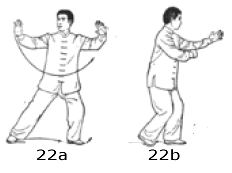
22a = 21b. At position 22b, the waist is facing W9.
23. Repulse Monkey Left (Dao Nian Hou Zou) 倒撵猴左
Name: Left Step Back and Whirl Arms (Dao Juan Gong Zou); Repulse Monkey Left Side (倒撵猴左 : Dao Nian Hou Zou).
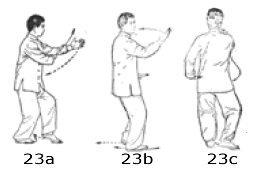
23a = 22b. At position 23c, the waist is facing SE5.
The Sun Taijiquan Competition 73 Form follows the Classic Sun Taijiquan 98 Form fairly closely from movement 1 until movement 23 of the 73 Form. The classic 98 form adds more postures to Step Back and Whirl Arms/Repulse Monkey (movements 23 and 24).
24. Repulse Monkey Right (Dao Nian Hou You) 倒撵猴右
Name: Right Step Back and Whirl Arms (You Dao Juan Gong); Repulse Monkey Right Side (倒撵猴右 : Dao Nian Hou You).
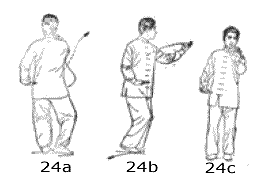
24a = 23c. At position 24c, the waist is facing NE1.
25. Brush Left Knee (Zuo Lou Xi Ao Bu) 左搂膝拗步
Name: Twist Step, Brush Left Knee, Right Palm Strike; Left Brush Knee and Twist Step (左搂膝拗步 : Zou Lou Xi Ao Bu); Brush Knee; Brush Knee and Push; Brush Left Knee and Right Palm Strike.
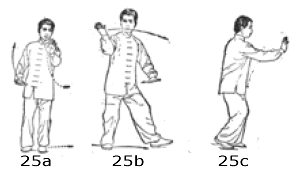
25a = 24c. At position 25c, the waist is facing W9.
26. Lazily Tying Clothes Left (Lan Zha Yi Zou) 懶扎衣左
Name: Tuck in Robes (Lan Zha Yi), Leisurely Tying Clothes (懶扎衣左 : Lan Zha Yi Zou); Lazily Tying Back the Clothes, Lazily Tying Clothes.
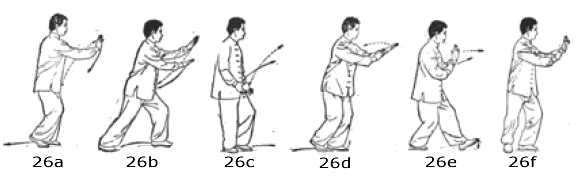
At position 26f, the waist is facing W9.
"The main technical characteristics of the
competition routine of Sun style Tai Ji Quan are as follows: The postures are
high and the footwork is agile; the body is centered and upright; the rhythm is
natural and lively, agile and light; the movements are filled with the internal
strength with the hardness embedded in softness; the speed is smooth and tender,
like the floating clouds and the flowing water. When practicing, pay
attention to the coordination of the advancing and retreating of the footwork
and the use of the movement of opening and closing the hands to connect each
turning."
The Competition
Routine of Sun Style Taijiquan, 2003, p. 4.
-
27. Opening Hands (Kai Shou) 开手
Name: Open Hands (开手 : Kai Shou), Opening Hands.
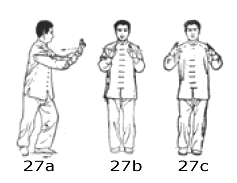
27a = 26f. At position 27c, the waist is facing N12.
Breathe in through the nose when opening hands. Stand up straight.
Hold the head erect. Shoulders are slightly rounded inward. Knees are
slightly bent. Relax and settle; find the central equilibrium.
28. Closing Hands (He Shou) 合手
Name: Close Hands (合手 : He Shou); Closing Hands.
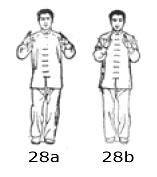
28a = 27c.
At position 28b, the waist is facing N12. Breathe out through the nose when closing hands.
Stand up straight. Hold the head erect. Shoulders are slightly
rounded inward. Knees are slightly bent. Relax and settle; find the
central equilibrium. In position 28b, the waist is facing N12.
29. Single Whip Right (Dan Bian You) 单鞭右
Name: Right Single Whip (You Dan Bian Shou): Single Whip Right Side (单鞭右 : Dan Bian You).
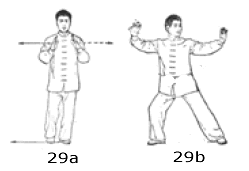
28b = 29a. At position 29b, the waist is facing N12.
30. Cloud Hands Right (Yun Shou You) 云手右
Name: Right Wave Hands Like Clouds (You Yun Shou); Cloud Hands Right (云手右 : Yun Shou You); Waving Hands Like Clouds to the Right.
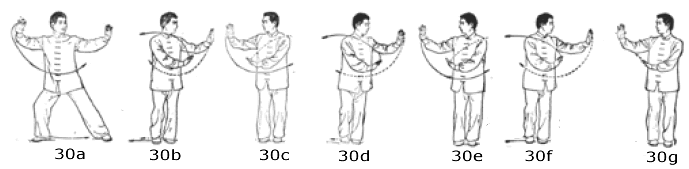
30a = 29b. At position 30f, the waist is facing N12.
Section 3, Movements 21 - 30 This chart provides, for each movement, the number of the movement, the name of the movement, the final direction to face for each movement, a very brief description of the movement, and the summary chart (below) for movements 21-30. (PDF, 91 Kb, 2 Pages, 2008)
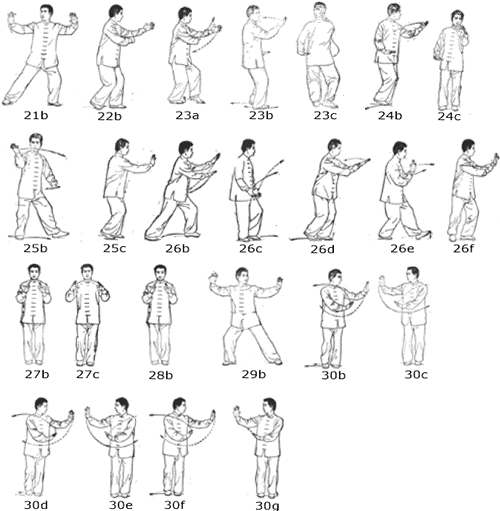
Sun Taijiquan 73 Form, Movements 21 - 30
Return to the Main Index for this Webpage
Return to the Sectional Index for the 73 Form
Section 4, Movements
31 - 40
Sun Style Taijiquan, 73 Movements Standard
International Competition Form
List of Movements: 1-38 List of Movements: 39-73 List of Movements: 1-73
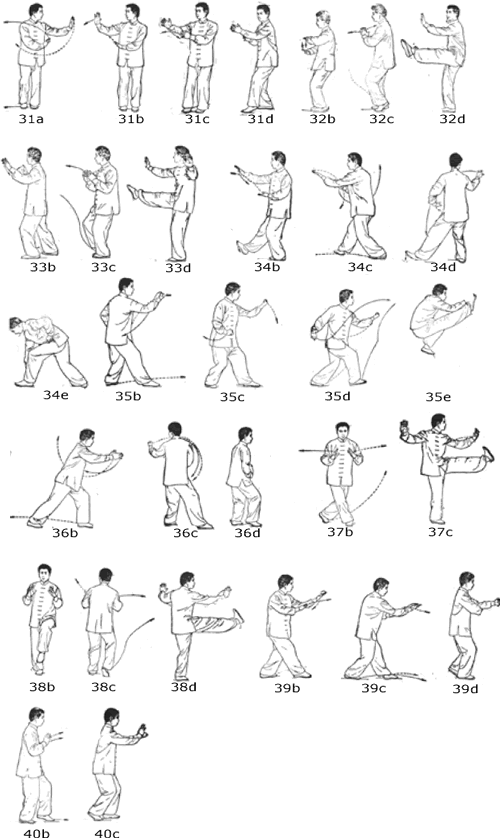
Section 4, Movements 31 - 40 This chart provides, for each movement, the number of the movement, the name of the movement, the final direction to face for each movement, a very brief description of the movement, and the summary chart (below) for movements 21-30. (PDF, 91 Kb, 2 Pages, 2008)
Slide Show of Sun Lu Tang Performing the Sun 97 Taijiquan Form.
31. High Pat on Horse (Gao Tan Ma) 高探马
Name: Search High on the Horse; Higher Horse; Pat the Big Horse on the Back; Pat a High Horse (高探马 : Gao Tan Ma); High Pat on the Horse.
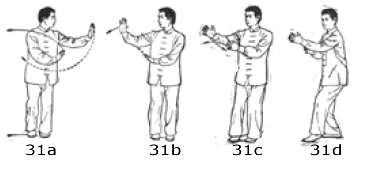
Position 31a = 30f, and position 31b = 30g. From 31b, facing NE2, step back with the right leg diagonally towards SW7, as the right had extends toward NE2, palm open, and bringing the left hand, palm open, towards the right arm (31b-31d for legs, 31b-31c for arms). Bring the left hand forward towards NE2, and the right hand back to alongside the left elbow; bring the left foot back slightly to a left empty toe stance and settle the weight into the right leg and sit back somewhat (31c-31d). At position 31d, the waist is facing NE2.
This stance looks like the Yang style "Separate Hands" ("Left Play the Pipa"), and very much unlike Yang style "High Pat on Horse."
32. Kick Left Foot (Zuo Jiao) 左 脚
Name: Left Toes Kick; Toe Kick Left; Left Separation Kick (左分脚 : Zuo Fen Jiao); Kick Left Foot (左脚 : Zuo Jiao)
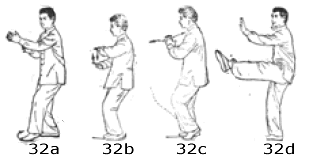
Position 32a = 31d. At position 32d, the waist is facing E4. The left foot kicks in the direction of NE2. This is a left toe tick.
33. Kick Right Foot (You Jiao) 右脚
Name: Right Toes Kick; Toe Kick Right; Right Separation Kick (右分脚 : You Fen Jiao); Kick Right Foot (右脚 : You Jiao)
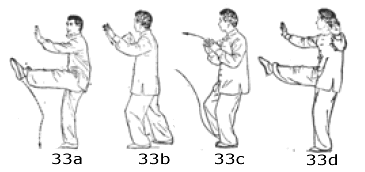
Postion 33a = 32d. At position 33d, the waist is facing E3. The right foot kicks more in the direction of SE5.
34. Step Forward and Punch Down (Jian Bu Da Chui) 进步栽锤
Name: Jump Step and Punch Down (Jian Bu Da Chui); Step, Punch Low; Step Forward and Punch Down.
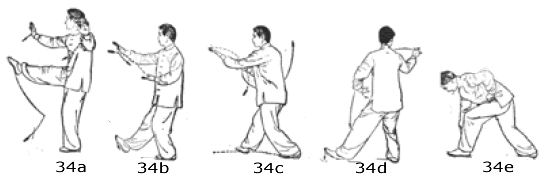
Position 34a = 33d. At position 34e, the waist is facing the earth, and the head is pointing to E3.
35. Turn Over Body and Double Jump Kick (Fan Shen Qi Er Jiao) 翻身其二脚
Name: Turn Over Body and Double Jump Kick (Fan Shen Er Qi Jiao); Turn, Strike, Hop, Double Jump Kick; Turn, Hop, Jump Kick.
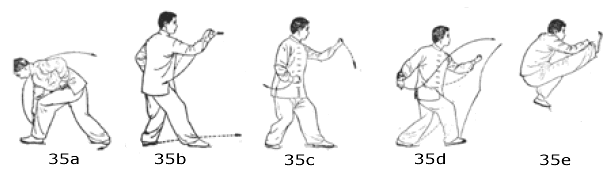
Position 35a = 34e. At position 35e, the waist is facing in the direction of W9. High kick with right foot in the direction of W9.
There are many days that my body, at age 62, is not as agile and strong as on other days. Since the double kick is the most challenging combination kick in the 73 Form routine, I make an adaptation. What I do is step forward with the left leg from 35d-35e, and bring my left knee up for a high knee strike while keeping the right hand at the waist. I then place my left foot on the ground in a stable and secure position, capable of holding the entire weight of my body (275 lbs). I then kick as high as I can with the right foot and slap the right shin with my right hand.
36. Diagonal Subdue Tiger (Xie Fei Ke Hu) 斜飞克虎
Name: Hand Defense and Tame the Tiger (Pi Shen Fu Hu); Diagonal Subdue Tiger; Turn Body and Straddle the Tiger.
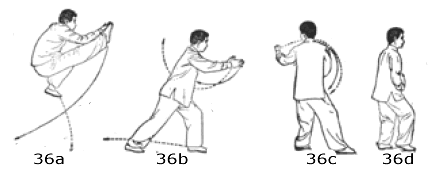
Position 36a = 35e. At position 36d, the waist is facing W9.
37. Toe Kick Left - (Zuo Fen Jiao) 右分脚
Name: Toe Kick Left (Zuo Fen Jiao); Kick with Left Foot; Separation Kick to the Left; Left Heel Kick .
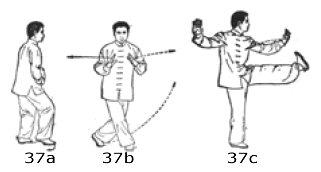
Position 7a = 36d. Heel kick with left foot, a high fast kick, in the direction of W9.
At position 37c, the waist is facing N12.
38. Spin, Right Heel Kick (Zhuan Shen You Deng Jiao) 转身右蹬脚
Name: Turn Body and Heel Kick (Zhuan Shen You Deng Jiao); Spin, Right Heel Kick.
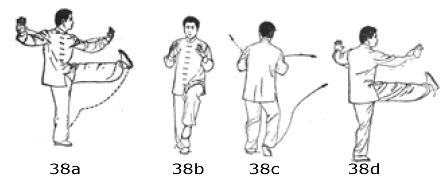
Position 38a = 37c.
Turn clockwise 180 degrees. Kick with right heel in the direction of W9. At position
38d, the waist is facing SW7.
39. Advance, Parry and Punch (Jin Bu Ban Lan Chui) 进步搬拦捶
Name: Advance, Parry and Punch (Jin Bu Ban Lan Chui); Step Forward to Deflect Downwards, Parry and Punch; Advance Step, Deflect, Parry and Punch.
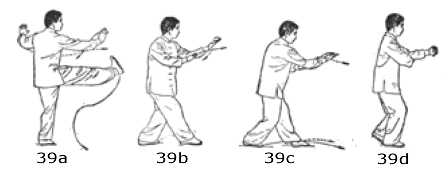
Step right foot forward, left hand forward palm up, and the right hand with palm
down at the height of the left elbow. Step forward with the left foot in
W9 direction, move right hand forward with palm up, move left hand
with palm down to height of right elbow. Step forward with the right foot
in W9 direction, follow step with the left foot. As the right foot steps
forward the right hand is drawn into a ward off position about chest height, and
the left hand makes a fist and punches forward above left forearm. Both hands
make a fist. When stepping move forward in the W9 direction.
At position 39d, the waist is facing W9.
"The principles of posture and body alignment for Taiji form practice are fundamentally the same as for all qigong exercises. Thus the principles of posture for standing meditation [#1] apply to form movement as well. The following principles are additional considerations in practicing Taiji form movement: 1) Keep a relaxed, natural posture. 2) Keep the "five bows." 3) Keep central equilibrium, and straight and centered. 4) Avoid an excessively low stance. 5) Understand the importance and function of turning the waist."
- Yang Yang, Taijiquan, 2005, p. 82.
40. Apparent Close Up (Ru Feng Si Bi) 如封似闭
Name: Apparent Close Up (Ru Feng Si Bi); Appearing to Seal and Close; Apparent Closing Up.
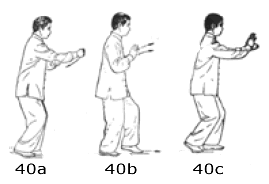
At position 40c, the waist is facing W9.
Section 4, Movements 31 - 40 This chart provides, for each movement, the number of the movement, the name of the movement, the final direction to face for each movement, a very brief description of the movement, and the summary chart (below) for movements 21-30. (PDF, 91 Kb, 2 Pages, 2008)
Return to the Main Index for this Webpage
Return to the Sectional Index for the 73 Form
Section 5, Movements
41 -
50
Sun Style Taijiquan, 73 Movements Standard
International Competition Form
List of Movements: 39-73 (PDF, 15 Kb) Number and name of movement
41. Carry Tiger and Push Mountain (Bao Hu Gui Shan) 抱虎归山
Name: Carry Tiger and Push Mountain (Bao Hu Tui
Shan); Carring the Tiger and Pushing the Mountain; Hold the Tiger, Push the
Mountain, Embrace the Tiger and Push the Mountain.
At position #41 ... the waist is facing W9.
42. Opening Hands (Kai Shou) 开手
Name: Open Hands (Kai Shou), Opening Hands.
Turn the body counterclockwise to the right 90 degrees.
Breathe in through the nose when opening hands. Stand up straight.
Hold the head erect. Shoulders are slightly rounded inward. Knees are
slightly bent. Relax and settle; find the central equilibrium.
At position #42 ... the waist is facing S6.
43. Closing Hands (He Shou) 合手
Name: Close Hands (He Shou); Closing Hands.
Breathe out through the nose when closing hands. Stand up straight.
Hold the head erect. Shoulders are slightly rounded inward.
Knees are slightly bent. Relax and settle; find central equilibrium.
At position #43 ... the waist is facing S6.
44. Brush Left Knee and Twist Step (Zuo Lou Xi Ao Bu) 左搂膝拗步
Name: Left Brush Knee and Twist Step (Zuo Lou Xi
Ao Bu); Brush Knee and Twist Step Left; Brush Knee and Push.
Turn the body counterclockwise and step with left foot to NE2.
At position #44 ... the waist is facing NE2.
45. Lazily Tying Clothes (Lan Zha Yi) 懶扎衣
Name: Tuck in Robes (Lan Zha Yi), Leisurely Tying Clothes, Lazily Tying Back the Clothes, Lazily Tying Clothes.
Step back with right foot, follow step with left foot, drawing left hand down
with palm down and right hand touches left hand. Step forward with left
foot, follow step with right foot, attack jab with fingers of left hand with
palm up, right hand on left wrist. Step back with right foot, draw left
hand with palm up in a counterclockwise arc at shoulder height, push left hand
forward and settle wrist for left hand palm strike, follow step forward with
right foot, and right hand on left wrist.
At position #45e ... the waist is facing NE2.
At position #45e ... the waist is facing NE2.
46. Opening Hands (Kai Shou) 开手
Name: Open Hands (Kai Shou), Opening Hands.
Turn slightly clockwise to face E.
Breathe in through the nose when opening hands. Stand up straight.
Hold the head erect. Shoulders are slightly rounded inward. Knees are
slightly bent. Relax and settle; find the central equilibrium.
At position #46 ... the waist is facing E3.
47. Closing Hands (He Shou) 合手
Name: Close Hands (He Shou), Closing Hands.
Breathe out through the nose when closing hands.
Stand up straight. Hold the head erect. Shoulders are slightly
rounded inward. Knees are slightly bent. Relax and settle; find
central equilibrium.
At position #47 ... the waist is facing E3.
48. Diagonal Single Whip (Xie Dan Bian) 斜单鞭
Name: Oblique Single Whip (Xie Dan Bian);
Diaongal Single Whip (Dan Bian); Slant Single Whip; Single Whip.
Step with right foot to E4. Both arms open
gracefully into single whip position. Palms facing out and fingers held
upward. End by looking at left hand.
At position #48b ... the waist is facing NE2.
49. Parting the Wild Horse's Mane (Ye Ma Fen Zong) 野马分鬃
Name: Parting the Wild Horse's Mane (Ye Ma Fen Zong); Part Wild Horse's Mane.
At position #49d ... the waist is facing E3.
50. Lazily Tying Clothes (Lan Zha Yi) 懶扎衣
Name: Tuck in Robes (Lan Zha Yi), Leisurely Tying Clothes, Lazily Tying Back the Clothes, Lazily Tying Clothes.
At position #50f ... the waist is facing E3.
Return to the Main Index for this Webpage
Return to the Sectional Index for the 73 Form
Section 6, Movements
51 -
60
Sun Style Taijiquan, 73 Movements Standard
International Competition Form
List of Movements: 39-73 (PDF, 15 Kb) Number and name of movement
51. Opening Hands (Kai Shou) 开手
Name: Open Hands (Kai Shou), Opening Hands.
Breathe in through the nose when opening hands. Stand up straight.
Hold the head erect. Shoulders are slightly rounded inward. Knees are
slightly bent. Relax and settle; find the central equilibrium.
At position #51 ... the waist is facing N12.
52. Closing Hands (He Shou) 合手
Name: Close Hands (He Shou), Closing Hands.
Breathe out through the nose when closing hands.
Stand up straight. Hold the head erect. Shoulders are slightly
rounded inward. Knees are slightly bent. Relax and settle; find the
central equilibrium.
At position #52 ... the waist is facing N12.
53. Single Whip Left (Dan Bian Zou) 单鞭 左
Name: Left Single Whip (Zuo Dan Bian); Single Whip to Left Side
At position #53 ... the waist is facing N12.
54. Cloud Hands Left (Yun Shou Zou) 云手左
Name: Left Wave Hands Like Clouds (Zuo Yun Shou);
Cloud Hands Left; Waving Hands Like Clouds Left.
Step with right foot to the right side. Bring left
foot closer to right foot.
Move to the left towards W9.
At position #54f ... the waist is facing N12.
55. Cloud Hands, Lowering (Yun Shou Xia Shi) 云手下势
Name: Wave Hands Like Clouds and Push Down (Yun
Shou Xia Shi); Waving Hands Like Clouds and Lowering Hands;
Cloud Hands, Lowering.
Basically a Brush Left KneeAt position #55c ... the waist is facing W9.
56. Golden Rooster Stands on One Leg (Jin Ji Du Li) 金鸡独立
Name: Golden Rooster Stands on One Leg (Jin Ji Du Li); Rooster Stands on One Leg.
Golden Rooster Stands on Left Leg at position 56b.
At position #56b ... the waist is facing W9.
Golden Rooster Stands on Right Leg at position 56d.
At position #56d ... the waist is facing W9.
57. Fan Through the Back (Shan Tong Bei) 扇通背
Name: Deflect Through the Back (Shan Tong Bei);
Fan Through the Back; Fan Back.
Step back with left leg (#57a), then with right leg
(#57b).
Brush left knee and reach down to Pick Up the Needle from the Bottom of the Sea
(#57d).
Raise up, step out with left leg and extend left arm in Fan Through Back (#57e).
Waist facing W9.
Pivot 180º, step out with right leg and extend right arm in Fan Through Back
(#57f).
At position #57f ... the waist is facing E2.
58. Jade Lady Works the Shuttles (Yu Nu Chuan Suo) 玉女穿梭
Name: Jade Girl Working the Shuttles (Yu Nu Chuan Suo); Fair Lady Working at the Shuttles; Beautiful Lady Works the Loom.
Left hand high at head, right hand at chest, waist facing NE2 at #58b.
Right hand high at head, left hand at chest, waist facing NW10 at #58d.
Left hand high at head, right hand at chest, waist facing SE5 at #58f.
Right hand at face, left hand forward at chin, waist facing NW10 at #58h.
At position #58h ... the waist is facing NW10.
59. High Pat on Horse (Gao Tan Man) 高探马
Name: Search High on the Horse; High Pat on Horse; Higher Horse;
Pat the High Horse.
At position #59 ... the waist is facing NW10.
60. Cross Hands and Slap Kick (Shi Zi Shou Pai Jiao) 十字手拍 脚
Name: Cross Hands, Swinging Lotus Kick (Shi
Zi Shou Shen Bai Lian Jiao); Cross Hands and Kick; Cross Hands and Patting Foot;
Level Hands, Turn Cross Hands; Pat Kicking
Right Foot.
Right hand over left hand at chest height, facing W9 at #60a.
Hands crossed at 60b, facing E3 at 60b.
Kick high with right foot and pat foot with left hand.
At position #60d ... the waist is facing W9.
Return to the Main Index for this Webpage
Return to the Sectional Index for the 73 Form
Section 7, Movements
61 -
73
Sun Style Taijiquan, 73 Movements Standard
International Competition Form
List of Movements: 39-73 (PDF, 15 Kb) Number and name of movement
61. Step Forward, Punch Groin (Jian Bu Zhi Dang Chui) 进步指裆捶
Step Forward and Punch Down : Jian Bu Da Chui : 进步栽锤
Forward Step to Punch Groin.
Stepping forward three steps and then punching low.
First left foot step at #61a. Second right foot step at #61c. Third
left foot step at #61d.
Punch to groin with right fist at #61d.
At position #61d ... the waist is facing E3.
62. Stepping, Lazily Tying Clothes (Bu Lan Zha Yi) 步懶扎衣
Name: Lively Step and Leisurely Tying Clothes. Tuck in Robes (Lan Zha Yi), Leisurely Tying Clothes, Lazily Tying Back the Clothes, Lazily Tying Clothes.
Toe stance left foot and draw fists to waist at #62b with waist facing E3.
At position #62g ... the waist is facing E3.
63. Opening Hands (Kai Shou) 开手
Name: Open Hands (Kai Shou), Opening Hands.
Breathe in through the nose when opening hands. Stand up straight.
Hold the head erect. Shoulders are slightly rounded inward. Knees are
slightly bent. Relax and settle; find the central equilibrium.
At position #63 ... the waist is facing N12.
64. Closing Hands (He Shou) 合手
Name: Close Hands (He Shou), Closing Hands.
Breathe out through the nose when closing hands.
Stand up straight. Hold the head erect. Shoulders are slightly
rounded inward. Knees are slightly bent. Relax and settle; find the
central equilibrium.
At position #64 ... the waist is facing N12.
65. Single Whip Left (Dan Bian Zou) 单鞭
At position #65 ... the waist is facing N12.
66. Single Whip and Lowering Down (Dan Bian Xia Shi) 单鞭 下势
Single Whip and Lowering Movement.
At position #66 ... the waist is facing W9.
67. Step Up to the Seven Stars (Shang Bu Qi Xing) 上步七星
Forward Step, Seven Stars.
At position #67 ... the waist is facing W9.
68. Step Back and Ride the Tiger (Tui Bu Kua Hu) 退步跨虎
At position #68b ... the waist is facing W9.
69. Turn Body, Swinging Lotus Kick (Zhuan Shen Bai Lian) 转身摆莲
At position #69b ... the waist is facing W9.
70. Bend the Bow and Shoot the Tiger (Wan Gong She Hu) 弯弓射虎
At position #70b ... the waist is facing SW8.
71. Double Crashing Fists Strike (Shuang Zhuang Quan Chui) 双撞捶捶
At position #71b ... the waist is facing SW8.
72. Uniting Yin and Yang
Yin and Yang Merging Into One.
At position #72c ... the waist is facing N12.
73. Returning to Wu Ji (Fan Hui Wu Ji) 返回无极
Closing Form.
At position #73b ... the waist is facing N12.
Sun Style Taijiquan, 73 Competition Form, List of Movements: 1-73 (PDF, 131 Kb, 4 Pages) Number and name of movement in English, Chinese Pinyin and Chinese Characters, and resource links
Return to the Main Index for this Webpage
Return to the Sectional Index for the 73 Form
General Remarks
Sun Style Taijiquan, 73 Movements Standard
International Competition Form
By Michael P. Garofalo
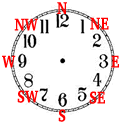
I have adopted a directional scheme to use when describing Taijiquan movements: North is at the 12:00 o'clock position, East = 3:00, South = 6:00, and West = 9:00. If you wish to start from another direction, consult the alternative directional schemes provided elsewhere.
The Opening Hands (Kai Shou) and Closing Hands (He Shou) movements are repeated 9 times in the 73 Form at # 3/4, 8/9, 15/16, 19/20, 27/28, 42/43, 46/47, 51/52, and 63/64.
The Lazily Tying Clothes or Tuck in Robes (Lan Zha Yi, 懶扎衣) movement sequence is repeated 6 times in the 73 Form at # 2, 18, 26, 45, 50, and 62. The Leisurely Tying Clothes movement is a Hao family and then Sun Lu Tang Taijiquan replacement for the Yang and Wu Yu Xiang Taijiquan movement called "Grasping the Sparrow's Tail." A movement called "Lazily Tying Clothes" is also found in Chen Taijiquan.
The Sun Style Taijiquan 73 Form is performed at a faster pace than other styles of Taijiquan. Thus, it is called "Flowing Steps Taijiquan" (Huo Bu Jia Taijiquan) or "Active Step Taijiquan" (Huo Bu Taijiquan). Master Men Hui-Feng, who led the effort to develop the Sun 73 Form, performs the entire Sun Taijiquan 73 Form in 5:42 minutes; and most people I have seen demonstrate the Sun 73 Taijiquan Form do it in under 6 minutes. In comparison, Master Chen Zenglei performs the traditional Chen Taijiquan Old Frame First Form, 74 movements, in 13:46 minutes.
Practitioners of the Yang and/or Chen styles of Taijiquan should not assume that a movement in the Sun style of Taijiquan, with the same name, is performed in a way that is the same. For example, the movement "Step Back and Whirl Arms #23" sometimes called "Repulse Monkey #23" in the Sun 73 Form, has nothing in common with "Repulse Monkey" in the Yang style; or, note the marked difference between "Parting the Wild Horse's Mane" in Yang style and Sun Style (#49). However, many of the moves, except for the width of the stance, are somewhat similar to Yang style, e.g, "Golden Rooster Stands on One Leg' (#56), "Brush Knee" (#10), "Fan Through the Back" (#57e), etc. I think the radical divergence of the Sun Taijiquan from the Chen, Yang and Wu Taijiquan foundations is what led Master Jou Tsung Hwa to argue that to go beyond Wu Style Taijiquan as Wu (Hao) Taijiquan did, and then like Sun style Taijiquan did, is a move into "formlessness." I think that Master Bruce Frantzis is correct in calling the Sun Style of Taijiquan a "Combination Style" when he says (Tai Chi: Health for Life, 2006, p.177) that "The combination styles that you are most likely to find in the West are the Sun style, which combined Hao tai chi with ba gua and hsing-i..."
Sun style Taijiquan was created by Sun Lu Tang (1861-1933) as a blend of the Wu Yu-xiang style of Taijiquan from Hao Wei Chen (1849-1920) who taught Sun Lu Tang in 1911, and Sun Lu Tang's master level expertise in Hsing I Quan, Bagua Quan, and Wudang Qigong.
Madame Sun Jian Yun, and a few others, did not agree with some of the sequencing and the inclusion of a few of the moves found in the Sun 73 competition form (e.g., high jump kick, #35). In the end, Madame Sun Jian Yun, and a few others, did not endorse the new 73 Sun Form. [One must not, of course, forget the bitterness of many traditional martial artists because of the excesses of the Maoist Communist Cultural Revolution in the 1960's, and the suspicions and resistance of some to governmental Wushu standardization.] However, overall, for the main purpose of a standardized international competition form, the new 73 Sun Style Taijiquan Form has been judged by a number of martial arts experts as a reasonable and fair representation of Sun Lu Tang's Taijiquan in terms of style, techniques, general sequencing, and spirit.
A substantial percentage of the Sun Taijiquan 73 Competition Form is identical to the original Sun Taijiquan 98 Form in sequencing. 54 movements of the 73 form are in the same sequence as the 98 form, and are largely performed in the same way.
Sectional Arrangements of the Sun Taijiquan 73 Form
Here is my own arrangement of the Sun 73 Form into 7 sections, seqments, or parts:
Here is the arrangement found in The Competition Routine of Sun Style Taijiquan, 6 Segments, Zhong Shan, Chief Editor; and in Dr. Paul Lam's Sun Style Tai Chi 73 Forms, 6 Sections.
Segment/Section 1, Movements 1 - 22
Segment/Section 2, Movements 23 - 34
Segment/Section 3, Movements 35 - 41
Segment/Section 4, Movements 42 - 53
Segment/Section 5, Movements 54 - 57
Segment/Section 6, Movements 58 - 73
Slide Show of Sun Lu Tang Performing the Sun 97 Taijiquan Form.
|
Identical Movement Sequences in the Sun
Taijiquan 73 Form and the Classical Sun Taijiquan 98 Form |
|
| Movements 1- 26 | Movements 1 - 26 |
| Movements 36 - 49 | Movements 44 - 58 |
| Movements 59 - 73 | Movements 84 - 98 |
Illustrations of the Sun Taijiquan 73 Form
I believe that the illustrations (line drawings) came from the book: Sun Style Taijiquan, 73 Forms. Textbook. Beijing University of Sports Education, China. 72 pages, b&w. There is a Chinese only and English only version of this book according to Internet sources. 177 line drawings of the 73 Form. Publication date unknown. I do not have a copy of the publication, as of 1/1709; but am seeking one. This Sun 73 Form classroom instructional text is not readily available to English readers. Suggestions?
I have seen different sets of these black and white line drawings on the Internet in both .pdf and .jpg formats. I reorganized the illustrations into smaller groups, touched them up, numbered them according to the movement sequences in the Sun Taijiquan 73 Form, placed them on a transparent background, and converted them into a more condensed .gif format.
Performance Times for the Sun Taijiquan 73 International Competition Form
|
|
||
| Time | Performer | Source |
| 5:31 | Liang, Shou-Yu | Sun Style Taijiquan with Applications, VHS, 1996 |
| 5:17 | Tsao, Jesse | Tai Chi Sun Style Competition Form 73, VHS, 2002 |
| 9:22 | Jiang, Jian-Ye | Sun Sytle Tai Chi Competition Form 73, VHS, 1997 |
| 7:30 | Lam, Paul | Sun Style Tai Chi - 73 Forms, The Competition Form, VHS, 2000 |
| 5:42 | Men, Hui-Feng | Sun Style Tai Chi - 73 Forms, The Competition Form, VHS, 2000 |
| 5:01 | Ocean Hou | Ocean Hou's Sun Style 73 Competition Taiji Form Demonstration UTube |
| 3:52 | Li, Cheng-Xiang | Sun Style Long Competition Form 73, VCD |
| 10:08 | Xing, Guangzhi | Tai Chi for Life, Sun 73 Style, DVD, 2005 |
| 5:37 | Unknown | Sun Tai Chi 73 Mouvements UTube Online Video, 2007 |
| 4:22 | Nguyen Hoai Van | Tai Chi Sun Style Modified, 73 Form UTube Online Video, 2006 |
| 5:20 | Unknown | The Competition Routine of Sun Style Taijiquan, 2003 |
Traditional Sun Style Taijiquan, 98 Movement Form, 1921 |
||
| 6:32 | Sun, Jian Yun (1914-2003) 孫式太極 孫劍雲 |
Traditional Sun Style Long
Form UTube Online Video, B&W |
| 7:44 | Sun, Peng | Traditional Sun Style Long Form. UTube Online Video, color |
Return to the Main Index for this Webpage
Bibliography, Links, Resources
Sun Style Taijiquan, 73 Movements Standard
International Competition Form
A
Note to Readers: The
Cloud Hands webpages have been online continuously since 2001. In 2009,
over 1,350,000 webpages (excluding graphics) were served to readers around the
world from the
websites: Cloud Hands
T'ai Chi Ch'uan, Valley
Spirit Qigong,
Walking, Taoism,
Meditation and
Yoga. Since 2005, I
have also provided information about Taijiquan and Qigong at my
Cloud Hands Blog. Since
these mind-body arts websites are very well-established and stable websites,
they provide readers with a good and secure starting point for their online
research into Taijiquan and Chi Kung. The Cloud Hands websites are funded entirely by
Green Way Research, with
volunteer efforts by Michael P.
Garofalo.
Unfortunately, as everyone knows, many other websites and webpages,
documents, and videos appear and then disappear from the Internet scene.
Authors do not pay to keep up their web hosting services, loose a "free hosting"
option, change filenames, recode away from HTML, or decide to remove the
webpages for various reasons. Consequently, links to some good webpages or
videos become invalid and the files are no longer found on the Internet. You
may find a some of these "dead links" to nonexistent webpages or videos cited
below; and, there is no way to avoid this troublesome situation. For this
reason, when you do find a good and useful webpage, be sure to save the webpage
to a folder on your hard drive or server.
I welcome your suggestions for how to improve this webpage. Your comments,
ideas, contributions, and constructive criticism are encouraged. Send your
suggestions to my email box.
Ba Gua Zhang, Pa
Kua Chang: Sun Lu Tang Style
Cane, Zhang, Short
Staff, Jo, Hanbo, Gun Weapons and Exercise Methods, JoDo, Zhang Quan
Cloud Hands Blog by Mike Garofalo
The Competition
Routine of Sun Style Taijiquan. Zhong Shan, Chief Editor. Wu
Don, Executive Editor. Li Wei, Editor of English Version. Published
in Beijing, China, 2003. 151 pages. ISBN: 7537720851. A
detailed study of the Sun Taijiquan 73 standard competition form. Book
comes with a VCD, color, 50 minutes. The accompanying VCD ISRC:
CN-C20-02-0040-O/V-G8. I could not find identification of the performer or
instructor on the VCD. There is no English narration on the VCD, just
music.
The book is written in both English and
Chinese. I used this very useful book to determine the names of the
movements and to help me prepare the the
glossary for Sun
Lu Tang's internal martial arts system. The book includes many numbered
black and white photographs of each movement in the 73 Sun Form. The book
is part of an "Chinese-English bilingual series of guides to learning and
practicing the competition routines of Tai Ji Quan." Other titles in the
series help you learn to perform the competition versions of the Yang, Chen, Wu,
Wu (Hao), Sun, and 42 Forms. I benefited from reading their suggestions on
how to prepare for and participate in Taijiquan competitions. I ordered
the Sun Taijiquan 73 form book and VCD from
Tai Chi Depot. The VCD
includes a demonstration of the form, and an instructional segment where the
instructor slowly moves through the 73 form move by move from a front view, and
then from a back and side view. There is no English language narration.
VSCLC.
The
Complete Book of Tai Chi Chuan: A Comprehensive Guide to the Principles
and Practice. By Wong Kiew Kit. Shaftesbury, Dorset, Element, 1996.
Index,
bibliography, 316 pages. ISBN: 1852307927. Chapter 18, pp.
262-277, is about the Sun-Style Tai Chi Chuan. There were 97 postures-movements in
Sun Lu Tang's original Tai Chi set. Sun Kiam Yun, a lady Tai Chi master,
does a 72 posture form. This book includes a list of the
postures-movements-patterns in the
72 form by Sun Kiam Yun and includes excellent detailed line drawings of her
doing this form.
Deng Fu Ming,
Sun Taiji Master. Instructional DVDs, in Mandarin with English
subtitles. Plum Publications DVDs and VCDs. Master Deng demonstrates
Sun Style Xing Yi, Ba Gua and Taiji.
The Development
of Sun Style Tai Chi Chuan
Excellent article by Peter
Lim Tian Tek. German
Translation Interesting biography of Sun Lu-Tang. 17Kb.
Illustrated version
of the Sun Style 73 Competition Form. Black line illustrations.
Source unspecified.
Illustrated version of the Sun Style 73 Competition Form. Black line
illustrations. Source unspecified.
Internal Martial Arts (Nei Jia Quan), Sun Style
- Quotations, Sayings, Commentary
The Internal Practices of Sun Lu-Tang. By Bradford Tyrey.
CreateSpace Independent Pub., 2017. 128 pages. ISBN: 9781517340223.
"Book contains: Over 150 old photos and drawings, 135 pages of detailed
information from the source. A distinctive book authored by one of Madam Sun
Jian-Yun's (daughter of Grandmaster Sun Lu-T'ang) direct long-term students.
Contains old translations from Chinese boxing masters, lectures and explanations
from Madam Sun [1913-2003] and original students of Grandmaster Sun [1861-1933].
Topics covered concern old practices of Sun Taijiquan (Tai-Chi), Sun and Cheng
styles of Baguazhang, Xingyiquan, Qigong, sword practice methods, and an
overview of Grandmaster Sun's history with photos. Introduction to several of
Madam Sun's direct long-term students: Bradford Tyrey (USA), Dave Martin (United
Kingdom), and Su-Ying Martin (United Kingdom). Writings on: Glimpses into the
Life of Grandmaster Sun Lu-T'ang, The Essence & Smoothness of Qi Within the San-t'i
Posture, Old Xingyiquan Teachings of Master Guo Yun-Shen [1827-1903], Baguazhang
& Xingyiquan's I-Chin Jing (Changing Tendon Classic), Guo Yun-Shen's Animal
Pairings in Xingyiquan: Dragon & Tiger, Developing Inner Force Through Standing,
Ten Character Hands, Food & Drink That Harm Qi, Taoist Methods of Grandmaster
Sun Lu-T'ang, Traditional Sun Family Sword Practices, Sun Family Bagua Sword
Methods, Introduction to the Eight Immortals & Sword Methods, Ten True [Correct]
Sword Shape Methods, A Lecture on Internal Sword Practices - Presented by Madam
Sun Jian-Yun in 1987, An Explanation of Lao Yin Yunshou (Old Yin Cloud Hands),
Questions & Answers, Moving Qi Among Three Points & The Skill of Nurturing the
Small. This is our first book offered on traditional Sun family style practices.
We highly recommend that you also purchase our second book 'Traditional Sun Lu-T'ang
Style: Commentary by Madam Sun Jian-Yun, Daughter of Sun Lu-T'ang - Questions &
Answers on Taijiquan - Baguazhang -Xingyiquan - Qigong (Volume I), full of old
photos and training methods."
List of Movements
Sun
Taijiquan International Standard Competition 73 Form
List of Movements: 1-73 Sun 73 Form. One name, in English, for each of the numbered 73
movements is provided. (PDF, 17 Kb, 1 Page, 2003)
List of Movements: 1-38 Sun 73 Form. One name, in
English, for each of the numbered movements 1-38 is provided. (PDF, 15 Kb, 1
Page, 2003)
List of Movements: 39-73 Sun 73 Form. One name, in
English, for each of the numbered movements 39-73 is provided. (PDF, 15 Kb, 1
Page, 2003)
List of Movements: 1-73 Sun 73 Form. One name, in
English, for each of the 73 numbered movements is provided. Resource links are
included. (PDF, 26 Kb, 3 Pages, 2008)
List of Movements: 1-73 Sun 73 Form. The number and
name for each of the 73 movements is provided. Names are given in English,
Chinese, and Chinese characters. Resource links are included. (PDF, 133 Kb, 4
Pages, 2008)
List of Movements: 1-73 Sun 73 Form. The number and name
for each of the 73 movements is provided. Names are given in English, Chinese,
Chinese characters, French, German and Spanish. Reference sources for the names
for each of the 73 movements are cited. Alternative names are cited. Resource
links are included. Research by Michael P. Garofalo, M.S.. (PDF, 284Kb,
31 Pages, 2008)
Sun Style of T'ai Chi Ch'uan: Standard Competition 73 Movements Form. Research by Michael P. Garofalo, M.S.. Webpage: 450Kb, June 2008. This webpage includes an introduction, information on the history of the Sun Taijiquan forms, a detailed bibliography, extensive links, references to video resources, a large collections of quotations about Sun Taijiquan, recommendations on the best media resources on the topic, and suggestions for learning the 73 competition Sun Taijiquan form. A detailed comparative list of the names of each of the 73 movements is provided, with source references, and the movement names are given in English, Chinese, Chinese characters, French, German, and Spanish. This webpage includes detailed descriptions of each of the 73 movements with black and white illustrations for each movement sequence along with commentary and comparisons. Many additional nomenclature lists and section study charts in the PDF format, photographs and graphics are also provided - over 1 MB of information. This webpage is the most detailed and complete document on the subject of the Sun Taijiquan Competition 73 Form available on the Internet. This document was published by Green Way Research, Valley Spirit Taijiquan, Red Bluff, California, 2008. URL: http://www.egreenway.com/taichichuan/sun73.htm.
List of Movements, Sun Lu Tang's Original Long Hand
Form, 98 Movements, 1921 (PDF, 18Kb, 1 Page, 2003)
Lost T'ai-chi Classics from the Late Ch'ing Dynasty. By Douglas
Wile. State University of New York Press, 1995.
Nomenclature of Movements, 98 Movement Form International Sun Tai Chi Association
Online Videos of the Sun Taijiquan 73 Form
Opening and Closing Hands An
essential Sun style movement in Sun Taijiquan and
qigong practice.
Original 98
Movement Long Hand Form, Sun Lu Tang, 1921
Plum Publications
Santa Cruz, California. Offers DVDs/VCDs from Sun Jian Yun, Deng Fu Ming,
and Joanna Zoya. Sun Lu Tang DVDs/VCDs:
Page 1,
Page 2.
"Principles and Practice of Sun Style T’ai Chi"
by Yip, Li (Faye).
T’ai Chi: The International Magazine of T’ai Chi Ch’uan:
April 1998,
Vol. 22 No. 2.
Quotations: Internal Martial Arts (Nei Jia Quan),
Sun Style - Quotations, Sayings, Commentary
Recommended for
Learning the Sun
Taijiquan 73 Form
San Ti Shi: "Three Harmony"
Standing Exercise International Sun Tai Chi Association.
San Ti Shi: Bibliography, Links, Quotes, Notes, Photographs
Slide Show of Sun Lu Tang
Performing the Sun 97 Taijiquan Form.
A Study
of Taijiquan. By Sun Lutang. Translated by Tim Cartmell. North Atlantic
Books, 2003. 160 pages. ISBN: 1556434626. Includes
a very informative biography,
with photographs, about the life of Sun Lutang (Sun Fu Quan). There is an
introduction to the form, and very short chapters on each
of the 98 movements in Sun Lu tang's original long hand form. Many black and white photographs of Sun Lu Tang in
movement postures.
Limited details in movement descriptions and descriptions of transitions. Cradall
uses a text published in 1924. This book,
and Sun Lutang's other books on Baguazhang (1916) and Xingyiquan (1915) were groundbreaking
and seminal works
in the history of the internal martial arts (Nei Jia Quan). In fact,
an argument
can be made that Sun Lu-Tang's published works marked the introduction of
these ideas into a much wider circle of Chinese Neijia Quan enthusiasts
of physical culture, and intellectuals seeking knowledge of the internal martial
arts and their many interrelations with Taoism, Daoyin (Qigong) and Chinese philosophy.
Sun Lu Tang:
Books, DVDs, VCDs, Pamphlets. Plum Publications, CA.
Sun Lu Tang (Sun Fun
Quan) 1861-1933 Chronology of his life.
Sun Lu Tang's Style
of Internal Martial Arts: Bibliography, Instructions, Links,
Resources, Quotations. By Mike Garofalo. 1.3MB.
Sun Style Long Competition Form. Instructional VCD, 130 minutes.
Instructions,
in Chinese only, by Li Cheng Xiang. 2 VCDs. Available from Plum
Publications,
VCD 675. ISBN: 788721100X.
Sun-Style Taichi
Chuan. 2 instructional VCDs. "Such VCD
is of English version and both the English subtitle and explanation can help
practitioners well understand the essentials of Sun-style Tai Chi Chuan. Lee De
Yin, who is the contemporary famous Tai Chi master and professor now working
with People's University of China and state-level coach in Beijing Martial Arts
Committee, gives lectures in the program regarding the key points for every
phases in the 73-posture routine forms. He also showcases every postures in a
detailed way (reviewed often from front or back)."
Sun Style Tai Chi Chuan: Quotations, Sayings,
Commentary
Sun Style Tai Chi Chuan 73 Forms:
Instructions, Lists of Movements, Bibliography, Links.
Sun Style of T'ai Chi
Ch'uan: Standard Competition 73 Movements Form. Research by Michael P.
Garofalo, M.S.. Webpage: 350Kb, May 2008. This webpage includes an
introduction, information on the Sun Taijiquan form, a large collection of
quotations about Sun Taijiquan, a detailed bibliography, extensive links,
references to video resources, and suggestions for learning the 73 competition
Sun form. A detailed comparative list of the names of each of the 73
movements is provided, with source references, and the movement names are given
in English, Pinyin Chinese, Chinese characters, French, German, and Spanish.
A detailed description of each of the 73 movements with black and white
illustrations for each movement sequence is provided along with instructions,
commentary and general comments. This is the most detailed and complete
webpage on the subject of the Sun Taijiquan 73 Competition Form available on the
Internet.
Sun
Style Tai Chi Chuan with Applications. Directed by Grandmaster Liang, Shou-Yu and Dr. Yang Jwing-Ming. International
Standard Routine. Produced by Yang's
Martial Arts Association, Boston, MA, 1996. VHS, 52 minutes. A
demonstration of the overall form, then the form is broken into six parts and each part is
demonstrated
twice - no instruction. 20 minutes of applications. Performed
by Grandmaster Liang, Shou-Yu and Ramel Rones. Information.
ASIN:1886969469.
Sun Style Tai Chi Competition Form. Instructional videotape by Jiang
Jian-ye. VHS, 82 minutes. Albany, New York,
CDTKA, 1997. The standard competition 73 movement form approved by the Chinese
National Wushu Association for international competition. Website:
Jiang's
Tai Chi Videos. Master Jiang Jian-ye is a Taijiquan and Wushu expert
with a Master's degree in Physical Education, has produced many high
quality instructional videotapes, and has many of his videotapes distributed by
Wayfarer Publications and through
Tai Chi Magazine. I value the
quality work of Master Jiang, I own a number of his instructional videotapes,
and have learned a lot from him. His explanations are clear and detailed,
and he shows repeated views at different angles and sometimes at different
speeds as necessary for faster forms.
Sun Style Tai
Chi Competition Form. "Created by the Chinese National
Wushu Association." Instructional
videotape by
Jiang Jian-ye. VHS, 120 minutes. Website: Jiang's
Tai Chi Videos. This is the 73 Movement standard competition form.
Sun Style Tai Chi - 73 Forms. The Competition Forms. An
instructional videotape by Dr. Paul Lam. Narwee,
Australia, East Action Video, 2000. A
competition form created by Professor Men Hui Feng of Beijing University based on the Sun
style. "This detailed instructional video includes a demonstration of the set by
its
creator, Professor Men Hui-Feng. Sun style is characterized by its
powerful qigong elements, agile steps and flowing movements." VHS, 103
minutes. Contents: Introduction to Tai Chi and the
Sun style. Comprehensive instructions. Demonstrations of the
complete set
by Dr. Paul Lam from front and back views. A demonstration by the creator
of the set, Professor Men Hu--Feng. ASIN: B000066G1T.
Sun Style Taiji
Chuan. Instructional VCD. "VCD
is the English version and both the English subtitles and explanation can help practitioners well understand the
essentials of Sun-style Tai Chi Chuan. Lee De Yin, who is a contemporary famous Tai
Chi master
and professor now working with People's University of China and state-level
coach in Beijing Martial Arts Committee, gives lectures in the program regarding the key
points for every phase in the 73-posture routine forms. He also showcases every
posture in a detailed way (reviewed often from front or back)." Part of the
Chinese Kung Fu
CD series.
Sun Style Tajiquan:
Bibliography, Guides, Links, Resources, Instructions, Research
Sun
Style Taijiquan Competition Routine. Instructional DVD by Li
Chengxiang. 120 minutes. English and Chinese subtitles with
voiceover in Chinese. 73 Form routine.
Sun Style Taijiquan Quotations and
Notes
Sun Style Taijiquan,
73 Competition Form, List of
Movements: 1-73 (PDF, 131 Kb, 4 Pages)
Number and name of movement in English, Chinese Pinyin and Chinese Characters,
and resource
links.
Sun Style Taijiquan, 73 Forms. Textbook.
Beijing University of Sports Education, China. 72 pages, b&w. In
Chinese and English. 177 line drawings of the 73 Form.
Distributed by Tai Chi and Chi
Kung Institute. "This is the English textbook for
students studying Sun Style at the Beijing University of Sports Education in
China, which we reprint here for students of the Institute with permission.
This book presents the Sun Style Tai Chi Competition Routine in 73 Forms,
illustrated with 177 diagrams and accompanied by written descriptions. It
also contains a floor plan, which outlines the distribution of movements in the
routine."
Sun T'ai Chi
Ch'uan: Competition Routine. By Le Deyin and Wu Dong.
Ebook. 300 color
photos.
Sun T'ai Chi Ch'uan - Valley Spirit
Homepage
Sun
Tai Chi Video and Book 73 Competition Form. ISBN: 7537720851.
Sun Taijiquan: Standard Competition 73 Movements Form,
List of Movements: 1-73 Number and name for each of the 73
movements is provided. Names are given in English, Chinese, Chinese characters,
French, German and Spanish. Reference sources for the names for each of the 73
movements are cited. Alternative names are cited. Resource links are
included. (PDF, 295Kb, 33 Pages, 2008)
Sun Taijiquan: Standard
Competition 73 Movements Form. Research by Michael P. Garofalo, M.S.. This webpage includes an introduction,
information on the Sun Taijiquan form, a large collection of quotations about
Sun Taijiquan, a detailed bibliography, extensive links, references to video
resources, and suggestions for learning the 73 competition Sun form. A
detailed comparative list of the names of each of the 73 movements is provided,
with source references, and the movement names are given in English, Pinyin
Chinese, Chinese characters, French, German, and Spanish. A detailed
description of each of the 73 movements with black and white illustrations for
each movement sequence is provided along with instructions, commentary and
general comments. This is the most detailed and complete webpage on the
subject available on the Internet.
Survey of the Sun
Style Demonstration VCD, 60 minutes. By Sun Jian Yun,
family members,
and senior students. Available from Plum
Publications, VCD25. ISBN: 788721100X. "Starts with a performance of Sun T'ai Chi by Sun Jian-Yun, herself an "old
Shihfu". Other students and family members help demonstrate T'ai Chi, Sun Style Ba Gua Partner Sword
practice, Sun Style Hsing Yi Fist Set, and a rather nice Sun style Xing Yi sword." DVD
Tai Chi Chuan: Theory and Practice. By Paul F. N. Tam. "This
book covers history, lineage, and writings of the old masters, pushing hands and the form itself. Tam
is a direct descendant of Sun Lu Tang’s teachings and one of Sun Jian Yun's
top disciples." Hardback, In
English, 300 pages. In
Chinese. 1991.
Tai
Chi: Health for Life. How and Why It Works for Health, Stress Relief,
and Longevity. By Bruce Frantzis. Berkeley, California, Blue Snake Books, Energy Arts
Inc., c 2006. Index, 320 pages. ISBN: 1583941444.
VSCL.
Tai Chi for
Life: Sun Style Tai Chi. 73 Standard Competition Form. DVD Instruction, 90
minutes.
Instruction by Master Guangzhi Xing. Turtle Press. "Sun style was
developed by Master Sun Lu-Tang,
using elements from various Chinese boxing schools. It features quick hand and
foot movements
as well as smooth footwork, earning it the name of "the form of the flowing
steps." On this DVD,
Master Xing teaches you the 73-movement form developed by the Chinese National
Wushu
Association from the traditional Sun family form for international competition.
Begin with a
warm-up followed by detailed instruction in the movements that make up the
forms. Master Xing
demonstrates from the front, rear and side views, performing the complete form
then teaching
the individual movements one by one with detailed instruction."
Instruction in English and with
some text over video. Huo Bu Jia: The Form of the Flowing Steps.
Copyright Turtle Press,
2002-2005.
Tai Chi Sun Style Competition Form 73.
Instructional videotape by Master Jesse Tsao. 60 minutes. Tai Chi Healthways, 2002. Telephone: 858-793-8939.
The form is demonstrated by Master Tsao, then he teaches the form in 15 lessons,
posture by posture.
Sun
Style Tai Chi. Demonstration by Jesse Tsao. UTube, 5:37 min.
Demonstration of his instructional videotape. 73 Form.
Email Jesse Tsao.
Taijiquan, Sun Style: Quotations, Sayings, Commentary
Taijiquan Theory of Dr. Yang, Jwing-Ming: The Root of
Taijiquan. By Yang Jwing-Ming. Boston, Massachusetts, 2003.
References, glossary, index, 270 pages. ISBN: 0940871432.
Taijiquan Xue (A Study of Taiji Boxing). Classical Taijiquan, Volume
1. By Sun Lutang.
Translated and edited by Joseph Crandall. Pinole, California, Smiling
Tiger Martial
Arts, 2000. 100 pages. ISBN: 1929047177. "Sun's original preface written in 1919 and photos of Sun performing the 98
part Sun Style Tai Ji routine. Part Two is a push hands sparring routine plus an
explanation of its use as a bridge from the 98 movement form to free style sparring and
ultimately to combat." Book (8.5" x 11", Velo-Bound format) Distributed by Plum
Flower Press, formerly High View Publications, at 800-531-0693.
Joseph Crandall translates a book published in 1921.

Traditional Sun Style T'ai Chi
Ch'uan 98 Movement Routine
Created by Grandmaster Sun Lutang from 1913-1918,
Published book in 1921
List of Movements, Sun Lu Tang's Original Long Hand Form, 98 Movements, 1921 (PDF, 18Kb, 1 Page, 2003)
Traditional Sun Style Taijiquan
Traditional Sun Style Taijiquan
Course.
Traditional Sun Style Taijiquan.
Instructional DVDs by Tim Cartmell. Shen Wu Martial Arts: Tim Cartmell.
Garden Grove, California. "This 5 DVD set includes complete and
precise instruction of the entire traditional Sun style Taijiquan form. Every
posture and movement of the long form is covered in full detail, in addition the
DVDs also include detailed instruction of postural alignment, power building
exercises, footwork, methods of partner testing for every posture in the form
and numerous demonstrations of the martial applications of the form movements."
Traditional Sun Style Tai Chu Chuan. Two instructional DVDs by Shifu
Jianye Jiang. "By Jiang Jian-ye. Created by the famous Sun Lu-Tang, who
studied many internal martial arts, this form draws on the other T'ai Chi styles
and Xingyi and Bagua. The form is taught movement-by-movement with each movement
repeated 3-4 times, front and back. Groups of movements are reviewed front and
back. There is a demonstration of the 41 movements on this tape at the beginning
and again three times at the conclusion. 110 Min." -
Wayfarer Catalog
A Study
of Taijiquan. By Sun Lutang. Translated by Tim Cartmell. North Atlantic
Books, 2003. 160 pages. ISBN: 1556434626. Includes
a very informative biography,
with photographs, about the life of Sun Lutang (Sun Fu Quan). There is an
introduction to the form, and very short chapters on each
of the 98 movements in Sun Lu tang's original long hand form. Many black and white photographs of Sun Lu Tang in
movement postures.
Limited details in movement descriptions and descriptions of transitions. Cradall
uses a text published in 1924. This book,
and Sun Lutang's other books on Baguazhang (1916) and Xingyiquan (1915) were groundbreaking
and seminal works
in the history of the internal martial arts (Nei Jia Quan). In fact,
an argument
can be made that Sun Lu-Tang's published works marked the introduction of
these ideas into a much wider circle of Chinese Neijia Quan enthusiasts
of physical culture, and intellectuals seeking knowledge of the internal martial
arts and their many interrelations with Taoism, Daoyin (Qigong) and Chinese philosophy.
Sun's Style
Tai Chi Chuan. By Master Sun Jian-yun and Master
Paul Lam (Tam Fung-ngar Paul). Translated by
Peter Chan and Leung Ming-yuen. Published by Peter Chan and Co., Kowloon,
Hong Kong, 2003. 141 pages.
Distributed by
Plum Publications.
Hong Kong Registry No. 962-8665111. "Some books are nothing less than essential. For the
Sun style enthusiast this is a keystone written by the famous instructors own
daughter who practiced for over 70 years. Well written in generally good
translation this book discusses the Sun style with its key points, Sun Jian Yun's life, the breakdown of the form with written examples of usage, key points
to remember in practice and historical notes. Our only criticism is that the
photographs are rather small. On the other hand there are specifics about, for
instance, Sun footwork which are very helpful in understanding the fundamentals
of this branch." The form presented in this book has 97 movements.
Sunstyle
taijiquan 孙式太极拳 performed by Master Wang Yanji.
Maste Wang studied wushu- martial arts from family Li, And has studied to the
Chinese many martial arts famous experts. Maste Li Tianji studied wushu
from his father, Li Yulin, as well as from his father's masters, Sun Lutang and
Li Jinglin. He graduated from the Shandong Wushu Institute, became a
college professor, the executive of the Harbin Wushu Federation, and the first
chief coach of the China Wushu Team. Li Tianji has been memorialized as one of
the "Ten Best Wushu Masters of China (Zhongguo Shi Da Wushu Mingshi). In
1956 Li Tianji created the first standardized taijiquan: 24-Form Simplified
Taijiquan, 32-Form Simplified Taiji Sword, 88-Form Yang Taijiquan,
Xingyidalianhuan, Wudangjian and Wudangtaijijian."
Survey of the Sun
Style Demonstration VCD, 60 minutes. By Sun Jian Yun,
family members,
and senior students. Available from Plum
Publications, VCD25. ISBN: 788721100X. "Starts with a performance of Sun T'ai Chi by Sun Jian-Yun, herself an "old
Shihfu". Other students and family members help demonstrate T'ai Chi, Sun Style Ba Gua Partner Sword
practice, Sun Style Hsing Yi Fist Set, and a rather nice Sun style Xing Yi sword." DVD
Traditional Sun Lu-T'ang Style: Commentary by Madam Sun Jiian-Yun.
Compiled and translations by Bradford Tyrey. CreateSpace Independent Pub.,
2017. 104 pages. ISBN: 9781541376953. "Traditional Sun Lu-T'ang
Style: Commentary by Madam Sun Jian-Yun, Daughter of Sun Lu-T'ang ~ Questions &
Answers on Taijiquan ~ Baguazhang ~ Xingyiquan ~ Qigong (Volume I). Book
contains: Over 130 old photos and drawings, with 100 pages of detailed
information. An authoritative book authored by one of Madam Sun Jian-Yun's
(daughter of Grandmaster Sun Lu-T'ang [1861-1933]) direct long-term students.
Old writings on the Neijiaquan practices of Taijiquan (Tai-Chi), Baguazhang,
Xingyiquan, and Qigong. This book focuses on questions that we asked Madam Sun
[1913-2003] in class, and her detailed explanations. This is part of a series of
books on traditional Sun family practices and is highly recommended as a
follow-up text to our 1st book: The Internal Practices of Sun Lu-T'ang.
Introduction to several of Madam Sun's direct long-term students: Bradford Tyrey
(USA), Dave Martin (United Kingdom), and Su-Ying Martin (United Kingdom). Our
second book offered on traditional Sun family style practices. This book
introduces many of the profound methods of practice taught by Grandmaster Sun
Lu-T'ang, and is an absolutely essential text for pursuing the traditional Sun
family style Taijiquan (Tai-Chi) form instruction and cultivation of qi
presented in our third book in this series."
Traditional Sun Lu-T'ang Style Photographic Guidebook (1957 Guidebook, 95
Posture Form). By Jian-Yun Sun. Compiled by Bradford Tyrey.
CreateSpace Independent Pub., 2017. 92 pages. ISBN: 971544892177.
"This Sun Tai-Chi (Taijiquan) guidebook was written in 1957 by Madam Sun
Jian-Yun, daughter of Great Grandmaster Sun Lu-T'ang. With over 200 photographs
of Madam Sun demonstrating postures, this book is an essential photographic
reference in understanding the traditional breakdown and sequence of the Sun
Tai-Chi form. Bradford Tyrey, who lived in China for 13 years (1984-97), studied
the Sun family arts of Tai-Chi, Bagua, and Xingyi with Madam Sun, becoming her
first foreign disciple. Additionally, he had studied with many of the elders of
the Sun family during those years. After returning to the United States, he
continued learning from Madam Sun over the years until her passing in 2003. This
edition of her book shows: a few of Madam Sun's long-standing disciples, the
breakdown of postures, the correct name of each sequence of postures, several
examples of the profound teachings that Madam Sun taught in classes, examples of
personal notes that Bradford wrote down while in class during those years, and a
number of rare photos with explanations provided by Madam Sun. This edition of
her guidebook presents a general, but necessary reference for learning the
traditional Sun Tai-Chi form through follow-along photos. In an upcoming edition
of this guidebook, Bradford details advanced instruction as taught by Madam Sun
Jian-Yun regarding each posture."
List of Movements of the 1921 Version of Sun Lu Tang's Tai Chi Chuan Long
Form. Sent to me by William B. Swann, Jr., on August 8, 2015. PDF
File. Divided into Sections.
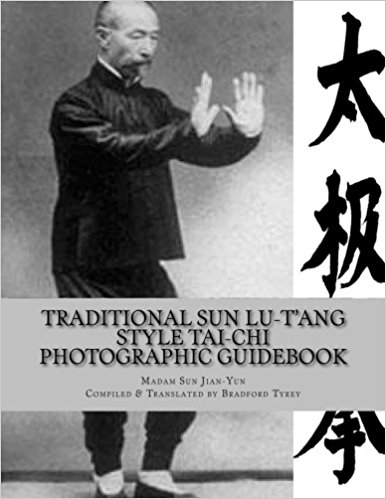
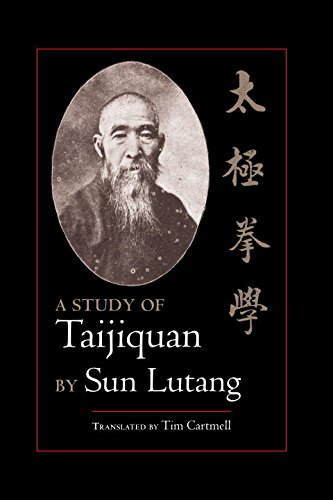
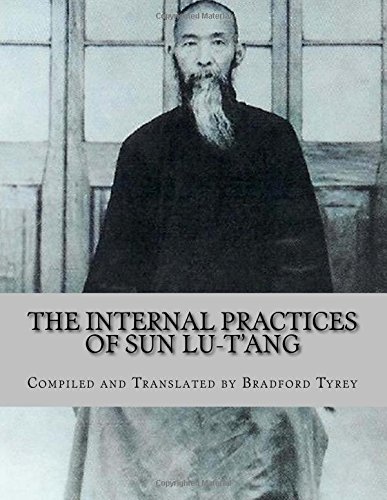
Videos Online of Sun Taiji 73 Form
Workshops and Seminars about Sun Style Taijiquan
Please send me information about any workshops, seminars, or intensives about Sun Style Taijiquan short forms, 73 form or 98 form. I will advertise them on this webpage.
Dr. Paul Lam's Annual Taijiquan Retreat, June 11-16, 2012, in Memphis,
Tennessee. Three levels of the Sun 73 Form are taught.
Return to the Main Index for this Webpage
Videos Online
Sun Style Taijiquan, 73 Movements Standard
International Competition Form
Lots of Taijiquan teachers and enthusiasts have put UTube
videos online about the Sun 73 form. The UTube database of Taijiquan
demonstrations and teaching is growing each month.
Sun Taijiquan 73 Form: UTube Videos
73 Sun Style Tai Chi.
Demonstration and commentary by Stephan Luff.
Part 1, 8:19 minutes, UTube.
Part 2, 4:25 minutes, UTube.
Excellent!
Ocean Hou's Sun Style 73
Competition Taiji Form Demonstration. UTube, 5:01 min, color. A
Master level performance by Ocean Hou. A very nice soundtrack with
renaissance style music. The performance in a beautiful titled patio of a
public garden. This is the best online video of a performance of the Sun
73 form.
Sun Lu Tang Performing the
Sun 97 Taijiquan Form. This is a slideshow. UTube, 3:09 minutes.
Sun
Taiji Competition Form, 73 Form, Performed by Professor Men Hui Feng.
Utube, 4:48. Very grainy black and white video.
Sun
Tai Chi 73 Mouvements. UTube, 5:37 min. Quite dark and hard to
see clearly the graceful movements of a lady doing the form. 73 Form.
Tai Chi
Sun Style Modified, 73 Form UTube Online Video, 4:22, 2006.
Performed by Nguyen Hoai Van,
France.
Tai Chi
Sun Style Modified. UTube, 4:22 min. 73 Form.
Sun 73 Tai Chi.
Demonstration by Guy C. Prentice, 2007. UTube, 6:48. A bit blurry
and grainy video.
Sun Style 73 Forms
Instructional DVD Introduction to Paul Lam's instructional VHS.
UTube, 5:38 min.
Sun
Style Short Form. UTube, 2:33.
Sun
Style Tai Chi. Demonstration by Jesse Tsao. UTube, 5:47 min.
Demonstration of his instructional videotape. 73 Form.
Sun Style Tai Chi 73.
UTube, 5:54 min. An older American man performs the 73 form in a room.
No sound.
Sun Taijiquan Competition
Form. UTube, 5:31 min. This video features a front view and
simultaneous insert of a side view. Demonstration by a man in a
white uniform in a spring green park.
Sun Taijiquan, Videos Online, List
Taichichuan Sun Style.
Interesting Moscow Taiji club practice of Sun Style Taiji. UTube, 2:27.
Taiji - Sun Style 98 Form.
Demonstrated by Sun Jian Yun. Utube, 7:42, color. Probably the best
video version I've seen of Master Sun Jian Yun (1913-2003) doing the traditional
form.
Return to the Main Index for this Webpage
Quotations
Sun Style Taijiquan
Quotations about Sun Lu Tang's Internal Martial Arts : Tai Ji Quan, Ba Gua Quan, Hsing Yi Quan
Return to the Main Index for this Webpage
Recommendations
for Learning
Sun Style Taijiquan, 73 Movements Standard
International Competition Form
By Michael P. Garofalo
I get email from readers asking me to recommend
books,
videotapes, VCDs, or DVDs for them to use to study the Sun style Taijiquan 73
competition from.
I have viewed many VCDs, DVDs, and/or VHS videotapes on the subject of the 73
Sun Form. I have collected nearly all of the printed and media materials
on the subject. I welcome suggestions from
readers of this webpage about this topic.
I have provided numerous strategies, tactics, tips and suggestions for learning Taijiquan forms on your own on my webpages on the 24 Standard Short Yang Form and the 32 Standard Sword Yang Form.
Based upon the products that I have reviewed, I recommend the following instructional resources:
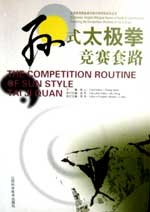
1.
Sun Style Tai Chi - 73 Forms. The International Competition Form. An
instructional DVD or videotape by Dr. Paul Lam,
M.D.. Narwee,
Australia, East Action Video, 2000. DVD/VHS, 103 minutes. ASIN: B000066G1T. Excellent color photography and sound work.
Detailed instruction by Dr. Lam of each movement of the 73 Form. A student
demonstrates while Dr. Lam describes the movement. Each movement is then
demonstrated by Dr. Lam with a front and back view. On screen text gives
the number and name of each of the 73 movements. "This detailed instructional video includes a
demonstration of the set by
its
creator, Professor Men Hui- Feng. Sun style is characterized by its
powerful qigong elements, agile steps and flowing
movements." Contents: Introduction to Tai Chi and the
Sun style. Comprehensive posture by posture instructions by Dr. Lam,
students modeling movements, different views, repetitions from front and back
sides. A demonstration of the
complete form by Dr. Paul Lam, with front and back views. A front view performance demonstration by the committee chairperson and main creator
of the set, Professor Men Hui-Feng.
Professor Men Hui-Feng of Beijing University
was the committee chairperson and main creator of this competition form,
published
in 1991.
I enjoy the slow, careful and detailed descriptions by Dr. Lam and his use of students to demonstrate as he gives you clear instructions on how to do the Sun 73 Form.
2.
The Competition
Routine of Sun Style Taijiquan. Zhong Shan, Chief Editor. Wu
Don, Executive Editor. Li Wei, Editor of English Version. Published
in Beijing, China, 2003. 151 pages. ISBN: 7537720851. A
detailed study of the Sun Taijiquan 73 standard competition form. Book
comes with a VCD, color, 50 minutes. The accompanying VCD ISRC:
CN-C20-02-0040-O/V-G8. I could not find identification of the performer or
instructor on the VCD. There is no English narration on the VCD, just
music.
The book is written in both English and Chinese. I used this very informative book to determine the names of the movements and to help me prepare the the glossary for Sun Lu Tang's internal martial arts system. The book includes many numbered black and white photographs of each movement in the 73 Sun Form. The book is part of an "Chinese-English bilingual series of guides to learning and practicing the competition routines of Tai Ji Quan." Other titles in the series help you learn to perform the competition versions of the Yang, Chen, Wu, Wu (Hao), Sun, and 42 Forms. I benefited from reading their suggestions on how to prepare for and participate in Taijiquan competitions. I ordered the Sun Taijiquan 73 form book and VCD from Tai Chi Depot.
The VCD includes a demonstration of the form, and an instructional segment where the instructor very slowly moves through the 73 form move by move from a front view, and then from a back and side insert view. There is no English language narration. The VCD is inferior to the other instructional DVDs or VHS videocassettes I recommend. However, the fact that the VCD is combined with the book, and both are sold at a very reasonable price, make this set a valuable learning resource. VSCLC.
3.
Sun Style Tai Chi Competition Form. Instructional videotape by Jiang
Jian-ye. VHS, 82 minutes. Albany, New York,
CDTKA, 1997. The standard competition 73 movement form approved by the Chinese
National Wushu Association for international competition. Website:
Jiang's
Tai Chi Videos. Master Jiang Jian-ye is a Taijiquan and Wushu expert
with a Master's degree in Physical Education. He has has produced many high
quality instructional videotapes, and has many of his videotapes distributed by
Wayfarer Publications and through
Tai Chi Magazine. I value the
quality work of Master Jiang. I own a number of his instructional
videotapes, and have learned a lot from him. His explanations are clear
and detailed, and he shows repeated views at different angles and sometimes at
different speeds as necessary for faster forms. He is
enthusiastic and focused.
4.
Sun Style Taiji Competition
73 Form Instructional DVD or VHS videotape by Master Jesse Tsao. 60 minutes.
San Diego, California, Tai Chi Healthways, 2002. Telephone: 858-793-8939.
Email Jesse Tsao.
The form is demonstrated by Master Tsao, then he teaches the form in 15 lessons,
posture by posture. "Sun style is the
youngest among the five leading styles of Tai Chi. Sun style is characterized
by its compactness of movement, its high, upright posture, and its lively
footwork. This DVD video teaches the Chinese national standard routine Sun
Style Form 73. Master Tsao teaches posture-by-posture in detail in English. He
also demonstrates the entire routine in both front and back views.
(Difficulty: Beginner through Advanced Levels)" For selections from
this instructional media resource look at the online video
Sun
Style Tai Chi 73 Form (Jesse Tsao, UTube, 5:37 min).
5. Sun Style of T'ai Chi Ch'uan: Standard Competition 73 Movements Form. Research by Michael P. Garofalo, M.S.. This webpage includes an introduction, information on the history of the Sun Taijiquan forms, a detailed bibliography, extensive links, references to video resources, a large collection of quotations about Sun Taijiquan, recommendations on the best media resources on the topic, and suggestions for learning the 73 competition Sun Taijiquan form. A detailed comparative list of the names of each of the 73 movements is provided, with source references, and the movement names are given in English, Chinese, Chinese characters, French, German, and Spanish. This webpage includes detailed descriptions of each of the 73 movements with black and white illustrations for each movement sequence along with commentary and comparisons. Many additional nomenclature lists and section study charts in the PDF format, photographs and graphics are also provided - over 1 MB of information. This webpage is the most detailed and complete document on the subject of the Sun Taijiquan Competition 73 Form available on the Internet. This document was published by Green Way Research, Valley Spirit Taijiquan, Red Bluff, California, 2007-2012. URL: http://www.egreenway.com/taichichuan/sun73.htm.
Return to the Main Index for this Webpage
| Standard
Directional Scheme Used for Describing the Sun
Style Taijiquan 73 Form Used By Mike Garofalo Directional Instructions and Alternatives
|
|||
| Key | Clock Hour Direction |
Compass Direction A |
|
| N 12 | 12:00 o'clock | North - Front Side of Body | |
| NE 1 | 1:30 o'clock | Northeast | |
| E 3 | 3:00 o'clock | East - Right Side of Body | |
| SE 4 | 4:30 o'clock | Southeast | |
| S 6 | 6:00 o'clock | South - Back Side of Body | |
| SW 7 | 7:30 o'clock | Southwest | |
| W 9 | 9:00 o'clock | West - Left Side of Body | |
| NW 10 | 10:30 o'clock | Northwest | |
Return to the Main Index for this Webpage

谷神太极拳
Green Way Research
Valley Spirit Taijiquan, North Sacramento River Valley, Red Bluff, California,
1998-2017
Valley Spirit Taijiquan, Columbia River Valley, Vancouver, Washington, 2017-
Sun Lu Tang (1861-1933) Biographical Information
Sun Taijiquan Competition 73 Forms
Cloud Hands: T'ai Chi Ch'uan and Chi Kung Website
Detailed Index to the Cloud Hands Website
Sun Style T'ai Chi Ch'uan: Bibliography, Links, Resources, Quotes, Notes.
Sun Taijiquan: Bibliography, Links, Resources, Instructions, Quotations, Index
Sun Style Taiji Quan: Bibliography, Links, Resources, Instructions, Quotations, Index
Sun Tai Chi: Bibliography, Links, Resources, Instructions, Quotations, Index
Sun Lu Tang's T'ai Chi Ch'uan, Taijiquan, Taiji Quan, Tai Chi
Sun Lu Tang's Bagua Quan, Baqua Zhang, Bagua, Baguazhang
Sun Lu Tang's Xing Yi Quan, Hsing I Chuan, Hsing I, Mind-Form Boxing, Form-Will Boxing
Sun Lu Tang's Sword, Jian, Saber, Dan Dao
Return to the Main Index for this Webpage
This webpage was first published on the Internet in January 2003.
It was substantially revised in 2009, and 2012.
This webpage was last modified or updated on July 14, 2017.